Equity on Trial Slides
Equity on Trial
Serrano v. Priest (1971)
Challenging the Wealth Gap in California Education
The Funding Gap
In the 1960s, California schools relied heavily on local property taxes.
"The quality of a child's education was a function of the wealth of their parents and neighbors."
A Tale of Two Districts:
- Beverly Hills: High wealth, low tax rate, high spending.
- Baldwin Park: Low wealth, high tax rate, low spending.
Quick Check
Why did relying on local property taxes create an "inequitable" system for students in different districts?
A) Wealthy districts could raise more money even with lower tax rates.
B) Poor districts were forced to pay higher taxes but still had less for schools.
C) The quality of education depended on where a student lived.
D) All of the above.
The Case: Serrano v. Priest
The Plaintiffs
John Serrano and other parents sued Ivy Baker Priest (the State Treasurer) on behalf of their children.
The Argument
Education is a fundamental right. Funding it via property taxes violates the Equal Protection Clause of the California Constitution.
The 1971 Decision
The Verdict
"The right to an education in our public schools is a right which must be made available to all on equal terms."
— California Supreme Court
Fiscal Neutrality: The state must ensure that spending per pupil does not depend on local property wealth.
Equalization: California was ordered to reduce spending gaps between districts to less than $100 per pupil.
Concept Check
Based on the "Fiscal Neutrality" rule, what is the State's responsibility in school funding?
A) To ensure every school district gets the exact same amount of money from local taxes.
B) To ensure a student's education isn't limited by the property values of their neighborhood.
C) To eliminate all local taxes and have the federal government pay for everything.
The Great Debate
The Case for Equity
- Justice: Poverty shouldn't prevent a child from accessing quality labs, books, or teachers.
- Economic Future: A better-educated workforce benefits the entire state economy.
The Case for Local Control
- Autonomy: Parents should have the right to tax themselves more to improve their own local schools.
- Efficiency: Local control ensures money is spent on specific community needs rather than state mandates.
Impact & Legacy
Centralized Funding
The State of California now controls most school funding, distributing it more evenly across districts.
Proposition 13 (1978)
Property tax limits made Serrano's goal of "equalization" easier but reduced the total money available for all schools.
LCFF (Today)
The Local Control Funding Formula builds on Serrano by giving extra money to districts with high-need students.
Serrano v. Priest shifted the focus from district wealth to student need.
Final Reflection
In your opinion, which is more important: allowing communities to choose how much they spend on their local schools, or ensuring every child in the state has access to the same resources?
Take 60 seconds to discuss with a neighbor or write down your thoughts.
Funding Justice Worksheet
Funding Justice
Serrano v. Priest (1971) Case Study
NAME:
DATE:
Part 1: Vocabulary Brief
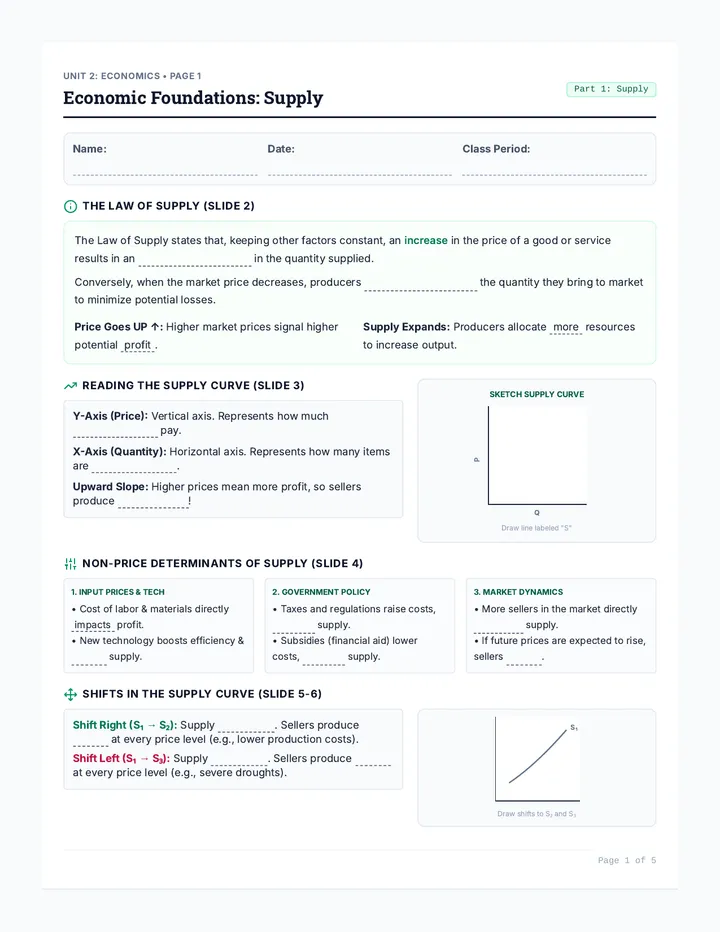
Define the following terms based on the lesson presentation:
1. Property Tax:
2. Inequity:
3. Equal Protection:
4. Fiscal Neutrality:
Part 2: Case Analysis
The Problem:
Explain why relying on local property wealth to fund schools created a "gap" between districts like Beverly Hills and Baldwin Park.
The Argument:
What was the primary constitutional argument used by John Serrano's legal team against the state funding system?
Part 3: The Verdict & Impact
According to the California Supreme Court, why is education considered a "fundamental right"?
Arguments for Equity
List two reasons why many supported the court's decision to equalize funding:
Arguments for Local Control
List two reasons why some people were concerned about the court's ruling:
Final Verdict
Consider the shift from "district wealth" to "student need." Do you believe California has achieved educational equity today? Why or why not?
Serrano Case Teacher Guide
Teacher Facilitation Guide
Lesson: Equity on Trial (Serrano v. Priest)
Duration: 15-20 Minutes
Instructional Objective
Students will analyze the legal and economic implications of the 1971 Serrano v. Priest decision, specifically focusing on how it shifted California's school funding from a local-wealth-based system to a state-equalized system.
Key Concepts
- Equal Protection
- Fundamental Rights
- Fiscal Neutrality
- Local Control
Presentation Pacing & Prompts
Slides 1-3
(4 mins)
Focus: The Gap
Explain the reliance on property taxes. Use the Beverly Hills vs. Baldwin Park example to show that "low tax rates" don't always mean "low funding."
Discussion Prompt: "If you lived in Baldwin Park, how would you feel paying a higher tax rate than a neighbor in Beverly Hills but having fewer resources in your classroom?"
Slides 4-6
(5 mins)
Focus: The Legal Ruling
Highlight the "Equal Protection Clause." Explain that the court saw education as a fundamental right that shouldn't depend on wealth.
Key Note: Clarify "Fiscal Neutrality"—it doesn't mean every district gets exactly the same, but that the state must ensure wealth isn't the deciding factor.
Slides 7-9
(6 mins)
Focus: Debate & Legacy
Discuss the trade-off. Equalization often meant the state took control away from local communities. Mention Proposition 13 as a side effect.
Final Reflection: Allow students 1-2 minutes of silent writing on the final slide prompt before a brief whole-class share.
Worksheet Answer Key
Part 1: Vocabulary Definitions
- Property Tax: A tax based on the value of real estate or other property.
- Inequity: Lack of fairness or justice; an unfair disparity in resources.
- Equal Protection: A constitutional guarantee that no person or group will be denied the same protection of laws.
- Fiscal Neutrality: The principle that school spending should not depend on a district's local property wealth.
Part 2: Case Analysis
The Problem: Districts with high-value homes (like Beverly Hills) could raise massive amounts of money with very low tax rates. Districts with low-value homes (like Baldwin Park) couldn't raise enough even with very high tax rates, leading to a massive gap in teacher pay, facilities, and books.