Digital Empire Slides while (true) { connect(); innovate(); disrupt(); }
if (idea == mine) { sue(); } else { iterate(); }
01000110 01100001 01100011 01100101 01100010 01101111 01101111 01101011
Digital Empire
The Ethics & Law of The Social Network
Terminal Questions
Who "owns" an idea? Can you steal a concept without stealing code?
Is "disruptive" business growth inherently unethical?
How has social media fundamentally re-coded our social interactions?
The Network Nodes
Mark Zuckerberg
The Architect. Driven by logic, status, and the desire to build something exclusive.
Eduardo Saverin
The CFO. The traditional businessman who provided seed money and legal structure.
The Winklevoss Twins
The Plaintiffs. Elite athletes who claim the idea for "The Facebook" was stolen from them.
Sean Parker
The Catalyst. Napster founder who envisions a billion-dollar company, not just a site.
Timeline of Discord
0:05 The Facemash Hack
0:18 The Winklevoss Pitch
0:45 The Facebook Goes Live
1:15 Meeting Sean Parker
1:40 The Legal Deposition
1:52 The Dilution Reveal
Reference these timestamps on your "Code of Ethics" Worksheet.
IP Law Primer
Copyright
Protects the expression of an idea (like specific code). It does not protect the general concept.
Trade Secret
Confidential info that gives a competitive edge. (Did Mark break a "confidential" agreement?)
Patent
Protects inventions or processes. Harder to apply to the basic "social network" concept in 2004.
Execute Viewing Guide
Use the provided timestamped worksheet to track key legal and ethical milestones. Pay close attention to the deposition scenes—they contain the "why" behind the "what."
Record Observations
Identify IP Claims
Code of Ethics Worksheet Movie Guide
THE SOCIAL NETWORK (2010)
Name: ________________________________
Date: ________________________________
Your Goal
Track how the characters treat their friends and how they handle the ownership of their ideas as Facebook grows from a dorm room project to a global business.
Time What is happening? Notes & Observations 0:00-0:10 Facemash
Mark hacks school computers to rank students by looks.
Question: Was he right to do this? Why or why not?
|
|
| 0:15-0:25 |
The Pitch
The twins ask Mark to build "Harvard Connection."
Question: Did Mark actually agree to help them?
|
|
| 0:35-0:50 |
Going Live
"The Facebook" launches at Harvard.
Question: Why does Mark want to keep the site "exclusive"?
|
|
| 1:10-1:25 |
Sean Parker
The Napster founder enters the picture.
Question: How does Mark's attitude change after meeting Sean?
|
|
| 1:35-1:50 |
The Betrayal
Eduardo is legally pushed out of the company.
Question: Was this fair business or a betrayal of a friend?
|
|
Final Verdict
1. Who "owns" the idea for Facebook?
Some say the twins had the idea first. Others say Mark is the one who actually built it. What do you think?
I believe the ownership belongs to...
2. Friendship vs. Business
Mark gained 500 million "friends" on his site, but he lost his only real friend, Eduardo. Was the trade worth it?
In my opinion, the trade was...
3. Is Mark a "Jerk"?
At the end, a lawyer tells Mark, "You're not a jerk, Mark. You're just trying so hard to be one." Do you agree or disagree?
I agree/disagree because...
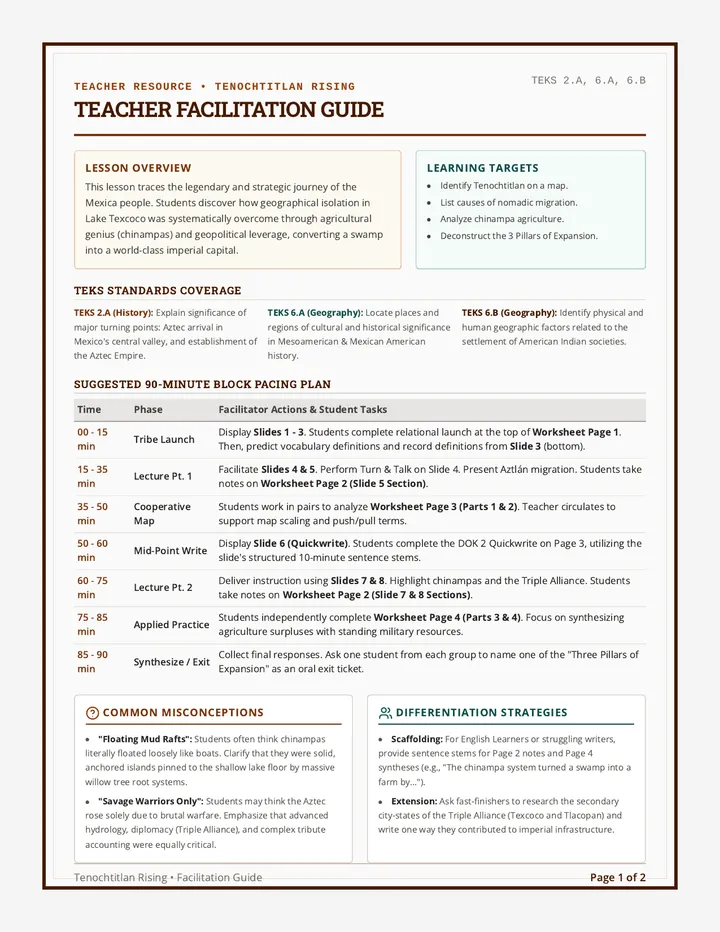
The Social Network Movie Guide
Code of Ethics Answer Key Answer Key
Simplified 10th Grade Version
Teaching Strategy
Use these points to guide class discussion. 10th graders respond best to themes of social status and betrayal .
Time Discussion Points & Expected Answers 0:00 - 0:10 Facemash:
Mark was acting out of hurt and revenge. This shows his lack of empathy for others' privacy.
Key Point: Ethical hacking vs. malicious hacking.
|
| 0:15 - 0:25 |
The Idea Pitch:
Mark didn't sign anything, but his emails implied he was working on their site. He used their concept as inspiration for his own site.
Key Point: Verbal agreements and professional honesty.
|
| 0:35 - 0:50 |
Launching:
He wanted to keep it for Harvard students only. This made it "exclusive"—making it more desirable for others.
Key Point: The psychology of "coolness" in business.
|
| 1:10 - 1:25 |
Sean Parker:
Mark starts seeing Eduardo as a "small-time" businessman who is holding the company back compared to Sean's massive vision.
Key Point: Influence of mentors (for better or worse).
|
| 1:35 - 1:50 |
Betrayal:
Mark used a legal trick to take Eduardo's shares. While "legal," it was a massive betrayal of his only real friend.
Key Point: Business logic vs. Personal loyalty.
|
Final Verdict Guide
1. Who "owns" the idea?
Discuss the difference between having a thought and doing the work . Mark’s argument is that ideas are cheap, but building a functional site is what matters.
2. Friendship vs. Business:
The movie questions if success is worth losing your humanity. Mark has billion-dollar success but is portrayed as lonely and isolated by the end.
3. Is Mark a "Jerk"?
Focus on his obsession with vision over social norms. He isn't acting to be evil; he's acting based on logic and efficiency, often forgetting how it affects people.
Discussion Vocabulary
Intellectual Property (IP)
The legal right to own things you create with your mind, like inventions, code, or stories.
Exclusivity
Making something limited to only a specific group of people, which often makes it more desirable to others.
Founding Feud Teacher Guide Founding Feud
Interactive Debate & Discussion Guide
Activity Overview
This guide facilitates a "Mock Trial" or structured debate based on the film's events. Students move beyond the worksheet to argue the ethical and legal standings of the characters.
Case 01
Winklevoss v. Zuckerberg
Theme: Intellectual Property Theft
The Plaintiffs:
"Mark led us on, took our confidential idea, and built his own version while stalling our project."
The Defense:
"Ideas are worthless without execution. Mark's site had a different interface, backend, and purpose."
Case 02
Saverin v. Zuckerberg
Theme: Business Ethics & Fiduciary Duty
The Plaintiff:
"I was the only one who put up money. I was pushed out via a legal loophole created to spite me."
The Defense:
"Eduardo was a liability. He froze the bank account and didn't move to CA. The company had to scale."
Socratic Seminar Prompts
The "Cool" Factor:
"Is business success primarily about the product itself, or the timing and social exclusivity of its launch? How did Mark 'engineer' coolness?"
The Moral Math:
"If Facebook has connected billions and aided social movements, does that erase the unethical way it was founded? Do the ends justify the means?"
The Gender Lens:
"How does the film's portrayal of women reflect the early culture of Silicon Valley? How did this 'bro-culture' influence the platform's design?"
Facilitator Observation Notes
Key Student Insights:
Common Misconceptions:
* End of Facilitation Log *