Feudal Labor Shift Teacher Guide Teacher Guide
Unit: Medieval Transitions
Grade: 10th World History
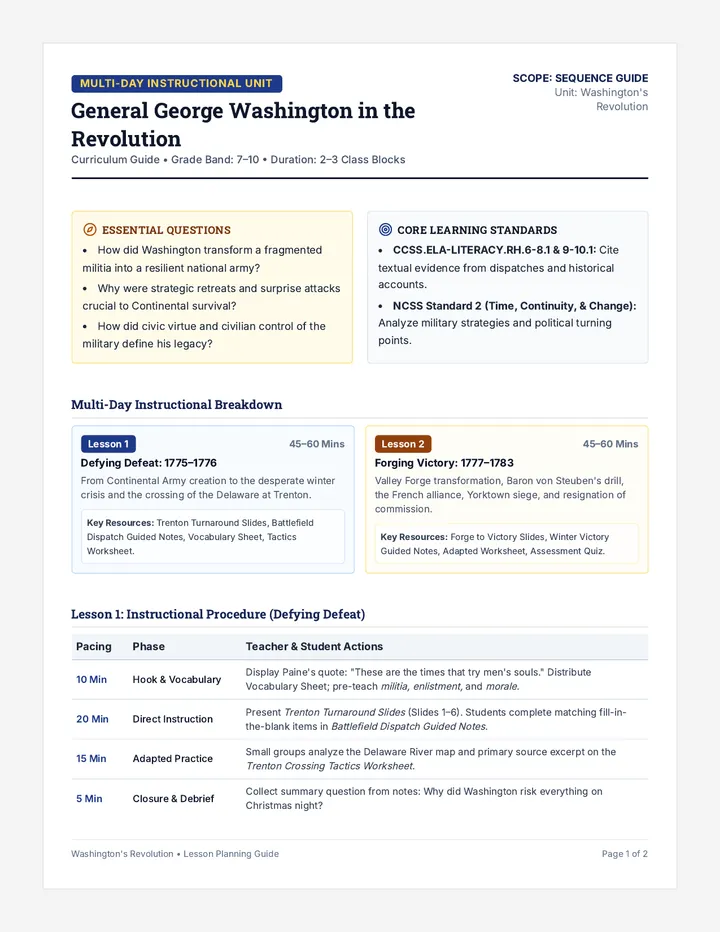
The Great Labor Shift
Learning Objective
Students will evaluate the causes for the decline of Feudalism, specifically focusing on how the labor shortage caused by the Black Death shifted bargaining power from land-owning Lords to surviving Peasants.
Instructional Sequence
5m
Warm-up: Supply & Demand Quick-Write
Prompt: "If there are fewer workers available in a town, what happens to their wages? Why?" Connect this to the economic reality of the 14th century.
15m
Video Viewing: Medieval Europe (Crash Course)
Focus specifically on the segment **11:18-12:28** which details the end of feudalism and peasant revolts. Use the slide deck to facilitate this viewing.
20m
Main Activity: The Feudal Bargaining Table
Split class into Lords and Peasants. Distribute the Role-Play Scenarios and Negotiation Scorecards . Students must negotiate new contracts reflecting the labor scarcity.
5m
Reflection & Exit Ticket
Compare student results to the **Peasants' Revolt of 1381**. Why did the "little people" finally have leverage?
Discussion Anchors
Economic Leverage: Why were the "little people" finally able to demand rights? What gave them leverage they didn't have before?
The Myth of Stagnation: John Green mentions that the "Dark Ages" were a time of innovation. How did the collapse of an old social order (Feudalism) lead to innovation?
Materials Needed
Slide Deck
Role-Play Scenarios
Negotiation Scorecards
Labor Shift Anchor Chart
Labor Shift Slides The Great
Labor Shift
The Black Death & The Death of Feudalism
Warm-up: Quick-Write
"If there are suddenly fewer workers available in your town, what happens to their wages ?"
Why does this happen?
Think about leverage.
Evidence: Medieval Europe
Embedded media
Focus Segment
11:18 — 12:28
The End of Feudalism
Look for:
Role of Mercenaries
Value of Peasant labor
The "Little People"
The Plague's Math
Population
↓ 50%
Labor Value
↑ HIGH
"Scarcity creates leverage. Leverage creates change."
The Bargaining Table
The Lords
• You have land but no one to work it.
• Crops are rotting in the fields.
• The King still wants his taxes.
The Peasants
• You survived the Great Plague.
• Other lords are offering better deals.
• Why stay for a "handshake" and a crust of bread?
GOAL: Negotiate a new contract. What is your labor worth?
The Verdict
1
Did the Peasants succeed in your role-play? Why or why not?
2
The Real 1381: Peasants sacked London and murdered the Archbishop. Even though the revolt was suppressed, did the "old ways" of feudalism ever truly return?
Feudal Bargaining Scenarios The Bargaining Table
Post-Plague Negotiation Scenarios (Year: 1351)
The Lord's Perspective
Lord of the Manor: Baron Geoffrey
The Crisis: 60% of your serfs died in the plague. Your wheat is rotting in the fields. If it isn't harvested in two weeks, you will be bankrupt.
The Pressure: The King has demanded a "Shield Tax" to fund the Hundred Years' War. You need cash, and cash comes from selling grain.
Your Goal: Keep the peasants bound to your land. Try to offer them small concessions (a little more food) without giving up your "right" to their free labor.
The Peasant's Perspective
Surviving Laborer: Thomas the Smith
The Leverage: You are one of the few skilled smiths left alive in the county. Every lord needs you to fix their plows and shoe their horses.
The Option: The neighboring Lord, Count William, has sent a secret messenger offering you 5 pennies a day and freedom from serfdom if you move to his manor.
Your Goal: Demand freedom from the land. Ask for cash wages. If Baron Geoffrey refuses, threaten to walk away. He can't stop you—he doesn't have enough soldiers left to guard the roads.
Negotiation Rules
You have 10 minutes to reach a signed agreement.
If no agreement is reached, the Peasant leaves and the Lord loses the harvest.
Be realistic! High wages were exciting, but the law still technically favored the Lords.
Negotiation Scorecard The Negotiation Scorecard
Labor Contract of 1351
Name:
Date:
Identify Your Role
The Lord
The Peasant
Phase 1: Your Strategy
Based on your scenario card, what are your top 3 goals for this negotiation? What do you want to achieve, and what are you willing to "give up" (concede)?
Phase 2: The Final Agreement
Record the final terms of your contract. Be specific about wages, labor hours, and social status (e.g., "Free Man" vs. "Bound Serf").
Signature of Opposition
Seal of the Manor
Phase 3: Post-Negotiation Reflection
Who held more power during this negotiation? How did the "supply of labor" (how many workers were left alive) influence your result?
Labor Shift Anchor Chart The Great Labor Shift
From Bound Serfs to Bargaining Peasants
1. The Great Dying
The Black Death (1347-1351) kills nearly 50% of the European population. Communities are shattered.
2. Labor Scarcity
Lords have vast lands, but no one to plow, plant, or harvest. The surplus of labor is gone.
3. Economic Leverage
Peasants realize their labor is valuable. They demand wages, freedom from the land, and better conditions.
4. Feudalism Cracks
Revolts (like 1381) and economic shifts lead to the end of serfdom. A new "Middle Class" begins to emerge.
"When the supply of workers dropped, the power of the survivor rose."