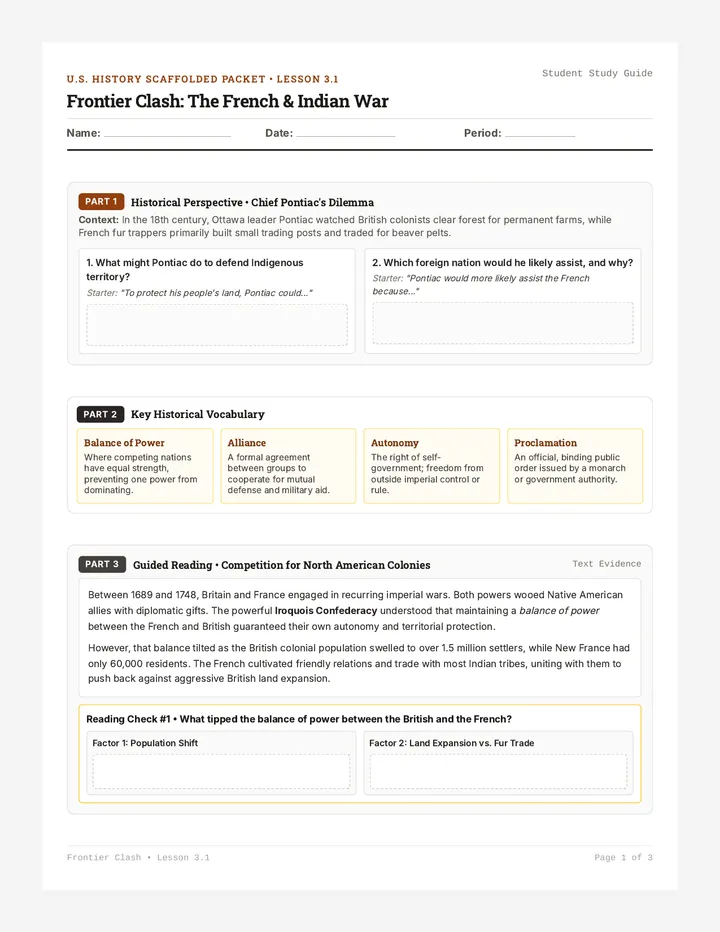
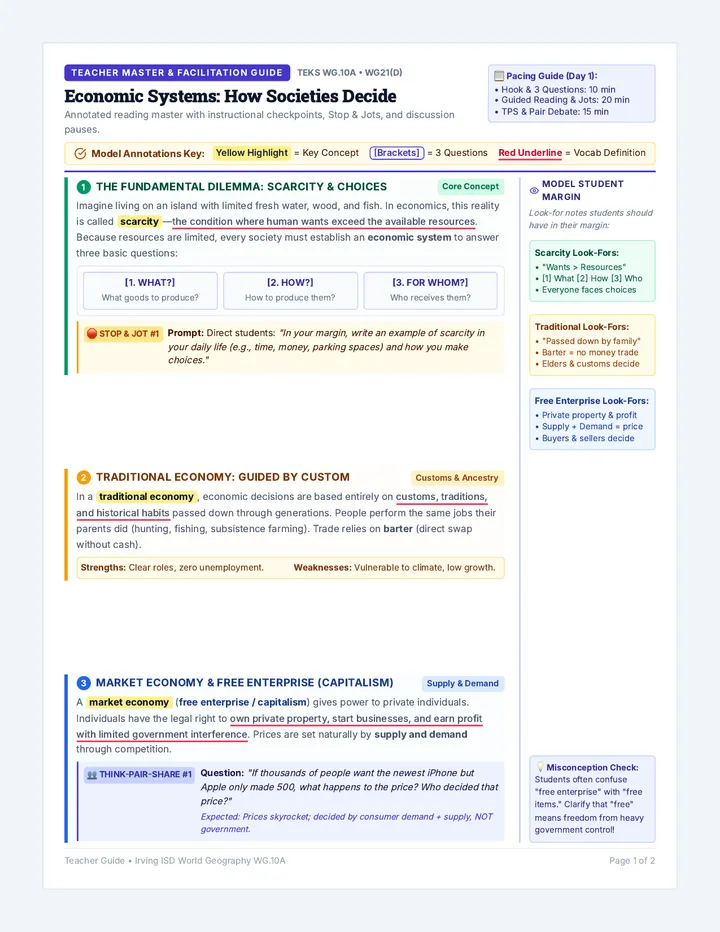
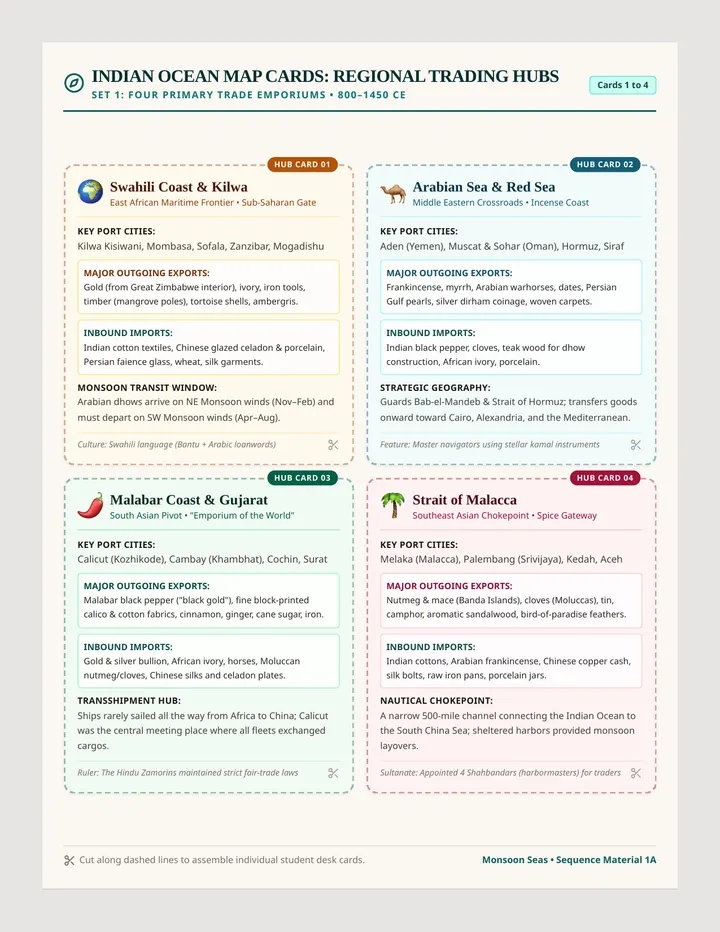
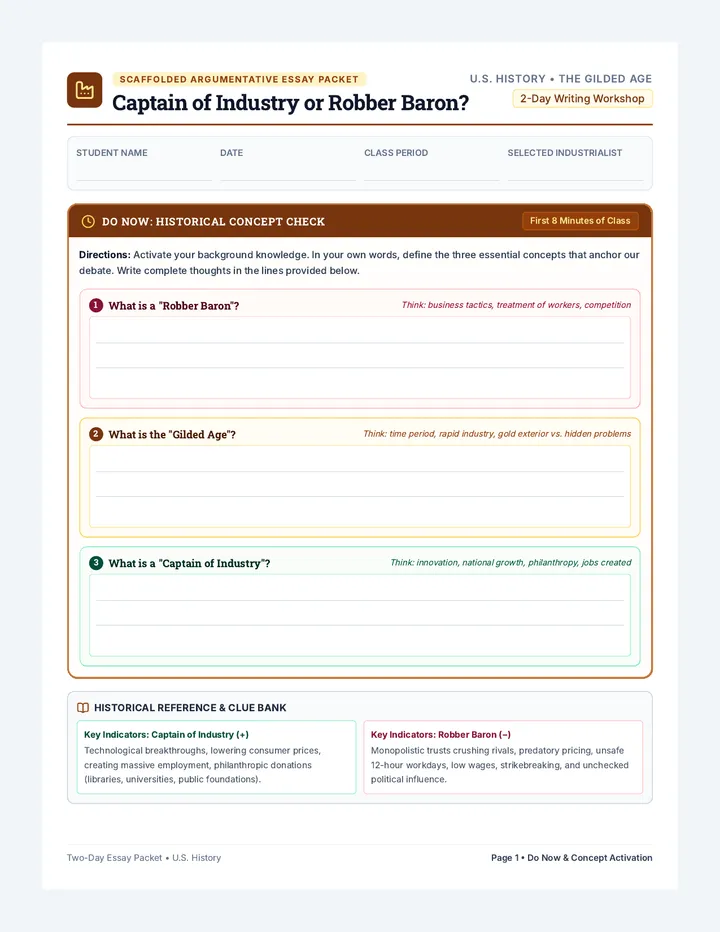
Ice Age Chaos Worksheet Ice Age Chaos
Student Investigation: Climate & Crisis
Name:
Date:
Part 1: Weather vs. Climate
Discuss the difference between 'weather' and 'climate' using local examples from the past year.
Weather (Short-term)
Climate (Long-term trends)
Part 2: The Crisis of the 17th Century
As we watch the video, list the 5 specific political crises or revolutions mentioned that occurred during the Little Ice Age.
# Global Political Crisis / Revolution 1. 2. 3. 4. 5.
Part 3: The "Thought Bubble" Effect
John Green explains how a 2-degree Celsius drop in temperature causes a ripple effect through society. Explain the connection between these economic/biological steps:
30-50% Rice Harvest Yield Reduction
High Bread Prices & Less Spending
Calorie Drop (2500 → 2000)
Part 4: Closure
Discussion Quote:
"History is never controversial."
Why does the host say this ironically? How does climate change (past or present) complicate our view of "settled" history?
Causation Chain Activity Causation Chain
Group Activity Guide
WORLD HISTORY: UNIT 4
CLIMATE & POWER
Objective
Distinguish between correlation (things happening at the same time) and causation (one thing making another thing happen) by mapping the domino effect of climate change on political power.
The Mission
Your group must create a logical Causation Chain that connects a global climate event to the fall of a mighty empire.
Required Elements
The Trigger: 2-Degree Temperature DropThe Conclusion: Dynasty Collapse (e.g., Ming Dynasty)The Chain: At least 4 intermediate steps that show clear cause and effect .
Brainstorming Bank
Use these concepts to build your links:
Harvest Failure Tax Hikes Bread Riots Unemployment Soldier Calamity Invasion Starvation Loss of "Mandate"
Group causation flowchart
The Trigger
2°C Global Temp Drop
The Result
Dynasty Collapse
Group Members: ____________________________________________________________________________________
© Environmental History Lab
Climate Chaos Slides World History Investigation
Climate Chaos
The Little Ice Age & the Global Crisis of the 17th Century
Little Ice Age
Political Crisis
Weather vs. Climate
Weather
The short-term state of the atmosphere. Rain, snow, sun, or heat right now or this week.
"It's freezing outside today!"
Climate
The long-term average of weather patterns over decades or centuries.
"The winters here have been getting shorter over the last 30 years."
💡 Discussion: What local weather events from the past year felt "unusual"? Was it just weather, or a shift in climate?
Video Evidence
Crash Course World History
Embedded media
Watch & Listen For:
• The "Little Ice Age" duration.
• The 5 political crises.
• The 2-degree drop math.
Global Upheaval
England
English Revolutions (1640 & 1689)
China
Fall of the Ming / Rise of the Qing
Ottoman Empire
Succession Crises
Europe (General)
Thirty Years' War (1618–1648)
Spain
European Wars & Debt Crises
Correlation vs. Causation: Did the ice make the guns fire?
The Math of Starvation
-2°C
Temp Drop
Rice Harvest Failure
Yields fall by 30% to 50%.
5X
Price Hike
The Dominos Fall
Bread riots → Unemployment → Malnutrition → "Soldier Calamity"
Group Activity
The Causation Chain Challenge
Using your activity guides, map out the logical path from Cooler Earth to Fallen Emperor.
You must include at least 4 intermediate steps.
"History is never controversial."
Why did John Green say this ironically?
Think about: How does adding Environmental Data change our understanding of events we usually blame only on "bad leaders" or "greedy empires"?
Climate Chaos Teacher Guide Teacher Guide: Climate Chaos
Instructional Strategies & Answer Key
World History / 9-12
Lesson Facilitation
The Hook (5 min)
Ask students to recall a "weird" weather day this year. Use this to pivot to the idea of climate as a collection of these events over time. Stress that a single cold day (weather) doesn't disprove global warming (climate).
Video Critical Thinking (10 min)
Pause the video at 6:00 (The Thought Bubble). Ask: "Why would a bad harvest in a rural village cause an artist in a city to lose their job?" (Answer: Food prices spike, discretionary income vanishes).
Activity Scaffolding (20 min)
Some groups may struggle with "Intermediate Steps." Encourage them to think about Taxation . Government budgets rely on taxes; if crops fail, peasants can't pay; if the state can't pay soldiers, soldiers revolt ("Bing huo").
Differentiation
For advanced learners: Ask them to research the "Maunder Minimum" or "Volcanic Winter" specifically. For struggling learners: Provide a pre-filled step for their flowchart (e.g., "Step 2: Grain prices double").
Worksheet Answer Key
Part 2: The 5 Crises
Students should list 5 from: English Revolution (1640), Thirty Years' War, Fall of the Ming (1644), Ottoman succession crisis, Spanish debt/wars, Mughal succession wars.
Part 3: The Math of Starvation (Chain Effects)
Harvest Reduction → Scarcity leads to bread prices doubling or quintupling.High Prices → People spend all money on food; non-agricultural sectors (artisans, manufacturing) collapse → high unemployment.Calorie Drop → Metabolism takes priority; humans lose 50% of work capacity, leading to even lower food production and higher susceptibility to disease.
Part 4: The Ironic Quote
John Green is being ironic because history is extremely controversial. Climate change is a "controversial" political topic today; by showing it has always driven history, he's suggesting that the environment is a core historical actor that we've often ignored in favor of strictly "political" or "great man" narratives.
Sample Causation Chain (The Ming Case)
1. 2°C Temp Drop (Maunder Minimum / Volcanoes)
2. Shorter growing seasons & droughts in North China
3. Rice harvests fail → Massive grain price spikes
4. Peasants can't pay taxes → Army goes unpaid & begins looting ("Bing huo")