Lenny.com
Explore
Create
ActivitiesNewMathEnglish Language ArtsScience & EngineeringSocial StudiesGlobal LanguagesHealth & Physical EducationSpecial EducationCounseling & Life SkillsArts & CreativityESL
Lenny.com
Lenny.com
Explore
Create
ActivitiesNewMathEnglish Language ArtsScience & EngineeringSocial StudiesGlobal LanguagesHealth & Physical EducationSpecial EducationCounseling & Life SkillsArts & CreativityESL
Lenny.com
Lenny.com

Solutions

Lenny for EducatorsLenny for SchoolsLenny for Districts

Product

ExploreSign inCreateSupportAbout

Resources

Getting startedMTSS Acceleration Program

Newsletters

School Funding Newsletter

© 2026 Lenny Learning Inc.

TermsPrivacyAccessibility
LinkedInInstagramX
Lenny

Perceptual Organization

Gestalt principles of proximity, similarity, and closure explain how the brain organizes sensory input into coherent patterns. Examines figure-ground relationships and depth perception cues used to interpret visual environments.

Social StudiesSocial Studies PracticesLocation WordsMapsOrder EventsChronology and CausationEvaluating SourcesHistorical ThinkingGeography, Humans, & the EnvironmentAmerican Symbols and LandmarksCitiesStatesState CapitalsRegions of the United StatesGeographic SkillsPhysical GeographyHuman GeographyRegional GeographyGeography of AfricaGeography of AsiaGeography of EuropeGeography of OceaniaGeography of the AmericasSociety and Environment of EuropeSociety and Environment of AsiaSociety and Environment of The AmericasSociety and Environment of the Middle EastSociety and Environment of AfricaHistoryPrehistoryComparing Ancient River CivilizationsAncient MesopotamiaAncient Egypt and KushAncient South AsiaEarly ChinaGreeceRome and the Byzantine EmpireAncient World HistoryNative Peoples of North AmericaNative Peoples of Mesoamerica and South AmericaAfrican EmpiresMedieval AsiaMedieval EuropeThe Silk RoadMedieval HistoryIslamic EmpiresWorld ReligionsRenaissance PeriodAge of ExplorationThe Thirteen ColoniesThe American RevolutionUS History Early RepublicFounding of the United StatesUS History AntebellumUS Civil WarReconstruction PeriodThe Gilded AgeUS ImperialismWorld ImperialismWorld War IUS History 1920sGreat DepressionWorld War IIThe Cold WarUS History 1950-60sUS History 1960s-70sWorld History 20th CenturyContemporary US HistoryContemporary World HistoryHolidaysCivics and GovernmentCitizenshipGovernment FoundationsThe ConstitutionUS ConstitutionExecutive BranchLegislative BranchJudicial BranchState and LocalPolitical ParticipationPublic PolicyPolitical SystemsPower and AuthoritySocial MovementsDefining DevianceTheories of DevianceCrime and Criminal JusticeEconomicsBasic Economic PrinciplesSupply and DemandWhat is MoneyEconomic FundamentalsMicroeconomicsMacroeconomicsBanking and FinanceEconomic SystemsGlobal EconomicsCorporations and PowerThe Changing WorkplaceUnemployment and LaborClass and InequalitySocial MobilityGlobal InequalityPsychologyHistory of PsychologyPsychology as a ScienceBrain and Nervous SystemNeuroscience and BehaviorGenetics and BehaviorSleep and ConsciousnessSensory ProcessesPerceptual OrganizationClassical ConditioningOperant ConditioningObservational LearningCognitive LearningMemory ProcessesThinking and Problem SolvingLanguage and CognitionTheories of MotivationStress and CopingPrenatal and Infant DevelopmentChildhood DevelopmentAdolescent DevelopmentAdulthood and AgingSelf and IdentitySocial CognitionSocial InfluenceAttraction and RelationshipsGroup BehaviorPrejudice and DiscriminationAnxiety and Mood DisordersClinical PsychologyForensic PsychologyPhilosophy & EthicsIntroduction to PhilosophyMajor Philosophers & IdeasMind and Body ProblemFree Will vs DeterminismEthics & MoralityReligion & PhilosophyPolitical Philosophy

Videos

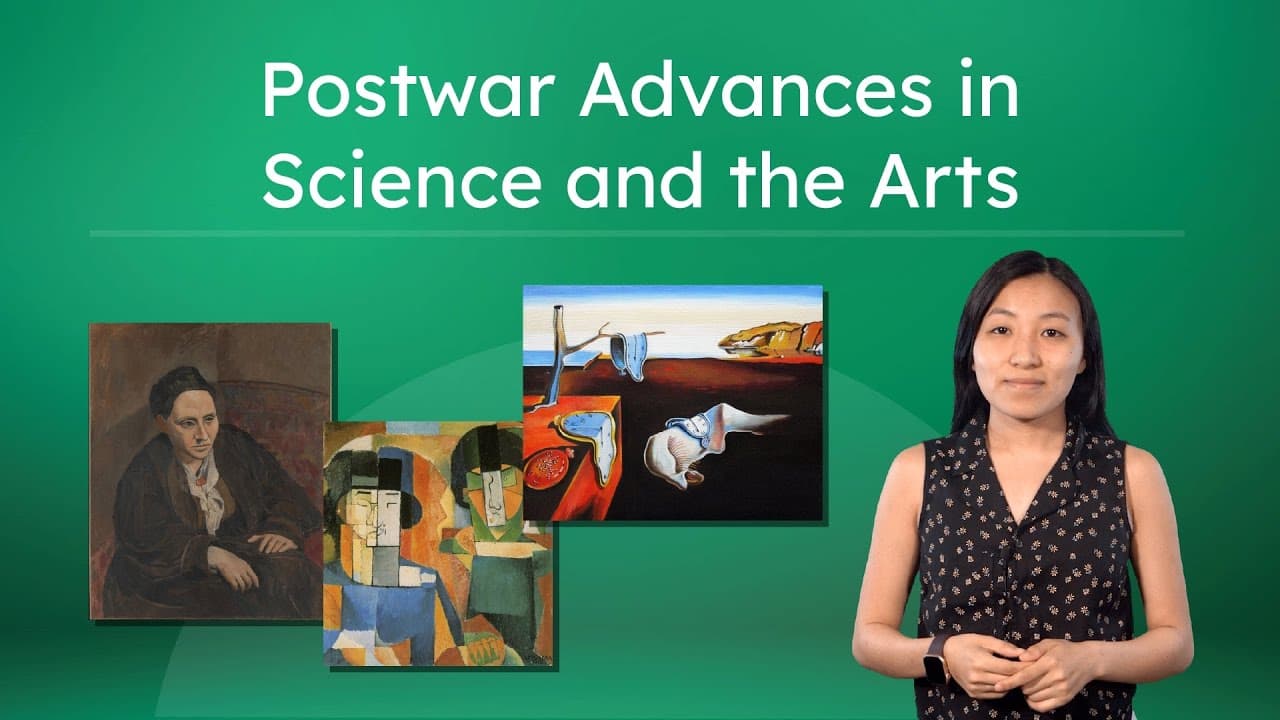
Culture and Innovation in the Interwar Years

Culture and Innovation in the Interwar Years

This educational video provides a comprehensive overview of the Interwar Period (roughly 1918–1939), exploring the profound shifts in art, science, and society that occurred between World War I and World War II. It begins by examining the psychological impact of the "Great War," including shell shock and the disillusionment of the "Lost Generation." The narrative then guides viewers through major artistic movements of the era, such as Cubism, Surrealism, and Art Deco, while highlighting how art was used globally—from the Harlem Renaissance to Mexican Muralism—to express identity, nationalism, and anticolonialism.
Miacademy & MiaPrep Learning ChannelMiacademy & MiaPrep Learning Channel

11mins 3s

Sequences

Neural Foundations Slides

Synaptic Circuits

A comprehensive introductory psychology sequence for university students, exploring the biological, cognitive, and social foundations of human behavior through a lens of scientific inquiry and critical analysis.

KM

Kyaw Min Oo

15
Brain Blueprint Teacher Guide

Mind Explorers

A foundational university-level psychology curriculum covering biological bases, cognitive processes, behavioral theories, and social dynamics. This sequence provides a rigorous introduction to the scientific study of the human mind and behavior.

10
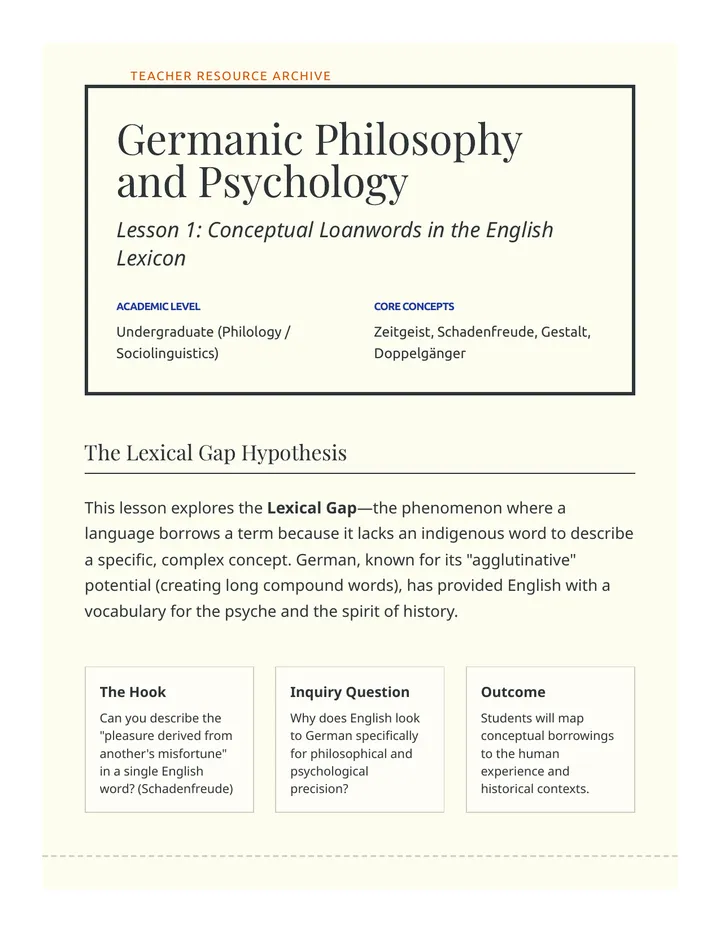
Germanic Concepts Teacher Guide

Global Etymology and Sociolinguistic History

An undergraduate-level exploration of loanwords in English, focusing on the sociolinguistic history and philological origins of terms from German, Spanish, Italian, Arabic, Hindi, and Yiddish. Students investigate how culture, philosophy, and trade shape the lexicon.

12
Illusions Unmasked Teacher Guide

Perceptual Design Hackers

A project-based sequence for 12th-grade psychology students exploring how perceptual organization principles are applied in design, illusions, and marketing. Students transition from analyzing perceptual errors to intentionally creating them to understand the manipulation of human experience.

14
Whole Over Parts Slides

The Mind's Eye

This sequence explores Gestalt psychology, examining how the human brain organizes sensory information into coherent patterns. Students progress from historical theory to practical application in modern design and visual media.

12
Depth Foundations Slides

Vision Lab Depth Perception

This sequence explores how the human brain constructs a 3D world from 2D retinal images. Students investigate binocular and monocular depth cues, motion parallax, and perceptual constancies through hands-on labs, art analysis, and digital critique.

15

Lessons

Senses in Service Slides

Senses in Service

This lesson explores the Gurmat perspective on the five senses, moving from sensory bondage to spiritual mastery through the teachings found in the 'Slave to the Senses' discourse.

SJ

Satvinder Juss

5
Perception Lab Worksheet

Reality Check Review

A comprehensive review of sensation and perception concepts, featuring scenario-based application, definition matching, and visual demonstrations of perceptual illusions.

MM

Michele Magee

4
Perception Lab Worksheet

Reality Check Review

A review of sensation and perception modules, focusing on Gestalt principles in design and real-world scenarios.

MM

Michele Magee

3
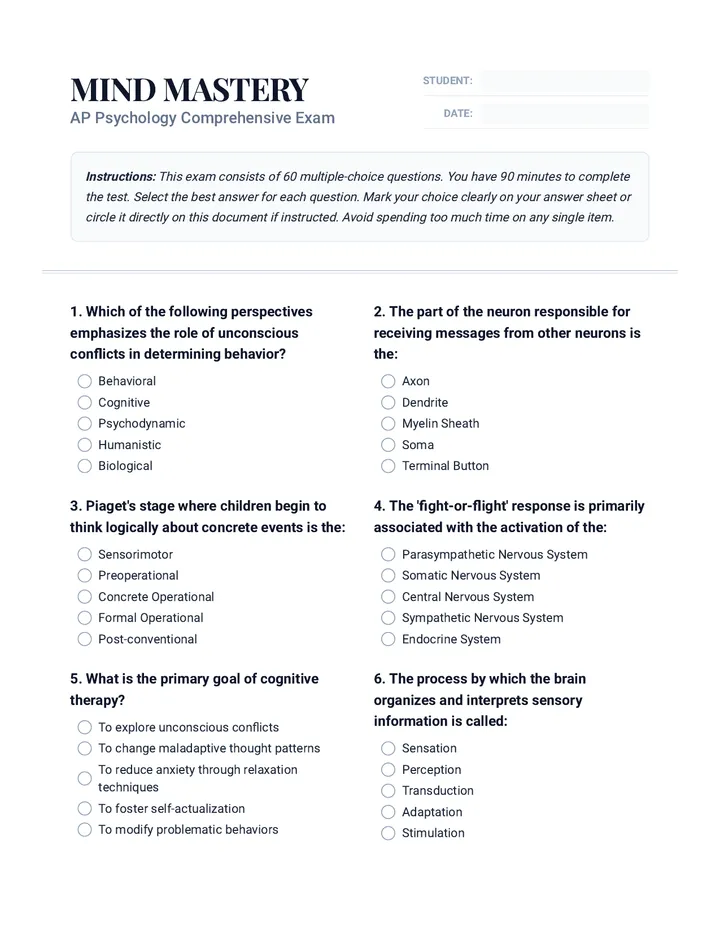
Mind Mastery Exam Test

Mind Mastery Exam

A comprehensive 90-minute assessment covering the breadth of the AP Psychology curriculum, including a 60-question multiple-choice exam, a post-exam reflection, and a detailed study guide for review.

DL

Dr. Lisa Lamb

8