Lenny.com
Explore
Create
ActivitiesNewMathEnglish Language ArtsScience & EngineeringSocial StudiesGlobal LanguagesHealth & Physical EducationSpecial EducationCounseling & Life SkillsArts & CreativityESL
Lenny.com
Lenny.com
Explore
Create
ActivitiesNewMathEnglish Language ArtsScience & EngineeringSocial StudiesGlobal LanguagesHealth & Physical EducationSpecial EducationCounseling & Life SkillsArts & CreativityESL
Lenny.com
Lenny.com

Solutions

Lenny for EducatorsLenny for SchoolsLenny for Districts

Product

ExploreSign inCreateSupportAbout

Resources

Getting startedMTSS Acceleration Program

Newsletters

School Funding Newsletter

© 2026 Lenny Learning Inc.

TermsPrivacyAccessibility
LinkedInInstagramX
Lenny

Ethics & Morality

Analyzes foundational frameworks of right and wrong, including utilitarianism, deontology, and virtue ethics. Applies these theories to contemporary moral dilemmas and the development of societal value systems.

Social StudiesSocial Studies PracticesLocation WordsMapsOrder EventsChronology and CausationEvaluating SourcesHistorical ThinkingGeography, Humans, & the EnvironmentAmerican Symbols and LandmarksCitiesStatesState CapitalsRegions of the United StatesGeographic SkillsPhysical GeographyHuman GeographyRegional GeographyGeography of AfricaGeography of AsiaGeography of EuropeGeography of OceaniaGeography of the AmericasSociety and Environment of EuropeSociety and Environment of AsiaSociety and Environment of The AmericasSociety and Environment of the Middle EastSociety and Environment of AfricaHistoryPrehistoryComparing Ancient River CivilizationsAncient MesopotamiaAncient Egypt and KushAncient South AsiaEarly ChinaGreeceRome and the Byzantine EmpireAncient World HistoryNative Peoples of North AmericaNative Peoples of Mesoamerica and South AmericaAfrican EmpiresMedieval AsiaMedieval EuropeThe Silk RoadMedieval HistoryIslamic EmpiresWorld ReligionsRenaissance PeriodAge of ExplorationThe Thirteen ColoniesThe American RevolutionUS History Early RepublicFounding of the United StatesUS History AntebellumUS Civil WarReconstruction PeriodThe Gilded AgeUS ImperialismWorld ImperialismWorld War IUS History 1920sGreat DepressionWorld War IIThe Cold WarUS History 1950-60sUS History 1960s-70sWorld History 20th CenturyContemporary US HistoryContemporary World HistoryHolidaysCivics and GovernmentCitizenshipGovernment FoundationsThe ConstitutionUS ConstitutionExecutive BranchLegislative BranchJudicial BranchState and LocalPolitical ParticipationPublic PolicyPolitical SystemsPower and AuthoritySocial MovementsDefining DevianceTheories of DevianceCrime and Criminal JusticeEconomicsBasic Economic PrinciplesSupply and DemandWhat is MoneyEconomic FundamentalsMicroeconomicsMacroeconomicsBanking and FinanceEconomic SystemsGlobal EconomicsCorporations and PowerThe Changing WorkplaceUnemployment and LaborClass and InequalitySocial MobilityGlobal InequalityPsychologyHistory of PsychologyPsychology as a ScienceBrain and Nervous SystemNeuroscience and BehaviorGenetics and BehaviorSleep and ConsciousnessSensory ProcessesPerceptual OrganizationClassical ConditioningOperant ConditioningObservational LearningCognitive LearningMemory ProcessesThinking and Problem SolvingLanguage and CognitionTheories of MotivationStress and CopingPrenatal and Infant DevelopmentChildhood DevelopmentAdolescent DevelopmentAdulthood and AgingSelf and IdentitySocial CognitionSocial InfluenceAttraction and RelationshipsGroup BehaviorPrejudice and DiscriminationAnxiety and Mood DisordersClinical PsychologyForensic PsychologyPhilosophy & EthicsIntroduction to PhilosophyMajor Philosophers & IdeasMind and Body ProblemFree Will vs DeterminismEthics & MoralityReligion & PhilosophyPolitical Philosophy

Videos

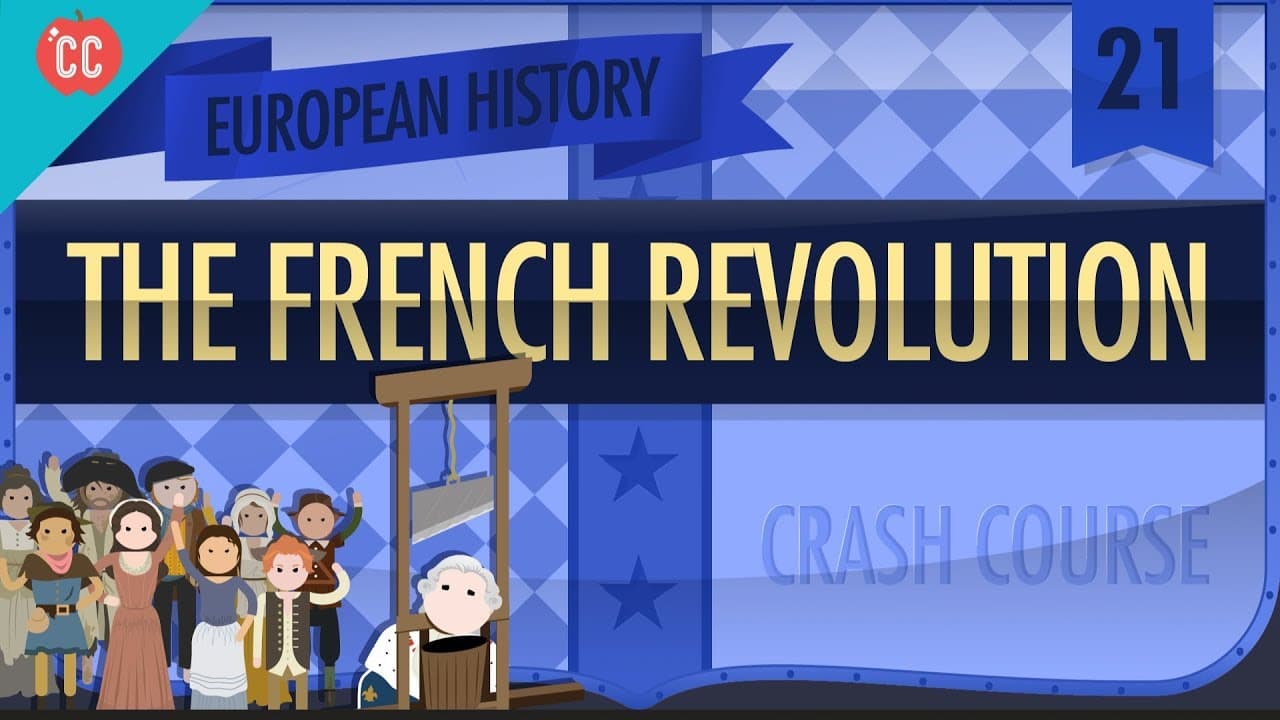
The French Revolution: From Liberty to Terror

The French Revolution: From Liberty to Terror

This fast-paced educational video provides a comprehensive overview of the French Revolution, tracing its origins from the financial and agricultural crises of the late 18th century to the rise of Napoleon Bonaparte. Hosted by John Green, the video explores how a nation ruled by an absolute monarchy transformed into a republic based on the principles of liberty, equality, and fraternity, before descending into the violence of the Terror. It examines the complex interplay between Enlightenment ideals, class struggle, and political radicalism. Key themes include the shift from subjects to citizens, the tension between liberty and order, the role of women in the revolution, and the birth of modern political ideologies (left vs. right). The video highlights pivotal moments like the Storming of the Bastille, the Women's March on Versailles, and the execution of Louis XVI, while also discussing the intellectual reactions from figures like Edmund Burke and Mary Wollstonecraft. For educators, this resource serves as an excellent anchor for units on European history, revolutions, or civics. It helps students understand the chaotic nature of political change and challenges them to evaluate the cost of progress. The video connects historical events to modern concepts of human rights and nationalism, providing numerous entry points for class debates on whether violent revolution is justified to achieve democratic ends.

CrashCourseCrashCourse

15mins 29s

How the Constitution Functions as a Social Contract

How the Constitution Functions as a Social Contract

This educational video introduces students to the concept of constitutional government by drawing a relatable analogy to the "Terms and Conditions" agreements found in modern apps and software. It breaks down complex political philosophy into digestible parts, starting with the idea of a social contract as proposed by Jean-Jacques Rousseau. The narrator explains that just as users agree to terms to use an app, citizens and governments enter a social contract where citizens give up certain absolute freedoms in exchange for the protection of rights and an organized society. The video identifies and defines three core principles of constitutional government: Rule of Law (society is governed by laws, not individuals), Limited Government (government authority is restricted), and Popular Sovereignty (the ultimate power rests with the people). It emphasizes that a constitution serves as a written instrument that clearly outlines the powers of the government and, crucially, guarantees specific rights to the citizens that the government cannot infringe upon. Designed for civics and government classrooms, this resource is highly valuable for bridging the gap between abstract political theory and students' daily lives. It includes built-in pause points with reflection questions, making it an interactive tool for introducing the U.S. Constitution. The video concludes with a powerful call to civic engagement, reminding students that an informed citizenry is essential for democracy to function and that they must "vote, debate, and participate."

Miacademy & MiaPrep Learning ChannelMiacademy & MiaPrep Learning Channel

10mins 49s

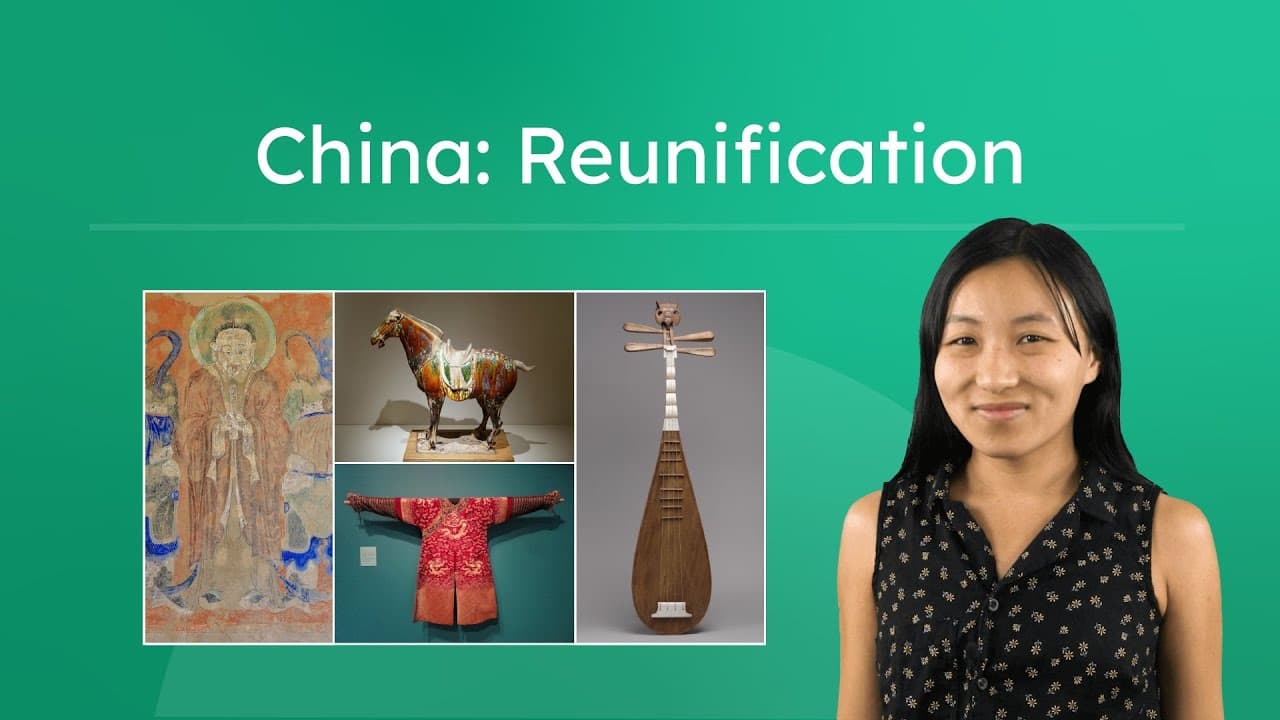
Discovering the Golden Age of Ancient China

Discovering the Golden Age of Ancient China

This educational video explores the reunification and subsequent "Golden Age" of Ancient China under the Sui and Tang dynasties. Narrated by Mia, it takes students on a journey through a timeline of chaos following the Han Dynasty to the stability established by the Sui. The video details significant technological advancements, including the Four Great Inventions (gunpowder, paper, printing, and the compass) and the construction of the massive Grand Canal, highlighting how these innovations connected the world and fueled economic growth. The content dives deep into the cultural explosion of the Tang Dynasty, showcasing its poetry, landscape paintings, ceramics, music, and cuisine. It emphasizes the aesthetic and social values of the time, illustrating how art and daily life were intertwined. Furthermore, the video addresses the philosophical and religious landscape of the era, specifically examining how Buddhism and Confucianism coexisted and complemented one another to guide social behavior and spiritual life. This resource is highly valuable for World History curriculums, offering a clear, engaging overview of a complex historical period. It provides opportunities to discuss the impact of technology on society, the role of infrastructure in economic development, and the syncretism of religious beliefs. Teachers can use the embedded questions to check for understanding and the rich visuals of artifacts and maps to anchor lessons on geography and art history.
Miacademy & MiaPrep Learning ChannelMiacademy & MiaPrep Learning Channel

10mins 10s

Understanding Liberalism: Liberty, Rights, and the Social Contract

Understanding Liberalism: Liberty, Rights, and the Social Contract

This educational video from the Crash Course Political Theory series explores the complex philosophy of Liberalism, moving beyond the common political usage of the term to its roots as a philosophy centered on liberty and individual rights. Hosted by Ellie Anderson, the video traces the evolution of liberal thought from the 1600s social contract theories of Thomas Hobbes and John Locke to modern interpretations by John Rawls and Isaiah Berlin. It tackles difficult questions about what happens when individual rights conflict and how a democratic society balances freedom with equality. The content dives deep into key political concepts including the State of Nature, the Social Contract, the Veil of Ignorance, and the crucial distinction between Negative Liberty (freedom from interference) and Positive Liberty (the capacity for self-determination). It also addresses historical contradictions within classical liberalism, such as its coexistence with slavery and colonialism, and introduces contemporary debates regarding multiculturalism and group rights versus individual rights. For educators, this video serves as an excellent anchor for units on political philosophy, civics, or government. It provides a structured framework for students to understand abstract concepts like justice and fairness. The video offers concrete metaphors—like the ride-sharing app for the social contract or the job applicant for positive/negative liberty—that make complex theories accessible. It naturally prompts critical thinking and classroom debate regarding current events, social justice, and the role of government.

CrashCourseCrashCourse

12mins 24s

From Absolute Kings to Constitutional Rights: The English Civil War

From Absolute Kings to Constitutional Rights: The English Civil War

This episode of Crash Course European History explores the tumultuous 17th-century struggle in Britain between the concept of the "Divine Right of Kings" and the rising power of Parliament. It details the reigns of the Stuart monarchs—James I, Charles I, Charles II, and James II—tracing how their attempts to enforce absolute rule and religious uniformity led to the English Civil War, the execution of a king, and a temporary military dictatorship under Oliver Cromwell. The video delves into the complex intersection of religion and politics, highlighting how conflicts between Catholics, Anglicans, and Puritans fueled social unrest, civil war, and eventually the "Glorious Revolution." It examines the pivotal transition from absolutism to constitutionalism, culminating in the English Bill of Rights of 1689, which established parliamentary sovereignty and limited monarchical power. For educators, this resource serves as an essential primer on the foundations of modern Western democracy. It connects historical events to the influential political philosophies of Thomas Hobbes and John Locke, demonstrating how the chaos of the 17th century birthed the concepts of natural rights—life, liberty, and property—that directly influenced the founding documents of the United States and other modern democracies.

CrashCourseCrashCourse

14mins 36s

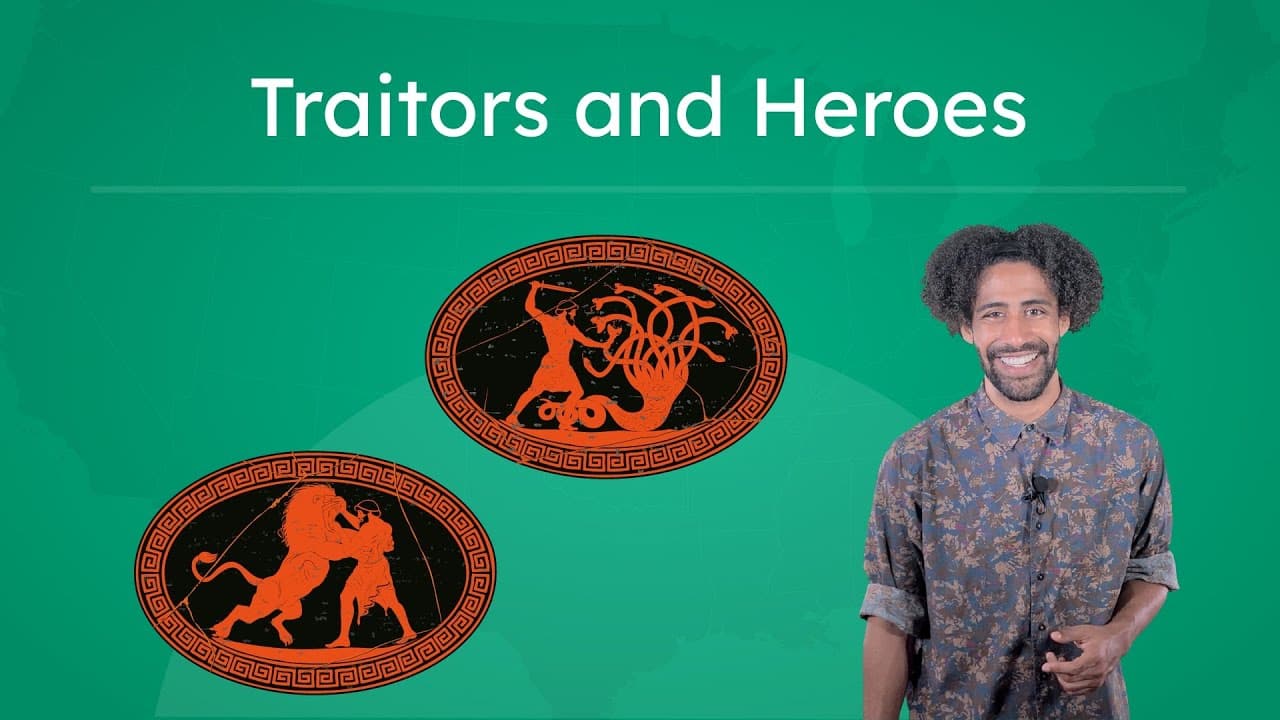
Defining Heroes and Traitors in American History

Defining Heroes and Traitors in American History

This educational video explores the complex and often subjective definitions of "hero" and "traitor" through three distinct case studies from American history. The narrator challenges students to look beyond simple definitions and consider how historical context, personal values, and perspective shape these labels. The video examines John Adams' controversial defense of British soldiers after the Boston Massacre, Colonel John Chivington's role in the horrific Sand Creek Massacre, and Carry Nation's radical "hatchetations" during the temperance movement. The video delves into deep ethical questions about justice, duty, and morality. It asks students to evaluate whether John Adams was a traitor to the colonial cause or a hero of justice for defending the enemy. It contrasts Chivington's self-proclaimed heroism in protecting settlers with the brutal reality of massacring peaceful Cheyenne and Arapaho people. Finally, it analyzes Carry Nation's crusade against alcohol, asking if her violent methods undermined her virtuous goals. Each segment includes pauses for reflection and specific guiding questions. Teachers can use this video to foster critical thinking and historical analysis skills. It serves as an excellent anchor for lessons on the American Revolution, Native American history, or the Prohibition era. By presenting historical figures who defy easy categorization, the video encourages students to engage with nuance and ambiguity. It is particularly useful for sparking debates about the rule of law, the ethics of war, and the validity of different protest methods.

Miacademy & MiaPrep Learning ChannelMiacademy & MiaPrep Learning Channel

11mins 30s

Materials

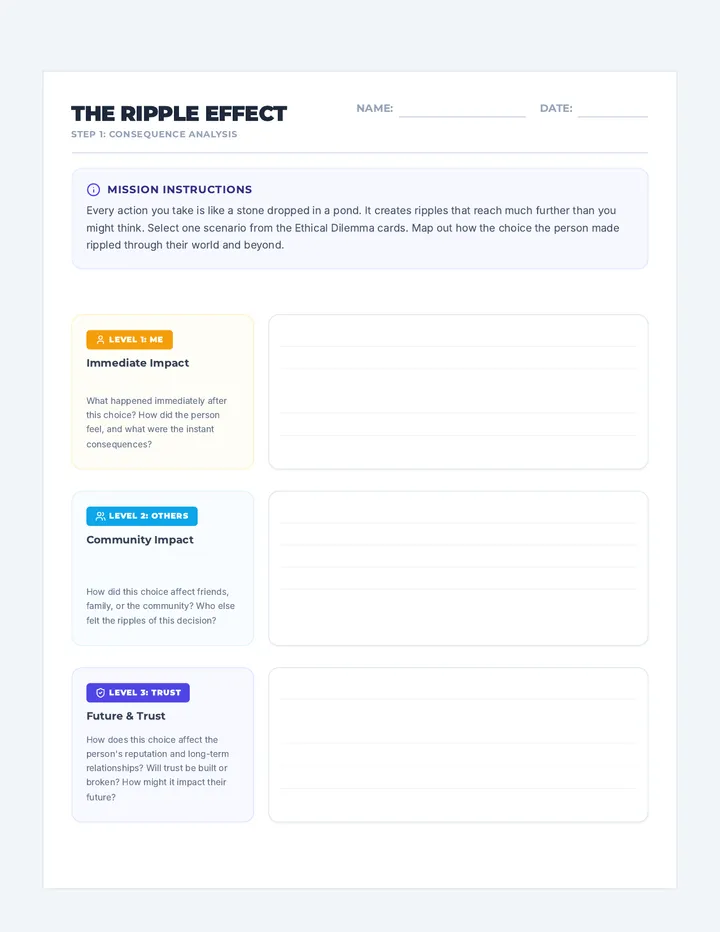
Ripple Effect Organizer

Ripple Effect Organizer

A 2-page graphic organizer for students to visualize and analyze choices made in ethical dilemmas. Page 1 contains instructions and detailed reflection boxes for Levels 1-3. Page 2 provides a large, full-page concentric ripple map with a transparent center box and a Step 3 Rate the Verdict section.

SC

Sinéad Cahill

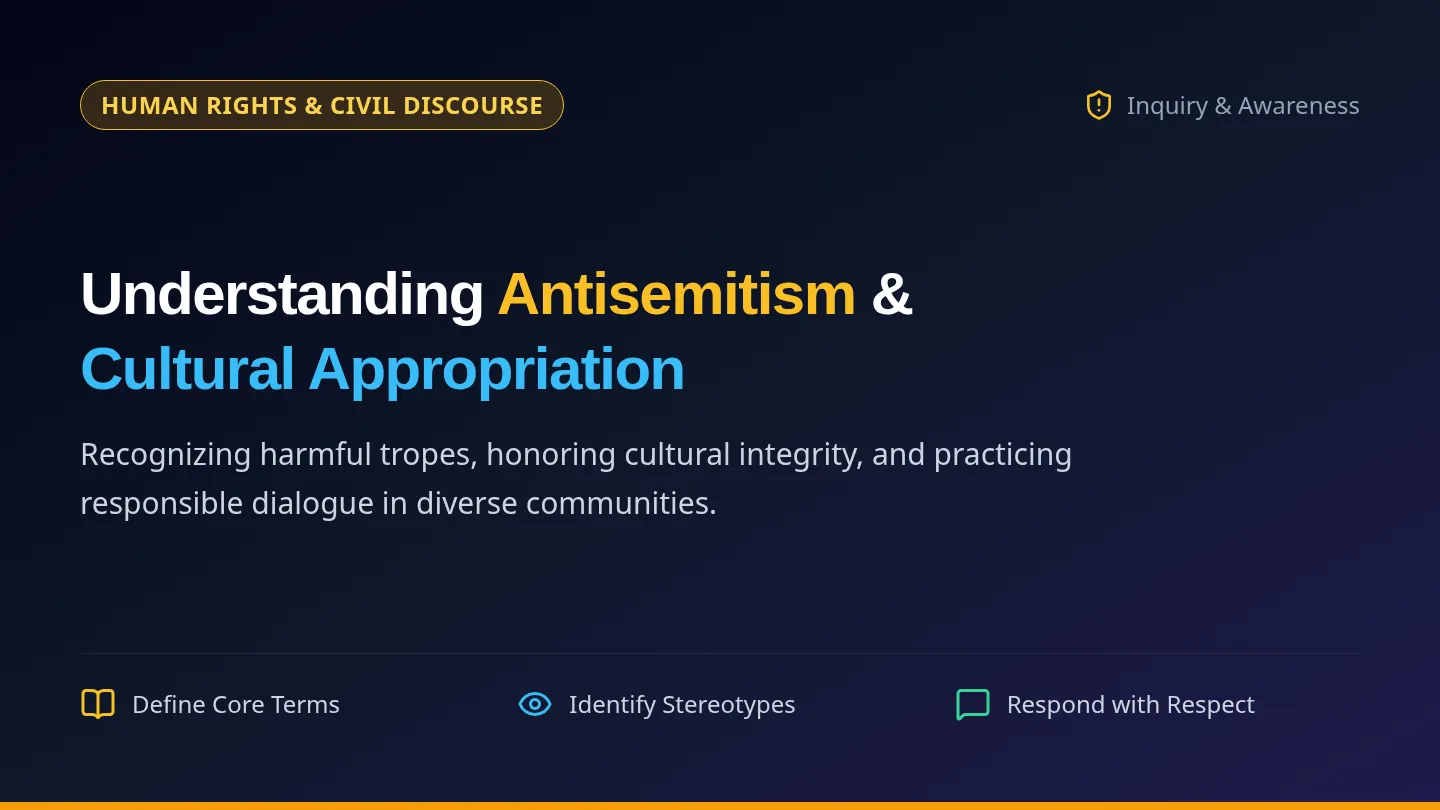
Bias and Culture Slides

Bias and Culture Slides

A 9-slide instructional presentation introducing key definitions of antisemitism and cultural appropriation, identifying stereotypes and their real-world harms, and providing frameworks for cultural respect and speaking up against biased language.

J

jwhite

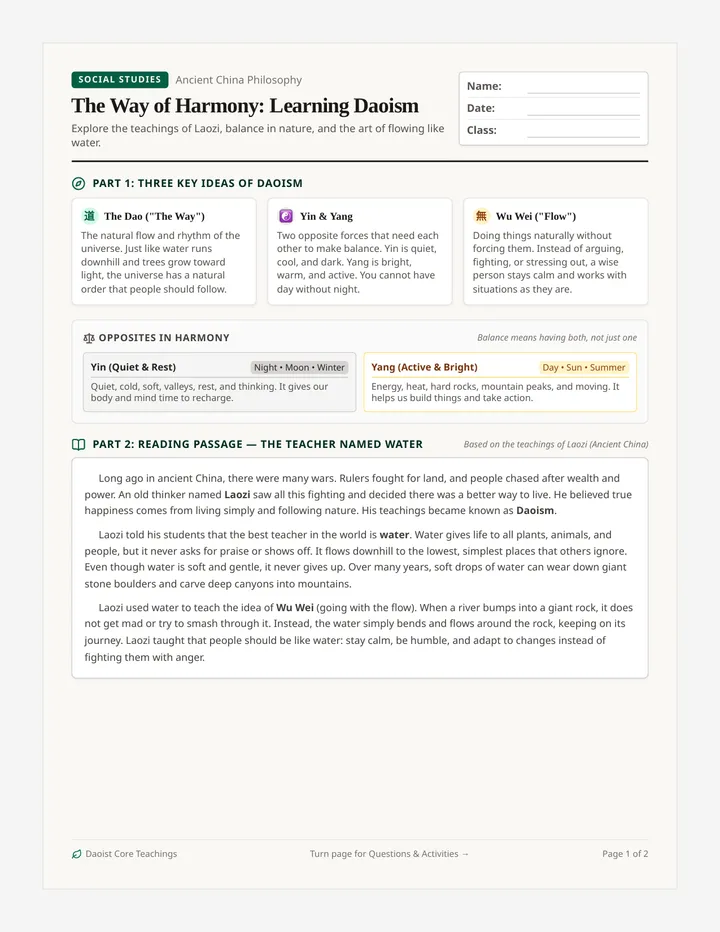
Way of Harmony Worksheet

Way of Harmony Worksheet

An accessible two-page printable student worksheet on Daoism featuring simplified reading passages, foundational concepts (the Dao, Yin and Yang, and Wu Wei), clear text-dependent questions, and balance-matching activities.

M

meagan_asp

Modern World Fall Inquiry Benchmark

Modern World Fall Inquiry Benchmark

A seven-slide model inquiry presentation demonstrating an exemplary project response for the Fall Inquiry Benchmark, featuring the user's provided composite image of Plato, Socrates, and Aristotle as the sole image on the mentorship connection slide (Slide 3).

KT

Kyle Trocolla

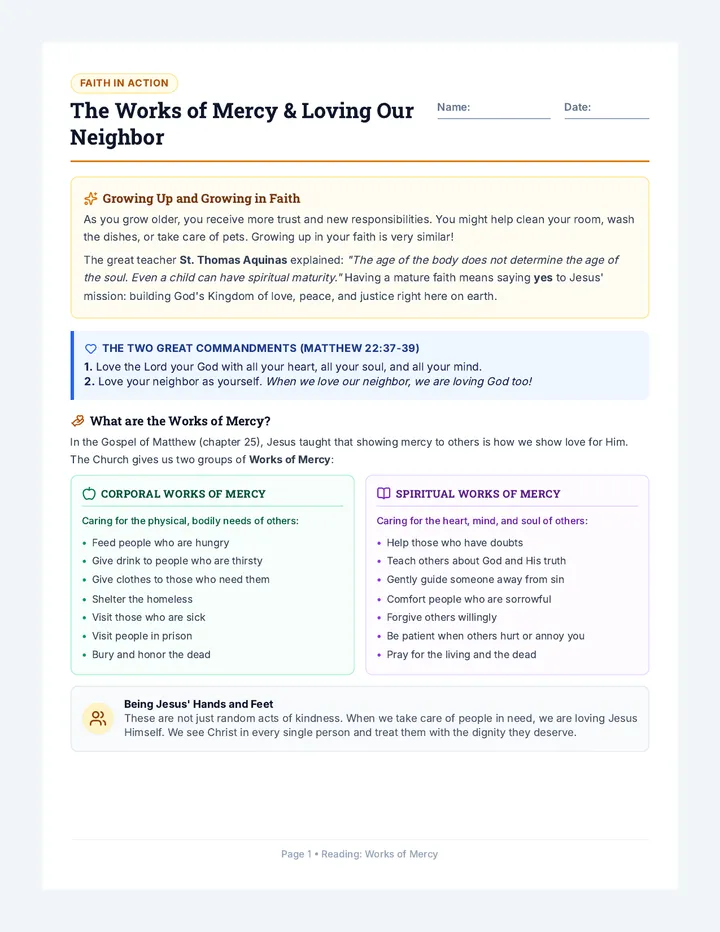
Works of Mercy Student Packet

Works of Mercy Student Packet

A simplified four-page student packet covering the Works of Mercy, Catholic Social Teaching, human dignity, the common good, and solidarity, complete with student-friendly reading sections and aligned questions.

H

hlittlejohn

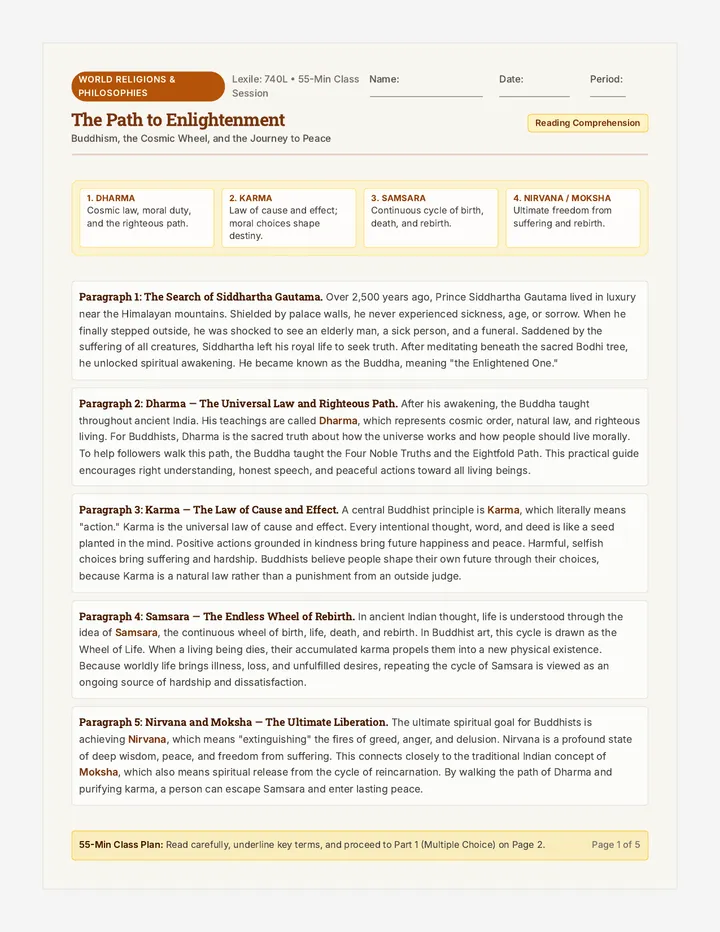
Pathways of Buddhism Student Packet

Pathways of Buddhism Student Packet

A comprehensive 5-page Buddhism reading comprehension packet designed for a 55-minute middle school social studies lesson. Features a 5-paragraph Lexile 700-800 reading passage, 10 multiple choice questions, 10 true/false items, 5 fill-in-the-blank prompts, a vocabulary word search, a verified crossword puzzle, and 2 open response questions exploring Dharma, Karma, Samsara, and Nirvana.

WM

Wilberto Mejias

Sequences

Master Organizer Slides

Think Like Aristotle

A four-part series for middle schoolers on Aristotelian logic and philosophy, focusing on categorization, reasoning, and ethics, with a historical tie-in to Alexander the Great.

DB

Danielle Burham

21
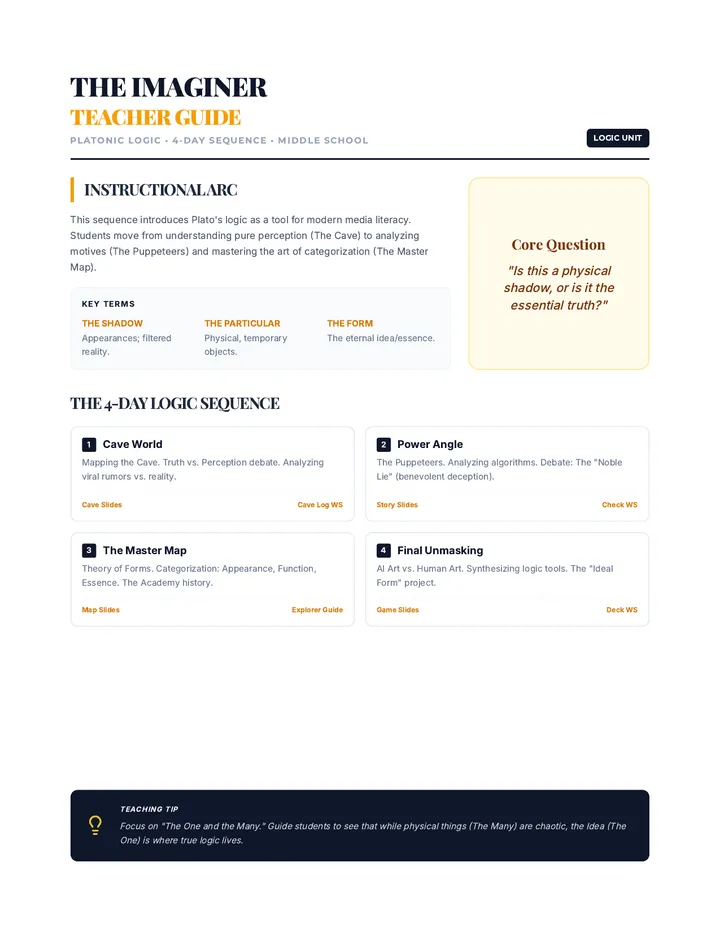
The Imaginer Teacher Guide

The Imaginer Plato Logic

A four-day introductory logic and philosophy sequence for middle schoolers focusing on Plato's 'Thinking Style.' Students explore the Allegory of the Cave, perception vs. reality, and the Theory of Forms through the lens of 'The Imaginer,' culminating in a visual analysis game.

DB

Danielle Burham

12
Soulful Cyphers Lesson Plan

We Gon’ Be Alright- A Century of Black Excellence

A comprehensive 6-lesson Black History Month curriculum for 5th-8th graders, exploring historical excellence, emotional expression, and community through the lens of five core values: Virtus, Kenkyo, Sankofa, Ubuntu, and Ganas. Inspired by a century of resilience and brilliance.

JS

Joleen Shillingford

18
Thirteen Friends Worksheet

Democratic Foundations

A series of lessons exploring the foundational documents and processes of the United States government, from the birth of the nation to the creation of modern laws.

SB

Stephanie Bizeur

40
Funding Foundation Checklist

Ethics Engine

A 5-week immersive ethics storyline following the evolution of a single nonprofit organization as it navigates a massive corporate grant, data ethics, policy clashes, and eventual sustainability crises.

DE

Dr. Erick Clinton Lear

11
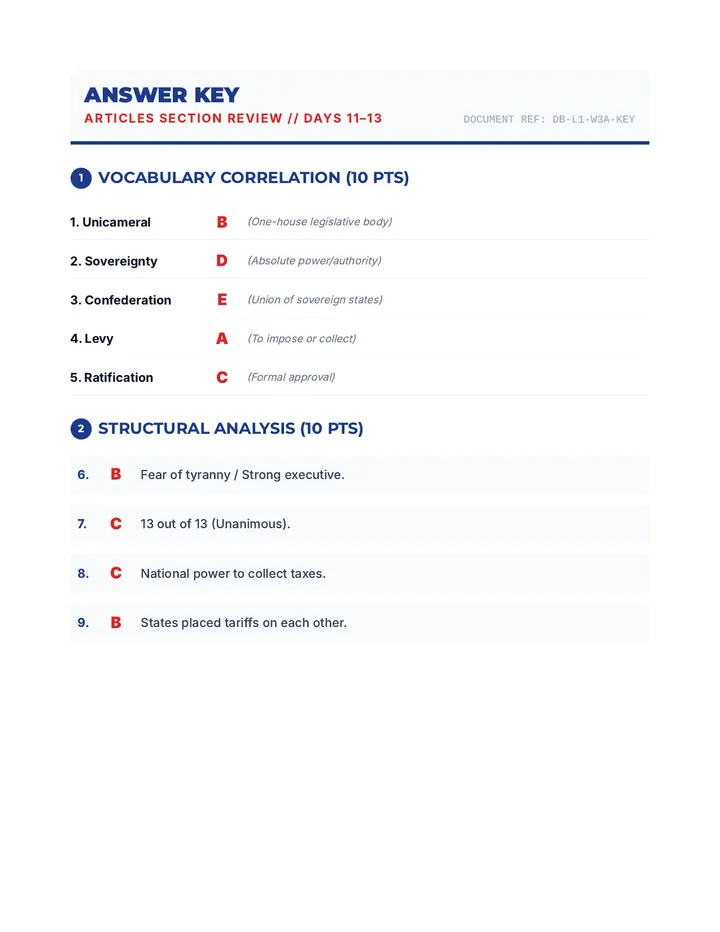
Articles Section Review Key

Democracy Blueprint

A comprehensive 90-day independent study program for high school government, covering everything from philosophical foundations to modern policy and civic participation.

LF

Lindsey Foulks

35

Lessons

Ballot Blitz Slides

Ballot Blitz

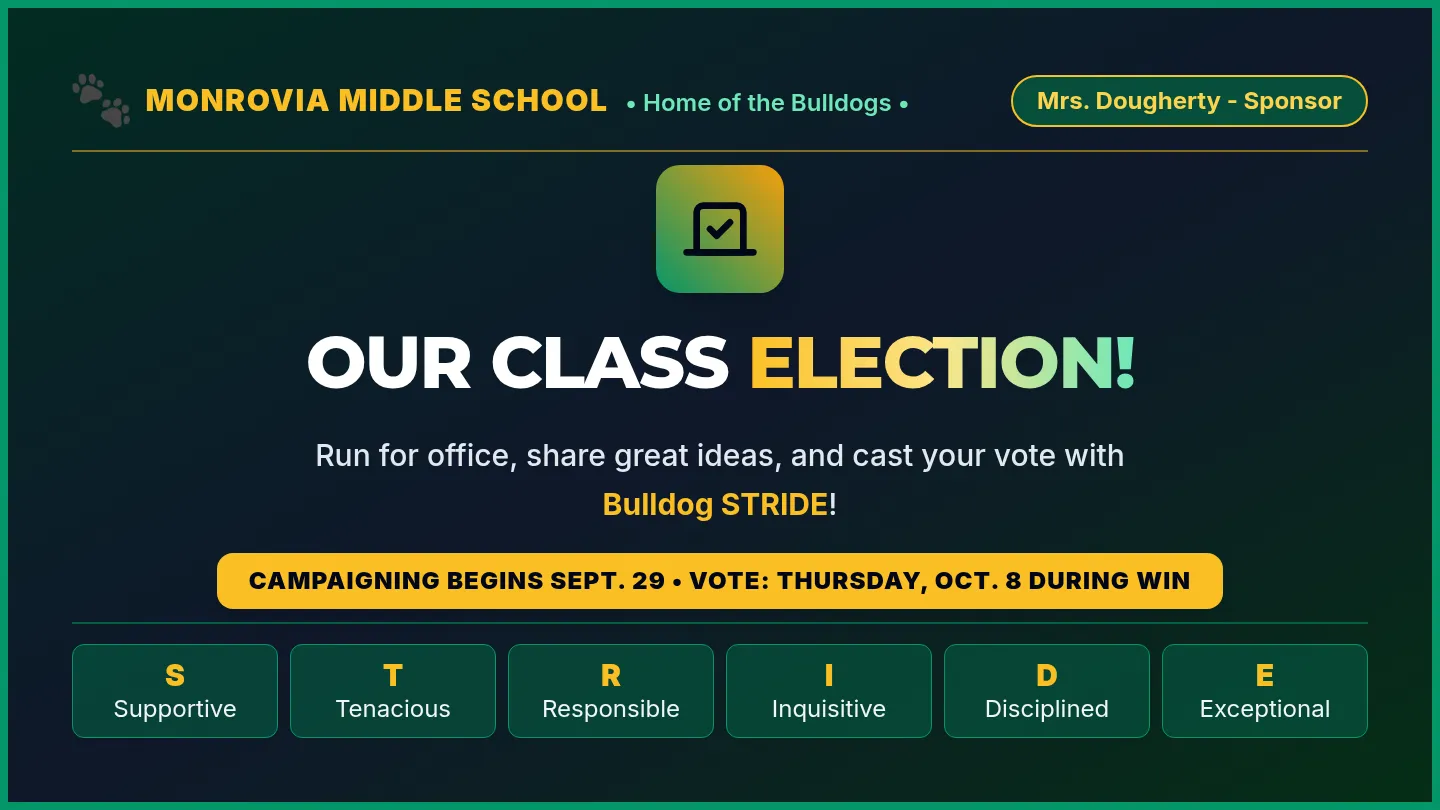
A comprehensive classroom election simulation where students explore democratic principles, develop campaign platforms, and participate in a guided secret-ballot election.

AD

amee dougherty

6
Crown and Covenant Teacher Guide

Crown and Covenant

A pre-reading lesson on the Divine Right of Kings and European Absolutism, preparing 10th-grade students with crucial background knowledge through a close reading of King James I and Louis XIV.

T

timothy.nixon

8
Reason for Revolution Worksheet V4 Refined Final

Architects of Liberty

A lesson exploring how Enlightenment philosophers like Locke, Montesquieu, and Voltaire influenced the founding documents and structure of the United States government.

KB

Kenneth Brown

10
Justice Gallery Investigation Worksheet

Justice Gallery Case Files

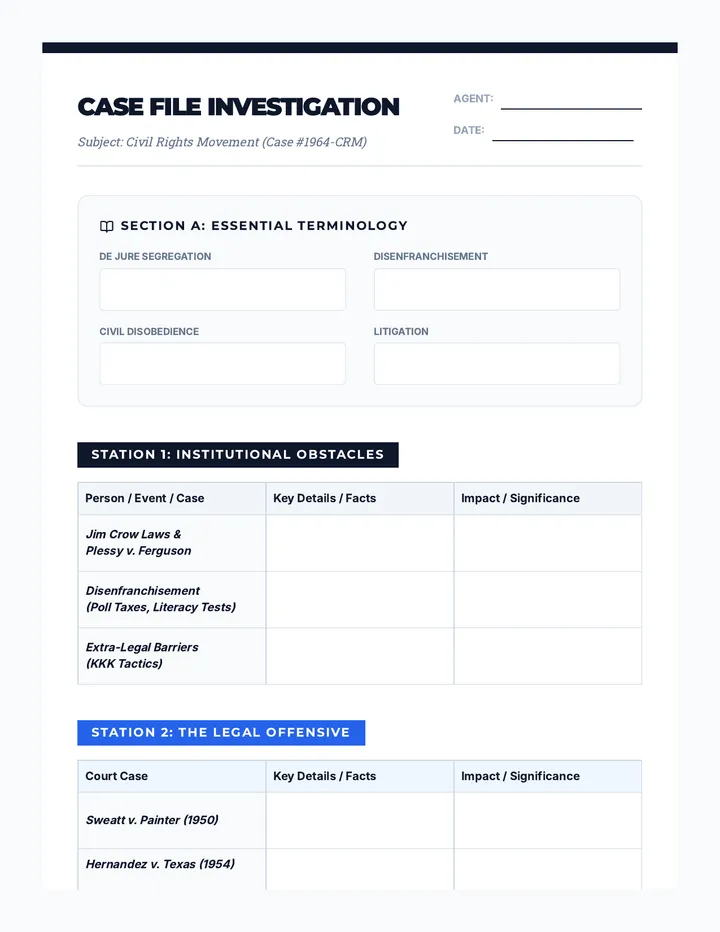
A comprehensive lesson on the Civil Rights Movement featuring gallery stations and a guided investigation worksheet. Students analyze institutional obstacles, legal strategies, non-violent and militant tactics, and the expansion of the movement to other marginalized groups.

CE

Chelsea Elliott

25
Convention Blueprint Reading Handout

Convention Blueprint

A lesson exploring the 1787 Constitutional Convention, the roles of key Framers like James Madison, and the fundamental principles of American government including federalism, republicanism, and separation of powers.

SA

Senta Agnello-Shelton

17
Chronicle Study Guide Student

Modern Era Mastery

A comprehensive review and assessment package covering World History from the Enlightenment through the Cold War, aligned with state standards.

AH

Ashley Hopf

16