Lenny.com
Explore
Create
ActivitiesNewMathEnglish Language ArtsScience & EngineeringSocial StudiesGlobal LanguagesHealth & Physical EducationSpecial EducationCounseling & Life SkillsArts & CreativityESL
Lenny.com
Lenny.com
Explore
Create
ActivitiesNewMathEnglish Language ArtsScience & EngineeringSocial StudiesGlobal LanguagesHealth & Physical EducationSpecial EducationCounseling & Life SkillsArts & CreativityESL
Lenny.com
Lenny.com

Solutions

Lenny for EducatorsLenny for SchoolsLenny for Districts

Product

ExploreSign inCreateSupportAbout

Resources

Getting startedMTSS Acceleration Program

© 2026 Lenny Learning Inc.

TermsPrivacyAccessibility
LinkedInInstagramX
Lenny

US History 1960s-70s

Civil Rights activism, Vietnam War policy, and counterculture movements that defined mid-century American life. Addresses Great Society programs, the space race, and political impacts of the Watergate scandal.

Social StudiesSocial Studies PracticesLocation WordsMapsOrder EventsChronology and CausationEvaluating SourcesHistorical ThinkingGeography, Humans, & the EnvironmentAmerican Symbols and LandmarksCitiesStatesState CapitalsRegions of the United StatesGeographic SkillsPhysical GeographyHuman GeographyRegional GeographyGeography of AfricaGeography of AsiaGeography of EuropeGeography of OceaniaGeography of the AmericasSociety and Environment of EuropeSociety and Environment of AsiaSociety and Environment of The AmericasSociety and Environment of the Middle EastSociety and Environment of AfricaHistoryPrehistoryComparing Ancient River CivilizationsAncient MesopotamiaAncient Egypt and KushAncient South AsiaEarly ChinaGreeceRome and the Byzantine EmpireAncient World HistoryNative Peoples of North AmericaNative Peoples of Mesoamerica and South AmericaAfrican EmpiresMedieval AsiaMedieval EuropeThe Silk RoadMedieval HistoryIslamic EmpiresWorld ReligionsRenaissance PeriodAge of ExplorationThe Thirteen ColoniesThe American RevolutionUS History Early RepublicFounding of the United StatesUS History AntebellumUS Civil WarReconstruction PeriodThe Gilded AgeUS ImperialismWorld ImperialismWorld War IUS History 1920sGreat DepressionWorld War IIThe Cold WarUS History 1950-60sUS History 1960s-70sWorld History 20th CenturyContemporary US HistoryContemporary World HistoryHolidaysCivics and GovernmentCitizenshipGovernment FoundationsThe ConstitutionUS ConstitutionExecutive BranchLegislative BranchJudicial BranchState and LocalPolitical ParticipationPublic PolicyPolitical SystemsPower and AuthoritySocial MovementsDefining DevianceTheories of DevianceCrime and Criminal JusticeEconomicsBasic Economic PrinciplesSupply and DemandWhat is MoneyEconomic FundamentalsMicroeconomicsMacroeconomicsBanking and FinanceEconomic SystemsGlobal EconomicsCorporations and PowerThe Changing WorkplaceUnemployment and LaborClass and InequalitySocial MobilityGlobal InequalityPsychologyHistory of PsychologyPsychology as a ScienceBrain and Nervous SystemNeuroscience and BehaviorGenetics and BehaviorSleep and ConsciousnessSensory ProcessesPerceptual OrganizationClassical ConditioningOperant ConditioningObservational LearningCognitive LearningMemory ProcessesThinking and Problem SolvingLanguage and CognitionTheories of MotivationStress and CopingPrenatal and Infant DevelopmentChildhood DevelopmentAdolescent DevelopmentAdulthood and AgingSelf and IdentitySocial CognitionSocial InfluenceAttraction and RelationshipsGroup BehaviorPrejudice and DiscriminationAnxiety and Mood DisordersClinical PsychologyForensic PsychologyPhilosophy & EthicsIntroduction to PhilosophyMajor Philosophers & IdeasMind and Body ProblemFree Will vs DeterminismEthics & MoralityReligion & PhilosophyPolitical Philosophy

Videos

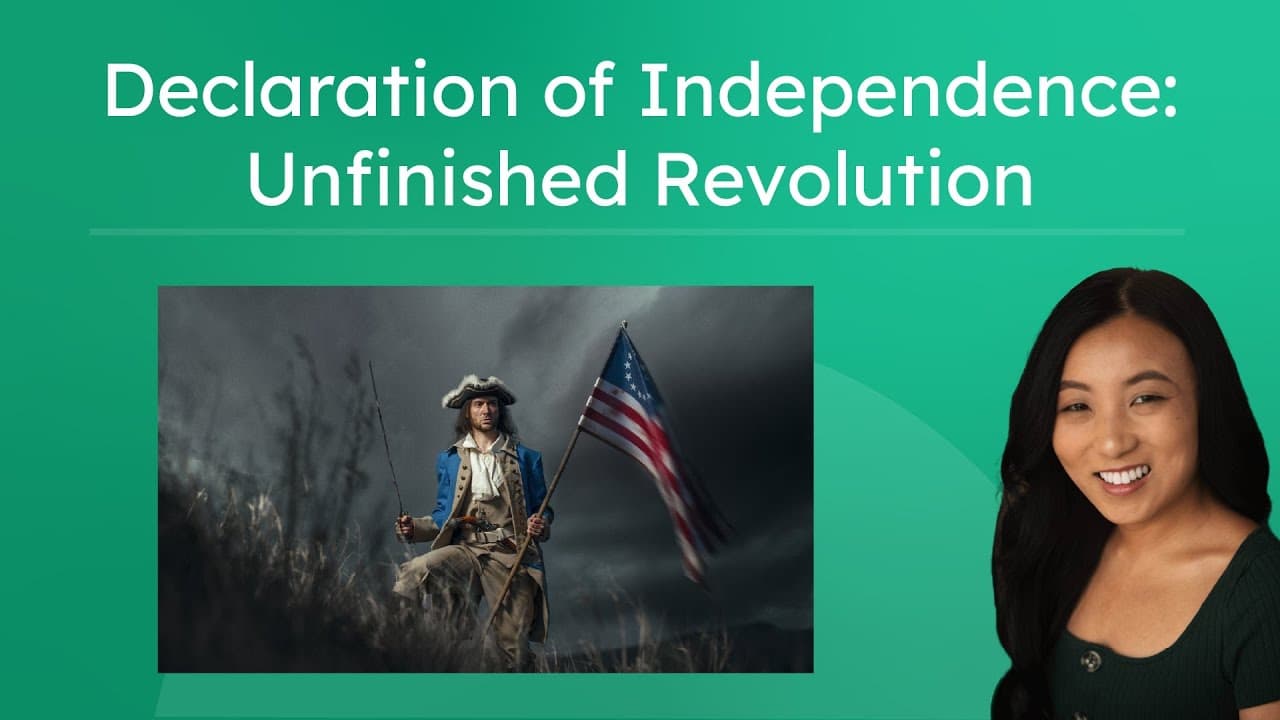
How the Declaration of Independence Sparked a Continuous Revolution

How the Declaration of Independence Sparked a Continuous Revolution

This educational video explores the concept of the "unfinished revolution" in American history, arguing that the principles embedded in the Declaration of Independence created a framework for continuous social and political change. The narrator, Caroline, guides viewers through three major historical movements—the abolition of slavery, the labor movement, and the civil rights movement—demonstrating how each utilized the Declaration's ideals to challenge the status quo and expand democratic rights.

Miacademy & MiaPrep Learning ChannelMiacademy & MiaPrep Learning Channel

8mins 2s

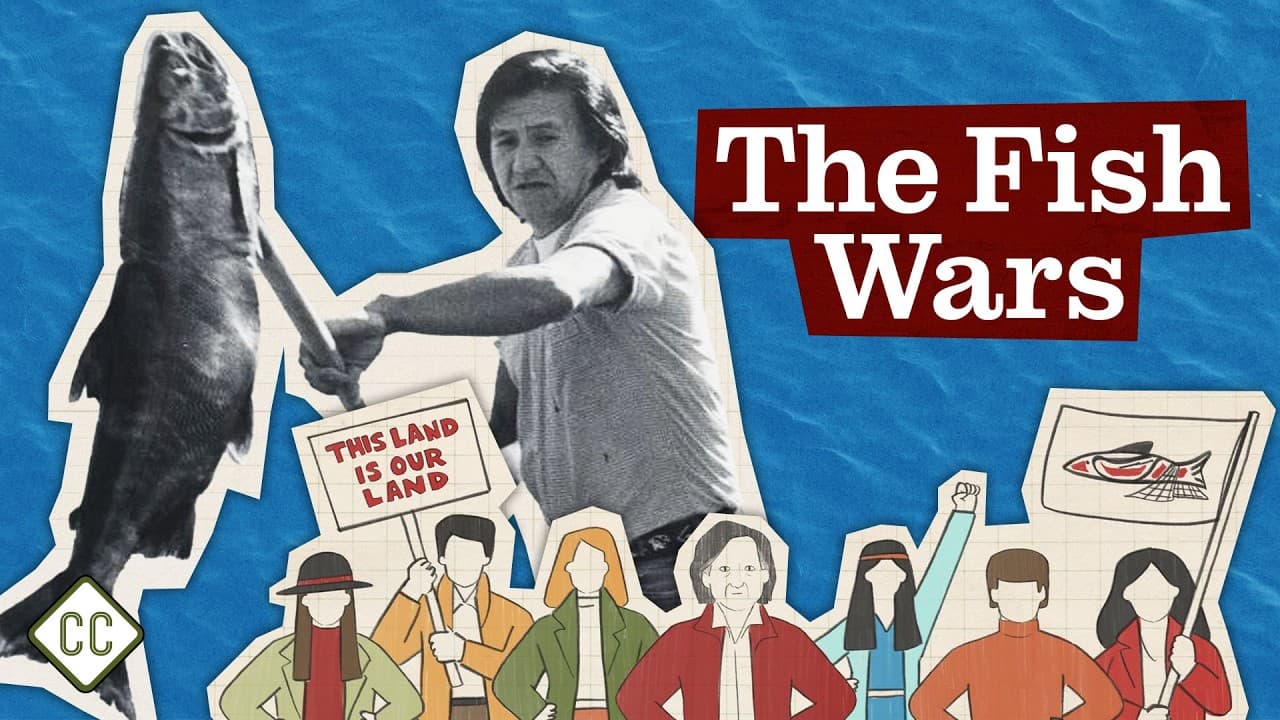
The Fish Wars and the Fight for Native American Food Sovereignty

The Fish Wars and the Fight for Native American Food Sovereignty

This educational video explores the critical concept of "Food Sovereignty" within Native American history, using the dramatic story of Billy Frank Jr. and the Fish Wars as a central narrative. It details how Native nations in the Pacific Northwest fought to protect their treaty-guaranteed fishing rights against state encroachment, culminating in the landmark 1974 Boldt Decision. The host explains that food sovereignty is not just about nutrition, but about the legal and cultural right of Indigenous peoples to define their own food systems and manage the resources that have sustained them for millennia. The video covers several key historical and cultural themes, including the devastating impact of colonization on Indigenous food sources—most notably the mass slaughter of the buffalo to subjugate the Great Sioux Nation. It also examines the complicated history of frybread, tracing its origins to the rations provided during forced displacements like the Navajo Long Walk, and discussing its dual status today as both a symbol of resilience and a contributor to health disparities. The narrative connects these historical events to modern revitalization efforts, such as the "Three Sisters" agricultural projects and the rise of Indigenous chefs. For educators, this video serves as a powerful interdisciplinary tool connecting American history, civics, environmental science, and health. It provides concrete examples of civil disobedience and legal battles outside the typical Civil Rights Movement curriculum. Teachers can use it to spark discussions about the importance of treaties, the ecological relationship between people and the land, and how historical policies continue to shape modern health and economic realities for Native communities.

CrashCourseCrashCourse

10mins 56s

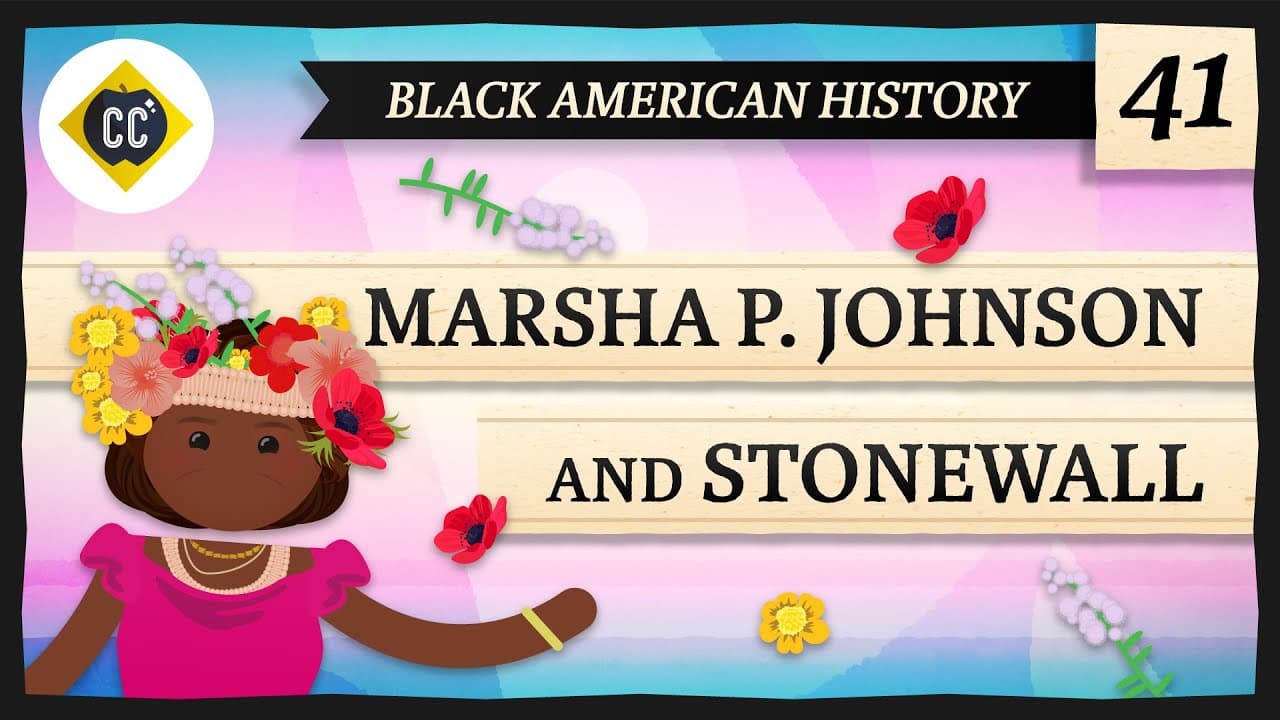
The Stonewall Rebellion and the Activism of Marsha P. Johnson

The Stonewall Rebellion and the Activism of Marsha P. Johnson

This episode of Crash Course Black American History explores the Stonewall Rebellion and the life of one of its most iconic figures, Marsha P. Johnson. Hosted by Clint Smith, the video details the systemic police harassment and criminalization of the LGBTQ+ community in the 1960s that led to the uprising at the Stonewall Inn in June 1969. It examines the myths and realities surrounding the rebellion, including the debated role of Johnson herself during the initial outbreak of resistance. The narrative broadens to cover the aftermath, including the first Pride parades and the formation of activist organizations like the Gay Liberation Front. The video provides a deep dive into the biography of Marsha P. Johnson, a Black transgender woman who navigated homelessness, sex work, and severe mental health struggles while becoming a tireless advocate for gay rights. It highlights her friendship with Sylvia Rivera and their co-founding of STAR (Street Transvestite Action Revolutionaries) to support homeless transgender youth. The content addresses the complexities of historical figures, urging viewers to see Johnson not just as a two-dimensional hero, but as a complex human being who faced significant trauma, including sexual assault and institutionalization, yet remained a pivotal force for change. For educators, this video serves as a powerful resource for teaching the intersections of Civil Rights and LGBTQ+ history. It provides critical opportunities to discuss how laws and societal norms affect marginalized groups, the evolution of social justice movements from spontaneous protests to organized political action, and the importance of intersectionality in activism. The video also opens the door for nuanced discussions about historical memory, the reliability of oral histories versus written records, and how society chooses to remember its icons.

CrashCourseCrashCourse

11mins 59s

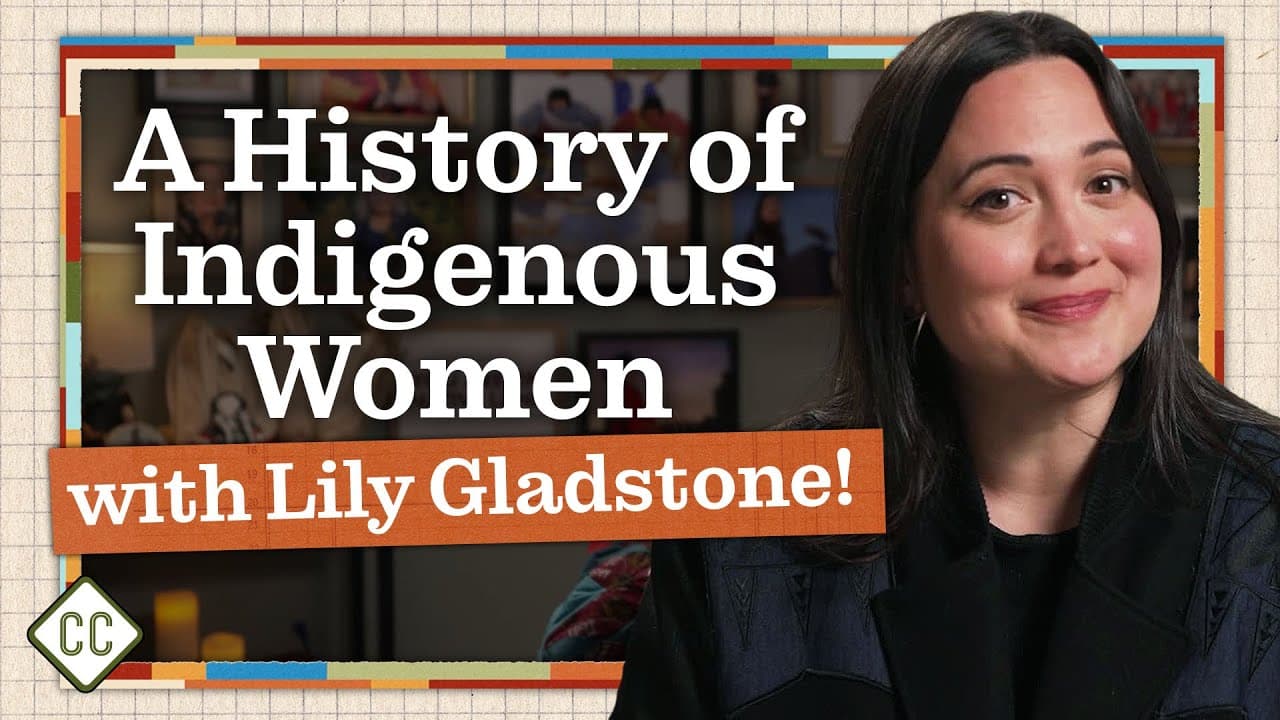
The Power, Resilience, and History of Native American Women

The Power, Resilience, and History of Native American Women

Hosted by Lily Gladstone, this episode of Crash Course Native American History explores the pivotal and diverse roles of Native women, Femmes, and Two-Spirit people from pre-contact times to the present day. It challenges the monolithic view of Native gender roles by highlighting the existence of matriarchal and matrilineal societies, such as the Diné (Navajo), where women hold significant economic and decision-making power. The video details historical figures like the warrior Buffalo Calf Road Woman and the diplomat Jikonsaseh, who helped found the Haudenosaunee Confederacy, illustrating that Native women have always served as leaders, healers, and protectors of their nations. The video also tackles the dark history of colonization and its specific targeting of Indigenous women to destabilize tribal societies. It addresses difficult topics including the imposition of European patriarchal values, the forced sterilization of thousands of Native women in the 1970s, and the ongoing crisis of Missing and Murdered Indigenous Women (MMIW). The narrative explains how settler colonialism disrupted traditional gender balances and how systemic failures in law enforcement continue to impact Native communities today. Despite these challenges, the video emphasizes resilience and modern activism. It profiles influential leaders like Elouise Cobell, who successfully sued the U.S. government for billions in mismanagement of funds, and Deb Haaland, the first Native American cabinet secretary. For the classroom, this resource is invaluable for teaching about gender studies, civil rights, and the complex legal and social history of Native Americans. It provides students with a nuanced understanding of how historical trauma and contemporary triumph coexist in Indigenous communities.
CrashCourseCrashCourse

13mins 42s

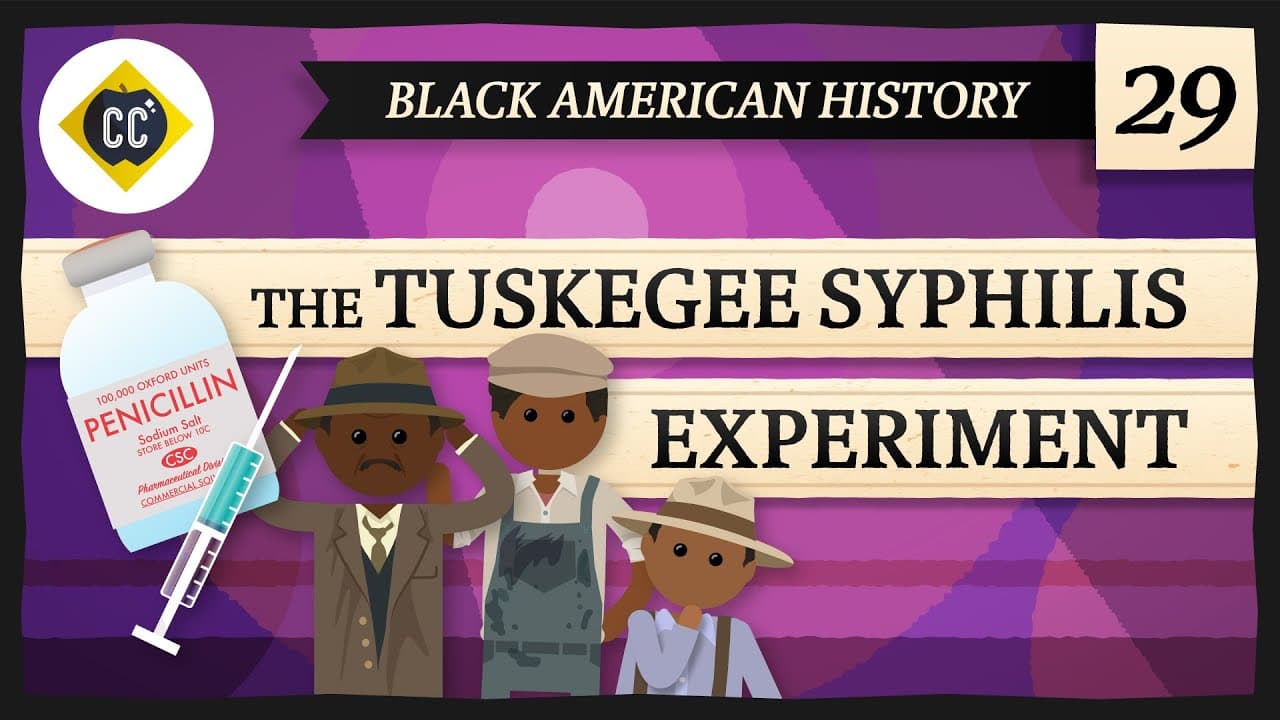
The History and Ethics of the Tuskegee Syphilis Study

The History and Ethics of the Tuskegee Syphilis Study

This educational video from Crash Course Black American History, hosted by Clint Smith, provides a comprehensive examination of the Tuskegee Syphilis Study (1932-1972). It details how the United States Public Health Service recruited 600 Black men in Macon County, Alabama, under the guise of receiving free health care, only to withhold life-saving treatment for syphilis to observe the disease's progression. The video explores the historical context of scientific racism that fueled the study, the specific unethical methodologies employed, and the devastating impact on the men, their families, and the broader Black community's trust in the medical system. The narrative delves into the complex layers of the study, including the role of the Great Depression and poverty in coercing participation, the lack of informed consent, and the involvement of Black medical professionals like Nurse Eunice Rivers. It highlights the eventual exposure of the study by whistleblower Peter Buxtun in 1972, the subsequent class-action lawsuit led by Fred Gray, and the resulting changes in medical ethics laws, including the National Research Act of 1974 and the establishment of Institutional Review Boards. For educators, this video is a powerful tool for teaching about bioethics, civil rights history, and systemic racism in healthcare. It connects historical events to contemporary issues, such as medical mistrust and health disparities, encouraging students to think critically about the responsibilities of scientific institutions. The video serves as a case study for understanding the importance of informed consent and the long-term sociological effects of unethical government actions.

CrashCourseCrashCourse

13mins 48s

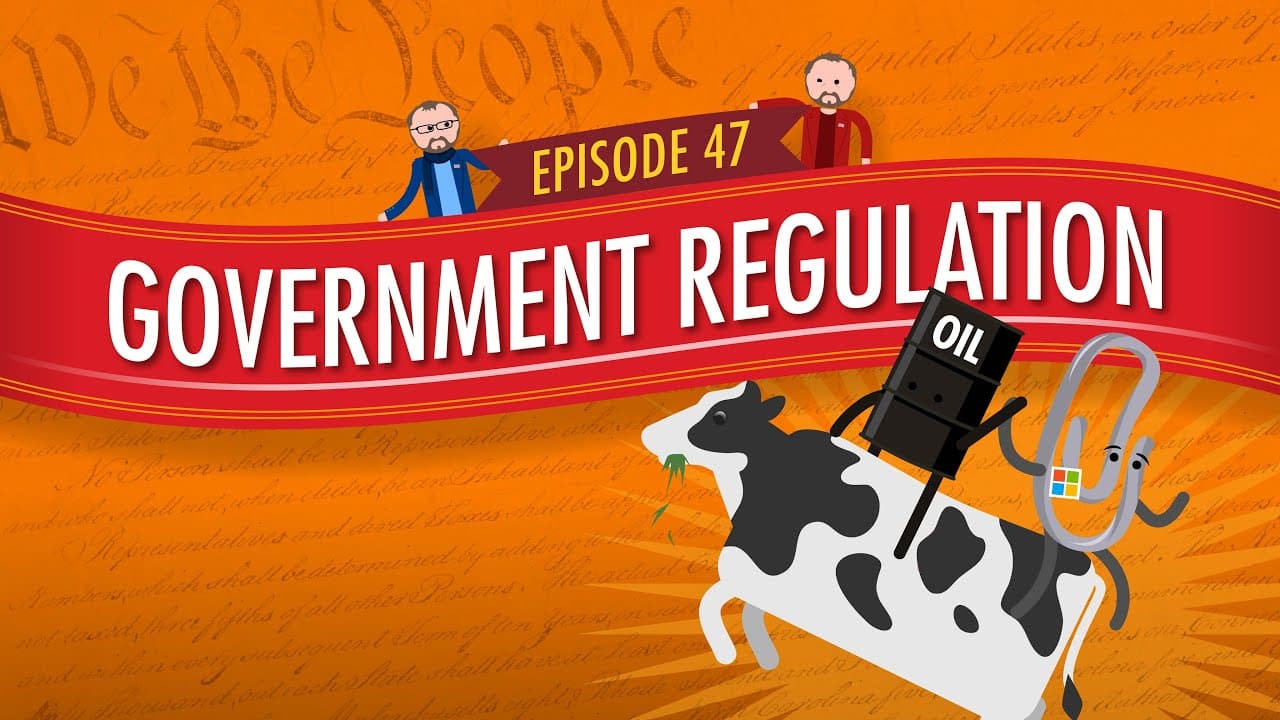
How the Government Manages the Economy

How the Government Manages the Economy

This engaging episode of Crash Course Government and Politics explores the complex relationship between the United States government and the economy. Host Craig Benzine breaks down the four primary goals of government economic policy: promoting stable markets, fostering economic prosperity, encouraging business development, and protecting consumers and employees. Through humor and fast-paced examples, the video illustrates how the government uses tools like regulations, subsidies, and federal agencies to achieve these objectives. The video also provides a historical overview of economic regulation in the US, tracing the shift from 19th-century laissez-faire policies to the rise of the administrative state. It covers key historical turning points, such as the regulation of railroads in the 1880s, the anti-trust laws of the Gilded Age, the New Deal under FDR, and the expansion of regulatory agencies like the EPA and OSHA in the 1970s. The narrative explains how the government's role has evolved from minimal interference to becoming an active participant in managing the nation's economic health. For educators, this video is an excellent resource for Civics, Government, and Economics classrooms. It simplifies abstract macroeconomic concepts and connects them to real-world government agencies that students may recognize, such as the FDA and the Federal Reserve. The content serves as a perfect springboard for discussions on the balance between free enterprise and government intervention, the efficacy of subsidies, and the historical context of modern economic debates.

CrashCourseCrashCourse

9mins 49s

Materials

Source Clash Task Cards

Source Clash Task Cards

A 5-page printable task card set featuring eight paired-source historical corroboration bellringers, with Card 07 specifically detailing when and why the Alternative Center for Excellence (ACE) in Danbury CT opened in 1977, paired with a weekly student analysis log.

KT

Kyle Trocolla

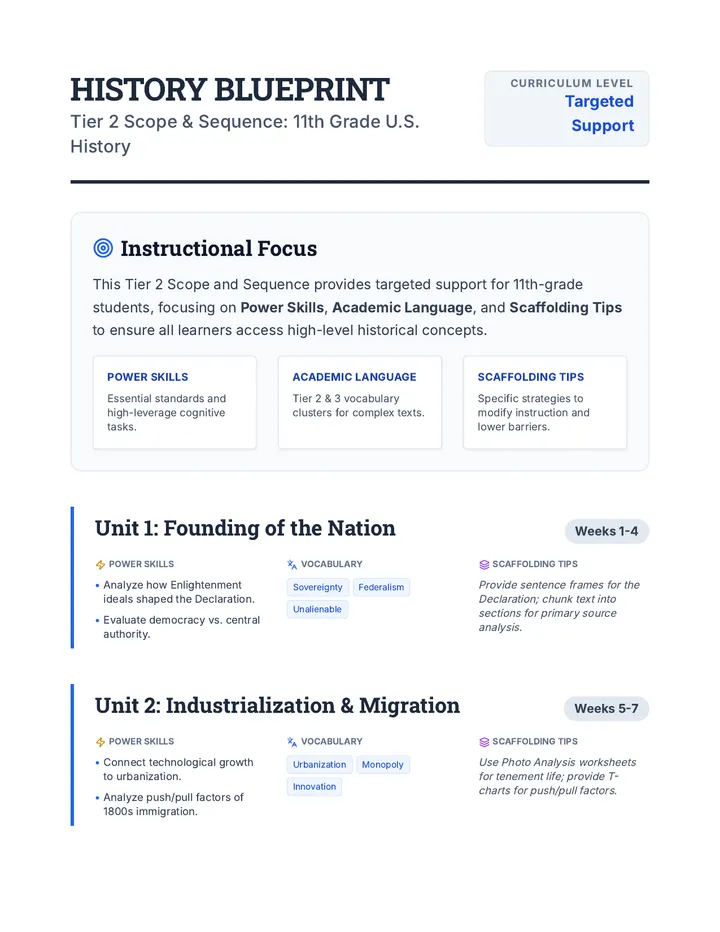
History Blueprint Scope and Sequence

History Blueprint Scope and Sequence

An updated Tier 2 Scope and Sequence for 11th Grade U.S. History, now including specific scaffolding tips for each unit alongside power skills and academic vocabulary. The layout is optimized for teacher reference with instructional strategies tailored for targeted support.

D

dfleisch

Intelligence Briefing Flashcards

Intelligence Briefing Flashcards

A set of 8 high-impact flashcards designed as 'Classified Intelligence Files' covering the Iran Hostage Crisis and the Iran-Contra Affair. Each card features key figures, dates, and outcomes with a professional bureaucratic aesthetic for easy printing and study.

JS

Jennifer Schoen

Cold War Dossier Flashcards

Cold War Dossier Flashcards

A set of 20 printable two-sided flashcards covering key Cold War terms and concepts for the US History STAAR test. The cards feature a 'confidential dossier' aesthetic and are formatted for double-sided printing with terms on the front and detailed historical significance on the back.

JS

Jennifer Schoen

Sequences

Invention Boom Slides

Modern Era Odyssey

A 13-day journey through modern American history, from the Industrial Revolution to the present day, focusing on key historical figures and major conflicts as outlined in the 5th Grade TEKS. Each lesson is designed for a quick 30-minute block, integrating multimedia and primary source analysis.

CH

Courtney Holdren

49
Thirteen Friends Worksheet

Democratic Foundations

A series of lessons exploring the foundational documents and processes of the United States government, from the birth of the nation to the creation of modern laws.

SB

Stephanie Bizeur

40
Conflict Cards Activity

Century Crossroads

A comprehensive assessment sequence covering the pivotal moments of 20th-century US history, from the build-up to World War II through the height of the Cold War and the diverse Civil Rights movements.

AH

Ashley Hopf

16
Reconstruction Reckoning Worksheet

Modern America

A comprehensive journey through United States history from the aftermath of the Civil War to the contemporary era, exploring the social, political, and economic shifts that shaped the modern nation.

DP

Darren Polamalu

18
Era of Crisis Study Guide

Superpowers and Scandals

A comprehensive unit covering United States history from 1960 to 1980, focusing on the Cold War, domestic policy, and political scandals.

AH

Ashley Hopf

5
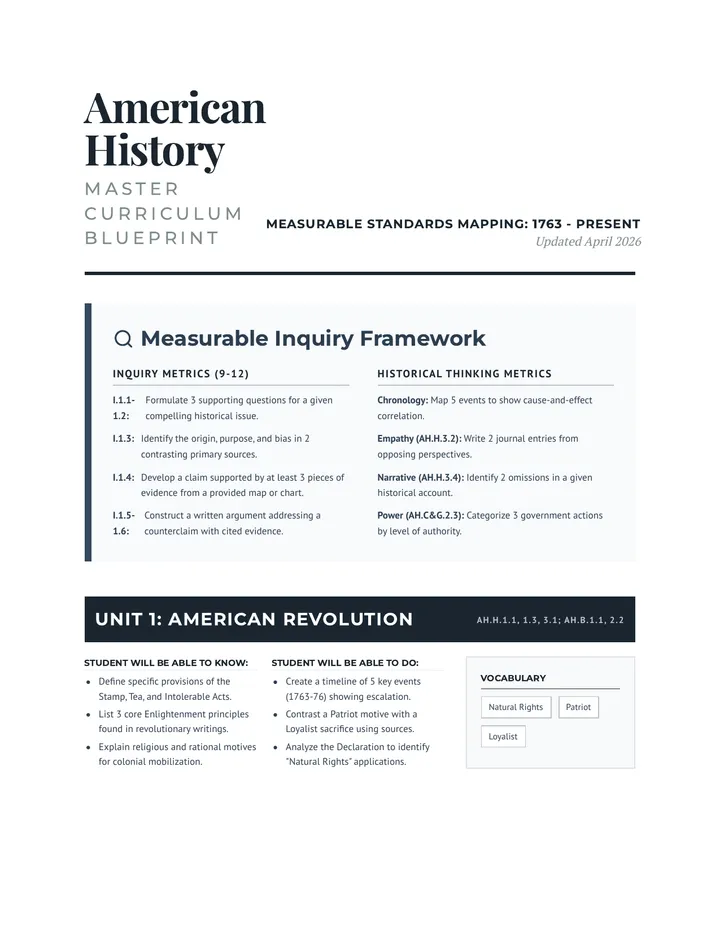
Curriculum Blueprint Document v2

History Horizon Sequence

A comprehensive high school curriculum plan for American History, covering 13 units from the American Revolution to the modern era, aligned with North Carolina Social Studies standards.

AK

Amity Kea

21

Lessons

History Sprint Pacing Guide

STAAR History Sprint

A comprehensive pacing guide and activity resource designed to cover the remaining 11th Grade US History TEKS before the STAAR test on April 16th. This lesson provides a day-by-day calendar for A/B block schedules and high-engagement activities for each remaining historical era.

BB

Bridgette Burdick

51
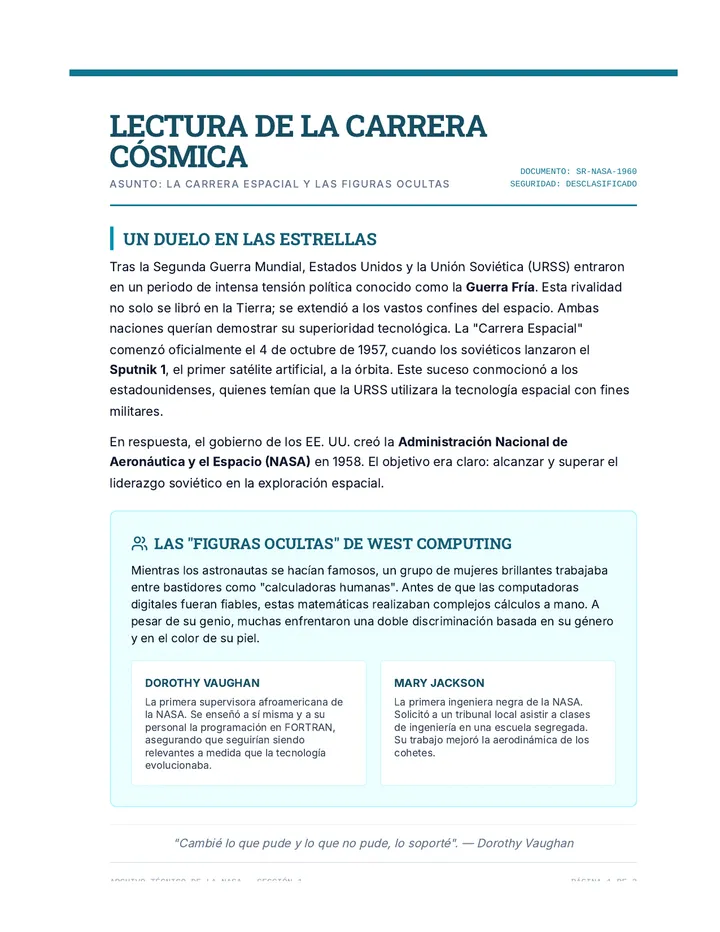
Cosmic Race Reading Text

Stellar Rivalry

A comprehensive exploration of the Space Race, highlighting the technological competition between the US and USSR, the essential contributions of African American women at NASA, and the international agreements that keep space a peaceful frontier.

RM

Robyn MacDonald

16
Forrest Gump Lesson Plan

Forrest Gump's America

A 90-minute history lesson using the film Forrest Gump to explore key 20th-century American events, from the Civil Rights Movement to the tech boom. Students analyze the intersection of personal narrative and national history.

AB

Alex Bryant

4
Black History Scavenger Hunt Lesson Plan

Black History Scavenger Hunt

A game-based lesson where students solve clues to discover significant figures and events in Black history, promoting cultural awareness and teamwork.

JH

Jade Hodge

5
Mission Briefing Teacher Guide

Modern Era Missions

A 100-minute station-based lesson covering pivotal events from the 1970s to the modern era, including Stagflation, the Camp David Accords, Reaganomics, and the War on Terror. Students rotate through four 20-minute missions using primary sources, political cartoons, data mapping, and manipulatives to master STAAR-aligned content.

LF

Lindsey Foulks

9
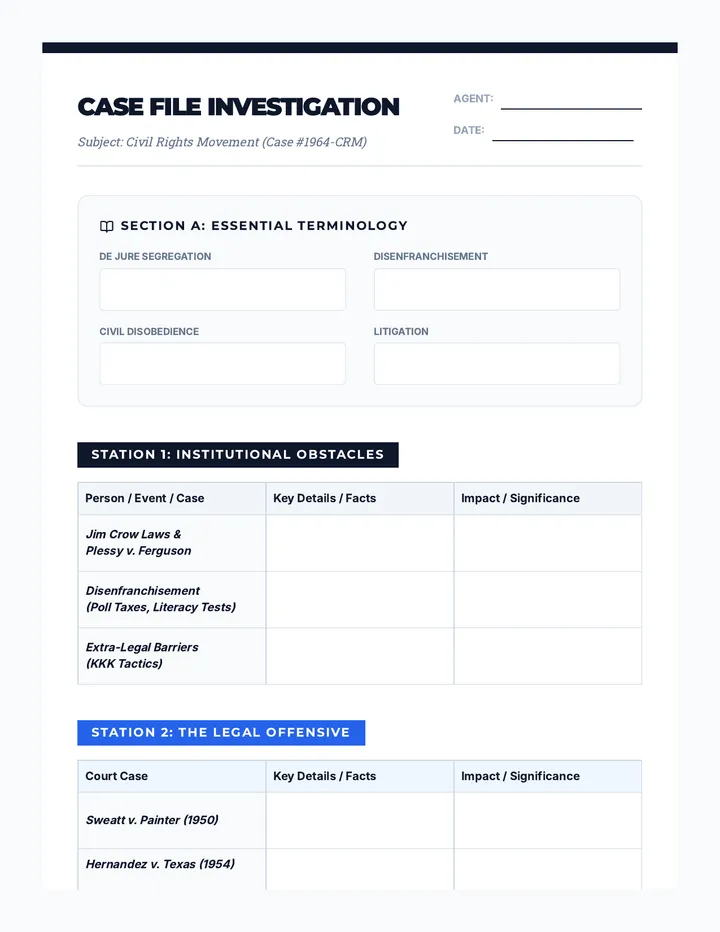
Justice Gallery Investigation Worksheet

Justice Gallery Case Files

A comprehensive lesson on the Civil Rights Movement featuring gallery stations and a guided investigation worksheet. Students analyze institutional obstacles, legal strategies, non-violent and militant tactics, and the expansion of the movement to other marginalized groups.

CE

Chelsea Elliott

25