Lenny.com
Explore
Create
ActivitiesNewMathEnglish Language ArtsScience & EngineeringSocial StudiesGlobal LanguagesHealth & Physical EducationSpecial EducationCounseling & Life SkillsArts & CreativityESL
Lenny.com
Lenny.com
Explore
Create
ActivitiesNewMathEnglish Language ArtsScience & EngineeringSocial StudiesGlobal LanguagesHealth & Physical EducationSpecial EducationCounseling & Life SkillsArts & CreativityESL
Lenny.com
Lenny.com

Solutions

Lenny for EducatorsLenny for SchoolsLenny for Districts

Product

ExploreSign inCreateSupportAbout

Resources

Getting startedMTSS Acceleration Program

Newsletters

School Funding Newsletter

© 2026 Lenny Learning Inc.

TermsPrivacyAccessibility
LinkedInInstagramX
Lenny

US Civil War

Examines secession origins, major military campaigns, and political leadership of the Union and Confederacy. Addresses the impact of the Emancipation Proclamation and early Reconstruction efforts.

Social StudiesSocial Studies PracticesLocation WordsMapsOrder EventsChronology and CausationEvaluating SourcesHistorical ThinkingGeography, Humans, & the EnvironmentAmerican Symbols and LandmarksCitiesStatesState CapitalsRegions of the United StatesGeographic SkillsPhysical GeographyHuman GeographyRegional GeographyGeography of AfricaGeography of AsiaGeography of EuropeGeography of OceaniaGeography of the AmericasSociety and Environment of EuropeSociety and Environment of AsiaSociety and Environment of The AmericasSociety and Environment of the Middle EastSociety and Environment of AfricaHistoryPrehistoryComparing Ancient River CivilizationsAncient MesopotamiaAncient Egypt and KushAncient South AsiaEarly ChinaGreeceRome and the Byzantine EmpireAncient World HistoryNative Peoples of North AmericaNative Peoples of Mesoamerica and South AmericaAfrican EmpiresMedieval AsiaMedieval EuropeThe Silk RoadMedieval HistoryIslamic EmpiresWorld ReligionsRenaissance PeriodAge of ExplorationThe Thirteen ColoniesThe American RevolutionUS History Early RepublicFounding of the United StatesUS History AntebellumUS Civil WarReconstruction PeriodThe Gilded AgeUS ImperialismWorld ImperialismWorld War IUS History 1920sGreat DepressionWorld War IIThe Cold WarUS History 1950-60sUS History 1960s-70sWorld History 20th CenturyContemporary US HistoryContemporary World HistoryHolidaysCivics and GovernmentCitizenshipGovernment FoundationsThe ConstitutionUS ConstitutionExecutive BranchLegislative BranchJudicial BranchState and LocalPolitical ParticipationPublic PolicyPolitical SystemsPower and AuthoritySocial MovementsDefining DevianceTheories of DevianceCrime and Criminal JusticeEconomicsBasic Economic PrinciplesSupply and DemandWhat is MoneyEconomic FundamentalsMicroeconomicsMacroeconomicsBanking and FinanceEconomic SystemsGlobal EconomicsCorporations and PowerThe Changing WorkplaceUnemployment and LaborClass and InequalitySocial MobilityGlobal InequalityPsychologyHistory of PsychologyPsychology as a ScienceBrain and Nervous SystemNeuroscience and BehaviorGenetics and BehaviorSleep and ConsciousnessSensory ProcessesPerceptual OrganizationClassical ConditioningOperant ConditioningObservational LearningCognitive LearningMemory ProcessesThinking and Problem SolvingLanguage and CognitionTheories of MotivationStress and CopingPrenatal and Infant DevelopmentChildhood DevelopmentAdolescent DevelopmentAdulthood and AgingSelf and IdentitySocial CognitionSocial InfluenceAttraction and RelationshipsGroup BehaviorPrejudice and DiscriminationAnxiety and Mood DisordersClinical PsychologyForensic PsychologyPhilosophy & EthicsIntroduction to PhilosophyMajor Philosophers & IdeasMind and Body ProblemFree Will vs DeterminismEthics & MoralityReligion & PhilosophyPolitical Philosophy

Videos

The Civil War: A Chronological Timeline of Every Major Battle

The Civil War: A Chronological Timeline of Every Major Battle

In a departure from the series' usual focus on causes and effects, this rapid-fire episode of Crash Course US History chronicles the military timeline of the American Civil War. Host John Green attempts to cover every major battle fought between the Union and Confederacy from 1861 to 1865. The video moves chronologically, listing the victories, defeats, and stalemates that defined the four-year conflict, accompanied by maps and historical imagery.

CrashCourseCrashCourse

7mins 25s

How the Declaration of Independence Sparked a Continuous Revolution

How the Declaration of Independence Sparked a Continuous Revolution

This educational video explores the concept of the "unfinished revolution" in American history, arguing that the principles embedded in the Declaration of Independence created a framework for continuous social and political change. The narrator, Caroline, guides viewers through three major historical movements—the abolition of slavery, the labor movement, and the civil rights movement—demonstrating how each utilized the Declaration's ideals to challenge the status quo and expand democratic rights.

Miacademy & MiaPrep Learning ChannelMiacademy & MiaPrep Learning Channel

8mins 2s

The Extraordinary Life and Legacy of Frederick Douglass

The Extraordinary Life and Legacy of Frederick Douglass

This episode of Crash Course Black American History explores the extraordinary life and legacy of Frederick Douglass, one of the most influential figures in American history. Hosted by Clint Smith, the video traces Douglass's journey from his birth into slavery in Maryland to his escape and subsequent rise as a world-renowned orator, writer, and abolitionist. It details the pivotal moments that shaped his worldview, including his covert education, his physical resistance against a "slave-breaker," and his escape to the North with the critical assistance of Anna Murray. The video delves into key themes such as the power of literacy as a tool for liberation, the strategic use of rhetoric to shift public opinion, and the complex political landscape of the mid-19th century. It highlights Douglass's career as an editor of *The North Star*, his advocacy for women's rights, and his influential relationship with Abraham Lincoln during the Civil War, where he pushed for Black enlistment as a path to citizenship. For educators, this resource serves as a powerful anchor for units on the Civil War, the abolitionist movement, or American literature. It humanizes a historical icon, moving beyond simple facts to explore his internal motivations, his partnership with his wife Anna, and his unwavering faith in the face of systemic oppression. The content naturally sparks discussions about resistance, the importance of education, and the definition of American citizenship.
CrashCourseCrashCourse

12mins 19s

How Westward Expansion Led to the Civil War

How Westward Expansion Led to the Civil War

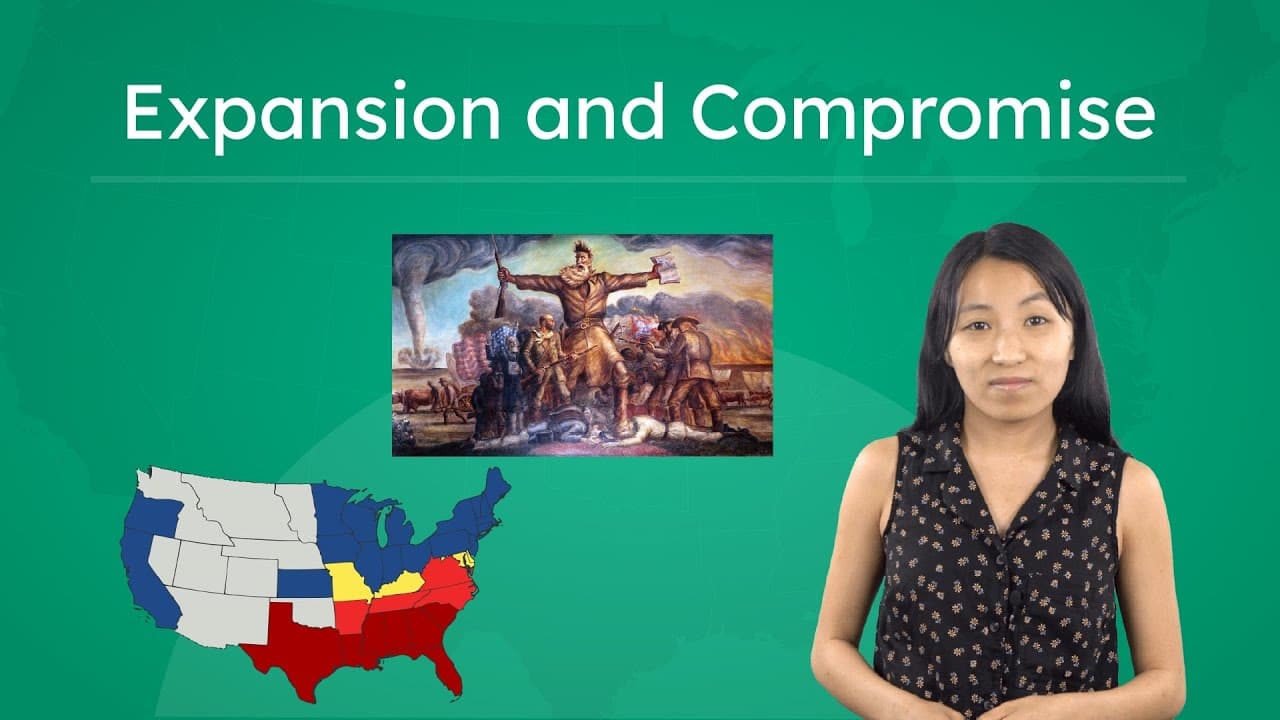
This educational video provides a comprehensive overview of the political tensions and legislative compromises in the United States between the Revolutionary War and the Civil War. It uses the metaphor of holding a "wolf by the ears" to explain the nation's precarious relationship with slavery. The video details how westward expansion forced the country to repeatedly confront the issue of slavery, leading to a series of fragile compromises designed to maintain a balance of power between free and slave states in Congress. Key historical events and legislation are broken down chronologically, including the Northwest and Southwest Ordinances, the Missouri Compromise, the Wilmot Proviso, and the Kansas-Nebraska Act. The narration explains how these events shifted the political landscape from a debate over representation to a moral conflict over the institution of slavery itself. It also explores the constitutional arguments regarding states' rights versus federal authority and how these differing interpretations justified secession for the South and preservation of the Union for the North. Teachers can use this video to help students visualize the geographic polarization of the country through its use of historical maps and political cartoons. It is an excellent tool for explaining complex political concepts like popular sovereignty and sectionalism. The video includes built-in pause points with guiding questions, making it ready-made for interactive classroom discussion or independent study.

Miacademy & MiaPrep Learning ChannelMiacademy & MiaPrep Learning Channel

12mins 20s

The Atlantic Slave Trade: History and Legacy

The Atlantic Slave Trade: History and Legacy

This educational video provides a comprehensive overview of the Atlantic Slave Trade, examining the staggering statistics, economic motivations, and brutal realities of the "peculiar institution." Host John Green details the movement of 10-12 million Africans to the Americas, debunking common misconceptions about where enslaved people were taken—highlighting that the vast majority went to the Caribbean and Brazil for sugar production, rather than the United States. The video explores the horrifying conditions on slave ships and the dangerous labor of sugar processing, framing slavery not just as a historical event but as an economic engine driven by consumer demand. Beyond the physical aspects, the video delves into the intellectual and legal history of slavery, defining "chattel slavery" and the concept of "social death." It traces the roots of these dehumanizing ideologies through history, referencing Greek philosophy (Aristotle), Roman plantation models (latifundia), Judeo-Christian justifications (the Curse of Ham), and the Arab slave trade. The analysis challenges viewers to understand how slavery was justified intellectually and legally for centuries. This resource is highly valuable for high school history classrooms as it connects historical events to broader themes of economics, human rights, and moral responsibility. It encourages critical thinking about how language is used (critiquing the casual use of the word "slave") and concludes with a powerful reflection on the shared human responsibility for this tragedy, warning against using history to blame specific groups while exonerating others.

CrashCourseCrashCourse

11mins 8s

How the Civil War Ended Slavery and Transformed the Nation

How the Civil War Ended Slavery and Transformed the Nation

In this installment of Crash Course US History, John Green moves beyond the battles and generals of the Civil War to explore its profound political, social, and economic consequences. The video tackles complex questions surrounding Abraham Lincoln's role as the "Great Emancipator," analyzing the strategic and legal limitations of the Emancipation Proclamation while crediting Lincoln for his persistence in securing the 13th Amendment. It also examines how the war transformed the United States from a loose collection of states into a unified, industrialized nation-state. Key themes include the shift in the war's purpose from preserving the Union to ending slavery, the impact of new military technologies and photography on public perception, and the massive expansion of federal power. The video highlights significant legislation passed during the war, such as the Homestead Act and the Pacific Railway Act, which shaped the country's future development. It also discusses the "singularization" of the United States, marking a cultural shift from seeing the country as a plural collection of states ("the United States are") to a single entity ("the United States is"). This video is an excellent resource for high school history classrooms. It encourages critical thinking about historical memory, challenges simplified narratives about emancipation, and connects the events of the 1860s to modern American government and identity. Teachers can use it to spark discussions about the reliability of primary sources (via Matthew Brady's photography), the role of government during crises, and the nuances of historical leadership.

CrashCourseCrashCourse

10mins 54s

Materials

Zoom Out History Packet

Zoom Out History Packet

A 6-page bilingual scaffolded 8th grade history packet on the ANEZZC writing method and Zoom Out strategy translated primarily into Spanish with English glossary, bilingual scaffolds, and visual supports for ELL/SGI students.

SP

Sheridan Pickett

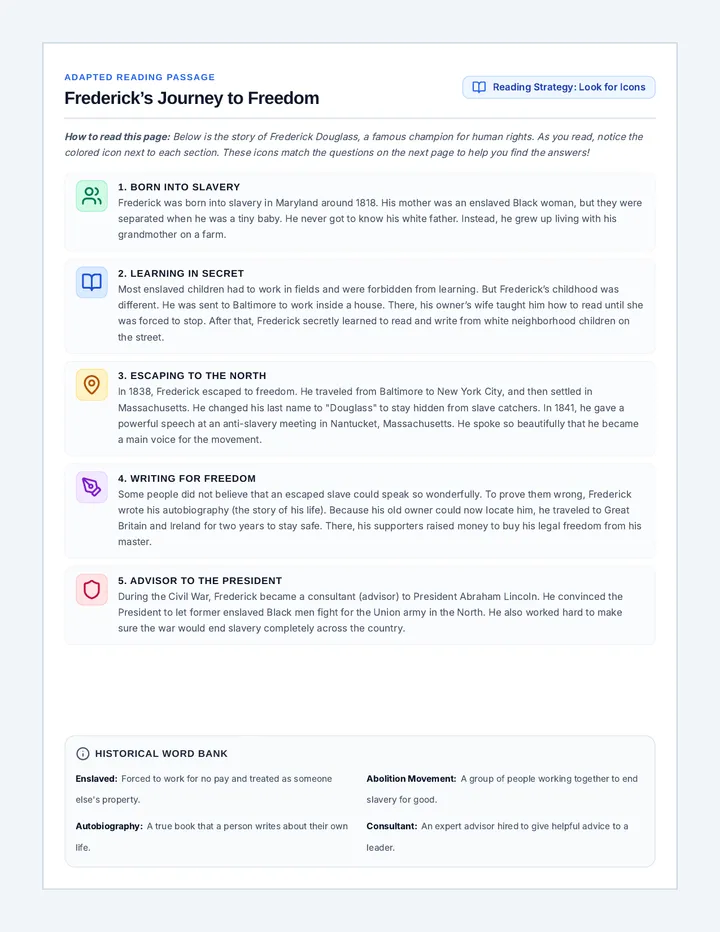
Frederick Douglass Scaffolded Worksheet

Frederick Douglass Scaffolded Worksheet

Create a highly scaffolded 2-page student reading passage and comprehension worksheet about Frederick Douglass with visual icons, a built-in historical glossary, and structured sentence starters.

NP

Nicole Palmiotto

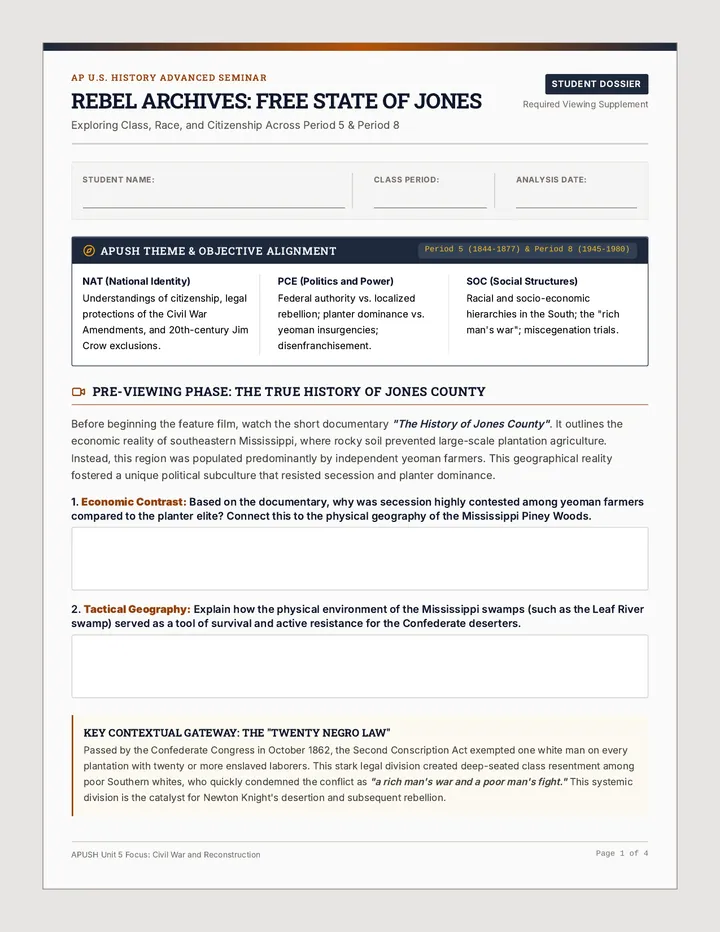
Rebel Archives Film Guide

Rebel Archives Film Guide

A highly structured, four-page AP U.S. History film study viewing guide and historical analysis packet for the movie 'Free State of Jones'. It connects Period 5 Civil War/Reconstruction themes with Period 8 20th-century Civil Rights contexts, focusing on Southern class dynamics, Unionism, and racial classification continuities.

JG

Joshua Griffith

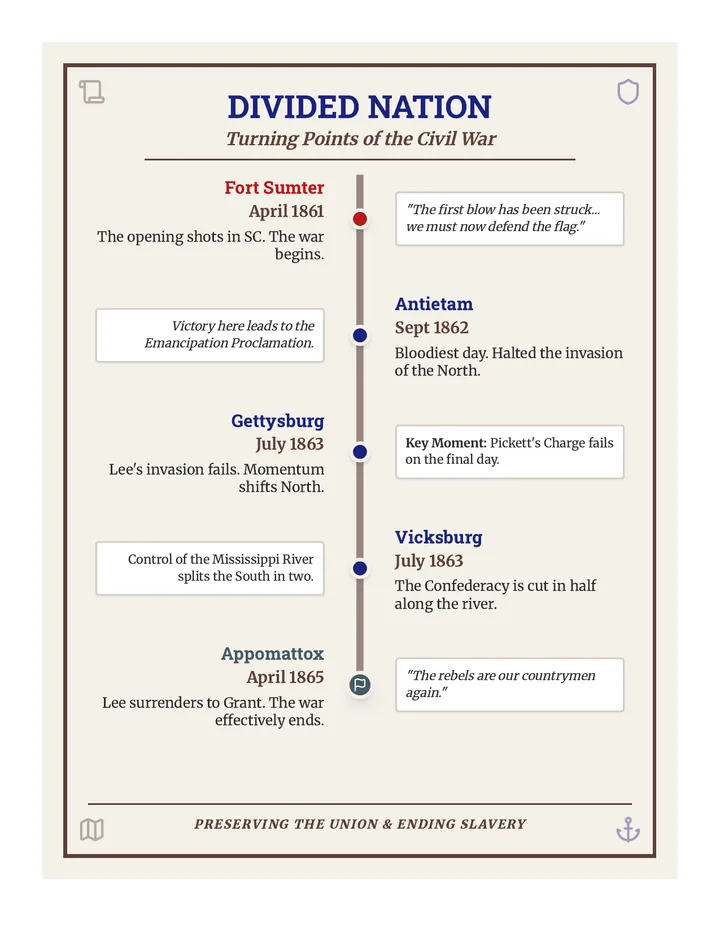
Divided Nation Timeline Anchor Chart

Divided Nation Timeline Anchor Chart

A high-visibility classroom anchor chart highlighting five major turning points of the American Civil War. Designed with large, readable text and historical motifs for middle school classroom display.

C

courtney.scott

Herstory Coloring Pages

Herstory Coloring Pages

A comprehensive collection of 9 coloring and activity pages for Women's History Month featuring iconic pioneers like Harriet Tubman, Rosa Parks, and Katherine Johnson, plus a "Future Hero" page. Each sheet includes large bubble-text for coloring, thematic icons, an inspiring quote, and a fun fact.

R

regina.gibson

Sequences

Cotton Kingdom Slides

Divided Nation

A 4-part exploration of the deep-seated tensions and pivotal events that led the United States to the brink of the Civil War, focusing on economic shifts, legislative compromises, and political flashpoints.

IA

Isabella Adkins

9
Leaders of the Storm Slides

Civil War Dispatch

A comprehensive 4-lesson unit for 5th grade exploring the pivotal figures, major conflicts, and the courageous escape routes of the American Civil War. Students engage with historical primary-source styles while learning about leadership and the quest for freedom.

IA

Isabella Adkins

12
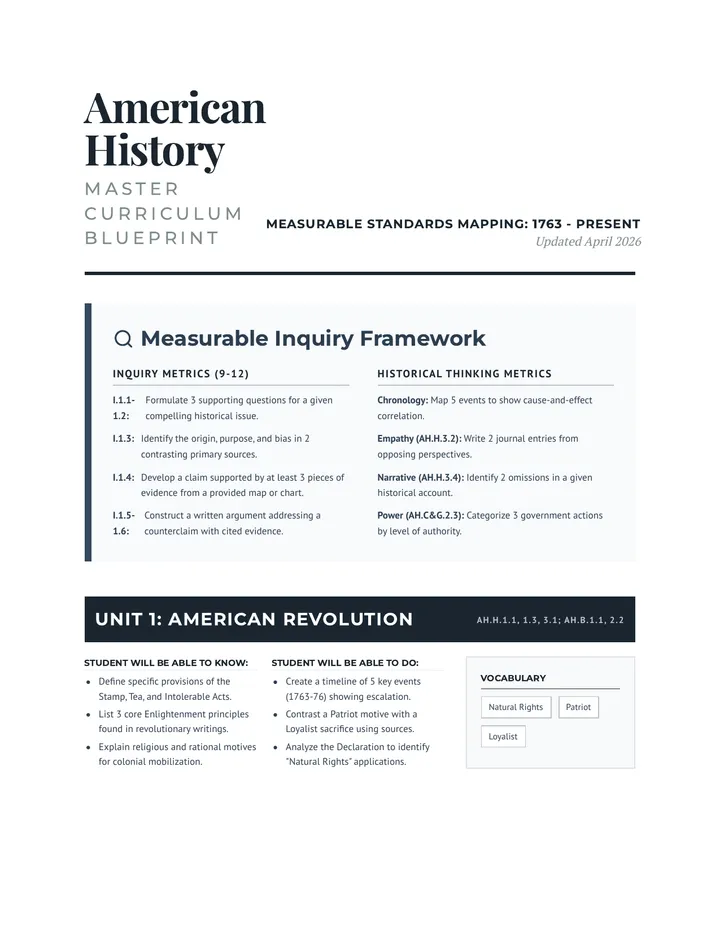
Curriculum Blueprint Document v2

History Horizon Sequence

A comprehensive high school curriculum plan for American History, covering 13 units from the American Revolution to the modern era, aligned with North Carolina Social Studies standards.

AK

Amity Kea

21
Toll of War Slides

Civil War Stories

A series of lessons focusing on the key figures, battles, and turning points of the American Civil War, designed for students with low reading comprehension.

TL

Tanya Larson

26
Freedom Seekers Lesson Plan

Freedom Seekers

A comprehensive 3-day unit for Grade 5 exploring the plantation economy, the lived experiences of enslaved people, the abolitionist movement, and the Emancipation Proclamation.

TZ

Terri Zappala

6
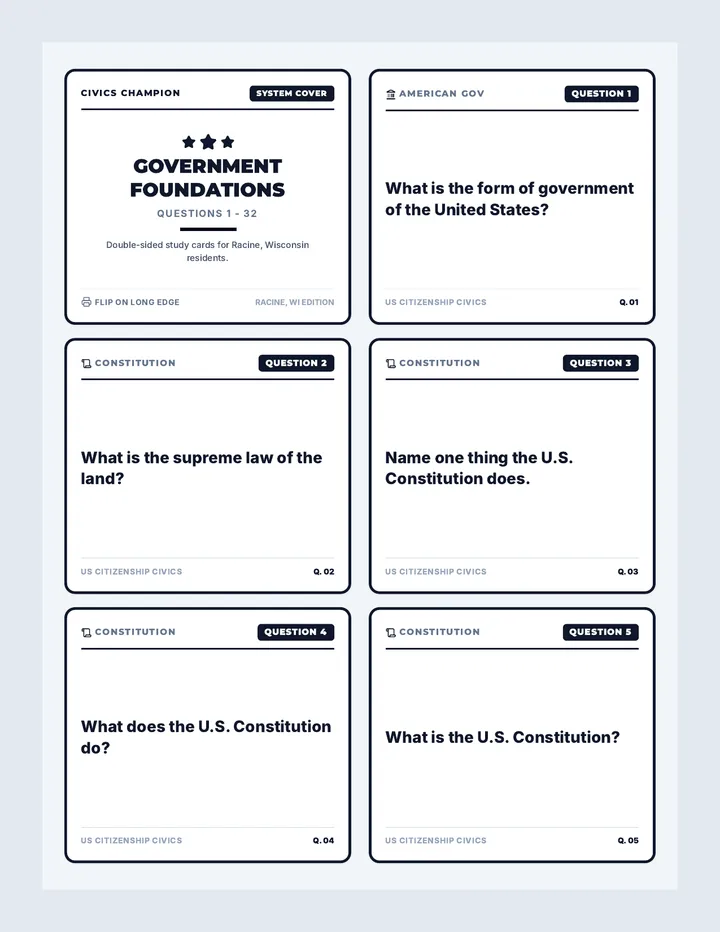
Foundations Flashcards Document

Civics Champion

A complete, printable study system of high-contrast, large-print double-sided flashcards covering all 128 questions of the citizenship test, optimized for easy home or classroom printing and maximum readability.

VL

V Lundgren

4

Lessons

History Sprint Pacing Guide

STAAR History Sprint

A comprehensive pacing guide and activity resource designed to cover the remaining 11th Grade US History TEKS before the STAAR test on April 16th. This lesson provides a day-by-day calendar for A/B block schedules and high-engagement activities for each remaining historical era.

BB

Bridgette Burdick

51
Border Lines Activity

Harriet Tubman Escape

A lesson exploring Harriet Tubman's 1850 escape and the significance of the Mason-Dixon Line as a geographical and legal boundary in the pre-Civil War United States.

TL

Tanya Larson

46
Massachusetts Milestones Slideshow

New England Chronicles

An expansive journey through the history of New England, divided into state-by-state volumes. This series provides middle school students with 180 daily historical warm-ups, exploring major milestones from pre-colonial times to modern innovations.

SF

Steven Flint

6
Wasteland Post-it Snapshots

Gettysburg Story Snapshots

This lesson provides visual 'snapshot' cards for key moments and figures of the Battle of Gettysburg, specifically focusing on the environmental impact (wasteland) and General Robert E. Lee's leadership.

TL

Tanya Larson

16
Rebuilding Union Teacher Guide

The Reconstruction Reconstruction

An immersive 8th-grade lesson where students role-play historical figures to debate the Reconstruction Amendments, exploring the tension between radical reform and systemic resistance.

DF

Dana Friedman

5
Final Vote Slides

The Final Vote

A deep dive into Steven Spielberg's 'Lincoln', focusing on the political maneuvers behind the 13th Amendment and the historical figures involved.

KT

Karen Terdoslavich

4