Lenny.com
Explore
Create
ActivitiesNewMathEnglish Language ArtsScience & EngineeringSocial StudiesGlobal LanguagesHealth & Physical EducationSpecial EducationCounseling & Life SkillsArts & CreativityESL
Lenny.com
Lenny.com
Explore
Create
ActivitiesNewMathEnglish Language ArtsScience & EngineeringSocial StudiesGlobal LanguagesHealth & Physical EducationSpecial EducationCounseling & Life SkillsArts & CreativityESL
Lenny.com
Lenny.com

Solutions

Lenny for EducatorsLenny for SchoolsLenny for Districts

Product

ExploreSign inCreateSupportAbout

Resources

Getting startedMTSS Acceleration Program

Newsletters

School Funding Newsletter

© 2026 Lenny Learning Inc.

TermsPrivacyAccessibility
LinkedInInstagramX
Lenny

African Empires

Trans-Saharan trade networks, the rise of the Ghana and Mali empires, and the cultural impact of Mansa Musa. Examines the maritime power of Aksum and the architectural engineering of Great Zimbabwe.

Social StudiesSocial Studies PracticesLocation WordsMapsOrder EventsChronology and CausationEvaluating SourcesHistorical ThinkingGeography, Humans, & the EnvironmentAmerican Symbols and LandmarksCitiesStatesState CapitalsRegions of the United StatesGeographic SkillsPhysical GeographyHuman GeographyRegional GeographyGeography of AfricaGeography of AsiaGeography of EuropeGeography of OceaniaGeography of the AmericasSociety and Environment of EuropeSociety and Environment of AsiaSociety and Environment of The AmericasSociety and Environment of the Middle EastSociety and Environment of AfricaHistoryPrehistoryComparing Ancient River CivilizationsAncient MesopotamiaAncient Egypt and KushAncient South AsiaEarly ChinaGreeceRome and the Byzantine EmpireAncient World HistoryNative Peoples of North AmericaNative Peoples of Mesoamerica and South AmericaAfrican EmpiresMedieval AsiaMedieval EuropeThe Silk RoadMedieval HistoryIslamic EmpiresWorld ReligionsRenaissance PeriodAge of ExplorationThe Thirteen ColoniesThe American RevolutionUS History Early RepublicFounding of the United StatesUS History AntebellumUS Civil WarReconstruction PeriodThe Gilded AgeUS ImperialismWorld ImperialismWorld War IUS History 1920sGreat DepressionWorld War IIThe Cold WarUS History 1950-60sUS History 1960s-70sWorld History 20th CenturyContemporary US HistoryContemporary World HistoryHolidaysCivics and GovernmentCitizenshipGovernment FoundationsThe ConstitutionUS ConstitutionExecutive BranchLegislative BranchJudicial BranchState and LocalPolitical ParticipationPublic PolicyPolitical SystemsPower and AuthoritySocial MovementsDefining DevianceTheories of DevianceCrime and Criminal JusticeEconomicsBasic Economic PrinciplesSupply and DemandWhat is MoneyEconomic FundamentalsMicroeconomicsMacroeconomicsBanking and FinanceEconomic SystemsGlobal EconomicsCorporations and PowerThe Changing WorkplaceUnemployment and LaborClass and InequalitySocial MobilityGlobal InequalityPsychologyHistory of PsychologyPsychology as a ScienceBrain and Nervous SystemNeuroscience and BehaviorGenetics and BehaviorSleep and ConsciousnessSensory ProcessesPerceptual OrganizationClassical ConditioningOperant ConditioningObservational LearningCognitive LearningMemory ProcessesThinking and Problem SolvingLanguage and CognitionTheories of MotivationStress and CopingPrenatal and Infant DevelopmentChildhood DevelopmentAdolescent DevelopmentAdulthood and AgingSelf and IdentitySocial CognitionSocial InfluenceAttraction and RelationshipsGroup BehaviorPrejudice and DiscriminationAnxiety and Mood DisordersClinical PsychologyForensic PsychologyPhilosophy & EthicsIntroduction to PhilosophyMajor Philosophers & IdeasMind and Body ProblemFree Will vs DeterminismEthics & MoralityReligion & PhilosophyPolitical Philosophy

Videos

How Ancient Trade Routes Connected the World

How Ancient Trade Routes Connected the World

This video explores the concept of global interconnectedness long before the advent of the internet or modern transportation. Starting with a relatable family dinner scene, the narrator challenges viewers to consider the origins of their food and clothing, using this as a springboard to introduce the historical mechanism of trade. The video defines cultural diffusion and illustrates how ancient trade routes like the Silk Road, Indian Ocean maritime routes, Trans-Saharan network, and Mediterranean Sea served as the "superhighways" of the ancient world, linking distant civilizations. Key themes include the definition and impact of cultural diffusion, the geography of major ancient trade networks, and the specific exchange of goods, ideas, technologies, and religions. The video highlights how the Indian Ocean trade facilitated the spread of Islam, how the Trans-Saharan route moved gold and salt, and how the Mediterranean connected Europe to ancient wisdom. It also details the "Four Great Inventions" of Ancient China—paper, printing, the compass, and gunpowder—and their profound effects on global society. For educators, this video serves as an excellent introduction to units on World History, global trade, or ancient civilizations. It features built-in "pause points" that invite students to check the tags on their own clothes, brainstorm inventions, and reflect on historical impacts, making it highly interactive. By connecting the abstract concept of cultural diffusion to tangible items like spices and clothing, the video helps students visualize how historical economic activities shaped the political, religious, and technological landscape of the modern world.

Miacademy & MiaPrep Learning ChannelMiacademy & MiaPrep Learning Channel

11mins 42s

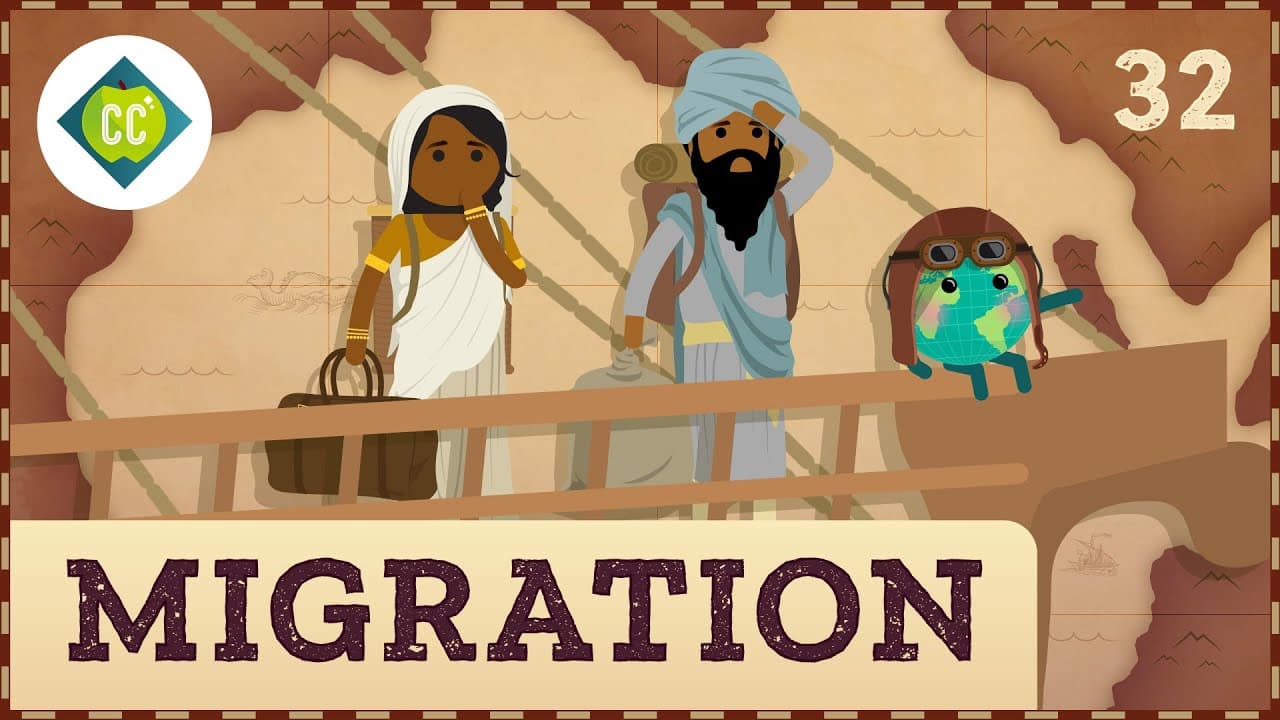
Why and How People Move: The Geography of Migration

Why and How People Move: The Geography of Migration

This educational video from Crash Course Geography provides a comprehensive overview of human migration, using the vast Indian diaspora as a primary case study to illustrate key concepts. Hosted by Alizé Carrère, the video breaks down the "how" and "why" of human movement, moving beyond simple definitions to explore the complex historical, economic, and environmental drivers behind migration. It covers a wide range of migration types, from the historical indentured labor systems in Trinidad and Tobago to ancient monsoon-driven trade routes, and modern political displacements like the 1972 expulsion of Asians from Uganda.

CrashCourseCrashCourse

11mins 16s

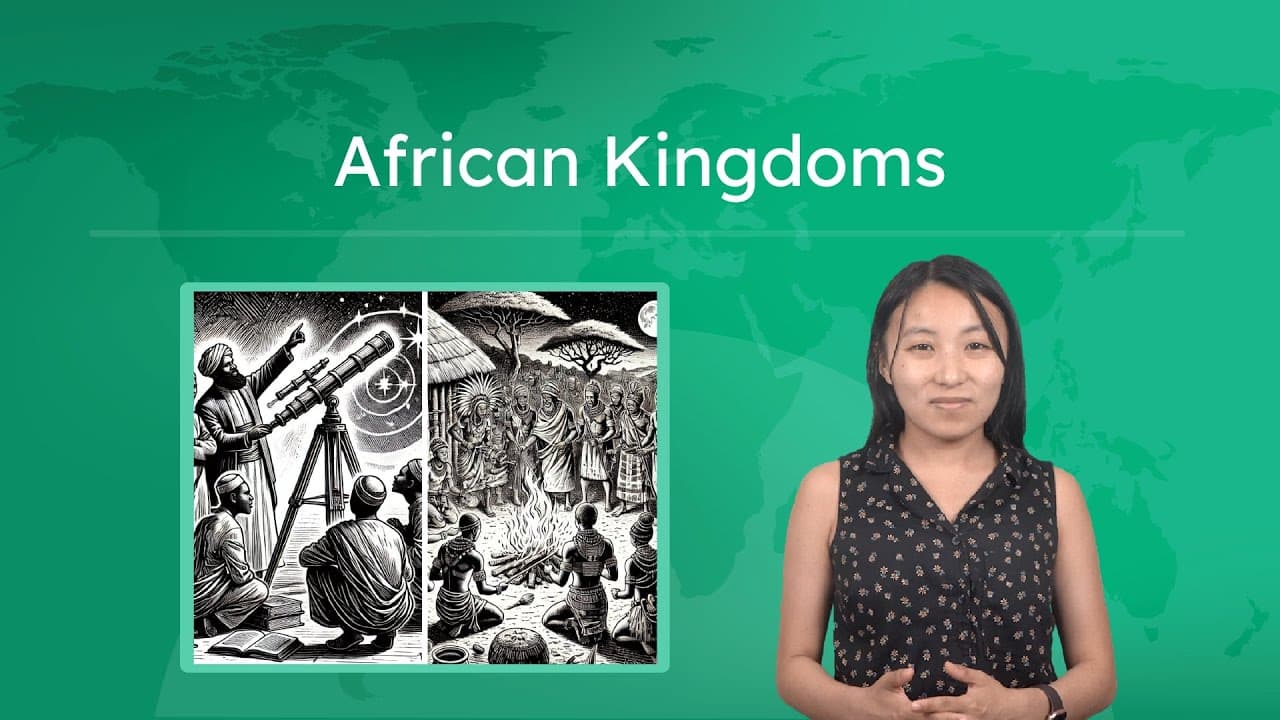
How Trade and Learning Built the Empires of West Africa

How Trade and Learning Built the Empires of West Africa

This educational video explores the rich history of West African civilizations during the Middle Ages, specifically focusing on the empires of Ghana, Mali, and Songhai. It details how the trans-Saharan trade routes served as more than just economic arteries for gold and salt; they were superhighways for the exchange of ideas, religion, and technology. The narrative highlights the pivotal role of geography, specifically the Sahara Desert, and how overcoming its challenges led to prosperity and global connection. Themes include the economic mechanics of the gold-salt trade, the spread and impact of Islam, and the reverence for education in cities like Timbuktu. The video examines key historical figures such as Mansa Musa and Askia the Great, illustrating how their leadership styles and policies regarding trade and religion shaped their respective empires. It also delves into specific intellectual achievements in astronomy, mathematics, architecture, and medicine that flourished in centers of learning like the University of Sankore. For educators, this video is an excellent resource for World History units covering African civilizations or the Middle Ages. It moves beyond simple dates and names to explain the *causes* of the rise of these empires—specifically the interplay between economic control and cultural development. It provides natural pause points for critical thinking questions and connects historical events to tangible innovations that students can understand, making it a strong anchor for lessons on economic systems, cultural diffusion, or historical geography.

Miacademy & MiaPrep Learning ChannelMiacademy & MiaPrep Learning Channel

14mins 15s

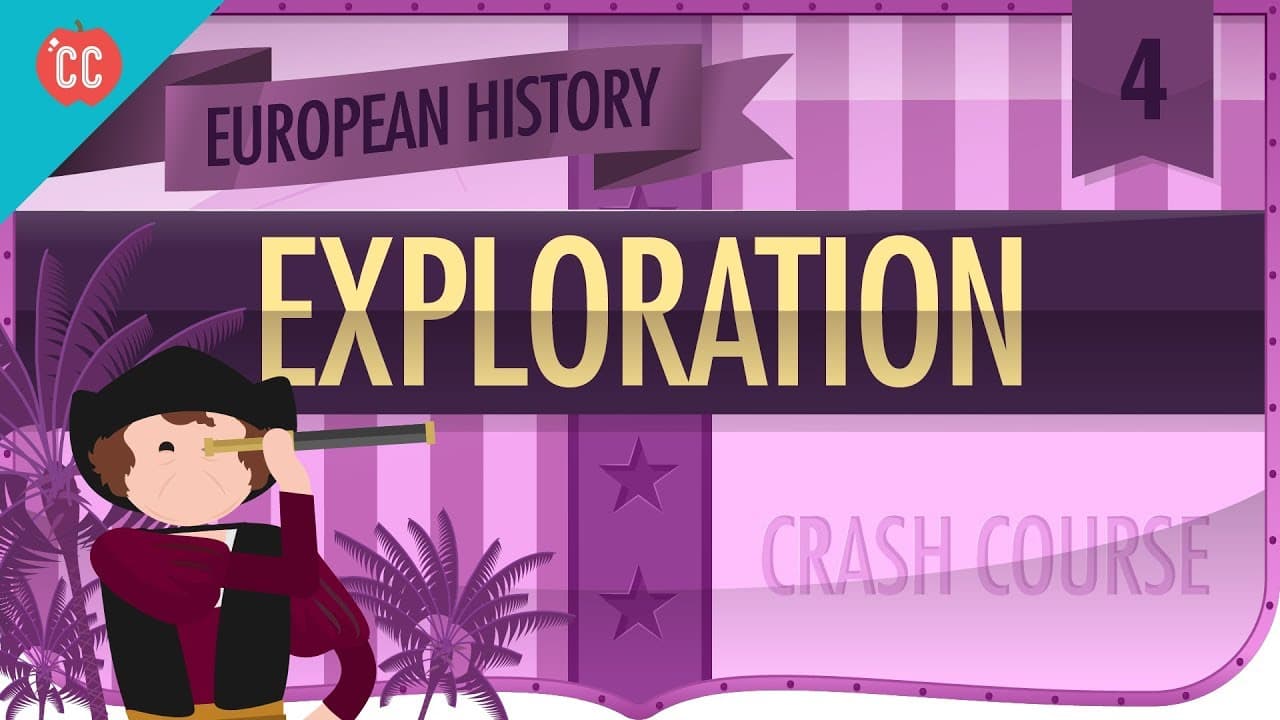
European Exploration: Empire, Trade, and Conquest

European Exploration: Empire, Trade, and Conquest

This installment of Crash Course European History explores the pivotal era of European exploration and expansion, contrasting the methods and motivations of the Portuguese and Spanish empires. Host John Green begins with the fall of Constantinople in 1453 as a catalyst for seeking new trade routes, detailing how Portugal established a trading post empire along the African coast and into the Indian Ocean, while Spain, following Columbus's voyages, developed a land-based colonial empire in the Americas. The video provides a nuanced look at the "God, Gold, and Glory" motivations, the technological advancements in navigation, and the economic shifts that moved the center of European power from the Mediterranean to the Atlantic. A central theme of the video is the importance of shifting perspectives. It challenges the traditional narrative of European dominance by highlighting the wealth and sophistication of African and Indigenous American civilizations prior to conquest. It examines the crucial role of local intermediaries, translators, and existing political rivalries that facilitated European expansion. The video also unflinchingly addresses the darker realities of this era, including the Atlantic slave trade, the devastation of indigenous populations through disease and violence, and the extraction of wealth that fueled European economies. For educators, this video serves as an excellent synthesis of the Age of Exploration, moving beyond simple timelines to analyze systems of power and exchange. It offers opportunities to discuss the differences between trading and settler colonialism, the impact of the Columbian Exchange, and the ethical complexities of historical narratives. The specific focus on technology (caravels, astrolabes) and the detailed maps make it a versatile tool for lessons on geography, economics, and world history.

CrashCourseCrashCourse

15mins 40s

A Global Tour of the World in 1750

A Global Tour of the World in 1750

This educational video serves as a comprehensive introduction to the Early Modern period of World History, specifically setting the stage in the year 1750. Through the narrative device of a "time machine," the host transports viewers around the globe to examine the political, social, and economic conditions of major world powers before the onset of the Industrial Revolution. The video covers the dominance of absolute monarchies in Europe, the emerging democratic shifts in Great Britain, the expansion of Russia, the economic might of Asian empires like China and India, and the isolationist policies of Japan.

Miacademy & MiaPrep Learning ChannelMiacademy & MiaPrep Learning Channel

10mins 12s

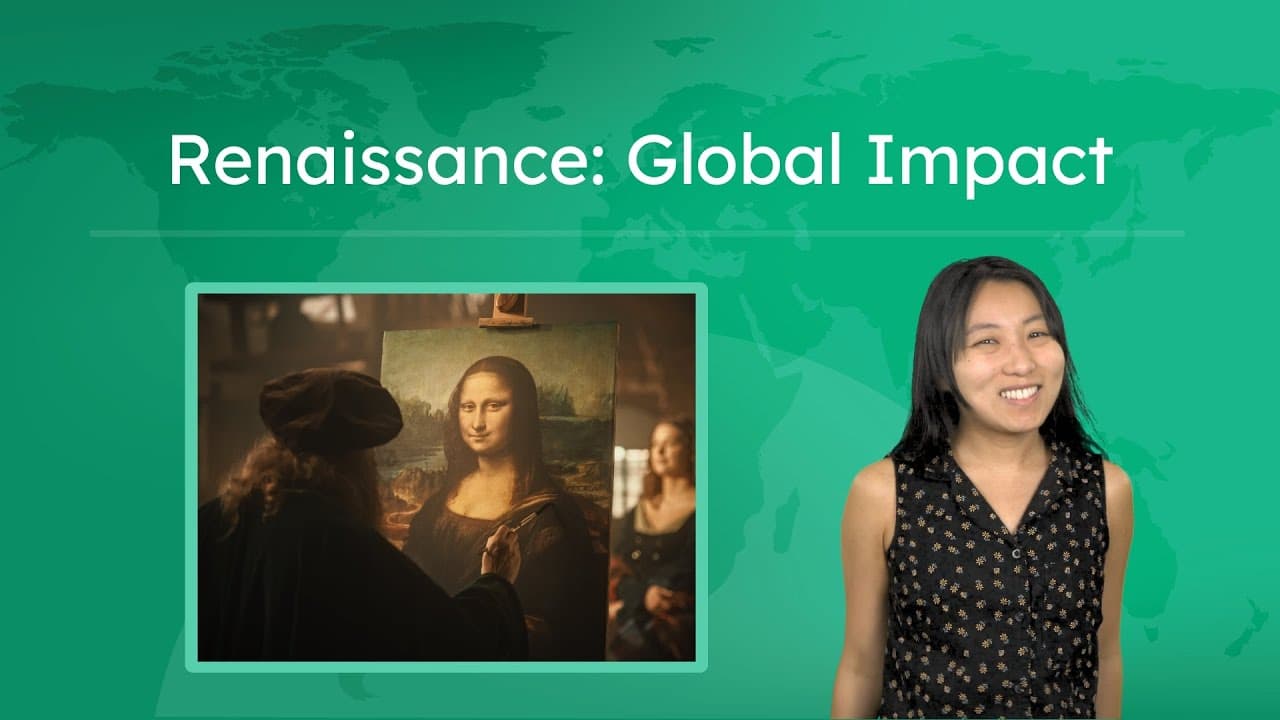
The Global Ripple Effect of the Renaissance

The Global Ripple Effect of the Renaissance

This educational video explores the global impact of the Renaissance using the metaphor of a "ripple effect." Moving beyond the traditional focus on European art, the narrator explains how Renaissance principles of realism, perspective, and humanism spread to the Americas, Africa, and Asia through trade, exploration, and the invention of the printing press. The video illustrates how these ideas blended with local traditions to create unique cultural syntheses in architecture, art, and science. The content highlights specific examples of this cultural exchange, such as the blending of indigenous and European styles in Mexican churches, the influence of realism on Benin bronzes in West Africa, and the scientific exchanges with the Ottoman, Mughal, and Chinese empires. It also delves into how the philosophy of humanism challenged traditional authority structures, influencing leaders like Mughal Emperor Akbar and eventually sparking political changes that led to democratic movements, including the American Revolution. For educators, this video serves as an excellent tool to teach World History beyond a Eurocentric lens. It connects disparate regions through the theme of globalization and cultural diffusion. Teachers can use the specific examples provided—like the Taj Mahal or the US Capitol building—to help students visualize how historical events in one region can shape the cultural and physical landscape of the entire world.

Miacademy & MiaPrep Learning ChannelMiacademy & MiaPrep Learning Channel

12mins 39s

Materials

Ancient Creativity Comprehension Packet

Ancient Creativity Comprehension Packet

A 4-page scaffolded reading and writing comprehension packet for 7th-grade social studies, tailored for a Chinese-speaking WIDA Level 2 English learner. Includes bilingual vocabulary glossaries (English, Simplified Chinese, and Pinyin), chunked passages, visual icons, comprehension checks, and guided sentence-frame writing exercises.

KC

Kasie Costopulos

Sequences

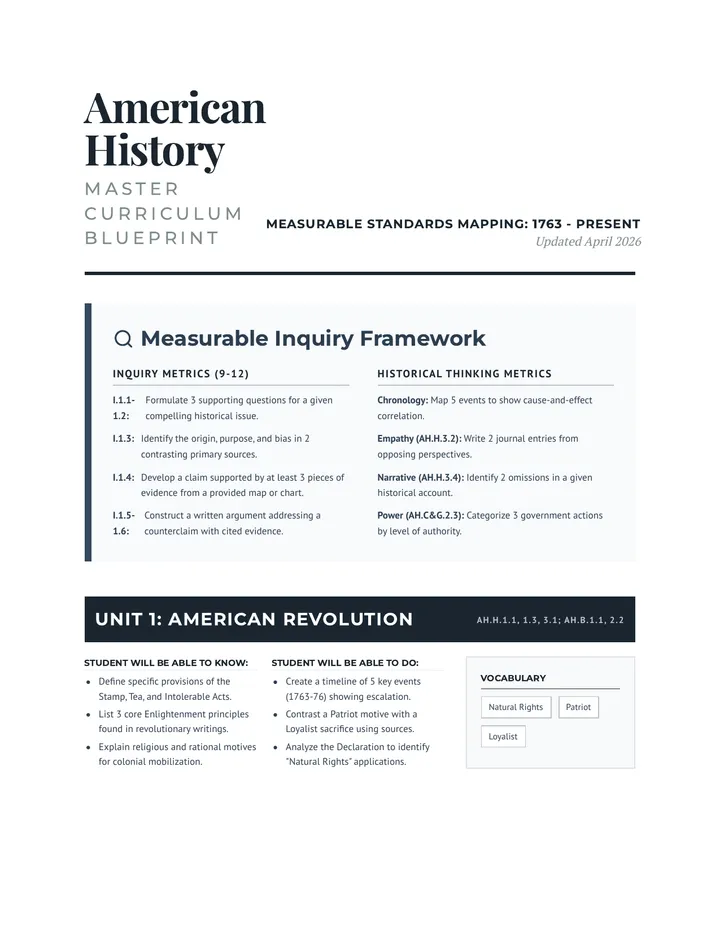
Curriculum Blueprint Document v2

History Horizon Sequence

A comprehensive high school curriculum plan for American History, covering 13 units from the American Revolution to the modern era, aligned with North Carolina Social Studies standards.

AK

Amity Kea

21
Land of Contrast Slides

Desert and Delta

A 3-lesson unit focused on the geography, trade, and kingdoms of Sub-Saharan Africa, specifically designed for WIDA level 1/2 ESL students with heavy visual support and sentence scaffolding.

RR

Ranjini Reddy

9
Heritage Harvest Slides

Soul Food Journey

A comprehensive sequence exploring the deep roots, cultural resilience, and global impact of Black Soul Food.

MK

Marlyce Kemp

10
Africa Geography and Trade Worksheet

Ancient Empires and Innovations

A weekly unit sequence exploring the physical geography of Africa, the trans-Saharan gold-salt trade, and the major technological and cultural innovations of ancient Sumer. Tailored with high-support, high-rigor scaffolds designed for SPED students.

AG

Amina Gueye

5
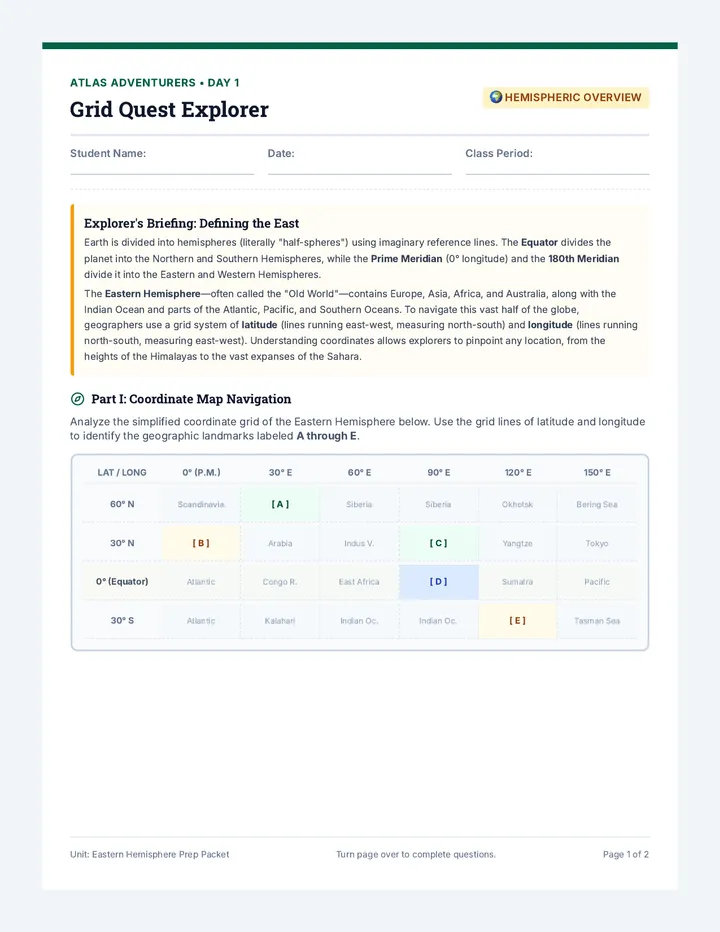
Grid Quest Worksheet

Atlas Adventurers

A five-day series of independent, paper-based social studies lessons covering the Eastern Hemisphere for 6th-grade classrooms. Each day is fully prepared with self-contained readings, map activities, and analytical questions, complete with comprehensive answer keys for substitute teachers.

T

tpayne

10
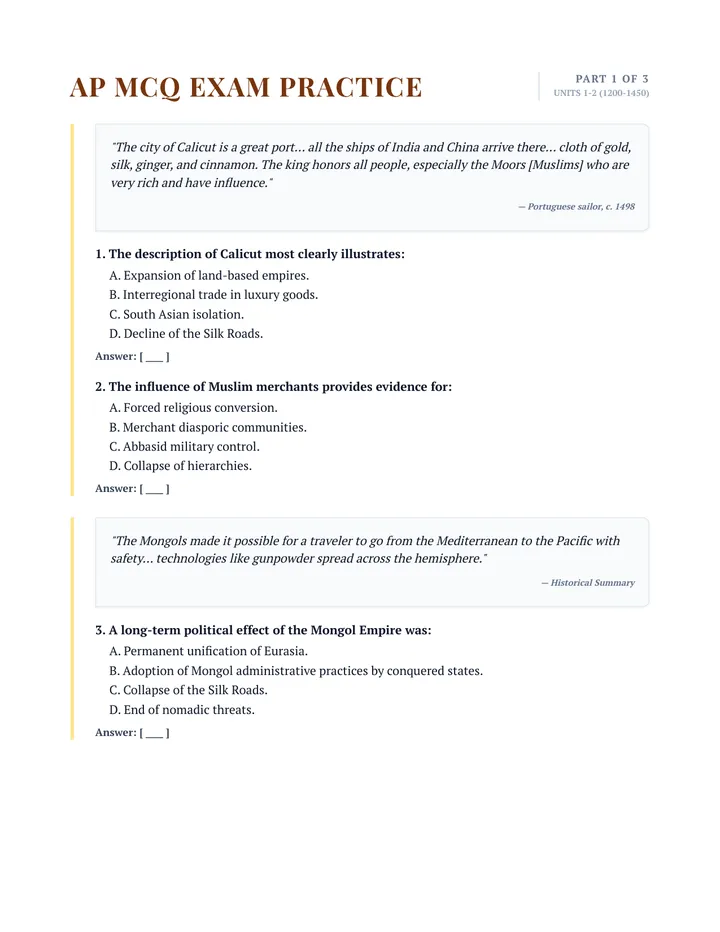
Interconnectivity Practice Questions

AP MCQ Vault

A focused AP World History practice series consisting exclusively of stimulus-based multiple choice questions and detailed answer keys covering Units 1-9.

J

james.shaw

6

Lessons

Asia Expedition Teacher Guide

Asia Expedition Stations微

A four-station rotation activity exploring the geography, culture, and innovations of Asia. Students investigate literary themes, analyze historical conflicts and migrations, map technological impacts, and play a geography-themed speaking game.

JR

Jessica Ross

6
Explorer Epochs Wall Chart

Early World Explorers

A comprehensive lesson on early world exploration from 300 BCE to 1500 CE, focusing on the geographical, cultural, and religious impacts of key explorers across different continents.

J

jcasey

14
Inquiry Project Teacher Guide

Blended Roots Inquiry

An inquiry-based project where students research the cultural transformation of a Latin American country during the colonial era, focusing on the blending of Spanish, Indigenous, and African influences in religion, language, and social structures.

KT

Kyle Trocolla

6
Smoke and Gears Key Slice

Industrial Impact

A focused practice session on the Industrial Revolution, targeting STAAR-aligned cause-and-effect skills regarding urbanization, technology, labor, and economic shifts.

KB

Kenneth Brown

4
Mali Mastermind Slides

Mali Mastermind

A comprehensive lesson exploring the life, leadership, and legacy of Mansa Musa, the legendary ruler of the Mali Empire, designed for 5th-7th grade students.

AA

Adam Amster

7
Voyager Log Worksheet squashed-v2

Global Voyagers

A deep dive into the Age of Exploration, comparing the motivations, encounters, and global impact of famous maritime explorers from around the world.

J

joseph.vida

9