Lenny.com
Explore
Create
ActivitiesNewMathEnglish Language ArtsScience & EngineeringSocial StudiesGlobal LanguagesHealth & Physical EducationSpecial EducationCounseling & Life SkillsArts & CreativityESL
Lenny.com
Lenny.com
Explore
Create
ActivitiesNewMathEnglish Language ArtsScience & EngineeringSocial StudiesGlobal LanguagesHealth & Physical EducationSpecial EducationCounseling & Life SkillsArts & CreativityESL
Lenny.com
Lenny.com

Solutions

Lenny for EducatorsLenny for SchoolsLenny for Districts

Product

ExploreSign inCreateSupportAbout

Resources

Getting startedMTSS Acceleration Program

Newsletters

School Funding Newsletter

© 2026 Lenny Learning Inc.

TermsPrivacyAccessibility
LinkedInInstagramX
Lenny

Geography of Asia

Major landforms, river systems, and climate zones across the Asian continent. Examines how diverse environments shape human settlement, economic activities, and cultural development in various subregions.

Social StudiesSocial Studies PracticesLocation WordsMapsOrder EventsChronology and CausationEvaluating SourcesHistorical ThinkingGeography, Humans, & the EnvironmentAmerican Symbols and LandmarksCitiesStatesState CapitalsRegions of the United StatesGeographic SkillsPhysical GeographyHuman GeographyRegional GeographyGeography of AfricaGeography of AsiaGeography of EuropeGeography of OceaniaGeography of the AmericasSociety and Environment of EuropeSociety and Environment of AsiaSociety and Environment of The AmericasSociety and Environment of the Middle EastSociety and Environment of AfricaHistoryPrehistoryComparing Ancient River CivilizationsAncient MesopotamiaAncient Egypt and KushAncient South AsiaEarly ChinaGreeceRome and the Byzantine EmpireAncient World HistoryNative Peoples of North AmericaNative Peoples of Mesoamerica and South AmericaAfrican EmpiresMedieval AsiaMedieval EuropeThe Silk RoadMedieval HistoryIslamic EmpiresWorld ReligionsRenaissance PeriodAge of ExplorationThe Thirteen ColoniesThe American RevolutionUS History Early RepublicFounding of the United StatesUS History AntebellumUS Civil WarReconstruction PeriodThe Gilded AgeUS ImperialismWorld ImperialismWorld War IUS History 1920sGreat DepressionWorld War IIThe Cold WarUS History 1950-60sUS History 1960s-70sWorld History 20th CenturyContemporary US HistoryContemporary World HistoryHolidaysCivics and GovernmentCitizenshipGovernment FoundationsThe ConstitutionUS ConstitutionExecutive BranchLegislative BranchJudicial BranchState and LocalPolitical ParticipationPublic PolicyPolitical SystemsPower and AuthoritySocial MovementsDefining DevianceTheories of DevianceCrime and Criminal JusticeEconomicsBasic Economic PrinciplesSupply and DemandWhat is MoneyEconomic FundamentalsMicroeconomicsMacroeconomicsBanking and FinanceEconomic SystemsGlobal EconomicsCorporations and PowerThe Changing WorkplaceUnemployment and LaborClass and InequalitySocial MobilityGlobal InequalityPsychologyHistory of PsychologyPsychology as a ScienceBrain and Nervous SystemNeuroscience and BehaviorGenetics and BehaviorSleep and ConsciousnessSensory ProcessesPerceptual OrganizationClassical ConditioningOperant ConditioningObservational LearningCognitive LearningMemory ProcessesThinking and Problem SolvingLanguage and CognitionTheories of MotivationStress and CopingPrenatal and Infant DevelopmentChildhood DevelopmentAdolescent DevelopmentAdulthood and AgingSelf and IdentitySocial CognitionSocial InfluenceAttraction and RelationshipsGroup BehaviorPrejudice and DiscriminationAnxiety and Mood DisordersClinical PsychologyForensic PsychologyPhilosophy & EthicsIntroduction to PhilosophyMajor Philosophers & IdeasMind and Body ProblemFree Will vs DeterminismEthics & MoralityReligion & PhilosophyPolitical Philosophy

Videos

Why the Bronze Age Civilizations Collapsed

Why the Bronze Age Civilizations Collapsed

In this episode of Crash Course World History, John Green explores the mysterious collapse of the Bronze Age civilizations in the Eastern Mediterranean around 1200 BCE. The video challenges the traditional narrative of separate, isolated civilizations by demonstrating how Egypt, the Hittites, the Mycenaeans, and others formed a highly interconnected international system defined by trade, diplomacy, and war. It examines the evidence for this interdependence, including the famous Uluburun shipwreck and the Amarna Letters.

CrashCourseCrashCourse

12mins 58s

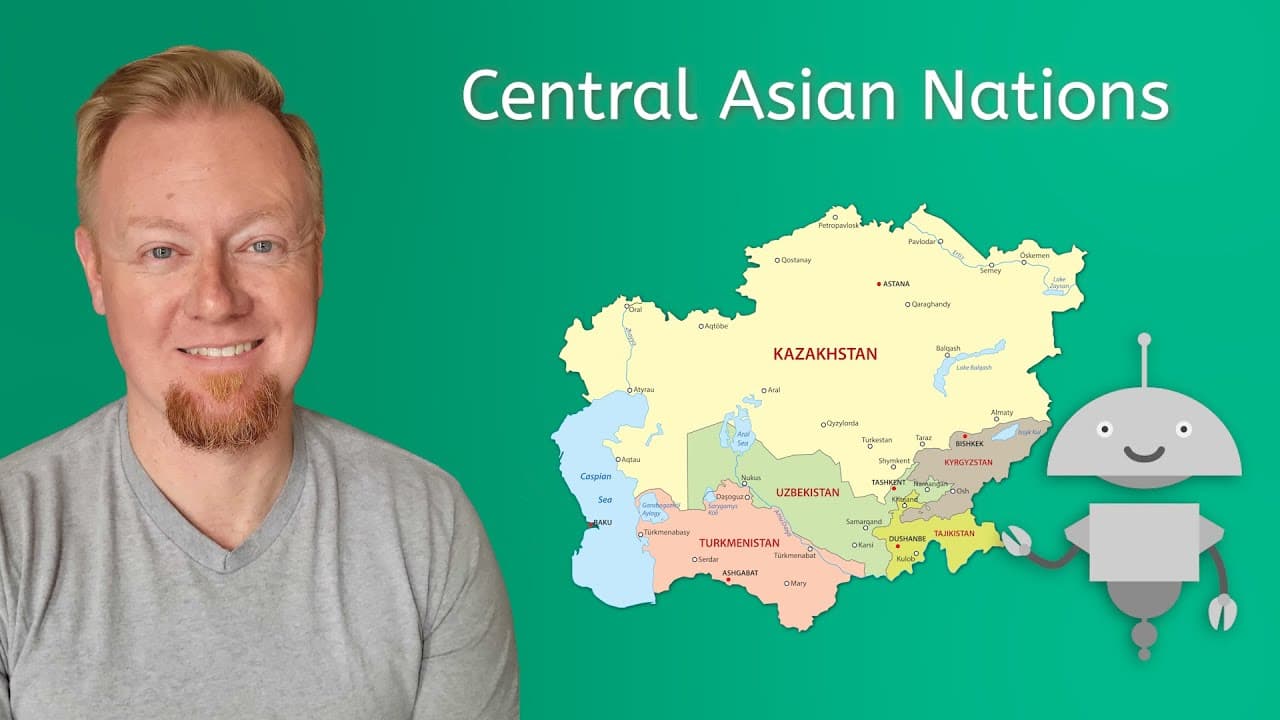
Exploring Central Asia: The Land of the Stans

Exploring Central Asia: The Land of the Stans

This educational video provides a comprehensive geographical and cultural overview of Central Asia, focusing on the five "Stan" countries: Kazakhstan, Kyrgyzstan, Tajikistan, Turkmenistan, and Uzbekistan. The narrator, Brian, guides viewers through the region's physical geography, including its towering mountain ranges, vast deserts, and the Caspian Sea, while also delving into the environmental challenges such as the shrinking Aral Sea. The video connects these physical features to the human experience, explaining how the landscape has shaped nomadic traditions and modern life. The content explores a wide range of topics including the etymology of the suffix "-stan," the region's history under the Soviet Union, and the current political and economic climates of these newly formed nations. It highlights key demographic data, religious practices, and unique cultural elements like eagle hunting, fermented mare's milk, and the ancient tradition of improvisational poetry battles. The video also touches on serious subjects like government corruption and economic reliance on commodities. For educators, this video serves as an excellent resource for World Geography, Social Studies, and History classes. It effectively illustrates the intersection of physical geography and human culture, offers a case study on environmental impact (the Aral Sea), and introduces students to a region often underrepresented in standard curricula. The mix of maps, data charts, and cultural footage provides multiple entry points for lesson activities ranging from map analysis to discussions on political freedom and environmental stewardship.
Miacademy & MiaPrep Learning ChannelMiacademy & MiaPrep Learning Channel

10mins 42s

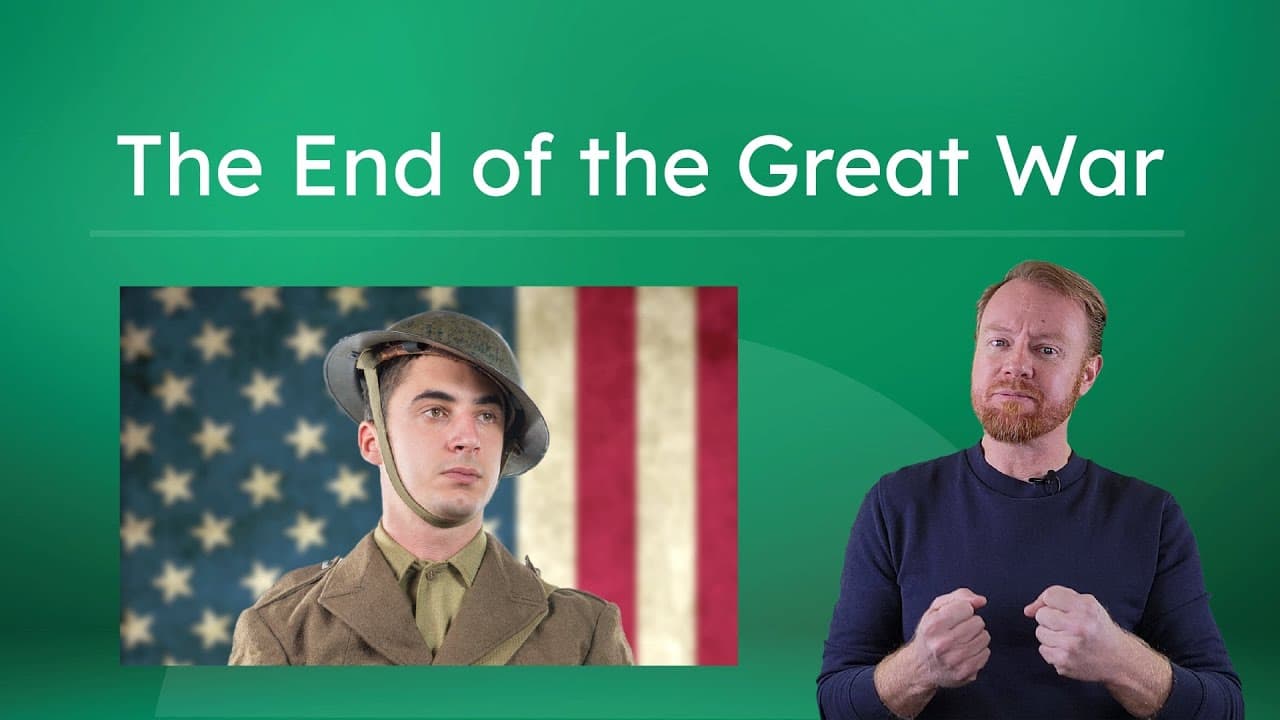
Global Conflict and Total War: The End of World War I

Global Conflict and Total War: The End of World War I

This educational video provides a comprehensive overview of the latter half of World War I, detailing how a European conflict expanded into a global war involving Africa, Asia, and North America. It explains the strategic importance of colonies for resources, the entry of major powers like the United States and the Ottoman Empire, and the disastrous Gallipoli campaign. The narrative transitions into the concept of "Total War," illustrating how the conflict reshaped civilian life through mass mobilization, women entering the workforce, economic rationing, and government propaganda. The video explores several key historical themes including imperialism, the definition and impact of total war, the role of propaganda and censorship in shaping public opinion, and the geopolitical shifts that occurred as empires collapsed. It covers significant events such as the sinking of the Lusitania, the Russian Revolution, and the signing of the Treaty of Versailles. The content highlights the staggering human and economic costs of the war and foreshadows the rise of totalitarian regimes. For educators, this video serves as an excellent anchor for a unit on the Great War. It features clear definitions of complex terms like "Total War," "Price Controls," and "Armistice," supported by historical photographs and animated maps. The video structure, which includes built-in pauses for guiding questions, allows teachers to easily segment the lesson for note-taking and class discussion. It effectively connects military history with social history, making it valuable for exploring both the battlefield and the home front.

Miacademy & MiaPrep Learning ChannelMiacademy & MiaPrep Learning Channel

10mins 52s

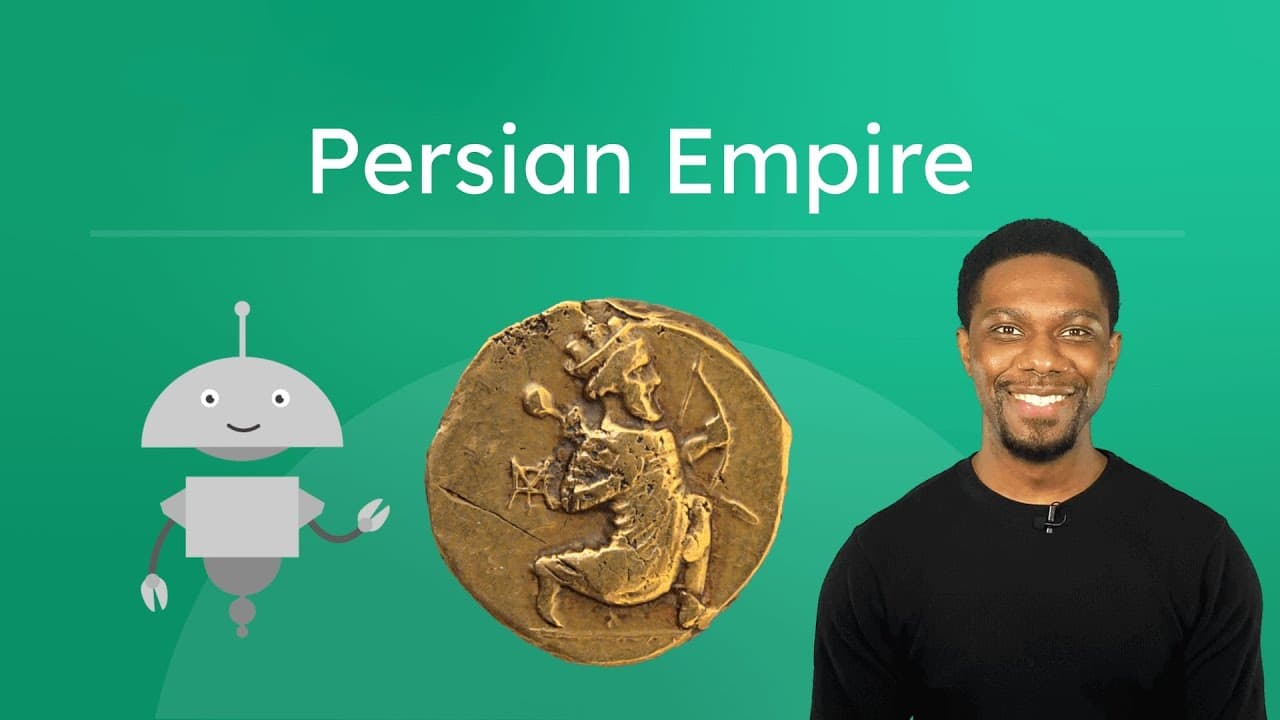
Exploring the Power and Culture of the Persian Empire

Exploring the Power and Culture of the Persian Empire

This educational video provides a comprehensive overview of the Ancient Persian Empire, designed for middle school history students. Narrated by an engaging host, the lesson breaks down the empire's vast geography spanning three continents, its efficient government structure utilizing satraps, and its innovative economic systems including the Royal Road and the gold Daric coin. The video uses maps, historical imagery, and on-screen text to make these complex historical structures accessible.

Miacademy & MiaPrep Learning ChannelMiacademy & MiaPrep Learning Channel

9mins 3s

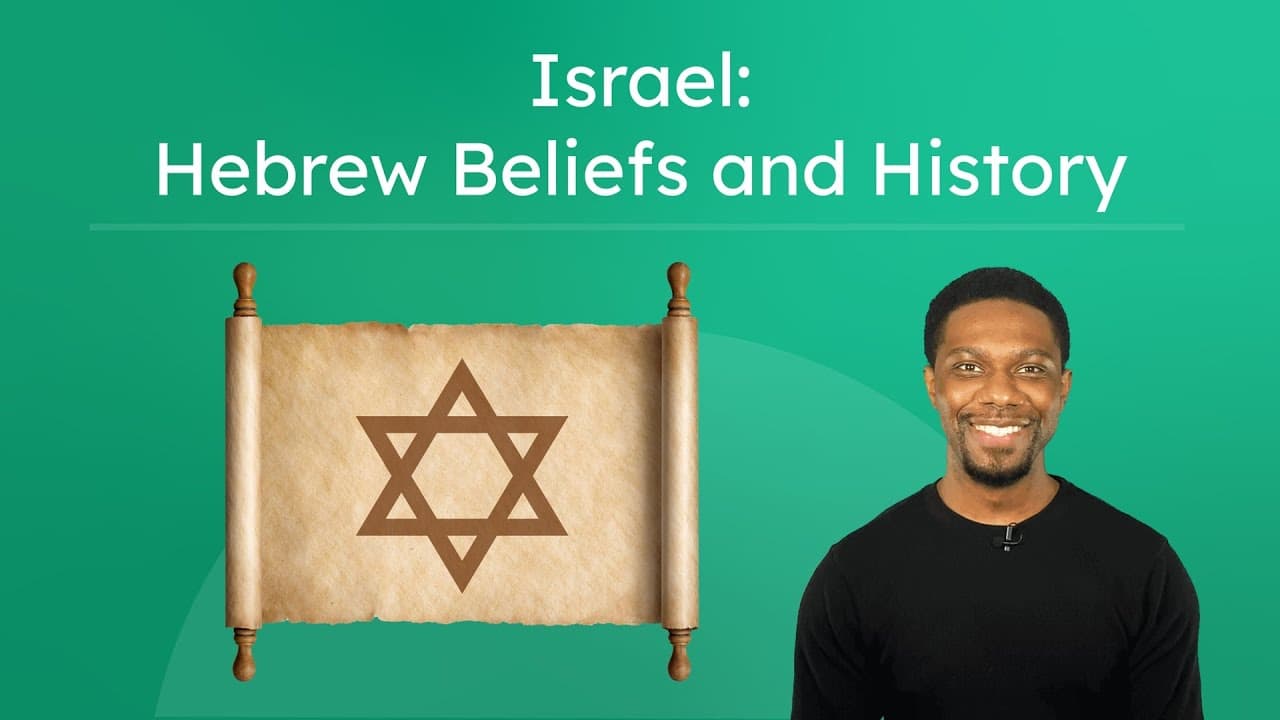
Exploring Ancient Israel and the History of the Hebrews

Exploring Ancient Israel and the History of the Hebrews

This educational video provides a comprehensive overview of Ancient Israel and the Levant, exploring how geography and history intertwined to shape the Hebrew civilization. The host uses engaging analogies, such as baking bread, to introduce the concept of the "Levant" as a rising region and a geographical crossroads between Europe, Africa, and Asia. The video details the physical landscape, including the importance of the Jordan River and the Dead Sea, and explains how early inhabitants adapted to the arid climate through innovations like cisterns.

Miacademy & MiaPrep Learning ChannelMiacademy & MiaPrep Learning Channel

10mins 40s

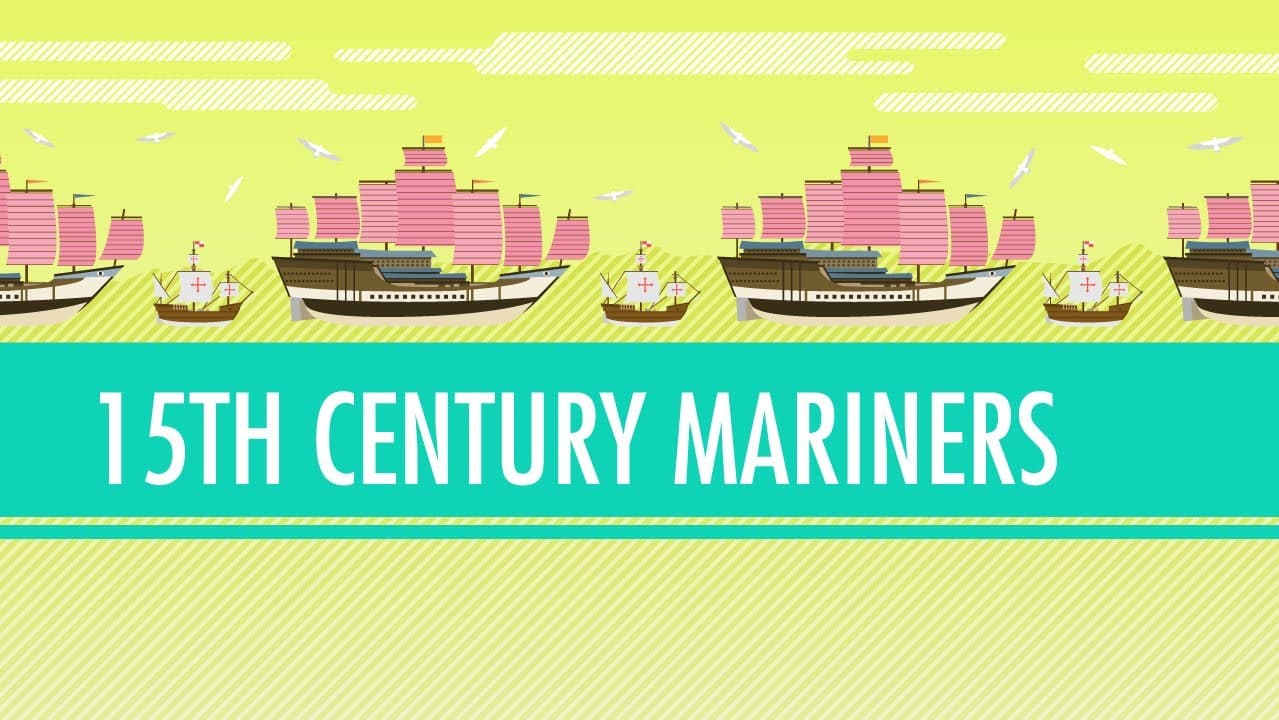
Who Was the Greatest Mariner of the 15th Century?

Who Was the Greatest Mariner of the 15th Century?

This fast-paced World History video compares and contrasts three major 15th-century mariners: China's Zheng He, Portugal's Vasco da Gama, and Spain's Christopher Columbus. It moves beyond the traditional Eurocentric narrative of exploration to examine the massive scale of Chinese naval expeditions and the aggressive trading tactics of the Portuguese in the Indian Ocean. The host, John Green, deconstructs common myths surrounding these figures, particularly focusing on the technological disparities between their fleets and their differing motivations—ranging from imperial prestige to religious zeal and economic extortion. The video explores key historical themes such as the 'Tribute System' of the Ming Dynasty, the concept of a 'Trading Post Empire' established by the Portuguese, and the misconceptions regarding Columbus's navigational skills and beliefs. It provides a detailed look at maritime technology, contrasting the gigantic Chinese treasure ships with the modest European vessels, and explains the geopolitical shifts that led nations to either embrace or abandon naval exploration. For educators, this resource serves as an excellent tool for teaching comparative history and critical thinking. It encourages students to evaluate historical "greatness" through different lenses—administrative competence, navigational daring, or long-term historical impact. The video is particularly useful for units on the Age of Exploration, Global Trade Networks, and the shift from regional to global history.

CrashCourseCrashCourse

10mins 38s

Materials

River Cradle Slides

River Cradle Slides

A dark-themed, visually vibrant classroom slide deck labeled Unit 2: Lesson 3.1 Geography of Mesopotamia, aligned with Arizona History and Social Science standards on every slide, featuring rich photography, high-contrast color-coded cards, and interactive review prompts.

SZ

Sandra Zoerhoff

Mesopotamia Adventure Packet

Mesopotamia Adventure Packet

A 6-page printable-ready student adventure packet about ancient Mesopotamia with enlarged readable Nunito fonts, a 5-paragraph reading passage, 4 text-dependent questions, scaffolded missions, and a culminating Settler Council simulation.

D

destiny.lanier

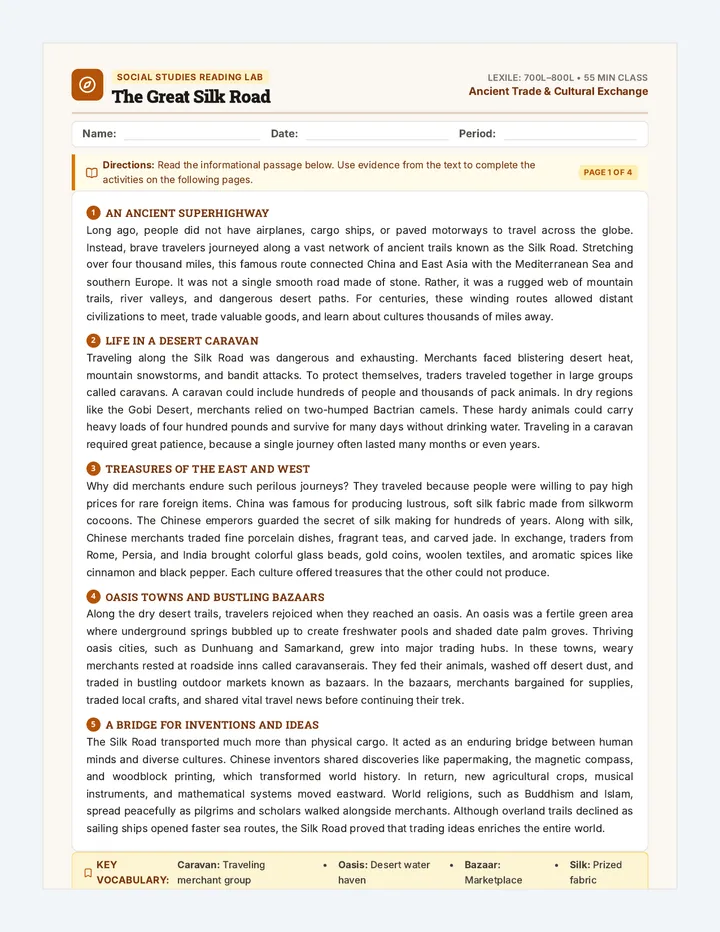
Silk Road Quest Reading Comprehension

Silk Road Quest Reading Comprehension

A comprehensive 4-page social studies reading comprehension packet exploring the ancient Silk Road at a 700-800 Lexile level. Includes a 5-paragraph informational text, 10 multiple choice questions, 10 true/false items, 5 fill-in-the-blank sentences, a verified 10x10 word search, an intersecting crossword puzzle, and 2 evidence-based open response prompts.

WM

Wilberto Mejias

World Celebrations Slides

World Celebrations Slides

An engaging 8-slide classroom presentation for 6th grade introducing global festivals, exploring how cultural traditions, beliefs, and geographic environments shape celebrations worldwide.

J

Jojones

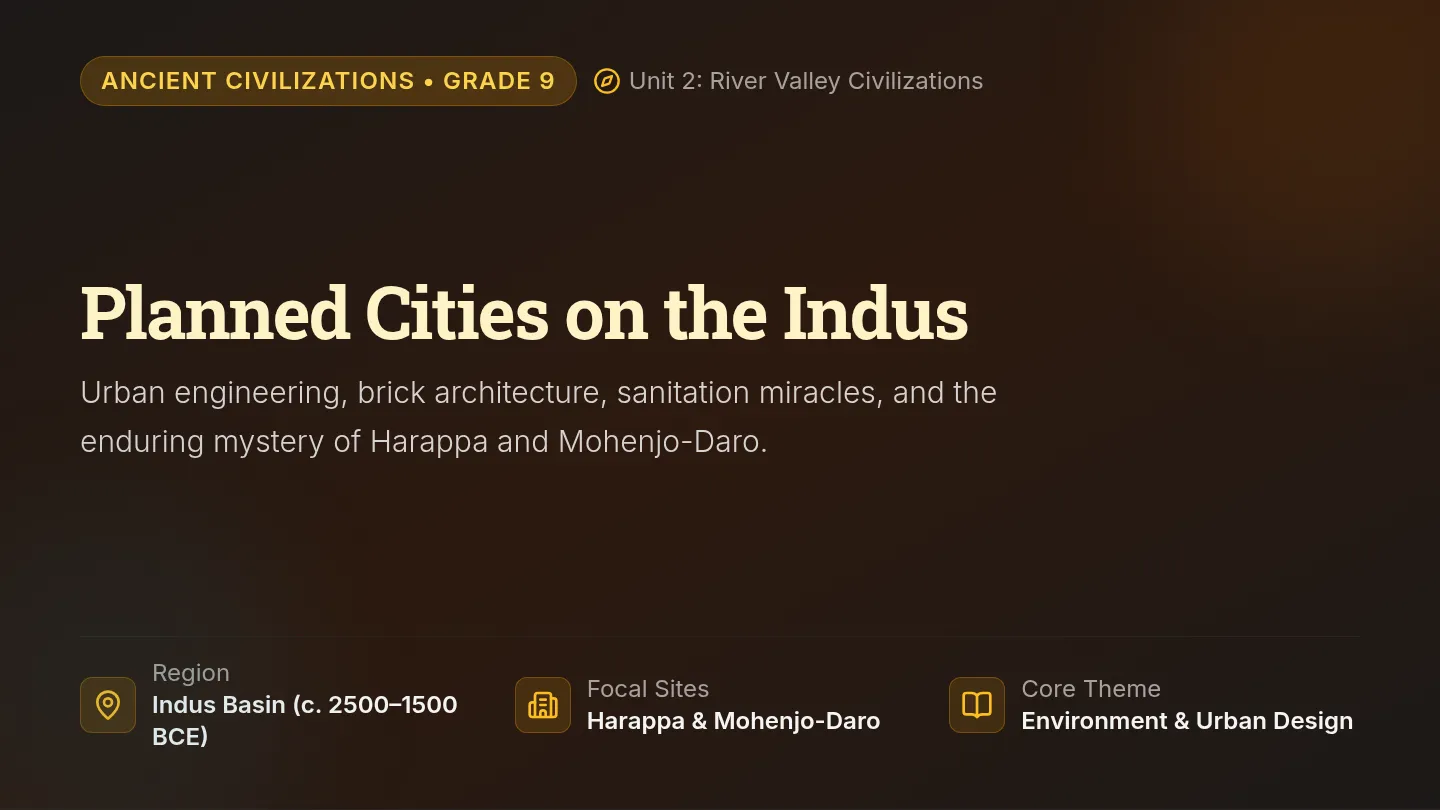
Indus Planned Cities Slides

Indus Planned Cities Slides

A comprehensive 12-slide instructional deck for 9th grade Ancient Civilizations covering the geography, urban planning, sanitation, culture, undeciphered language, trade, and collapse of the Indus Valley civilization.

E

ebakke

Bizarre Malaysia Trivia Slides

Bizarre Malaysia Trivia Slides

An expanded 8-slide presentation featuring a dedicated morning breakfast poll with iconic Malaysian favorites (Nasi Lemak/Roti Canai, Milo & Biscuits, and Kaya Toast & Half-Boiled Eggs), standalone question and reveal slides for each bizarre Malaysian trivia round, and an open-floor cultural sharing wrap-up.

HI

Husna Izzati

Sequences

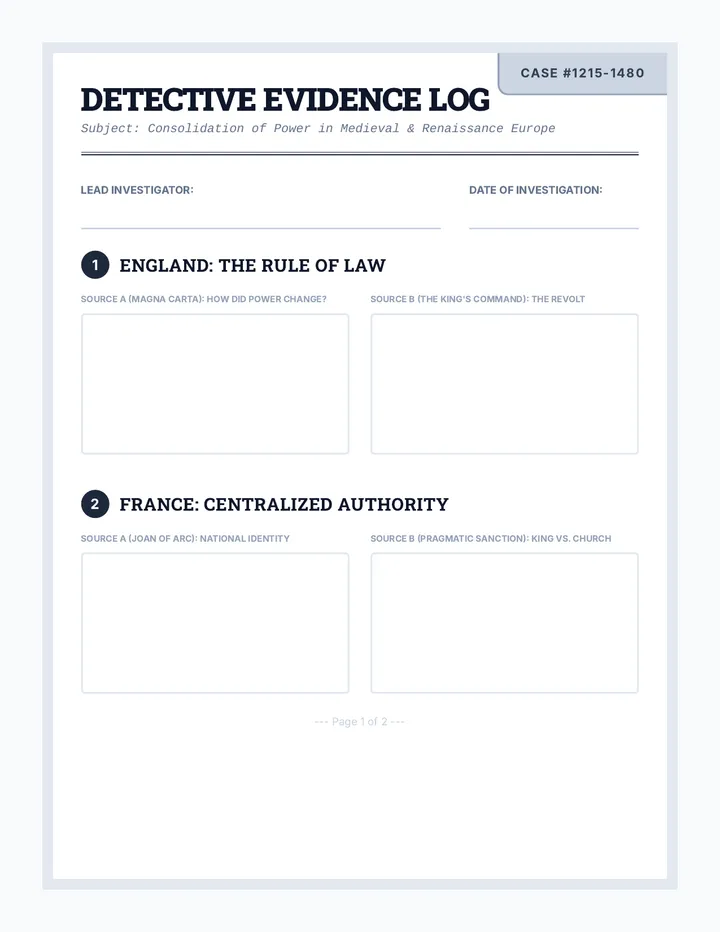
Detective Evidence Log Worksheet

Nation State Detectives

A comprehensive middle school history unit where students act as 'history detectives' to investigate the rise of nation-states in England, France, Spain, and Russia through primary source analysis.

HO

Helen O'Keefe

11
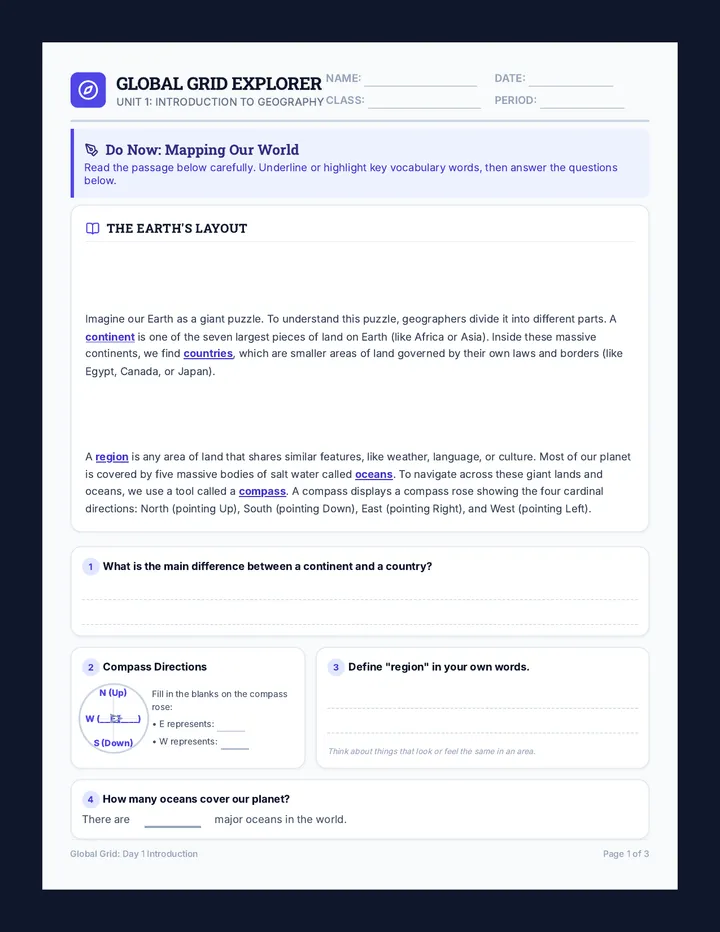
Global Grid Student Handbook

Power of Position

A 4-day introductory world history sequence exploring how geographic location, natural barriers, and famous trade routes shaped the rise, wealth, and power of global empires.

AG

Amina Gueye

14
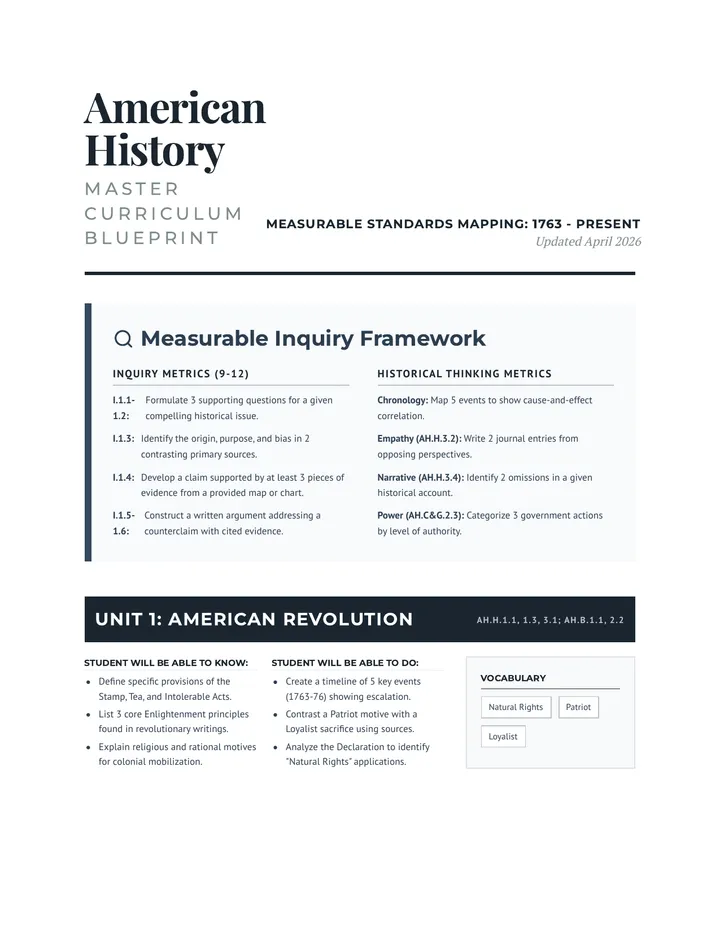
Curriculum Blueprint Document v2

History Horizon Sequence

A comprehensive high school curriculum plan for American History, covering 13 units from the American Revolution to the modern era, aligned with North Carolina Social Studies standards.

AK

Amity Kea

21
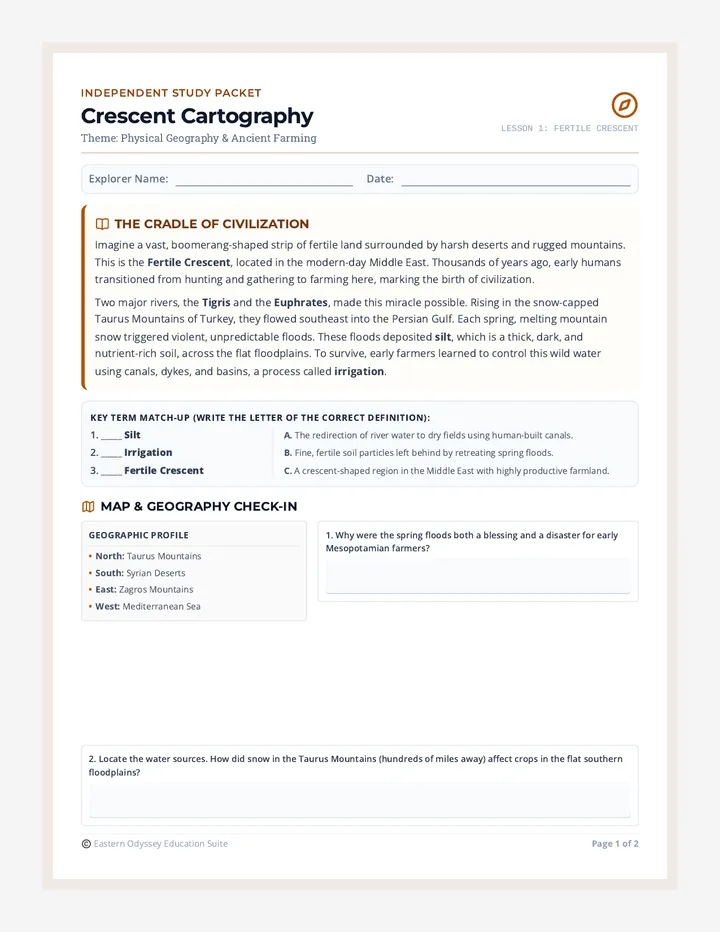
Crescent Cartography Student Packet

Eastern Odyssey Sub Packets

A sequence of 5 highly engaging, self-guided emergency sub plans for 6th-grade Eastern Hemisphere Social Studies, focusing on Ancient Egypt, Mesopotamia, the Fertile Crescent, Monsoon Asia, and Japan's island geography. Each sub plan includes a student packet and a teacher guide.

T

tpayne

10
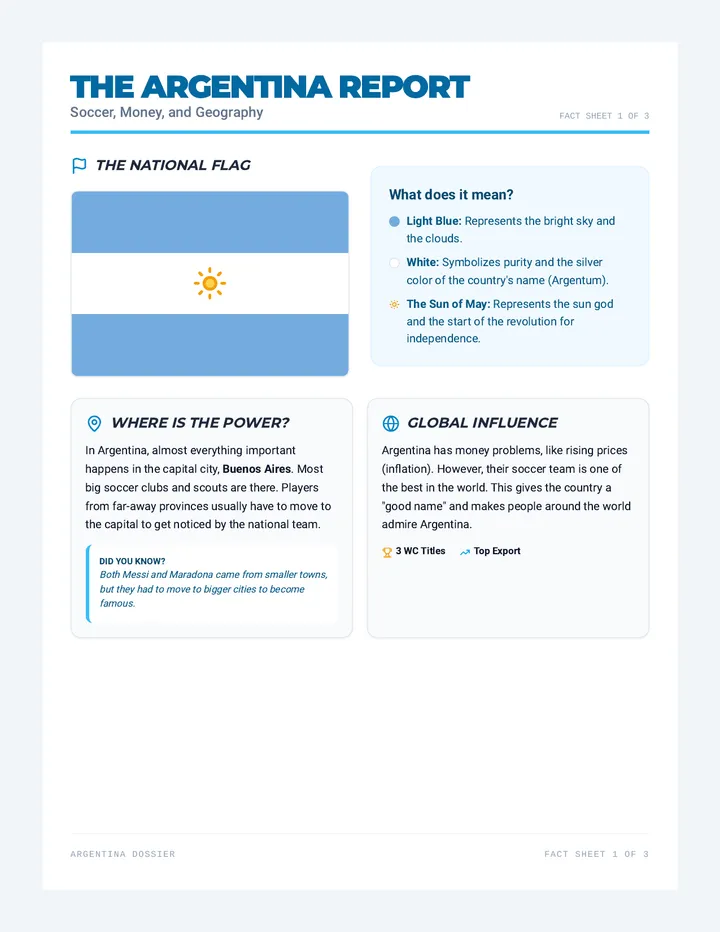
Albiceleste Dossier Packet

Pitch Power World Tour

A comparative study series exploring the geopolitics and economics of different nations through their national soccer teams.

AA

Adam Amster

25
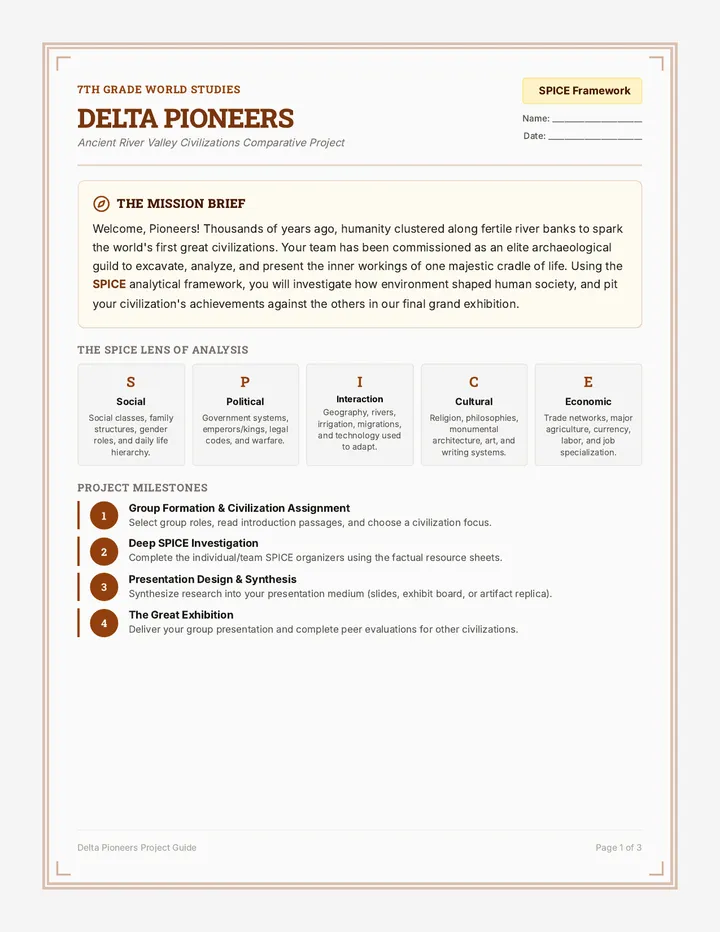
Pioneer Portfolio Project Guide

River Kingdoms

An immersive historical sequence guiding 7th-grade students through the excavation, comparison, and long-term legacy of the world's four primary river valley civilizations using the SPICE framework.

NE

Nicole Elder

9

Lessons

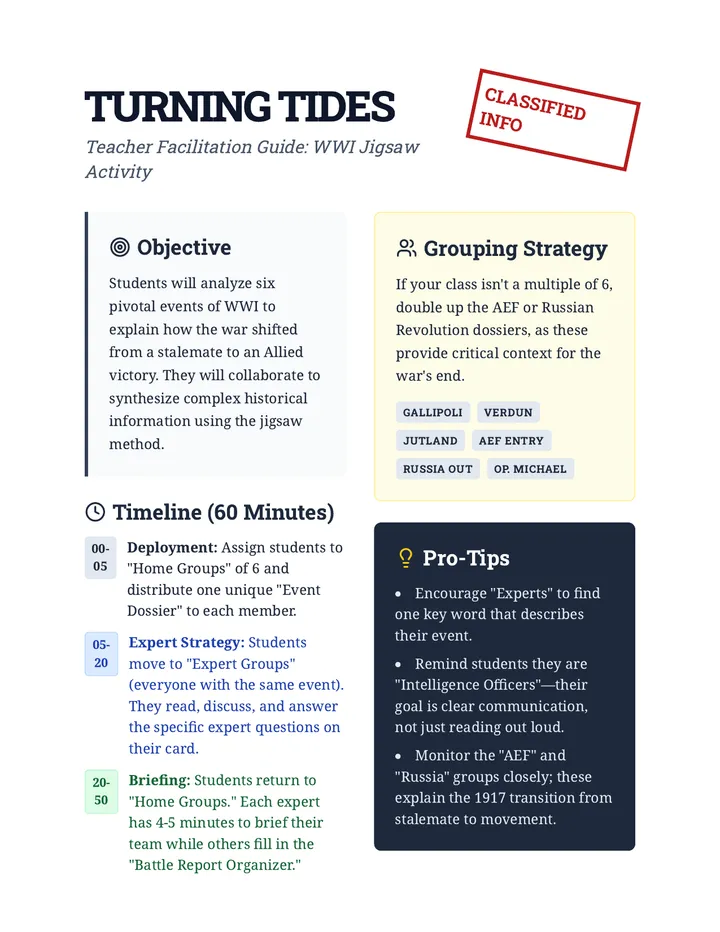
Turning Tides Teacher Guide

Turning Tides

A comprehensive jigsaw activity focusing on six pivotal events of World War I, designed for a 60-minute class session. Students act as intelligence officers to piece together the shifting dynamics of the Great War.

B

bliddy

34
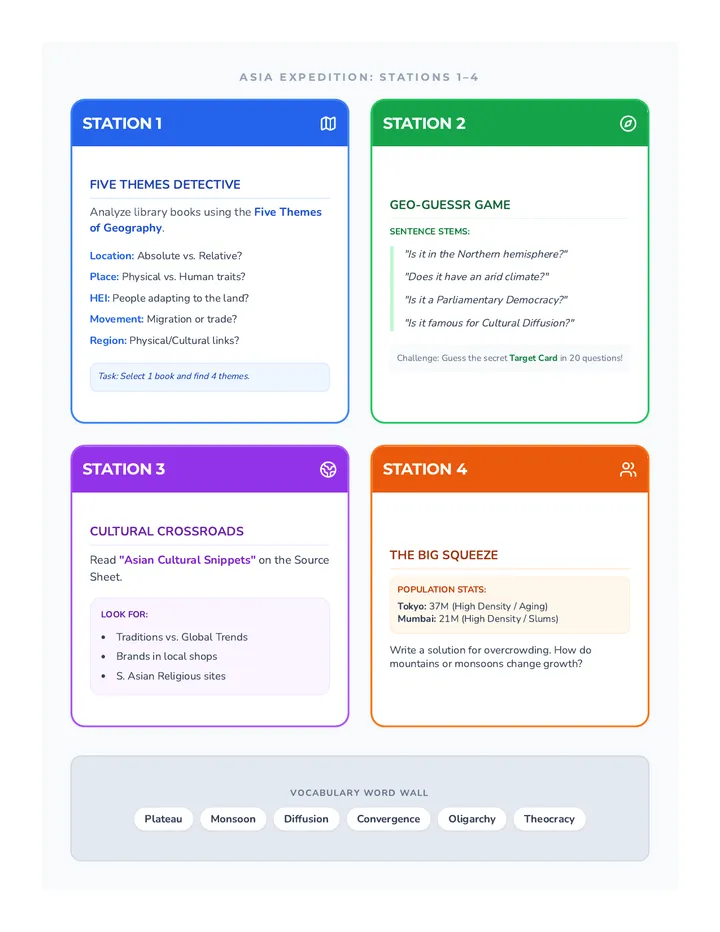
Asia Expedition Task Cards Resource

Asia Expedition Stations

A set of five interactive learning stations focused on the physical and cultural geography of Asia, including population challenges, globalization, and natural disasters. Students practice reading, writing, listening, and speaking skills while analyzing the five themes of geography.

JR

Jessica Ross

4
Asia Expedition Teacher Guide

Asia Expedition Stations微

A four-station rotation activity exploring the geography, culture, and innovations of Asia. Students investigate literary themes, analyze historical conflicts and migrations, map technological impacts, and play a geography-themed speaking game.

JR

Jessica Ross

6
Freedom Struggles Unit Assessment

Freedom Struggles

A comprehensive lesson exploring the divergent paths to independence in India and Vietnam, examining non-violent resistance, armed struggle, and the influence of Cold War ideologies.

AH

Ashley Hopf

8
Explorer Epochs Wall Chart

Early World Explorers

A comprehensive lesson on early world exploration from 300 BCE to 1500 CE, focusing on the geographical, cultural, and religious impacts of key explorers across different continents.

J

jcasey

14
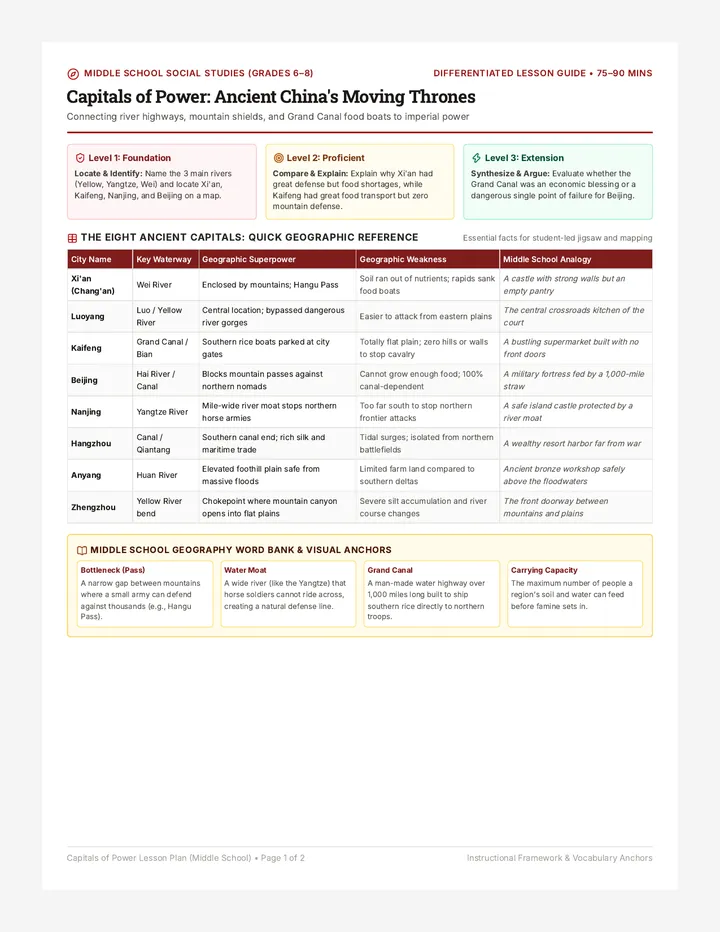
Capitals of Power Lesson Plan

Capitals of Power

An immersive geography and history investigation exploring China's eight ancient capitals, examining how river systems, mountain barriers, and agricultural heartlands dictated imperial power centers over four millennia. Students trace spatial shifts across China's major geographic zones through interactive mapping, comparative trade-off analysis, and strategic case studies.

DB

Danielle Burham

6