Lenny.com
Explore
Create
ActivitiesNewMathEnglish Language ArtsScience & EngineeringSocial StudiesGlobal LanguagesHealth & Physical EducationSpecial EducationCounseling & Life SkillsArts & CreativityESL
Lenny.com
Lenny.com
Explore
Create
ActivitiesNewMathEnglish Language ArtsScience & EngineeringSocial StudiesGlobal LanguagesHealth & Physical EducationSpecial EducationCounseling & Life SkillsArts & CreativityESL
Lenny.com
Lenny.com

Solutions

Lenny for EducatorsLenny for SchoolsLenny for Districts

Product

ExploreSign inCreateSupportAbout

Resources

Getting startedMTSS Acceleration Program

Newsletters

School Funding Newsletter

© 2026 Lenny Learning Inc.

TermsPrivacyAccessibility
LinkedInInstagramX
Lenny

Economic Systems

Fundamental structures of traditional, command, market, and mixed economies. Examines how different societies allocate resources, determine production, and manage distribution through various levels of government intervention and private enterprise.

Social StudiesSocial Studies PracticesLocation WordsMapsOrder EventsChronology and CausationEvaluating SourcesHistorical ThinkingGeography, Humans, & the EnvironmentAmerican Symbols and LandmarksCitiesStatesState CapitalsRegions of the United StatesGeographic SkillsPhysical GeographyHuman GeographyRegional GeographyGeography of AfricaGeography of AsiaGeography of EuropeGeography of OceaniaGeography of the AmericasSociety and Environment of EuropeSociety and Environment of AsiaSociety and Environment of The AmericasSociety and Environment of the Middle EastSociety and Environment of AfricaHistoryPrehistoryComparing Ancient River CivilizationsAncient MesopotamiaAncient Egypt and KushAncient South AsiaEarly ChinaGreeceRome and the Byzantine EmpireAncient World HistoryNative Peoples of North AmericaNative Peoples of Mesoamerica and South AmericaAfrican EmpiresMedieval AsiaMedieval EuropeThe Silk RoadMedieval HistoryIslamic EmpiresWorld ReligionsRenaissance PeriodAge of ExplorationThe Thirteen ColoniesThe American RevolutionUS History Early RepublicFounding of the United StatesUS History AntebellumUS Civil WarReconstruction PeriodThe Gilded AgeUS ImperialismWorld ImperialismWorld War IUS History 1920sGreat DepressionWorld War IIThe Cold WarUS History 1950-60sUS History 1960s-70sWorld History 20th CenturyContemporary US HistoryContemporary World HistoryHolidaysCivics and GovernmentCitizenshipGovernment FoundationsThe ConstitutionUS ConstitutionExecutive BranchLegislative BranchJudicial BranchState and LocalPolitical ParticipationPublic PolicyPolitical SystemsPower and AuthoritySocial MovementsDefining DevianceTheories of DevianceCrime and Criminal JusticeEconomicsBasic Economic PrinciplesSupply and DemandWhat is MoneyEconomic FundamentalsMicroeconomicsMacroeconomicsBanking and FinanceEconomic SystemsGlobal EconomicsCorporations and PowerThe Changing WorkplaceUnemployment and LaborClass and InequalitySocial MobilityGlobal InequalityPsychologyHistory of PsychologyPsychology as a ScienceBrain and Nervous SystemNeuroscience and BehaviorGenetics and BehaviorSleep and ConsciousnessSensory ProcessesPerceptual OrganizationClassical ConditioningOperant ConditioningObservational LearningCognitive LearningMemory ProcessesThinking and Problem SolvingLanguage and CognitionTheories of MotivationStress and CopingPrenatal and Infant DevelopmentChildhood DevelopmentAdolescent DevelopmentAdulthood and AgingSelf and IdentitySocial CognitionSocial InfluenceAttraction and RelationshipsGroup BehaviorPrejudice and DiscriminationAnxiety and Mood DisordersClinical PsychologyForensic PsychologyPhilosophy & EthicsIntroduction to PhilosophyMajor Philosophers & IdeasMind and Body ProblemFree Will vs DeterminismEthics & MoralityReligion & PhilosophyPolitical Philosophy

Videos

How Your T-Shirt Explains the Global Economy

How Your T-Shirt Explains the Global Economy

In this energetic installment of Crash Course World History, John Green tackles the complex subject of globalization by focusing primarily on international trade and cultural exchange. Using the lifecycle of a simple cotton t-shirt as a central case study, the video illustrates how economic interdependence connects farmers in the US, textile workers in low-wage countries, and consumers worldwide. It breaks down the drivers of modern globalization, including multinational corporations, cheap shipping, and reduced government regulations. The video explores both the benefits and drawbacks of this interconnected system. It highlights how globalization has lifted hundreds of millions out of poverty in developing nations through manufacturing jobs, while simultaneously disrupting industries in developed nations and raising questions about environmental sustainability and labor conditions. The narrative also touches on cultural globalization, discussing migration, remittances, and the blending of global cultures through food, media, and sports. For educators, this video serves as an excellent primer for units on modern economics, human geography, or contemporary history. It provides concrete examples that make abstract economic concepts tangible for students. The "Journey of a T-Shirt" segment offers a perfect launchpad for classroom activities involving supply chain mapping, while the discussion on cultural homogenization versus diversification provides rich material for debates and essays.

CrashCourseCrashCourse

11mins 51s

The Rise and Impact of Industrial Capitalism

The Rise and Impact of Industrial Capitalism

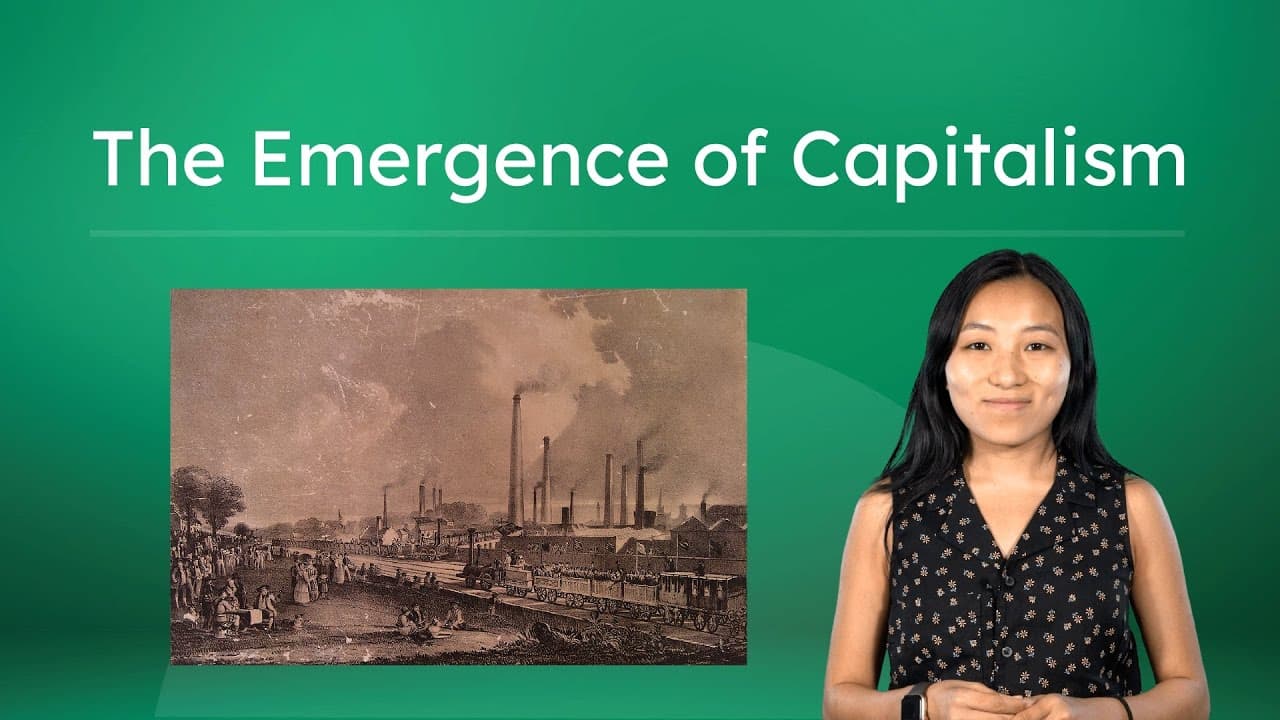
This educational video provides a comprehensive overview of capitalism's emergence during the Industrial Revolution, contrasting it with the preceding feudal system. It uses a modern-day analogy of a t-shirt business to explain complex economic concepts like profit, supply and demand, and market exchange before diving into the historical realities of Industrial England. The narrator introduces key figures like Adam Smith and concepts such as laissez-faire economics, explaining how the shift from subsistence farming to mass production fundamentally changed society. The video presents a balanced analysis of industrial-era capitalism by detailing both its significant benefits—such as self-determination, innovation, and massive economic growth (GDP)—and its severe drawbacks. These drawbacks include extreme wealth inequality, worker exploitation (including child labor and dangerous conditions), the rise of monopolies, and environmental degradation. The content highlights the complexities of the system, showing how it led to both unprecedented prosperity for some and difficult lives for others. For educators, this resource serves as an excellent primer for units on the Industrial Revolution, Economics, or World History. It effectively breaks down abstract economic terms into digestible examples and provides clear visual data (graphs on GDP and wages) that allow for quantitative analysis in the classroom. The video concludes by setting the stage for government regulation and the rise of labor unions, making it a perfect bridge to lessons on social reform movements.

Miacademy & MiaPrep Learning ChannelMiacademy & MiaPrep Learning Channel

17mins 35s

Exploring the Geography and Culture of Turkey, Iran, and Cyprus

Exploring the Geography and Culture of Turkey, Iran, and Cyprus

This educational video takes students on a comprehensive journey through three key nations in Southwest Asia: Turkey, Iran, and Cyprus. Hosted by an engaging narrator, the lesson explores the physical geography, government structures, economic drivers, and rich cultural traditions of these countries. It highlights how they are geographically linked to the Fertile Crescent and explores their unique positions as bridges between Europe and Asia.

Miacademy & MiaPrep Learning ChannelMiacademy & MiaPrep Learning Channel

11mins 24s

Exploring South America's Northern Tropics: Geography and Culture

Exploring South America's Northern Tropics: Geography and Culture

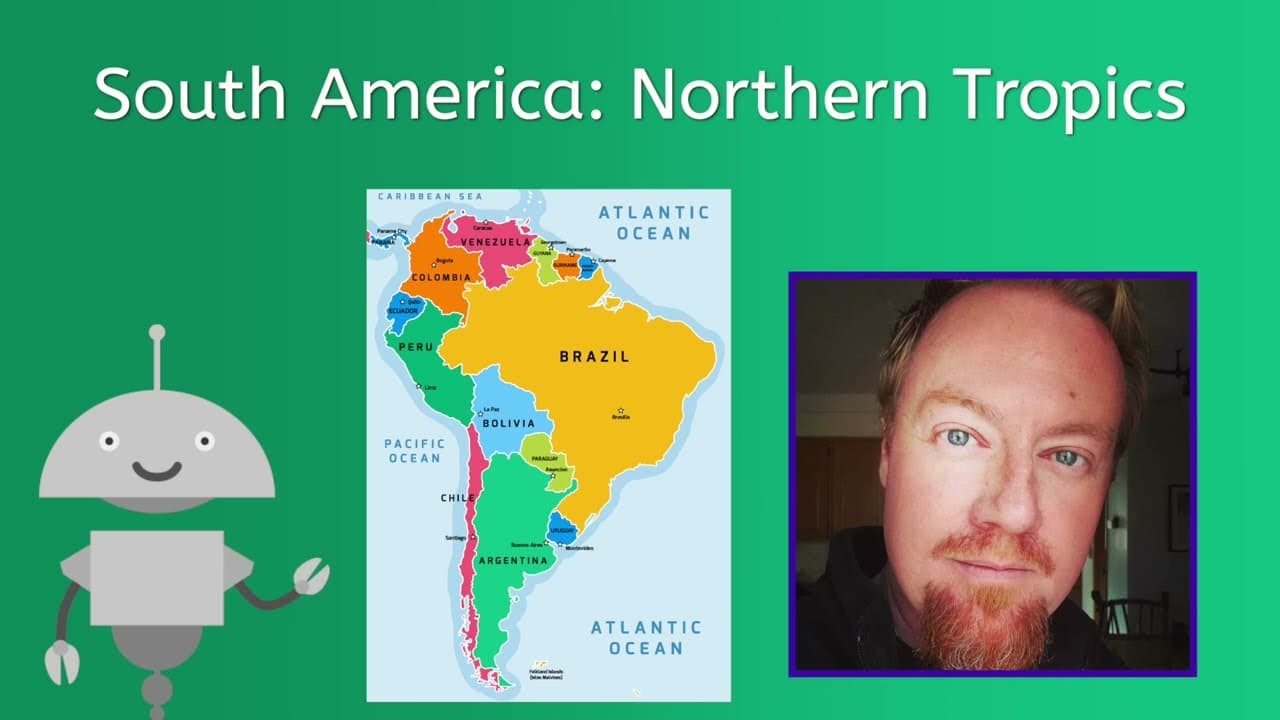
This video provides a comprehensive geographic and cultural overview of the Northern Tropics region of South America, specifically examining French Guiana, Suriname, Guyana, Venezuela, and Colombia. The narration breaks down the region's diverse physical geography, ranging from the Amazon rainforest and the Guiana Highlands to the Andean peaks and coastal plains. It contrasts the unique colonial histories of each territory, explaining how French, Dutch, British, and Spanish influences have shaped the modern linguistic and religious demographics of the population. Key themes include the economic reliance on natural resources and agriculture, with deep dives into Venezuela's oil-dependent economy and subsequent crisis, as well as Colombia's coffee industry and struggles with the illegal drug trade. The video also highlights the impact of historical migration patterns, including the legacy of the trans-Atlantic slave trade and Asian indentured servitude, on the current ethnic composition of these nations. For educators, this video serves as a powerful tool for comparative regional studies in geography and economics. It allows for rich discussions on human-environment interaction, the "resource curse" in developing economies, and the lasting effects of colonialism. The content bridges physical geography with contemporary social issues, making it ideal for units on Latin America, global economics, or cultural geography.

Miacademy & MiaPrep Learning ChannelMiacademy & MiaPrep Learning Channel

11mins 52s

Course Preview: Intellectual Property and Economics

Course Preview: Intellectual Property and Economics

In this channel update and course preview, host John Green announces the conclusion of the World History series and introduces two upcoming courses: Intellectual Property and Economics. The video serves as a transition point for the channel, explaining the shift in hosts and topics for the coming season. The video outlines the scope of the new series. First, it introduces a mini-series on Intellectual Property and Copyright Law hosted by Stan Muller, emphasizing its relevance to creators and internet users. Second, it previews Crash Course Economics, hosted by Adriene Hill and Jacob Clifford, with Green humorously highlighting the complexity of discussing capitalism's pros and cons. Finally, Green discusses his temporary departure to focus on writing a book. While primarily an announcement, this video acts as an excellent 'hook' or syllabus introduction for teachers starting units on Economics, Civics, or Media Literacy. It helps set expectations for students, introduces the new instructors, and briefly touches on the 'why' behind studying intellectual property and economic systems, sparking initial curiosity.

CrashCourseCrashCourse

1min 56s

How Cotton Became King: The Economics of Slavery

How Cotton Became King: The Economics of Slavery

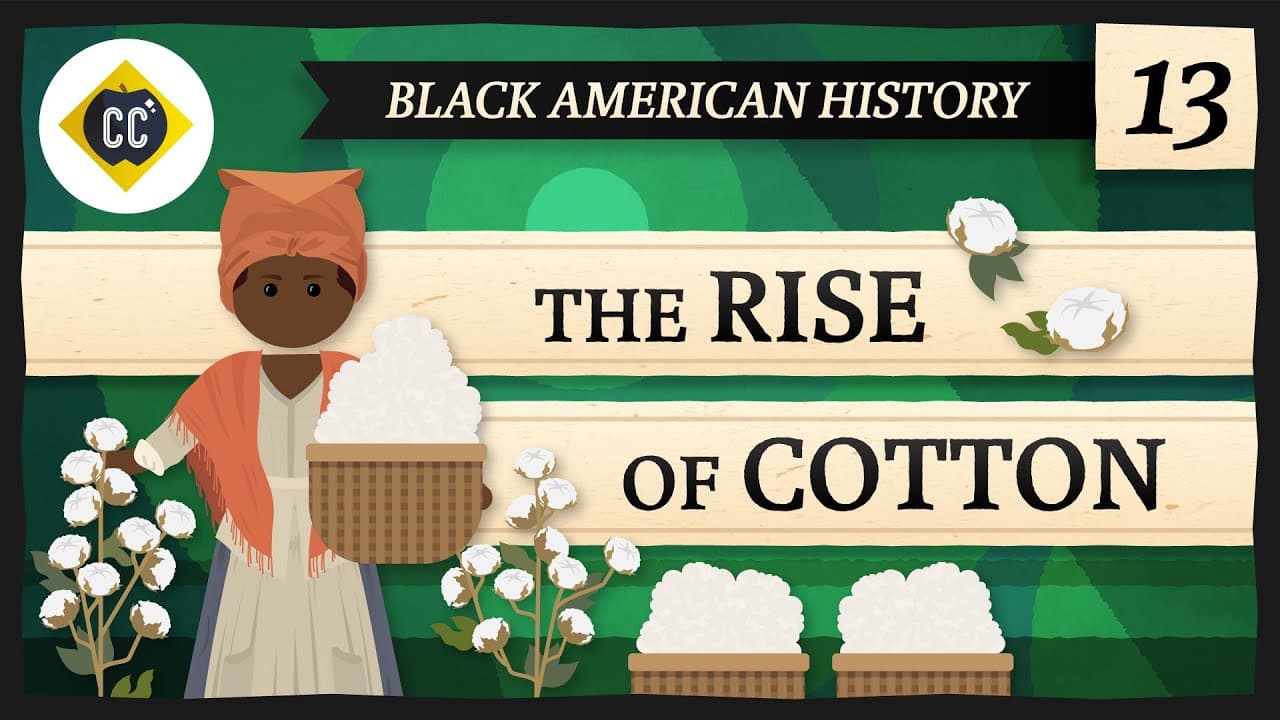
In this episode of Crash Course Black American History, Clint Smith explores the profound economic entanglement of the cotton industry and the institution of slavery in the United States. The video details how cotton became the first mass consumer commodity, transforming the U.S. into a global economic superpower while simultaneously entrenching the brutal system of chattel slavery. It explains how the invention of the cotton gin in 1793 by Eli Whitney inadvertently revitalized slavery by making cotton processing exponentially more efficient, leading to an insatiable demand for land and enslaved labor. The narrative expands beyond the Southern plantations to illustrate the complicity of the Northern United States and European powers, particularly Great Britain. Viewers learn that Northern banks, insurance companies, and textile mills were deeply invested in the cotton trade, debunking the myth that slavery was solely a Southern issue. The video highlights how the wealth generated by enslaved people fueled the Industrial Revolution and created economic disparities that persist today. Critically, the video connects historical events to modern sociological realities, specifically the racial wealth gap. Smith explains how centuries of unpaid labor, followed by systems like sharecropping and the denial of property rights, prevented Black families from building generational wealth. This resource is excellent for helping students understand the economic foundations of American history, the systemic nature of inequality, and the long-term consequences of historical policies on present-day society.

CrashCourseCrashCourse

12mins 11s

Materials

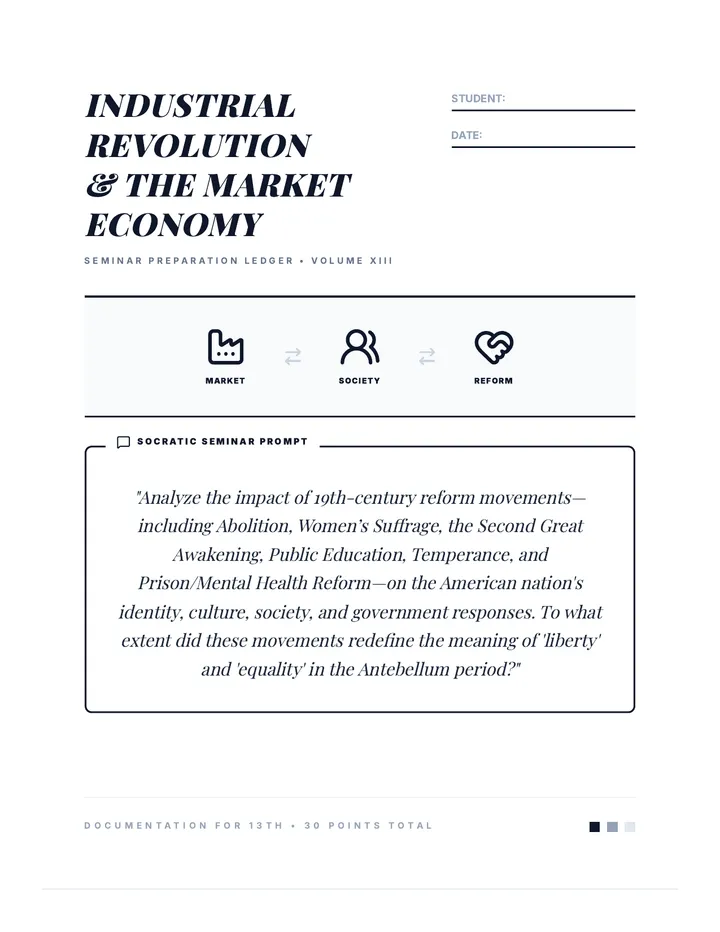
Market Economy Seminar Ledger

Market Economy Seminar Ledger

A detailed 5-page seminar preparation ledger for the Industrial Revolution and Market Economy lesson. Features a dedicated cover page with relevant historical icons and a prominent Socratic prompt, three separate article analysis pages, and a final synthesis evaluation. Writing lines are darkened for optimal print quality.

JG

Joshua Griffith

US Communities Slides

US Communities Slides

A 10-slide presentation designed for Grade 3-4 SWD students exploring U.S. communities (urban vs. rural), economic trade, and democratic government. Every slide features an accessible objective paired directly with New York Social Studies and Next Generation ELA learning standard numbers.

ML

Mrs Lindor

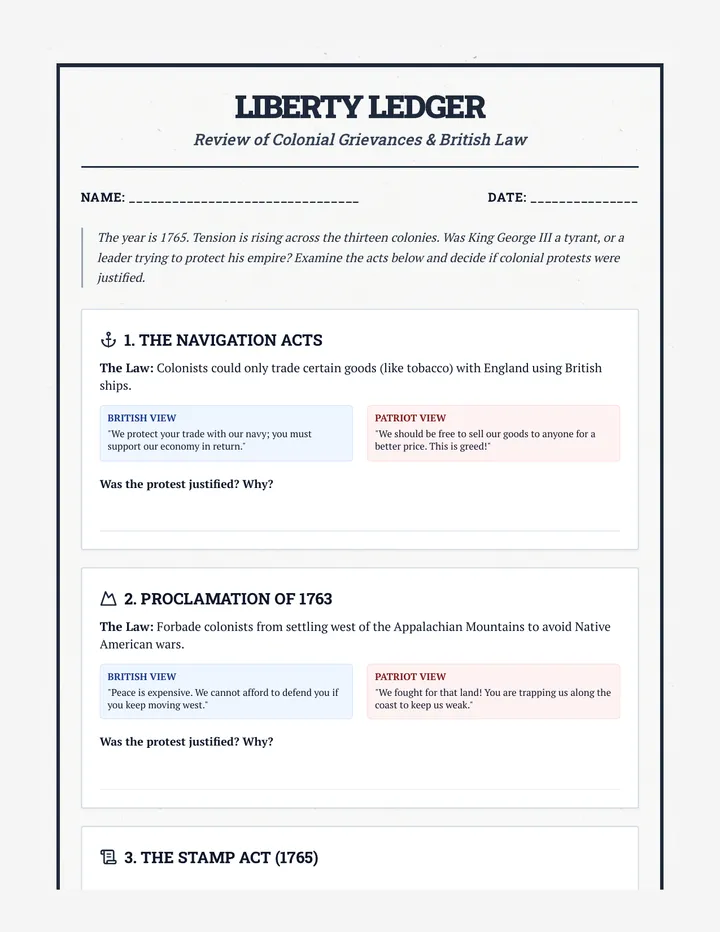
Liberty Ledger Assignment

Liberty Ledger Assignment

A two-sided homework assignment reviewing the Navigation Acts, Proclamation of 1763, and the Stamp Act. It prompts students to evaluate both British and Patriot perspectives to determine if colonial protests were justified. Margins have been significantly reduced for better print utilization on standard paper.

EK

Emily Kemnitz

Island Economy Rubric

Island Economy Rubric

A comprehensive 50-point assessment rubric for the Create Your Own Economy island simulation project, evaluating economic content accuracy, comparative analysis, critical thinking trade-offs, geographic map design, visual creativity, and written communication.

MQ

Melanie Quick

Historical Crossroads Inquiry Worksheet

Historical Crossroads Inquiry Worksheet

A two-page historical inquiry investigation dossier for students exploring a significant local event and its multifaceted community consequences, featuring source evaluation, a consequence matrix, and a modern legacy synthesis.

AV

Andrew Vandenberg

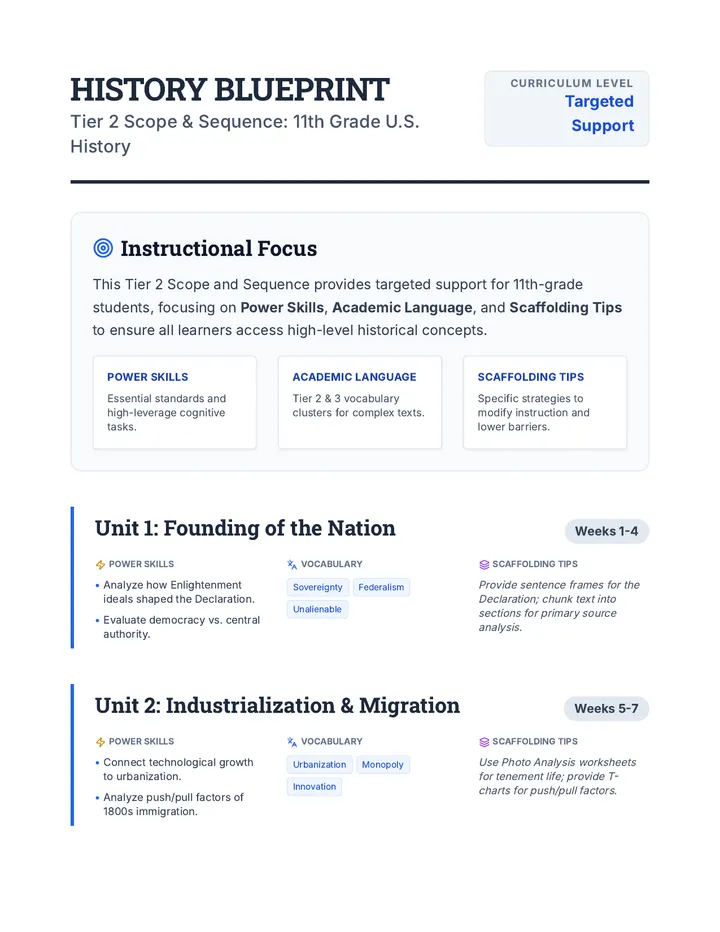
History Blueprint Scope and Sequence

History Blueprint Scope and Sequence

An updated Tier 2 Scope and Sequence for 11th Grade U.S. History, now including specific scaffolding tips for each unit alongside power skills and academic vocabulary. The layout is optimized for teacher reference with instructional strategies tailored for targeted support.

D

dfleisch

Sequences

Invention Boom Slides

Modern Era Odyssey

A 13-day journey through modern American history, from the Industrial Revolution to the present day, focusing on key historical figures and major conflicts as outlined in the 5th Grade TEKS. Each lesson is designed for a quick 30-minute block, integrating multimedia and primary source analysis.

CH

Courtney Holdren

49
Economics Essentials Facilitation Guide

Economics Essentials Packet

A 7-day remediation packet for 12th-grade economics focusing on fundamental concepts like scarcity, supply and demand, economic systems, and international trade, scaffolded for accessibility.

CE

Chelsea Elliott

29
Cotton Kingdom Slides

Divided Nation

A 4-part exploration of the deep-seated tensions and pivotal events that led the United States to the brink of the Civil War, focusing on economic shifts, legislative compromises, and political flashpoints.

IA

Isabella Adkins

9
Peaks and Valleys Teacher Guide

Copper State Chronicles

A 4-day social studies unit for 3rd grade focusing on Arizona's geography, history, and economy, specifically designed to meet standard 3.RI.9 by comparing and contrasting key details across multiple texts.

TD

Taylor Doucet

13
Reconstruction Reckoning Worksheet

Modern America

A comprehensive journey through United States history from the aftermath of the Civil War to the contemporary era, exploring the social, political, and economic shifts that shaped the modern nation.

DP

Darren Polamalu

18
Mobilization Intro Slides

Global Conflict WWII

A comprehensive 2-day unit covering World War II for 11th Grade US History, aligned with TEKS. It focuses on the transition from isolationism to total war, the home front experience, major turning points in both the European and Pacific theaters, and the strategic decisions that ended the conflict.

BB

Bridgette Burdick

17

Lessons

History Sprint Pacing Guide

STAAR History Sprint

A comprehensive pacing guide and activity resource designed to cover the remaining 11th Grade US History TEKS before the STAAR test on April 16th. This lesson provides a day-by-day calendar for A/B block schedules and high-engagement activities for each remaining historical era.

BB

Bridgette Burdick

51
Border Lines Activity

Harriet Tubman Escape

A lesson exploring Harriet Tubman's 1850 escape and the significance of the Mason-Dixon Line as a geographical and legal boundary in the pre-Civil War United States.

TL

Tanya Larson

46
Modern Era Reader Part 1

The Modern Ledger

A comprehensive exploration of the 1990s through the modern day, covering technological shifts, political milestones, military conflicts, and cultural evolution in the United States.

CE

Chelsea Elliott

20
Asia Expedition Task Cards Resource

Asia Expedition Stations

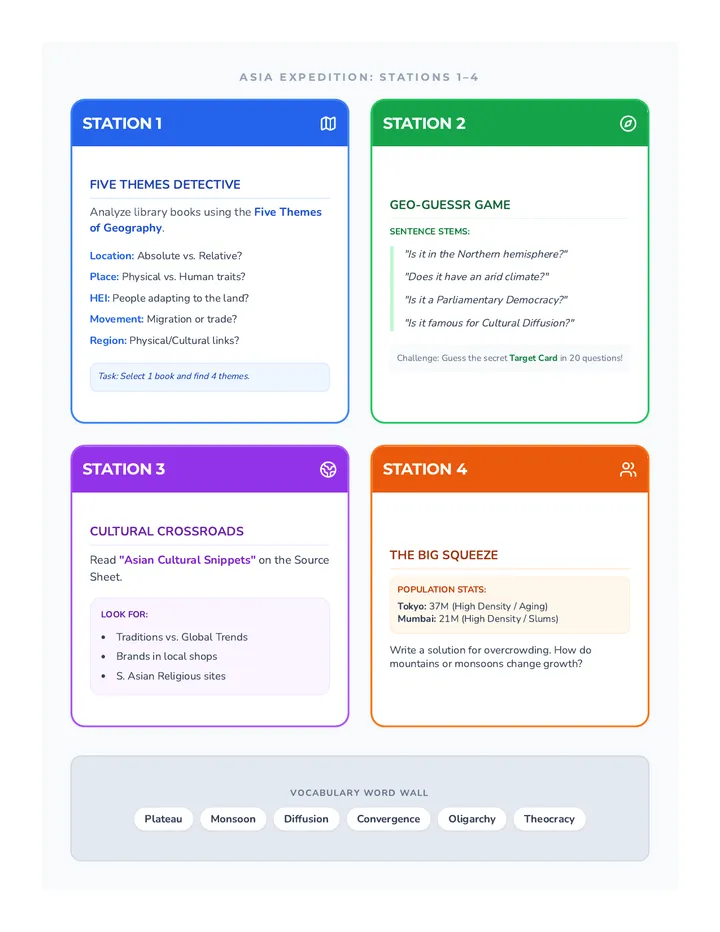
A set of five interactive learning stations focused on the physical and cultural geography of Asia, including population challenges, globalization, and natural disasters. Students practice reading, writing, listening, and speaking skills while analyzing the five themes of geography.

JR

Jessica Ross

4
Latin American Ledger Reading

The Latin American Ledger Project

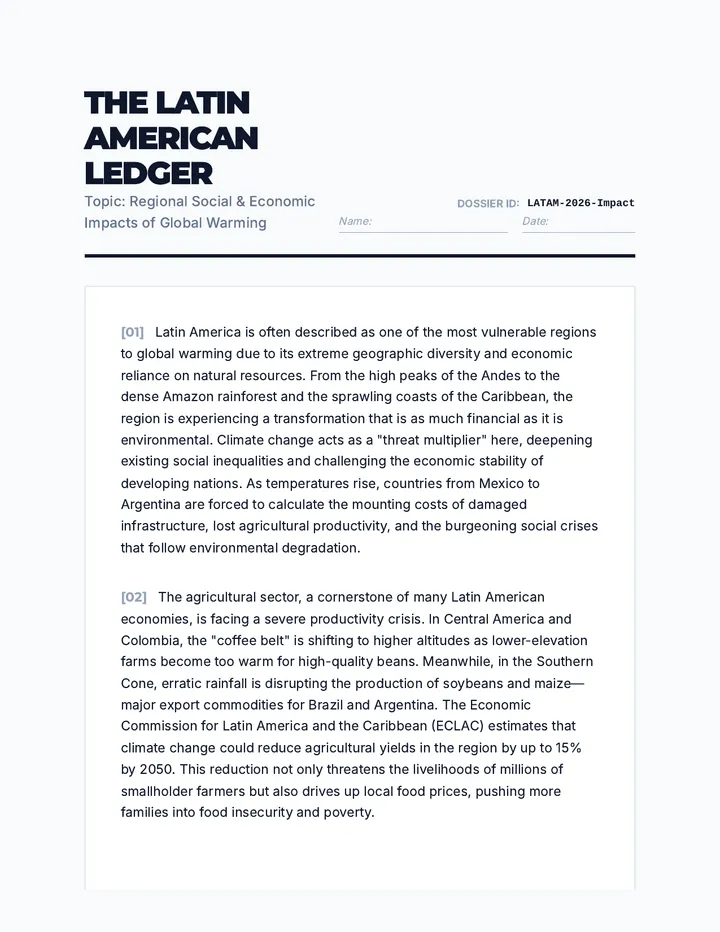
A regional investigation into the social and economic consequences of global warming in Latin America, focusing on human displacement, glacial melt in the Andes, and agricultural shifts. Students analyze a detailed text and construct a Claim-Evidence-Reasoning (CER) argument.

GJ

Gerardo Jimenez Ramirez

10
Mission Briefing Teacher Guide

Modern Era Missions

A 100-minute station-based lesson covering pivotal events from the 1970s to the modern era, including Stagflation, the Camp David Accords, Reaganomics, and the War on Terror. Students rotate through four 20-minute missions using primary sources, political cartoons, data mapping, and manipulatives to master STAAR-aligned content.

LF

Lindsey Foulks

9