Lenny.com
Explore
Create
ActivitiesNewMathEnglish Language ArtsScience & EngineeringSocial StudiesGlobal LanguagesHealth & Physical EducationSpecial EducationCounseling & Life SkillsArts & CreativityESL
Lenny.com
Lenny.com
Explore
Create
ActivitiesNewMathEnglish Language ArtsScience & EngineeringSocial StudiesGlobal LanguagesHealth & Physical EducationSpecial EducationCounseling & Life SkillsArts & CreativityESL
Lenny.com
Lenny.com

Solutions

Lenny for EducatorsLenny for SchoolsLenny for Districts

Product

ExploreSign inCreateSupportAbout

Resources

Getting startedMTSS Acceleration Program

Newsletters

School Funding Newsletter

© 2026 Lenny Learning Inc.

TermsPrivacyAccessibility
LinkedInInstagramX
Lenny

Theories of Deviance

Analyzes sociological perspectives on norm violations and societal reactions. Examines strain, labeling, and conflict theories to understand how legal and social systems define and manage deviance.

Social StudiesSocial Studies PracticesLocation WordsMapsOrder EventsChronology and CausationEvaluating SourcesHistorical ThinkingGeography, Humans, & the EnvironmentAmerican Symbols and LandmarksCitiesStatesState CapitalsRegions of the United StatesGeographic SkillsPhysical GeographyHuman GeographyRegional GeographyGeography of AfricaGeography of AsiaGeography of EuropeGeography of OceaniaGeography of the AmericasSociety and Environment of EuropeSociety and Environment of AsiaSociety and Environment of The AmericasSociety and Environment of the Middle EastSociety and Environment of AfricaHistoryPrehistoryComparing Ancient River CivilizationsAncient MesopotamiaAncient Egypt and KushAncient South AsiaEarly ChinaGreeceRome and the Byzantine EmpireAncient World HistoryNative Peoples of North AmericaNative Peoples of Mesoamerica and South AmericaAfrican EmpiresMedieval AsiaMedieval EuropeThe Silk RoadMedieval HistoryIslamic EmpiresWorld ReligionsRenaissance PeriodAge of ExplorationThe Thirteen ColoniesThe American RevolutionUS History Early RepublicFounding of the United StatesUS History AntebellumUS Civil WarReconstruction PeriodThe Gilded AgeUS ImperialismWorld ImperialismWorld War IUS History 1920sGreat DepressionWorld War IIThe Cold WarUS History 1950-60sUS History 1960s-70sWorld History 20th CenturyContemporary US HistoryContemporary World HistoryHolidaysCivics and GovernmentCitizenshipGovernment FoundationsThe ConstitutionUS ConstitutionExecutive BranchLegislative BranchJudicial BranchState and LocalPolitical ParticipationPublic PolicyPolitical SystemsPower and AuthoritySocial MovementsDefining DevianceTheories of DevianceCrime and Criminal JusticeEconomicsBasic Economic PrinciplesSupply and DemandWhat is MoneyEconomic FundamentalsMicroeconomicsMacroeconomicsBanking and FinanceEconomic SystemsGlobal EconomicsCorporations and PowerThe Changing WorkplaceUnemployment and LaborClass and InequalitySocial MobilityGlobal InequalityPsychologyHistory of PsychologyPsychology as a ScienceBrain and Nervous SystemNeuroscience and BehaviorGenetics and BehaviorSleep and ConsciousnessSensory ProcessesPerceptual OrganizationClassical ConditioningOperant ConditioningObservational LearningCognitive LearningMemory ProcessesThinking and Problem SolvingLanguage and CognitionTheories of MotivationStress and CopingPrenatal and Infant DevelopmentChildhood DevelopmentAdolescent DevelopmentAdulthood and AgingSelf and IdentitySocial CognitionSocial InfluenceAttraction and RelationshipsGroup BehaviorPrejudice and DiscriminationAnxiety and Mood DisordersClinical PsychologyForensic PsychologyPhilosophy & EthicsIntroduction to PhilosophyMajor Philosophers & IdeasMind and Body ProblemFree Will vs DeterminismEthics & MoralityReligion & PhilosophyPolitical Philosophy

Videos

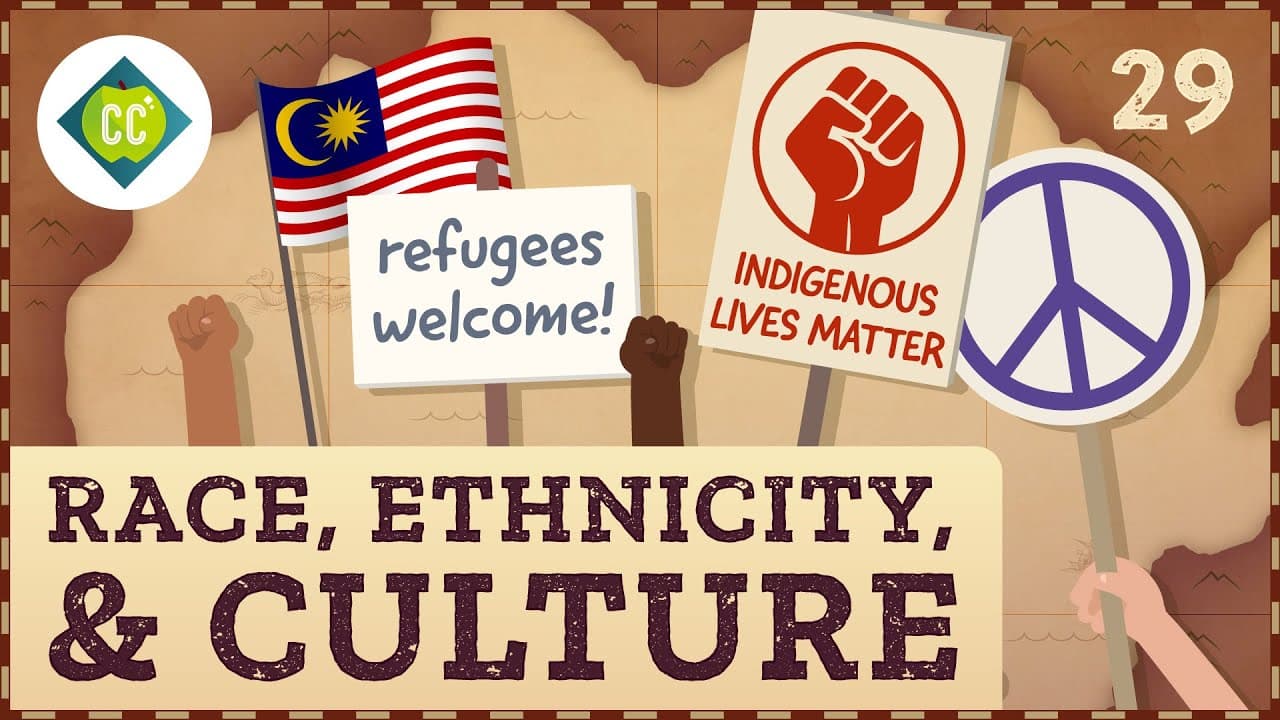
How Culture and Power Shape the Landscape

How Culture and Power Shape the Landscape

This installment of Crash Course Geography explores the intricate relationship between culture, identity, and the physical environments humans create. Host Alizé Carrère introduces the field of cultural geography, demonstrating how abstract concepts like values, beliefs, and social norms leave a visible imprint on the world—known as the "cultural landscape." Using Kuala Lumpur, Malaysia as a primary case study, the video illustrates how diverse ethnic and religious groups coexist, mix, and influence the architecture, food, and daily life of a city. The video addresses complex and sensitive themes regarding how cultures interact, distinguishing between natural "acculturation" (mixing like a stew) and forced "assimilation" (erasing identity). It candidly discusses power dynamics, tackling heavy subjects such as the social construction of race, the history of indigenous residential schools, xenophobia, and the plight of stateless nations. By examining how dominant groups can marginalize others, the content provides a geographical framework for understanding social justice issues. For educators, this resource is invaluable for AP Human Geography, Sociology, and World History curriculums. It moves beyond simple definitions to foster critical thinking about how power shapes space and identity. The video provides clear vocabulary and engaging visual metaphors—like the "cultural canvas"—that help students decode the signals in their own neighborhoods while navigating difficult conversations about racism and historical trauma with empathy and academic rigor.
CrashCourseCrashCourse

12mins 5s

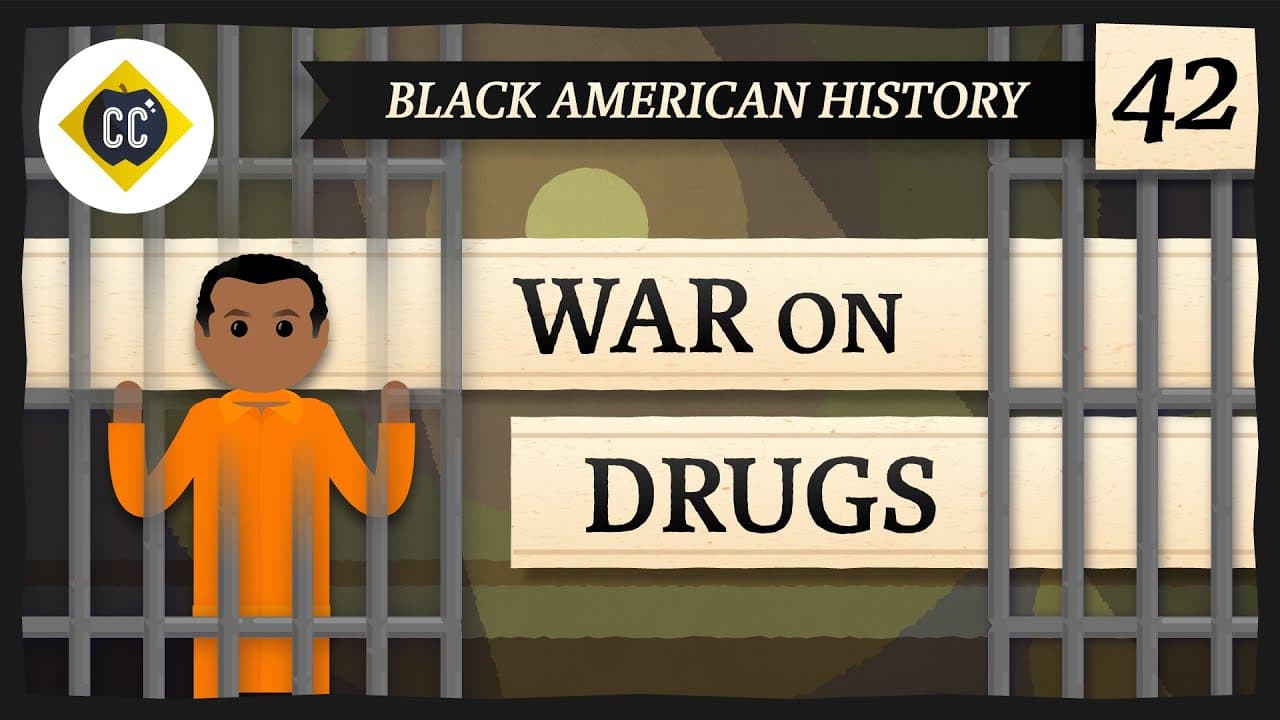
How the War on Drugs Fueled Mass Incarceration

How the War on Drugs Fueled Mass Incarceration

This installment of Crash Course Black American History provides an in-depth analysis of the "War on Drugs," examining its origins, implementation, and devastating impact on Black communities in the United States. Hosted by Clint Smith, the video traces the evolution of drug policy from the "War on Crime" in the 1960s under LBJ, through the official declaration by Richard Nixon, to the escalation under Ronald Reagan and Bill Clinton. It highlights how policies that were ostensibly about public safety evolved into mechanisms of mass incarceration that disproportionately targeted Black and Brown Americans.

CrashCourseCrashCourse

13mins 4s

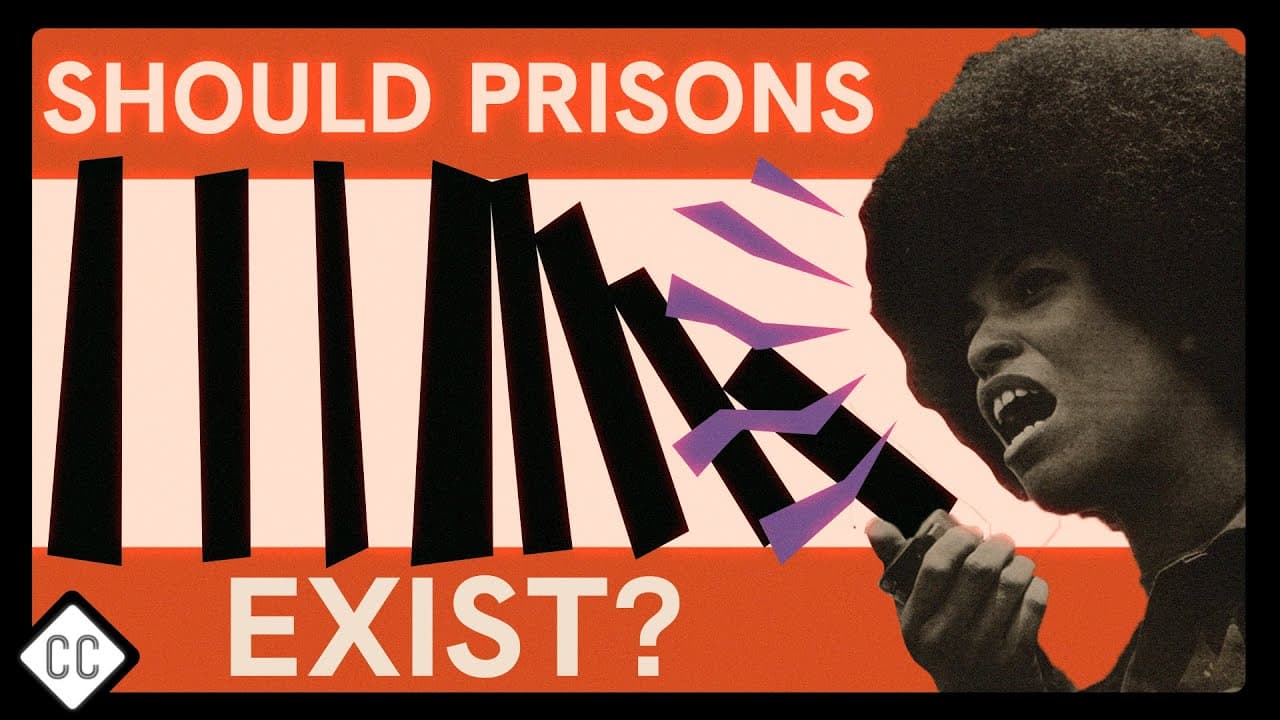
The Theories Behind Prison, Punishment, and Abolition

The Theories Behind Prison, Punishment, and Abolition

This episode of Crash Course Political Theory explores the history, philosophy, and future of the prison system. Host Ellie Anderson examines why societies punish, moving from historical corporal punishment to the development of the modern prison system in the late 1700s. The video breaks down complex concepts like Jeremy Bentham's Panopticon and Michel Foucault's theories on surveillance, helping students understand how physical structures and social observation influence human behavior.

CrashCourseCrashCourse

11mins 3s

Sequences

Mind of the Offender Slides

Forensic Psychology Principles and Legal Applications

This unit explores the intersection of psychology and the law, covering profiling, memory reliability, interrogations, the insanity defense, and jury dynamics. Students apply psychological theories to legal contexts through simulations and case analysis.

15
Consensus Culture Slides

Interpreting Cultural Shifts and the Counterculture

This sequence explores the seismic shift in American culture from the conformity of the 1950s to the radical counterculture of the 1960s. Students analyze literature, music, and primary sources to understand how art and activism challenged traditional gender roles, materialism, and political authority.

15
Social Contract Journal Worksheet

Broken Contracts

A 10th-grade Government lesson exploring John Locke's Social Contract theory, the justification for revolution, and its historical applications in the American and French Revolutions. Students engage in a Socratic Seminar to analyze when a government loses its legitimacy.

4
Crisis Epidemiology Slides

Designing Public Health Interventions for the Opioid Crisis

A graduate-level public health sequence focused on the opioid crisis. Students analyze epidemiological data, social determinants of health, harm reduction efficacy, and legal frameworks to design a comprehensive community intervention proposal aimed at mitigating the epidemic.

10
Legal Foundations Slides

Intervention and Advocacy Protocols

A comprehensive sequence for undergraduate students focusing on the legal, ethical, and practical dimensions of human trafficking intervention. Students develop professional competencies in identification, trauma-informed reporting, supply chain auditing, and policy advocacy.

10
Myths and Realities Slides

Shadows of Coercion

A comprehensive undergraduate sequence analyzing the psychological mechanisms, recruitment tactics, and systemic vulnerabilities associated with human trafficking. Students move from debunking media myths to deconstructing complex grooming cycles, digital predatory behavior, and labor exploitation structures.

15

Lessons

Mob Mindset Worksheet

Madness of Crowds

A deep dive into the psychology of collective behavior, examining how individuals lose their sense of self in a crowd. Students analyze historical examples from the 1692 Salem Witch Trials, the French Revolution, and modern social media to understand the triggers and consequences of mob mentality.

LC

Leeah Cavanaugh

9
Justice Quest Worksheet

Verdict at Nuremberg

A lesson focused on evaluating the historical impact and adequacy of the Nuremberg Trials through structured writing and evidence-based argumentation.

NP

Nicole Palmiotto

2
Interrogation Analysis Answer Key

The Psychology of Confessions

This lesson explores the psychological factors and interrogation techniques that lead to confessions, with a specific focus on why innocent suspects might confess to crimes they didn't commit.

JB

Jonathan Becker

3
Thunder at the Ferry Script

Fire and Justice

A dramatic exploration of John Brown's 1859 raid on Harpers Ferry, focusing on the conflicting perspectives of the raiders, the military, and the local community through a 4-scene classroom play.

K

Kristine.Hosler

3
Criminal Profile Worksheet

Criminal Minds

An exploration of Hans Eysenck's criminal personality theory, focusing on the intersection of biology, behaviorism, and personality traits like extraversion and neuroticism.

KB

Kimberly Buiel

2
Mind Profile Slides

Criminal Mindset

This lesson explores Hans Eysenck's criminal personality theory, focusing on the biological and environmental factors that contribute to criminal behavior and identifying the four higher-order factors of personality.

KB

Kimberly Buiel

3