Foster Care Pipeline Slides Foster Care
Pipeline
Evaluating Systemic Vulnerability in the Child Welfare System
Lesson 01
Personal Safety & Public Health
The Hook: Timeline of Risk
Consider "Maya," a youth who entered foster care at age 10. By age 17, she has experienced:
1
9 placements across 4 different counties.
2
6 school changes , resulting in a 2-year credit gap.
3
A 3-month runaway episode at age 15 after a group home incident.
Discussion Questions:
Where are the security gaps in this timeline?
At what points would a trafficker find Maya most accessible ?
How does the system itself act as a recruiter's accomplice ?
The Data: Why Foster Youth?
60%
of recovered child trafficking victims had a history in the child welfare system .
70%
increase in risk for youth who have experienced 3+ placements .
Congregate care (group homes) is the primary recruitment ground for child trafficking.
Source: National Center for Missing & Exploited Children (NCMEC)
Mechanisms of Vulnerability
Relational Poverty
Lack of consistent, caring adults makes youth susceptible to "grooming" that mimics affection or family structures.
Institutional Distrust
Bad experiences with authorities lead youth to hide from police/social workers, directly into the hands of traffickers.
The "Aging Out" Cliff
At 18 (or 21), support ends abruptly. Traffickers offer immediate "stability" (housing/food) that the state fails to provide.
Normalization of Displacement
Frequent moves desensitize youth to being moved between unfamiliar people and locations.
Systemic Critique
"If the foster care system is designed for safety, why does it produce the highest volume of trafficking victims?"
Transition to Activity:
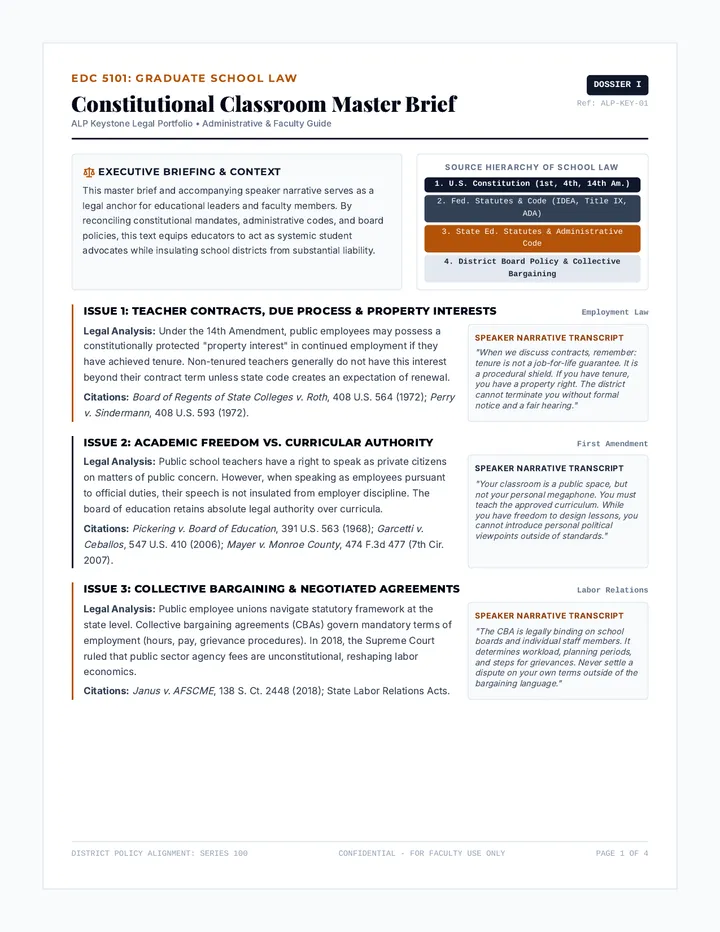
In your groups, analyze the Systemic Gaps Dataset . You will identify three specific legislative or administrative changes that could 'harden' the system against trafficking recruitment.
Systemic Gaps Worksheet Systemic Gaps Analysis
Lesson 01: The Foster Care Pipeline
Student Name:
Date:
Part 1: The Recruitment Timeline
Below is a chronological record of "Maya’s" journey through the child welfare system. Analyze the data to identify specific points of structural failure.
Age Event / Placement Type Duration Outcome/Status Change 10 Initial Removal (Neglect); Foster Home A 14 months Reunification with biological parent. 12 Re-entry; Emergency Shelter 3 weeks Placement in Foster Home B (Rural). 13 Disruption (Behavioral); Group Home C 8 months Transfer to higher-level congregate care. 15 Runaway Episode (3 months) -- Apprehended; placed in Detention Center. 16 Foster Home D (Therapeutic) 11 months Placement disruption; move to County E. 18 Aging Out (No Transition Plan) Current Unsheltered; High Vulnerability.
1. Identification of Gaps: At which age/event did Maya face the highest "Relational Poverty"? Explain why.
2. Recruitment Hypothesis: If a trafficker met Maya during her age 15 runaway episode, what "needs" would they likely promise to fulfill to establish control?
Part 2: Structural Interventions
Research shows that stability is the primary deterrent to recruitment. Critique the current child welfare system using the three pillars below.
I. Congregate Care
Why are group homes high-risk zones?
II. Information Gaps
How does cross-county moving help traffickers?
III. The Aging Out Cliff
What policy change would stop 18-year-old vulnerability?
Legislative Recommendation
Draft a one-sentence "Anti-Trafficking Stability Policy" that mandates a specific protection for foster youth who are at high risk of displacement.
"I propose that the state legislature mandates..."
LGBTQ Vulnerability Slides Survival
Safety Nets
LGBTQ+ Vulnerability and the Intersection of Displacement
Lesson 02
Evaluating Systemic Vulnerability
The Hook: The Safety Net Gap
Imagine a safety net made of several strands. For many LGBTQ+ youth, these strands are intentionally cut :
Family Acceptance
Traditional Shelters (Often Gender-Segregated)
Legal Protections in Employment/Housing
Discussion:
"When the state and the family both reject a youth, who becomes their primary provider of 'safety'?"
Traffickers fill the void.
Critical Concept: Survival Sex
"The exchange of sexual acts for basic physiological needs —food, shelter, safety, or drugs—rather than for money or profit."
Coerced by Circumstance
Non-Consensual by Nature
LGBTQ+ youth are 7x more likely to engage in survival sex due to shelter barriers.
Why are Shelters Failing?
Gender Binary Bias
Transgender/Non-binary youth are often forced into wards that don't match their identity, leading to high rates of assault.
Harassment & Violence
Poorly trained staff or other residents may target LGBTQ+ youth, making the "street" feel safer than the "shelter."
Criminalization
Laws against loitering or "street-based survival" target displaced youth, pushing them into hidden, exploitative networks.
The Assessment Activity
Analyzing the "Vulnerability Matrix"
Using your Safety Net Assessment Handout , you will evaluate how family rejection, lack of housing, and identity-based discrimination intersect to create a "Leverage Point" for traffickers.
Goal: Identify three specific organizational policies that could turn a hostile shelter into a safe harbor.
Safety Net Assessment Worksheet Safety Net Assessment
Lesson 02: LGBTQ+ Vulnerability & Survival Sex
Student Name:
Date:
Part 1: The Matrix of Compounding Risks
Traffickers exploit the void left when traditional safety nets fail. Evaluate how the following systemic failures provide "leverage" for an exploiter.
A. Family Rejection
Loss of housing, emotional support, and financial backing.
Trafficker's Counter-Offer:
Systemic Vulnerability Result:
B. Institutional Exclusion
Barriers to shelters, healthcare, and employment.
Trafficker's Counter-Offer:
Systemic Vulnerability Result:
Part 2: Defining Survival Sex Dynamics
"I didn't want to do it, but I needed a place to sleep that wasn't a park bench. He said I could stay on his couch if I 'helped him out.' Eventually, 'helping him out' became every night, and then he started bringing friends over."
1. Coercion vs. Consent: In the narrative above, identify the physiological needs that replaced free will.
2. The Barrier Effect: Why might this youth avoid a traditional homeless shelter in a city with strict binary gender rules?
Systemic Redesign: Shelter Audit
You are a consultant for a metropolitan shelter system. Propose two specific administrative policy changes that would make the shelter system more accessible to LGBTQ+ youth, thereby reducing their reliance on traffickers.
Policy Recommendation 1
Policy Recommendation 2
Migration Leverage Slides Migration
& Leverage
Exploiting Borders, Status, and the Fear of Deportation
Lesson 03
Evaluating Systemic Vulnerability
The Hook: Deceptive Recruitment
"TRABAJO SEGURO EN EE.UU."
• Visa H-2A Guaranteed
• Transportation Provided
• Housing & Meals Included
• Pay: $1500/week
• No experience necessary
Example of a recruitment ad found in a migrant community center.
What's the trap?
Traffickers use information asymmetry . They know the legal requirements; the migrant does not.
The "Visa" is actually a tourism permit or non-existent.
The "Transportation" creates a high-interest debt.
Systemic Leverage: Deportation Fear
Debt Bondage
Migrants are charged thousands for "smuggling" fees. Until paid, they are "owned" by the network.
Document Theft
Confiscating passports makes legal escape impossible and creates total dependency.
Legal Coercion
"If you call the police, I tell ICE where you are." Status makes the victim a 'criminal' in the eyes of the law.
The Border Pipeline: Unaccompanied Minors
When minors are released from federal custody to "sponsors," the oversight system is often overwhelmed.
Fraudulent Sponsors acting as Labor Brokers.
Child Labor in sanitation, meatpacking, and construction.
Systemic Weakness:
The drive to move children out of detention centers quickly creates vulnerabilities in the vetting process . Traffickers exploit this "efficiency" to gain legal custody of victims.
Recruitment Forensic Lab
In today's activity, you will analyze authentic-style advertisements and recruitment scripts used in migrant communities.
"Your task is to identify the Geopolitical Leverage : How does the recruiter use current immigration policy to trap the worker?"
Migration Forensic Lab Worksheet Recruitment Forensic Lab
Lesson 03: Geopolitical Leverage & Migration
Student Name:
Date:
Part 1: Deconstructing the "Offer"
[Evidence A: Digital Ad Text]
"Attention Agricultural Workers!"
Travel to the US on a 100% legal company visa. No upfront costs. We handle all paperwork. Earn $2,000 monthly with free housing. Call Miguel at [NUMBER] to secure your spot. Space is limited.
Note: This ad was posted on a social media group for migrant workers in Central America.
1. Information Asymmetry:
What legal facts is the recruiter likely hiding or misrepresenting?
2. The "No Upfront Costs" Trap:
Explain how "free paperwork" creates future systemic leverage.
Part 2: Status-Based Control Mechanisms
In trafficking, "leverage" is often derived from the victim's interaction with the legal system. Identify how traffickers use immigration status in the following scenarios.
Scenario: Document Retention
"I'll keep your passport for 'safe keeping' until the transportation debt is paid. You don't want to lose it and get deported, do you?"
Mechanism of Leverage:
Scenario: Law Enforcement Deterrence
"Go ahead, call the police. You are here illegally. They won't help you; they'll just put you on a plane back to the violence you ran from."
Mechanism of Leverage:
Policy Critique: The T-Visa Requirement
The T-Visa allows victims of trafficking to stay in the US, but it often requires cooperation with law enforcement to prosecute the trafficker.
Analysis: Why might the requirement of "law enforcement cooperation" be a barrier for a migrant who has experienced systemic betrayal?
Alternative: Propose one way to protect migrant victims that does NOT depend on a criminal conviction of their trafficker.
Homeless Youth Slides Needs
& Networks
Mapping the Intersection of Youth Homelessness and Recruitment
Lesson 04
Evaluating Systemic Vulnerability
The Hook: Resource Deserts
In many major cities, the locations of youth-specific shelters do not overlap with the areas where traffickers are most active.
The "Recruitment Window":
The first 48 hours a youth spends on the street are the most critical. If a shelter isn't accessible within that window, a recruiter likely will be.
Visualizing "The Desert"
Students will map local youth services vs. known "high-risk" transit hubs.
Exploiting Physiological Needs
Shelter
Traffickers offer a bed when the shelter is at capacity or "too dangerous."
Food
A warm meal is the most common "grooming" tool for hungry runaway youth.
Protection
Traffickers provide "security" from street violence that the state fails to stop.
Traffickers aren't just criminals; they are unregulated service providers.
Tactical Adaptation
The "Romeo" Approach
Recruiters feign a romantic relationship. They target youth with High Relational Poverty , promising love and family to build an emotional trap.
"I'm the only one who really loves you."
The "Gorilla" Approach
Uses immediate physical force, intimidation, or debt-based coercion. Often targets youth already in High Physical Vulnerability (e.g., sleeping outdoors).
"You owe me for that meal/bed."
The Mapping Challenge
You will be assigned a specific urban neighborhood. Your task is to map Gaps in Service Provision .
Project Deliverable:
Identify one "Trafficking Hotspot" and propose where a new mobile outreach unit should be placed to intercept recruitment.
Resource Mapping Worksheet Resource Desert Mapping
Lesson 04: Homeless Youth Dynamics
Student Name:
Date:
Part 1: Defining the Trafficking Desert
A Trafficking Desert is a geographic area characterized by high youth displacement (runaways, homeless) but critically low access to emergency youth-specific services.
The 48-Hour Critical Window
"Data suggests that a youth is approached by a trafficker within 48 hours of leaving their home or the foster care system. If the distance to a safe shelter is greater than 5 miles or requires complex transit, the likelihood of recruitment increases by 40%."
Analysis: Why might a general adult shelter be an ineffective resource for a 16-year-old runaway? (Think about safety, legality, and recruitment risk).
Part 2: Gap Identification
Analyze the hypothetical neighborhood map provided in class (Neighborhood X). Use the table below to log service gaps.
Location Type Risk Factor (Why Recruiters Are There) Closest Safe Service (Miles) Interstate Bus Terminal
|
| 24-Hour Laundromat District |
|
|
| Public Library (Daytime) |
|
|
Intervention Proposal: Mobile Outreach
If you cannot build a new permanent shelter, how would you design a Mobile Outreach Unit to serve this "Desert"?
1. Immediate "Gait" Factors (What should the van provide to build trust fast?):
2. Deployment Schedule (When is recruitment highest in this zone?):
Public Health Prevention Slides Upstream
Prevention
Applying the Public Health Model to Human Trafficking
Lesson 05
Evaluating Systemic Vulnerability
The Parable of the River
"Imagine people are falling into a river and drowning. We spend all our money on rescue boats and resuscitation at the bottom of the waterfall."
The Question:
"Who is looking upstream to see who is pushing them in, or why the bridge is broken?"
Downstream (Current Focus)
Prosecution, Law Enforcement, Rescue Operations.
Upstream (Our Focus)
Housing Policy, Foster Care Support, Poverty Eradication.
The Three Levels of Prevention
Level 01
Primary
"Stop it before it starts."
Universal interventions: Economic stability, safe housing, education.
Level 02
Secondary
"Early detection."
Targeted support: Runaway outreach, foster care stability, LGBTQ+ safe-spaces.
Level 03
Tertiary
"Damage control."
Long-term care: Trauma-informed therapy, re-integration, legal aid.
The Budget Challenge
Current state spending is often 90% Downstream .
"If you had $100 Million to stop trafficking in your state, how would you re-allocate it to prioritize structural stability over reactive policing?"
1
Audit current systemic rejections.
2
Fund "Buffer Systems" (Transition housing, etc).
3
Evaluate based on "Recruitment Interception."
The Prevention Proposal
Final Deliverable:
Systemic Vulnerability Reduction Plan
Using all 4 previous lessons, you will design one "Upstream" intervention for a specific population we studied.
"Focus on the structure, not the actor."
Prevention Proposal Worksheet Prevention Strategy Proposal
Lesson 05: A Public Health Approach
Student Name:
Date:
Part 1: The $100 Million Allocation
You are the Secretary of Health and Human Services. You have a theoretical budget of $100 Million to reduce trafficking statewide. Allocate your funds across the following categories and justify your systemic reasoning.
A. Downstream (Rescue & Prosecution)
$ M
E.g., Law enforcement stings, victim witness assistance.
B. Secondary (Targeted Intervention)
$ M
E.g., Youth shelters, mobile outreach, foster stability.
C. Primary (Upstream Prevention)
$ M
E.g., Housing vouchers, UBI trials, education policy.
Justification: Why did you prioritize one level over the others? Connect your answer to a specific systemic vulnerability studied in this course.
Part 2: Designing an Upstream Intervention
Select ONE of the following vulnerable populations: Foster Youth, LGBTQ+ Youth, Migrant Communities, or Homeless Youth . Design a Primary Prevention policy.
Selected Population:
1. The Broken Bridge (Identify the specific systemic failure):
2. The Upstream Solution (Propose a non-law enforcement intervention):
3. Anticipated Outcome (How does this "harden" the system against traffickers?):
Final Reflection: The Essential Question
"To what extent do systemic societal failures contribute to the vulnerability of specific populations to trafficking?"
Summarize your findings from the last 5 lessons here...