Lenny.com
Explore
Create
ActivitiesNewMathEnglish Language ArtsScience & EngineeringSocial StudiesGlobal LanguagesHealth & Physical EducationSpecial EducationCounseling & Life SkillsArts & CreativityESL
Lenny.com
Lenny.com
Explore
Create
ActivitiesNewMathEnglish Language ArtsScience & EngineeringSocial StudiesGlobal LanguagesHealth & Physical EducationSpecial EducationCounseling & Life SkillsArts & CreativityESL
Lenny.com
Lenny.com

Solutions

Lenny for EducatorsLenny for SchoolsLenny for Districts

Product

ExploreSign inCreateSupportAbout

Resources

Getting startedMTSS Acceleration Program

© 2026 Lenny Learning Inc.

TermsPrivacyAccessibility
LinkedInInstagramX
Lenny
Science & EngineeringLife ScienceLiving ThingsAnimalsPlantsBody SystemsTraitsAdaptationsCellsEcosystemsHeredityGenes to TraitsCell DivisionPhysicsComparing MaterialsShapes and PropertiesMagnetsMagnetismLightSoundLight and SoundMatterStates of MatterChanges of StateMixturesPhysical and Chemical ChangeHeating and CoolingHeat and Thermal EnergyEnergyForce and MotionElectrical CircuitsAtoms and MoleculesPeriodic TableMotion in One DimensionMotion in Two DimensionsScalars and VectorsForces and Laws of MotionCircular Motion and GravityMomentum and ImpulseWork, Energy, and PowerWavesElectromagnetic WavesGeometric OpticsElectricity and MagnetismSimple Harmonic MotionThermodynamicsNuclear PhysicsEarth Science & AstronomyWeatherWater CycleRocks and MineralsFossilsEarth's FeaturesEarth's ResourcesEarth's StructureWeather and ClimateEarth EventsFossils and Geologic TimePlate TectonicsHuman ImpactsAstronomyChemistryUnits and MeasurementAtomic StructurePeriodic TrendsChemical BondingNomenclatureMolecular StructureIntermolecular ForcesThe MoleStoichiometryProperties of GasesSolutionsChemical ReactionsBalancing EquationsEnergy ChangesRates of ReactionsEquilibriumAcids and BasesQuantum ModelBiologyClassificationCell StructureThe Chemistry of LifeBiomoleculesCellular TransportCell EnergyCell Growth and DivisionDNAProtein SynthesisMeiosis and Sexual ReproductionPatterns of InheritanceMulticellular OrganismsEvolutionEcologyBiodiversityComputer ScienceAlgorithms and Computational ThinkingProgramming LanguagesComputing SystemsNetworks and InternetData AnalysisCybersecurityAI and Machine LearningSoftware Design and DevelopmentBlockchainEngineering & AIDesigning ExperimentsEngineering PracticesDesign ThinkingEngineering Design ProcessMechanical EngineeringElectrical EngineeringMaterials and StructuresCAD and 3D DesignRoboticsArtificial Intelligence BasicsVibe CodingMachine LearningAI Ethics and SocietySystems ThinkingEntrepreneurship & InnovationEntrepreneurial MindsetBusiness Idea DevelopmentBusiness Plan BasicsMarketing & Customer DiscoveryFinancial Management for Startups

Matter and Change

An inquiry-driven physical science unit investigating the properties of matter, reversible phase changes, physical alterations, and chemical reaction indicators through hands-on everyday investigations.

JSJanette Sullivan
State Shifters

Students explore the particle arrangement and observable behavior of solids, liquids, and gases, analyzing thermal energy and reversible phase transitions with familiar items.

Change Detectives

Students compare physical changes where substance identity stays constant against chemical changes where bonds break and new substances are formed.

Kitchen Chemistry

Students test and document everyday chemical reactions using common household pantry items, analyzing evidence such as effervescence, color changes, and temperature shifts.

Matter and Change

An inquiry-driven physical science unit investigating the properties of matter, reversible phase changes, physical alterations, and chemical reaction indicators through hands-on everyday investigations.

JSJanette Sullivan

3. Unexpected Color Shift

Not simple paint mixing! Two clear liquids combining into a vivid yellow, or shiny copper pennies turning greenish as patina forms.

4. Precipitate Formation or Odor

A solid powder (precipitate) falls out of solution when two clear liquids mix, or an entirely new smell (like sour curdled milk) emerges.

Core Vocabulary Focus

TermScientific DefinitionContext Clue
ReactantsStarting substances before chemical change occurs.Left side of equation.
ProductsBrand-new substances formed after the reaction.Right side of equation.
PrecipitateAn insoluble solid that forms from mixing liquid solutions.Cloudy solid settling down.
ExothermicA reaction that releases thermal energy into surroundings.Campfire, hand warmers.
EndothermicA reaction that absorbs thermal energy from surroundings.Cold packs, vinegar + soda.

Ambiguity Check: When you add red food coloring to water, it turns red. Is this a chemical change? Explain why or why not.

Unit 1: Matter & Change Page 2 of 3

Assessment & Application

Everyday Case Files & Comprehension

Name:  

Part A: Everyday Case File Classification

ScenarioType (P / C)Scientific Justification
1. An egg is fried on a hot skillet until the clear liquid turns solid white.[    ]
2. An aluminum soda can is crushed flat with a foot.[    ]

| | 3. Fireworks explode in the sky, producing bright green light and a boom. | [    ] |

| | 4. Wet clothes hang in the breeze until they are completely dry. | [    ] |

| | 5. Milk left on the counter for a week curdles into sour lumps. | [    ] |

|

Part B: Concept Check

6. Which is a definitive sign of a chemical reaction?

(A) Liquid turns to gas by boiling

(B) Solid dissolves in water

(C) Formation of a new precipitate

(D) Material is cut into halves

7. During any chemical reaction, total mass must:

(A) Always decrease as energy is lost

(B) Remain exactly conserved

(C) Increase as new bonds form

(D) Depend on room temperature

Part C: Evidence-Based Scientific Analysis

8. Open vs. Closed System: When wood burns in a fireplace, the ash left behind weighs much less than the original log. Explain how this still obeys the Law of Conservation of Mass.

9. Critical Distinction: Explain why water boiling in a pot produces bubbles (a physical change), whereas baking soda mixed with vinegar produces bubbles (a chemical reaction).

Unit 1: Matter & Change Page 3 of 3

Physical or Chemical?

Case A is Physical (reversible phase shift). Case B is Chemical (new sugars & aroma compounds produced).


Mastery Summary 05 / 05

Your 4-Point Detective Checklist

1. Bubbles

New gas generated

2. Color

Unexpected change

3. Energy

Heats up or chills

4. New Solid

Precipitate forms

Ready for hands-on testing in Lesson 3: Kitchen Chemistry Lab!

Claim (State your direct answer clearly):

Evidence (Provide specific observations and data recorded during the lab):

Reasoning (Connect evidence to chemical principles: new bonds, gas formation, thermal energy):

Mass Mystery: If you weighed the open cup before and after the reaction in Station 1, the scale reading drops by 1.2 grams. Where did those 1.2 grams go?

Page 2 of 2

Page 1 of 2 • Teacher Reference Manual

Answer Keys & Exemplars

Master Solutions & Rubrics

All Lessons • Answer Key

Lesson 1: State Shifters Key (Q1–Q6)

  • Q1: (B) Gas particles move rapidly and overcome bonds. | Q2: (B) Definite physical volume.
  • Q3: (C) Gain kinetic energy and spread far apart.
  • Q4 (Hot Oven Air): High thermal energy means gas particles move at high velocity, expanding rapidly to equalize pressure when the door opens.
  • Q5 (Windshield Frost): Surrounding humid air; water vapor transitions directly from gas to solid (deposition).
  • Q6 (Freezing Mass): Exactly 250 grams; mass is conserved because particle count remains identical.

Lesson 2: Change Detectives Key (Q1–Q9)

  • 1. Fried egg: C (protein bonds denature).

  • 2. Crushed can: P (shape altered only).

  • 3. Fireworks: C (combustion, light, gas).

  • 4. Drying clothes: P (evaporation).

  • 5. Curdled milk: C (acid precipitating curds).

  • Q6: (C) Formation of a new precipitate.

  • Q7: (B) Remain exactly conserved.

  • Q8 (Fireplace Ash): Unaccounted mass escaped as \(CO_2\) and steam; system obeys conservation.

  • Q9 (Boiling vs Vinegar): Boiling = phase change without bond breaking; vinegar+soda = chemical synthesis of \(CO_2\).

Lesson 3: Lab CER Exemplar

Claim: Combining vinegar and baking soda is a chemical reaction that creates new substances.

Evidence: Vigorous bubbling occurred without external heating, gas escaped, and the cup temperature dropped by 3–5°C.

Reasoning: Release of carbon dioxide gas and thermal energy absorption (endothermic) demonstrate that starting bonds broke to yield sodium acetate, water, and \(CO_2\).

Support: Use sentence frames for CER explanations; highlight keywords (mass, bond, state) in reading.

Extension: Challenge students to calculate the mass of carbon dioxide produced in Station 1 using an electronic balance.
Page 2 of 2 • Teacher Reference Manual

You might also like

Signal Anatomy Slides

Signal Masters

A hands-on systems engineering unit where 7th-grade students deconstruct communication components, model feedback loops and signal degradation, and engineer a custom communication system to solve a real-world scenario.

TC

Theresa Crafts

8
Design Brief Slides

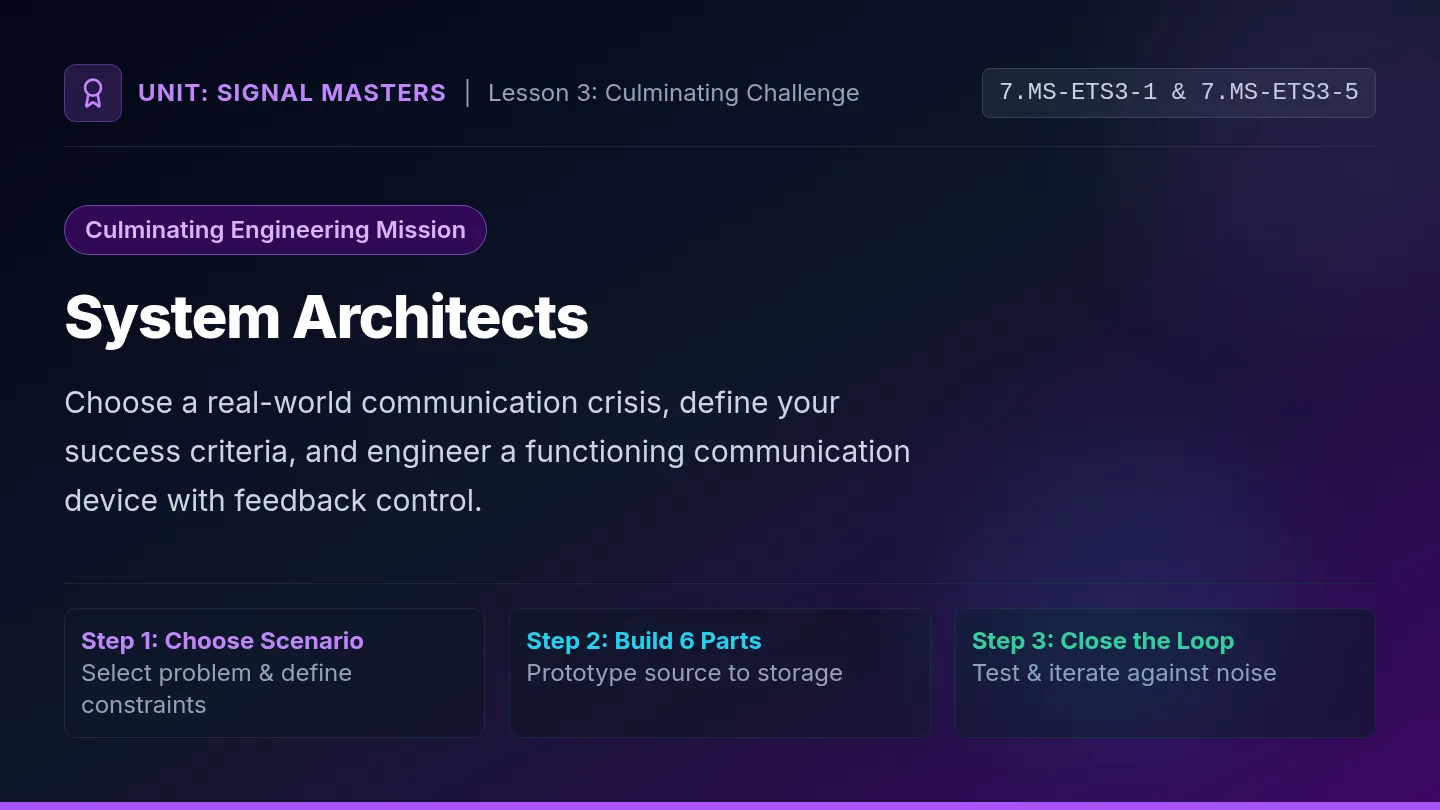
System Architects

Student teams select an authentic communication challenge, define criteria and constraints, engineer a functioning physical prototype, and validate performance with iterative feedback loops.

TC

Theresa Crafts

3
Rock Cycle Coloring Worksheet

Rock Cycle Coloring Worksheet

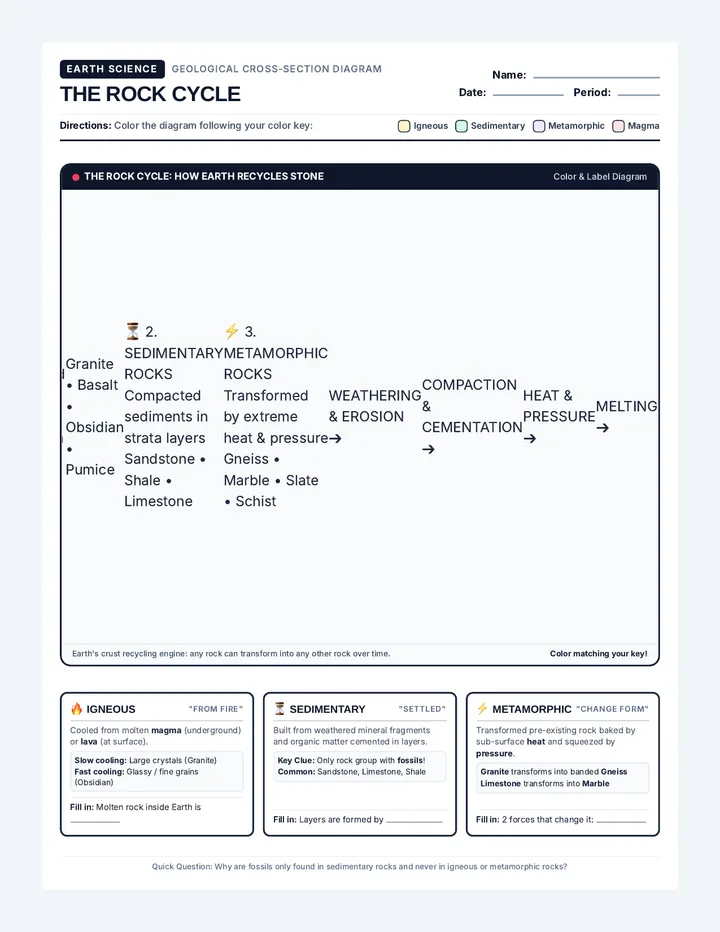
An engaging, full-page coloring worksheet that illustrates the rock cycle and the three major rock types: igneous, sedimentary, and metamorphic. Features a detailed geological cross-section diagram image with erupting volcano, stratified sedimentary ocean floor, tectonic metamorphic heat and pressure zone, and colorable transition pathways.

RD

Rebecca Dolan

Earth Sun Dance Lab Log

Stellar Explorers

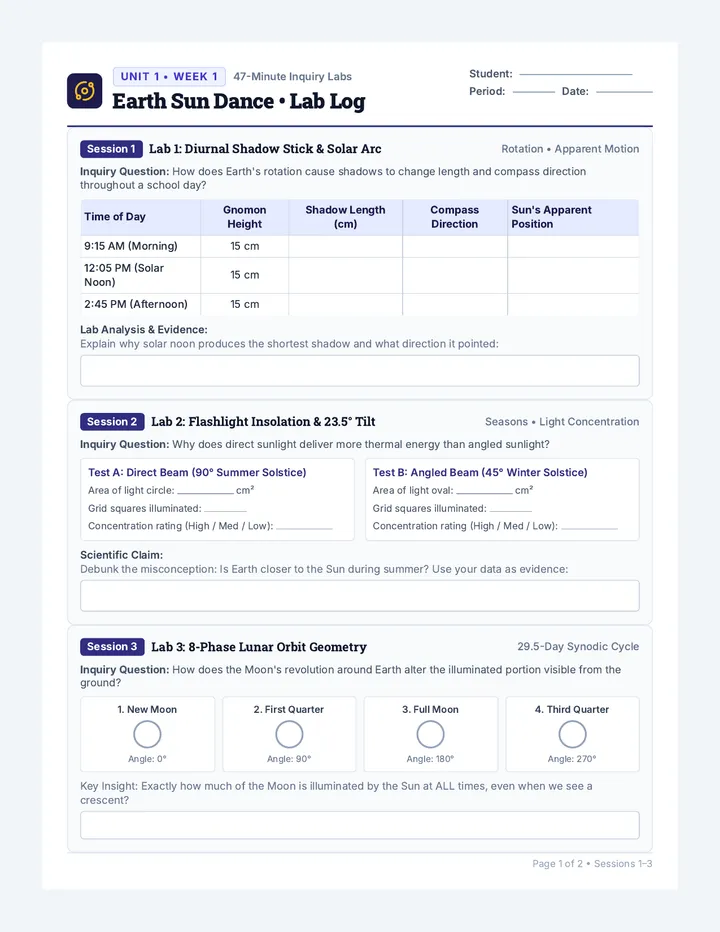
A four-week, 20-session astronomy lab and enrichment curriculum for sixth-grade public school students, structured for 47-minute class periods. Spanning Earth-Sun-Moon celestial mechanics, comparative planetary science, stellar lifecycles and galaxies, and modern space exploration engineering.

B

bfox

8
System Feedback Slides

Feedback Loops

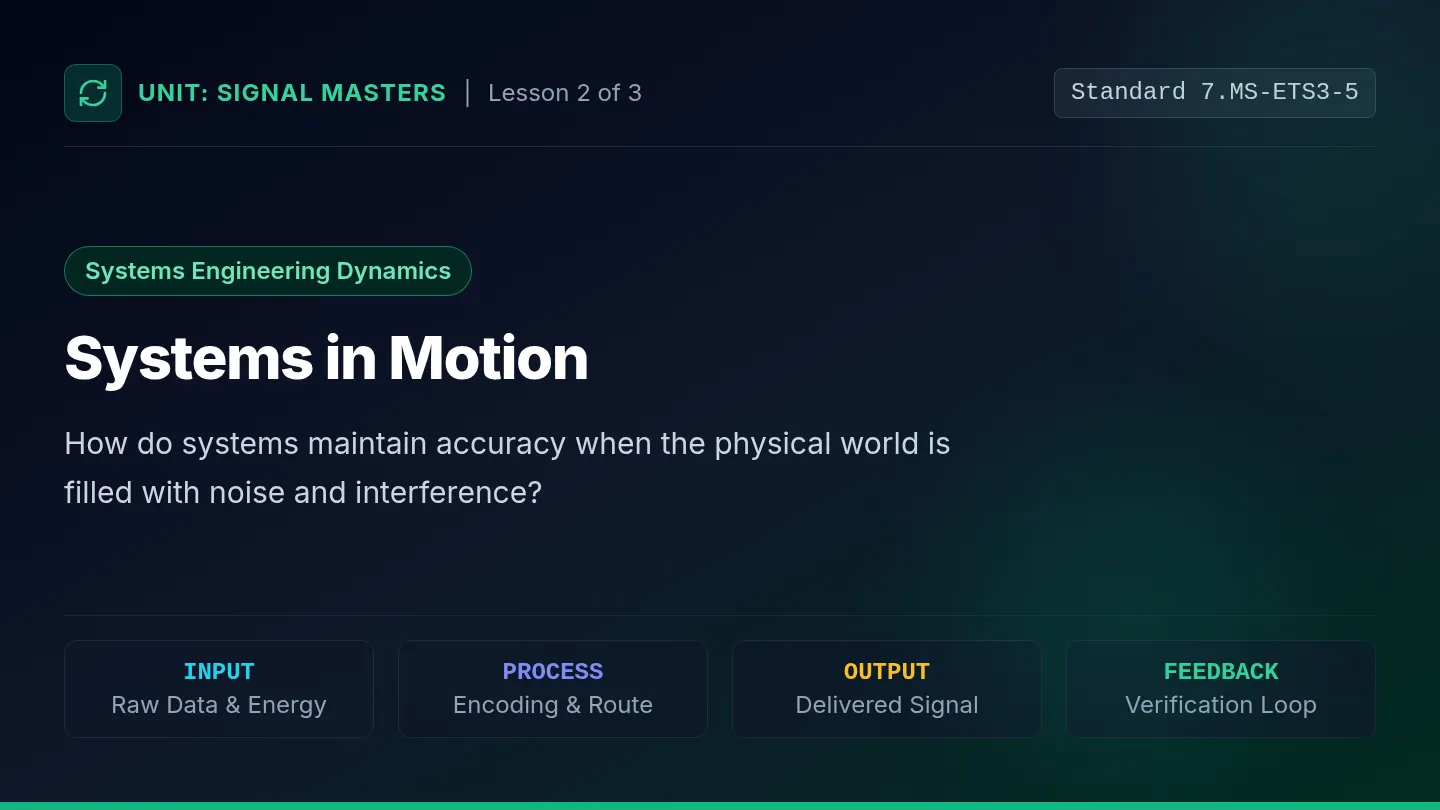
Students apply systems engineering concepts to analyze inputs, processes, outputs, noise interference, and feedback mechanisms within communication networks.

TC

Theresa Crafts

2
Rock Recycler Guided Practice

Rock Recycler Guided Practice

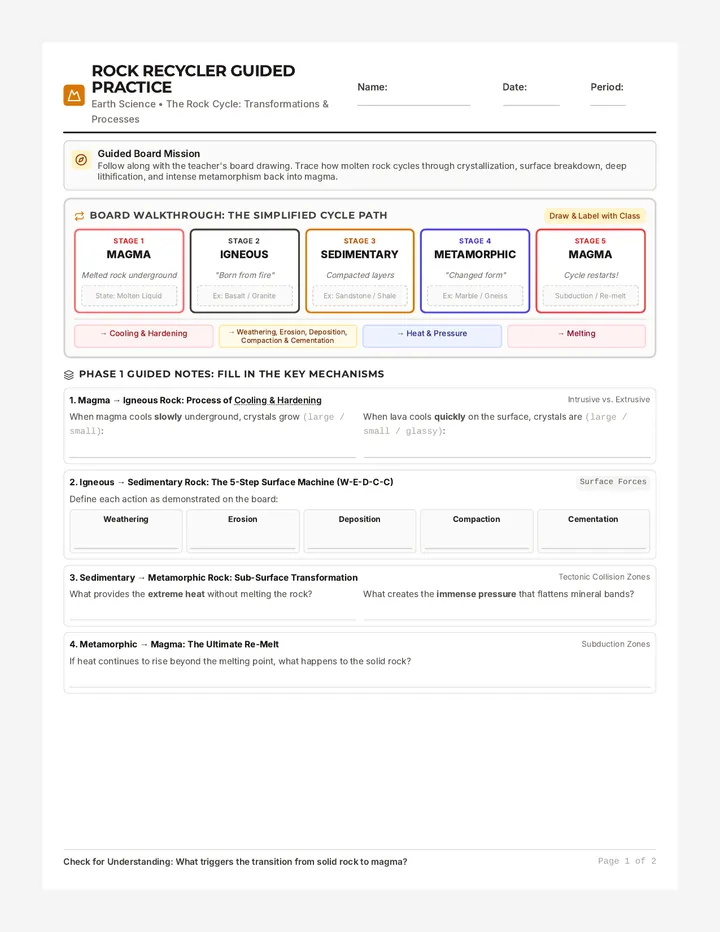
A comprehensive two-page guided practice worksheet tracing the complete rock cycle sequence from magma to igneous, sedimentary, and metamorphic rock, featuring diagram prompts, step-by-step guided notes, and pathway investigation scenarios.

RD

Rebecca Dolan

Helix Studio Slides

Candy Code Sequence

A multi-day competency-based biology sequence exploring DNA architecture, complementary base pairing, and semi-conservative replication through tactile candy modeling and evidence-based assessment.

TM

Teri Minami

6
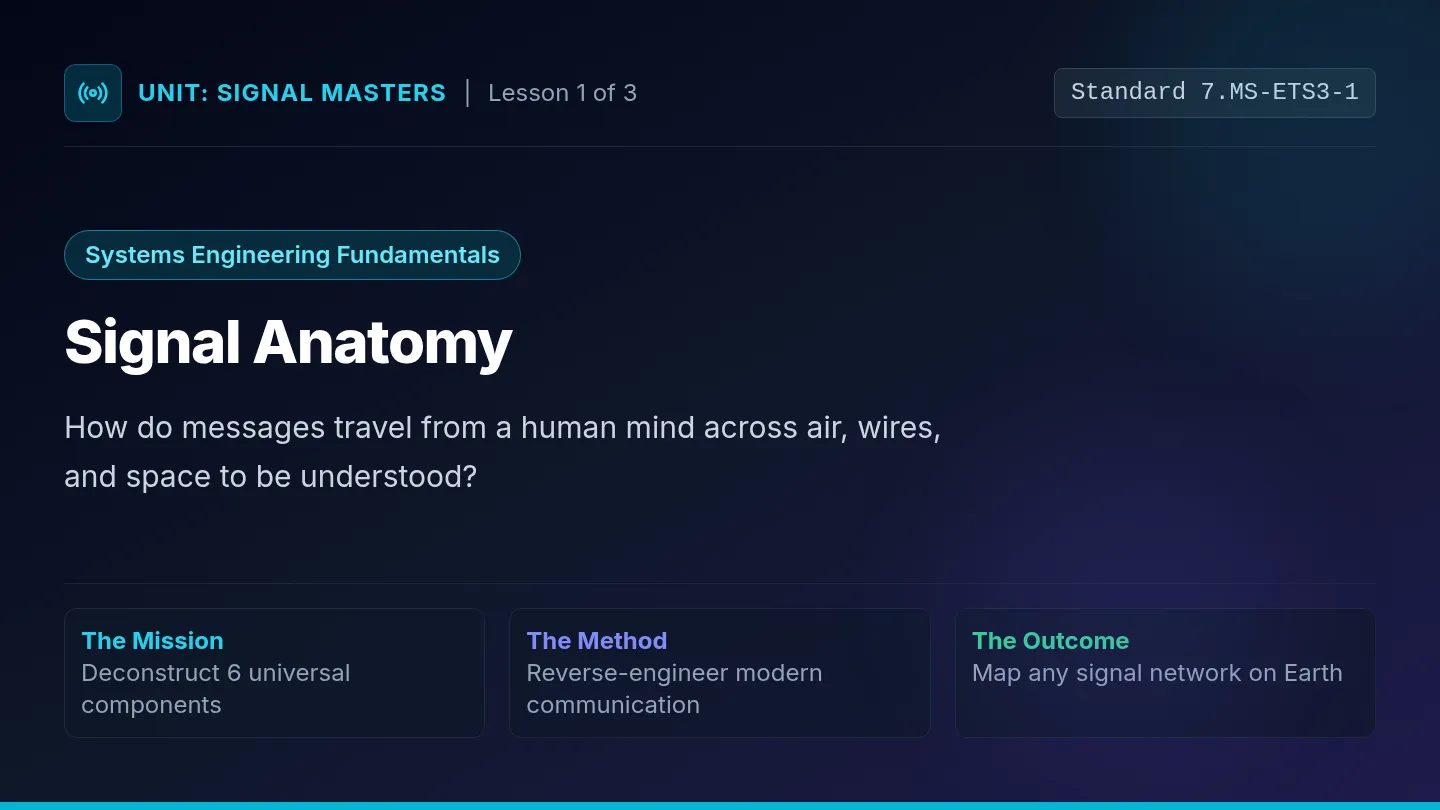
Signal Anatomy Slides

Signal Anatomy

Students deconstruct how messages travel by investigating the six fundamental components of every communication system: source, encoder, transmitter, receiver, decoder, and storage.

TC

Theresa Crafts

3
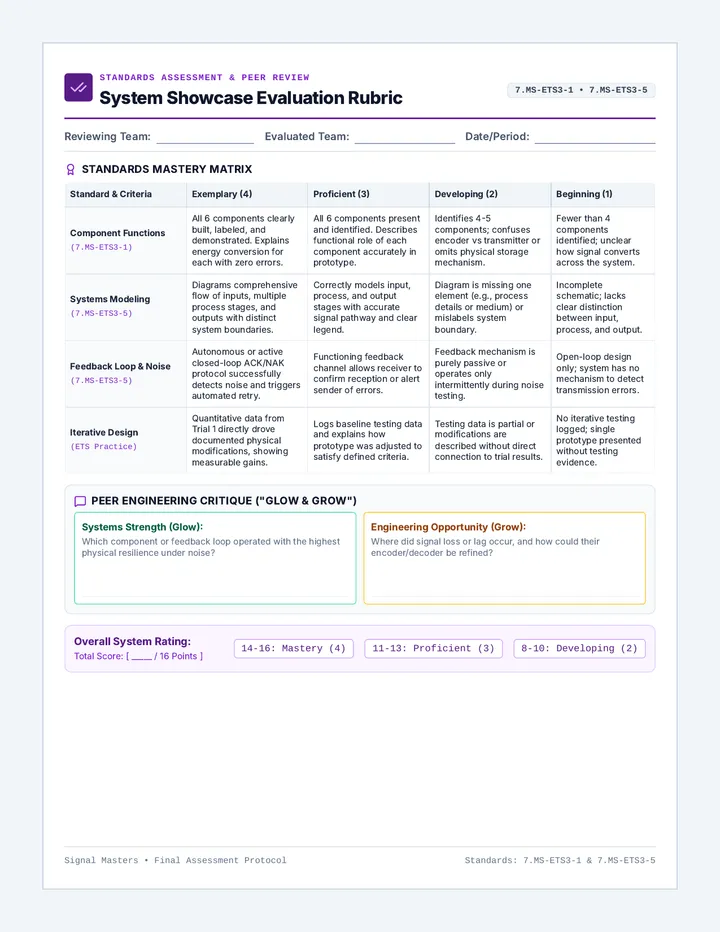
System Showcase Rubric

System Showcase Rubric

A standards-based evaluation rubric and peer critique instrument assessing 6-component identification, systems modeling, feedback loop integration, and empirical iteration.

TC

Theresa Crafts

Pesky Biters Slides

Bug Busters

A two-part fifth-grade science sequence investigating how insects can be annoying nuisances, bite and sting, and damage crops and homes. Specially scaffolded with high-visual supports, decodable text chunks, and guided practice for lower-literacy learners.

Lenny Avatar
Lenny
11
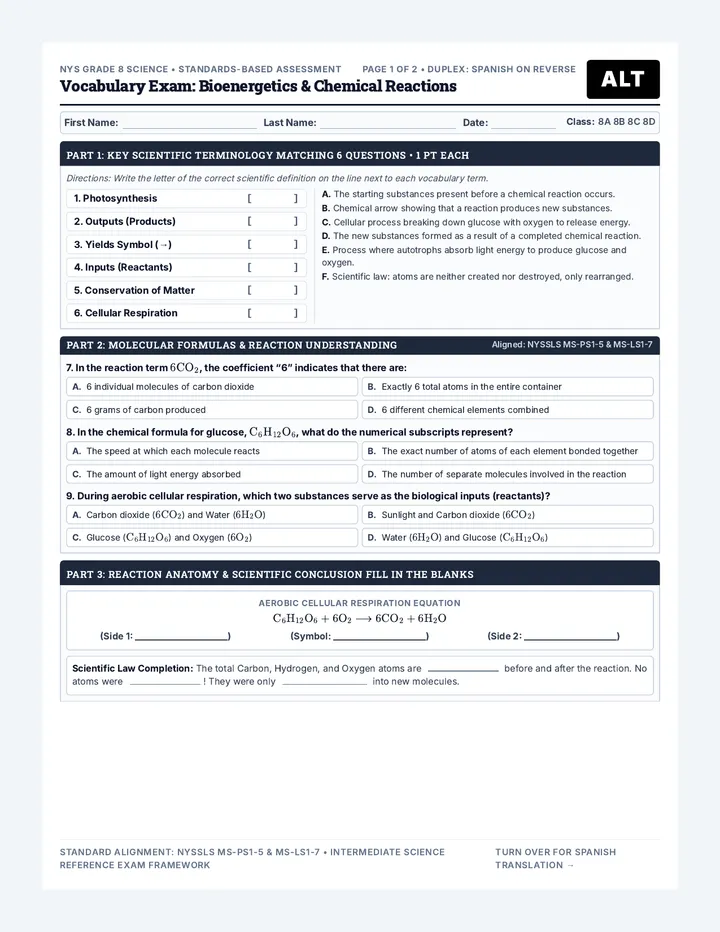
Bioenergetics Alternate Exam

Energy and Matter

A comprehensive science lesson focusing on cellular energy, photosynthesis, and respiration.

JE

Jeffrey Elterman

1
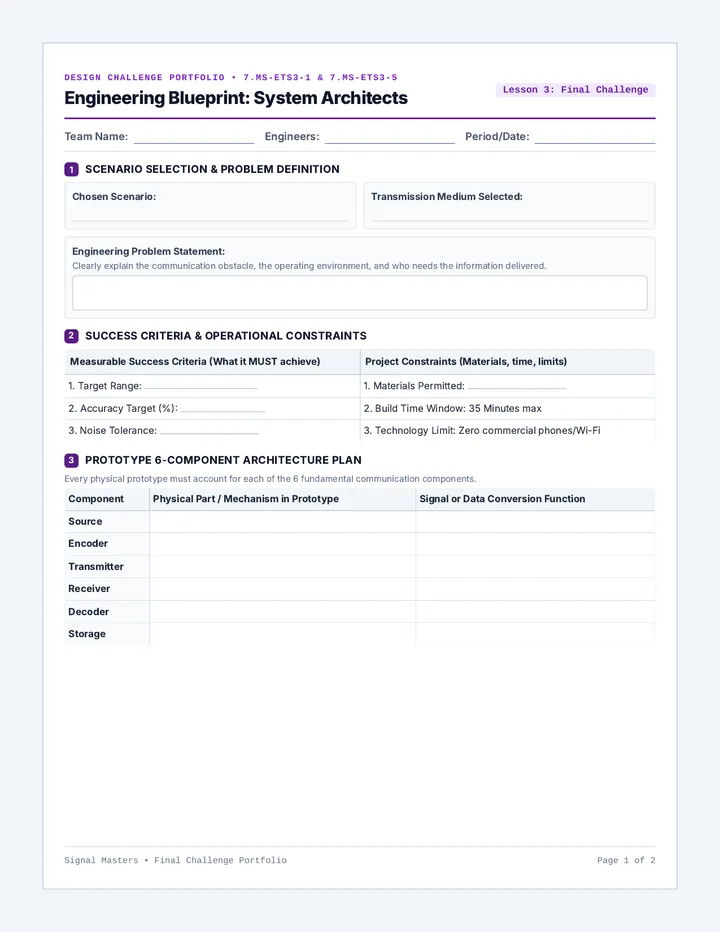
Engineering Blueprint Packet

Engineering Blueprint Packet

A comprehensive two-page engineering design portfolio where student teams document scenario selection, criteria and constraints, 6-component architecture, schematics, and iterative testing logs.

TC

Theresa Crafts