Identity Erasure Analysis Worksheet Assimilating the Soul
Lesson 1: The Boarding School Experience
Case File #1924-B
Evidence: Visual Record
[Photo: Tom Torlino (Navajo) - 'Before' and 'After' Carlisle, 1882]
Analyze the physical transformations: hair, clothing, jewelry, and posture. Note the skin tone lighting used in the photographs.
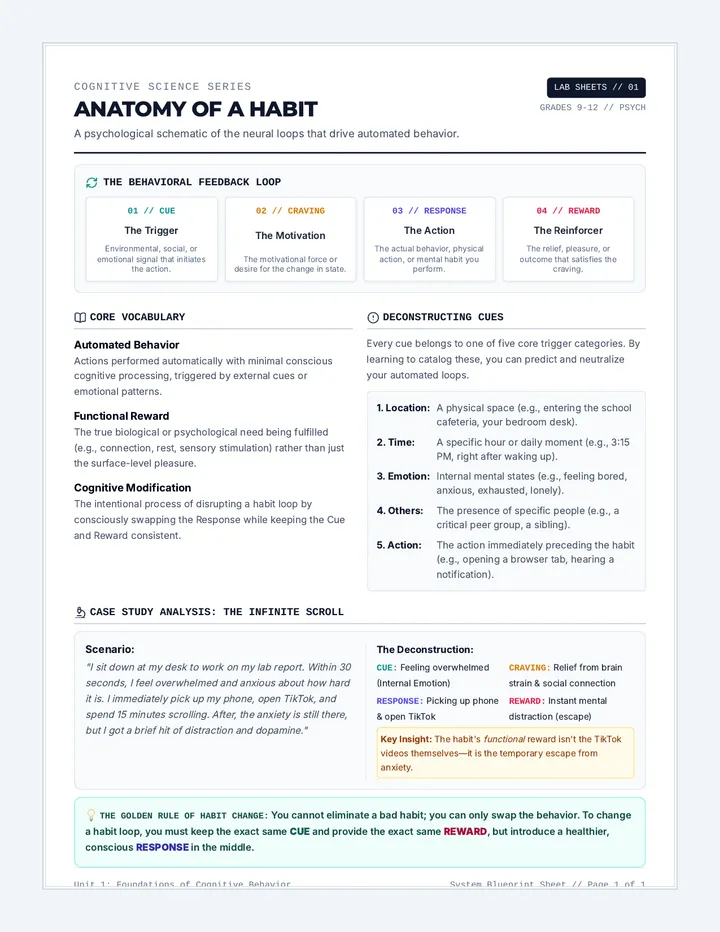
Testimony fragment
"They told us our language was dirty. Every time I spoke Diné, they scrubbed my mouth with lye soap. I learned to keep my thoughts inside, where they couldn't reach them."
Student Investigator:
Date of Analysis:
Part 1: The Mechanism of Erasure
Based on the 'Before and After' photos and the testimony provided, identify three specific methods used by the school to strip Indigenous identity.
Part 2: Psychological Intent
Richard Henry Pratt, founder of Carlisle, famously said: "Kill the Indian in him, and save the man." How does this philosophy manifest in the daily life of a student?
Part 3: Intergenerational Echoes
How might the trauma of being removed from home and family affect the way these survivors parented their own children later in life?
Archival Document: Bureau of Indian Affairs Analysis RESTRICTED ACCESS - EDUCATIONAL USE ONLY
Assimilating the Soul Slides Assimilating the Soul
The Boarding School Era
Case File #1879-1970
The "Before & After"
[Image: Tom Torlino, Navajo, 1882. Traditional dress, long hair, silver jewelry, darker complexion.]
Traditional Identity
[Image: Tom Torlino, Navajo, 1885. Short hair, suit and tie, lighter complexion due to lighting.]
"Assimilated" Identity
"Kill the Indian, and save the man." — Richard Henry Pratt
Mechanisms of Cultural Erasure
Severing the Connection
Cutting hair was often a sign of mourning in many tribes; here, it was a forced separation from ancestors.
Linguistic Genocide
Punishment for speaking native languages. Names replaced with English or numbers.
Forced Conversion
Replacement of spiritual practices with Christian indoctrination and manual labor.
Discussion Question
"How does changing a person's physical appearance change their psychological self-perception?"
The Resistance Within
Subtle Acts
Students speaking their languages in whispers at night or carving traditional symbols into hidden places.
Escape
Thousands of students attempted to "run away" back to their families, despite the immense distances and harsh climates.
Oral History
Survivors kept the stories alive, eventually leading to modern movements for reparations and healing.
"They buried us, but they didn't know we were seeds."
The Legacy of Trauma
The Boarding School era ended, but the impact remains in the form of Intergenerational Trauma .
How does a community heal when multiple generations were denied the chance to be parented by their own families?
Analyze Oral Histories
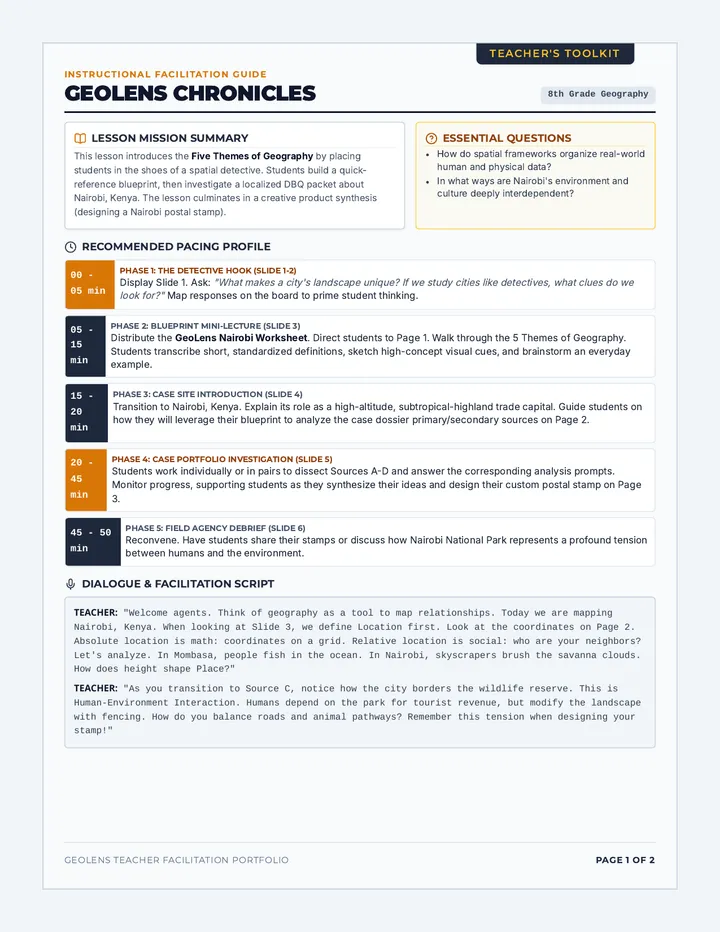
Boarding School Teacher Guide Facilitation Guide: Assimilating the Soul
Lesson 1: The Boarding School Experience
Lesson Overview
This lesson introduces the era of forced assimilation (approx. 1879-1970s). Students will move from visual analysis to deeper inquiry into systemic cultural erasure and psychological trauma.
Key Concepts
Cultural Erasure vs. Assimilation
Psychological Warfare/Colonization
Intergenerational Trauma
Resilience & Resistance
Materials Needed
Identity Erasure Worksheet
Boarding School Slide Deck
Primary source audio/text (optional)
Instructional Sequence
01
The Hook: Visual Investigation (10 mins)
Display the 'Before and After' photos of Tom Torlino. Do not provide context yet. Ask students: "What do you see?" vs "What do you notice about the lighting and camera angle?".
Teacher Note: Mention that photographers often used darker lighting for 'Before' photos to emphasize 'savagery' and brighter lighting for 'After' to suggest 'civilization/enlightenment'.
02
Direct Instruction: The Policy (15 mins)
Walk through the Slide Deck. Emphasize the industrial nature of these schools (Carlisle was a former army barracks). Discuss the Pratt quote in depth: what does it mean to "kill the Indian"?
03
Worksheet: Identity Analysis (20 mins)
Students work on the 'Identity Erasure Analysis' worksheet. Encourage them to find the "why" behind the physical changes (e.g., hair cutting as spiritual violation).
04
Discussion: Intergenerational Trauma (15 mins)
Closing discussion on the long-term effects. Ask: "If you are never hugged or told you are loved by a parent for 10 years, how do you learn to love your own children?" This connects history to modern sociology.
Differentiation & Sensitivity
This topic is heavy and can be triggering for students with personal ties to trauma or removal from families.
For Advanced Learners: Have them research the 2021-2022 discoveries of mass graves at schools like Kamloops (Canada) or Chemawa (Oregon).
Support: Provide a glossary of terms: Assimilation, Sovereignty, Indigenous, Intergenerational.
Relocation and Termination Slides Termination & Concrete Jungles
The 1950s Relocation Policy
House Concurrent Resolution 108
Termination: "Setting Free"?
The Goal
To end the special trust relationship between the US government and Native tribes. Effectively "canceling" their status as sovereign nations.
The Result
Over 100 tribes were terminated. Tribal lands were sold, and communal services (healthcare, education) were abolished.
"The plan was to make us disappear into the 'American melting pot' once and for all. They didn't want nations within a nation anymore."
Marketing the "Dream"
[Visual: 1950s BIA Relocation Poster showing a happy Native couple in a modern kitchen with the text "Plenty of Jobs! Good Housing!"]
The Promises
One-way bus ticket to a city
Temporary housing assistance
Vocational training / Job placement
"Integration" into modern life
The Broken Reality
Housing
Families were often placed in substandard, segregated housing in inner cities (Chicago, Denver, SF).
Employment
Jobs were mostly low-wage, unskilled labor. Native people faced intense racial discrimination from urban employers.
Isolation
Separated from the communal support of the reservation, many faced extreme loneliness and cultural shock.
BY 1960: Over 30% of Native Americans lived in cities.
The Birth of Activism
"When they moved us to the cities, they put us all in the same ghettos. We stopped being just Sioux, or Navajo, or Ojibwe... we became Indians together."
Pan-Indianism: The unintended fuel for the Red Power movement.
Next: The Rise of AIM
Relocation Marketing Critique Worksheet Selling the City
Marketing vs. Reality: The Relocation Era
BIA File: Urban Transition
Investigator
Date
Source: BIA Pamphlet (1956)
The Way to a New Life!
"Thousands of your friends have found prosperity in the city! Come to Chicago, Denver, or Los Angeles. Good jobs, clean homes, and modern schools await you and your children."
Bureau of Indian Affairs
Critique: The Marketing
1. What is the "Sales Pitch"? (Emotional appeal)
2. What is notably MISSING from the promises?
The Ground Truth: Oral Histories
"They gave us a bus ticket and fifty dollars. When we got to Chicago, the 'clean home' was a basement apartment with no heat. The 'good job' was cleaning floors for half of what white men made."
"In the city, I didn't see another Indian face for a month. I felt like a ghost. But then I found a bar where all the Mohawks went. That was the first time I felt I could breathe."
Synthesis Analysis: Connecting the Dots
How did the failure of the Relocation Program actually lead to the success of the activism movements that followed? (Think about "Pan-Indianism")
Document: HCR-108 Evaluation Critical Analysis Worksheet
Termination Policy Teacher Brief Teacher Policy Brief: Termination Era
Lesson 2: Termination and Relocation Policies
Historical Context
Post-WWII America was defined by a drive for "Conformity" and "Containment." Policy makers viewed tribal sovereignty as a "communist-style" communal living that contradicted American individualism.
Key Statistics
109: Tribes terminated (lost federal recognition).
1.3 Million: Acres of tribal land removed from trust status.
100,000+: Native people relocated to urban centers by 1960.
1. Defining "Termination"
Many students assume termination sounds positive (like terminating a debt). Clarify that this was a unilateral decision by Congress to break treaties.
Prompt: "Is a treaty a suggestion or a legal contract? Can one side just 'terminate' a contract without the other's consent?"
2. The Marketing Critique
Distribute the Relocation Marketing Critique worksheet.
Focus: Point out the visual elements of the BIA posters—they often show nuclear families, modern appliances, and urban clothing. This was a "re-boarding school" attempt in an urban setting.
3. The Urban Unintended Consequence
This is the pivot point for the sequence. Explain how the concentration of diverse tribes in the same neighborhoods (the "pan-Indian" experience) led to the formation of organizations like the American Indian Movement (AIM) in Minneapolis.
Key Concept: Pan-Indianism—finding common ground across tribal lines to fight systemic oppression.
Critical Thinking Question
"If the goal of relocation was to make Native people 'disappear' into white society, why did it do the exact opposite?"
Unit: Forced Assimilation Instructional Support Material
Red Power and AIM Slides Red Power
The Rise of AIM
Minneapolis, 1968 The American Indian Movement
Born in the Streets
Why Minneapolis?
In the "Concrete Jungles" of the 1960s, Native people faced rampant police brutality and job discrimination. They were "invisible" to the Great Society programs.
"We were tired of being 'patrolled' by people who didn't know us. We started patrolling the police."
Initial Goals:
Monitoring police conduct
Finding housing for urban Indians
Indian-led education programs
Tactics of Confrontation
Direct Action
Inspired by the Black Panthers, AIM used armed patrols and occupation of federal buildings to force media attention.
Sovereignty First
Unlike the "Integration" goals of many Civil Rights leaders, AIM demanded Tribal Sovereignty —the right to remain separate and self-governing.
Visual Identity
Long hair, traditional jewelry, and braided styles became symbols of political resistance against assimilation.
"We didn't want a piece of the pie. We wanted the oven back."
The Faces of Resistance
Dennis Banks
Dennis Banks
Co-founder, Ojibwe leader. Focused on community organizing and survival schools.
Russell Means
Russell Means
Oglala Lakota. The movement's primary orator and master of media strategy.
Clyde Bellecourt
Clyde Bellecourt
White Earth Ojibwe. Instrumental in the initial Minneapolis street patrols.
John Trudell
John Trudell
Santee Sioux. Poet and "Voice of Alcatraz." Later a prominent musician and philosopher.
Civil Rights or Sovereign Rights?
"Civil rights is for those who want to be part of the system. Sovereign rights is for those who want to be separate from it."
What is the difference in strategy?
AIM Manifesto Analysis Worksheet Manifesto Analysis
The 20-Point Position Paper (1972)
Trail of Broken Treaties
Point 1: Treaty Making
"Restoration of constitutional treaty-making authority... The U.S. government should again recognize that Indian nations are sovereign nations with whom they have legal contracts."
Analysis: Why is this different from 'civil rights'?
Point 11: Land Rights
"Restoration of a land base... 110 million acres of land should be returned to Indian nations to ensure their economic and cultural survival."
Analysis: What is the connection between land and 'identity'?
Comparative Movements
Compare AIM's goals and tactics to the mainstream Civil Rights Movement (e.g., SCLC, NAACP).
Category Mainstream Civil Rights American Indian Movement Primary Goal Integration & Equal Access Key Tactics Non-violent sit-ins, marches Relationship to Gov't Seek inclusion in the system
Reflection Question
"Is AIM's demand for sovereignty 'un-American'? Why or why not?"
Material: Political Theory Analysis Student Worksheet
AIM Movement Teacher Guide Teacher Guide: The American Indian Movement
Lesson 3: The Rise of Red Power and AIM
Conceptual Focus
This lesson shifts from history (what was done *to* Native people) to political science (what Native people *did* in response). The central theme is Sovereignty —a concept often misunderstood by students as simple "rights."
Defining the Difference
Civil Rights: The right to be treated equally *within* a nation. (e.g., Voting, using the same bus).
Sovereign Rights: The right to *be* a nation, separate from the surrounding power. (e.g., Governing own land, having own laws).
Instructional Sequence
01
The Context: Urban Frustration (10 mins)
Connect back to Lesson 2 (Relocation). Native people in Minneapolis were 10% of the population but 70% of the arrests. AIM's first action was the "Police Patrols"—following police cars with radios to witness arrests.
02
Direct Instruction: Red Power Tactics (15 mins)
Use the Slide Deck. Contrast AIM with Dr. King's non-violence. AIM was influenced by the Black Panthers (armed self-defense) and Chicano activists. They were militant but focused on *legal* treaty obligations.
03
Manifesto Workshop (25 mins)
Distribute the AIM Manifesto Analysis worksheet. Students should focus on the language of "contract" and "sovereignty."
Key Discussion Point: Point 1 (Treaties) is the foundation of all other demands.
Misconception Alert
Students often think AIM wanted to "overthrow the US government."
Clarification: AIM wanted the US government to uphold its own laws (treaties). They were essentially asking for a divorce/separation based on a pre-existing legal contract, not an overthrow of the American system itself.
Unit: Resistance and Reclamation Teacher Resource
Reclaiming the Rock Slides Alcatraz
Indians of All Tribes
November 20, 1969 — June 11, 1971
Why an Abandoned Prison?
The 1868 Treaty of Fort Laramie stated that retired or abandoned federal land could be reclaimed by Native people.
"The Proclamation"
"We feel that this so-called Alcatraz Island is more than suitable for an Indian Reservation, as determined by the white man's own standards..."
The Satirical Logic:
1. It has no fresh water.
2. The soil is rocky and unproductive.
3. There are no healthcare facilities.
4. It is isolated from the modern world.
"It is exactly like the reservations you gave us."
The Occupation Community
Pan-Indian Unity
Students from UC Berkeley and SF State joined forces, representing dozens of different tribes under one banner: "Indians of All Tribes."
Daily Life
They established a school, a clinic, and a radio station ("Radio Free Alcatraz") hosted by John Trudell.
Media Strategy
They used humor and irony to grab international headlines, forcing the world to look at the "Indian Problem."
19 Months of Resistance
What Did They Win?
Policy Shift
The occupation directly pressured President Richard Nixon to officially end the Termination Policy in 1970.
Cultural Shift
It sparked a global re-awakening of Indigenous pride. It proved that young, urban Native people could lead the fight.
"Alcatraz was the spark that lit the fire. We didn't get the island, but we got ourselves back."
The Occupation Workshop
MISSION:
You are the media strategy team for 'Indians of All Tribes.' How do you turn a 'trespassing' charge into a global human rights statement?
Analyze the Proclamation. Use Satire. Demand Sovereignty.
Proclamation Satire Workshop Worksheet The Power of Satire
Alcatraz Proclamation Workshop
Indians of All Tribes
Source Text: "The Proclamation to the Great White Father" (1969)
"We will purchase said Alcatraz Island for twenty-four dollars ($24) in glass beads and red cloth, a precedent set by the white man's purchase of a similar island [Manhattan] about 300 years ago... We will further guide the inhabitants in the proper way of living. We will offer them our religion, our education, our life-ways, in order to help them achieve our level of civilization."
Analysis: The "Price"
Why did the occupiers offer exactly $24 in beads and cloth? What historical event are they mocking?
Analysis: The "Civilizing" Mission
They offer to "offer them our religion and education." How does this flip the history of the Boarding Schools (Lesson 1)?
Workshop Simulation: Strategic Communication
Scenario: The US Coast Guard has blocked fresh water shipments to the island. You are drafting a press release for 'Radio Free Alcatraz.' How do you use SATIRE to make the government look ridiculous to the public?
1. The Hook (The Headline)
2. The Satirical Argument (Compare the Coast Guard's actions to a historical policy)
3. The Demand (What must the "Great White Father" do?)
Simulation: Rhetorical Warfare Workshop Sheet: #ALC-1969
Alcatraz Occupation Teacher Guide Facilitation Guide: Reclaiming the Rock
Lesson 4: The Occupation of Alcatraz
The Power of "Reframing"
This lesson is about Rhetoric . Alcatraz was militarily insignificant, but rhetorically massive. It used the colonizer's own language (treaties, discovery) to highlight injustice.
Key Learning Objectives
Identify satirical elements in political manifestos.
Explain how media strategy can influence federal policy.
Connect 19th-century treaty law to 20th-century activism.
Instructional Sequence
01
The Hook: Tactical Irony (10 mins)
Ask: "If you want to protest a lack of housing, why would you move onto a rock in the middle of a freezing bay?" Discuss the irony of choosing a prison to demand freedom.
02
The Proclamation Breakdown (20 mins)
Go through the Slide Deck. Spend extra time on the "Logic of the Rock" slide. Students need to see that the occupiers weren't just complaining; they were using the government's own metrics of "successful reservations" (isolation, bad soil) to mock them.
03
Workshop Simulation (25 mins)
Students use the Proclamation Satire Workshop sheet.
Teacher Tip: Encourage students to be "biting" in their satire. The goal is to make the powerful look absurd. Remind them of the "Radio Free Alcatraz" broadcasts—they were funny, musical, and defiant.
Essential Outcome
"Alcatraz didn't result in a land transfer, but it resulted in a policy transfer."
Ensure students understand that Richard Nixon's 1970 address to Congress—officially ending Termination—was a direct result of the public embarrassment caused by Alcatraz.
Unit: Media and Modern Activism Teacher Resource
Wounded Knee Siege Slides Wounded Knee
1973: The 71-Day Siege
Pine Ridge Reservation, South Dakota
Geography of Trauma
Why Wounded Knee?
In 1890, the US 7th Cavalry massacred nearly 300 Lakota people here. It marked the "end" of the Indian Wars.
By choosing this site in 1973, AIM was saying: "We are still here, and the war never actually ended."
[Visual: Map of Pine Ridge showing Wounded Knee village surrounded by federal APCs and snipers.]
A War Within the Tribe
The GOON Squad
"Guardians of Our Oglala Nation." A private militia hired by tribal chairman Dick Wilson.
Supported by the BIA
Targeted traditionalists and AIM supporters
Used violence and intimidation
The Traditionalists / AIM
Oglala elders invited AIM to help them remove the corrupt Wilson government.
Demanded a return to traditional tribal law
Demanded federal investigation of BIA corruption
Occupied the village as a stand for sovereignty
Military vs. Citizens
The Arsenal
The FBI and Marshals brought in APCs (Armored Personnel Carriers), helicopters, and sniper teams. Over 500,000 rounds of ammunition were fired.
The Media Siege
The government cut off power and phone lines, but activists used "press couriers" to smuggle out film and statements to the world.
The Casualty
Two AIM activists were killed by snipers. One marshal was paralyzed. The standoff lasted 71 days through a harsh South Dakota winter.
Was it Worth It?
The Gains
It forced the first major federal investigation into tribal corruption and led to the 1975 Indian Self-Determination Act.
The Cost
A decade of violence on Pine Ridge (the "Reign of Terror") and the eventual imprisonment of many AIM leaders.
"We stood our ground. For 71 days, we were a free nation again."
Wounded Knee Legacy Analysis Worksheet Siege and Legacy
Analyzing the 71-Day Standoff
Pine Ridge Archive: 1973
Case Analysis: Conflict Dynamics
Identify the core motivations for the three main groups involved in the 1973 siege.
AIM & Oglala Traditionalists
What did they want to achieve?
The GOON Squad (Wilson Gov't)
What was their primary concern?
The Federal Government (FBI/US Marshals)
What message were they trying to send?
The "Second" Wounded Knee
Historical comparison: Why did AIM choose Wounded Knee rather than the tribal headquarters at Pine Ridge village?
Think about the 1890 Massacre. How does occupying that specific soil change the "meaning" of the protest?
Legacy Evaluation
List one POSITIVE long-term outcome:
List one NEGATIVE long-term outcome:
Final Sequence Reflection
"How did 20th-century Indigenous activists dismantle assimilation policies and reassert cultural and political identity?"
Unit Capstone: Evaluation of Activism Exit Ticket / Reflection Sheet
Wounded Knee Teacher Guide Teacher Guide: The Second Wounded Knee
Lesson 5: Wounded Knee 1973: Standoff and Legacy
The Complexity of Modern Conflict
The final lesson in the sequence is the most complex. It moves beyond "Native vs. White" and explores "Native vs. Native" (Traditionalists vs. Wilson’s GOONs) and the extreme militarization of domestic law enforcement.
Key Themes
Historical Trauma & Symbolism
Intra-tribal politics & corruption
State power vs. Armed resistance
Legislative Victory (Self-Determination Act)
Essential Vocabulary
GOON Squad
BIA (Bureau of Indian Affairs)
Pine Ridge Reservation
Self-Determination
Instructional Sequence
01
The Hook: The 1890 Echo (10 mins)
Contrast photos of the 1890 mass grave at Wounded Knee with 1973 photos of AIM members in trenches at the same site. Ask: "Why would they choose the site of a massacre to start a revolution?"
02
Direct Instruction: The 71-Day Siege (20 mins)
Use the Slide Deck to explain the "war within the tribe." It is vital that students don't see the GOONs as "the bad guys" in a vacuum—they were a result of a BIA system that rewarded corruption and loyalty over tradition.
03
Synthesis Workshop (25 mins)
Distribute the Wounded Knee Legacy Analysis worksheet. This serves as the final assessment for the sequence. Focus on the final reflection prompt—connecting Lesson 1 (Assimilation) to Lesson 5 (Resilience).
Sequence Debrief
Close the unit by answering the Essential Question: How did activists dismantle assimilation?
Answer: They didn't just ask for better treatment; they forced the US to recognize that they were still nations. They used media, law, and physical presence to prove that the "melting pot" had failed to erase them.
Unit: Forced Assimilation and Red Power Capstone Teacher Guide