Clever Hans Dossier Clever Hans Dossier
Methodological Crisis & The Collapse of Introspection
Historiography Series
Lesson 1.1
The Case: Wilhelm von Osten's Mathematical Horse
Berlin, 1904. A retired schoolteacher claims his Orlov Trotter, Hans, can perform arithmetic, identify musical intervals, and read German. Unlike previous animal acts, Hans requires no secret signals from his owner; he answers correctly even when strangers ask the questions. For a psychology struggling with the subjective "private" world of introspection, Hans represents a methodological crossroad.
I. The Commission of Inquiry
As a graduate researcher in 1904, analyze the following observed facts. Why did the "Hans Commission" (including Carl Stumpf) initially fail to find fraud?
Observation A
"The owner, von Osten, often stands at a distance while others ask the horse questions. The horse continues to tap out correct answers."
Observation B
"When von Osten is absent entirely, Hans still answers correctly 89% of the time for trusted investigators."
Methodological Challenge: How does this undermine the traditional "Anecdotal Method" of Romanes?
II. The Experimental Solution
Oskar Pfungst applied a "Double-Blind" logic before the term was formalized. He manipulated two variables. Identify the implications of each finding:
Condition 1: Visual Isolation
The questioner wears blinkers or a screen is placed between the horse and the human.
Result: Hans fails completely.
ANALYSIS OF THE "SOCIALLY CUEING" MECHANISM:
Condition 2: Ignorant Questioner
The person asking the question does not know the answer themselves (e.g., they didn't see the numbers on the card).
Result: Hans fails completely.
HISTORIOGRAPHIC SIGNIFICANCE:
III. The Death of Introspection
The Clever Hans case proved that "mental states" in others (animals or humans) were often projections of the observer's own expectations. In the space below, synthesize how this crisis paved the way for Watson's behaviorist revolution.
Introspection Crisis Slides The Introspection Crisis
From the "Private Theater" of Mind to the Rigor of Comparative Psychology
Methodological Evolution: Lesson 1
The Wundtian Paradigm
01 / LATE 19TH C.
"Psychology is the science of immediate experience."
— Wilhelm Wundt
Subject Matter: Consciousness, feelings, and sensations.
Primary Method: Trained Introspection (Selbstbeobachtung ).
Goal: Analysis of mental elements (Structuralism).
The "Laboratory" was a place for refined subjective reports.
The Methodological Collapse
Subjectivity
No two laboratories could agree on the "elements" of experience. Results were idiosyncratic to the observer's training.
The Wurzburg School
Kulpe's discovery of "imageless thought" directly contradicted Wundt, proving introspection couldn't see everything.
Lack of Utility
Societal demands for prediction (education, industry) couldn't be met by analyzing abstract sensations.
The Animal Challenge
If psychology is the study of consciousness via introspection , what do we do with animals?
The Problem of "Other Minds":
• Is a rat conscious?
• Can we "introspect" for a pigeon?
• Is behavior just a "leak" of mental states?
Lloyd Morgan's Canon (1894)
"In no case is an animal activity to be interpreted in terms of higher psychological processes if it can be fairly interpreted in terms of processes which stand lower in the scale of psychological evolution and development."
The birth of parsimony
The "Hans" Pivot
The Clever Hans case wasn't just about a fraud; it was a demonstration that behavioral output could be perfectly explained by environmental stimuli without any recourse to "higher mental functions."
Old Psychology
Mentalistic Attribution
"The horse knows math."
New Psychology
Functional Analysis
"The horse reacts to micro-cues."
Russian Psychology Teacher Guide Russian Objective Psychology
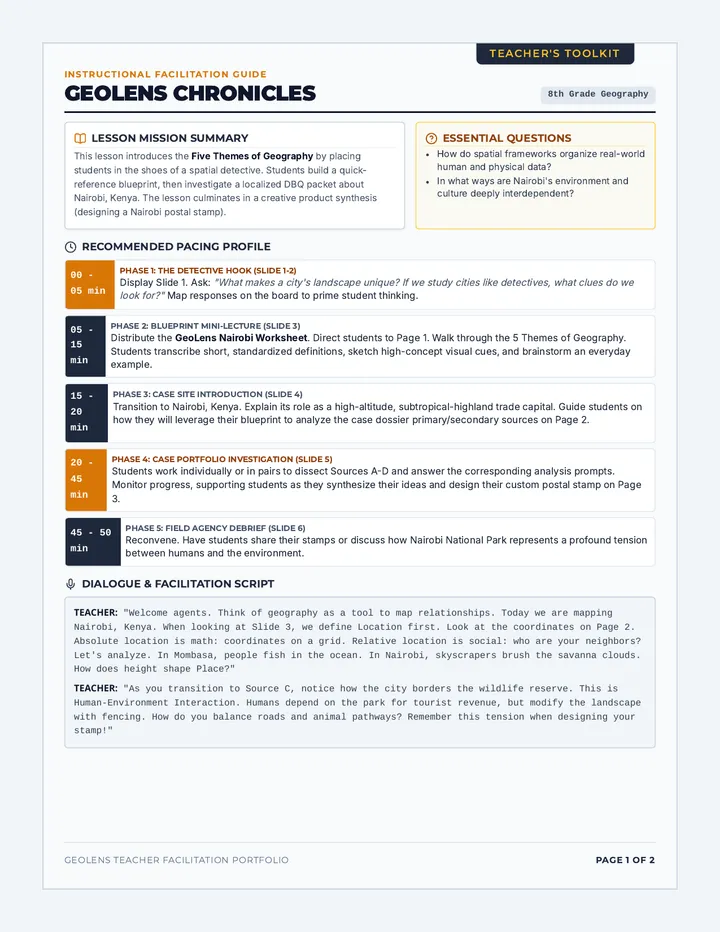
Teacher's Instructional & Discussion Guide
Lesson 2 Facilitation
Learning Objectives
Compare the "Psychic Secretion" of Pavlov with the "Reflex" model of Sechenov.
Analyze the sociopolitical context of the Russian laboratory as an industrial space.
Core Theory: Ivan Sechenov (1863)
"All acts of conscious or unconscious life are reflexes by their origin."
Discussion Spark 1: Determinism
Sechenov argued that inhibition was just as much a reflex as excitation. If both action and inaction are reflexes, does 'will' exist? Ask students to relate this to the transition from Cartesian dualism to Materialism.
Prompt:
"If a reflex can be 'inhibited' by another physiological state, why did earlier psychologists mistake this for 'free will'?"
The Laboratory as Factory
Pavlov didn't just study dogs; he built "The Tower of Silence"—a soundproofed, vibration-controlled environment. This wasn't just science; it was industrialized observation .
Technical Focus:
Chronic preparation: The surgical fistula allowed for long-term data collection without killing the animal.
Quantitative output: Drops of saliva as a direct metric for the 'strength' of a mental association.
Historiographic Insight:
"Pavlov's work was initially received in the West as physiology, not psychology. It was Watson who 'psychologized' the reflex, turning a biological mechanism into a theory of learning."
Seminar Discussion Prompts
Metaphysics vs. Method
Did Pavlov believe the mind didn't exist, or just that it couldn't be measured? Distinguish between Methodological Behaviorism (denying the use of introspection) and Metaphysical Behaviorism (denying the existence of mind).
The "Industrial" Dog
Analyze the visual culture of Pavlov’s lab (the harnesses, the tubes, the isolation). How does this visual language communicate the desire for 'Control' as the new objective of psychology over 'Understanding'?
Translation as Transformation
Pavlov’s "Conditional Reflex" was famously mistranslated as "Conditioned Reflex" in English. How did this subtle shift in grammar change the way American behaviorists viewed the passivity of the organism?
Classroom Activity: Mapping the Arc
Have students draw a flowchart connecting a (Bell) to a (Salivation). They must label where 'Mind' used to be, and how Pavlov's terminology (CS, US, CR, UR) removes the need for that label.
Pavlovian Schematic Worksheet The Pavlovian Schematic
Methodological Documentation: Exercise 2.2
Context: The Physiological Reduction
Ivan Pavlov’s contribution to psychology was not just the discovery of conditioning, but the operationalization of mental associations . By measuring drops of saliva, he converted the subjective "expectation of food" into a quantifiable physiological metric.
Requirement: Use precise Pavlovian terminology (US, UR, CS, CR) in your analysis.
I. Mapping the Reflex Arc
Analyze the standard conditioning paradigm. In the boxes below, identify the components and explain the transformation of the stimulus .
Pre-Conditioning
Stimulus (Food)
Unconditioned Stimulus (US)
Response (Salivation)
During Training
Contiguity & Reinforcement
Neutral Stimulus (Tone)
Unconditioned Stimulus (US)
Post-Conditioning
II. The Philosophical Pivot
1. Eliminative Materialism
Explain how Pavlov’s use of fistulas and saliva counts removes the need to discuss "hunger" or "pleasure" as explanatory variables.
2. Experimental Extinction
In Pavlov’s view, why is extinction not "forgetting," but rather the development of active cortical inhibition ?
3. Generalization vs. Discrimination
How does the laboratory's high level of control (e.g., the Tower of Silence) enable the study of these two phenomena without human interference?
"The animal is a mechanism, a complex piece of clockwork, which responds to every touch with a regular movement." — Sechenov
Watson Manifesto Slides Psychology as the Behaviorist Views It
The 1913 Manifesto and the Watsonian Revolution
John B. Watson | Columbia University
The Declaration of Independence
1913
"Psychology as the behaviorist views it is a purely objective experimental branch of natural science. Its theoretical goal is the prediction and control of behavior ."
Key Pillars:
No Introspection
No Mentalistic Concepts
Unitary Continuity (Human/Animal)
The Rhetorical Strategy
Watson wasn't just presenting data; he was branding a movement. He positioned himself as a "progressive" fighting against the "stagnant" mentalism of Wundt and James.
The Engineering Model
Utility
Psychology must be useful to society. If you can't predict behavior, you can't sell, educate, or manage.
Environment
The organism is a blank slate (Tabula Rasa). Behavior is a function of the stimulus history, not "inner spirit."
Control
Science is not just observation; it is manipulation . If you change the input, you must change the output.
The Famous Provocation
"Give me a dozen healthy infants... and I’ll guarantee to take any one at random and train him to become any type of specialist I might select—doctor, lawyer, artist, merchant-chief and, yes, even beggar-man and thief..."
— John B. Watson, 1930 edition
• Radical Environmentalism
• Rejection of Instinct
• Rejection of Genetics
Watson's Legacy
Watson succeeded in defining the borders of the field. Even those who disagreed with his extreme environmentalism accepted his premise: Public behavior is the only data that counts.
Next: The rise of Neobehaviorism and Intervening Variables
Watson Rhetorical Analysis Rhetorical Anatomy
Analysis of 'Psychology as the Behaviorist Views It' (1913)
WATSON / GRADUATE SEMINAR
I. The Paradigm Strike
Watson begins by defining psychology in a way that excludes his predecessors. Read the first paragraph of the manifesto and analyze the linguistic exclusionary tactics .
"Psychology... is a purely objective experimental branch of natural science... It can dispense with consciousness in a psychological sense."
Analytical Prompt:
By aligning psychology with "Natural Science," what is Watson implying about the "Philosophy" departments where psychology was currently housed? How does this function as a power move in university politics?
II. Dismantling the Old Guard
Watson claims introspection has failed because it lacks the "public" criteria of science. Fill in the comparative analysis below based on Watson's critique:
Mentalist Methodology
"The observer is the subject; the data is private."
Behaviorist Methodology
The "Scientific Utility" Argument:
Watson argues that if introspection doesn't work for animals, and we want a "unitary" science, we must drop it for humans too. Why is this logical parsimony so persuasive to a 1913 audience?
III. The Marketing of 'Prediction'
Watson sells behaviorism as a tool for social management. Critique the following claim from the text:
"If psychology would follow the plan I suggest... the educator, the physician, the jurist and the business man could utilize our data in a practical way."
The 'Benefit'
Standardization of human performance; efficiency in education and industry.
The 'Cost' (Historiographic Critique)
IV. Synthesis: The Manifesto as Myth
Historians like Samelson argue that Watson's "revolution" was actually a slow evolution, but Watson's rhetoric made it feel like a sudden break. Why is the "revolutionary" narrative so dominant in psychology textbooks today?
Paradigm Debate Guide The Paradigm Debate
Classroom Simulation & Roleplay Guide
Lesson 3.3 Activity
Activity Objective
To internalize the fundamental theoretical clash of 1913. Students will navigate the "crisis of communication" between a Traditional Mentalist (Structuralist) and a Watsonian Behaviorist , highlighting how they define 'truth' differently.
Role A: The Wundtian / Titchenerian
Perspective: Psychology is the study of mind . Behavior is merely a side effect.
Data: Introspective reports of sensation, image, and affect.
Goal: Analysis of the "periodic table" of consciousness.
Critique of Watson: "You are turning psychology into physiology. You have lost the subject!"
Role B: The Watsonian Convert
Perspective: Psychology is the study of behavior . "Mind" is a ghost in the machine.
Data: Observable stimulus-response (S-R) arcs.
Goal: Prediction and social control.
Critique of Mentalism: "Your results are unreplicable. If science isn't public, it isn't science!"
The Confrontation: "The Case of Fear"
A child is afraid of white rats (Little Albert scenario). Both psychologists must explain why the fear exists and how to treat it using only their paradigm's vocabulary.
W
"The child is experiencing a 'sensation of unpleasantness' and a 'vivid mental image' of the white rat which causes a 'lowering of affective tone'..."
B
"Nonsense! The child has an 'established conditioned response'. The rat (CS) was paired with a loud noise (US), leading to the avoidant behavioral output (CR). I don't care how he 'feels'—I care that he crawls away!"
Instructor Debriefing Prompts
The Incommensurability Problem: Why did neither side seem to actually "hear" the other? (Reference Kuhn's paradigm shifts).
The Moral Dimension: What are the ethical implications of treating a human as a purely reactive biological machine?
Evolution vs. Revolution: Was Watson's dismissal of mentalism a necessary "surgery" for the survival of psychology as a department?
Neobehaviorism Theory Slides Neobehaviorism
Operationalizing the 'Black Box' (1930s-1950s)
Tolman | Hull | Skinner
Beyond Simple S-R
Watson’s behaviorism was atheoretical —it just recorded associations. By the 1930s, psychology needed to explain why behavior varied in complex ways.
The Solution: Logical Positivism
Science must consist of observational terms AND theoretical terms, so long as the theoretical terms are operationally defined .
The Organism
S → O → R
The "O" returns to the equation.
Edward C. Tolman
Molar Behaviorism
Behavior is purposive . Animals don't just react; they act to achieve goals.
Latent Learning
Rats learn the maze layout even without a food reward. The learning is "hidden" until motivation is introduced.
Intervening Variables
Internal states (like a 'cognitive map') are acceptable to science ONLY if they are tied to observable antecedents and consequences.
"Cognitive" but still behaviorist in method.
Clark Hull's Drive Theory
sEr = sHr × D × V × K
Reaction Potential (E ) = Habit Strength (H ) × Drive (D ) × Stimulus Intensity (V ) × Incentive (K )
Hull attempted to create a Newtonian physics of behavior . If psychology could be expressed in math, its status as a hard science would be secured.
B.F. Skinner
The rejection of 'O' (The Intervening Variable)
Operant Conditioning
Behavior is not elicited (Pavlov); it is emitted . It is selected by its consequences (The Law of Effect).
Explanatory Fictions
Skinner argued that "mind," "will," and "drive" are just names for the behavior itself. To say "he eats because he is hungry" is a tautology.
The Goal: A Technology of Behavior
Operationalization Workshop The Operational Workshop
Bridging Theoretical Terms and Observational Data
Methodology Series
Graduate Practicum 4.2
Core Concept: Bridgman's Operationalism
"The concept is synonymous with the corresponding set of operations." In neobehaviorism, we can use "internal" words, but ONLY if we define the physical steps taken to measure them.
I. Defining the 'Unobservable'
Choose a "mentalistic" term and provide an operational definition that a strict 1940s neobehaviorist would accept.
Target: "HUNGER"
Example: "The number of hours of food deprivation" OR "The percentage of the animal's free-feeding body weight."
Target: "ANXIETY"
Target: "INTELLIGENCE"
Target: "MEMORY"
II. Theoretical Modeling
"Intervening variables are the psychological equivalent of the physicist's 'force' or 'energy'." — Tolman
System Map
Independent Variables
Stimulus (S)
Heredity (H)
Training (T)
Intervening Variable
?
Dependent Variable
Rate of response
Error count
Critique Task:
If we can measure the 'Independent' and the 'Dependent' variables perfectly, why did Tolman insist on keeping the 'Intervening' variable? What does it provide that a strict S-R account (Watson/Skinner) lacks?
III. The Cost of Precision
By the 1950s, neobehaviorism became increasingly complex (Hull's math was accused of being impenetrable). Evaluate the following historiographical claim: "The demand for total operational rigor eventually choked the creativity of psychological theory."
Cognitive Revolution Slides The Cognitive Revolution?
Historiographical Critiques of the Behavioral Legacy
Lesson 5: Evolution vs. Overthrow
Standard Narrative: The "Revolution"
"In the late 1950s, behaviorism was suddenly overthrown by the cognitive revolution, restoring 'mind' to its rightful place."
This narrative suggests a sudden, Kuhnian paradigm shift. But is it accurate? Or was it a rebranding of existing neobehaviorist trends?
Key Catalysts:
Chomsky (1959): Scathing review of Skinner’s Verbal Behavior .
Computer Analogy: Hardware (Brain) vs. Software (Mind).
Miller (1956): The Magical Number Seven (Capacity limits).
Verbal Behavior
Skinner's Account
Language is a "repertoire" of operants. Parents reinforce certain sounds; the child repeats them. Complexity is just "chaining."
Focus: External Control
Chomsky's Critique
Language is generative . Children say things they've never heard. You cannot explain syntax through "reinforcement history" alone.
Focus: Innate Structure
The "Moment of Impact": A 32-page review that changed a generation.
Did Behaviorism Die?
Evolution
Many "cognitive" theories just replaced "Intervening Variables" with "Information Processing" but kept the behaviorist method .
Survival
Applied Behavior Analysis (ABA) and Behavioral Economics remain dominant in practical fields today.
The Merger
Cognitive-Behavioral Therapy (CBT) represents the ultimate synthesis of the two paradigms.
Final Reflection
"Is the history of psychology a series of discoveries , or a series of shifts in fashion driven by the need for institutional funding and social utility?"
The Behaviorist Revolution secured the lab; the Cognitive Revolution secured the mind. Both remain in the DNA of the modern graduate researcher.
Historiography Seminar Final Assessment Historiographic Seminar
Synthesizing the Behavioral Era
Final Debrief
I. The 1959 Turning Point
Noam Chomsky’s review of Verbal Behavior is often cited as the "death knell" of radical behaviorism. Analyze the following excerpt and its methodological implications:
"If we take the terms 'stimulus', 'response', and 'reinforcement' seriously, they are not applicable to the behavior of the listener or the speaker in a natural language situation... if we take them metaphorically, they are no more than a paraphrase of the mentalist terms Skinner wants to replace."
Seminar Prompt:
Chomsky accuses Skinner of a "semantic trap." Explain how this critique undermines the entire project of operationalism that students studied in Lesson 4.
II. The 'Whig' History of Psychology
"Whig history" views the past as a steady march toward enlightenment. Most textbooks present the "Cognitive Revolution" as an enlightenment after the "Dark Ages" of behaviorism. Challenge this narrative:
The Continuity Argument
In what ways is modern "Cognitive Science" just Behaviorism with better computers ? Does the reliance on reaction times and MRI scans still rely on external markers of behavior rather than internal "understanding"?
The Sociopolitical Argument
How did the Cold War and the rise of Information Theory (computing) necessitate a "Cognitive" turn? Why was the simple S-R animal model no longer useful for a world of human-machine interaction?
Final Sequence Synthesis
"The behaviorist revolution succeeded in making psychology scientific, but failed in making it human." — Evaluate this statement using evidence from Watson, Pavlov, and Skinner.
Historiography of Psychology | Graduate Program | Session 5 Finish