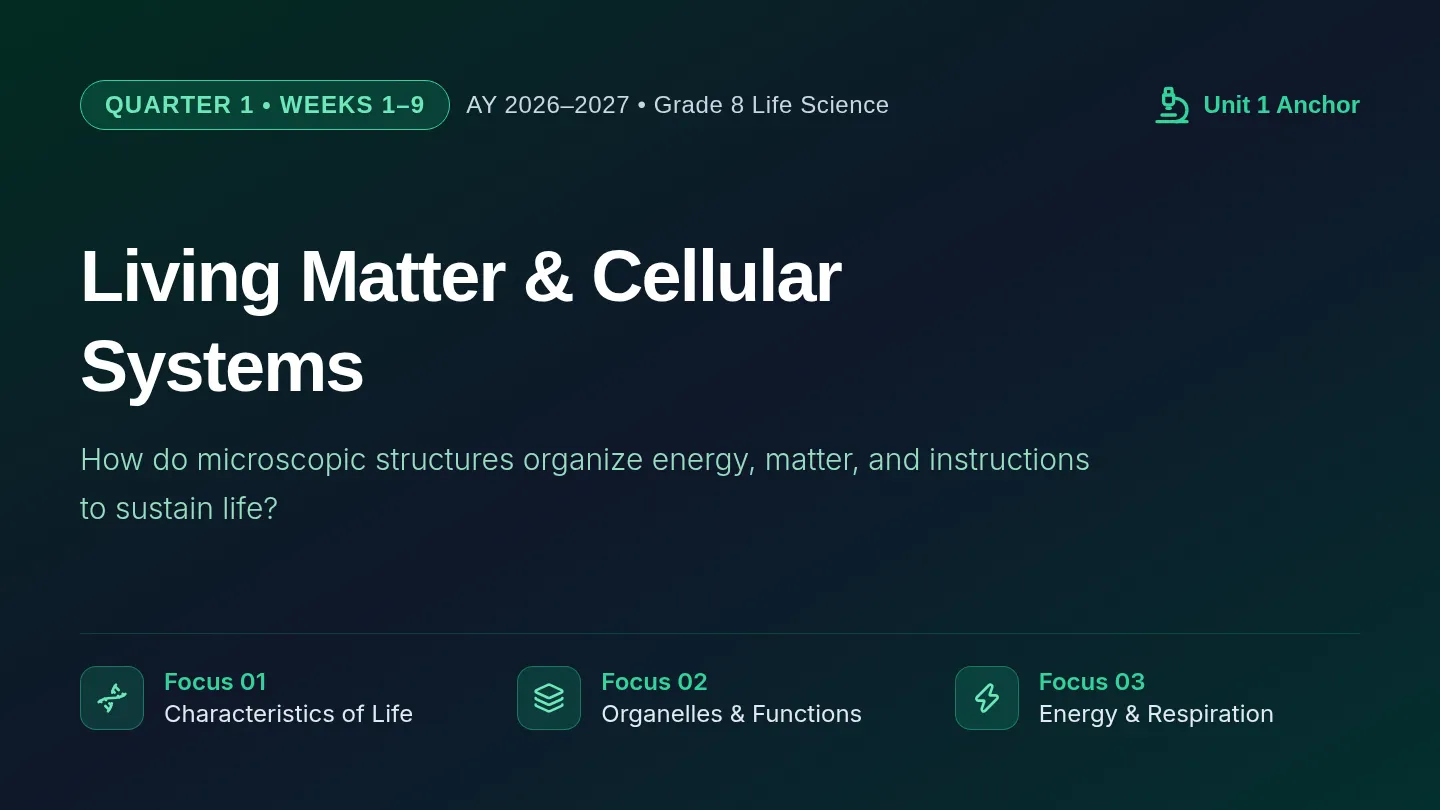
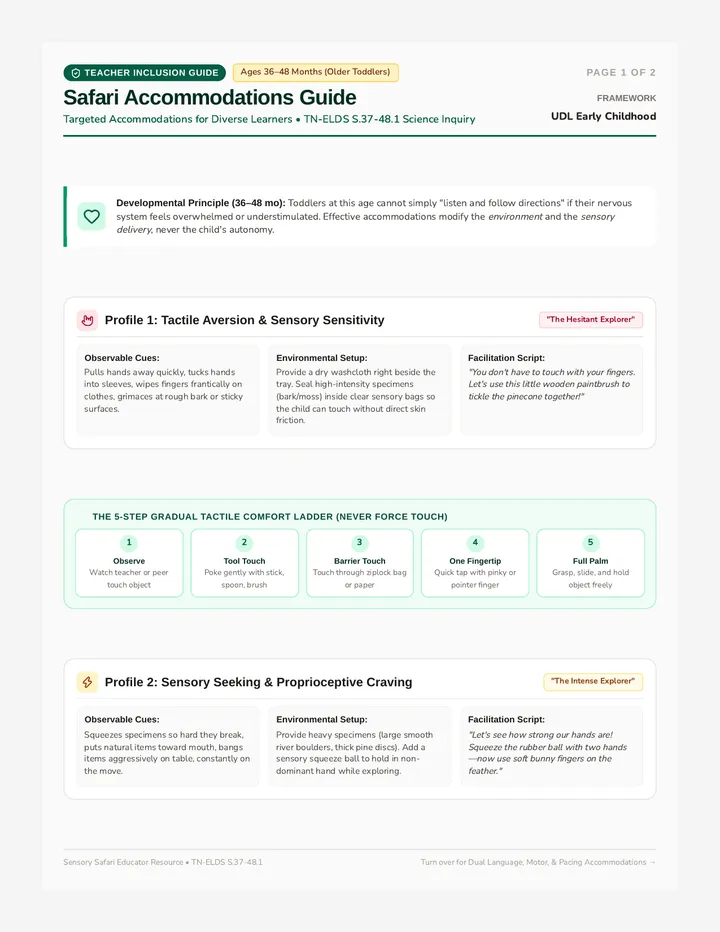
A three-part middle school science and physical health sequence exploring ancient Chinese medicine and movement through modern clinical trials, pharmacology, neurobiology, and biomechanics.
"Why did Tu Youyou need both a 1,600-year-old scroll AND a modern chemistry lab to win the Nobel Prize?"
"If someone drinks an unproven herbal tea and recovers from a cold in 5 days, how do we know if the herb worked or if the immune system did?"
Ancient Bio Lab • Facilitator Guide Lesson 1 Complete
4 Sham Controls & Unproven Claims
CLINICAL TRIALS
Sham Needles: In modern trials, researchers use telescoping blunt needles that poke the skin but retract inside the handle without piercing. This tests true neurological stimulation against patient expectation.
The Clinical Boundary: Acupuncture beats sham needles for chronic pain (knee arthritis, lower back, tension headaches). However, claims that needling cures infections, cancer, diabetes, or cleanses "toxins" (as in cupping bruising) fail clinical trials completely.
Receptor Density & Brain Mapping (The Sensory Homunculus)
Skin sensitivity is not uniform across your body. Highly sensitive regions (fingertips, lips, palms) are packed with thousands of microscopic mechanoreceptors with tiny, discrete receptive fields. In contrast, the forearm, back, and neck have sparse receptors sharing large receptive fields. We can measure this physical wiring using a simple two-point discrimination caliper test!
Ancient Bio Lab • Middle School Neuroscience Series Turn page over to SIDE B for the Sensory Lab & Practice Audit ➔
Ancient Bio Lab • Lesson 2 • Student Lab Sheet SIDE B: LAB & WORK AREA
Sensory Lab & Clinical Audit
Use the dossier on Side A to complete the audit, then map sensory receptors
Name:
Date:
1 Acupuncture & Physical Medicine Audit (Refer to Side A)
Practice & Ancient Claim
Status
Biological Reality / Anatomical Target
Modern Finding
Acupuncture for Chronic Pain
Ancient: Unblocks Qi
Verified
A-beta fibers close spinal pain gate; endorphin release.
Beats sham control in back pain & knee arthritis.
P6 Wrist Acupressure
Ancient: Harmonizes stomach
Verified
Proven in post-op & motion nausea; FDA wristbands.
Cupping Therapy
Ancient: Sucks out toxins
Weak / Inconclusive
Capillary rupture causes bruising; mild local heat.
|
| Needling for Infections/Tumors
Ancient: Cures internal illness | Disproven | Cannot kill bacteria or halt tumor cell division. | Zero benefit; cannot replace modern antibiotics/chemo. |
Materials: 1 bent paperclip caliper (set prong gaps with a ruler: 25mm, 12mm, 5mm, 2mm). Subject closes eyes. Partner gently touches skin with 1 or 2 tips. Record if felt as "1" or "2" points.
Body Site Tested
25 mm Gap
12 mm Gap
5 mm Gap
2 mm Gap
Smallest 2-Point Gap
Index Fingertip
|
|
|
|
| Palm of Hand |
|
|
|
|
|
| Inner Forearm (P6 Zone) |
|
|
|
|
|
3 Neurological Analysis & Reflection
1. Why does your fingertip distinguish two prongs only 2mm apart, while your forearm feels them as a single point? Explain using receptor density and brain territory.
2. P6 Acupressure Self-Test: Place your thumb 3 finger-widths above your wrist crease between the 2 tendons. Press firmly for 15 seconds. Describe the physical sensation along your median nerve.
3. Why did the Naloxone drug experiment definitively prove that acupuncture's pain relief is a physical, biological reality rather than just "mind over matter" or wishful thinking?
Ancient Bio Lab • Middle School Neuroscience Series Double-Sided Worksheet Complete • 30-Minute Lab
Socratic Discussion Prompts
"Why do you instinctively rub your elbow when you bang your funny bone?"
"Why do clinical trials need fake telescoping needles (sham controls) instead of just testing on willing volunteers?"
Ancient Bio Lab • Facilitator Guide Lesson 2 Complete
3. Iron Horse Stance
Feet twice shoulder-width, knees bent \(90^\circ\), chest tall, arms rounded as if hugging a giant tree. Pure endurance.
4. Gentle Shaking
Bounce lightly on heels with loose shoulders and dangling arms. Pumps lymphatic fluid and discharges residual muscle tension.
Mind & Body Class • Asia Week PE Feature Turn page over to SIDE B for the 15-Minute Daily PE Tracker ➔
Mind & Body Class • Daily Activity Tracker SIDE B: PE LOG & BIOMETRIC LAB
Daily Mind & Body Workout Log
Complete the 12–15 minute daily routine, measure your biometrics, and track progress
Name:
Week:
1 12–15 Minute Daily PE Routine Protocol
Follow Daily
Phase 1: Warm-Up (3 min)
2 min light shaking on heels + 1 min slow shoulder rolls with deep nasal belly breathing.
Phase 2: Core Moves (7 min)
6 reps "Holding Heavens", 6 reps "Drawing Bow" (each side), then max timed Horse Stance hold.
Phase 3: Cool-Down (3 min)
Standing still with hands folded over lower belly (Dantian). 10 slow 4-count inhales, 6-count exhales.
2 5-Day Biometric Tracker (Count pulse for 15 sec \(\times 4\) for BPM)
Session
Pre-Workout Pulse (BPM)
Post-Workout Pulse (BPM)
Horse Stance Hold Time
Somatic Sensation (Tingling/Warmth)
Day 1
|
|
|
| Day 2 |
|
|
|
|
| Day 3 |
|
|
|
|
| Day 4 |
|
|
|
|
| Day 5 |
|
|
|
|
3 Physiological Reflection & Scientific Analysis
1. Did your resting heart rate drop or stabilize after the cool-down phase compared to your pre-workout state? Explain how long, slow exhalations engage the vagal brake.
2. When holding the Horse Stance, your legs burn without any joint movement. What is an isometric contraction, and why does it build tendon and muscular endurance?
3. Ancient practitioners said slow forms made "Qi rush to the fingertips." Biologically, why do relaxing your shoulder muscles and slowing your breathing cause peripheral blood vessels to dilate?
Mind & Body Class • Asia Week PE Feature Double-Sided PE Log Complete • Daily Routine
Q3: Peripheral Vasodilation & Hand Warmth ("Qi Sensation"):
Chronic stress and tension keep smooth muscle walls around peripheral arterioles constricted. When deep breathing and mindful movement lower sympathetic output, arterioles dilate (vasodilation). Blood rushes into distal capillaries in the fingers, producing a real rise in skin temperature and a pulsating tingling sensation.
Mind & Body Class • Facilitator Guide Asia Week Complete