Nebelivka Mystery City Reading
World History & Archaeology
Name: Date:
THE NEOLITHIC REVOLUTION SERIES
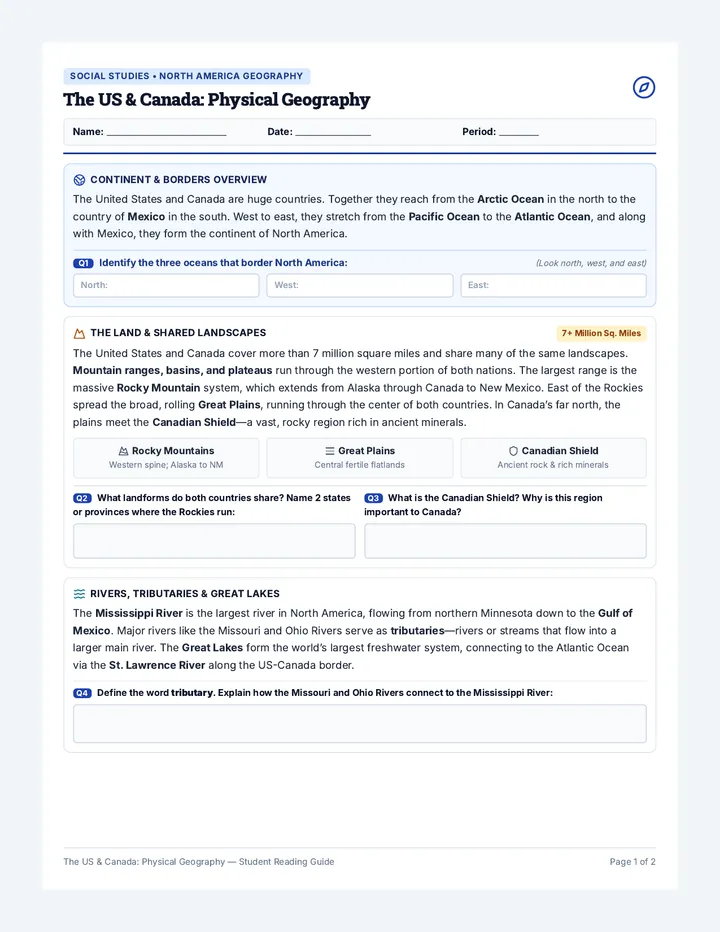
Nebelivka: The Lost Mega-City of the Stone Age
How a 6,000-year-old settlement proved that thousands of people could build a city without kings, palaces, or social classes.
Date Range
c. 3900–3700 BCE
Over 5,800 Years Ago
1. The Great Leap to Farming
For most of human existence, our ancestors lived as nomadic hunter-gatherers, traveling in small bands to chase wild game and forage seasonal plants. Around 12,000 years ago, humanity made its biggest breakthrough: the Neolithic Revolution. People learned to domesticate cattle, sheep, and pigs, and cultivate staple grains like wheat and barley. Because farmers did not need to follow wild animals, they could settle down in one place, invent pottery, and construct permanent villages.
2. A Secret Buried in Ukrainian Soil
Most history books once taught that early mega-cities only emerged in river valleys like the Nile in Egypt or the Tigris and Euphrates in Mesopotamia. But in modern-day Ukraine, archaeologists using satellite imagery and magnetometry (sensors detecting magnetic traces left by buried burned clay) uncovered something astonishing. Beneath farmland lay Nebelivka, a massive settlement built by the ancient Cucuteni-Trypillia culture that flourished around 3900 BCE—centuries before the Great Pyramids were built!
Archaeological Blueprint of Nebelivka Field Survey Data
Concentric Ovals
Over 1,400 houses arranged in wide nested rings across 600 acres (size of 450 football fields), leaving a vast central open plaza.
Equal Two-Story Homes
Timber and baked-clay houses with upper-floor living quarters and ground-floor granaries. Almost every house was nearly identical in size!
Assembly Network
Excavators identified over 100 neighborhood meeting halls plus one giant 60-meter Great Hall for city-wide gatherings.
3. Daily Life in a Trypillian Mega-Settlement
Between 10,000 and 15,000 people lived peacefully in Nebelivka. Families farmed fertile black soil outside the settlement, cared for herds of livestock, and created exquisite ceramics. Trypillian pottery is famous worldwide for swirling spirals painted in mineral red, black, and cream. Craft kilns, bread ovens, and grain pits were spaced evenly across neighborhoods rather than locked inside a central palace, showing that wealth and tools were shared across the community.
Part 1: Urban Architecture & The Neolithic Revolution Turn to Page 2 for The Egalitarian Investigation ➔ Page 1 of 2
Inquiry Case Study: Power & Equality in Early Civilizations Curriculum Focus: Ancient Social Structures
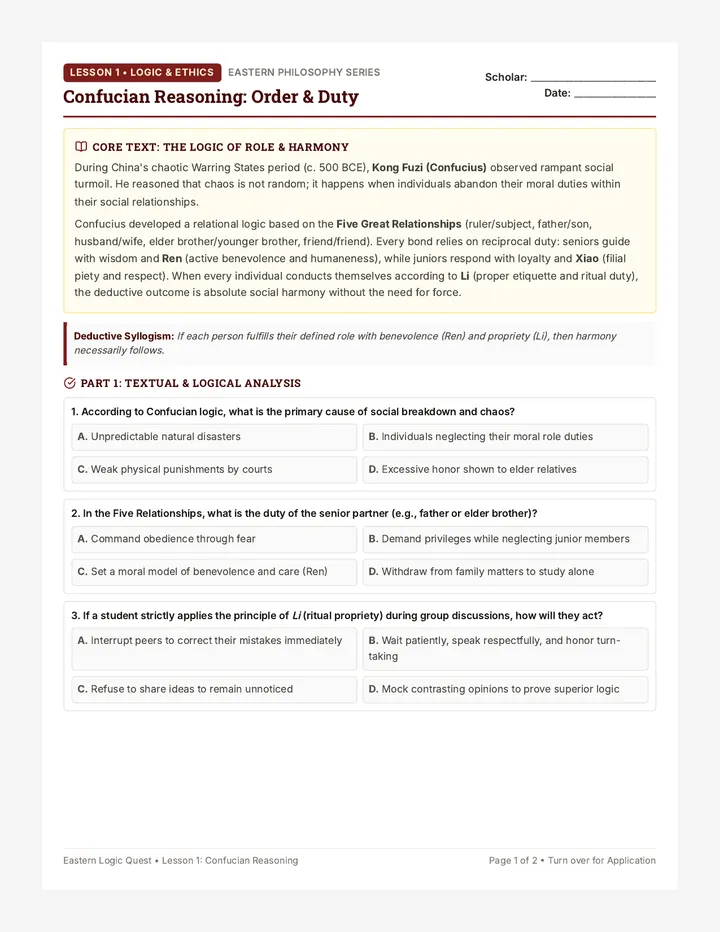
The Egalitarian Puzzle: Can a Mega-City Run Without a King?
For centuries, philosophers argued that when human populations grew large, a ruling class was inevitable: a king to command armies, nobles to own land, tax collectors to seize surplus grain, and lower classes to do hard labor. Yet Nebelivka contradicts this rule. Archaeologists call it an egalitarian society—a community rooted in social equality, where power was shared horizontally among citizens rather than held by a monarch at the top of a pyramid.
1. Equal Homes, Equal Burials
Across 1,400+ houses, sizes are remarkably uniform. Excavations show no lavish royal estates, no slums, and no "golden tombs" honoring wealthy rulers over ordinary citizens.
2. Nested Assembly Councils
Nebelivka had over 100 small neighborhood meeting houses and one giant Great Hall. Decisions were made cooperatively through neighborhood councils rather than royal decree.
3. No Military Elite or Fortresses
Unlike later Bronze Age cities built with defensive fortress walls and barracks for soldier castes, Nebelivka shows zero evidence of standing armies, slavery, or warfare.
4. The Burning House Ritual
Every 60–80 years, residents gathered, cleaned out their homes, laid ceremonial dishes, and intentionally burned their houses to ash. Some scholars believe this ritual prevented any single family from accumulating permanent generational wealth!
Key Archaeologist Vocabulary
Egalitarian A social system where all members share equal rights, status, and collective power.
Mega-Site An immense prehistoric settlement housing thousands of people before formal states.
Consensus A decision-making process where groups discuss until they reach general agreement.
Hierarchy A ranking system where a few powerful elites hold control over the general population.
Archaeological Field Debrief (Answer in complete sentences)
Cite specific details from the reading
1. [Physical Evidence] What physical evidence at Nebelivka shows archaeologists that there was no king, monarch, or super-wealthy ruling class?
2. [Governance & Assemblies] Nebelivka had over 100 neighborhood meeting halls and one central 60-meter Great Hall. How did these buildings allow thousands of people to make decisions together?
3. [Inquiry & Argument] Many old history books claimed that "large cities can only exist if a powerful ruler forces people to obey." How does Nebelivka prove that theory wrong?
Trypillia Mega-Sites Case Study • Curriculum Standard: Early Human Civilizations Page 2 of 2