Lenny.com
Explore
Create
ActivitiesNewCurriculumNewMathEnglish Language ArtsScience & EngineeringSocial StudiesGlobal LanguagesHealth & Physical EducationSpecial EducationCounseling & Life SkillsArts & CreativityESL
Lenny.com
Lenny.com
Explore
Create
ActivitiesNewCurriculumNewMathEnglish Language ArtsScience & EngineeringSocial StudiesGlobal LanguagesHealth & Physical EducationSpecial EducationCounseling & Life SkillsArts & CreativityESL
Lenny.com
Lenny.com

Solutions

Lenny for EducatorsLenny for SchoolsLenny for Districts

Product

ExploreSign inCreateSupportAbout

Resources

Getting startedMTSS Acceleration Program

Newsletters

School Funding Newsletter

© 2026 Lenny Learning Inc.

TermsPrivacyAccessibility
LinkedInInstagramX
Lenny
Science & EngineeringLife ScienceLiving ThingsAnimalsPlantsBody SystemsTraitsAdaptationsCellsEcosystemsHeredityGenes to TraitsCell DivisionPhysicsComparing MaterialsShapes and PropertiesMagnetsMagnetismLightSoundLight and SoundMatterStates of MatterChanges of StateMixturesPhysical and Chemical ChangeHeating and CoolingHeat and Thermal EnergyEnergyForce and MotionElectrical CircuitsAtoms and MoleculesPeriodic TableMotion in One DimensionMotion in Two DimensionsScalars and VectorsForces and Laws of MotionCircular Motion and GravityMomentum and ImpulseWork, Energy, and PowerWavesElectromagnetic WavesGeometric OpticsElectricity and MagnetismSimple Harmonic MotionThermodynamicsNuclear PhysicsEarth Science & AstronomyWeatherWater CycleRocks and MineralsFossilsEarth's FeaturesEarth's ResourcesEarth's StructureWeather and ClimateEarth EventsFossils and Geologic TimePlate TectonicsHuman ImpactsAstronomyChemistryUnits and MeasurementAtomic StructurePeriodic TrendsChemical BondingNomenclatureMolecular StructureIntermolecular ForcesThe MoleStoichiometryProperties of GasesSolutionsChemical ReactionsBalancing EquationsEnergy ChangesRates of ReactionsEquilibriumAcids and BasesQuantum ModelBiologyClassificationCell StructureThe Chemistry of LifeBiomoleculesCellular TransportCell EnergyCell Growth and DivisionDNAProtein SynthesisMeiosis and Sexual ReproductionPatterns of InheritanceMulticellular OrganismsEvolutionEcologyBiodiversityComputer ScienceAlgorithms and Computational ThinkingProgramming LanguagesComputing SystemsNetworks and InternetData AnalysisCybersecurityAI and Machine LearningSoftware Design and DevelopmentBlockchainEngineering & AIDesigning ExperimentsEngineering PracticesDesign ThinkingEngineering Design ProcessMechanical EngineeringElectrical EngineeringMaterials and StructuresCAD and 3D DesignRoboticsArtificial Intelligence BasicsVibe CodingMachine LearningAI Ethics and SocietySystems ThinkingEntrepreneurship & InnovationEntrepreneurial MindsetBusiness Idea DevelopmentBusiness Plan BasicsMarketing & Customer DiscoveryFinancial Management for Startups

Trait Tracker Reference Chart

A comprehensive student reference anchor chart for grades 5 and 8 covering heredity, traits, Punnett squares, and evolutionary concepts. It features a clean 'lab notebook' aesthetic with clear distinctions between inherited and learned characteristics.

KHKristina Homesley

You might also like

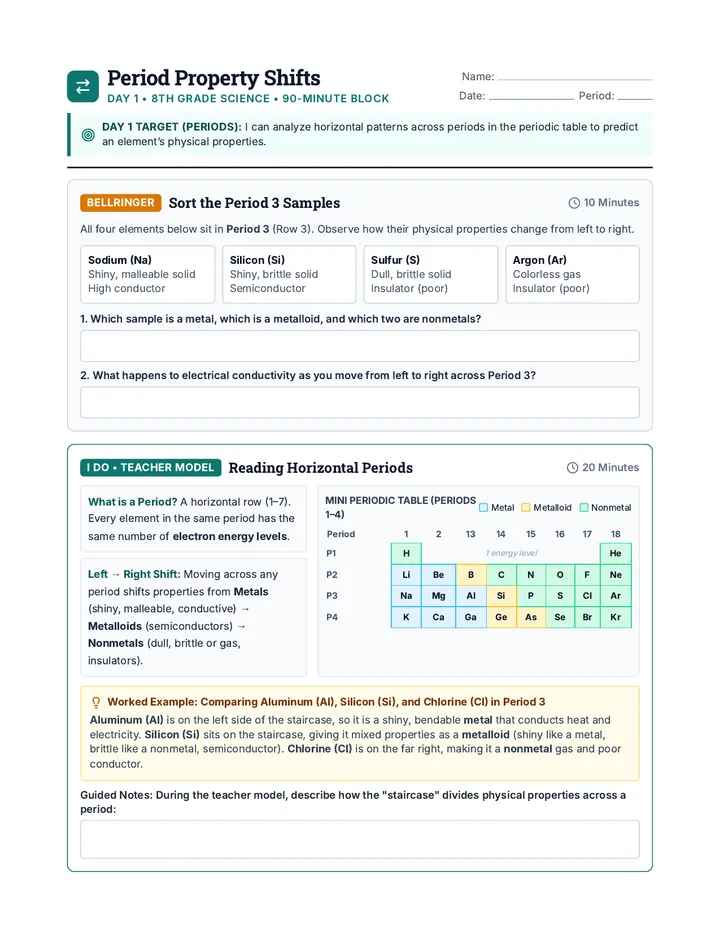
Period Property Shifts Worksheet

Periodic Pattern Detectives (12/01and02)

A two-day 8th grade science sequence (90 minutes per day) where students analyze periodic table patterns—focusing on horizontal periods on Day 1 and vertical groups on Day 2—to predict an element's physical properties and reactivity.

KV

Kristelyn Ventura

4
Brilliant Minds Slides

Ingenious Nations

An interdisciplinary reading and STEM lesson exploring Indigenous innovations across four Native American nations and regions: Haudenosaunee companion planting, Haida and Tlingit steam-bent cedar engineering, Inupiat snow goggles, and Hohokam desert canal irrigation. Includes classroom slides, leveled reading passages, a vocabulary and comprehension worksheet, and an answer key.

G

garcial

4
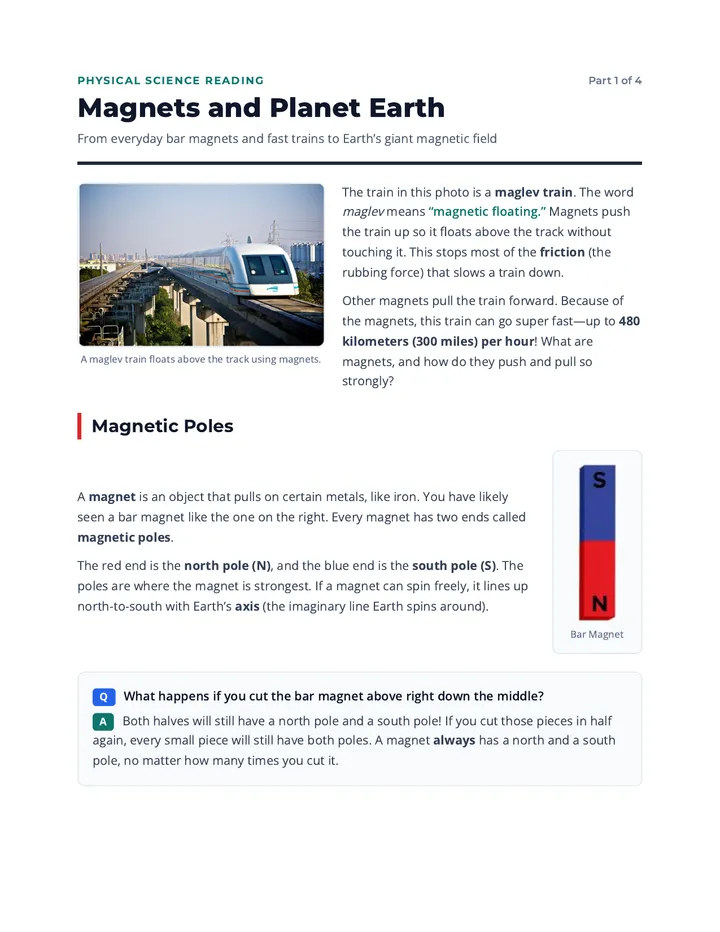
Magnets and Planet Earth Text

Magnets and Planet Earth Text

A cohesive, simplified four-page physical science reading text combining CK-12 content on magnets and Earth as a magnet. Written in clear, accessible language, it covers magnetic poles, magnetic forces and fields, interacting magnets, compasses, Earth's magnetosphere, and the difference between geographic and magnetic poles, complete with original diagrams, summaries, and review questions.

CE

Cameron E. Hill

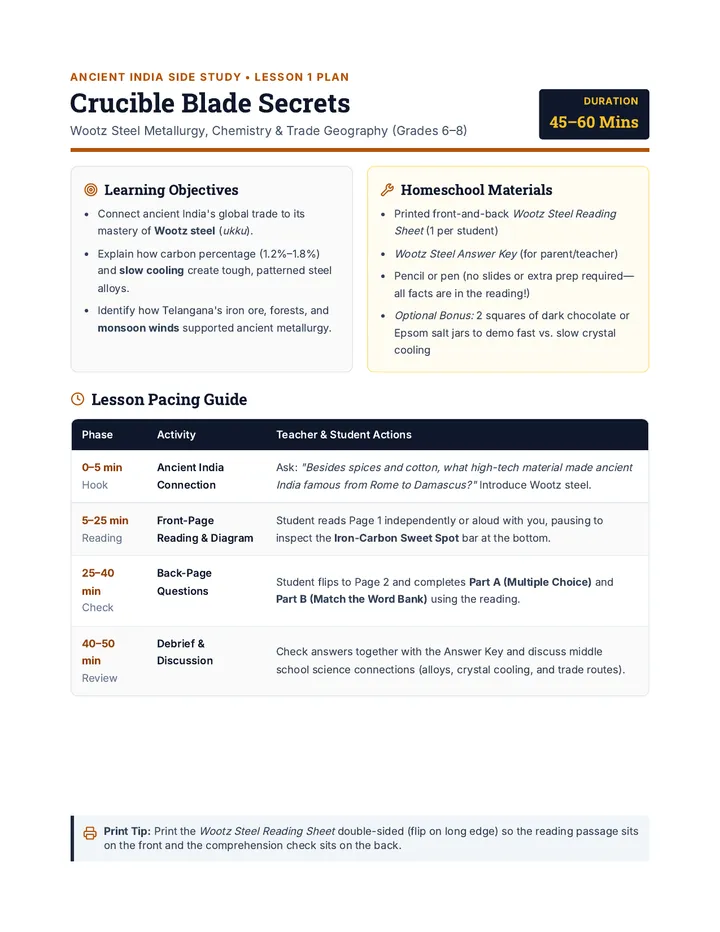
Crucible Blade Lesson Plan

Iron and Basalt

A two-lesson science and geography sequence for middle schoolers exploring South India's ancient Wootz steel metallurgy and the volcanic Deccan Plateau. Students investigate material science, crystal structures, volcanic geology, and monsoon geography through hands-on activities.

DB

Danielle Burham

6
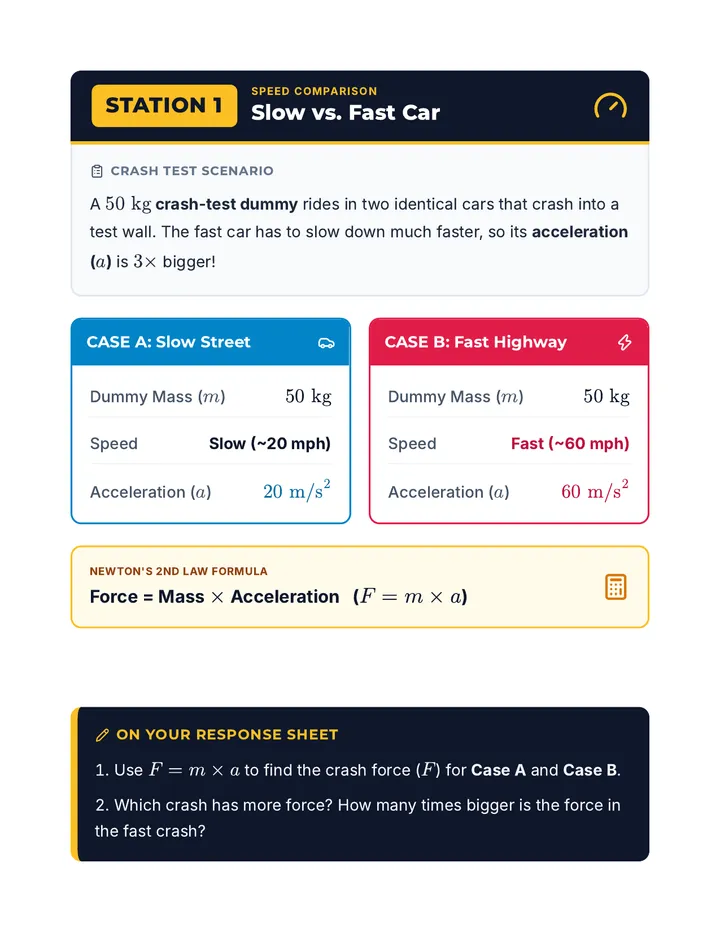
Crash Lab Station Cards

Crash Test Physics

An accessible 8th-grade physical science gallery walk where students analyze car crash scenarios using Newton's Laws of Motion and calculate impact force ($F = ma$) directly from given mass and acceleration values. Covers speed comparisons, seat belts and airbags, vehicle mass, and mixed real-world scenarios.

L

Logan-Greene

3
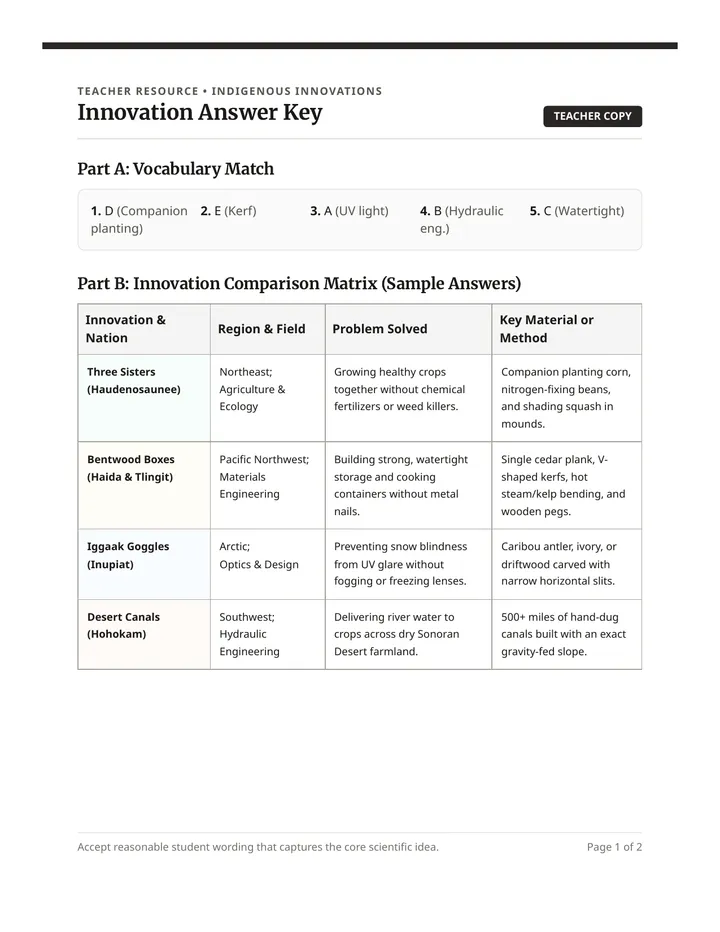
Innovation Answer Key

Innovation Answer Key

A 2-page teacher answer key and facilitation guide providing complete answers for the Innovation Lab Worksheet, sample student responses, and quick classroom pacing notes.

G

garcial

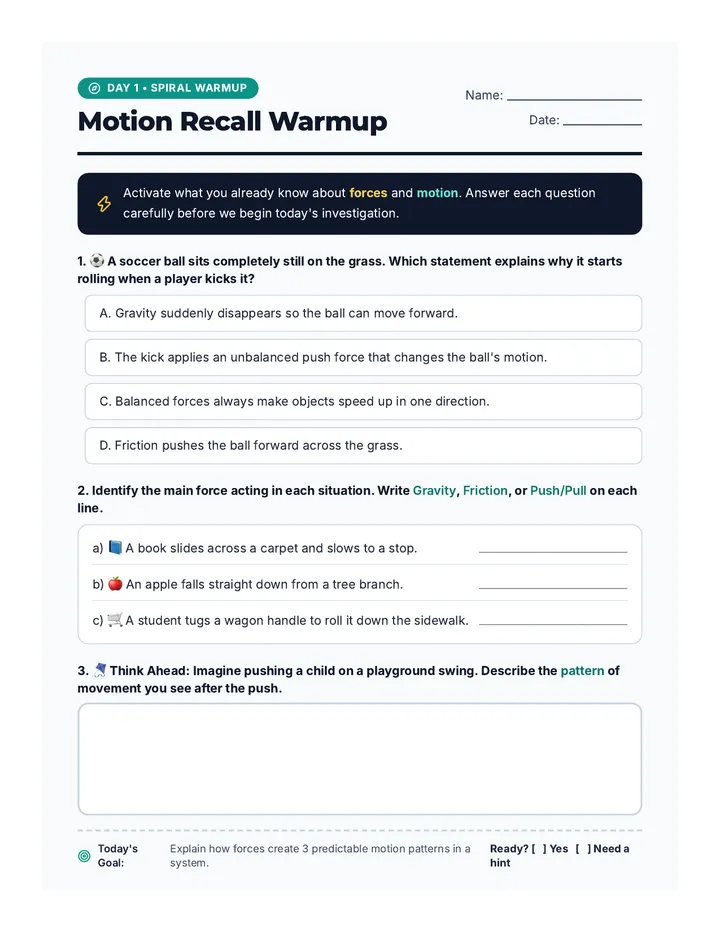
Motion Recall Warmup

Motion Pattern Makers

A two-day science sequence exploring how forces create predictable motion patterns within a system—moving in one direction, shifting back and forth, and moving in cycles—and how conditions like force strength, mass, and friction affect how fast or slowly these patterns occur.

LB

Lara Becker

11
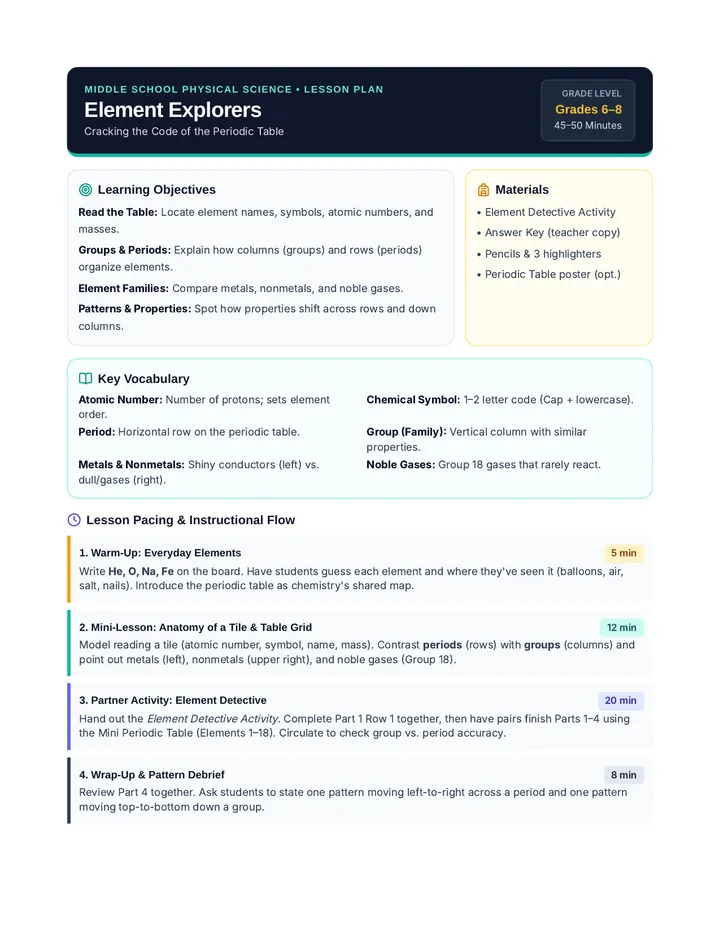
Element Explorers Lesson Plan

Element Explorers

A middle school introductory lesson on the periodic table where students learn to read element tiles, navigate groups and periods, compare metals, nonmetals, and noble gases, and spot patterns in element properties.

R

rnmurphy

4
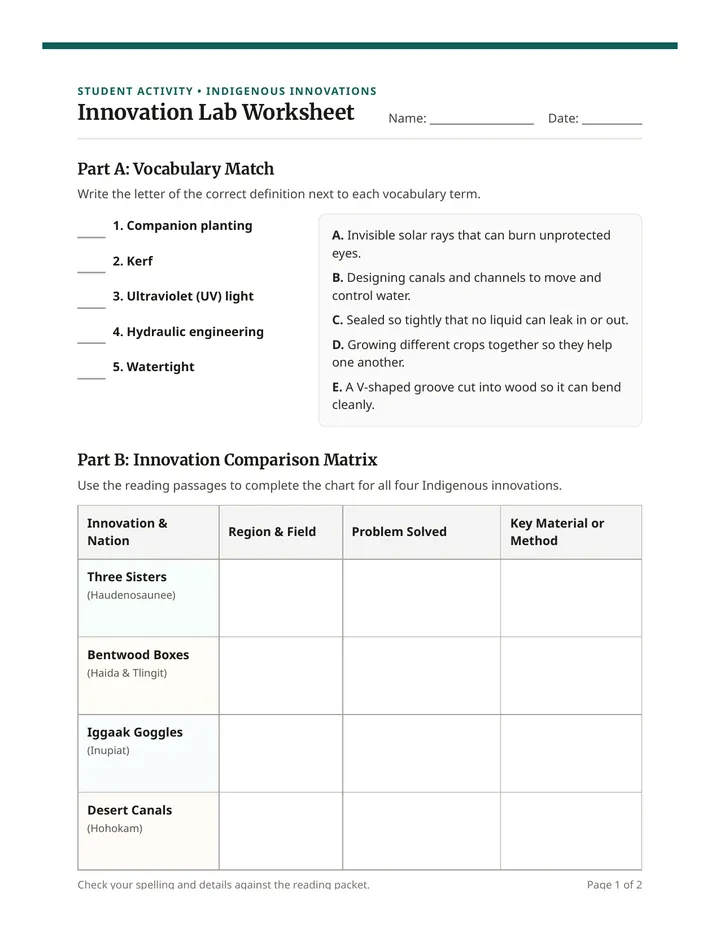
Innovation Lab Worksheet

Innovation Lab Worksheet

A 2-page printable student worksheet with vocabulary matching, an innovation comparison matrix, text-evidence comprehension questions, and an engineering reflection prompt.

G

garcial

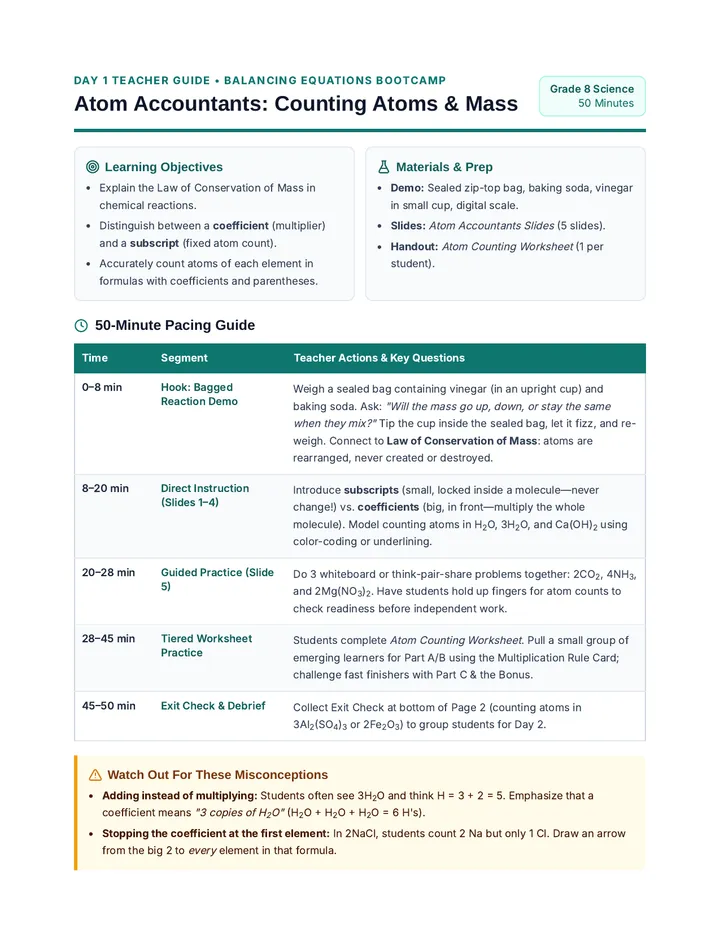
Atom Accountants Lesson Plan

Balancing Equations Bootcamp

A 5-day differentiated chemistry sequence teaching 8th-grade students how to balance chemical equations, progressing from counting atoms and the Law of Conservation of Mass to visual models, T-chart inventories, mixed-ability practice, and a final quiz. Designed for mixed-ability classrooms with built-in scaffolds, tiered practice, and teacher guides.

SH

Sarah Hale

13
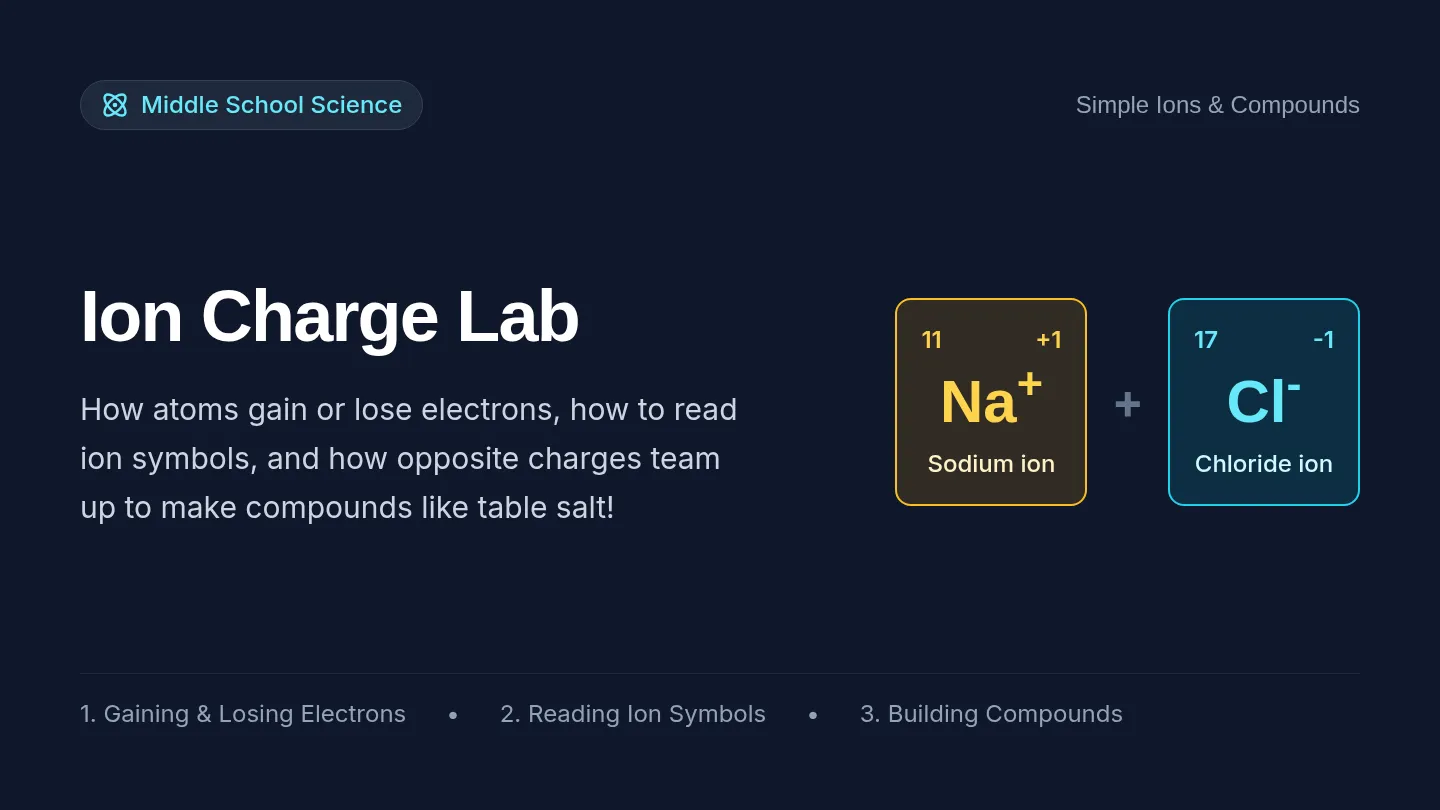
Ion Charge Slides

Ion Charge Lab

An introductory chemistry lesson on simple ions, covering how atoms gain or lose electrons, how to read ion notation, and how to balance charges to form simple ionic compounds. Includes an instructional slide deck, a printable student worksheet, and an answer key.

R

rnmurphy

4
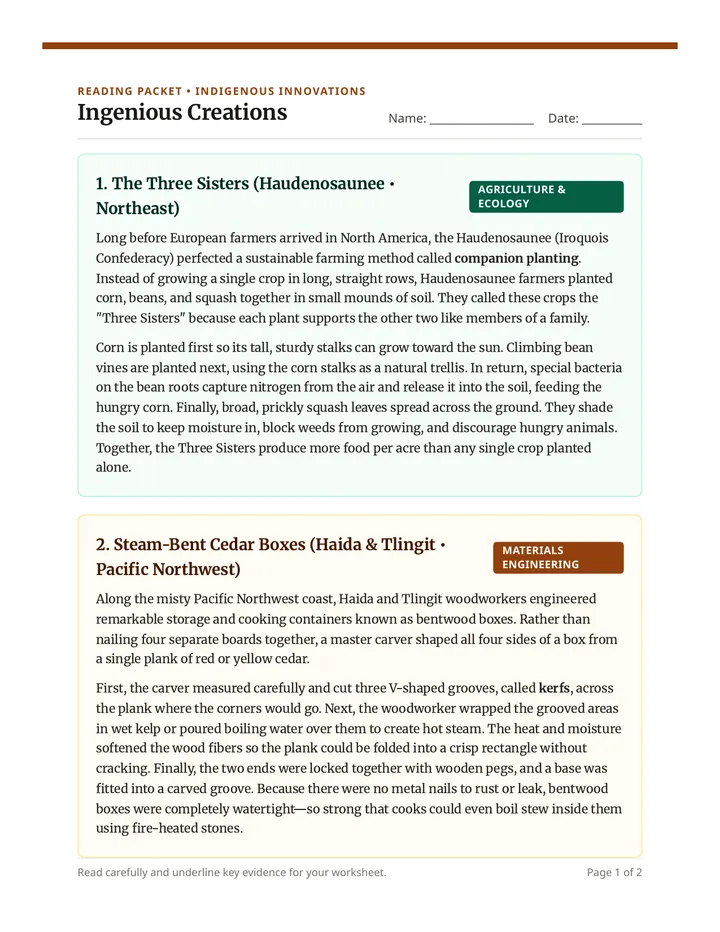
Ingenious Creations Reading

Ingenious Creations Reading

A 2-page printable reading packet featuring four informational passages on Native American innovations: Haudenosaunee Three Sisters companion planting, Haida and Tlingit bentwood boxes, Inupiat snow goggles, and Hohokam desert irrigation canals.

G

garcial