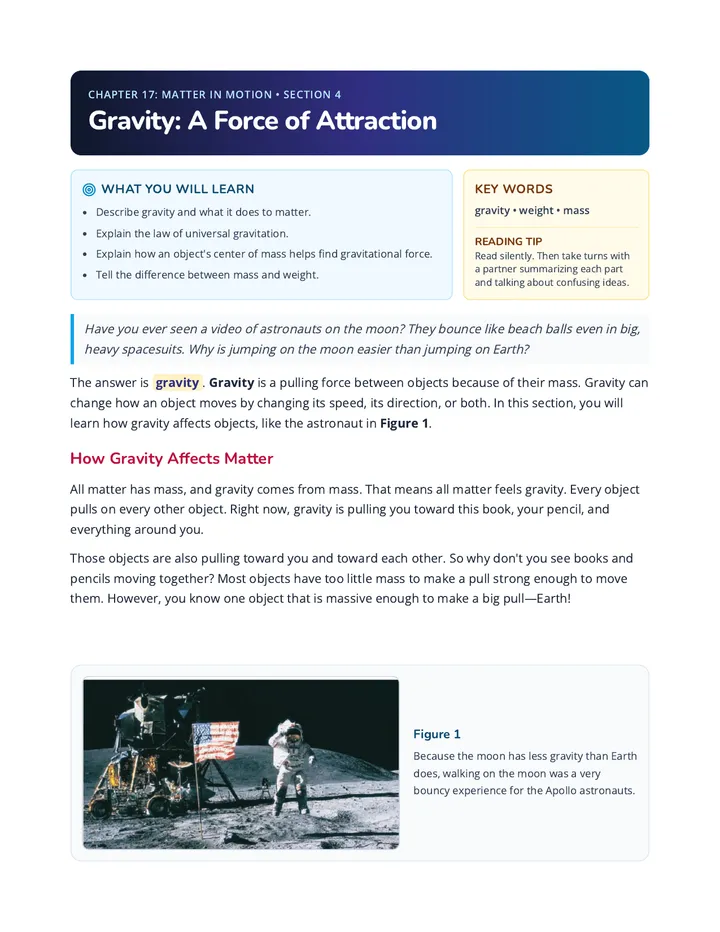
Gravity and Motion Reader
Simplified Science Reader Forces & Motion
Page 1 of 4
Gravity and Motion
Name: ____________________________________
Date: __________________
Key Words to Know
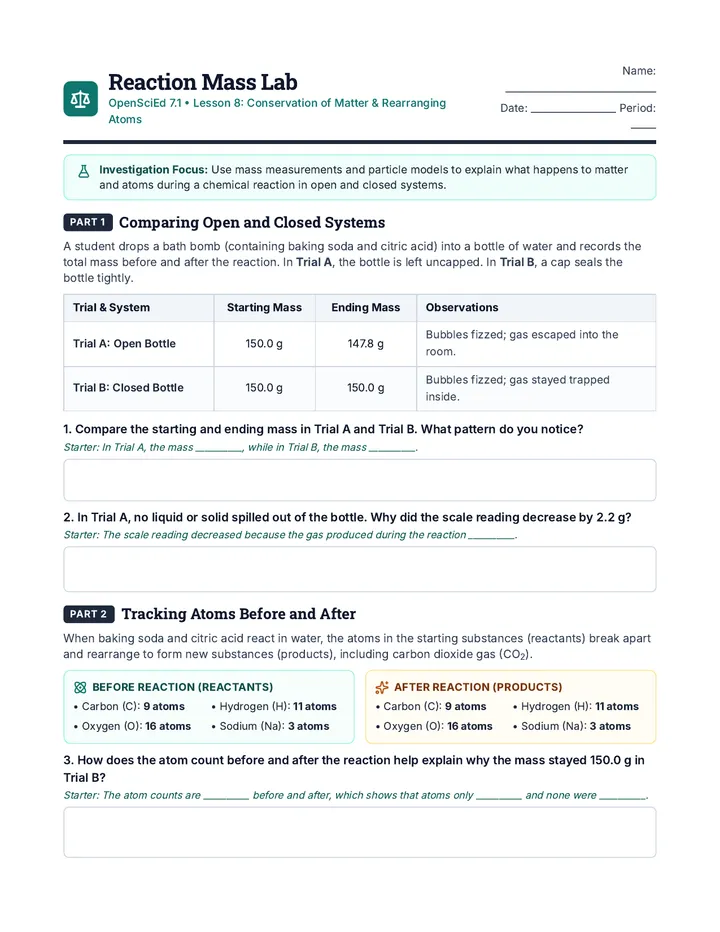
Gravity: The invisible force that pulls objects toward Earth.
Mass: The amount of matter inside an object.
Acceleration: How fast an object's speed changes over time.
1 Do Heavy Objects Fall Faster?
Imagine dropping a heavy baseball and a light marble from a tall building at the same time. Which one hits the ground first?
Long ago, a Greek thinker named Aristotle guessed that heavier objects fall faster. However, he never tested his idea.
In the late 1500s, an Italian scientist named Galileo questioned that idea. According to a famous story, he dropped two cannonballs of different weights from the Leaning Tower of Pisa. Both hit the ground at the exact same time!
Why does this happen? Gravity pulls harder on a heavier object, but a heavier object also has more mass, so it is harder to speed up. The extra pull and extra mass balance each other out.

Figure 1: A light ping-pong ball and a heavier golf ball fall at the same rate.
2 Speeding Up as You Fall
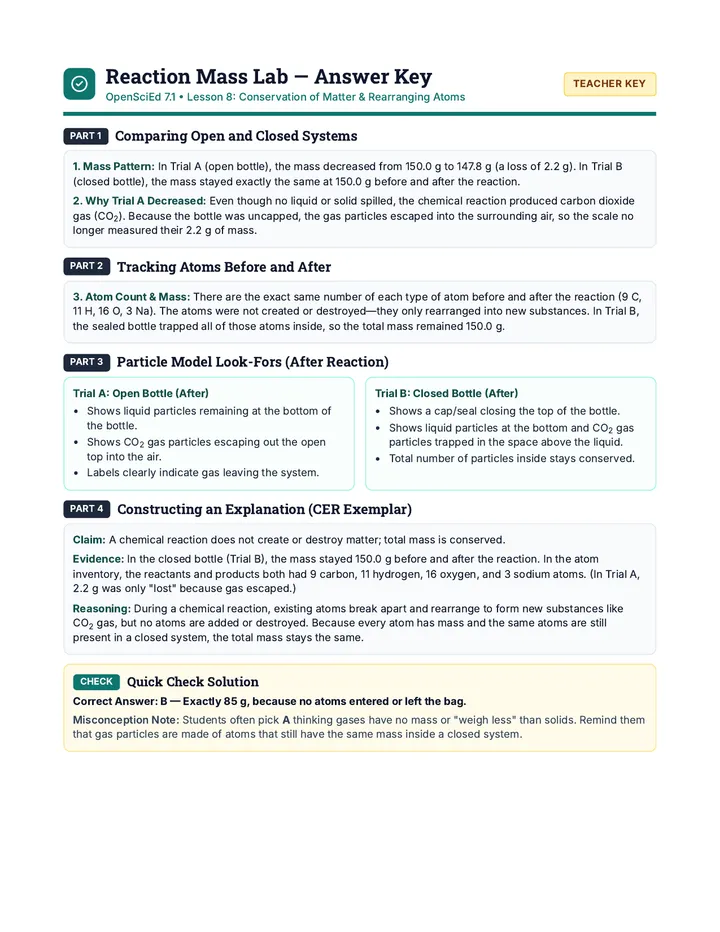
Gravity makes falling objects speed up at a steady rate. On Earth, every falling object speeds up by 9.8 meters per second every single second (\(9.8\text{ m/s}^2\)).
You can find a falling object's speed using this rule: multiply \(9.8\text{ m/s}^2\) by the number of seconds it falls.
Math Example
Rule: \(\Delta v = g \times t\)
If a stone falls for 3 seconds:
\(\Delta v = 9.8\text{ m/s}^2 \times 3\text{ s} = 29.4\text{ m/s}\)
Check Your Understanding
Summary: All objects accelerate downward at \(9.8\text{ m/s}^2\) regardless of mass.
1. If you drop a heavy rock and a light pebble at the same time (with no air), which hits first?
2. By how much does a falling object's speed increase each second on Earth?
Gravity and Motion — Simplified Science Reader Page 2 of 4
Key Words to Know
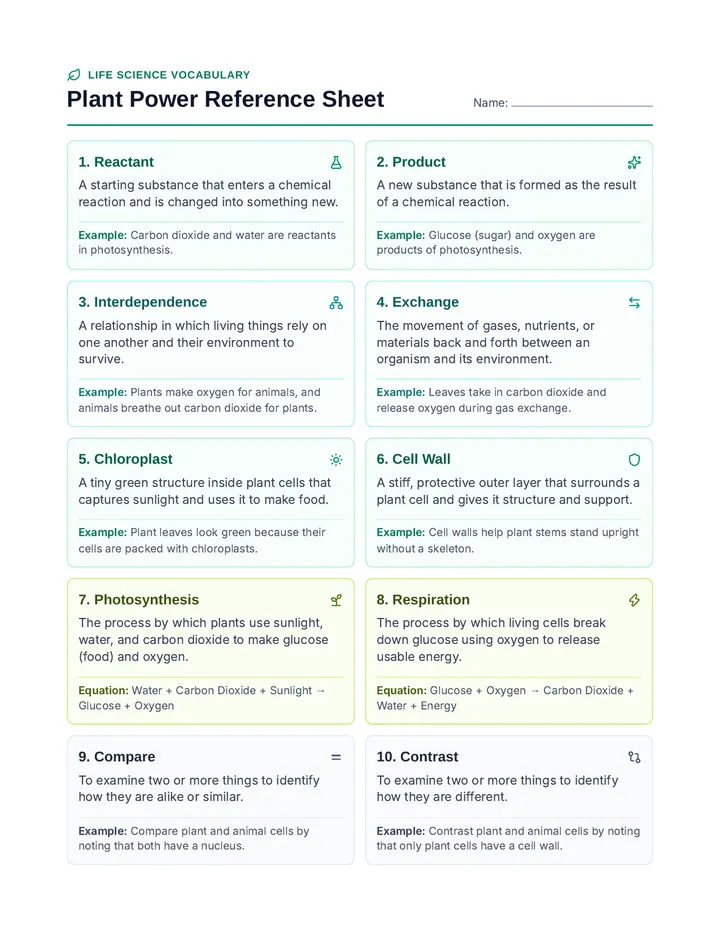
Air resistance: The push of air against a moving object. Example: A flat sheet of paper catches more air than a crumpled ball of paper.
Terminal velocity: The steady top speed of a falling object when air resistance balances gravity. Example: A parachute lowers a skydiver's terminal velocity for a safe landing.
Free fall: Falling when gravity is the only force acting on an object (no air). Example: Objects falling inside a vacuum or in space.
3 How Air Slows Things Down
Drop a flat sheet of paper and a crumpled paper ball at the same time. The crumpled ball lands first! Why? Because of air resistance.
Air pushes upward against falling objects. A flat sheet has a larger surface area, so air pushes on it more and slows it down.
As a falling object speeds up, air resistance grows stronger. When the upward push of air equals the downward pull of gravity, the object stops speeding up and falls at a steady speed called terminal velocity.
Terminal velocity protects us! Without air resistance, hailstones could hit Earth at 350 m/s instead of 5 to 40 m/s.

Figure 2: A parachute catches air and slows the skydiver to a safe terminal velocity.
4 When Gravity Works Alone: Free Fall
People often say skydivers are in "free fall" before opening their parachutes. That is not quite true, because air is still pushing up on them.
An object is only in true free fall when gravity is the only force pulling on it. True free fall can only happen where there is no air—such as in outer space or inside a vacuum (an empty space with no matter).
Inside a vacuum, a feather and an apple fall side by side at the exact same speed!

Figure 3: In a vacuum, a feather and apple fall together.
Check Your Understanding
Summary: Air resistance slows falling objects; free fall happens only without air.
1. Why does a flat sheet of paper fall more slowly than a crumpled ball of paper?
2. What happens to a falling object's speed once it reaches terminal velocity?
Gravity and Motion — Simplified Science Reader Page 3 of 4
Key Words to Know
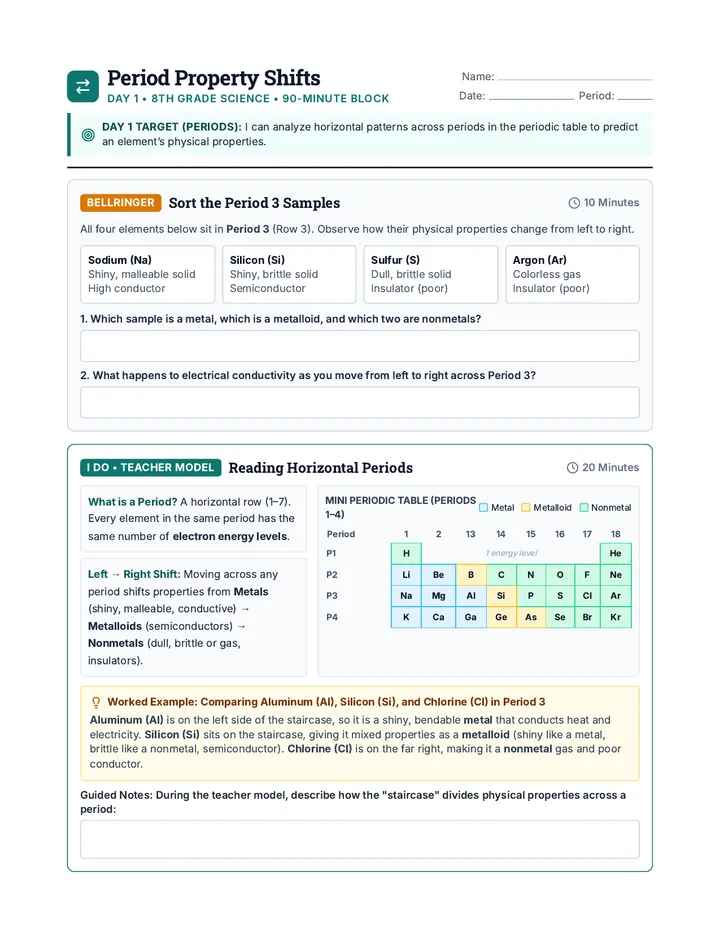
Orbit: The curved path an object follows as it travels around another object in space. Example: The moon orbits Earth.
Centripetal force: An unbalanced force that pulls a moving object toward the center of a circle. Example: Earth's gravity pulls the moon inward to keep it in orbit.
5 Why Do Astronauts Float?
Have you seen videos of astronauts floating inside a spacecraft? Many people think astronauts are "weightless" in space, but that is not true!
Weight is a measure of gravity's pull. Even in space, Earth's gravity still pulls on astronauts. In fact, it is impossible to be completely weightless anywhere in the universe.
Astronauts float because both they and their spacecraft are in free fall around Earth at the exact same rate—just like two people falling together in an elevator.
Figure 4: Astronauts appear weightless because they are in free fall with their spacecraft.
6 Two Motions Make an Orbit
If a spacecraft is always falling toward Earth, why doesn't it crash? Because it is also moving forward very fast! Combining forward motion and downward free fall creates a curved path that matches the curve of Earth.
Objects in circular orbits are always changing direction. That takes an inward pull called a centripetal force (meaning "toward the center"). Gravity provides the centripetal force that keeps the moon orbiting Earth and Earth orbiting the sun.

Figure 5: The space shuttle moves forward at a steady speed while gravity pulls it into free fall. Together, these two motions create a curved orbit around Earth.
Check Your Understanding
Summary: Orbiting combines forward motion and free fall, held by centripetal force.
1. Why do astronauts float inside an orbiting spacecraft?
2. What force acts as the centripetal force keeping the moon in orbit?
Gravity and Motion — Simplified Science Reader Page 4 of 4
Key Word to Know
Projectile motion: The curved path an object follows when it is thrown or launched near Earth. Examples: A thrown baseball, a leaping frog, water from a sprinkler, or a shot arrow.
7 Thrown Objects Follow a Curved Path
When you throw a ball, it travels in a curve. This projectile motion has two separate parts that do not affect each other:
- Horizontal (sideways) motion: Your hand pushes the ball forward. Once it leaves your hand, it keeps moving forward at a steady speed (ignoring air).
- Vertical (up-and-down) motion: Gravity pulls the ball downward, making it speed up at \(9.8\text{ m/s}^2\).
Because gravity pulls thrown objects down as they fly, an archer must aim slightly above a target to hit the bull's-eye!

Figure 6: The dropped red ball and pushed yellow ball fall downward at the exact same rate.
Big Picture Summary
• Gravity: Pulls all objects toward Earth at \(9.8\text{ m/s}^2\).
• Free Fall & Orbit: Orbiting is free fall plus fast forward motion.
• Air Resistance: Slows falling objects down to terminal velocity.
• Projectile Motion: Combines steady sideways motion and downward gravity.
Final Review Questions
1. Which of the following is an example of projectile motion?
a. a feather falling in a vacuum
b. a frog leaping across a pond
c. a car driving up a hill
d. a book resting on a desk
2. A rock falls off a cliff and hits the ground after 2 seconds. What is its speed when it lands? (\(\Delta v = 9.8\text{ m/s}^2 \times t\))
3. You drop a penny and flick another penny sideways off a table at the same time. Which hits the floor first, and why?