Ammonoosuc River Field Poster
NH Watershed Series White Mountains to Connecticut River
Mt. Washington • Grafton & Coös Co.
THE AMMONOOSUC RIVER
Abenaki: "Omanosek" — "Narrow, Stony Fishing Ground"
Length
55 Miles
Drop
4,600+ Ft
Drainage
398 Sq Mi
Course & Settlements Elevation Gradient Flow ➔
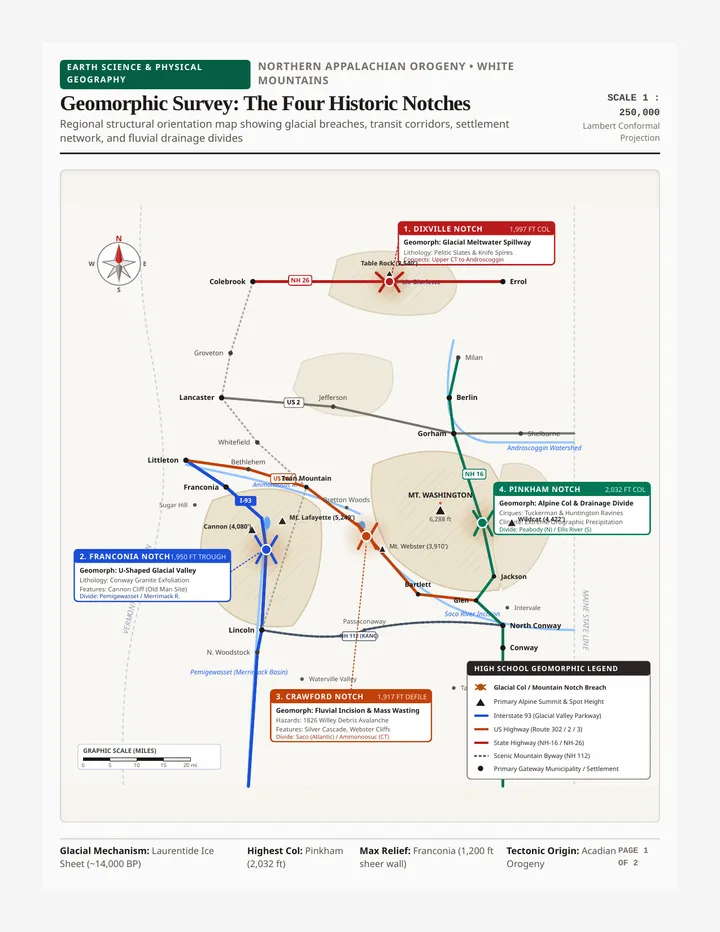
Mt. Washington (6,288') Lakes of the Clouds Source: Elev. 5,050 ft Gale River Wild Ammonoosuc R. CONNECTICUT RIVER Bretton Woods Carroll • Elev. 1,600' Twin Mountain Crossroads • 1,400' Bethlehem Pierce Br. • 1,180' Littleton Riverwalk & Falls • 820' Lisbon Gold Country • 590' Bath Historic Bridge • 520' Woodsville (Mouth) Confluence • Elev. 450' N
Flow Path: Starts at Lake of the Clouds on Mt. Washington, tumbles through Crawford Notch foothills into Carroll, Bethlehem, Littleton, Lisbon, Bath, and meets the Connecticut River at Woodsville.
America's Steepest Fall
Plunging over 4,600 feet in 55 miles, the Ammonoosuc is recognized as one of the steepest gradient rivers of its size east of the Mississippi. Its roaring descent oxygenates water essential for wild coldwater species.
Towns on the River Headwaters to Confluence
Bretton Woods (Carroll): Alpine Headwaters & Hotel
Twin Mountain: Rail junction & trout pools
Bethlehem: Pierce Bridge & boulder rapids
Littleton: Riverwalk, Grist Mill, Covered Br.
Lisbon: 1860s NH Gold Rush riverbeds
Bath: 1832 Bath Covered Bridge (Oldest)
Woodsville (Haverhill): Mouth into Connecticut River
Historic Covered Bridges: Bath Bridge (1832) is one of America's oldest surviving covered bridges. Littleton's pedestrian bridge spans dramatic natural falls.
1860s Gold Rush: In 1864, gold was found in the river gravels of Lisbon and Lyman! Placer gold is still panned along gravel bars today.
FISH OF THE AMMONOOSUC: FIELD IDENTIFICATION GUIDE
Class A Coldwater Fishery • High Dissolved Oxygen
Native Species NH State Fish
Eastern Brook Trout
Salvelinus fontinalis
● Red Halo Spots Vermiculations
Native char thriving in cold headwaters and cascades. Distinct white fin edges and ruby spots encircled by blue halos. Needs water under 65°F.
Water: Cold headwaters Food: Mayflies, stoneflies
Naturalized River Pools
Brown Trout
Salmo trutta
Golden Brown Sides ● Dark Spots
Introduced from Europe in 1880s. Thrives in deeper undercut banks and slower pools near Twin Mountain, Lisbon, and Bath. Wary nocturnal feeder.
Water: Deep pools & logs Food: Minnows, sculpins
Stocked & Wild Fast Water
Rainbow Trout
Oncorhynchus mykiss
Pink Lateral Stripe
Celebrated by anglers for aerial acrobatics. Displays a vivid magenta-pink lateral stripe and fine black speckles across back and caudal fin.
Water: Swift riffles Food: Aquatic nymphs, fry
Ecosystem Anchors Bioindicators
Native River Minnows
Dace, Sculpins & Suckers
Slimy Sculpin • Longnose Dace
Benthic fish hiding under rocks. Highly vulnerable to siltation; their abundance confirms high water purity and sustains top predators.
Water: Cobble riverbeds Food: Micro-crustaceans
Conservation Note: Protected under NH Rivers Management & Protection Program as a state Designated River.
Major insect hatches: Hendrickson, Green Drake, October Caddis