Lenny.com
Explore
Create
ActivitiesNewMathEnglish Language ArtsScience & EngineeringSocial StudiesGlobal LanguagesHealth & Physical EducationSpecial EducationCounseling & Life SkillsArts & CreativityESL
Lenny.com
Lenny.com
Explore
Create
ActivitiesNewMathEnglish Language ArtsScience & EngineeringSocial StudiesGlobal LanguagesHealth & Physical EducationSpecial EducationCounseling & Life SkillsArts & CreativityESL
Lenny.com
Lenny.com

Solutions

Lenny for EducatorsLenny for SchoolsLenny for Districts

Product

ExploreSign inCreateSupportAbout

Resources

Getting startedMTSS Acceleration Program

Newsletters

School Funding Newsletter

© 2026 Lenny Learning Inc.

TermsPrivacyAccessibility
LinkedInInstagramX
Lenny
Science & EngineeringLife ScienceLiving ThingsAnimalsPlantsBody SystemsTraitsAdaptationsCellsEcosystemsHeredityGenes to TraitsCell DivisionPhysicsComparing MaterialsShapes and PropertiesMagnetsMagnetismLightSoundLight and SoundMatterStates of MatterChanges of StateMixturesPhysical and Chemical ChangeHeating and CoolingHeat and Thermal EnergyEnergyForce and MotionElectrical CircuitsAtoms and MoleculesPeriodic TableMotion in One DimensionMotion in Two DimensionsScalars and VectorsForces and Laws of MotionCircular Motion and GravityMomentum and ImpulseWork, Energy, and PowerWavesElectromagnetic WavesGeometric OpticsElectricity and MagnetismSimple Harmonic MotionThermodynamicsNuclear PhysicsEarth Science & AstronomyWeatherWater CycleRocks and MineralsFossilsEarth's FeaturesEarth's ResourcesEarth's StructureWeather and ClimateEarth EventsFossils and Geologic TimePlate TectonicsHuman ImpactsAstronomyChemistryUnits and MeasurementAtomic StructurePeriodic TrendsChemical BondingNomenclatureMolecular StructureIntermolecular ForcesThe MoleStoichiometryProperties of GasesSolutionsChemical ReactionsBalancing EquationsEnergy ChangesRates of ReactionsEquilibriumAcids and BasesQuantum ModelBiologyClassificationCell StructureThe Chemistry of LifeBiomoleculesCellular TransportCell EnergyCell Growth and DivisionDNAProtein SynthesisMeiosis and Sexual ReproductionPatterns of InheritanceMulticellular OrganismsEvolutionEcologyBiodiversityComputer ScienceAlgorithms and Computational ThinkingProgramming LanguagesComputing SystemsNetworks and InternetData AnalysisCybersecurityAI and Machine LearningSoftware Design and DevelopmentBlockchainEngineering & AIDesigning ExperimentsEngineering PracticesDesign ThinkingEngineering Design ProcessMechanical EngineeringElectrical EngineeringMaterials and StructuresCAD and 3D DesignRoboticsArtificial Intelligence BasicsVibe CodingMachine LearningAI Ethics and SocietySystems ThinkingEntrepreneurship & InnovationEntrepreneurial MindsetBusiness Idea DevelopmentBusiness Plan BasicsMarketing & Customer DiscoveryFinancial Management for Startups

Vision Quest

A comprehensive Grade 4 substitute teaching unit reviewing Amplify Science's Vision and Light concepts, including light reflection, parts of the eye, and the path of light carrying visual information to the brain.

SSara.Nickolich

Vision Quest

A comprehensive Grade 4 substitute teaching unit reviewing Amplify Science's Vision and Light concepts, including light reflection, parts of the eye, and the path of light carrying visual information to the brain.

SSara.Nickolich

A In wavy, curvy circles that bend around walls.

B In straight lines in all directions until hitting an object.

C Only straight upward toward the ceiling.

D By bouncing through magnetic fields only.

3. When you step from a dark movie theater into bright sunshine, what does your pupil do?

A It gets smaller (constricts) to reduce light entering.

B It gets larger (dilates) to let in much more light.

C It changes from black to blue to block glare.

D It stops functioning and seals shut.

4. What is the specific job of the light receptors in the retina?

A They produce tears to keep the lens moist.

B They detect light and convert it to electrical signals.

C They protect the eye from scratches and dust.

D They bounce light backward to illuminate the room.

5. What carries information from eye receptors to the brain so an animal understands what it sees?

A The cornea

B The iris muscles

C The optic nerve

D The pupil opening

6. Which four conditions MUST all be present for an animal to see an object?

A Light source, object, unblocked path, and eye/brain.

B Mirror, magnifying lens, moonlight, and sound.

C Complete darkness, receptors, brain, and motion.

D Light source, transparent glass, cornea, and direct sun.

Amplify Science • Grade 4 Vision & Light Review Page 2 of 3

Part 5: Scientific Modeling

The Path of Light: Tokay Gecko Hunting

Amplify Investigation Model

Investigation Scenario:

A nocturnal Tokay gecko is hunting a cricket in the rainforest at dusk. A lantern provides light. On the diagram below, draw straight light rays with arrows showing the complete path light takes so the gecko can see the cricket.

Model Canvas: Draw light rays and arrowheads Remember: Light travels in straight lines!

Light Source (Lantern)

Object (Cricket)

Gecko's Eye & Brain

Step-by-Step Path Explanation:

Step 1: From the light source to the cricket:

Step 2: What happens when light strikes the cricket?

Step 3: What does the gecko's eye and brain do once light enters the pupil?

Scientific Explanation: Complete the Claim

If a thick wooden plank is placed between the cricket and the gecko's eyes, can the gecko still see the cricket? Explain why using the concept of light paths:

Amplify Science • Grade 4 Vision & Light Review Page 3 of 3

Answer: Sun, lightbulb, campfire, flashlight, stars.

CARD 2

How does light travel through empty space or clear air?

Answer: In straight lines.

CARD 3

What scientific word means light bouncing off an object?

Answer: Reflection (reflect).

CARD 4

What is the clear, protective outer window of the eye called?

Answer: The Cornea.

CARD 5

Why does an animal's pupil get larger (dilate) in the dark?

Answer: To let more light enter the eye to see.

CARD 6

What is the colored circular muscle around the pupil?

Answer: The Iris.

CARD 7

What part inside the eye focuses light onto the retina?

Answer: The Lens.

CARD 8

Where are light receptors located in the eyeball?

Answer: On the Retina (back wall).

CARD 9

What structure carries electrical signals to the brain?

Answer: The Optic Nerve.

CARD 10

Can an owl see in 100% pitch-black darkness? Why or why not?

Answer: No; sight requires light to reflect off objects.

CARD 11

What type of information does reflected light carry?

Answer: Color, shape, size, motion/distance.

CARD 12

What part of the body actually turns signals into an image?

Answer: The Brain.

Amplify Science • Grade 4 Vision & Light Board Game Page 2 of 2

Step 2 (Reflection):

"Light reflects (bounces) off the cricket's surface and carries information about the cricket's color, shape, and size in straight lines toward the gecko."

Step 3 (Eye to Brain):

"Light passes through the cornea and pupil, the lens focuses it on the retina, light receptors turn it into electrical signals, and the optic nerve sends it to the brain."

CER Claim (Wooden Plank Barrier):

"No, the gecko cannot see the cricket. The wooden plank blocks the straight path of light. Because light travels in straight lines and cannot pass through opaque wood, reflected light never enters the gecko's pupil, so no visual signals reach its brain."

Quick Scoring Rubric (4 Points Total)

4 pts All 6 MC correct, accurate diagram, clear light path CER.
3 pts 4–5 MC correct, eye diagram complete, basic CER logic.

2 pts 2–3 MC correct, partial diagram labeling, incomplete CER.

1 pt Effort shown, needs significant reteaching on light paths.

Amplify Science • Grade 4 Vision & Light Answer Key Page 2 of 2

You might also like

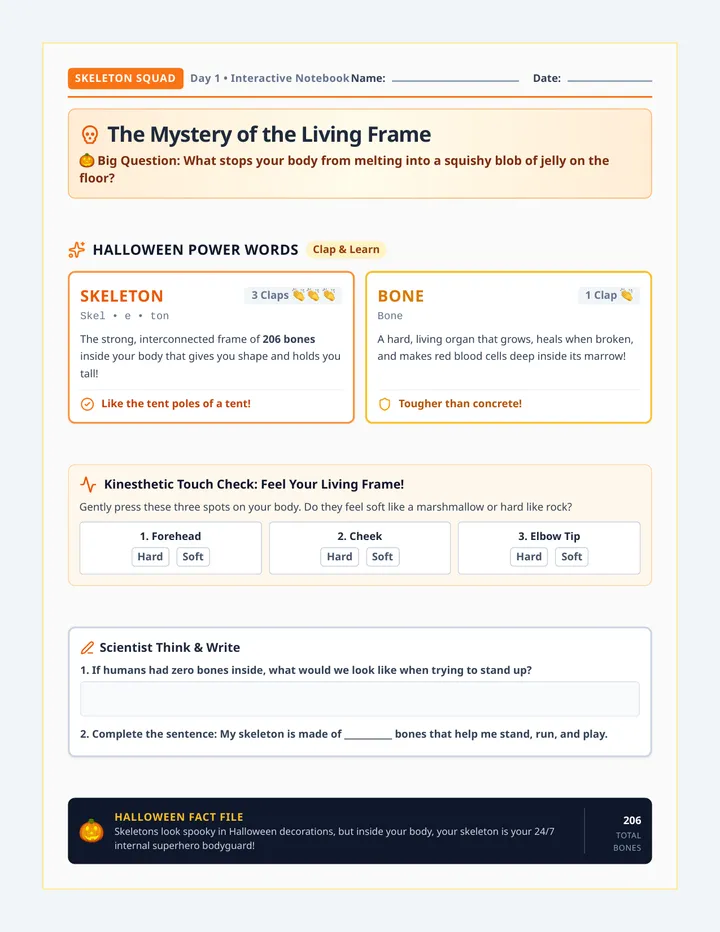
Bone Frame Notebook Entry

Skeleton Squad

A structured 5-lesson weekly life science sequence exploring bones and the skeletal system just in time for Halloween for 2nd-4th grade learners. Features visual vocabulary launch, protection and support layering, joint movement formative checks, a hands-on cotton-swab skeleton lab, and an independent Halloween flex challenge.

JE

jenn edwards

12
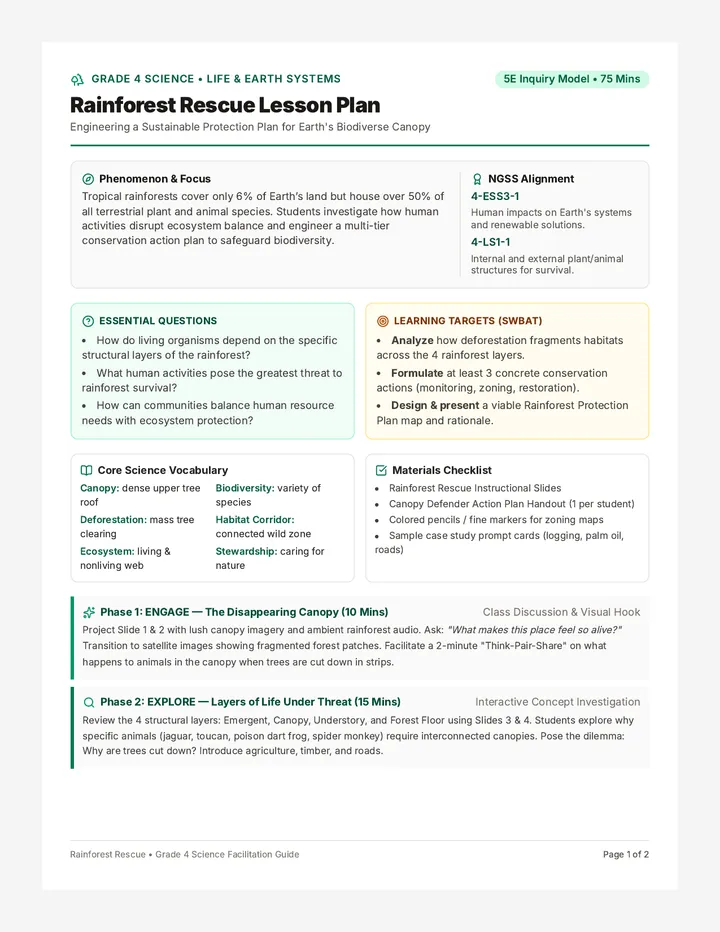
Rainforest Rescue Lesson Plan

Rainforest Rescue

A comprehensive 4th grade science lesson where students explore tropical rainforest ecosystems, analyze human impacts, and engineer their own conservation action plan to protect biodiversity and natural resources.

Lenny Avatar
Lenny
4
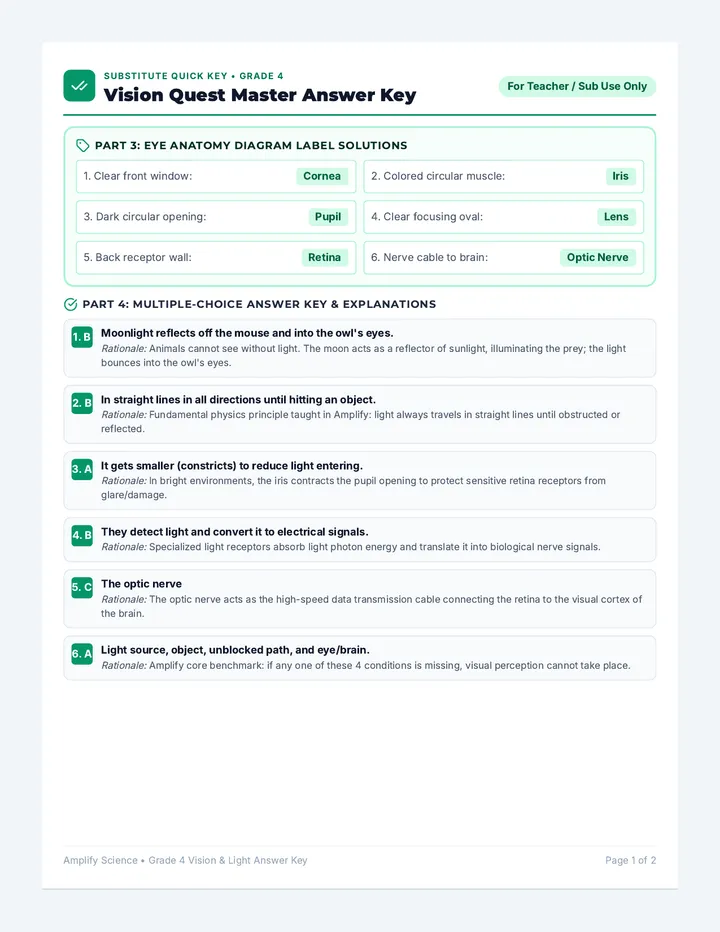
Vision Quest Answer Key

Vision Quest Answer Key

A 2-page master answer key and grading guide providing full answers, diagram solutions, scientific rationales, and rubric criteria for substitute teachers.

S

Sara.Nickolich

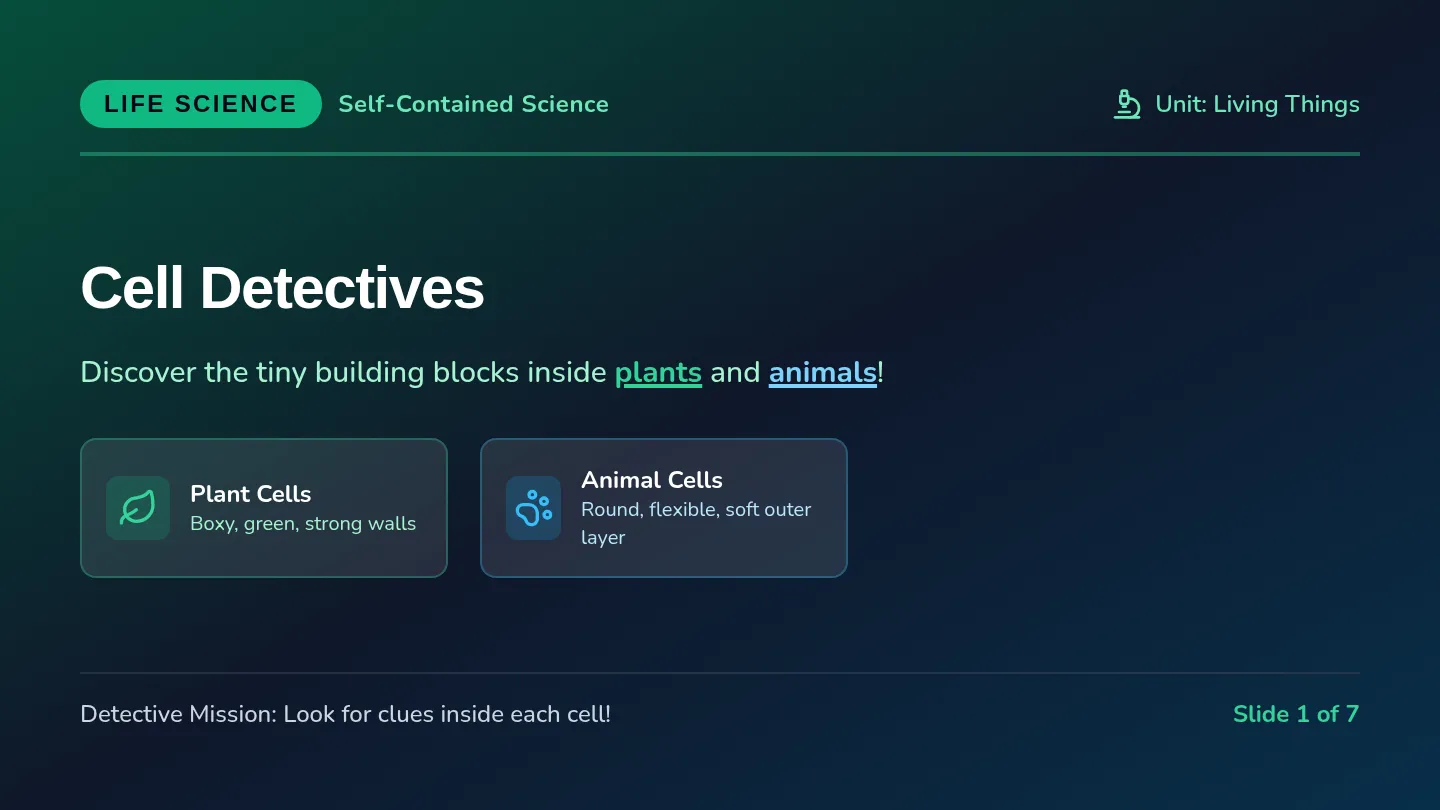
Cell Detectives Slides

Cell Explorers

A foundational life science unit for self-contained learners exploring the microscopic world of cells, organelle jobs, and how specialized cells work in teams to build living things.

CF

Carissa Fenner

8
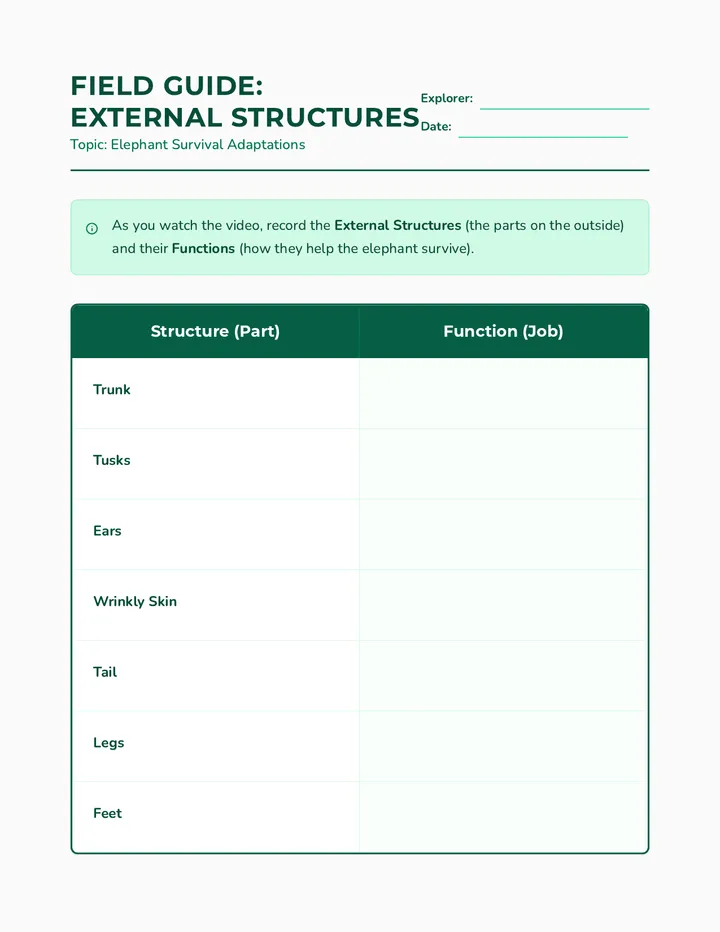
Structure Sketcher Note-taking Sheet

Survival Structures

Students explore how internal and external structures of animals, specifically elephants, function to support survival, growth, and behavior based on NGSS 4-LS1-1.

KW

Kathie Walker-Brown

6
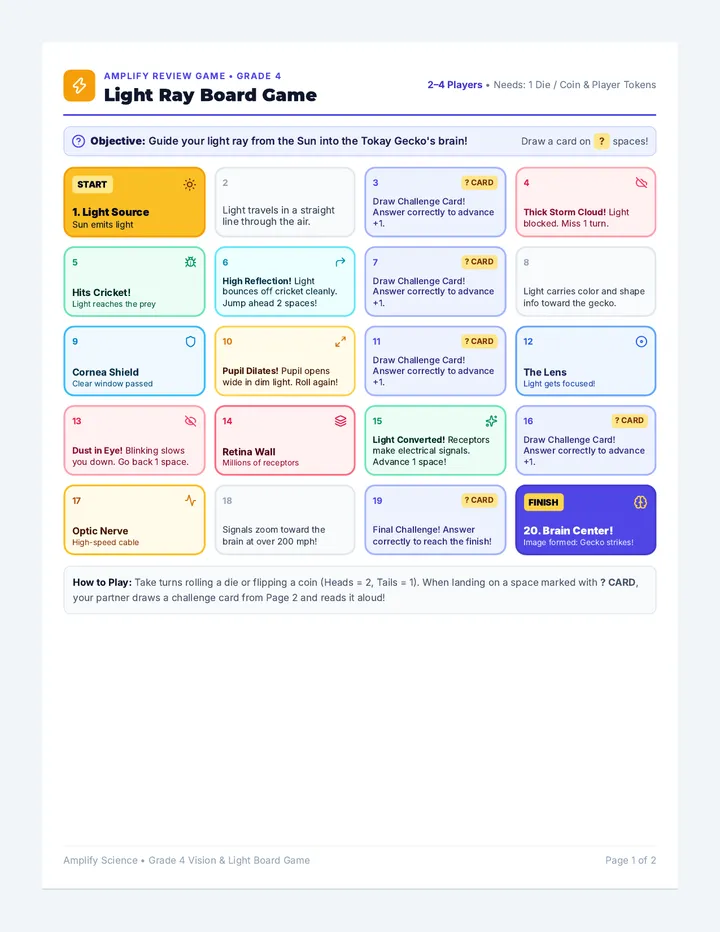
Light Ray Board Game

Light Ray Board Game

A 2-page printable review board game tracking a light ray from light source to prey reflection, through eye structures, to the brain, complete with game board and 16 science challenge cards.

S

Sara.Nickolich

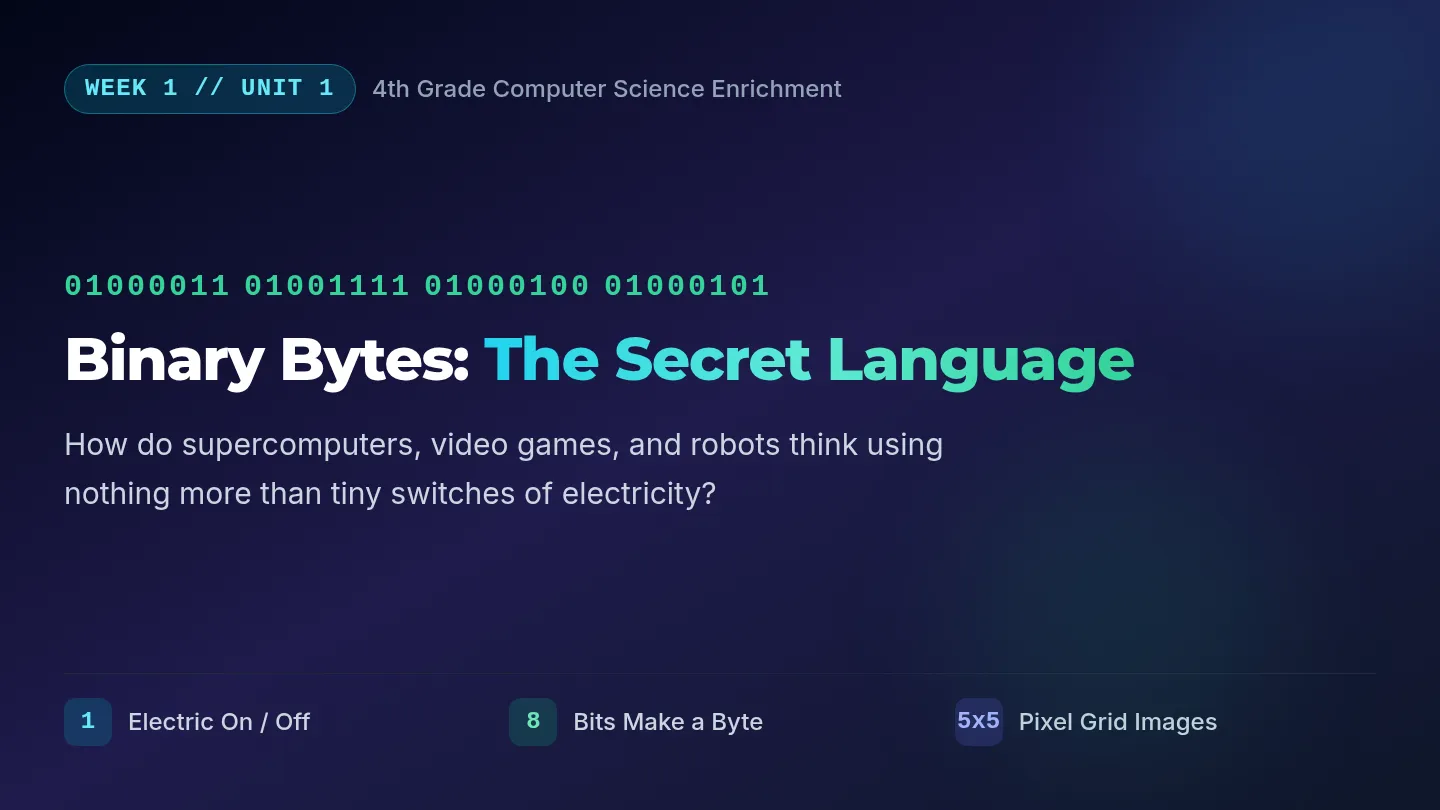
Binary Bytes Slides

Code Sparks

A four-week computer science enrichment unit for 4th graders introducing computational thinking fundamentals. Students progress from binary code and digital data representation to block-based algorithm logic, physical computing, and sensor-driven inventions with the micro:bit.

BK

Becky Krug

8
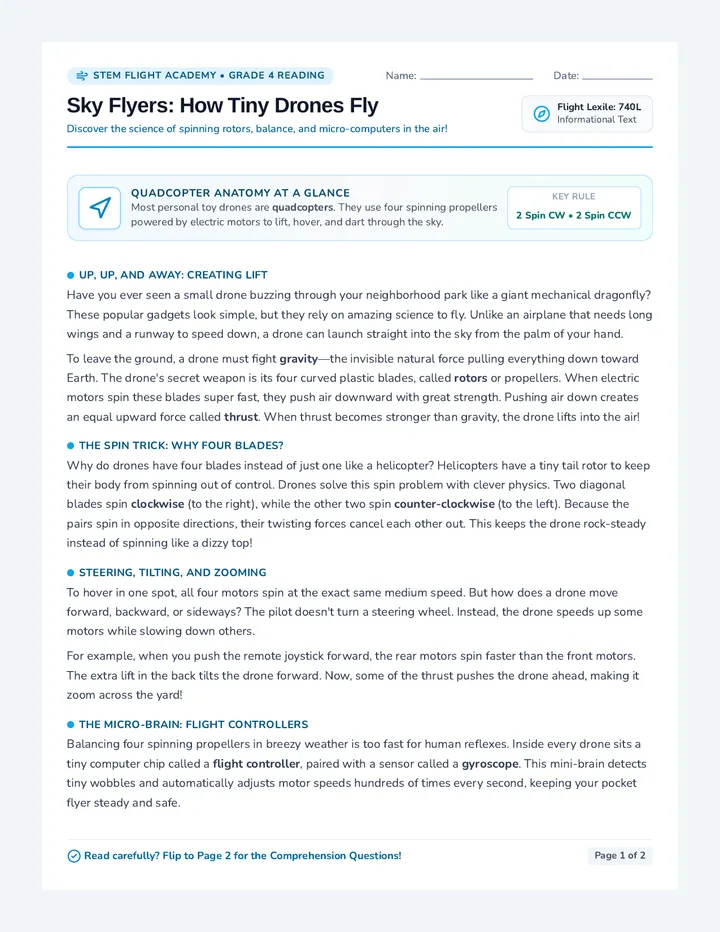
Sky Flyers Reading Passage

Drone Flight Dynamics

A 4th-grade STEM reading and science lesson exploring the physics, motor mechanics, and sensor technology behind personal quadcopter drones.

RH

Rachel Haydon

2
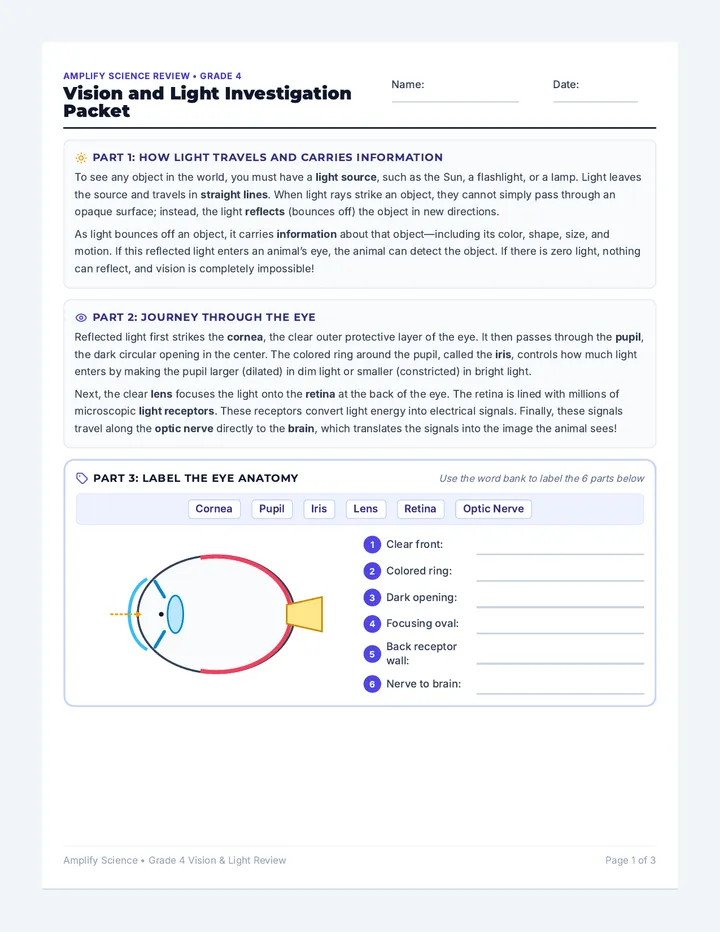
Vision Quest Student Packet

Vision Quest Student Packet

A 3-page student review packet covering Amplify Grade 4 Vision and Light concepts with rigorous reading passages, eye anatomy diagram labeling, multiple-choice questions, and a scientific modeling scenario.

S

Sara.Nickolich

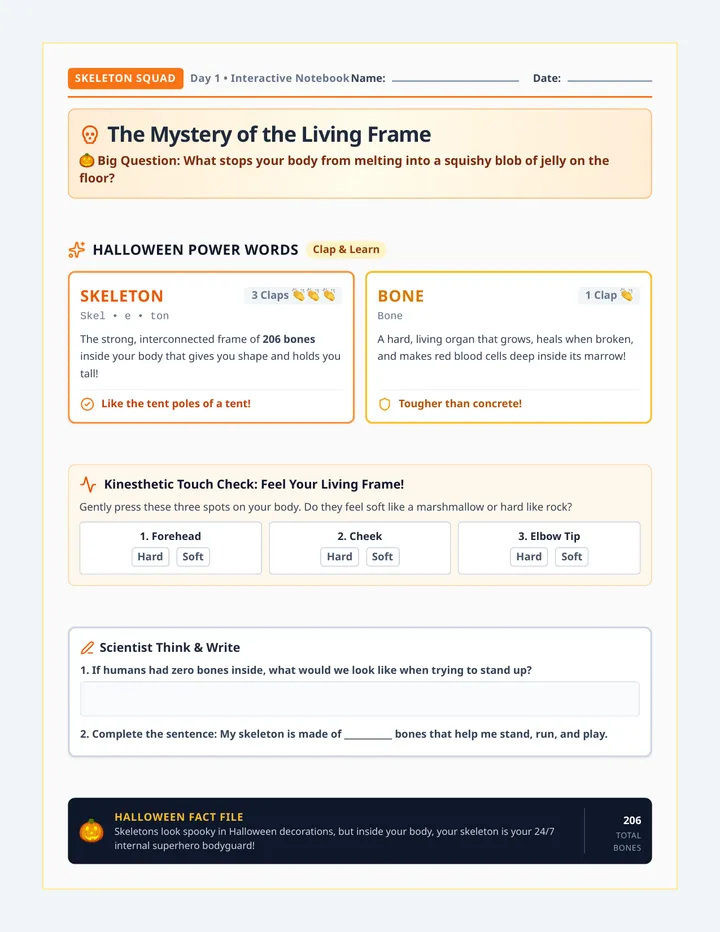
Bone Frame Notebook Entry

Skeleton Squad

A structured 5-lesson weekly life science sequence exploring bones and the skeletal system just in time for Halloween for 2nd-4th grade learners. Features visual vocabulary launch, protection and support layering, joint movement formative checks, a hands-on cotton-swab skeleton lab, and an independent Halloween flex challenge.

RD

Ralph Densing

12
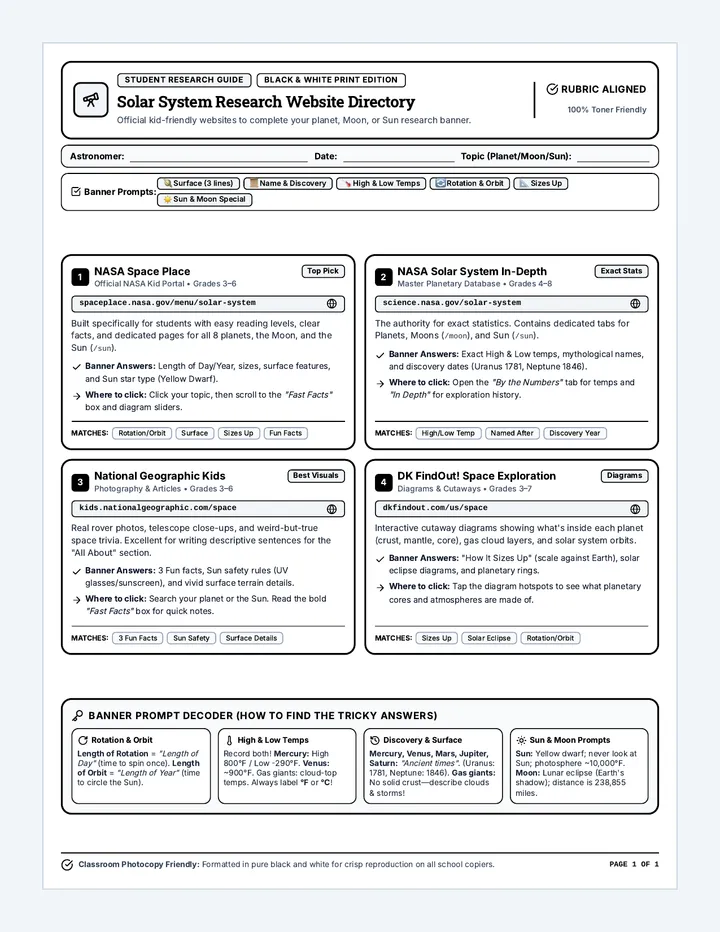
Planet Research Website Guide

Solar System Research Project

A comprehensive solar system research project where students investigate an assigned planet or the Moon using curated digital resources and assemble an illustrated research banner aligned to a detailed scoring rubric.

CP

Camryn Pope

2
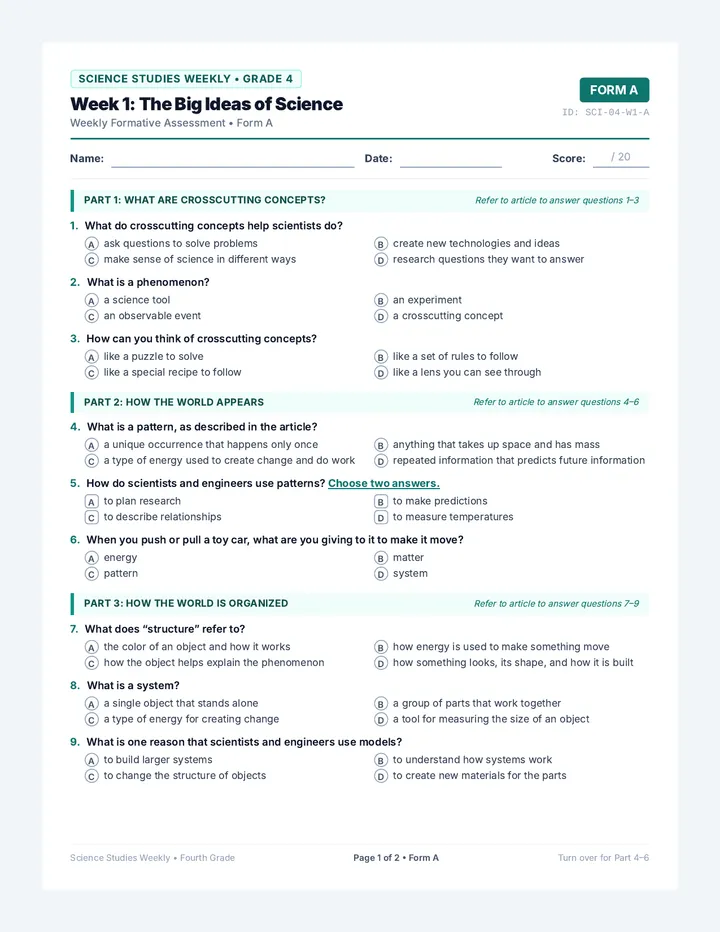
Big Ideas Form A Assessment

Grade 4 Assessments

A collection of fourth-grade standards-based assessments and answer keys across Science and English Language Arts.

MM

Mr. Micco

8