Lenny.com
Explore
Create
ActivitiesNewMathEnglish Language ArtsScience & EngineeringSocial StudiesGlobal LanguagesHealth & Physical EducationSpecial EducationCounseling & Life SkillsArts & CreativityESL
Lenny.com
Lenny.com
Explore
Create
ActivitiesNewMathEnglish Language ArtsScience & EngineeringSocial StudiesGlobal LanguagesHealth & Physical EducationSpecial EducationCounseling & Life SkillsArts & CreativityESL
Lenny.com
Lenny.com

Solutions

Lenny for EducatorsLenny for SchoolsLenny for Districts

Product

ExploreSign inCreateSupportAbout

Resources

Getting startedMTSS Acceleration Program

Newsletters

School Funding Newsletter

© 2026 Lenny Learning Inc.

TermsPrivacyAccessibility
LinkedInInstagramX
Lenny
Science & EngineeringLife ScienceLiving ThingsAnimalsPlantsBody SystemsTraitsAdaptationsCellsEcosystemsHeredityGenes to TraitsCell DivisionPhysicsComparing MaterialsShapes and PropertiesMagnetsMagnetismLightSoundLight and SoundMatterStates of MatterChanges of StateMixturesPhysical and Chemical ChangeHeating and CoolingHeat and Thermal EnergyEnergyForce and MotionElectrical CircuitsAtoms and MoleculesPeriodic TableMotion in One DimensionMotion in Two DimensionsScalars and VectorsForces and Laws of MotionCircular Motion and GravityMomentum and ImpulseWork, Energy, and PowerWavesElectromagnetic WavesGeometric OpticsElectricity and MagnetismSimple Harmonic MotionThermodynamicsNuclear PhysicsEarth Science & AstronomyWeatherWater CycleRocks and MineralsFossilsEarth's FeaturesEarth's ResourcesEarth's StructureWeather and ClimateEarth EventsFossils and Geologic TimePlate TectonicsHuman ImpactsAstronomyChemistryUnits and MeasurementAtomic StructurePeriodic TrendsChemical BondingNomenclatureMolecular StructureIntermolecular ForcesThe MoleStoichiometryProperties of GasesSolutionsChemical ReactionsBalancing EquationsEnergy ChangesRates of ReactionsEquilibriumAcids and BasesQuantum ModelBiologyClassificationCell StructureThe Chemistry of LifeBiomoleculesCellular TransportCell EnergyCell Growth and DivisionDNAProtein SynthesisMeiosis and Sexual ReproductionPatterns of InheritanceMulticellular OrganismsEvolutionEcologyBiodiversityComputer ScienceAlgorithms and Computational ThinkingProgramming LanguagesComputing SystemsNetworks and InternetData AnalysisCybersecurityAI and Machine LearningSoftware Design and DevelopmentBlockchainEngineering & AIDesigning ExperimentsEngineering PracticesDesign ThinkingEngineering Design ProcessMechanical EngineeringElectrical EngineeringMaterials and StructuresCAD and 3D DesignRoboticsArtificial Intelligence BasicsVibe CodingMachine LearningAI Ethics and SocietySystems ThinkingEntrepreneurship & InnovationEntrepreneurial MindsetBusiness Idea DevelopmentBusiness Plan BasicsMarketing & Customer DiscoveryFinancial Management for Startups

Solar System Research Project

A comprehensive solar system research project where students investigate an assigned planet or the Moon using curated digital resources and assemble an illustrated research banner aligned to a detailed scoring rubric.

CPCamryn Pope

Solar System Research Project

A comprehensive solar system research project where students investigate an assigned planet or the Moon using curated digital resources and assemble an illustrated research banner aligned to a detailed scoring rubric.

CPCamryn Pope

Low: -128.6°F (-89°C, Antarctica)

Surface (3 Details)

  1. 71% liquid oceans, 29% land; 2) Active shifting tectonic plates; 3) Nitrogen/oxygen air.

Sizes Up & Fun Facts

Size: 7,917 mi wide. Largest rocky planet (5th overall).

Facts: Only world with confirmed life; 1 moon; protective magnetic field.

4

MARS

(4th Planet from Sun)

Rotation: 24.6 hours (~1 Earth day) | Orbit: 687 Earth days (~1.9 yrs)

Named & Discovered

Named: Roman god of war (blood red).

Discovered: Ancient times.

Surface Temperatures

High: ~70°F (20°C, equator noon)

Low: -225°F (-153°C, polar night)

Surface (3 Details)

  1. Red iron oxide rust dust; 2) Olympus Mons volcano; 3) Valles Marineris canyon; ice caps.

Sizes Up & Fun Facts

Size: 4,212 mi wide (~half Earth's size). 2nd smallest.

Facts: 2 moons (Phobos/Deimos); giant dust storms; past water evidence.

M

THE MOON (Earth's Moon)

[Special Banner Template]

Distance: ~238,855 miles (384,400 km)

Lunar Eclipse Box

When Earth blocks sunlight from hitting Moon, casting shadow that turns it reddish ("Blood Moon").

Surface Temperatures

High: ~224°F to 250°F (120°C)

Low: -298°F to -300°F (-183°C)

Surface (3 Details)

  1. Fine powdery gray regolith dust; 2) Deep impact craters (Tycho); 3) Dark volcanic plains ("maria").

Sizes Up & Orbit

Size: 2,159 mi wide (1/4 Earth). 5th largest moon.

Rotation/Orbit: 27.3 days for both (synchronous rotation).

SOLAR SYSTEM RESEARCH PROJECT • TEACHER ANSWER KEY (BLACK & WHITE PRINT EDITION) PAGE 1 OF 2

Teacher Grading Key Black & White Print Edition

Solar System Banner Master Answer Key

Part 2: Gas Giants & The Sun

5

JUPITER

(5th Planet • Gas Giant)

Rotation: 9.9 hrs (fastest!) | Orbit: 11.9 Earth yrs

Named & Discovered

Named: King of Roman gods.

Discovered: Ancient times.

Temperature

Cloud-top: -160°F to -238°F

(-110°C to -150°C)

"Surface" (3 Details)

No solid crust; Great Red Spot storm; striped swirling cloud bands.

Sizes Up & Facts

Size: 86,881 mi (11x Earth). 1,300 Earths fit. #1 largest.

Facts: 95 moons; faint rings.

6

SATURN

(6th Planet • Gas Giant)

Rotation: 10.7 hrs | Orbit: 29.4 Earth yrs

Named & Discovered

Named: Roman god agriculture.

Discovered: Ancient times.

Temperature

Cloud-top avg: ~ -288°F

(-178°C; -220° to -300°F)

"Surface" (3 Details)

No solid crust; golden gas bands; hexagon north polar storm.

Sizes Up & Facts

Size: 72,367 mi (9x Earth). #2 largest.

Facts: Giant ice rings; floats in water; 146 moons.

7

URANUS

(7th Planet • Ice Giant)

Rotation: 17.2 hrs (retrograde) | Orbit: 84 Earth yrs

Named & Discovered

Named: Greek god of sky.

Discovered: 1781 (Herschel).

Temperature

Coldest: -371°F (-224°C)

High: -320°F (-195°C)

"Surface" (3 Details)

No solid crust; blue-green methane haze; slushy water/ammonia mantle.

Sizes Up & Facts

Size: 31,518 mi (4x Earth). #3 largest.

Facts: Tilted 98° on side; 13 dark rings; 27 Shakespeare moons.

8

NEPTUNE

(8th Planet • Ice Giant)

Rotation: 16.1 hrs | Orbit: 164.8 Earth yrs

Named & Discovered

Named: Roman god of sea.

Discovered: 1846 (Galle/Le Verrier).

Temperature

Cloud-top avg: ~ -353°F

(-214°C to -373°F)

"Surface" (3 Details)

No solid crust; vivid deep azure blue air; Great Dark Spot storm.

Sizes Up & Facts

Size: 30,599 mi (3.9x Earth). #4 largest.

Facts: 1,200+ mph winds (fastest); moon Triton orbits backward.

S

THE SUN

[Special Banner Template]

Type of Star: Yellow Dwarf (G2V Star)

Sun Safety (3 Rules)

  1. Never look directly at Sun; 2) Wear ISO solar eclipse glasses; 3) Use sunscreen & UV hats.

Surface Temperatures

Surface: ~10,000°F (5,500°C)

Core: ~27 million°F (fusion!)

Solar Eclipse Box

Moon passes directly between Earth & Sun, casting shadow on Earth and blocking sunlight.

Sizes Up & Facts

Size: 865,000 mi (109x Earth). 1.3 million Earths fit inside!

Facts: 99.8% solar mass; light takes 8m 20s to Earth.

Rubric Level 4 Checklist (Quick-Grading Guide)

1. Surface (4 pts)

Student included 3 distinct details about the surface terrain, atmosphere, color, or craters.

2. General Info (4 pts)

Included all 4 items: named after, year discovered, and both high AND low temperatures.

3. Sizes Up (4 pts)

Included 3 details comparing size (diameter, order/rank, or comparison to Earth's size/volume).

4. Overview (4 pts)

Wrote 4 or more complete sentences in the "All About [Topic]" section summarizing their research.

5. Fun Facts (4 pts)

Included 3 unique, verified fun facts about their celestial body in the numbered boxes.

SOLAR SYSTEM RESEARCH PROJECT • TEACHER ANSWER KEY (BLACK & WHITE PRINT EDITION) PAGE 2 OF 2
You might also like

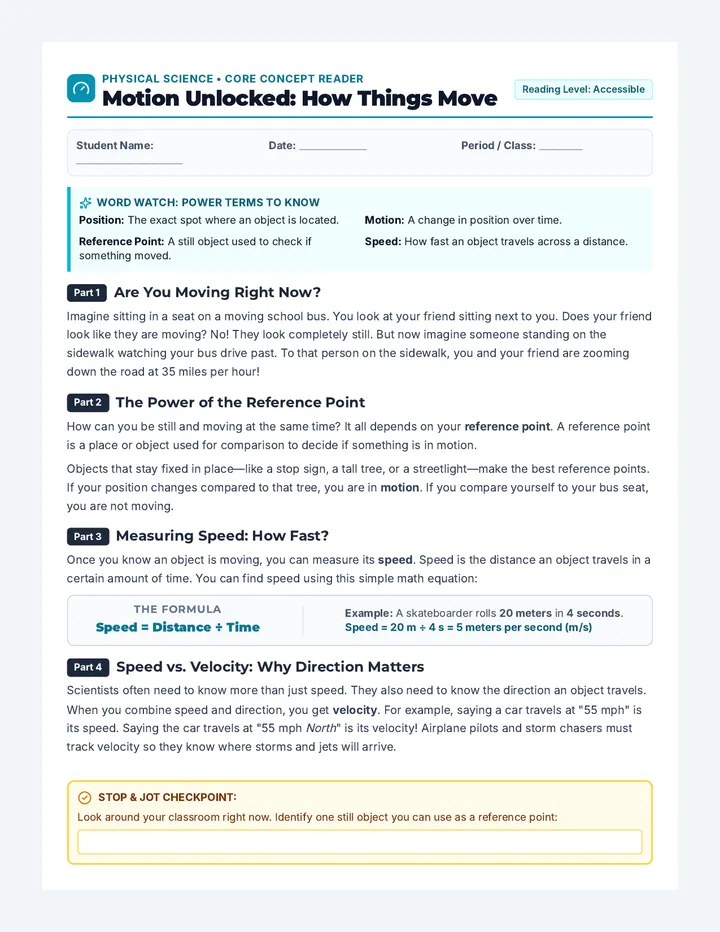
Motion Unlocked Reading Packet

Curriculum Unlocked

A sequence of high-interest, accessible 9th-grade reading lessons designed for students reading at a 5th-grade level across science and world history.

SH

Sarah Hunter

9
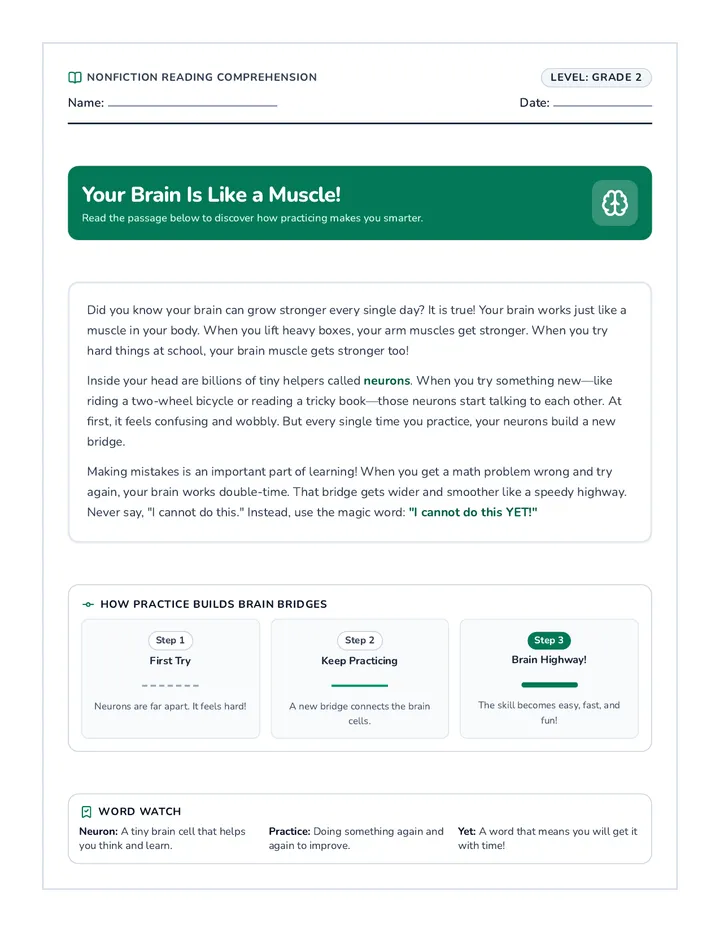
Practice Power Grade 2 Worksheet

Practice Power

A differentiated reading comprehension set exploring the science of neuroplasticity, deliberate practice, and perseverance for 2nd and 5th grade students.

KS

Kathleen Suther

3
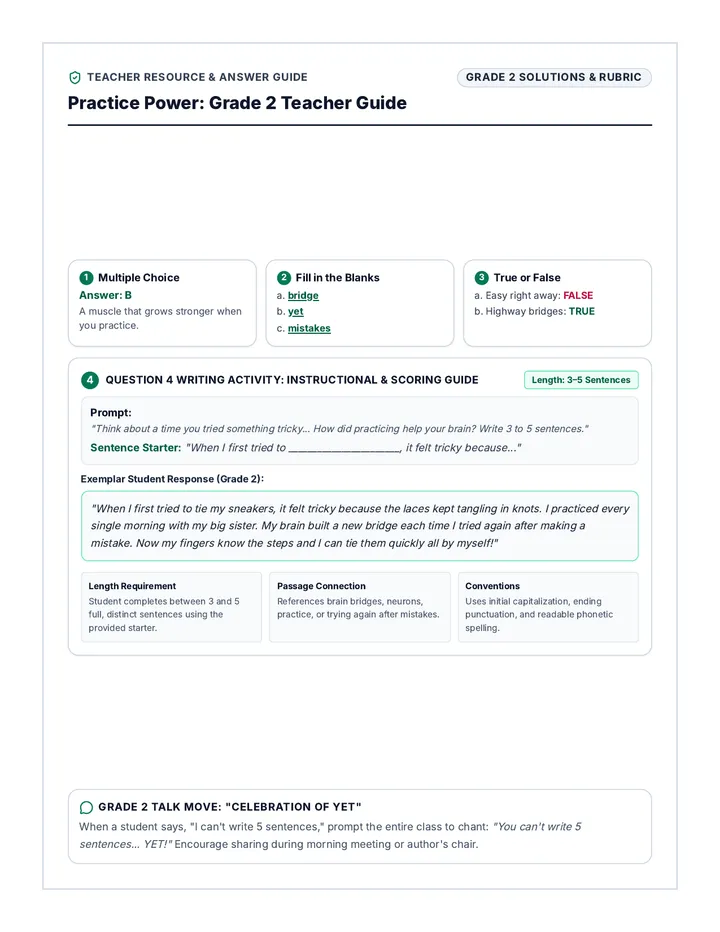
Practice Power Answer Key

Practice Power Answer Key

A printer-friendly teacher answer key and scoring guide on white background providing solutions for questions 1-3 and rubrics with exemplar responses for the 3-5 sentence writing activities.

KS

Kathleen Suther

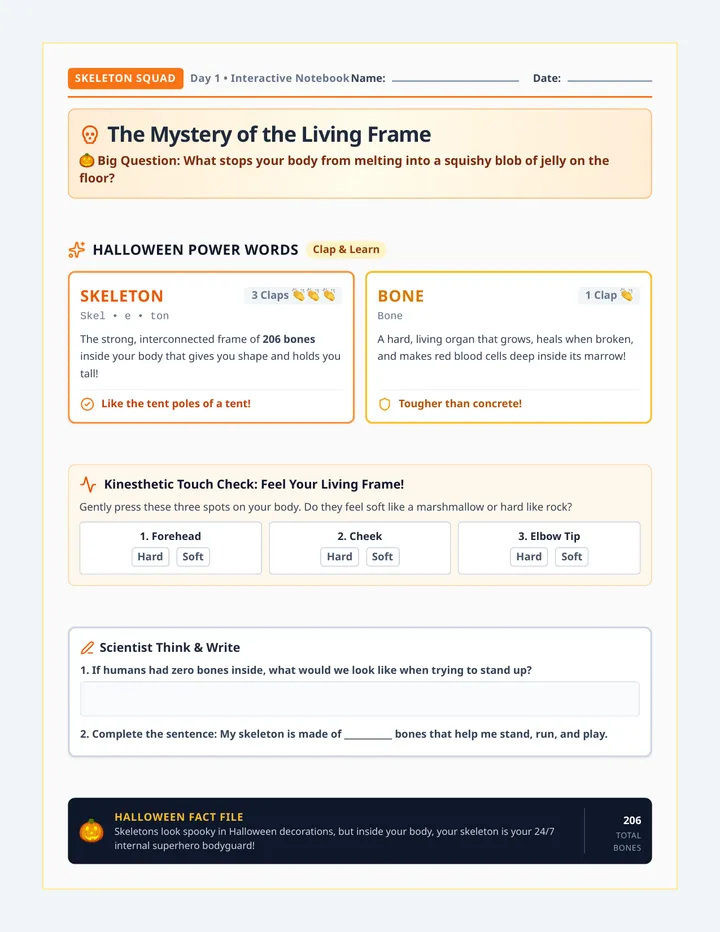
Bone Frame Notebook Entry

Skeleton Squad

A structured 5-lesson weekly life science sequence exploring bones and the skeletal system just in time for Halloween for 2nd-4th grade learners. Features visual vocabulary launch, protection and support layering, joint movement formative checks, a hands-on cotton-swab skeleton lab, and an independent Halloween flex challenge.

JE

jenn edwards

12
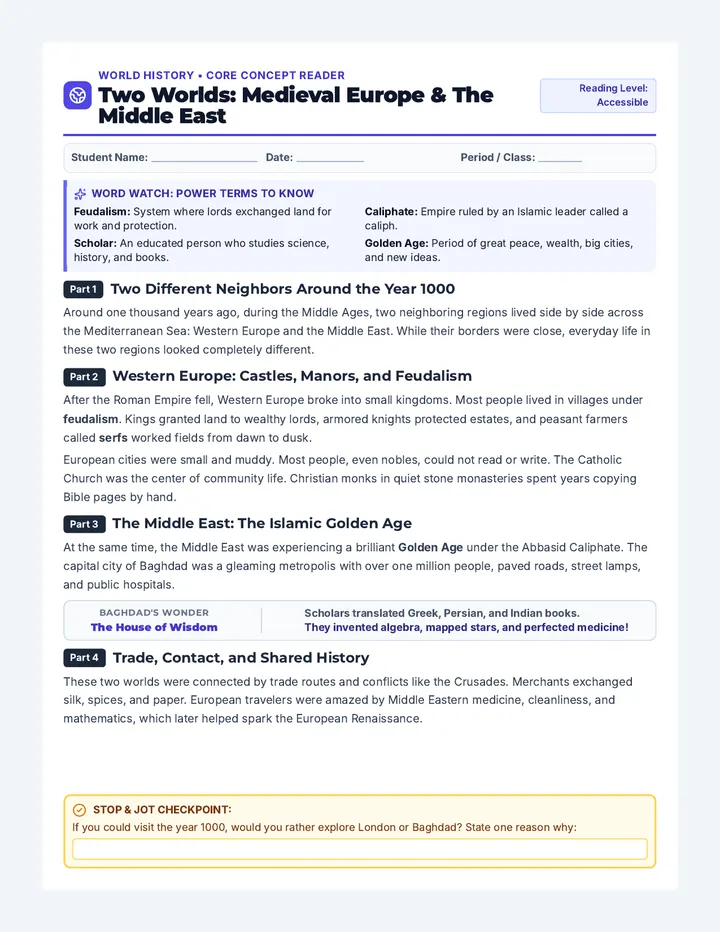
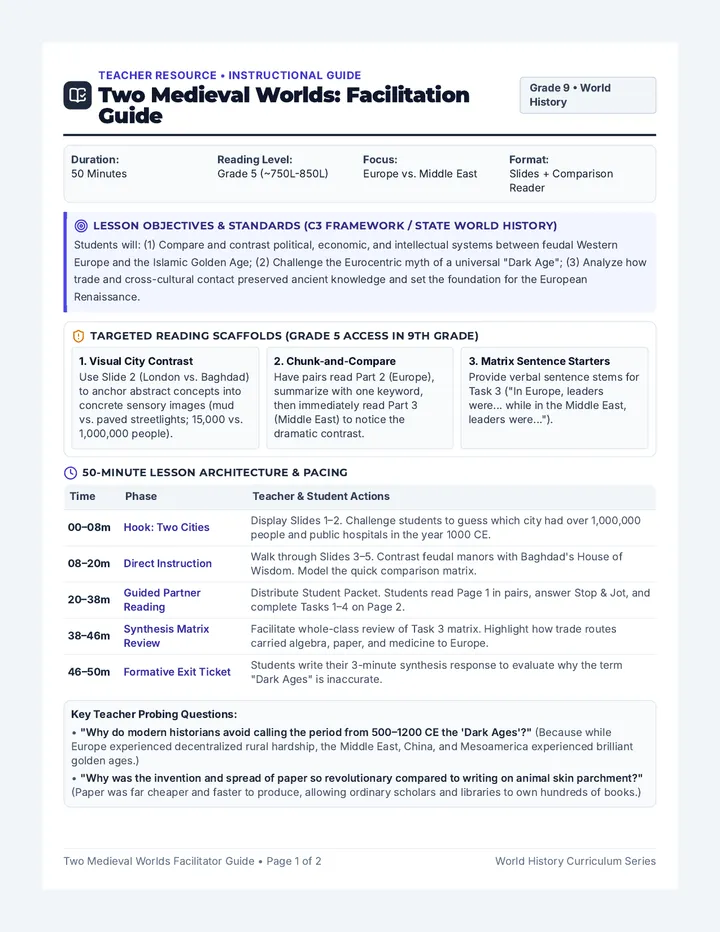
Two Medieval Worlds Reading Packet

Two Medieval Worlds

An accessible 9th-grade world history reading lesson comparing and contrasting feudal Europe during the Middle Ages with the Islamic Golden Age in the Middle East for students reading at a 5th-grade level.

SH

Sarah Hunter

3
Practice Power Grade 5 Worksheet

Practice Power Grade 5 Worksheet

A printer-friendly 5th-grade reading comprehension worksheet on white background featuring the article on neuroplasticity, questions 1-3, and a 3-5 sentence text-based writing activity with a sentence starter.

KS

Kathleen Suther

Detail Detectives Sub Plan

Sub Ready Reading

A comprehensive emergency substitute curriculum spanning core reading strategies, earth science weather systems, and middle school mathematics on ratios and rates. Features step-by-step substitute plans, student passages and worksheets with extensive practice problems, and full answer keys.

CP

Christian Page

16
Cycle Quest Game Board

Cycle Quest

An engaging, inquiry-driven 7th-grade science lesson where students explore the water, carbon, nitrogen, and phosphorus cycles through an interactive board game and systems-thinking simulation. Students trace matter flow across Earth's spheres, model biogeochemical interconnections, and analyze human impacts on nutrient balances.

BL

Burris Laboratory School

4
Practice Power Grade 2 Worksheet

Practice Power Grade 2 Worksheet

A printer-friendly 2nd-grade reading comprehension worksheet on white background featuring the passage on brain growth, questions 1-3, and a 3-5 sentence guided writing activity with a sentence starter.

KS

Kathleen Suther

Cell Detectives Slides

Cell Explorers

A foundational life science unit for self-contained learners exploring the microscopic world of cells, organelle jobs, and how specialized cells work in teams to build living things.

CF

Carissa Fenner

8
Evolution Unlocked Reading Packet

Evolution Unlocked

An accessible 9th-grade biology reading lesson exploring natural selection, adaptation, and variation for students reading at a 5th-grade level, complete with guided text and scaffolded comprehension tasks.

SH

Sarah Hunter

3
Two Medieval Worlds Facilitator Guide

Two Medieval Worlds Facilitator Guide

A two-page teacher facilitation guide and answer key for the comparative medieval world history lesson, featuring 50-minute pacing, 5th-grade reading level scaffolds, common misconceptions, and exemplar student responses.

SH

Sarah Hunter