Rainforest Rescue Lesson Plan Grade 4 Science • Life & Earth Systems
5E Inquiry Model • 75 Mins
Rainforest Rescue Lesson Plan
Engineering a Sustainable Protection Plan for Earth's Biodiverse Canopy
Phenomenon & Focus
Tropical rainforests cover only 6% of Earth’s land but house over 50% of all terrestrial plant and animal species. Students investigate how human activities disrupt ecosystem balance and engineer a multi-tier conservation action plan to safeguard biodiversity.
NGSS Alignment
4-ESS3-1
Human impacts on Earth's systems and renewable solutions.
4-LS1-1
Internal and external plant/animal structures for survival.
Essential Questions
How do living organisms depend on the specific structural layers of the rainforest?
What human activities pose the greatest threat to rainforest survival?
How can communities balance human resource needs with ecosystem protection?
Learning Targets (SWBAT)
Analyze how deforestation fragments habitats across the 4 rainforest layers.Formulate at least 3 concrete conservation actions (monitoring, zoning, restoration).Design & present a viable Rainforest Protection Plan map and rationale.
Core Science Vocabulary
Canopy: dense upper tree roof
Biodiversity: variety of species
Deforestation: mass tree clearing
Habitat Corridor: connected wild zone
Ecosystem: living & nonliving web
Stewardship: caring for nature
Materials Checklist
Rainforest Rescue Instructional Slides
Canopy Defender Action Plan Handout (1 per student)
Colored pencils / fine markers for zoning maps
Sample case study prompt cards (logging, palm oil, roads)
Phase 1: ENGAGE — The Disappearing Canopy (10 Mins) Class Discussion & Visual Hook
Project Slide 1 & 2 with lush canopy imagery and ambient rainforest audio. Ask: "What makes this place feel so alive?" Transition to satellite images showing fragmented forest patches. Facilitate a 2-minute "Think-Pair-Share" on what happens to animals in the canopy when trees are cut down in strips.
Phase 2: EXPLORE — Layers of Life Under Threat (15 Mins) Interactive Concept Investigation
Review the 4 structural layers: Emergent, Canopy, Understory, and Forest Floor using Slides 3 & 4. Students explore why specific animals (jaguar, toucan, poison dart frog, spider monkey) require interconnected canopies. Pose the dilemma: Why are trees cut down? Introduce agriculture, timber, and roads.
Rainforest Rescue • Grade 4 Science Facilitation Guide Page 1 of 2
5E Instructional Sequence (Continued) & Pedagogical Supports
Phases 3–5 & Differentiation
Phase 3: EXPLAIN — Conservation Strategies & Corridors (15 Mins) Direct Instruction & Synthesis
Unpack how ecologists prevent extinction without ignoring human needs. Introduce key conservation tools: Wildlife Corridors (bridges connecting forest islands), Buffer Zones (low-impact sustainable farming areas), and Ranger Patrols / Satellite Monitoring to curb illegal logging. Emphasize that total ban is rarely practical; sustainable balance is key.
Phase 4: ELABORATE — Canopy Defender Protection Plan (25 Mins) Applied Student Workshop
Distribute the Canopy Defender Action Plan Handout . Working individually or in pairs, students act as Chief Conservation Officers for a threatened reserve: (1) Select an anchor umbrella species; (2) Pinpoint human pressure threats; (3) Engineer 3 targeted solutions; and (4) Map out a zoned sanctuary featuring a core wilderness zone, buffer zone, and wildlife corridor.
Phase 5: EVALUATE — Summit Gallery Walk & Defense (10 Mins) Formative Assessment
Students display their plan blueprints for a 5-minute peer "Conservation Summit" gallery walk. Peers leave one sticky note with a positive feature and one question. Use the rubric to evaluate ecological reasoning, zoning coherence, and mitigation feasibility.
Targeting Common 4th Grade Misconceptions
Misconception:
"The rainforest only matters to the animals that live inside it."
Scientific Reality:
Rainforests regulate global weather, generate water cycles across continents, and store billions of tons of carbon dioxide.
Misconception:
"Saving the rainforest means kicking out all people and building fences."
Scientific Reality:
Indigenous peoples and local communities are the most effective stewards. Sustainable protection balances livelihoods with preservation.
Differentiated Instructional Pathways
Striving Learners
Provide pre-cut symbol icons (trees, ranger tower, fences) to paste on the zoning map rather than free-drawing.
Multilingual Learners
Use illustrated bilingual vocabulary cards; pair with a peer partner for collaborative proposal writing.
Advanced / Extension
Calculate the budget for ranger patrols or create an anti-poaching drone flight path over high-risk zones.
Rainforest Rescue • Grade 4 Science Facilitation Guide Page 2 of 2
Rainforest Rescue Slides Grade 4 Science • Life & Earth Systems
Canopy Defender Mission
Ecosystem Engineering Challenge
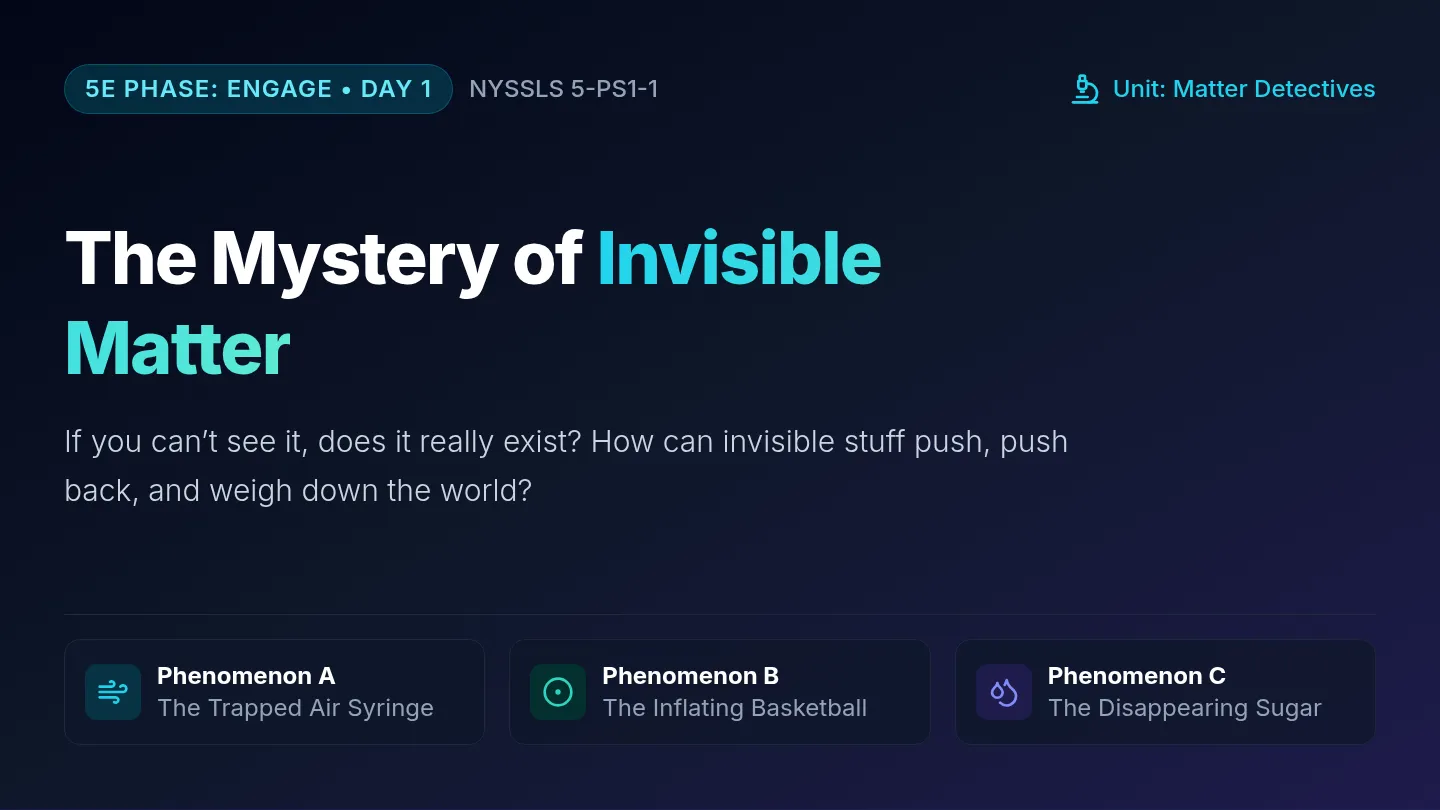
RAINFOREST RESCUE
Investigate Earth’s most biodiverse habitat and engineer an action plan to protect it from human threats.
4 Distinct Layers
Ecosystem balance
Human Pressures
Deforestation & roads
Your Action Plan
Design a sanctuary
The Phenomenon
Why Does the Rainforest Matter?
It covers only 6% of the Earth's surface, yet it powers our entire planet.
50%+
World's Wildlife
More than half of all land-dwelling animal and plant species live here.
1 in 4
Modern Medicines
Vital medicines for illnesses are discovered in rainforest plants.
Global
Weather Engine
It stores carbon and breathes water vapor into clouds that travel the globe.
Guiding Question: What happens to our planet when rainforest trees are cut down?
Ecosystem Architecture
The Four Layers of Life
From the top treetops to the dark damp ground, every creature has a home.
Layer 1 (Top)
Emergent
Giant trees over 200 feet tall reaching full sunlight and harsh wind.
🦅 Harpy Eagles, Fruit Bats
Layer 2 (Roof)
Canopy
Dense green roof holding 90% of all rainforest animal life!
🐒 Toucans, Tree Frogs, Sloths
Layer 3 (Middle)
Understory
Dim, warm, and humid with wide leaves that catch dappled sunlight.
🐆 Jaguars, Tree Pythons
Layer 4 (Floor)
Forest Floor
Almost total darkness where rapid decomposition enriches the soil.
🐜 Leaf-Cutter Ants, Tapirs
Key Science Takeaway: If you destroy the canopy, you destroy the homes of 90% of the forest's creatures!
Threat Alert
Trouble in the Forest
Human activities are stripping away precious acres every minute.
Logging & Timber
Massive hardwood trees like mahogany are cut down for furniture and paper, breaking continuous tree routes.
Cattle & Farming
Land is burned to make open pastures for cattle ranching or large monoculture crops like palm oil and soy.
Road Construction
Highways slice continuous forests into isolated fragments, leaving wildlife stranded and vulnerable.
Canopy Defender Handout Rainforest Conservation Guild • Field Officer Log Grade 4 Science
Canopy Defender: Rainforest Protection Plan
Part 1: Ecosystem Investigation & Threat Assessment
Name:
Date:
Ranger Team:
Mission Alert: You have been appointed Chief Conservation Officer for the Rio Verde Rainforest Reserve. Rapid deforestation, road building, and agricultural expansion threaten to sever vital canopy pathways. Complete this field assessment to engineer an emergency Protection Plan.
1 Select Your Reserve's Flagship Umbrella Species
Check one animal to protect
Jaguar
Understory & Forest Floor • Needs large hunting territory
Spider Monkey
Upper Canopy • Requires continuous unbroken treetops
Poison Dart Frog
Forest Floor & Epiphytes • Sensitive to moisture loss
How does your chosen animal depend on its specific rainforest layer for survival (food, shelter, or reproduction)?
2 Diagnose the Human Threat
Check the primary threat
Commercial Logging
Cattle Ranching & Soy
Highway Fragmentation
What immediate problems occur when human activity cuts this forest into separate fragments?
3 Ecosystem Chain Reaction
When the upper canopy trees are cleared, how does the increase in direct sunlight and drying wind affect the soil and organisms living on the forest floor?
Canopy Defender • Grade 4 Rainforest Protection Plan Page 1 of 2 (Flip over for Sanctuary Blueprint)
Part 2: Sanctuary Blueprint & Conservation Strategy
Engineer your 3 protective actions and layout your zoned reserve map.
Reserve Name:
4 Three Pillars of Your Protection Plan
Action 1: Habitat Bridge
How will you reconnect isolated tree patches across roads/rivers?
Action 2: Buffer Zone
What low-impact or shade farming will people do near the edge?
Action 3: Active Guard
How will rangers or technology detect illegal tree cutting?
5 Sanctuary Zoning Map
Draw your reserve zones, river, road, and wildlife corridor
Draw Reserve Area (Include: Core Wilderness, Buffer Zone, Wildlife Corridor, Ranger Post)
N
Core Wilderness
Buffer Zone
Wildlife Corridor
Ranger Station
"I pledge that this plan protects biodiversity while respecting community balance."
Officer Signature:
Canopy Defender • Grade 4 Rainforest Protection Plan Page 2 of 2 (Classroom Ready)
Canopy Rubric Guide Teacher Assessment & Evaluation Guide
Canopy Rubric & Exemplar Guide
Grading Matrix & Benchmark Responses for the Rainforest Protection Plan
NGSS Standards 4-ESS3-1 & 4-LS1-1
Performance Rubric (4-Point Scale)
Criterion 4 — Exemplary 3 — Proficient 2 — Developing 1 — Beginning Ecosystem & Layer Analysis Thoroughly explains organism adaptations to specific vertical layer and food web links. Accurately describes animal's layer and at least one direct survival need (food or shelter). Identifies animal and layer, but explanation of survival needs is vague or incomplete. Misidentifies layer or provides minimal connection to organism survival. Threat & Impact Diagnosis Articulates multi-step domino effects of fragmentation (isolation, microclimate changes). Accurately describes how habitat destruction immediately harms chosen animal. Identifies general threat but does not clearly explain specific impact on wildlife. Generic statement without scientific reasoning (e.g., "trees die"). Protection Engineering All 3 actions are scientifically viable, addressing connectivity, buffer, and surveillance. Proposes 3 practical conservation actions that address the diagnosed threats. Proposes 1–2 actions, or solutions are unrealistic/unconnected to the threat. Actions are missing, punitive, or lack conservation science basis. Sanctuary Zoning Map Clear spatial logic: corridor connects fragments; buffer surrounds core; full legend. Includes all 4 key legend zones with logical placement protecting wild habitat. Map includes some zones but lacks clear corridor connection or buffer logic. Unlabeled sketch without zoning distinctions or conservation components.
Benchmark Exemplar: High-Scoring Student Responses
Part 1: Flagship Species & Threat (Spider Monkey Example)
"Spider monkeys live high in the canopy where they swing from branches to reach ripe fruit and nuts. Because they rarely come down to the forest floor where predators like jaguars prowl, they need unbroken treetops. When a logging road cuts through, they are trapped in a small island of trees and cannot find enough seasonal fruit or mates."
Part 1: Ecosystem Chain Reaction (Soil & Microclimate)
"Without the thick canopy leaves blocking intense solar heat, the humid air dries out rapidly. Rain washes away thin nutrient-rich topsoil because there are no tree roots anchoring it, making it impossible for new seedling trees to sprout."