Students analyze the historical emergence of the 'teenager' as a demographic in the 1940s and redesign classic archetypes for a modern context using the Archie comics as a case study.
A practical transition program for students moving from the US to Canada, focusing on daily survival skills like the metric system and understanding how the Canadian parliamentary government compares to the US presidential system.
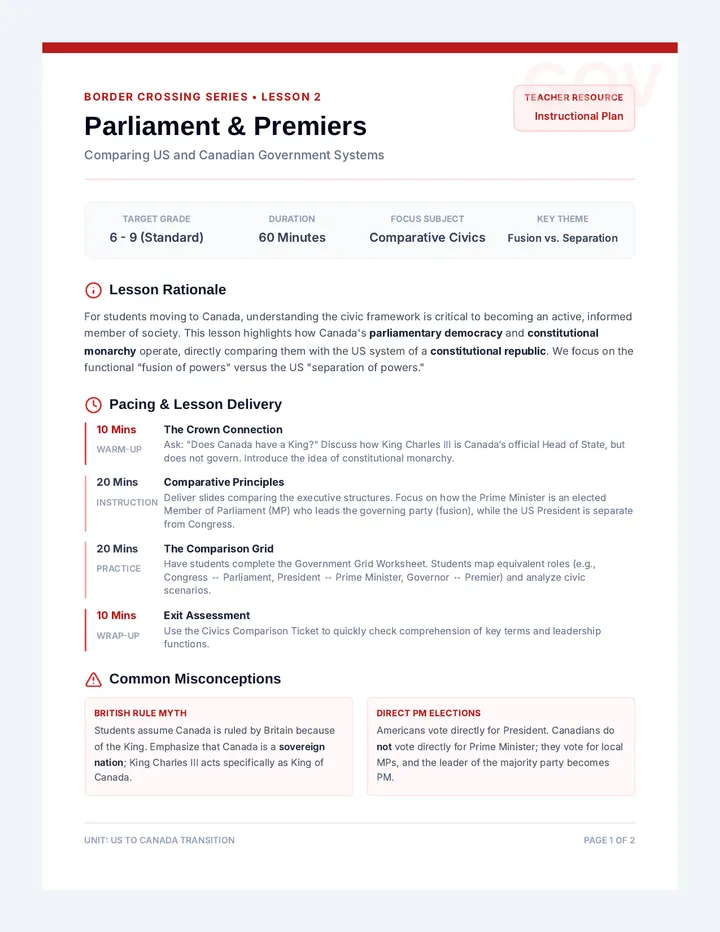
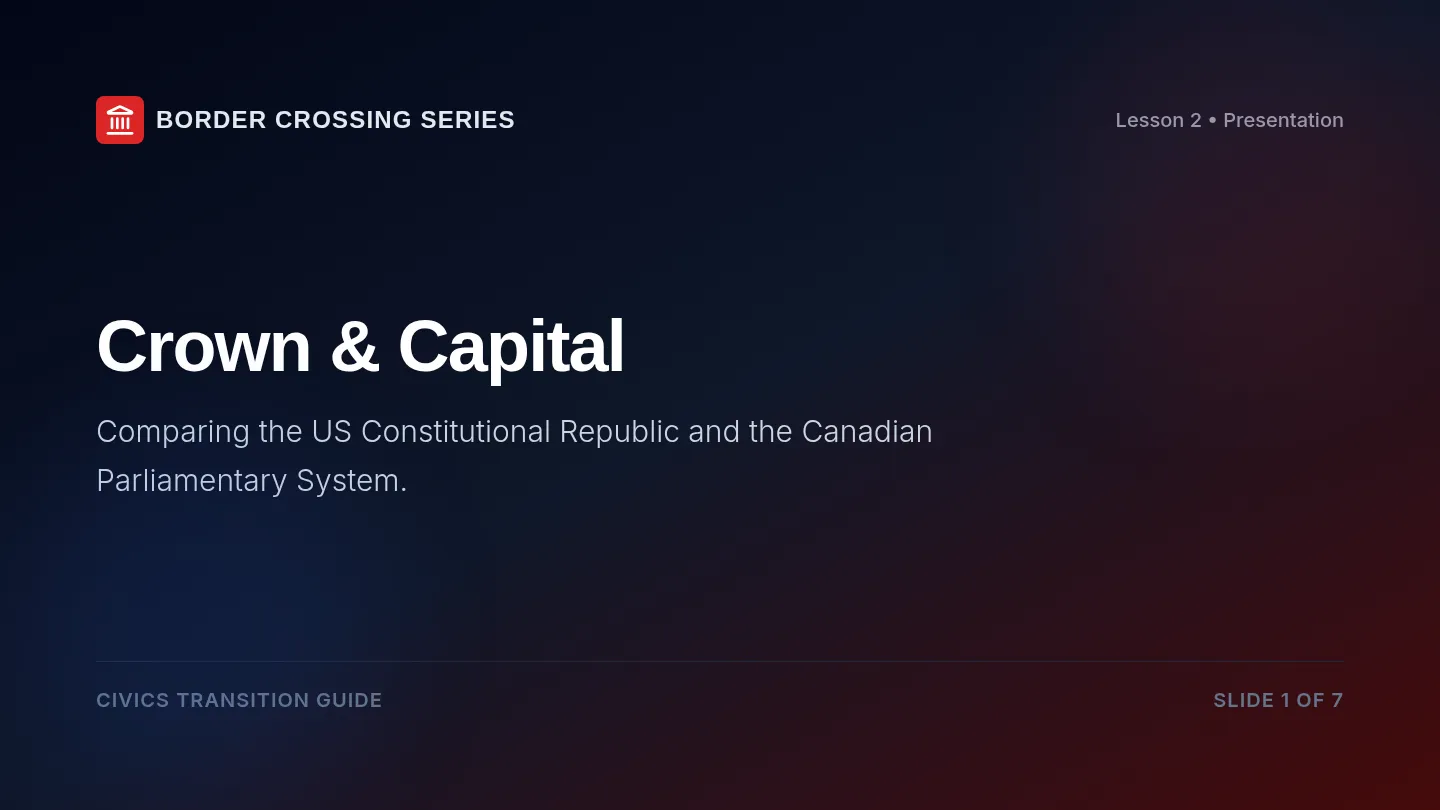
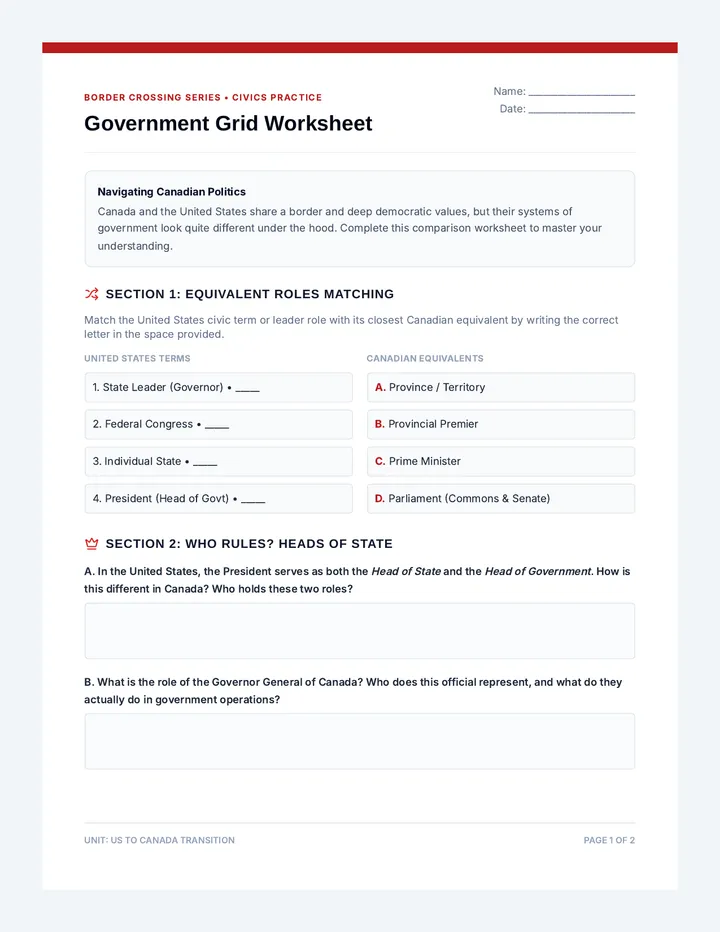
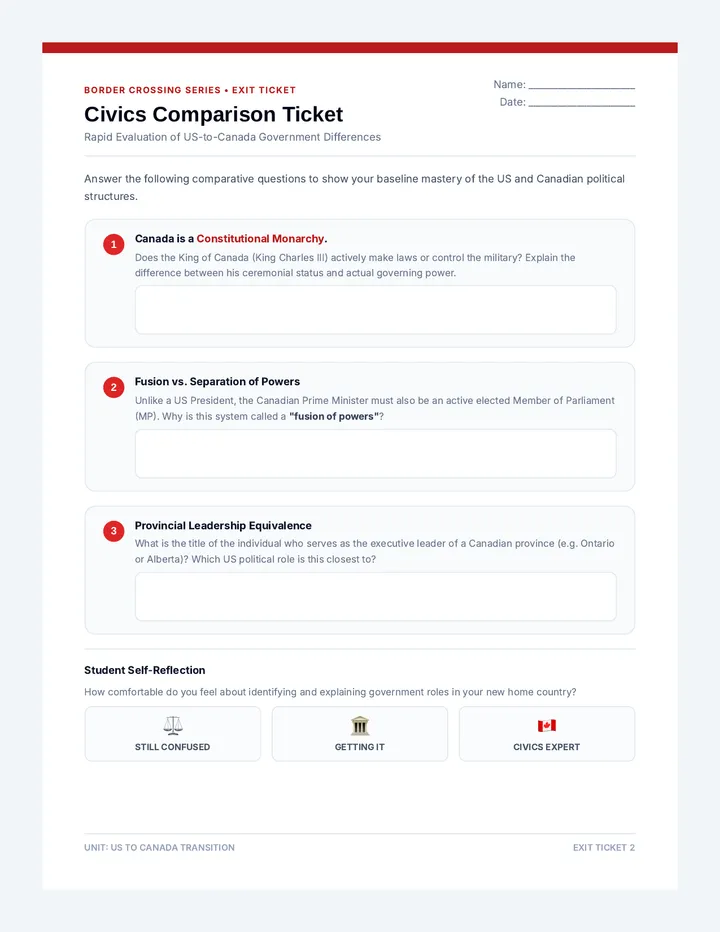
A comparative look at the Canadian and US systems of government, exploring the constitutional monarchy, parliamentary democracy, and the different roles of leaders.
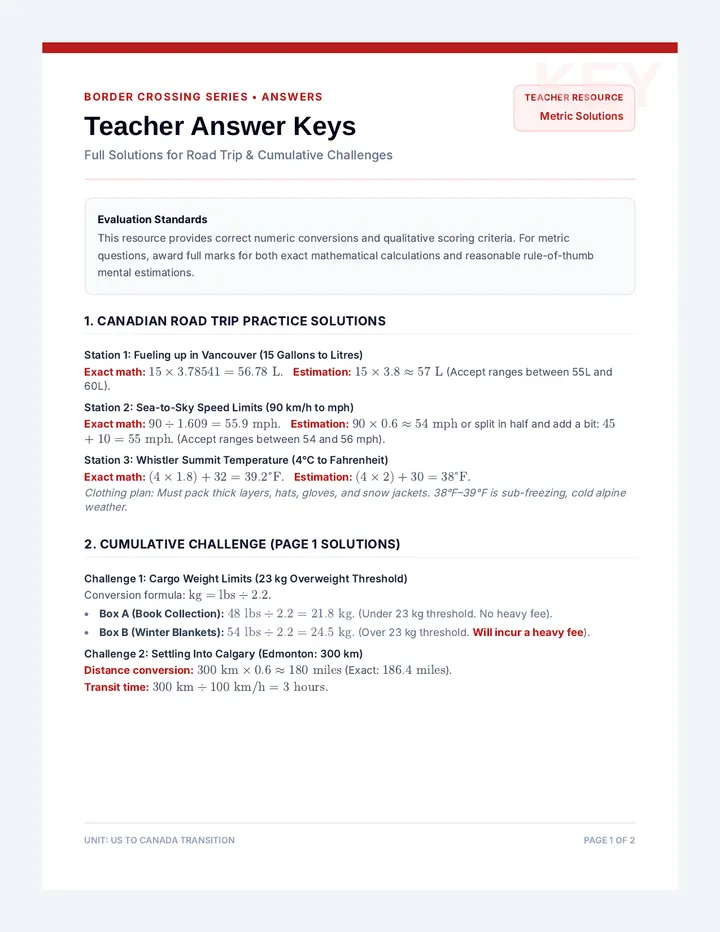
A complete, detailed answer key resource covering all solutions for the Canadian Road Trip Practice, Civics Scenario Practice, and the Cumulative Capstone Challenge.
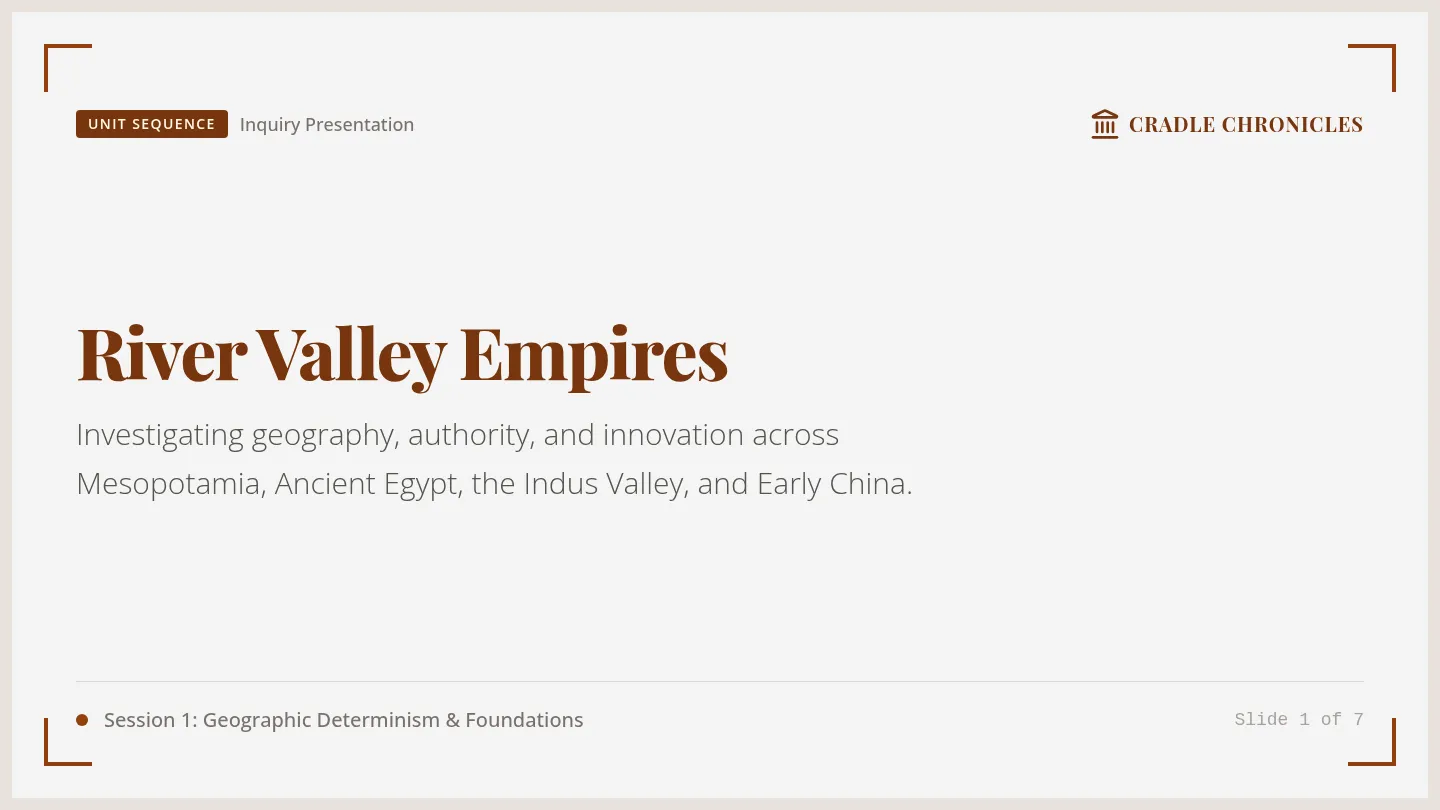
A premium comparative inquiry bundle exploring the foundational 'Big Four' ancient river valley civilizations (Mesopotamia, Egypt, Indus Valley, and Ancient China). Designed with high-quality primary sources, structured guided notes, and analytical rubrics to foster deep historical investigation.
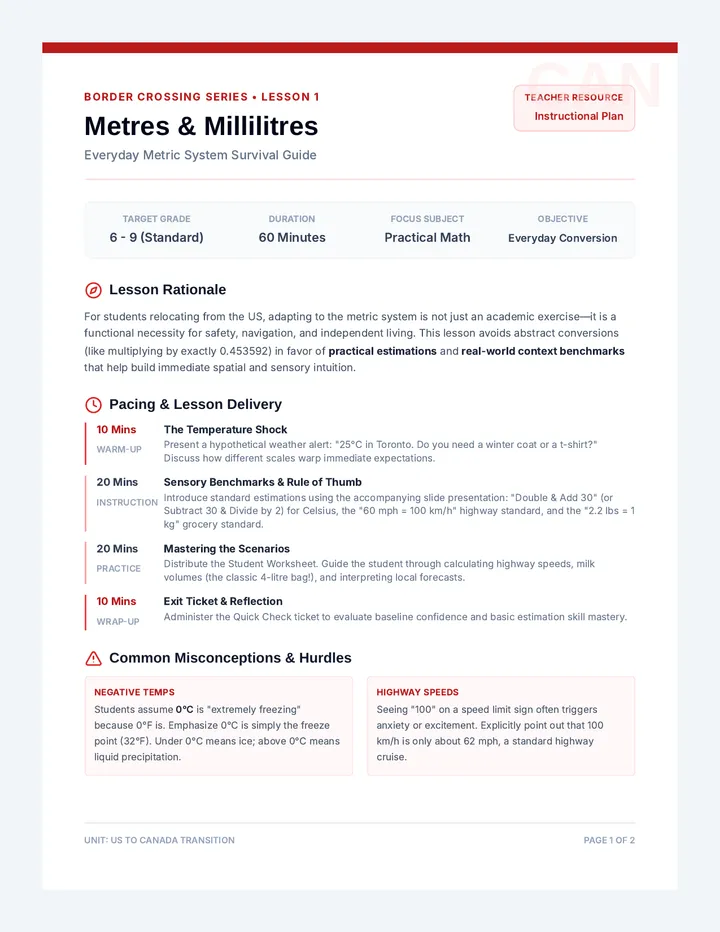
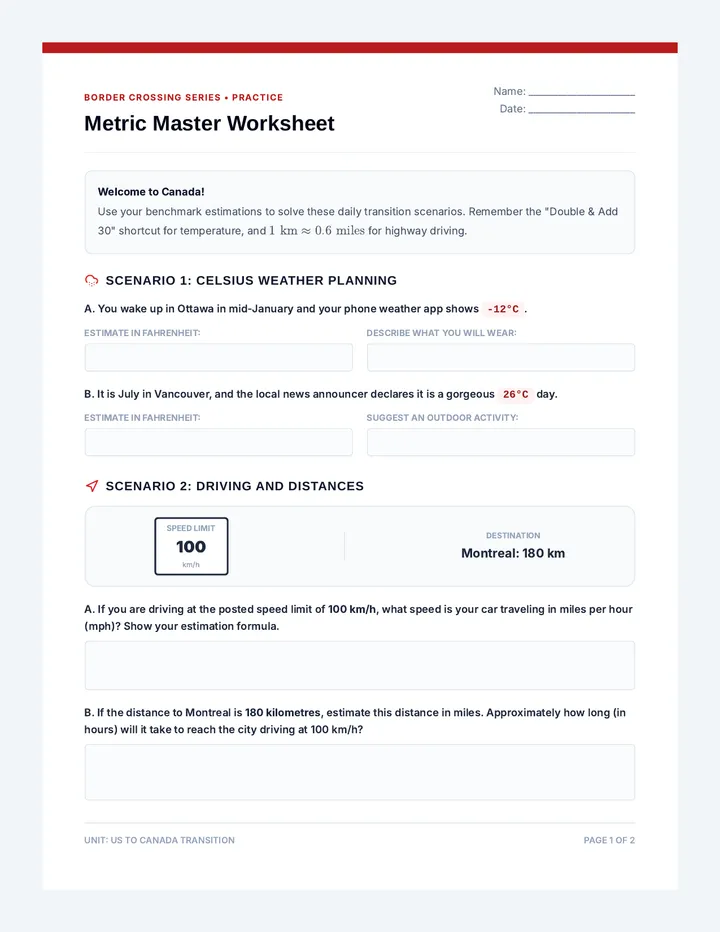
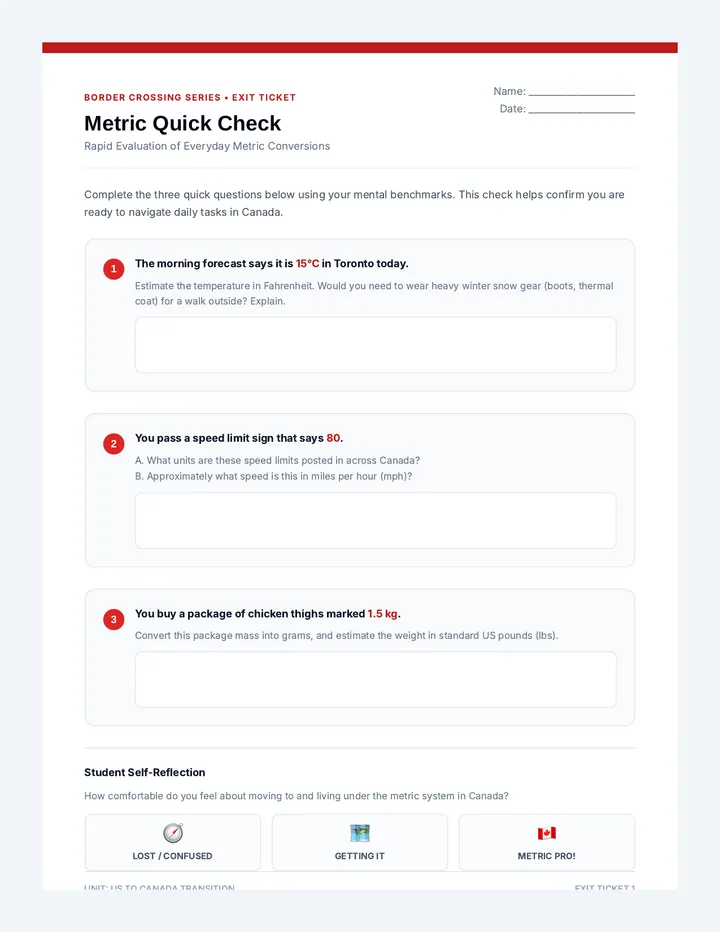
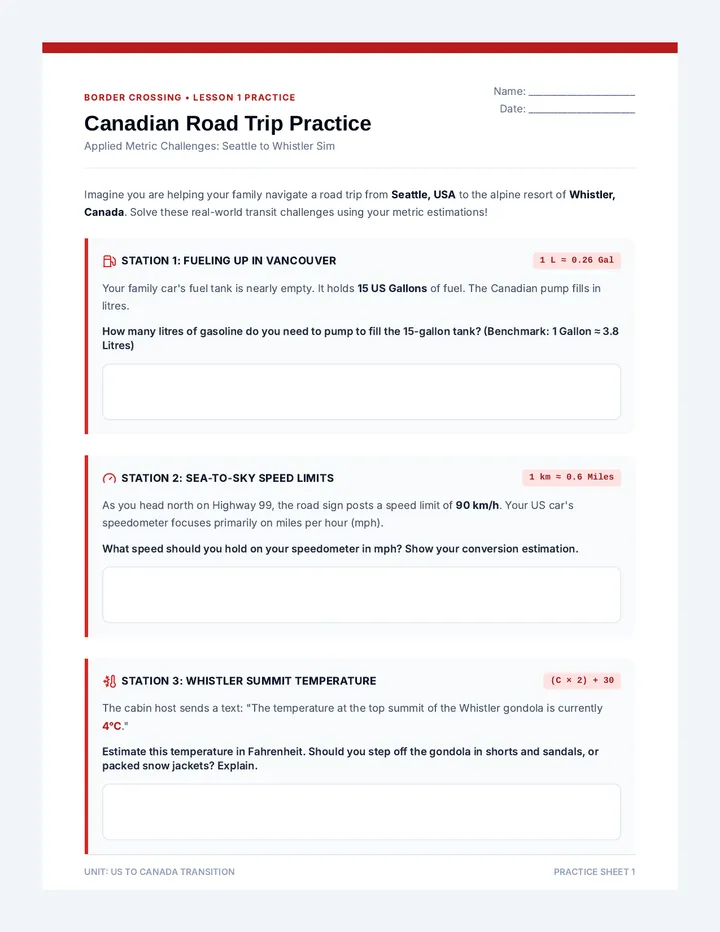
A practical guide to mastering the metric system for daily life in Canada, including temperature, distance, speed, weight, and volume conversions in real-world scenarios.
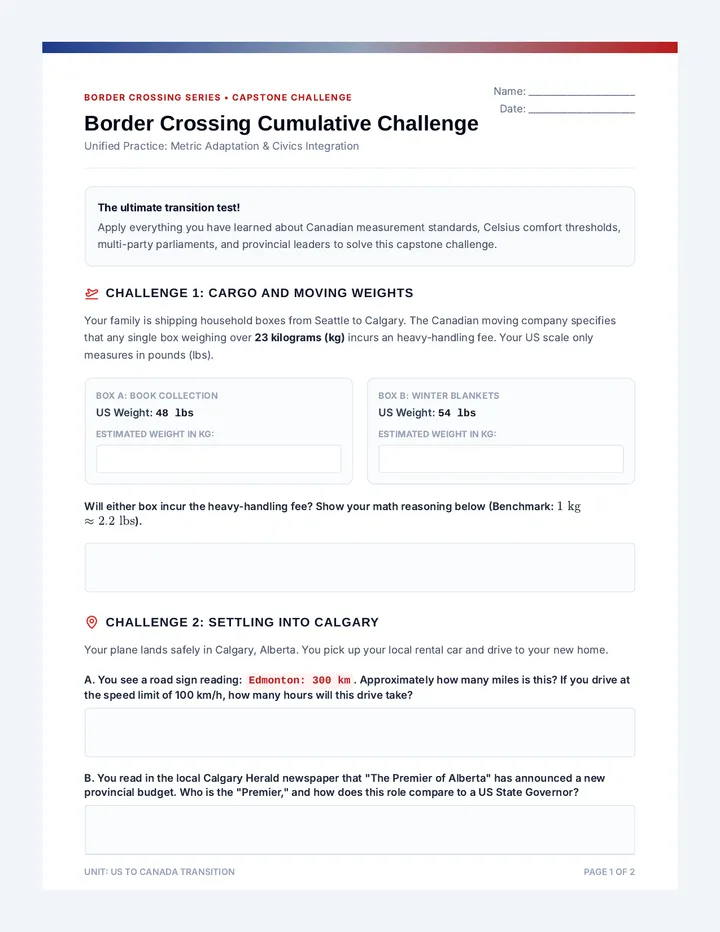
A cumulative 2-page practice worksheet combining metric conversions, road sign situations, and comparative Canadian government structures into unified real-life transition challenges.
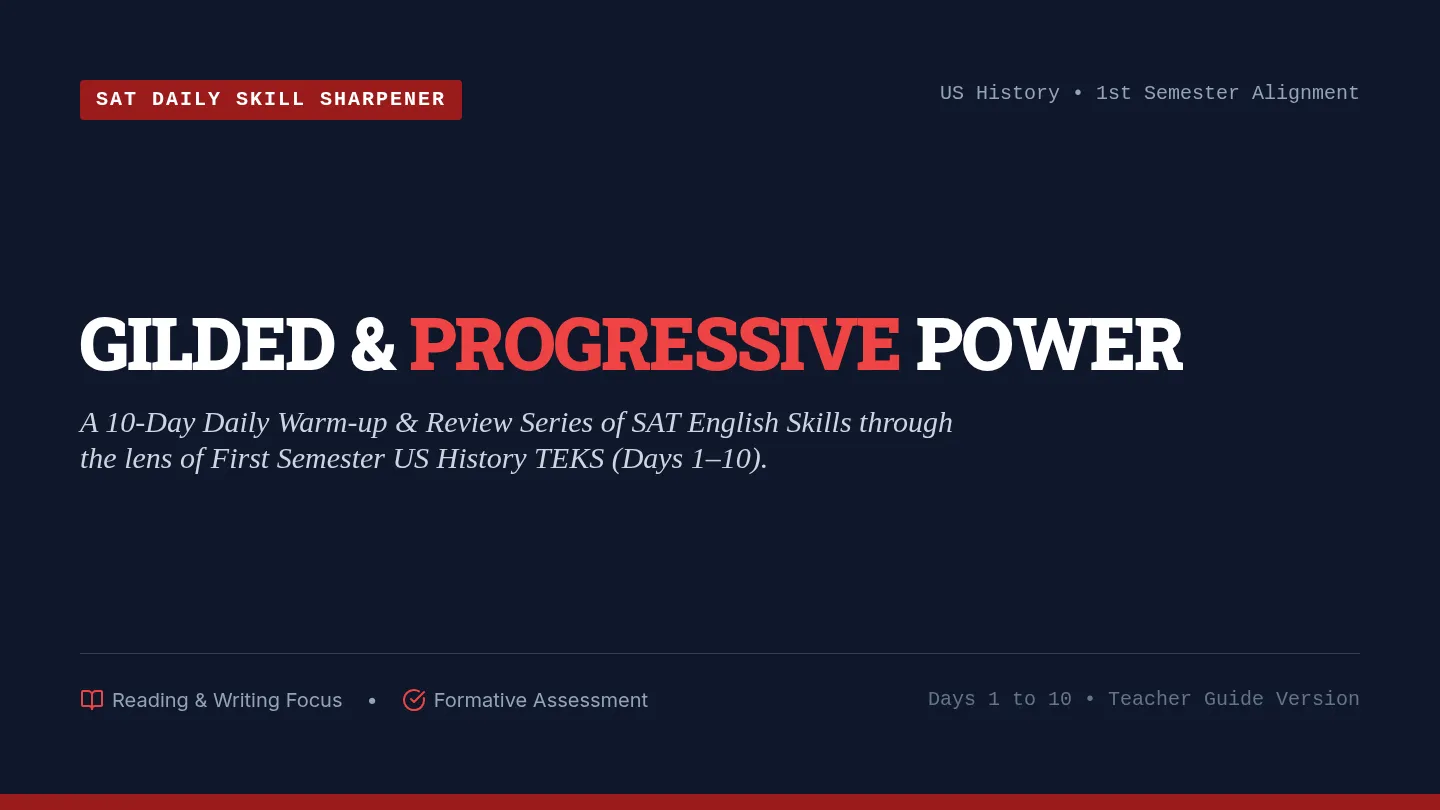
A 20-day dual-purpose review program aligning SAT English Reading and Writing skills with US History first-semester TEKS content. This curriculum covers key historic eras from the Gilded Age through the Great Depression with daily warmups, answers, and strategies.
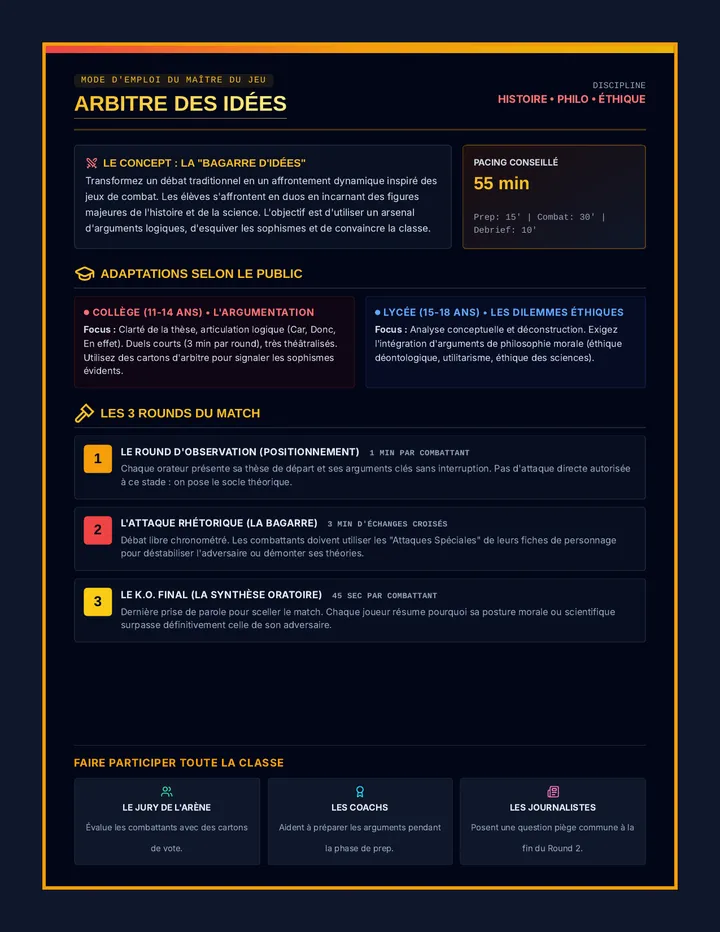
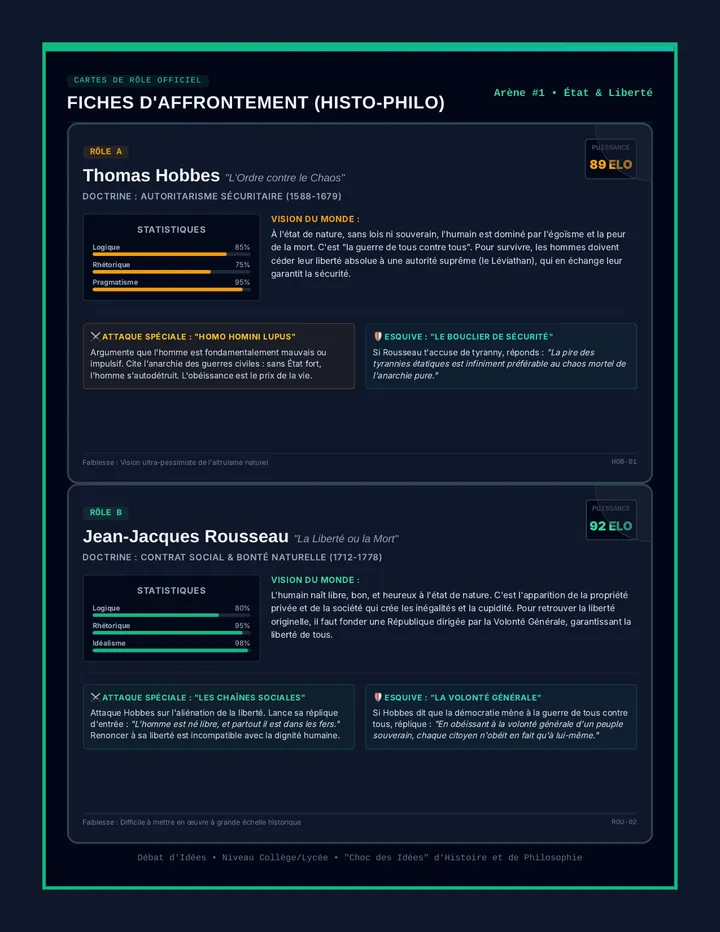
Une leçon immersive conçue comme un jeu de combat intellectuel ("Bagarre d'Idées") où les élèves incarnent des figures historiques et scientifiques. Cette leçon propose des joutes verbales et des débats philosophiques adaptés au collège (argumentation) et au lycée (dilemmes éthiques).
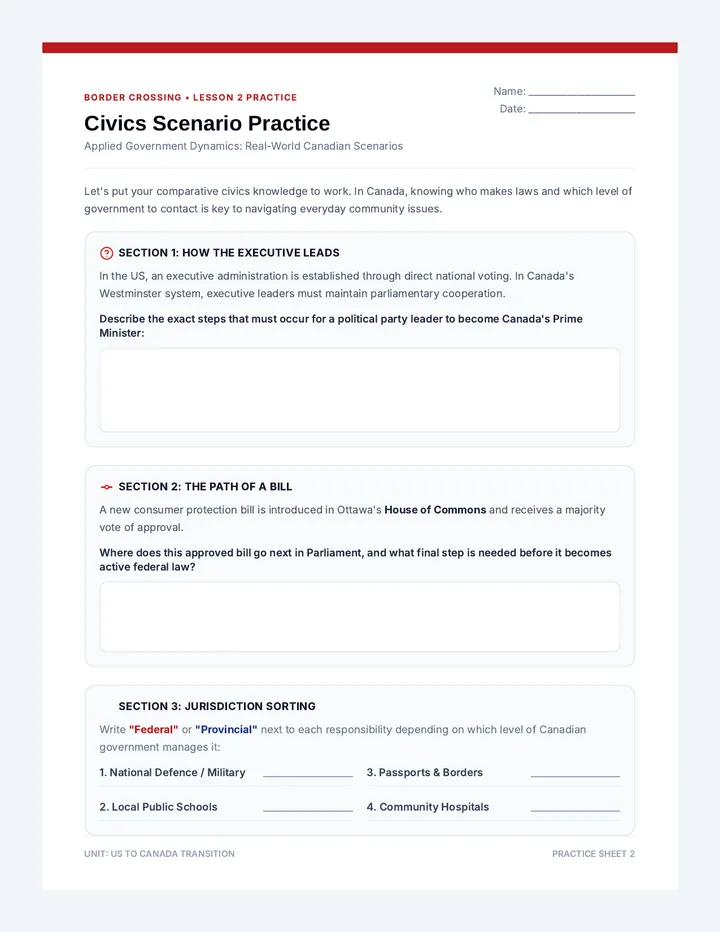
A single-page student practice worksheet featuring realistic political scenario problems, comparative jurisdictional matchings, and a Westminster bill-passing puzzle.
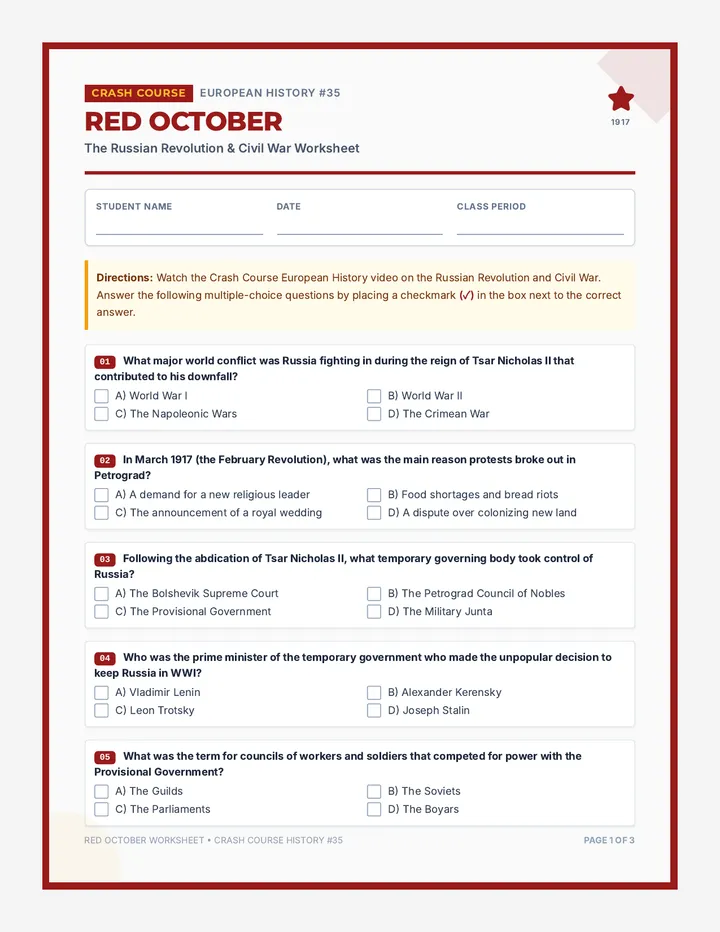
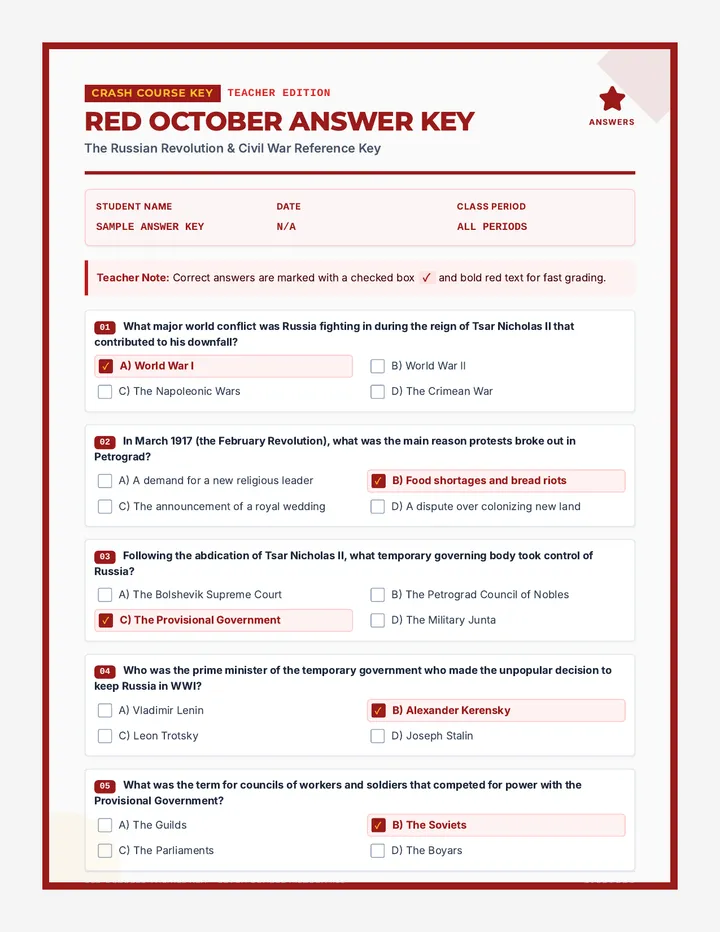
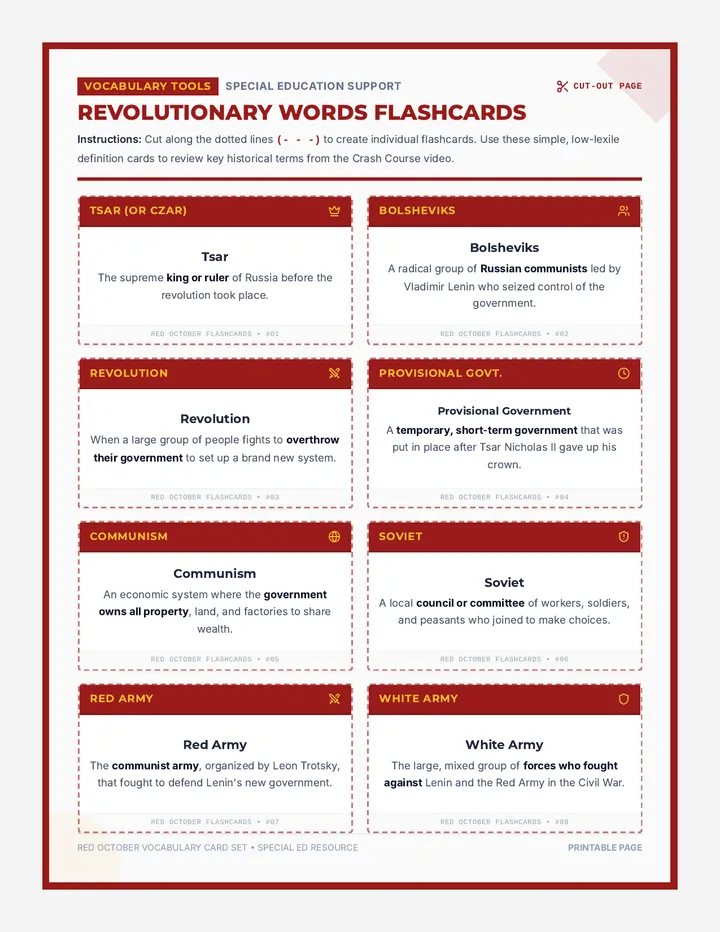
A comprehensive history sequence focusing on 20th-century communist revolutions in Russia and China. This sequence uses Crash Course videos, detailed worksheets, complete answer keys, and accessible vocabulary flashcards to explore the collapse of old empires and the rise of communist states.
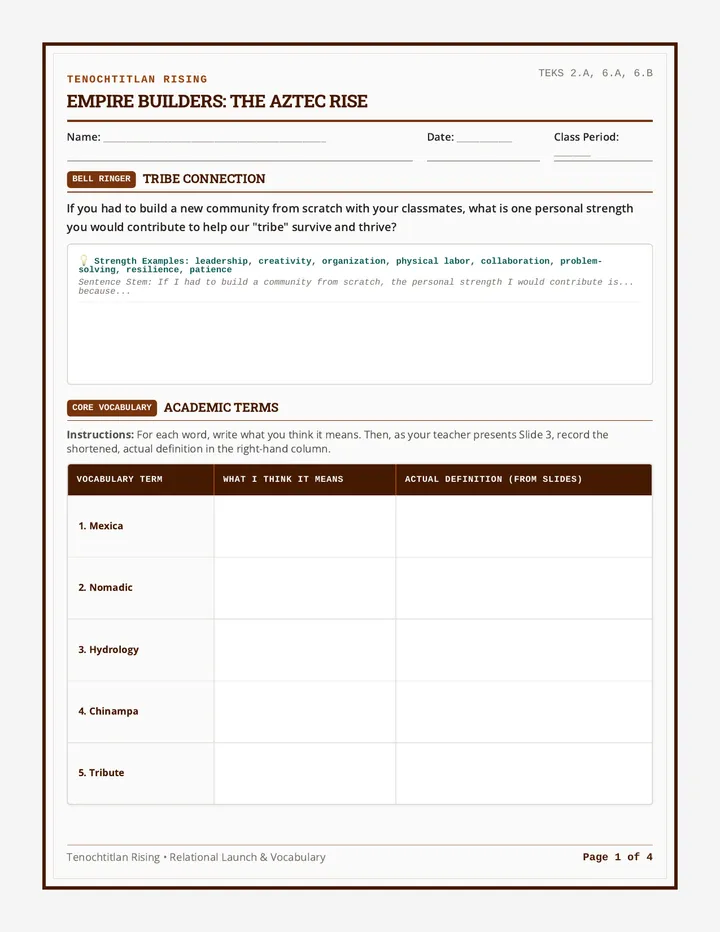
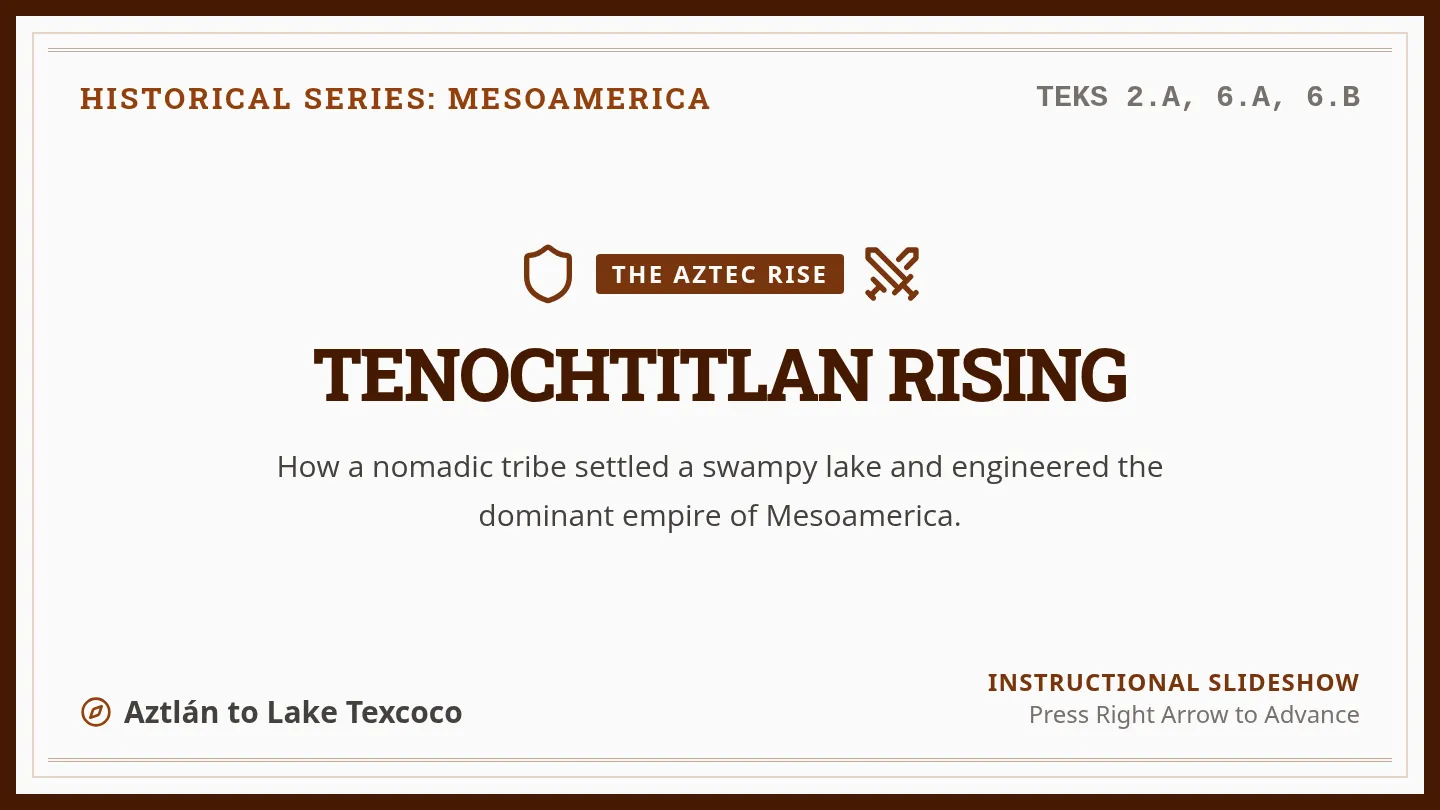
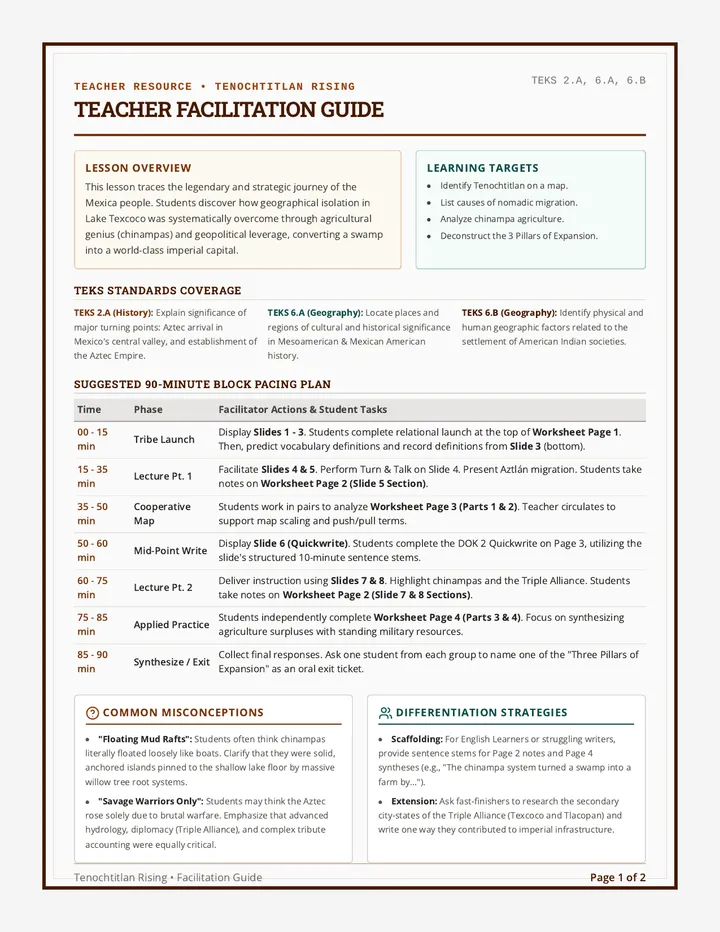
A comprehensive lesson exploring how the Mexica migrated from Aztlán, settled in the Valley of Mexico, and leveraged geography, agriculture, and military strategies to build the Aztec Empire. This lesson includes interactive presentation slides, a graphic organizer worksheet for student analysis, and a detailed teacher facilitation guide.
A single-page student practice worksheet focused on simulating a road trip across Canada, applying speed limits, gas station volume conversions (litres of fuel), and temperature differences in practical scenarios.