A creative history lesson where students analyze WWI propaganda techniques and design their own persuasive posters to support the war effort on the home front.
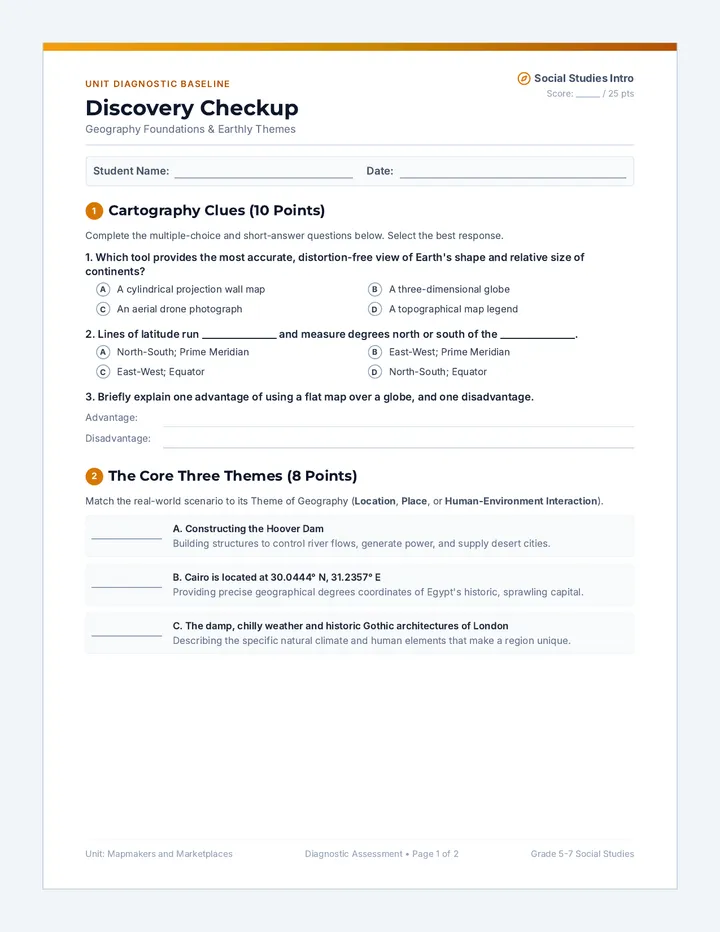
An introductory social studies sequence exploring geography foundations, core geographical themes, and basic economics. Students participate in highly interactive lessons, readings, task cards, and hands-on worksheets.
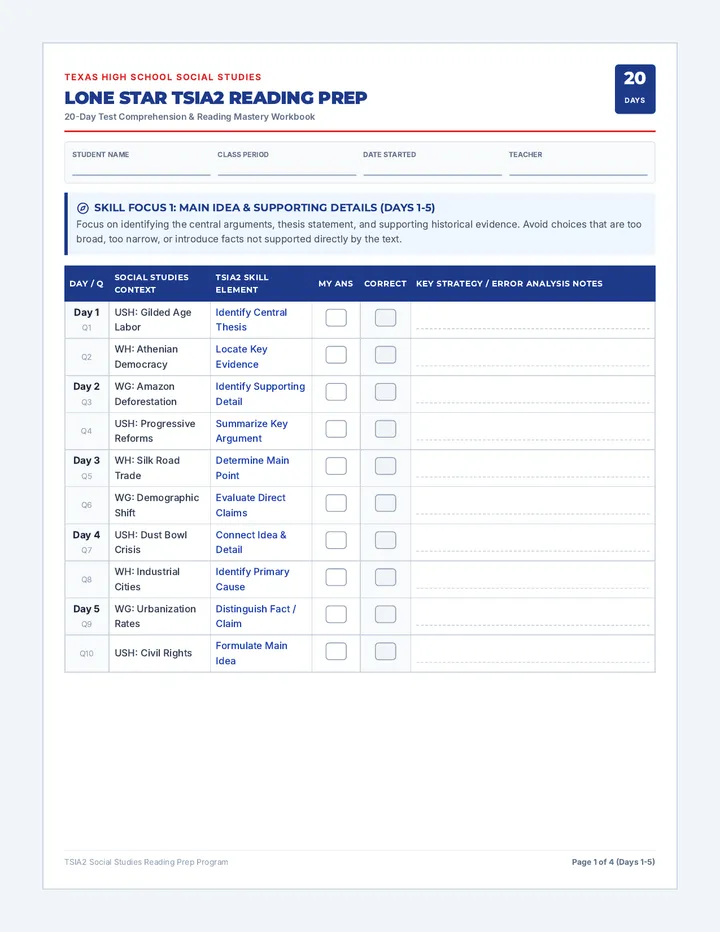
A comprehensive 20-day test preparation program combining Texas High School Social Studies content (US History, World History, and World Geography) with high-yield TSIA2 Reading comprehension skills, complete with daily warm-up slides and a highly-structured student tracking workbook.
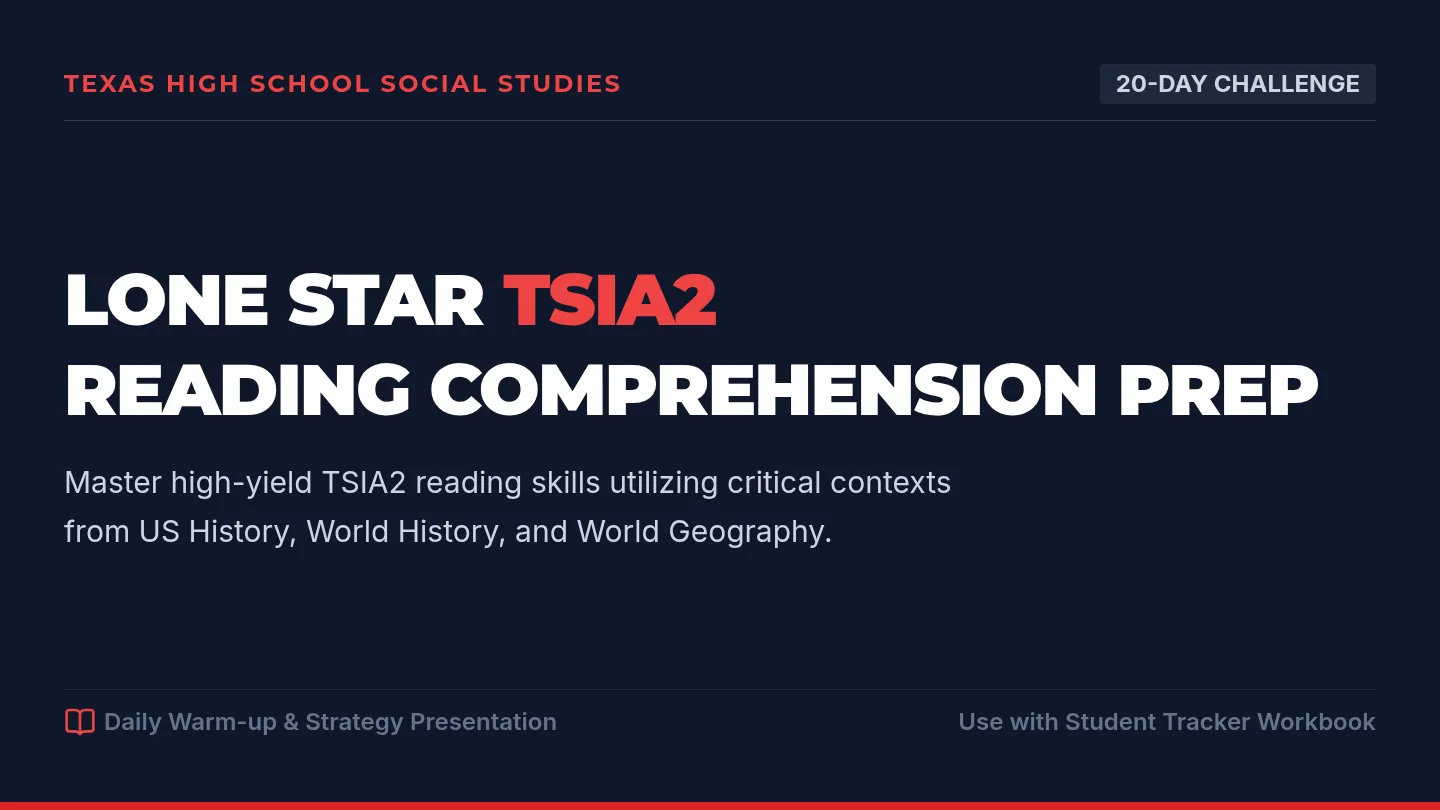
A 46-slide interactive presentation designed for the 20-day TSIA2 Reading Prep program. Features alternate Question and Answer/Strategy slides matching the social studies contexts (US History, World History, and World Geography) and skills on the tracker sheet. Fully stylized with deep navy and crimson, using high-yield passages, identical answer choice styling, and clear strategic breakdowns with text sizing strictly kept at or above 24px.
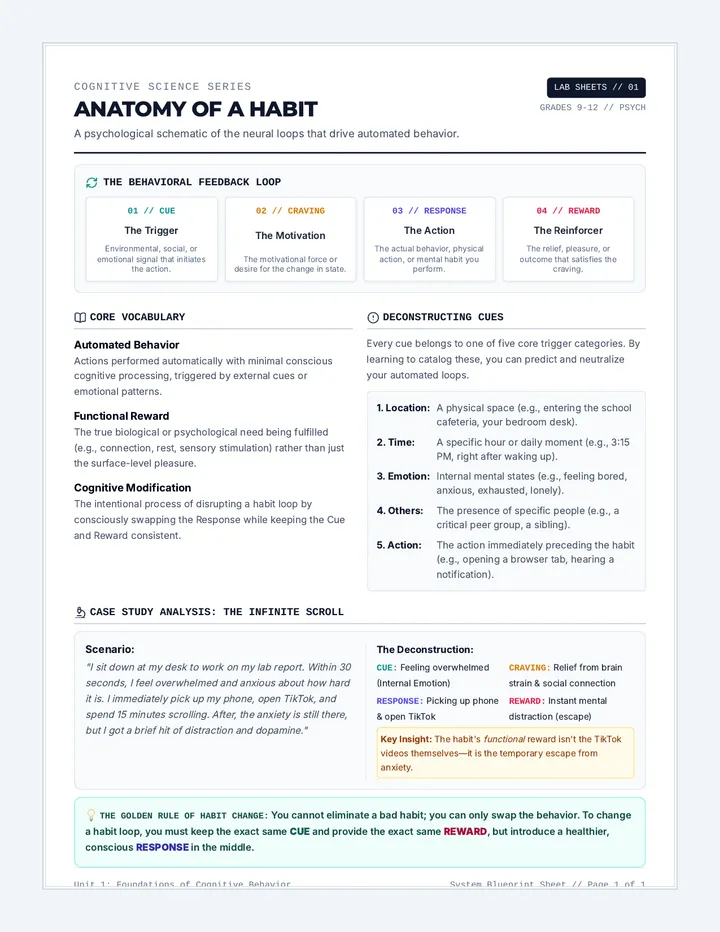
A three-part cognitive psychology series designed for Grades 9-12. Students learn the science of automation, explore how to isolate triggers and cravings, redesign unhelpful routines, and restructure their environments to make habit modification effortless.
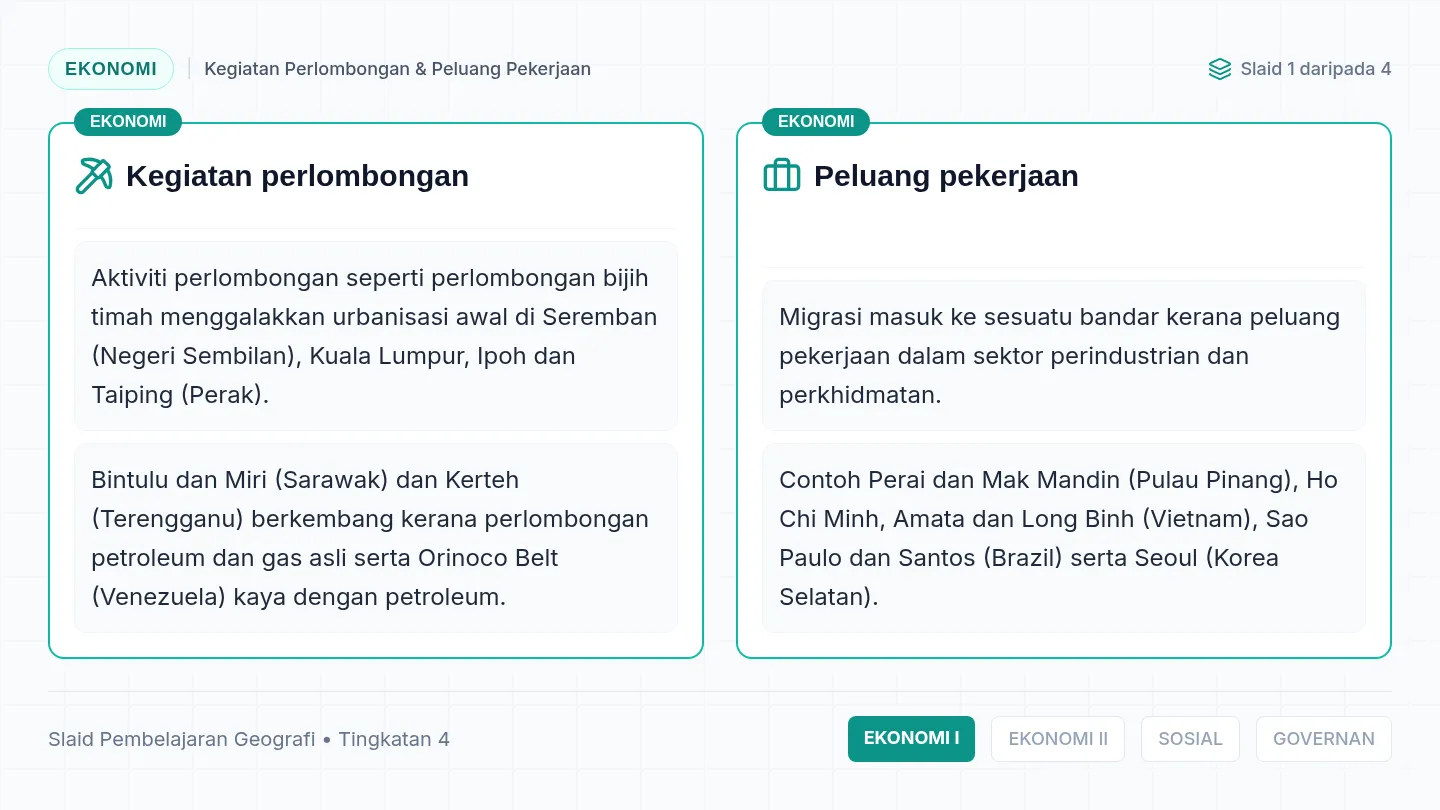
Lesson on the factors influencing the urbanization process, mapping out Economic, Social, and Governance branches with complete regional and global examples.
A highly-structured 4-page printable student tracking workbook for the 20-day TSIA2 Social Studies reading prep. Contains custom grids for all 40 questions with designated spaces for student answers, correct answers, English skills, and strategy notes.
Create a multi-lesson sequence covering the Cold War, focusing on origins, global expansion, and domestic impacts.
A simplified 6th-grade lesson exploring the classic nature vs. nurture debate. Students learn key vocabulary, read a graphic-organizer-style text, and answer scaffolded comprehension and reflection questions.
Interactive lecture slides mapping out the economic, social, and governance factors influencing the urbanization process, designed with a bright light theme, using only the exact text and examples provided, condensed to the core content slides.
A comprehensive unit on child development from birth through age 18, focusing on physical, cognitive, and social-emotional growth across early childhood, middle childhood, and adolescence.
Satu slot pengajaran interaktif mengenai kegiatan ekonomi utama di dunia termasuk primer, sekunder, dan tertier. Slaid ini membimbing murid memahami impak sektor ekonomi kepada manusia dan negara melalui aktiviti perbincangan dan tiket keluar.
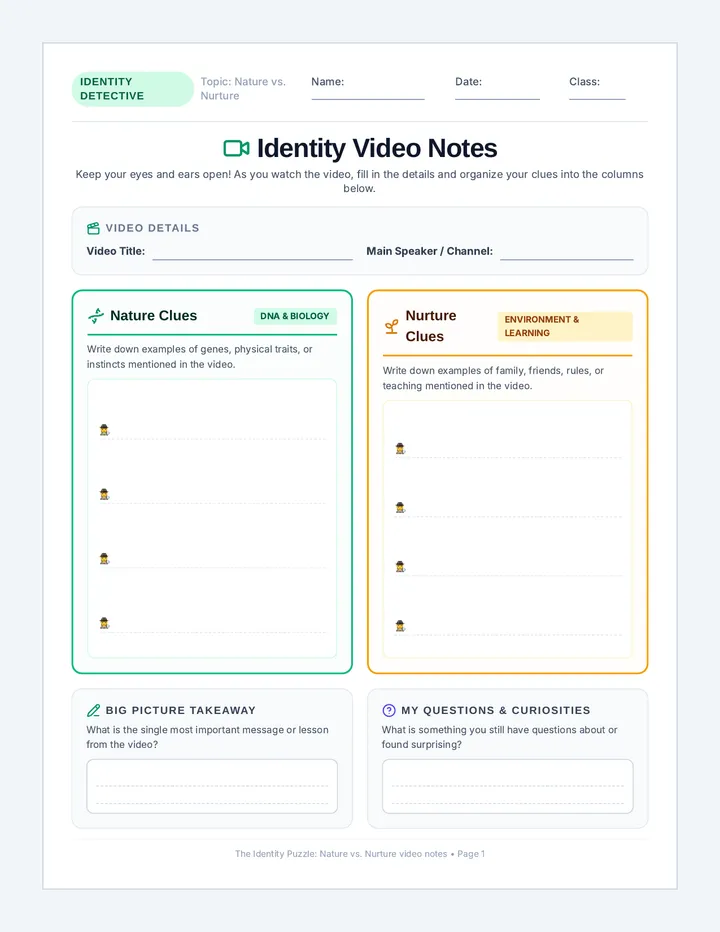
A single-page student video note-taking sheet with themed columns for nature and nurture observations, a video details block, and sections for writing a big-picture summary and outstanding questions.