A comprehensive history lesson exploring the rise, military expansion, trade networks, and cultural exchange of the Ottoman Empire through a rich historical story, slide presentations, and structured student synthesis activities.
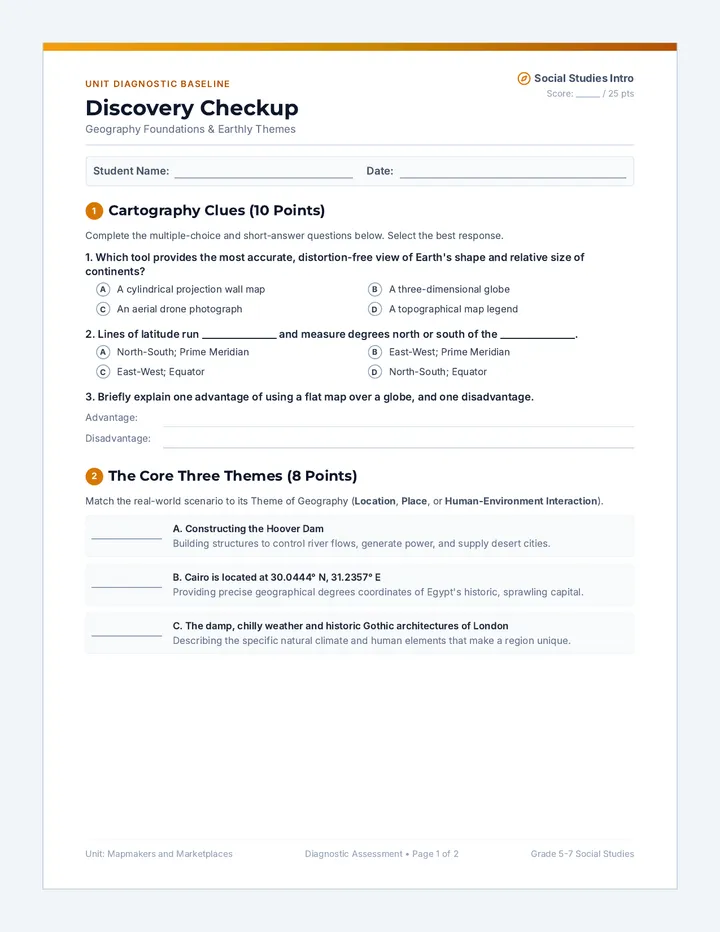
An introductory social studies sequence exploring geography foundations, core geographical themes, and basic economics. Students participate in highly interactive lessons, readings, task cards, and hands-on worksheets.
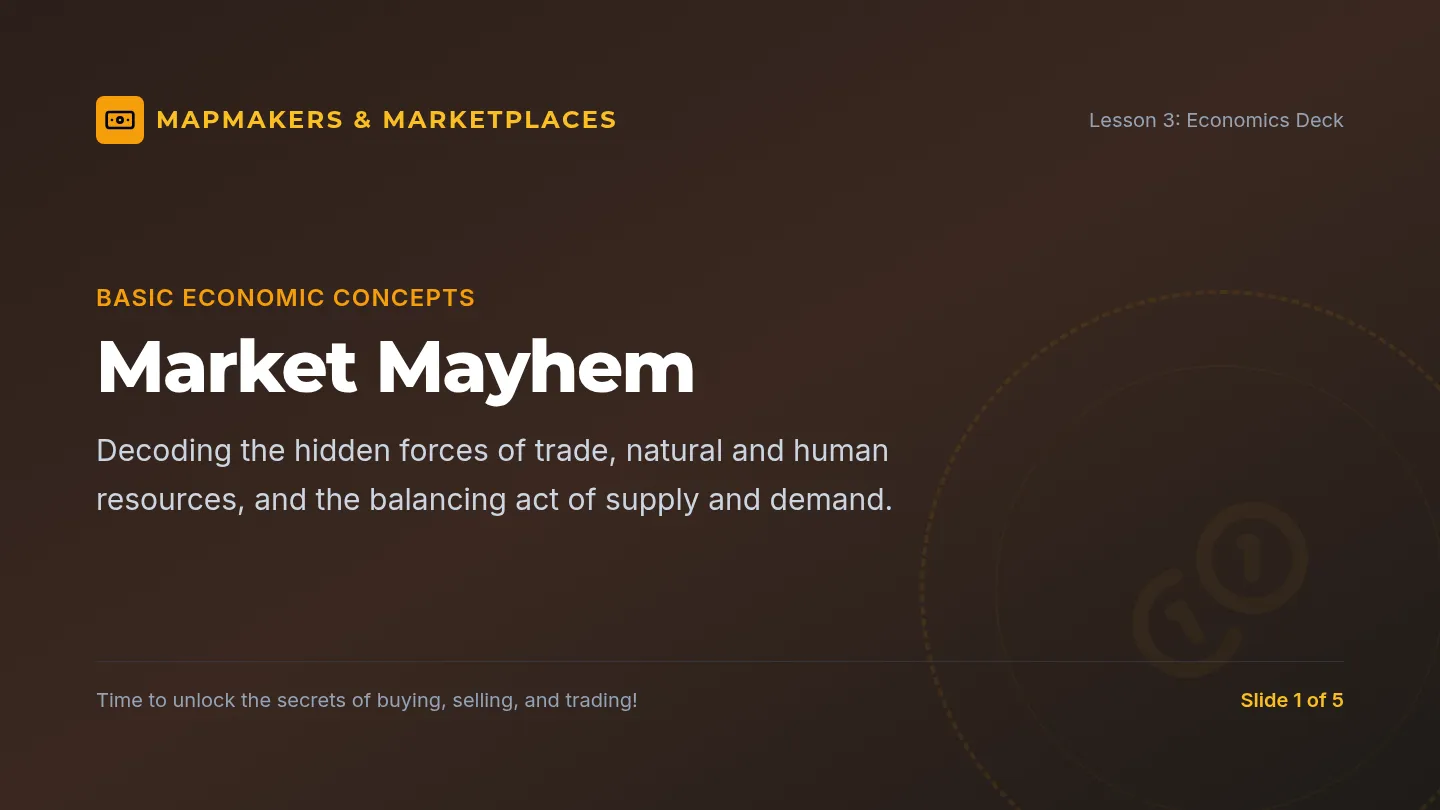
Explores fundamental economic concepts such as trade, natural and human resources, and the balance of supply and demand through simulations and worksheets.
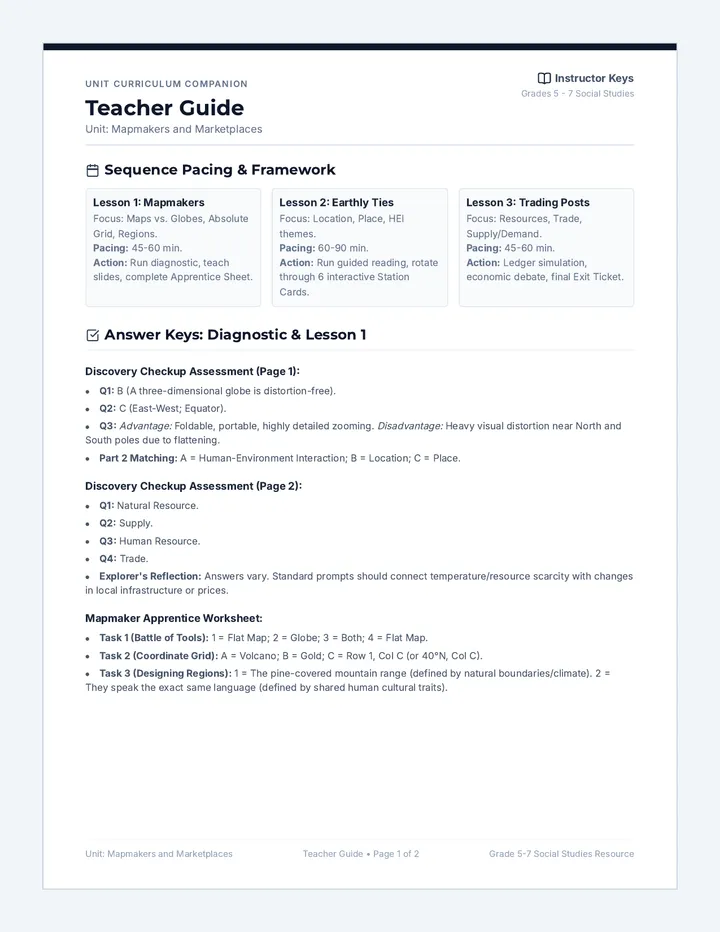
A comprehensive 2-page teacher resource containing lesson plan details, pacing, discussion prompts, and answer keys for the worksheets and pre-assessments.
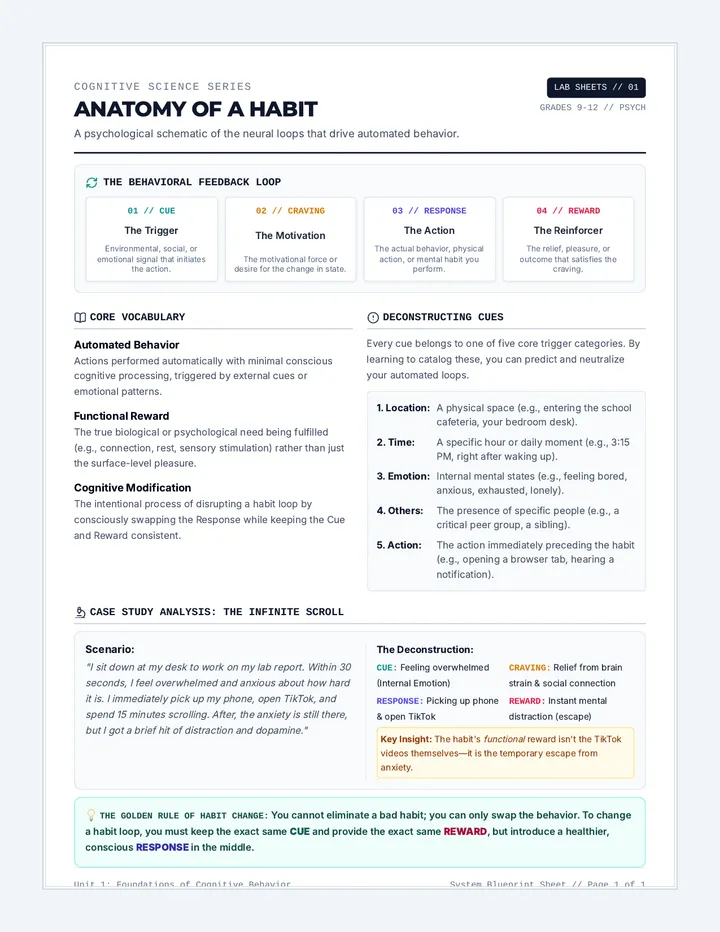
A three-part cognitive psychology series designed for Grades 9-12. Students learn the science of automation, explore how to isolate triggers and cravings, redesign unhelpful routines, and restructure their environments to make habit modification effortless.
Introduces three major themes of geography: Location, Place, and Human-Environment Interaction. Includes station task cards and guided reading passages.
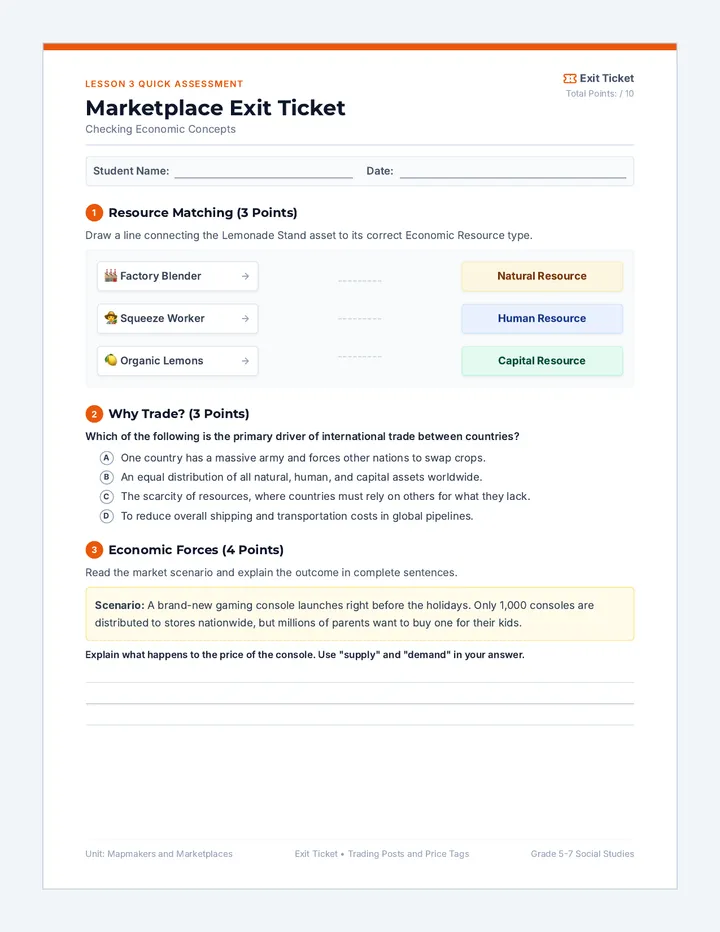
A quick diagnostic exit ticket checking student comprehension of resources, trade, and supply and demand dynamics before concluding the unit.
An immersive 3rd-grade Project-Based Learning unit where students act as museum curators to design and exhibit a living history museum, answering the driving question: How did where colonist lived shape how they lived?
Students explore the differences between maps and globes, understand coordinate grids, and explore world regions. Includes a comprehensive diagnostic pre-assessment.
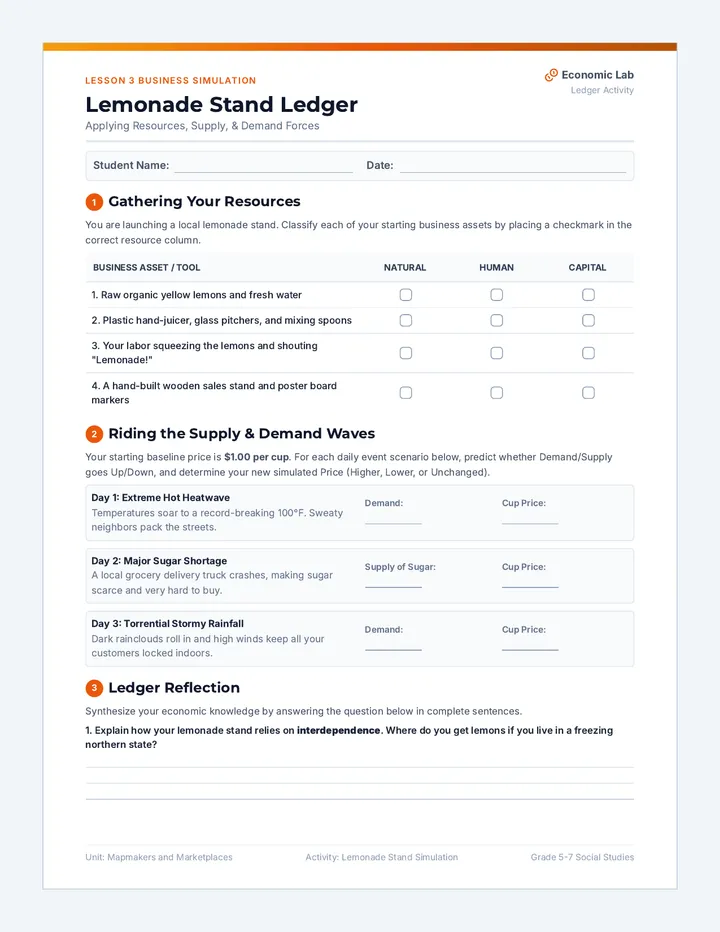
A hands-on student activity ledger simulating a lemonade stand to practice resource categorization and analyze real-world supply and demand shifts. Designed with clean student writing spaces.
Create a multi-lesson sequence covering the Cold War, focusing on origins, global expansion, and domestic impacts.
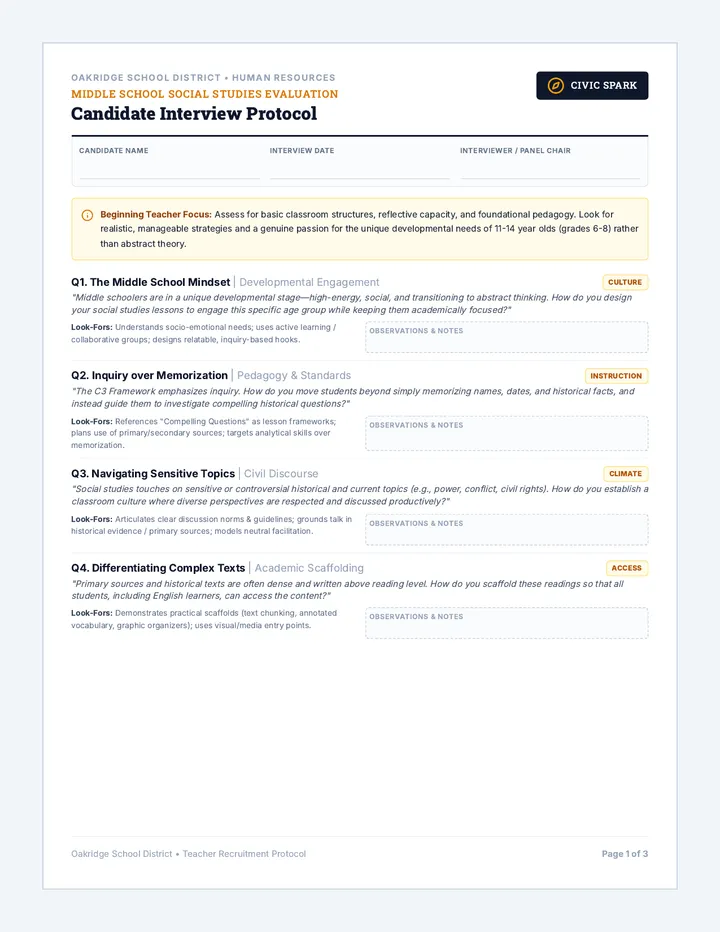
A high-quality evaluation system designed for secondary school administrators to screen, interview, and assess Middle School Social Studies teaching candidates. This lesson contains a comprehensive 10-question interview protocol and a standalone candidate writing prompt.
An educational 5-slide presentation demonstrating fundamental economic principles: natural vs. human vs. capital resources, trade, and the dynamics of supply and demand. Designed with rich content and bold text.