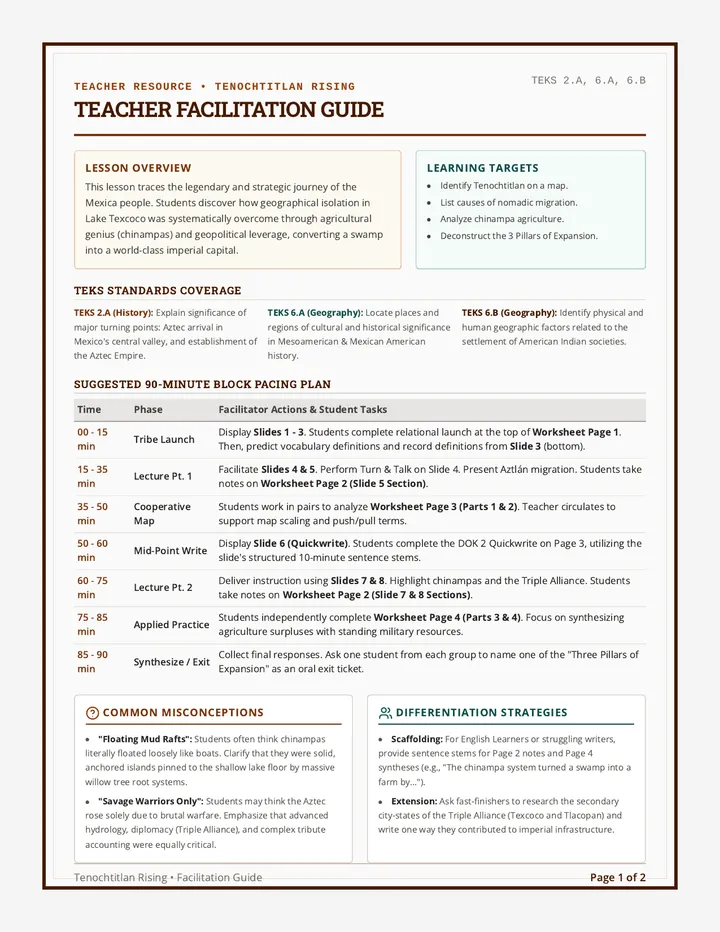
Quiz Bowl Lesson Plan Document Quiz Bowl
Lesson Plan: Conditioning Review
60 Minutes
8th Grade Psychology
Objective
Students will be able to differentiate between positive reinforcement, negative reinforcement, positive punishment, and negative punishment, as well as identify principles of classical conditioning by analyzing given scenarios.
The "Why"
Understanding conditioning helps students recognize how behavior is shaped in their own lives and the world around them, providing valuable insight into human and animal behavior.
Preparation
Review Operant and Classical Conditioning Slide Decks.
Print scenario quizzes for each student or prepare for digital display.
Ensure projector/whiteboard is functional.
Decide on facilitation style (individual competition, pairs, or teams).
Time Instructional Steps 10m
Introduction & Operant Review
Briefly intro concept of operant conditioning. Use the Operant Review Slides to recap the 4 types.
Key focus: Reinforcement (+/–) increases behavior; Punishment (+/–) decreases behavior.
|
| 15m |
Operant Scenario Quiz
Distribute the Operant Scenario Quiz . Students work individually or in pairs to identify conditioning types in real-world snippets.
|
| 5m |
Operant Discussion
Review answers using the Answer Key . Address common confusions (e.g., negative reinforcement vs. punishment).
|
| |
| 10m |
Classical Conditioning Review
Intro Pavlov's experiments. Use Classical Review Slides to cover Acquisition, Extinction, Spontaneous Recovery, Generalization, and Discrimination.
|
| 15m |
Classical Scenario Quiz
Distribute the Classical Scenario Quiz . Students identify key principles in specific learning scenarios.
|
| 5m |
Final Review & Wrap Up
Discuss classical quiz results. Conclude by having students share personal examples of conditioning seen at home or school.
|
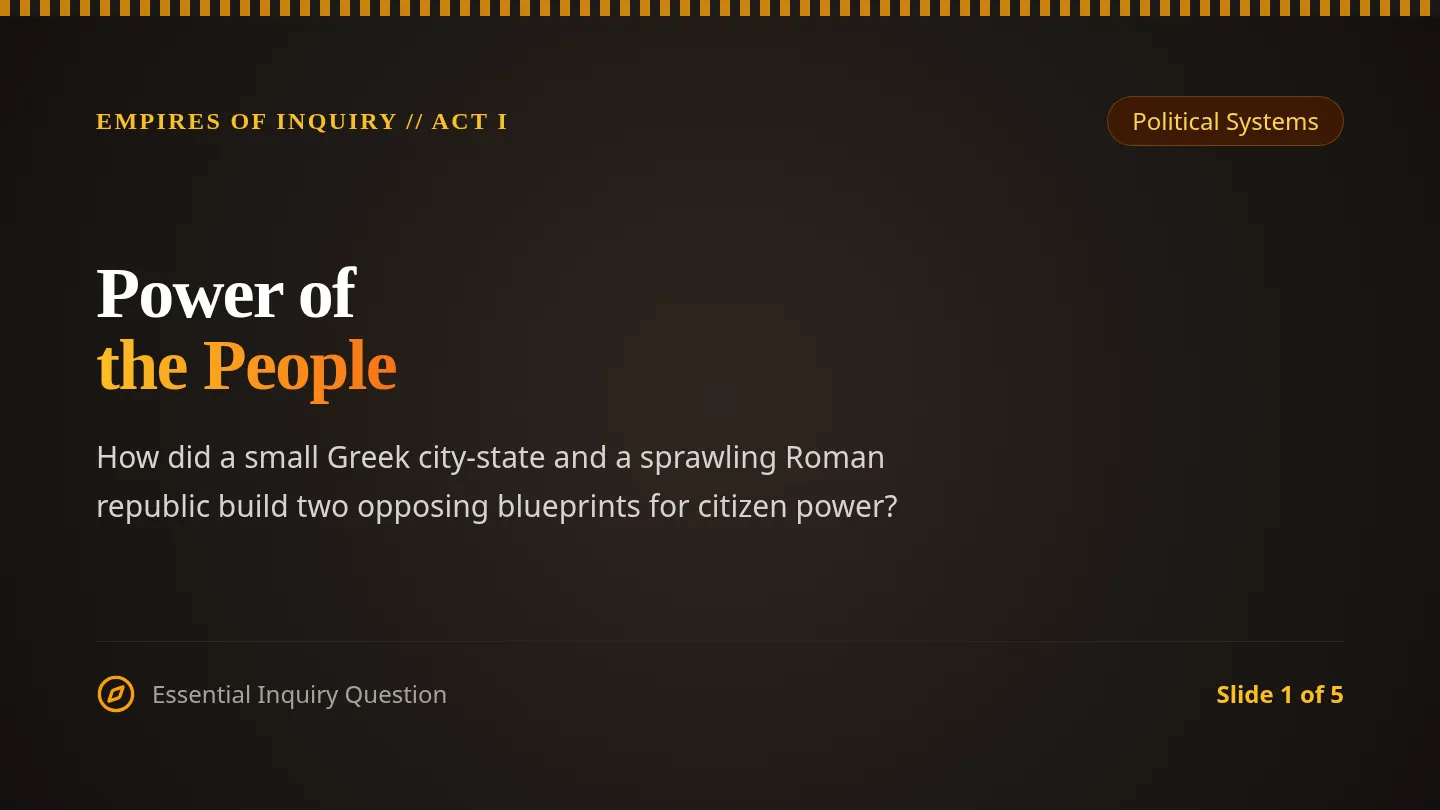
Operant Conditioning Review Slides Operant Conditioning
Learning through consequences: rewards and punishments.
Psych Lab Review
TEACHER NOTES: Welcome students and introduce the topic of operant conditioning, or quickly recap if already introduced. Emphasize that we're looking at how consequences affect behavior.
Positive Reinforcement
+R
Adding something GOOD to increase a behavior.
Positive = Adding something
Reinforcement = Increasing behavior
Example
Getting praise (added) for cleaning your room (increases cleaning behavior).
TEACHER NOTES: Explain Positive Reinforcement: adding something good to increase a behavior. Use a simple, relatable example.
Negative Reinforcement
-R
Removing something BAD to increase a behavior.
Negative = Removing something
Reinforcement = Increasing behavior
Example
Your car beeps (bad thing) until you put on your seatbelt (increases seatbelt use).
TEACHER NOTES: Explain Negative Reinforcement: removing something bad to increase a behavior. Contrast with punishment, as students often confuse these.
Positive Punishment
+P
Adding something BAD to decrease a behavior.
Positive = Adding something
Punishment = Decreasing behavior
Example
Getting a speeding ticket (added) for driving too fast (decreases speeding).
TEACHER NOTES: Explain Positive Punishment: adding something bad to decrease a behavior. Again, use a clear example.
Negative Punishment
-P
Removing something GOOD to decrease a behavior.
Negative = Removing something
Punishment = Decreasing behavior
Example
Getting your phone taken away (removed) for talking back (decreases talking back).
TEACHER NOTES: Explain Negative Punishment: removing something good to decrease a behavior. This is often confused with negative reinforcement.
Quick Recap
Reinforcement
Always INCREASES behavior
Punishment
Always DECREASES behavior
Positive
ADD something
−
Negative
REMOVE something
TEACHER NOTES: Summarize the key differences. Reinforcement INCREASES behavior, punishment DECREASES behavior. Positive ADDS, Negative REMOVES.
Scenario Challenge
Time to put your knowledge to the test. Let's look at some real-world behaviors!
TEACHER NOTES: Transition to the quiz and remind students to think carefully about each scenario.
Operant Conditioning Scenario Quiz Psych Lab: Operant Quiz
Topic: Reinforcement & Punishment Scenarios
Name:
Date:
Instructions: Read each behavioral scenario carefully. Identify which of the four types of operant conditioning is being described: Positive Reinforcement , Negative Reinforcement , Positive Punishment , or Negative Punishment .
1
Every time Sarah completes her homework on time, her parents allow her to watch an extra hour of TV. As a result, Sarah starts completing her homework more consistently.
Positive Reinforcement
Negative Reinforcement
Positive Punishment
Negative Punishment
2
John often leaves his dirty dishes in the sink. His roommate starts complaining loudly every time John leaves dishes out. To stop his roommate from complaining, John starts washing his dishes immediately.
Positive Reinforcement
Negative Reinforcement
Positive Punishment
Negative Punishment
3
When a student disrupts the class, the teacher makes them stay in during recess. The student's disruptive behavior decreases.
Positive Reinforcement
Negative Reinforcement
Positive Punishment
Negative Punishment
4
Maria talks back to her mother, and as a consequence, her mother takes away her phone for the rest of the evening. Maria's talking back behavior decreases.
Positive Reinforcement
Negative Reinforcement
Positive Punishment
Negative Punishment
5
[DOG'S PERSPECTIVE]: A dog whines at the dinner table. To stop the whining, its owner gives it a piece of food from their plate. The dog then whines more often.
Positive Reinforcement
Negative Reinforcement
Positive Punishment
Negative Punishment
6
A teenager stays out past their curfew. When they return home, their parents ground them for a week. The teenager then starts coming home on time.
Positive Reinforcement
Negative Reinforcement
Positive Punishment
Negative Punishment
7
To encourage employees to arrive on time, a company offers a bonus to anyone who has perfect attendance for a month. Punctuality significantly increases.
Positive Reinforcement
Negative Reinforcement
Operant Conditioning Answer Key Answer Key
Operant Conditioning Scenario Quiz
Positive Reinforcement
Positive: Extra TV time is added.
Reinforcement: Completing homework on time increases.
Negative Reinforcement
Negative: Roommate's complaining is removed.
Reinforcement: Washing dishes increases.
Positive Punishment
Positive: Staying in during recess is added (undesirable consequence).
Punishment: Disruptive behavior decreases.
Negative Punishment
Negative: Phone is removed (desirable item).
Punishment: Talking back decreases.
Positive Reinforcement
Positive: Piece of food is added.
Reinforcement: Whining increases.
Positive Punishment
Positive: Being grounded is added (undesirable consequence).
Punishment: Staying out past curfew decreases (punctuality increases).
Positive Reinforcement
Positive: A bonus is added.
Reinforcement: Punctuality increases.
Negative Reinforcement
Negative: Scolding is removed.
Reinforcement: Eating vegetables increases.
Classical Conditioning Review Slides Classical Conditioning
Learning through association: Pavlov's dogs and involuntary responses.
Psych Lab Part 2
TEACHER NOTES: Introduce Classical Conditioning, contrasting it with operant conditioning (involuntary vs. voluntary responses). Introduce Ivan Pavlov.
Acquisition
The Learning Phase
The Ingredients
UCS: Unconditioned Stimulus (Food)
UCR: Unconditioned Response (Drool)
NS: Neutral Stimulus (Bell)
CS: Conditioned Stimulus (Bell, after)
CR: Conditioned Response (Drool, after)
The initial learning of the stimulus-response relationship.
Example: The bell (NS) paired with food (UCS) leads to salivation (UCR/CR).
TEACHER NOTES: Explain Acquisition: the initial learning phase. Emphasize the neutral stimulus (NS), unconditioned stimulus (UCS), unconditioned response (UCR), and conditioned stimulus (CS), conditioned response (CR).
Extinction
The weakening of a conditioned response.
Occurs when the conditioned stimulus (bell) is repeatedly presented without the unconditioned stimulus (food).
Outcome
Eventually, the dog stops salivating at the sound of the bell.
TEACHER NOTES: Explain Extinction: the diminishing of a conditioned response. Emphasize that the CR doesn't disappear completely, but rather weakens.
Spontaneous Recovery
The reappearance, after a pause, of an extinguished response.
"After a few hours of silence, Pavlov rings the bell... and the dog salivates just a little bit!"
TEACHER NOTES: Explain Spontaneous Recovery: the reappearance of an extinguished CR after a pause.
Generalization
Responding to stimuli similar to the conditioned stimulus.
Example: Salivating to a buzzer that sounds like the bell.
Discrimination
The learned ability to distinguish between different stimuli.
Example: Learning to only salivate to the bell, not the buzzer.
TEACHER NOTES: Explain Generalization (responding to similar stimuli) and Discrimination (distinguishing between specific stimuli).
Terms to Know
Acquisition Initial Learning
Extinction Weakening Response
Recovery Sudden Return
Generalize Same Response
Classical Conditioning Scenario Quiz Psych Lab: Classical Quiz
Topic: Stimulus-Response Associations
Name:
Date:
Instructions: Read each scenario. Identify the core principle of classical conditioning demonstrated: Acquisition , Extinction , Generalization , Discrimination , or Spontaneous Recovery .
1
A child loves apples but hates broccoli. When their parents start serving apples and broccoli together, the child eventually starts to dislike apples as well.
Acquisition
Extinction
Generalization
Discrimination
Spont. Recovery
2
Every time the school fire alarm rings, students immediately evacuate. The school then decides to test the alarm every Monday for a month, but without any actual fire drills. After a few weeks, students no longer evacuate when the alarm rings on Mondays.
Acquisition
Extinction
Generalization
Discrimination
Spont. Recovery
3
A person has a phobia of dogs after being bitten by a large German Shepherd as a child. Now, they are also afraid of all large dog breeds, but not small ones.
Acquisition
Extinction
Generalization
Discrimination
Spont. Recovery
4
A cat learns to associate the sound of a can opener with being fed. Initially, the can opener was just a sound, but now the cat rushes to its bowl every time it hears it.
Acquisition
Extinction
Generalization
Discrimination
Spont. Recovery
5
A person developed a fear of dentists after a painful procedure. One day, after years of no fear, they felt a sudden pang of anxiety before an appointment, even though their new dentist had always been gentle.
Acquisition
Extinction
Generalization
Discrimination
Spont. Recovery
6
A child is scared of thunder. After a while, they learn to differentiate between the sound of thunder and the sound of a loud truck, and only react with fear to thunder.
Acquisition
Extinction
Generalization
Discrimination
Spont. Recovery
7
A specific jingle is played during a soda commercial. Over time, people start to feel thirsty whenever they hear the jingle, even without seeing the soda.
Classical Conditioning Answer Key Answer Key
Classical Conditioning Scenario Quiz
Generalization
Explanation: The child initially dislikes broccoli (UCS -> UCR). Apples (NS) are paired with broccoli. Eventually, the dislike for broccoli generalizes to apples (CS).
Extinction
Explanation: When the fire alarm (CS) is repeatedly presented without the actual danger (UCS), the conditioned response (evacuation) diminishes.
Generalization
Explanation: The fear response to the large German Shepherd has generalized to other similar stimuli (all large dog breeds).
Acquisition
Explanation: The cat is acquiring the new association between the can opener sound (NS) and the food (UCS).
Spontaneous Recovery
Explanation: Sudden reappearance of the fear response after a period of time, even though it was previously extinguished.
Discrimination
Explanation: The child has learned to distinguish between thunder (associated with UCS) and loud trucks (not associated).
Acquisition
Explanation: The jingle (NS/CS) is being paired with the soda/thirst (UCS/UCR), leading to the acquisition of the CR (thirst).