Industrial Giants Lesson Plan Industrial Giants
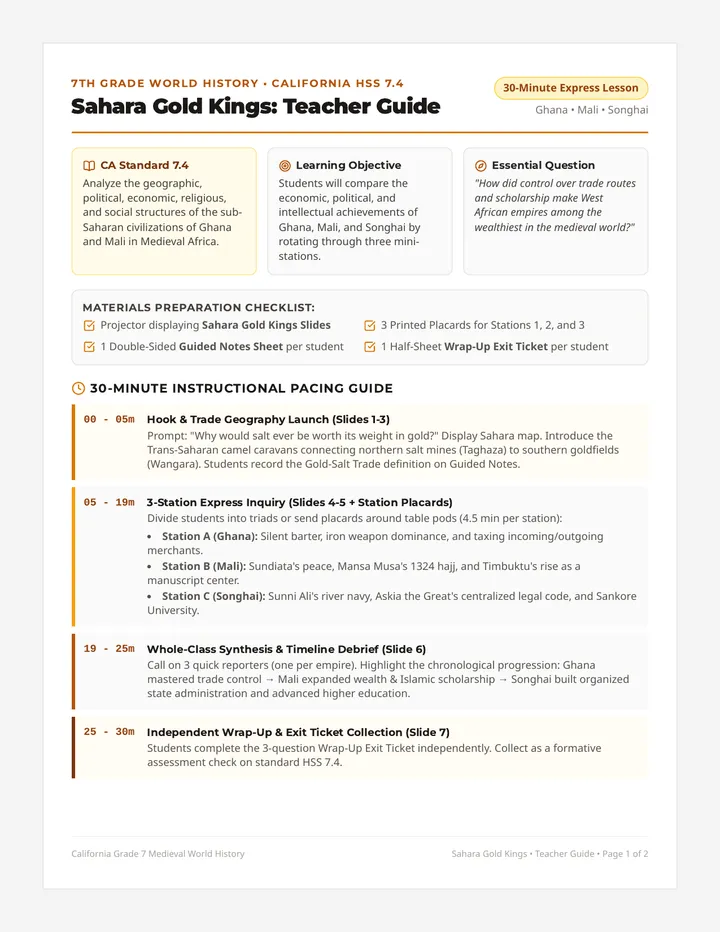
Teacher Facilitation Guide
Subject: US History I
Topic: USI.T6, Topic 1
Duration: 50 Minutes
Learning Objectives
Identify the primary causes of the American Industrial Revolution, including the impact of the Civil War.
Explain the role of technological advances (Railroads, Telephone, Lightbulb) in economic growth.
Analyze the impact of key business leaders (Rockefeller, Carnegie, Morgan, Vanderbilt) on American industry.
Evaluate primary source documents to understand the methods used by "Captains of Industry."
MA Standard [USI.T6.1]
"Explain the various causes of the Industrial Revolution... the expansion of the railroad system; the role of business leaders, entrepreneurs, and inventors..."
Lesson Timeline
0-5 min
The Hook: Invention Brainstorm
Ask students: "What invention from the last 20 years has changed your life the most?" Briefly connect their answers to the massive shift of the late 19th century.
5-20 min
Direct Instruction: The Engine of Change
Use the Empire Builders Slides to cover:
20-45 min
Primary Source Analysis: The Masters of Monopoly
Students work on the Monopoly Masters Worksheet . They will analyze excerpts from Andrew Carnegie's "Gospel of Wealth" and accounts of Standard Oil's business practices.
45-50 min
Closing: Captains or Robbers?
Quick vote/exit ticket: Were these men "Captains of Industry" (heroes) or "Robber Barons" (villains)?
Pro-Tips for Facilitation
Nuance is Key: Encourage students to see the duality. Carnegie gave away millions, but he also brutally suppressed strikes. Both can be true.Modern Connections: Compare Rockefeller to modern tech giants (Bezos, Musk, Gates) to make the concept of "monopoly" feel relevant.
Background & Discussion Guide
Key Concept: Vertical vs. Horizontal Integration
Vertical: Buying every step of the process (Carnegie owning the mines, the ships, and the mills).Horizontal: Buying out all competitors in one stage (Rockefeller owning 90% of all oil refineries).
Guided Discussion Questions
"How did the expansion of the railroad system create a 'national market'?"
Expectation: Moving goods long distances allowed businesses to sell to the whole country, not just their local town.
"Why might an inventor like Thomas Edison be just as important to the Industrial Revolution as a banker like J.P. Morgan?"
Expectation: Edison provided the technology (light, power), but Morgan provided the capital (money) to build the factories that used it.
"If you were a small business owner in 1890, how would you feel about Rockefeller's 'Standard Oil'?"
Expectation: Fear, resentment, feeling 'squeezed out' or forced to sell.
Check for Understanding
The Titan The Industry Key Contribution John D. Rockefeller Oil (Standard Oil) Horizontal Integration / Trust formation Andrew Carnegie Steel (US Steel) Bessemer Process / Vertical Integration Cornelius Vanderbilt Railroads Consolidating rail lines / Efficiency J.P. Morgan Finance / Banking Investment / Rescuing markets
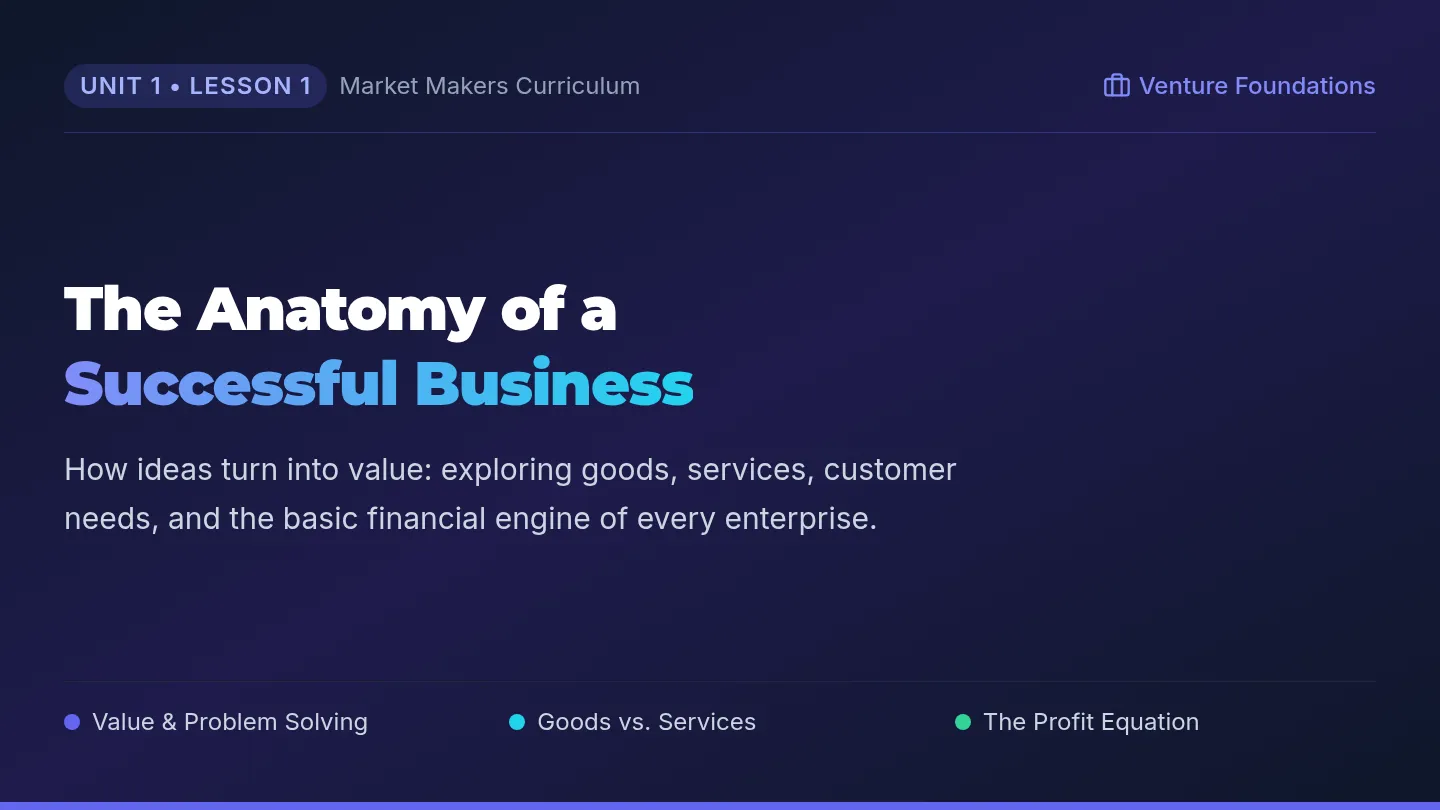
Empire Builders Slides Empire Builders
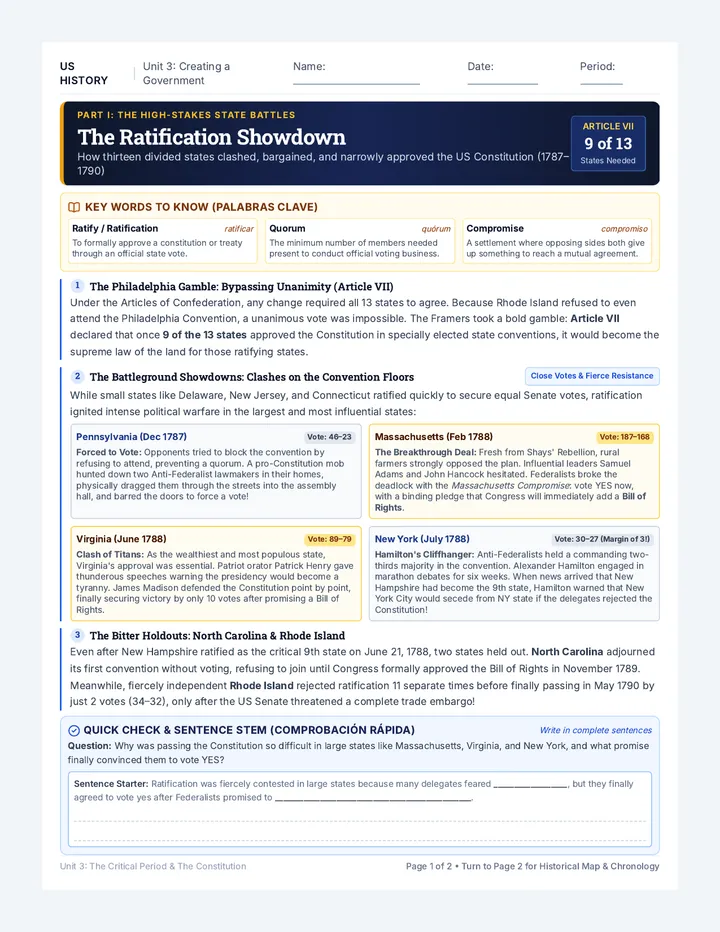
The American Industrial Revolution
TOPIC: USI.T6.1
The Spark
What changed your life?
Think of an invention from the last 20 years. How did it change how we:
Communicate?
Buy things?
Travel?
A Nation Reborn
Post-Civil War Expansion (1865-1900)
War as a Catalyst
The Civil War forced factories to produce at record speeds. Once the war ended, that energy shifted to building a new America.
Growing Markets
Millions of immigrants arrived, providing both the labor to build and the consumers to buy products.
The Iron Horse
"The Railroad system is the nervous system of the nation."
Distance
Connected the East Coast to the West Coast.
Speed
Travel went from months to days.
Markets
Allowed fresh meat and grain to travel thousands of miles.
The Spark of Genius
Alexander Graham Bell
The Telephone (1876)
Communication became instant across vast distances.
Thomas Edison
The Lightbulb (1879)
Factories could now stay open 24 hours a day.
John D. Rockefeller
Oil & Standard Oil
By 1880, he controlled 90% of the oil refining capacity in the U.S.
Strategy: Horizontal Integration
Buying up all the competition until you are the only choice left for consumers.
CARNEGIE STEEL
Andrew Carnegie
Revolutionized steel production using the Bessemer Process, making it cheap and strong.
Vertical Integration
He owned the coal mines, the iron fields, and the railroads. He didn't pay anyone else a profit.
Cornelius Vanderbilt
"The Commodore"
Consolidated the railroad industry, making travel more efficient but destroying many smaller companies in the process.
J.P. Morgan
The Master of Finance
The "banker to the titans." He used his massive wealth to consolidate industries and even saved the U.S. Treasury from collapse.
What is a Monopoly?
When one person or company controls the entire supply of a product or service.
Pros
Lower prices through mass production, stable supply.
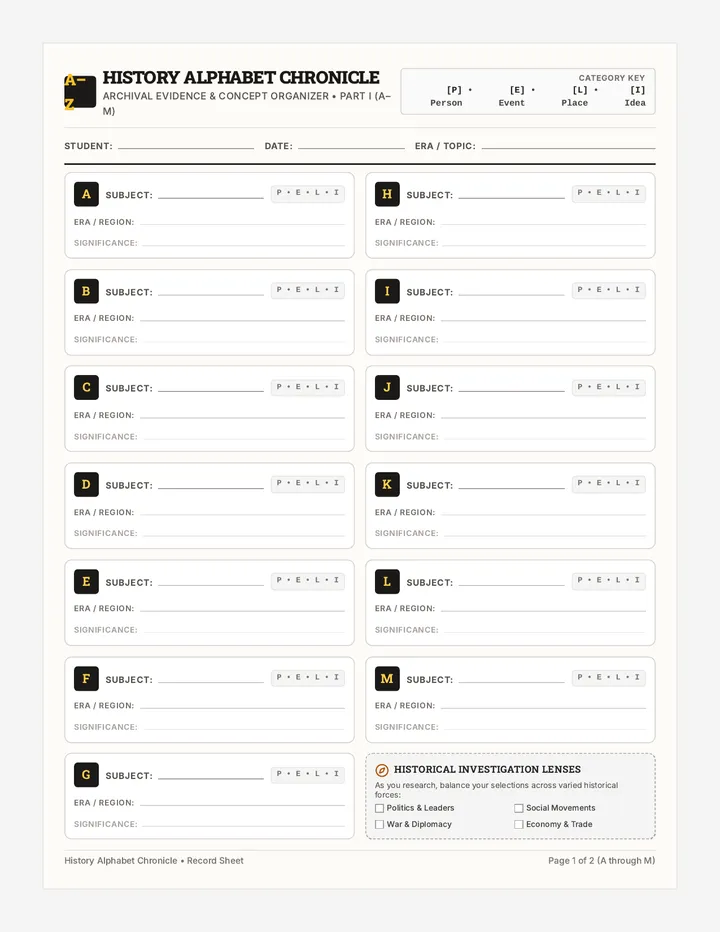
Monopoly Masters Worksheet Monopoly Masters
Topic: The American Industrial Revolution
Name:
Date:
Part 1: The Titans of Industry
Match the industrial leader to their primary industry and key strategy.
1. Andrew Carnegie
Controlled:
Strategy:
2. John D. Rockefeller
Controlled:
Strategy:
3. Cornelius Vanderbilt
Controlled:
Strategy:
Steel Industry Oil Industry Railroads Vertical Integration Horizontal Integration Consolidation
Part 2: Primary Source Analysis
Source A: The Gospel of Wealth (1889)
"This, then, is held to be the duty of the man of Wealth: First, to set an example of modest, unostentatious living... and finally, to consider all surplus revenues which come to him simply as trust funds, which he is called upon to administer... in the manner which, in his judgment, is best calculated to produce the most beneficial results for the community—the man of wealth thus becoming the mere agent and trustee for his poorer brethren..."
— Andrew Carnegie
1. According to Carnegie, what is the primary duty of a man with wealth?
2. Carnegie uses the word "trustee." What does this suggest about how he viewed his role in society?
Source B: The History of the Standard Oil Company (1904)
"Standard Oil didn’t just lower its own transportation costs through secret rebates from railroads. It demanded that the railroads pay them a portion of the money paid by their competitors. Thus, every time a rival company shipped oil, Standard Oil got richer, and the rival got closer to bankruptcy. It was a strategy of 'death by a thousand cuts' for the small refiner."
— Adapted from Ida Tarbell
3. How did Rockefeller use the railroad system to destroy his competition?
4. Based on Source B, why was Standard Oil considered a "monopoly"?
Critical Thinking: Captain or Robber?
Compare these two sources. Does Carnegie’s "Gospel of Wealth" excuse the aggressive business tactics described in Source B? Support your answer with one specific detail from the texts.
Monopoly Masters Answer Key Answer Key
Material: Monopoly Masters Worksheet
Teacher Resource
Part 1: The Titans
1. Andrew Carnegie Industry: Steel | Strategy: Vertical Integration
2. John D. Rockefeller Industry: Oil | Strategy: Horizontal Integration
3. Cornelius Vanderbilt Industry: Railroads | Strategy: Consolidation
Part 2: Primary Source Responses
Source A: The Gospel of Wealth
Q1: According to Carnegie, what is the primary duty of a man with wealth?
The primary duty is to live a modest life and use "surplus revenues" (extra money) for the benefit of the community. Wealthy people should act as administrators of their money for the common good.
Q2: Carnegie uses the word "trustee." What does this suggest about his role?
It suggests he doesn't see the money as purely "his" to spend on luxury, but rather as something he is holding in "trust" for society. He sees himself as a manager for the public.
Source B: Standard Oil History
Q3: How did Rockefeller use the railroad system to destroy his competition?
He secured secret rebates (discounts) for himself and even forced railroads to pay him a percentage of what his competitors paid. This made it impossible for small companies to compete on price.
Q4: Based on Source B, why was Standard Oil considered a "monopoly"?
Because they used their power to systematically bankrupt every other competitor in the industry until they were the only ones left controlling the supply.
Critical Thinking: Captain or Robber?
Teacher Note: Look for students to acknowledge the contradiction. Sample high-quality response:
"While Carnegie’s 'Gospel of Wealth' argues that the rich should help the poor, it doesn’t necessarily excuse the 'death by a thousand cuts' mentioned in Source B. Giving money back to libraries (Carnegie) doesn't change the fact that the methods used to get that money (like Rockefeller’s secret railroad deals) actively hurt small business owners and eliminated fair competition."