An analysis of Thomas Hobbes's argument for absolute authority. Students explore the concept of the Leviathan and debate the trade-offs between total freedom and collective security.
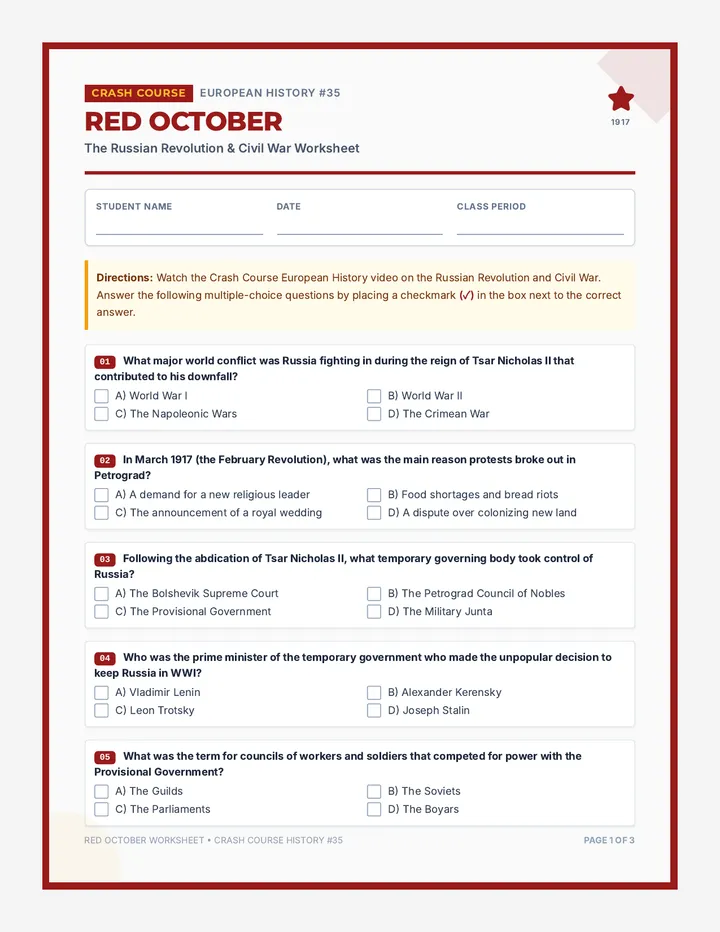
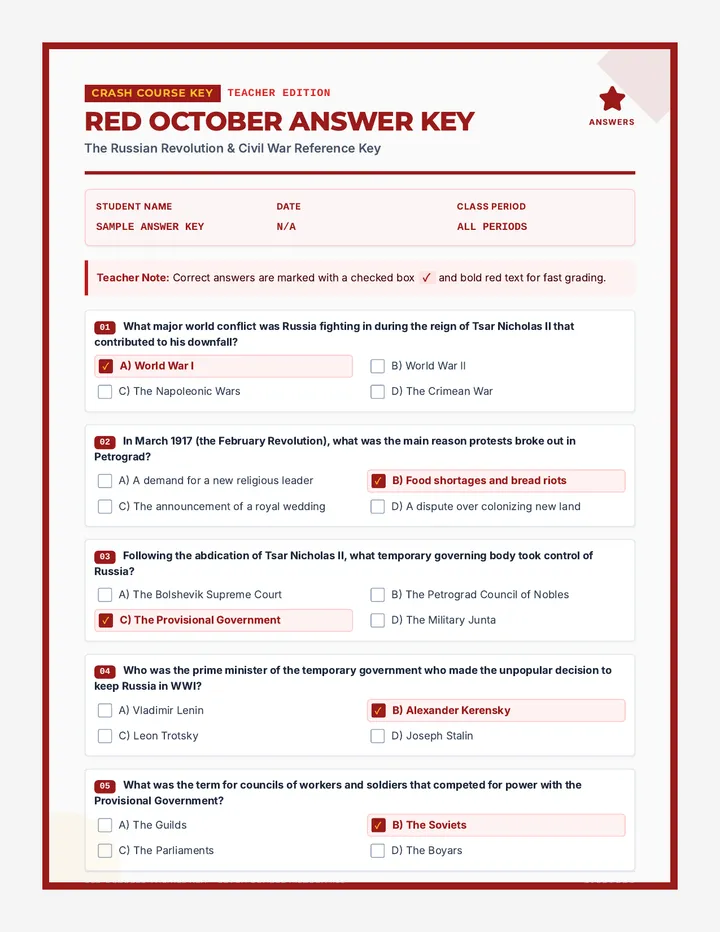
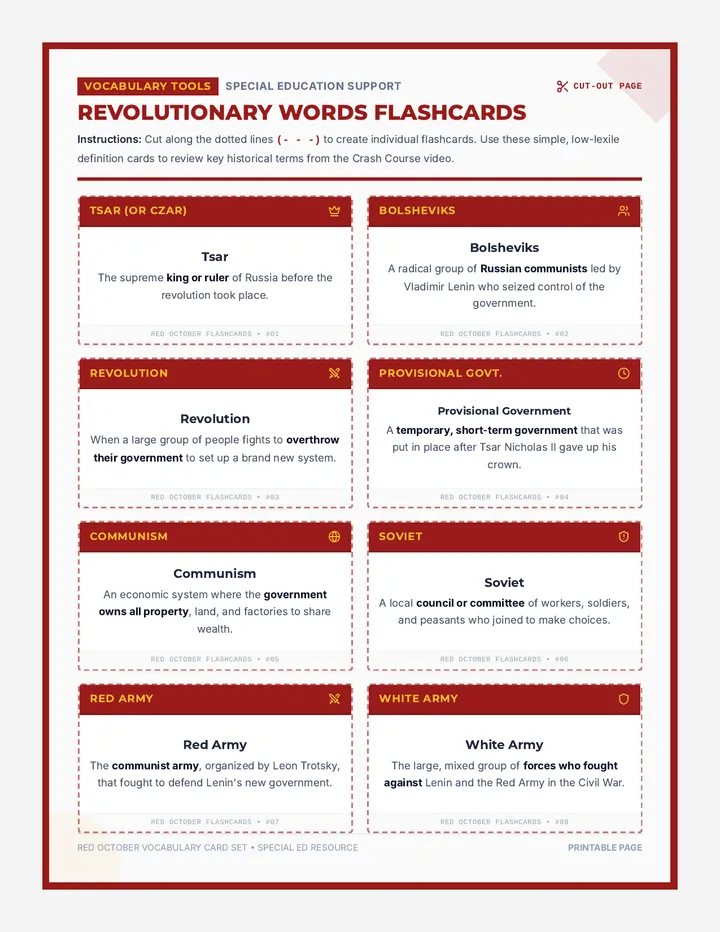
A comprehensive history sequence focusing on 20th-century communist revolutions in Russia and China. This sequence uses Crash Course videos, detailed worksheets, complete answer keys, and accessible vocabulary flashcards to explore the collapse of old empires and the rise of communist states.
An introductory lesson exploring the immigrant experience and systemic barriers through Suli Breaks' spoken word poem 'Fences'. Students engage in a structured movement and discourse activity to analyze literal and metaphorical barriers, connecting themes to their own lived experiences.
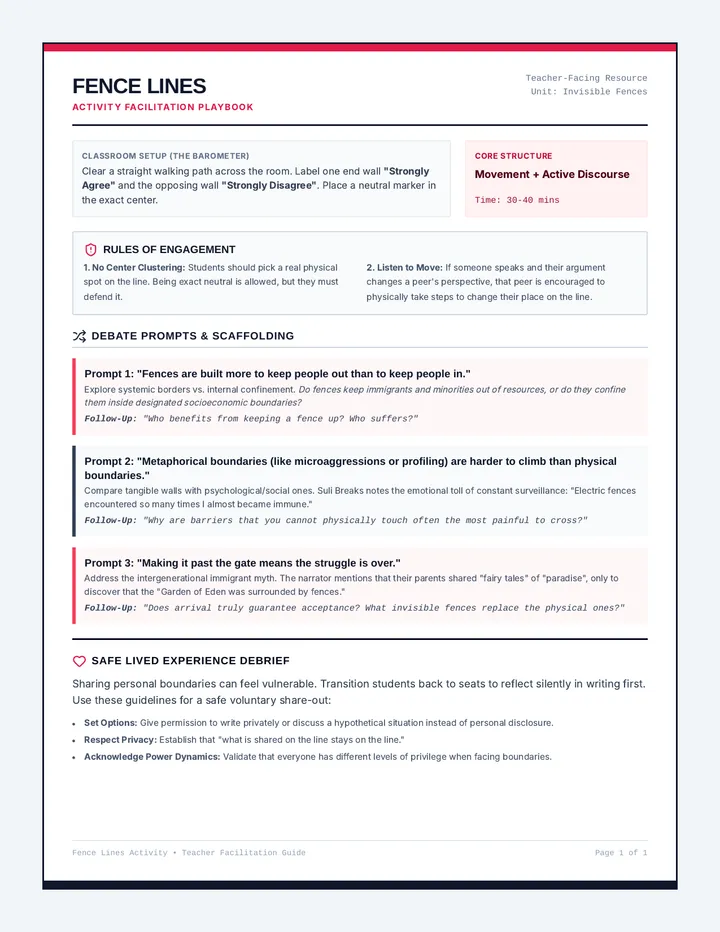
A 1-page teacher facilitation guide for the 'Fence Lines' movement and discourse activity. Provides structured guidelines for setting up the classroom barometer, lesson pacing, specific debate prompts, discussion scaffolds, and guidelines for managing sensitive personal reflections with care.
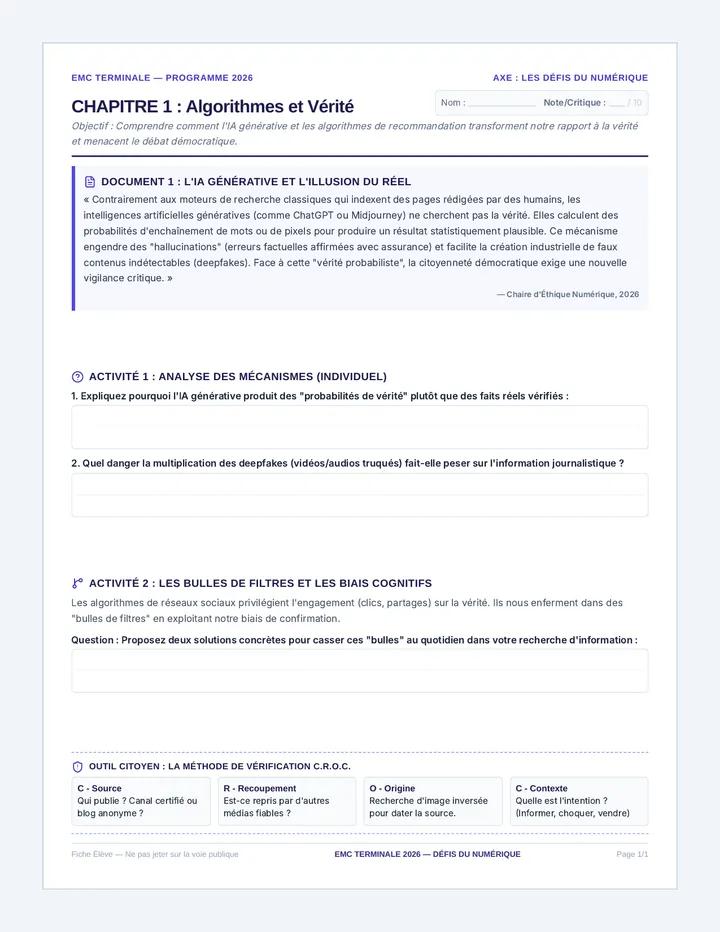
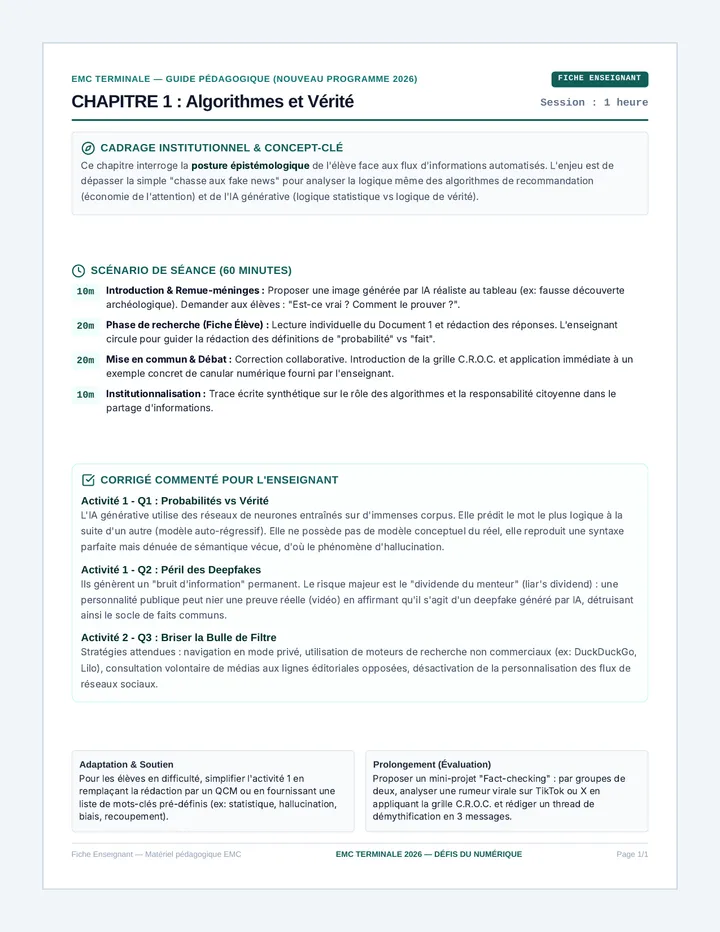
Une séquence complète d'activités clés en main d'Éducation Morale et Civique (EMC) pour la classe de Terminale, conforme au nouveau programme 2026. Elle se concentre sur les défis du numérique : intelligence artificielle, désinformation, espace public numérique et souveraineté technologique.
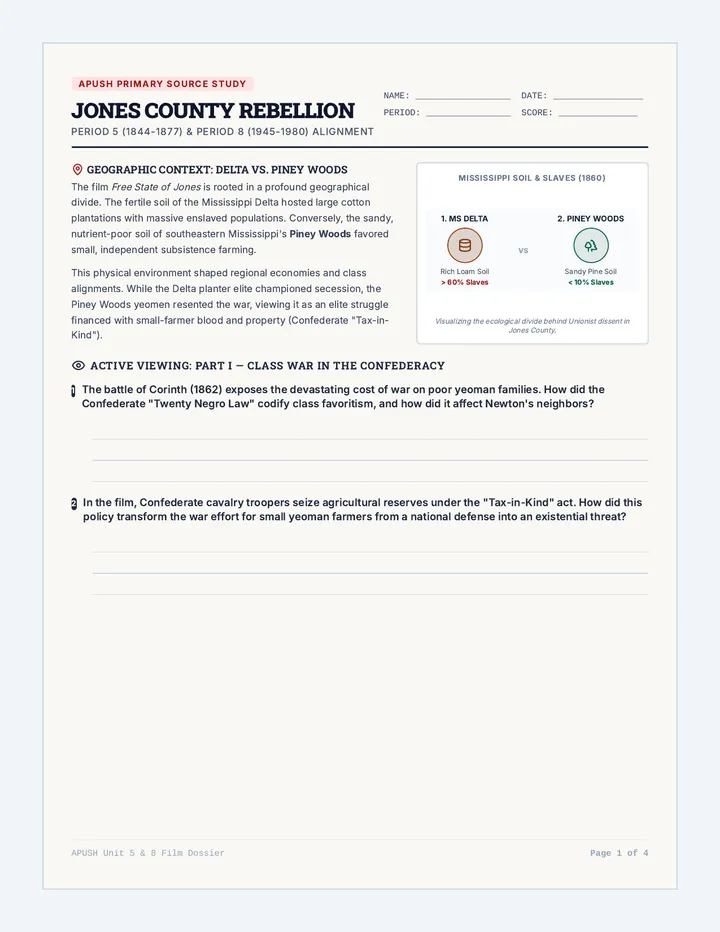
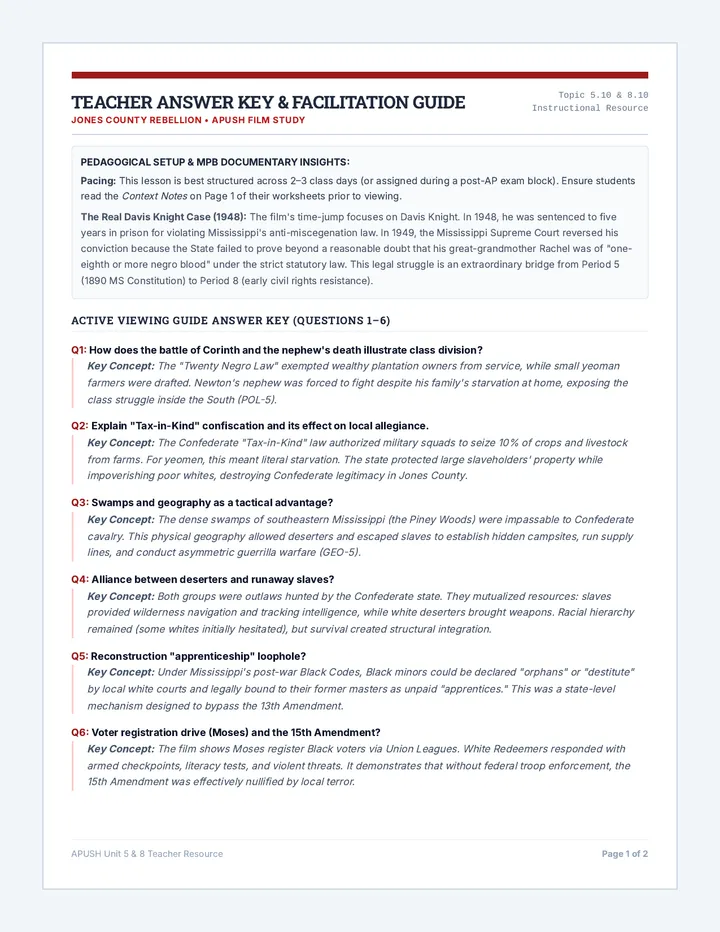
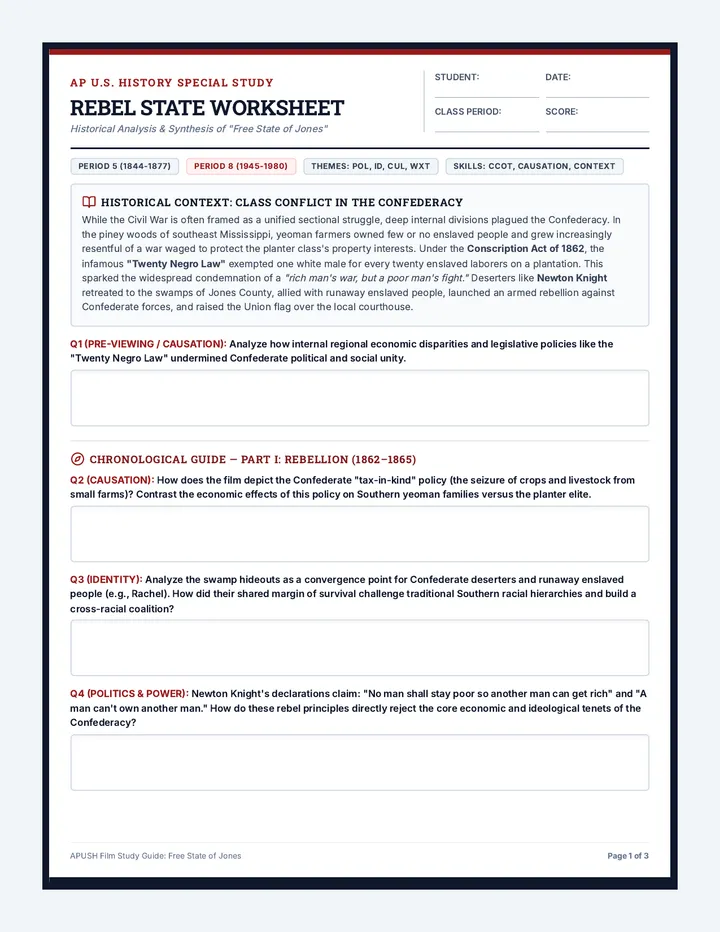
An AP U.S. History film study lesson on 'Free State of Jones' exploring Civil War dissent, Reconstruction failures (Period 5), and their long-term legacy in 20th-century Jim Crow courts (Period 8).
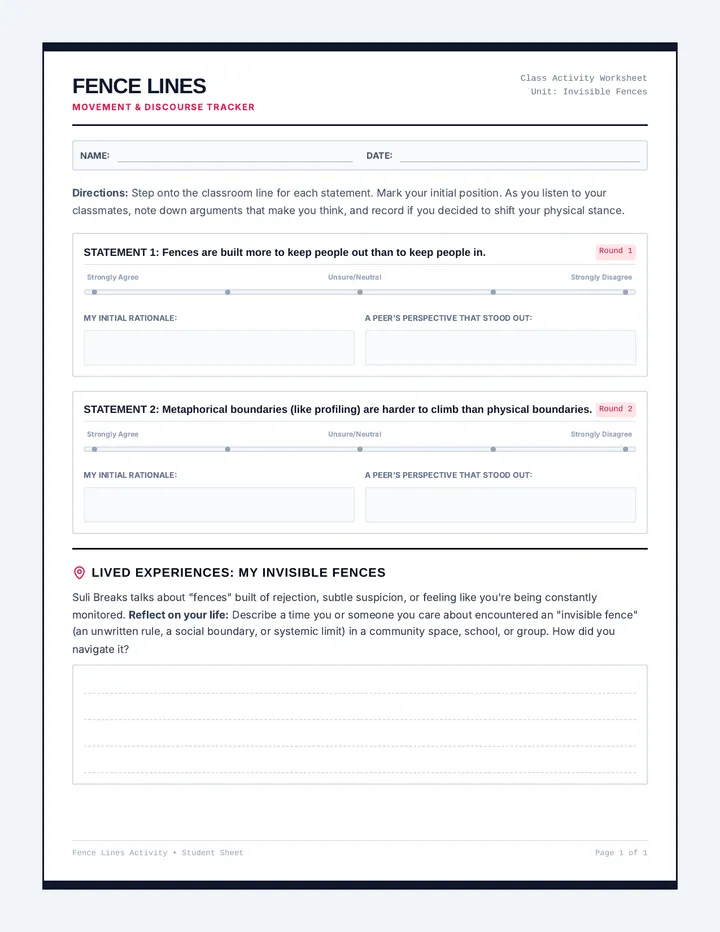
A 1-page student-facing tracker and reflection sheet for the 'Fence Lines' physical barometer activity. Includes visual scaling sliders for each movement prompt, spaces to record peer arguments, and a deep-dive writing area for real-world personal connections.
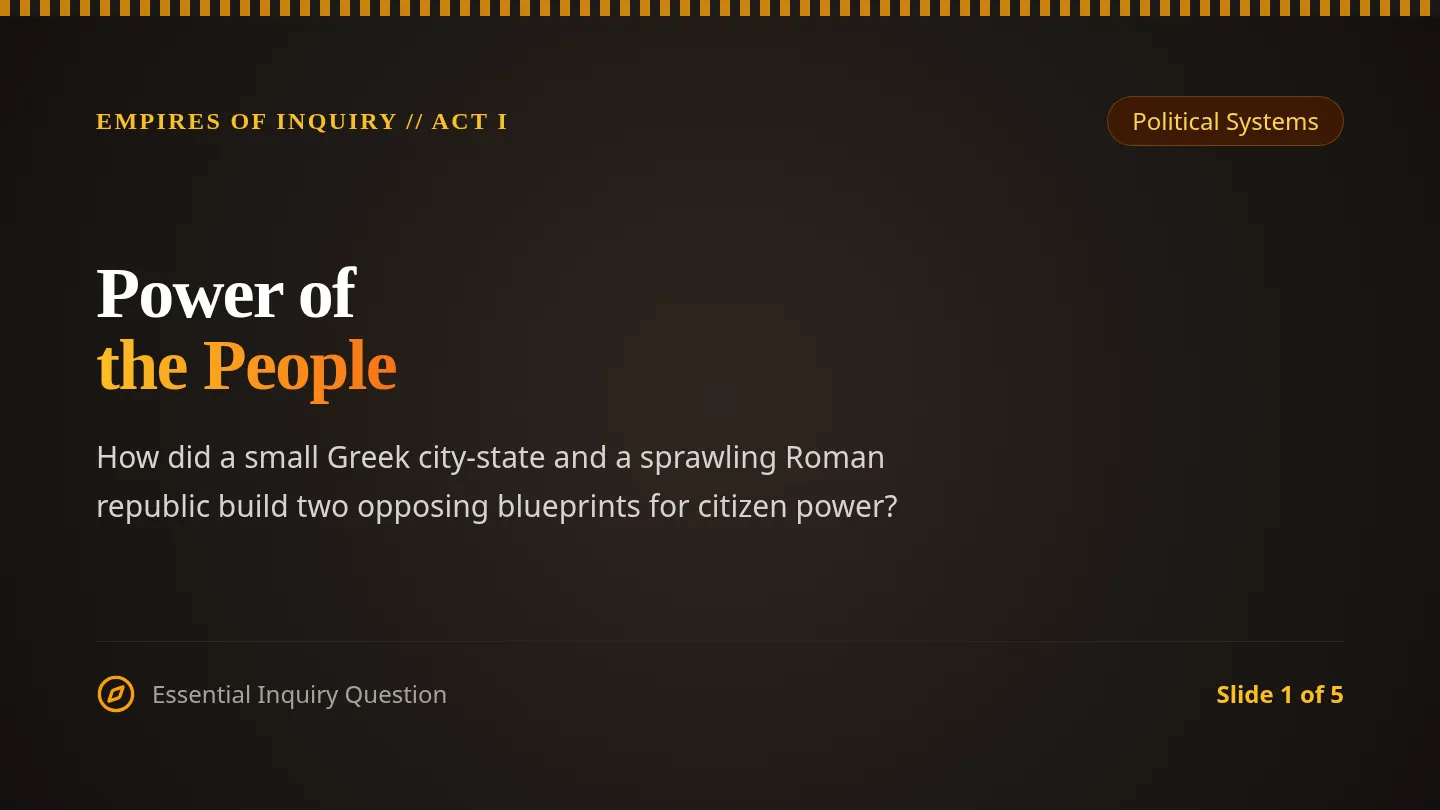
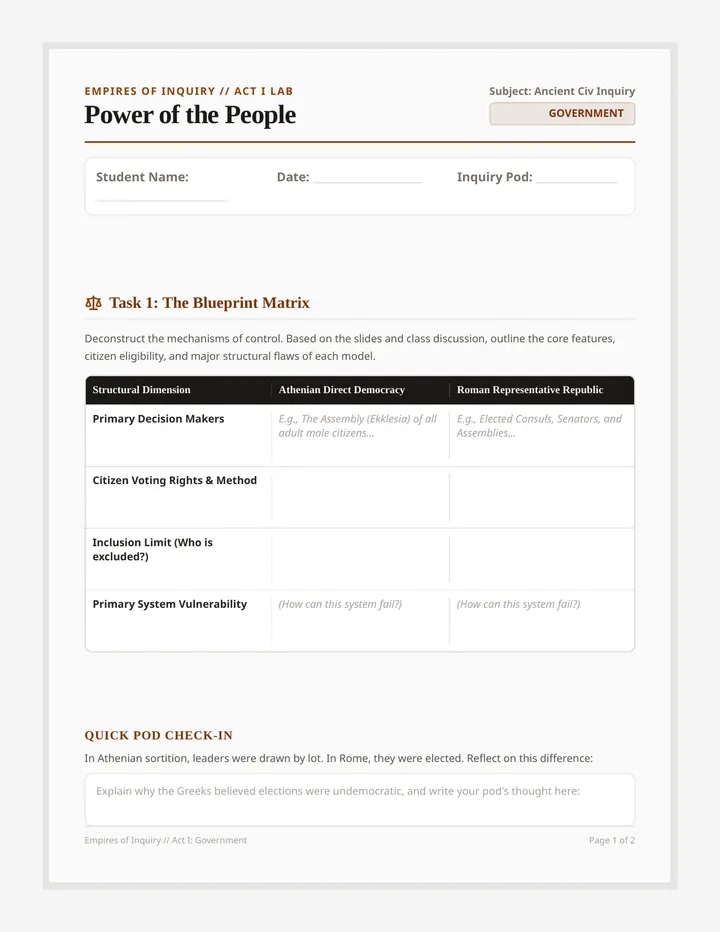
An inquiry-driven social studies sequence investigating Ancient Greece and Rome across four core pillars: government, philosophy, trade, and engineering. Students engage with primary sources, architectural achievements, and ethical dilemmas to construct arguments about classical legacies.
A comprehensive AP U.S. History study of the internal conflicts of the Confederacy, the legal boundaries of Reconstruction, and the long struggle for civil rights in Mississippi, structured around the historical events depicted in the film Free State of Jones.
The teacher guide and answer key for the 'Free State of Jones' Film Study Worksheet. Includes model answers for all 9 viewing questions, scoring rubrics for the AP-style SAQs, and pedagogical context from the Mississippi Public Broadcasting documentary.