Students transition into 'Ad Detectives' by exploring the relationship between claims and evidence in advertising, starting with a mysterious marketing challenge.
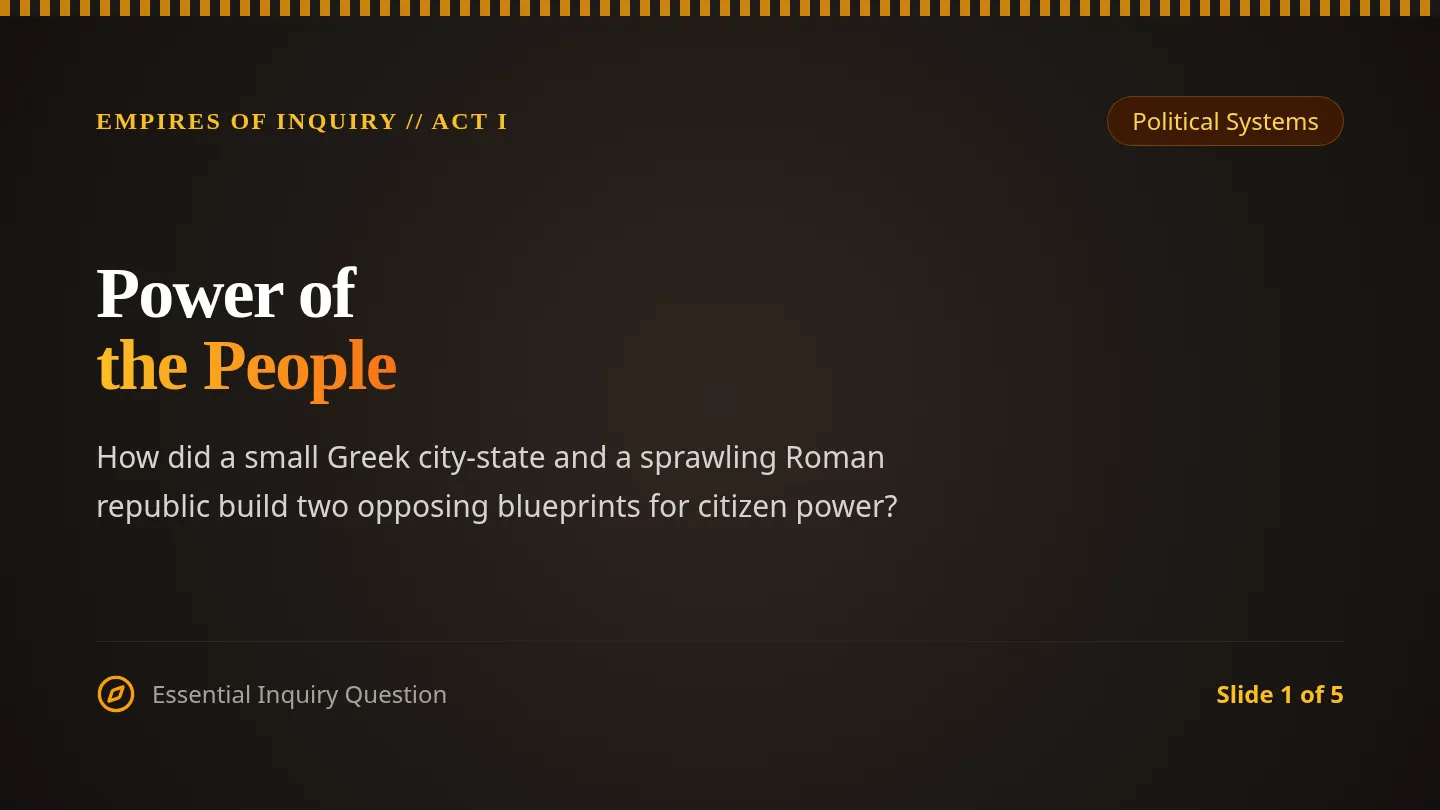
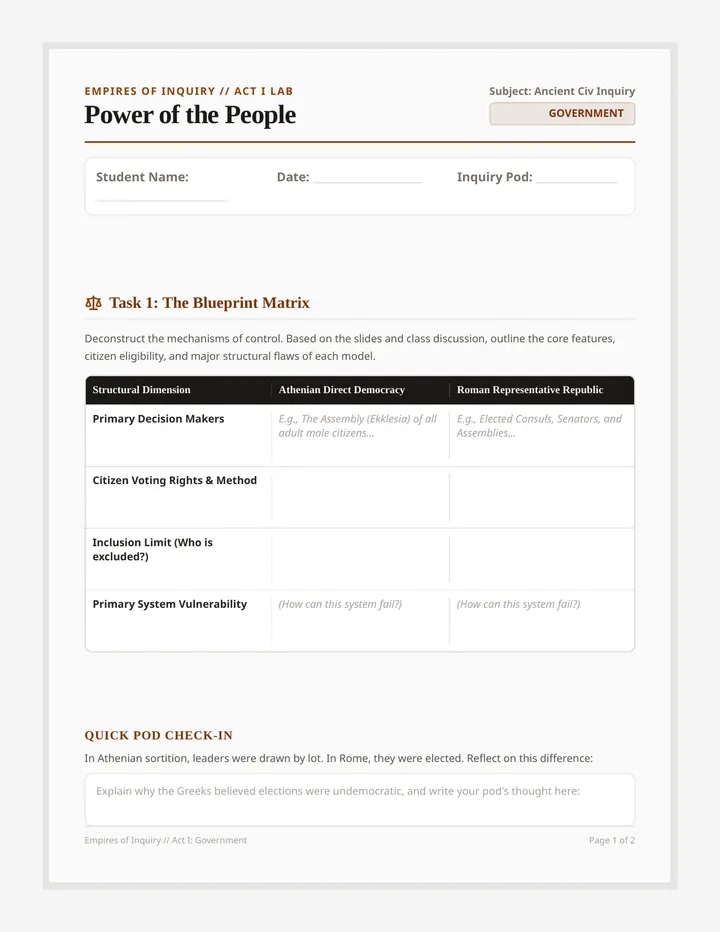
An inquiry-driven social studies sequence investigating Ancient Greece and Rome across four core pillars: government, philosophy, trade, and engineering. Students engage with primary sources, architectural achievements, and ethical dilemmas to construct arguments about classical legacies.
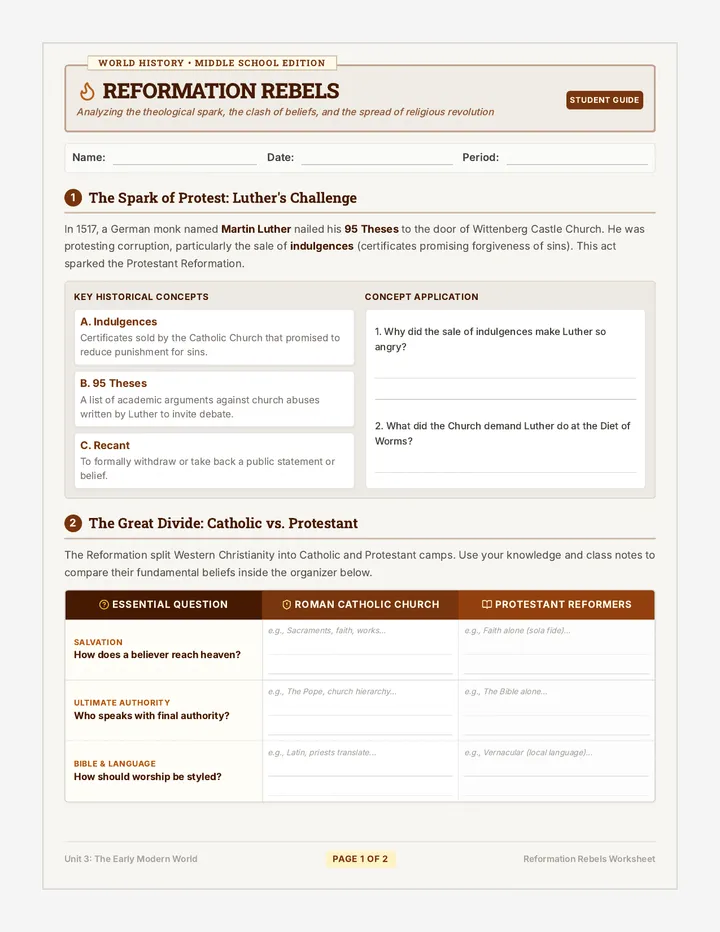
A middle school history lesson introducing the Protestant Reformation, focusing on Martin Luther's protest, the fundamental theological clashes, and the visual spread of Protestantism across Europe.
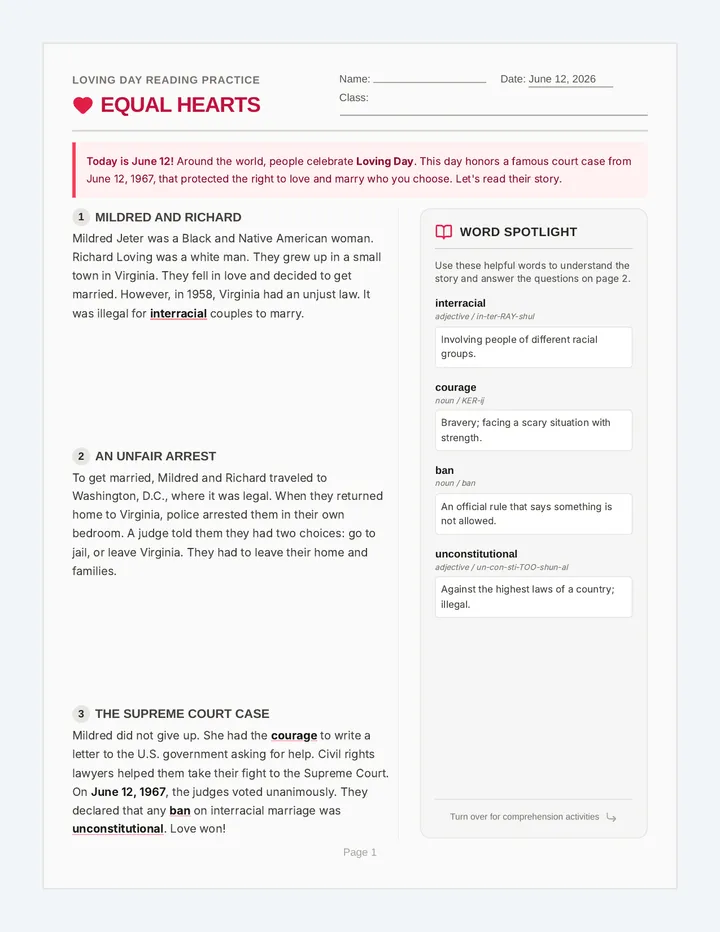
A standalone, double-sided printable reading worksheet designed for English Language Learners (ELL) focusing on Loving Day (June 12, 1967). Includes an accessible, scaffolded reading passage, a visual vocabulary spotlight, text-dependent comprehension questions with writing frames, and a creative reflection activity.
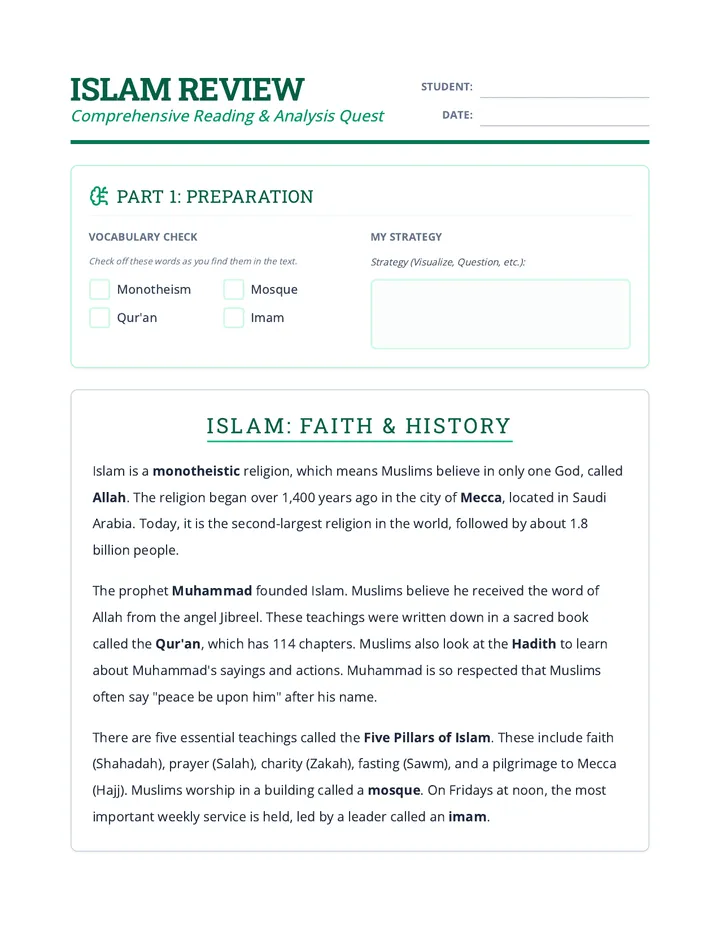
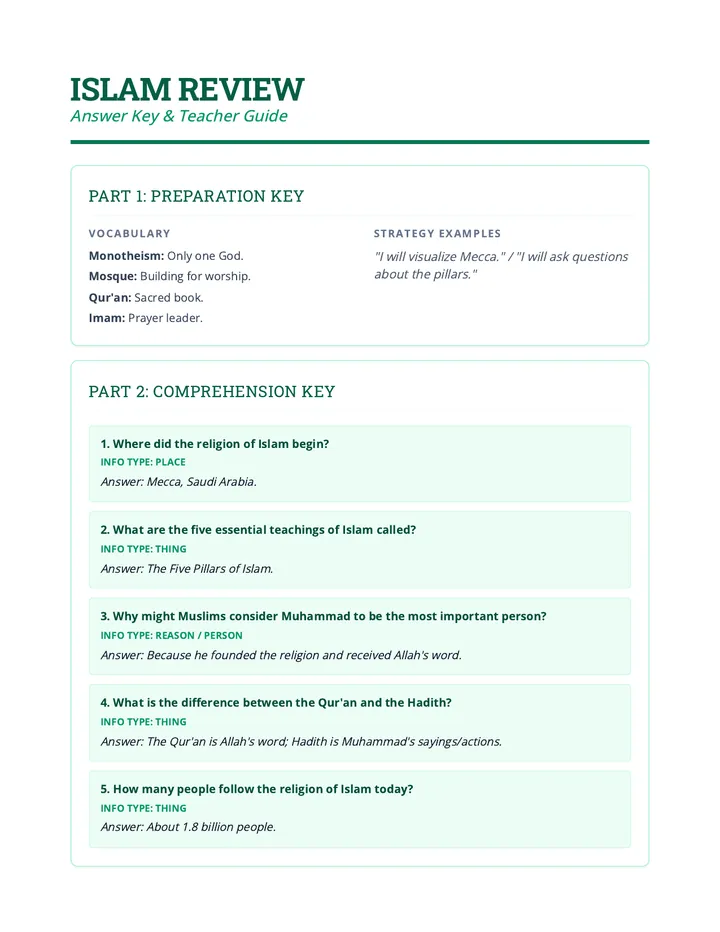
A comparative and deep-dive review sequence exploring foundational teachings, sacred texts, and cultural practices of major world religions.
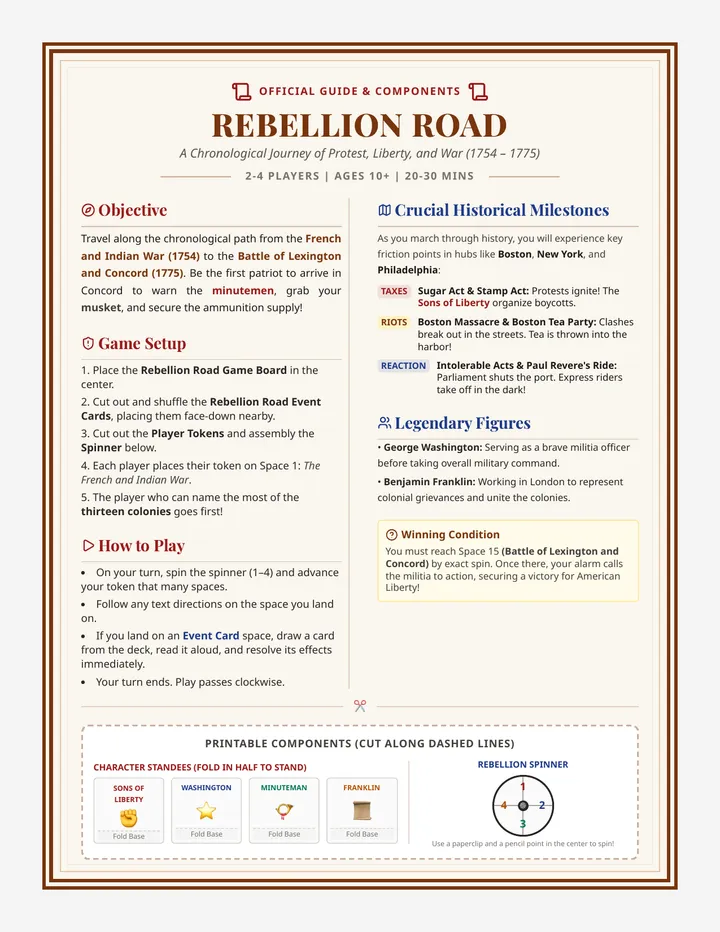
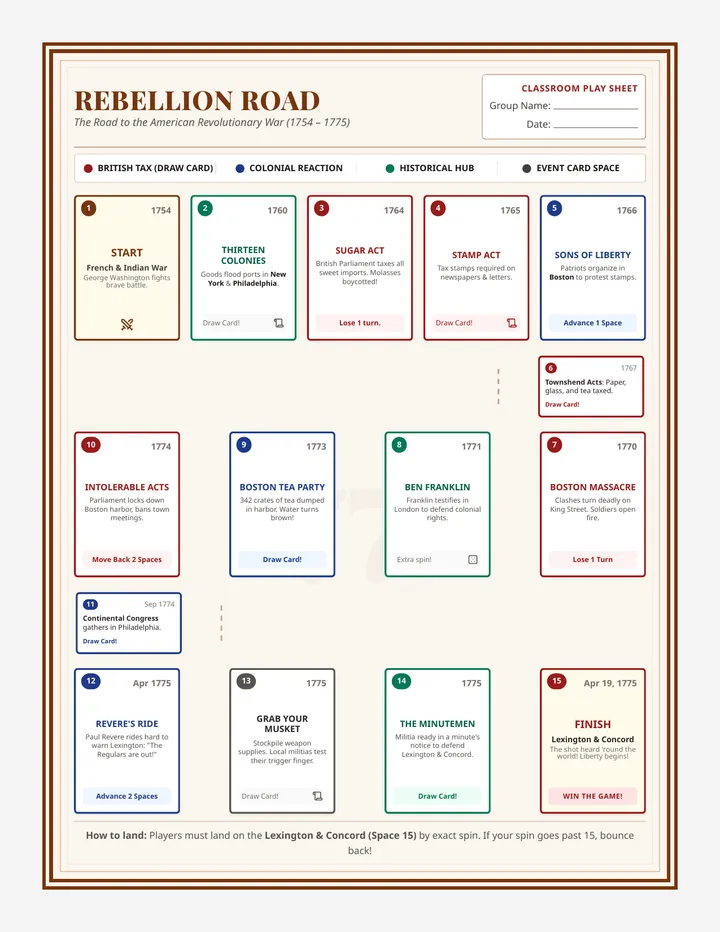
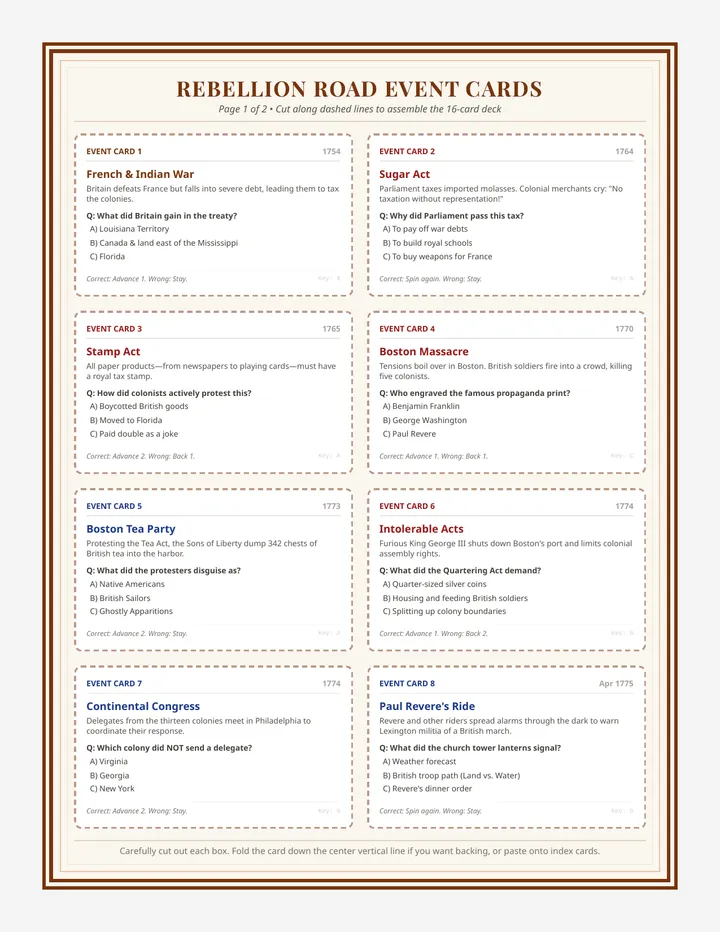
An immersive, print-ready educational board game teaching the major events, key figures, and critical concepts leading up to the American Revolutionary War from 1754 to 1775.
A printable 2-page graphic organizer and conceptual map worksheet for middle school students, exploring Martin Luther's protest, key theological differences between Catholicism and Protestantism, and the geopolitical spread of the Reformation.
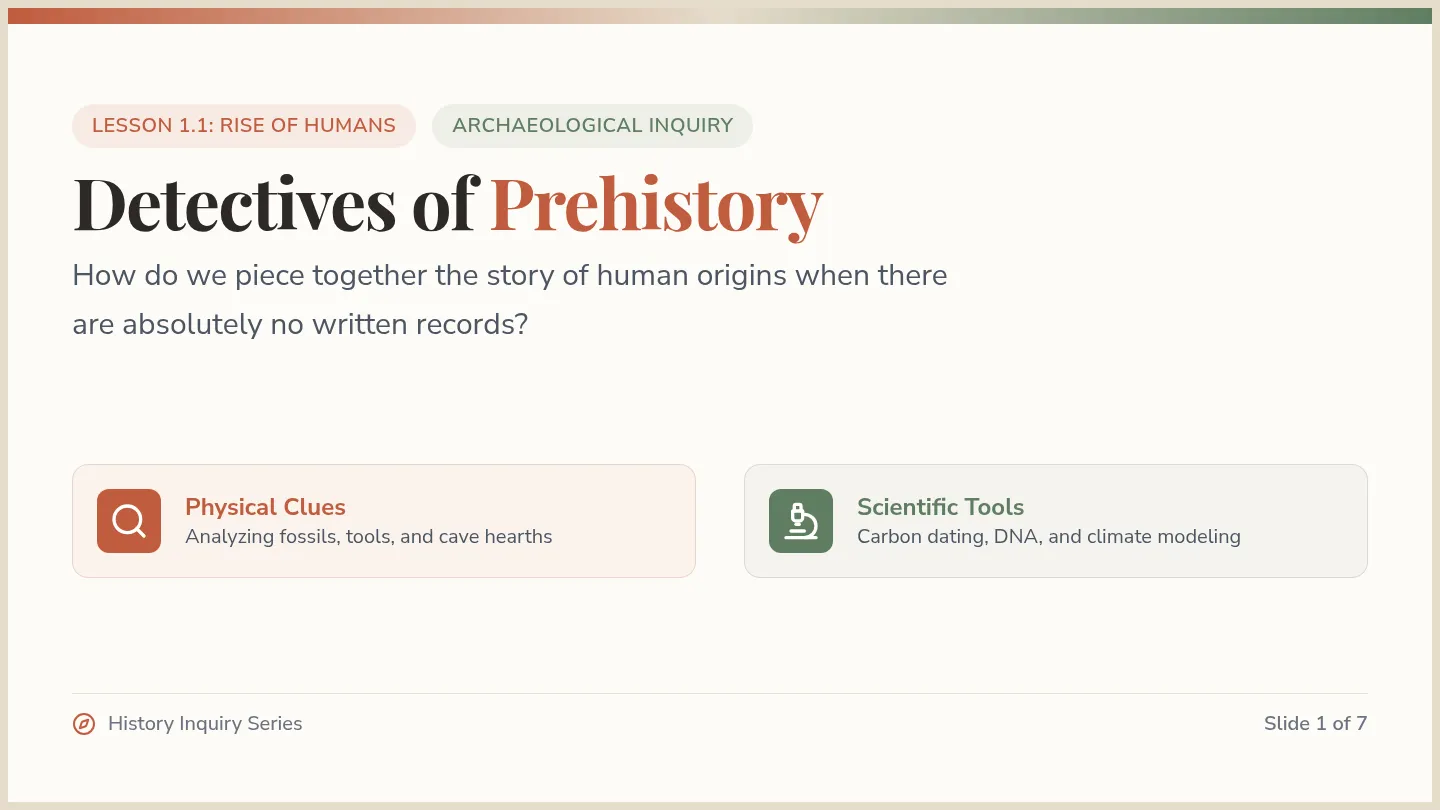
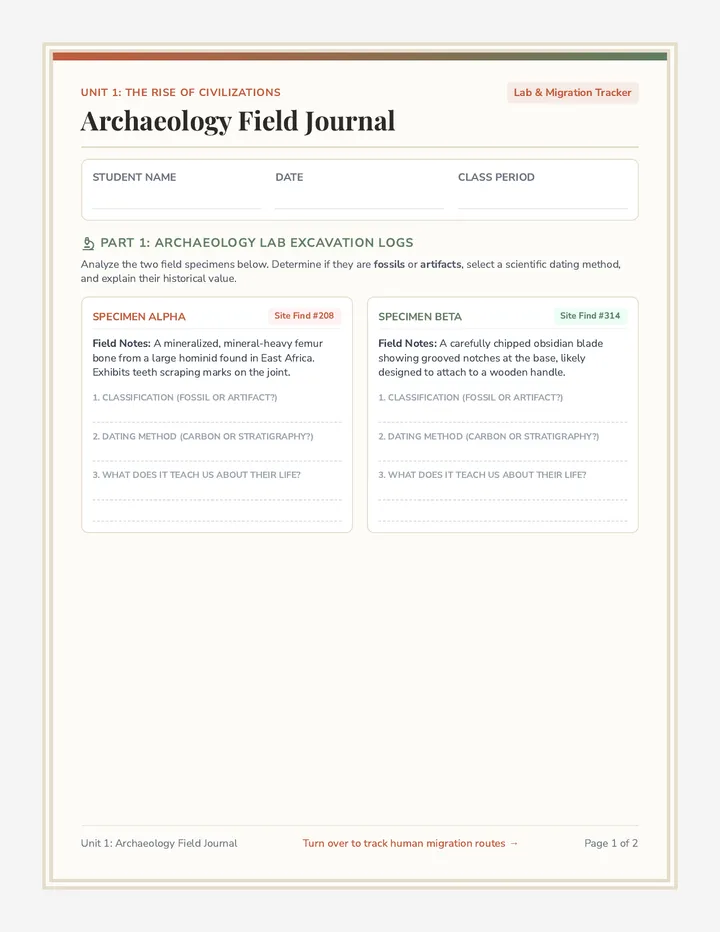
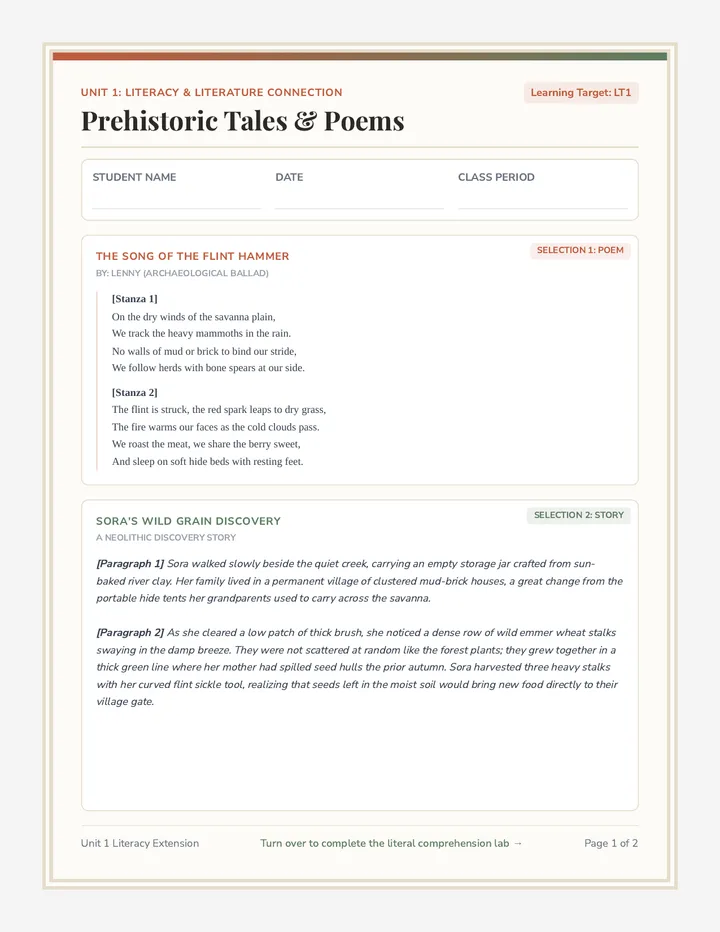
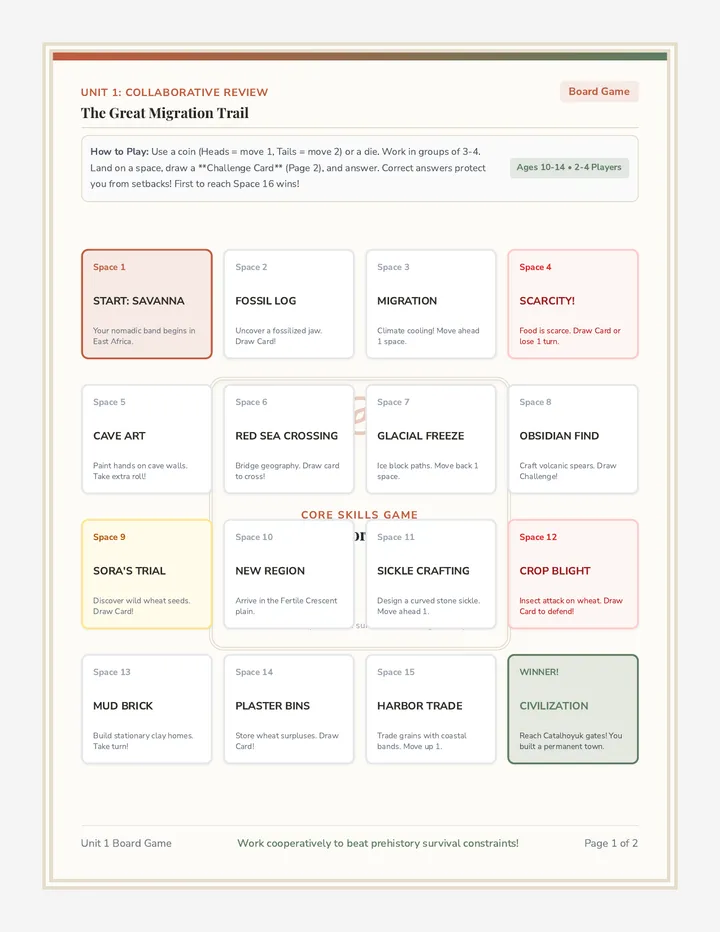
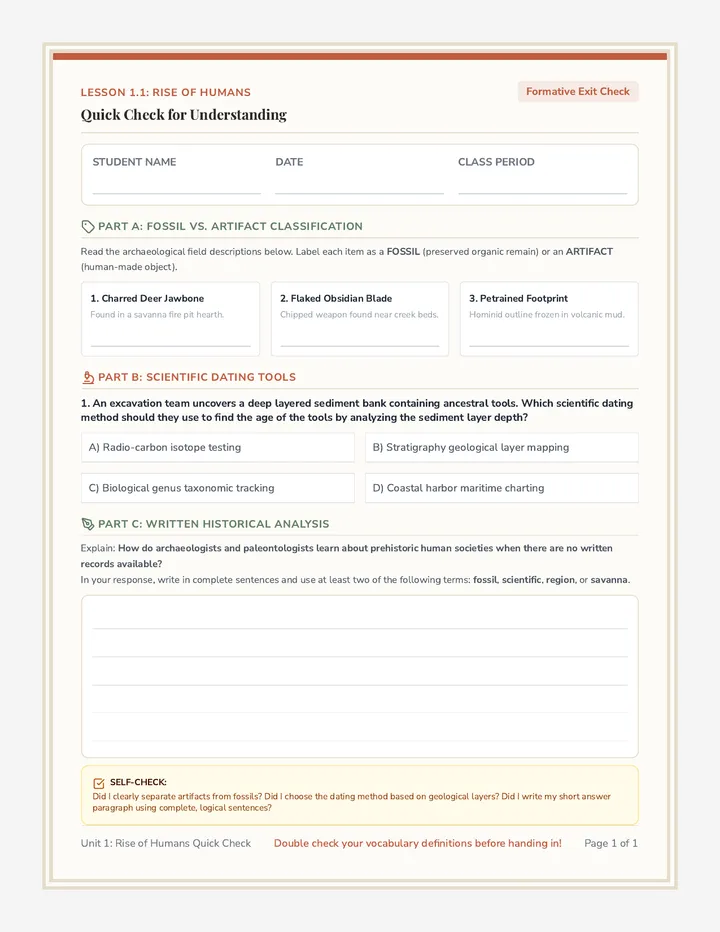
A middle-school history unit exploring the emergence of early humans, their prehistoric migrations, the radical transition of the agricultural revolution, and the foundations of early civilizations.
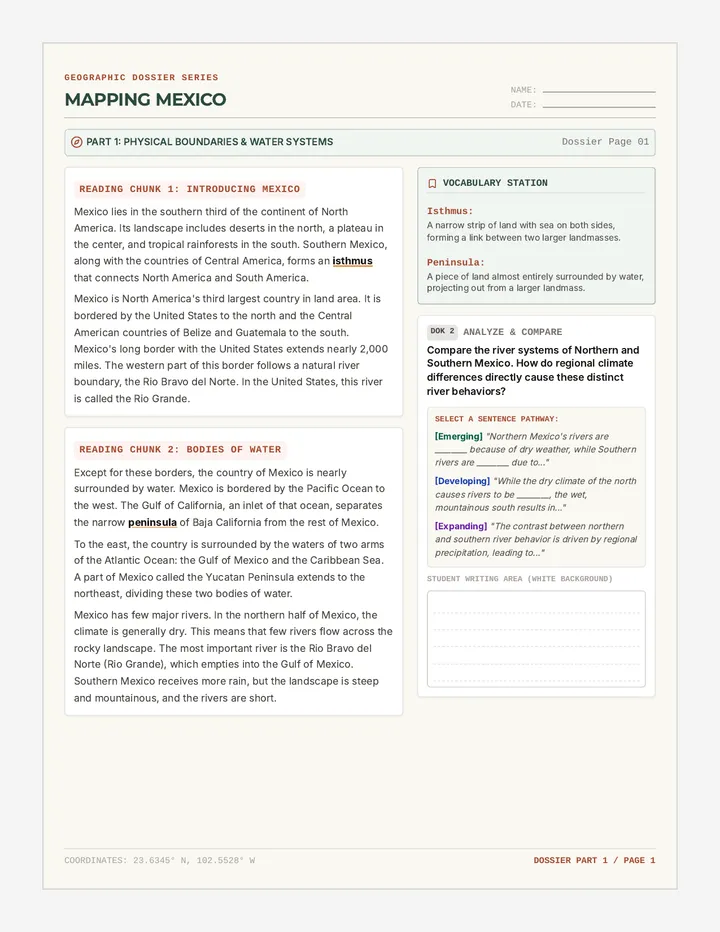
A comprehensive lesson exploring Mexico's physical geography, diverse climates, and distinct economic regions. Students engage in structured side-by-side reading, vocabulary analysis, and DOK2/DOK3 text-dependent analysis.
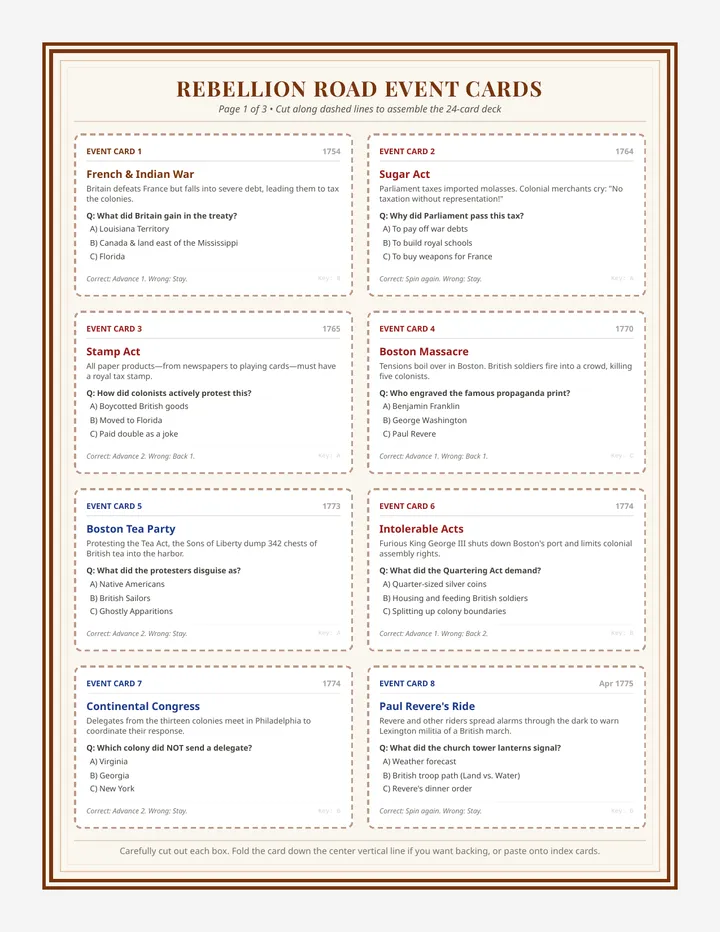
A expanded 24-card printable deck featuring critical events, key figures, and concepts leading to the Revolutionary War. Each card includes a historical summary, a multiple-choice question, and movement actions.
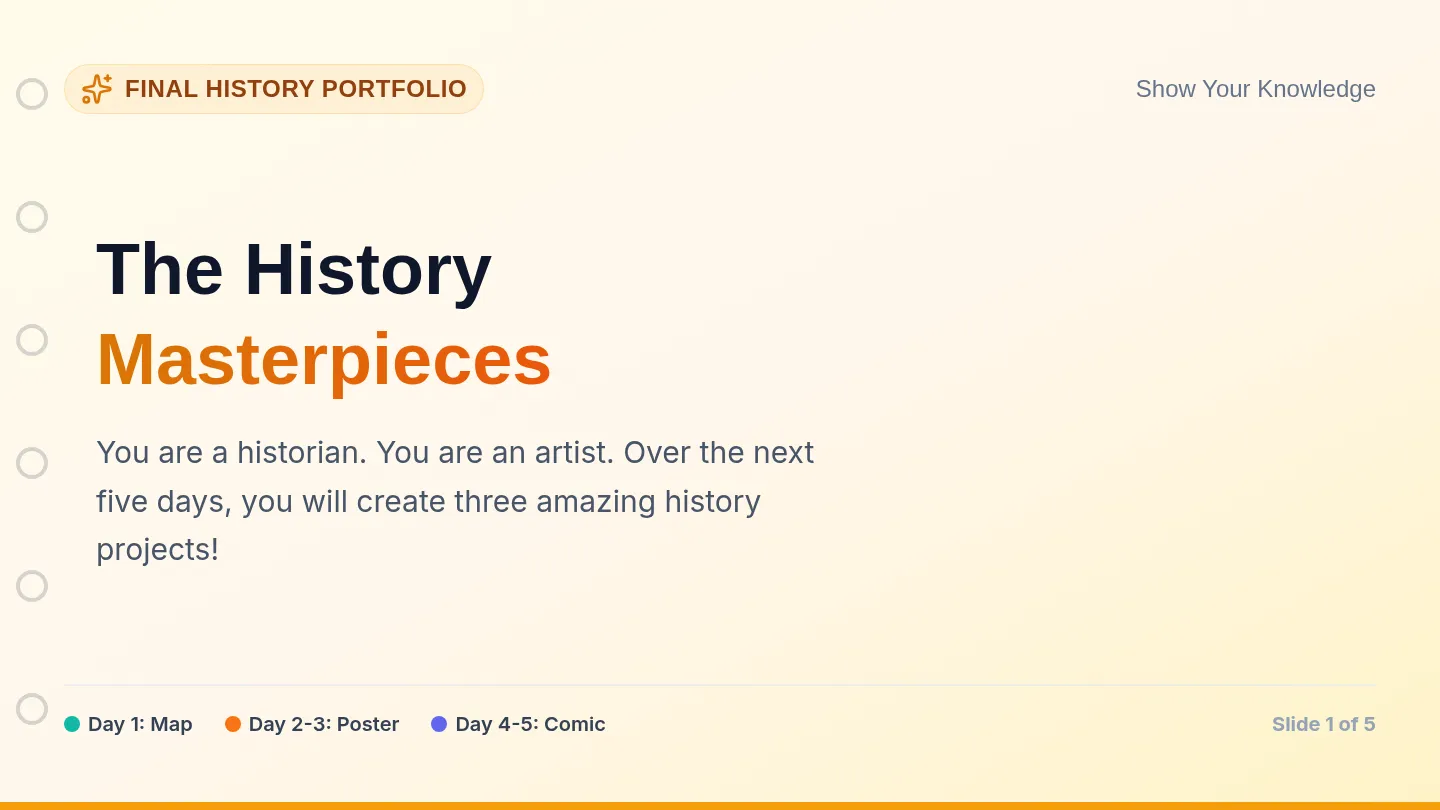
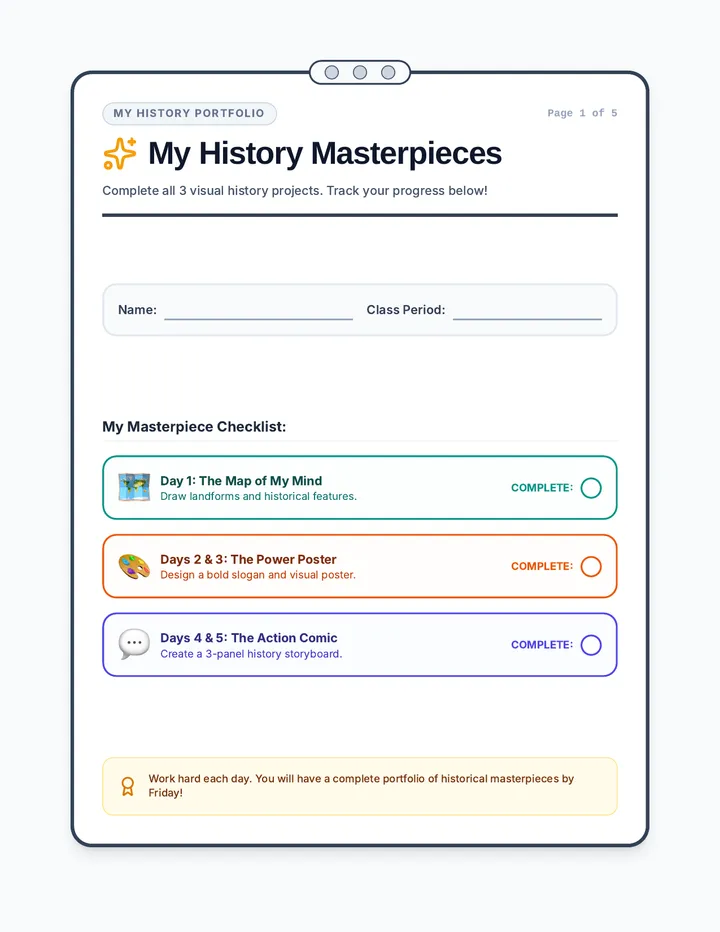
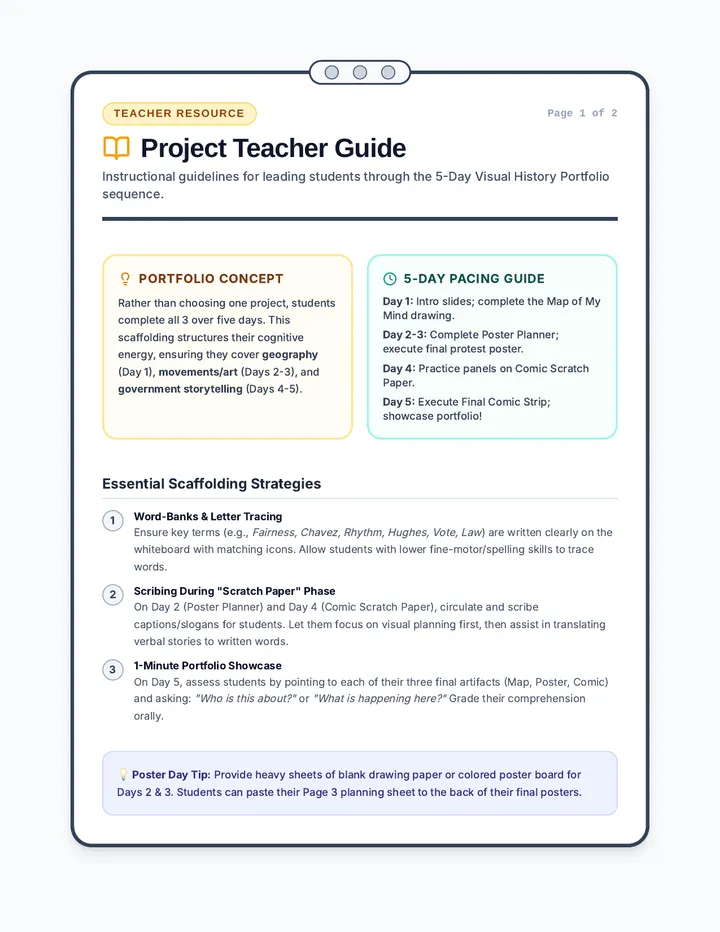
A final project sequence designed for middle school students with emerging literacy skills, enabling them to showcase their historical knowledge of geography, the Farmers' Movement, government, and the Harlem Renaissance through highly visual, expressive mediums.
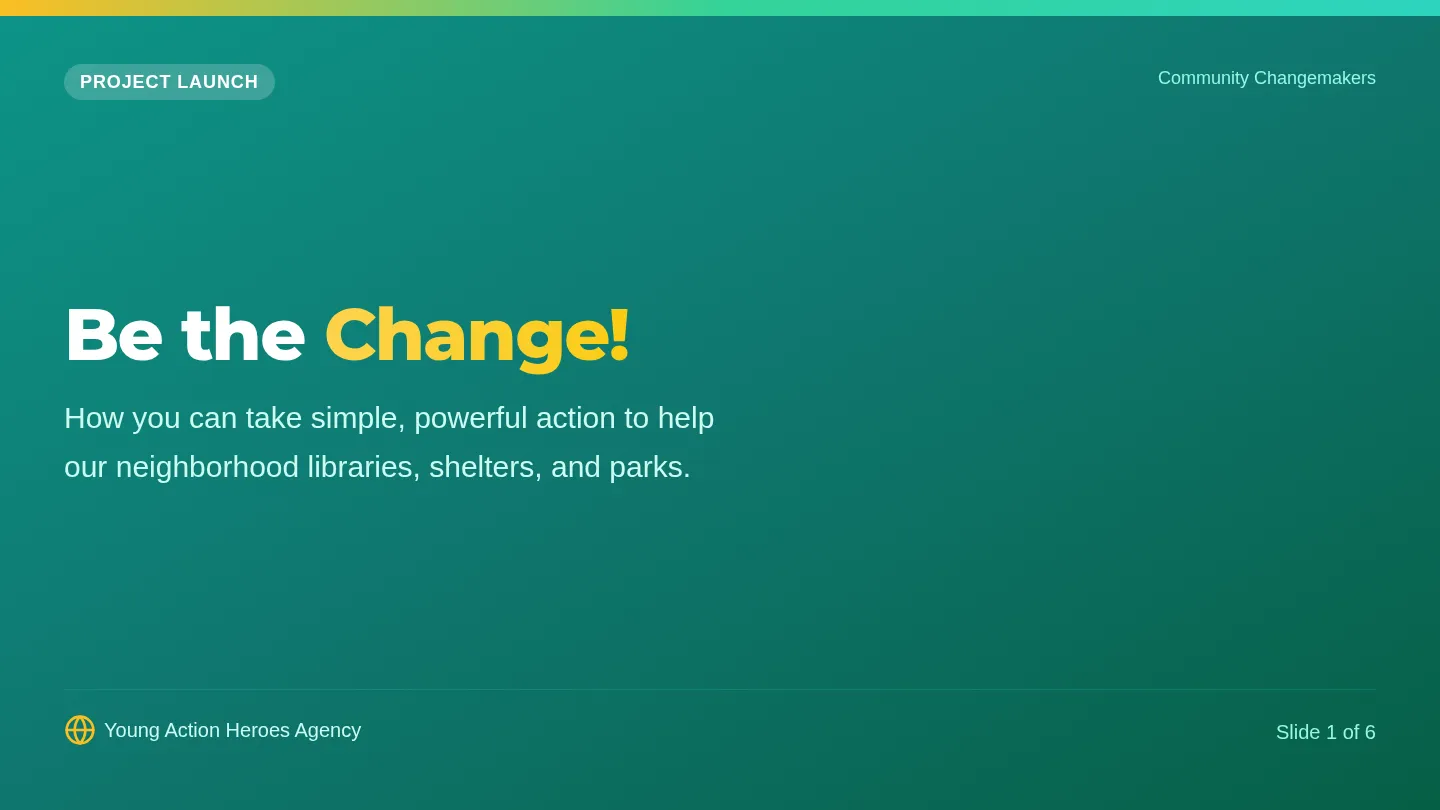
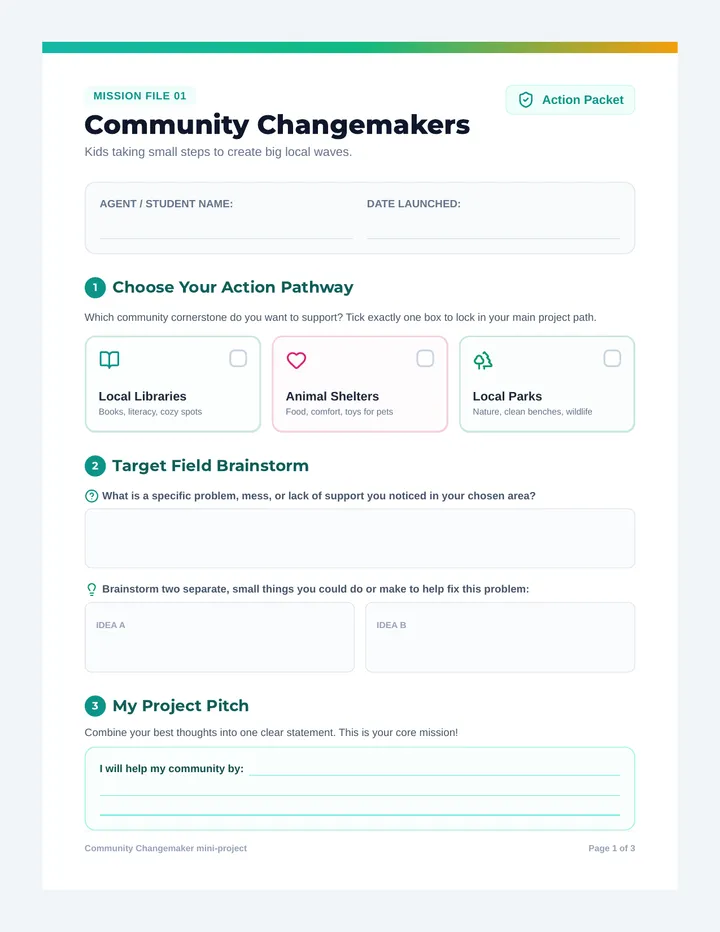
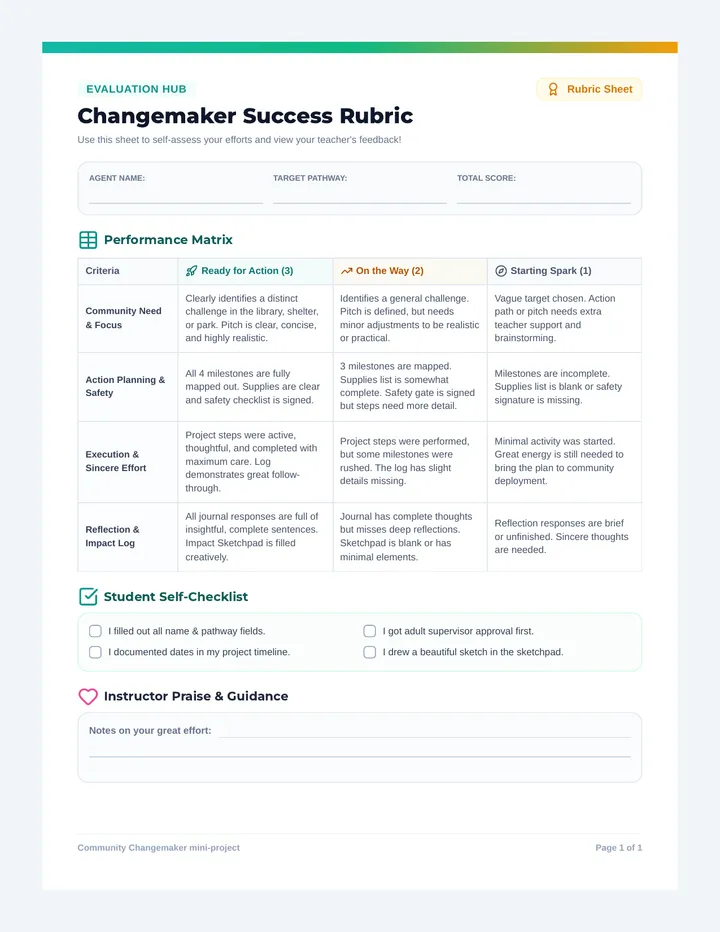
A mini-project curriculum designed to empower young students to become local community changemakers. It guides them through brainstorming, planning, and executing simple, impactful action projects for local libraries, animal shelters, or parks.
A 16-card printable deck featuring critical events, key figures, and concepts leading to the Revolutionary War. Each card includes a historical summary, a multiple-choice question, and movement actions.