Lenny.com
Explore
Create
ActivitiesNewMathEnglish Language ArtsScience & EngineeringSocial StudiesGlobal LanguagesHealth & Physical EducationSpecial EducationCounseling & Life SkillsArts & CreativityESL
Lenny.com
Lenny.com
Explore
Create
ActivitiesNewMathEnglish Language ArtsScience & EngineeringSocial StudiesGlobal LanguagesHealth & Physical EducationSpecial EducationCounseling & Life SkillsArts & CreativityESL
Lenny.com
Lenny.com

Solutions

Lenny for EducatorsLenny for SchoolsLenny for Districts

Product

ExploreSign inCreateSupportAbout

Resources

Getting startedMTSS Acceleration Program

© 2026 Lenny Learning Inc.

TermsPrivacyAccessibility
LinkedInInstagramX
Lenny
Science & EngineeringLife ScienceLiving ThingsAnimalsPlantsBody SystemsTraitsAdaptationsCellsEcosystemsHeredityGenes to TraitsCell DivisionPhysicsComparing MaterialsShapes and PropertiesMagnetsMagnetismLightSoundLight and SoundMatterStates of MatterChanges of StateMixturesPhysical and Chemical ChangeHeating and CoolingHeat and Thermal EnergyEnergyForce and MotionElectrical CircuitsAtoms and MoleculesPeriodic TableMotion in One DimensionMotion in Two DimensionsScalars and VectorsForces and Laws of MotionCircular Motion and GravityMomentum and ImpulseWork, Energy, and PowerWavesElectromagnetic WavesGeometric OpticsElectricity and MagnetismSimple Harmonic MotionThermodynamicsNuclear PhysicsEarth Science & AstronomyWeatherWater CycleRocks and MineralsFossilsEarth's FeaturesEarth's ResourcesEarth's StructureWeather and ClimateEarth EventsFossils and Geologic TimePlate TectonicsHuman ImpactsAstronomyChemistryUnits and MeasurementAtomic StructurePeriodic TrendsChemical BondingNomenclatureMolecular StructureIntermolecular ForcesThe MoleStoichiometryProperties of GasesSolutionsChemical ReactionsBalancing EquationsEnergy ChangesRates of ReactionsEquilibriumAcids and BasesQuantum ModelBiologyClassificationCell StructureThe Chemistry of LifeBiomoleculesCellular TransportCell EnergyCell Growth and DivisionDNAProtein SynthesisMeiosis and Sexual ReproductionPatterns of InheritanceMulticellular OrganismsEvolutionEcologyBiodiversityComputer ScienceAlgorithms and Computational ThinkingProgramming LanguagesComputing SystemsNetworks and InternetData AnalysisCybersecurityAI and Machine LearningSoftware Design and DevelopmentBlockchainEngineering & AIDesigning ExperimentsEngineering PracticesDesign ThinkingEngineering Design ProcessMechanical EngineeringElectrical EngineeringMaterials and StructuresCAD and 3D DesignRoboticsArtificial Intelligence BasicsVibe CodingMachine LearningAI Ethics and SocietySystems ThinkingEntrepreneurship & InnovationEntrepreneurial MindsetBusiness Idea DevelopmentBusiness Plan BasicsMarketing & Customer DiscoveryFinancial Management for Startups

Climate Shifts

A comprehensive 7th-grade science lesson exploring short-term climate oscillations like El Niño and La Niña alongside long-term astronomical, geological, and human-driven climate factors.

CECameron E. Hill

Climate Shifts

A comprehensive 7th-grade science lesson exploring short-term climate oscillations like El Niño and La Niña alongside long-term astronomical, geological, and human-driven climate factors.

CECameron E. Hill

Teacher Resource • Climate Shifts Instructional Materials Page 1 of 2 • Solutions Continued

Climate Shifts Answer Key (Page 2)

Short-Answer Solutions, Acceptable Variants, & Grading Guide

Teacher Grading Edition

Multiple Choice Solutions Continued (2 pts each)

Q3: A

Ash and dust particles in the atmosphere shield and reflect solar rays. Rationale: Sulfate aerosols and airborne ash act like a planetary mirror, reflecting incoming solar irradiance back into space.

Q4: B

It increases greenhouse gases like carbon dioxide, trapping more thermal energy. Rationale: Fossil fuel combustion oxidizes ancient organic carbon into atmospheric CO₂, intensifying radiative thermal trapping.

4 Part D: Sentence Frame Solutions & Acceptable Variants (2 pts each)

Grade 0, 1, or 2 points based on scientific accuracy

1. El Niño's Disruption (Full Sentence Model): 2 Points

"In an El Niño year, trade winds reverse and blow from west to east. Because of this wind shift, warm surface water travels east and piles up along the coast of South America. This layer of warm water blocks normal upwelling, meaning cold, nutrient-rich water cannot rise to feed marine life."

Acceptable student variants: Blank 3: "Peru", "western South America". Blank 4: "deep water cycling", "cold upwelling".

2. Natural Atmospheric Shields (Full Sentence Model): 2 Points

"When a catastrophic event occurs, large amounts of volcanic ash / dust and debris are blasted into the atmosphere. These tiny particles act like a shield / barrier that blocks and reflects incoming sunlight / solar rays. With less solar thermal energy reaching the surface, global temperatures will temporarily drop / decrease / cool."

Acceptable student variants: Blank 1: "ash", "sulfur dioxide", "dust". Blank 4: "fall", "decline", "lower".

3. Deforestation and Global Warming (Full Sentence Model): 2 Points

"Burning trees releases stored carbon dioxide (CO₂) into the atmosphere. In addition, destroying living forests removes trees that normally take in carbon dioxide during photosynthesis / food making. As more greenhouse gases accumulate in the air, more thermal / heat energy is trapped, causing higher global temperatures."

Acceptable student variants: Blank 1: "carbon", "greenhouse gases". Blank 3: "infrared", "radiant heat".

Glacial vs. Interglacial Connection Model: 2 Points (Bonus / Core)

Completed Sentence: "Because glacial ice melts during an interglacial period, sea levels are rising / increasing (causing coastal flooding)."

Credit Criterion: Student must recognize that melting continental ice transfers stored water into ocean basins, raising global sea levels.

Teacher Scoring Scale:

23–25 pts (92–100%)

Mastery / Advanced

20–22 pts (80–88%)

Proficient / Target

17–19 pts (68–76%)

Developing / Review

< 17 pts (< 68%)

Needs Intervention

7th Grade Earth Science • NC Standards & Holt Earth Science Page 2 of 2 • Teacher Key Complete

Volcanoes, the Greenhouse Blanket, and Taking Care of Earth

Name:

4

Volcanoes and Space Rocks Block the Sun

Did you know a volcano can make the whole world cooler? When a volcano explodes, it blasts giant clouds of ash and dust high into the sky. A huge space rock (asteroid) hitting Earth does the same thing! This dust cloud acts like a giant umbrella or shield. It reflects sunlight back into space so less heat reaches the ground. For 1 to 3 years, the whole world cools down!

Stop & Think #4

How does volcanic ash in the air make Earth cooler?

Sentence Starter: Volcanic ash cools Earth because it acts like a shield that blocks

5

Earth's Warm Blanket: The Greenhouse Effect

Have you ever stepped into a parked car on a warm, sunny day? The inside of the car feels super hot! Sunlight goes through the glass windows, and the heat gets trapped inside.

Earth has gases in the air (like carbon dioxide) that work just like the car windows! They trap warmth so our planet doesn't freeze. This is called the greenhouse effect, and it keeps Earth cozy. But when people burn fossil fuels (like gasoline and coal) or cut down forests, too many greenhouse gases build up. That traps extra heat and causes global warming.

Stop & Think #5

What is the greenhouse effect like in everyday life?

Sentence Starter: The greenhouse effect is like a sunny car with closed windows because it

Quick Comprehension Match: Connect the Clues!

Draw a line or write the letter

1. Climate: _____

2. Volcanic Ash: _____

3. Greenhouse Gases: _____

A. Traps thermal heat in the air like a blanket

B. Blocks sunlight and temporarily cools Earth

C. The long-term weather pattern over many years

Super Scientist Question: How Can We Help?

Trees take in carbon dioxide from the air. What is one thing your class or community can do to keep our air clean and healthy?

We can:

Grade 3 Science • Climate and Changes Great Job! Reading Completed 🎉
Grade 3 Differentiated Curriculum • Teacher Key Complete 1-Page Teacher Reference

You might also like

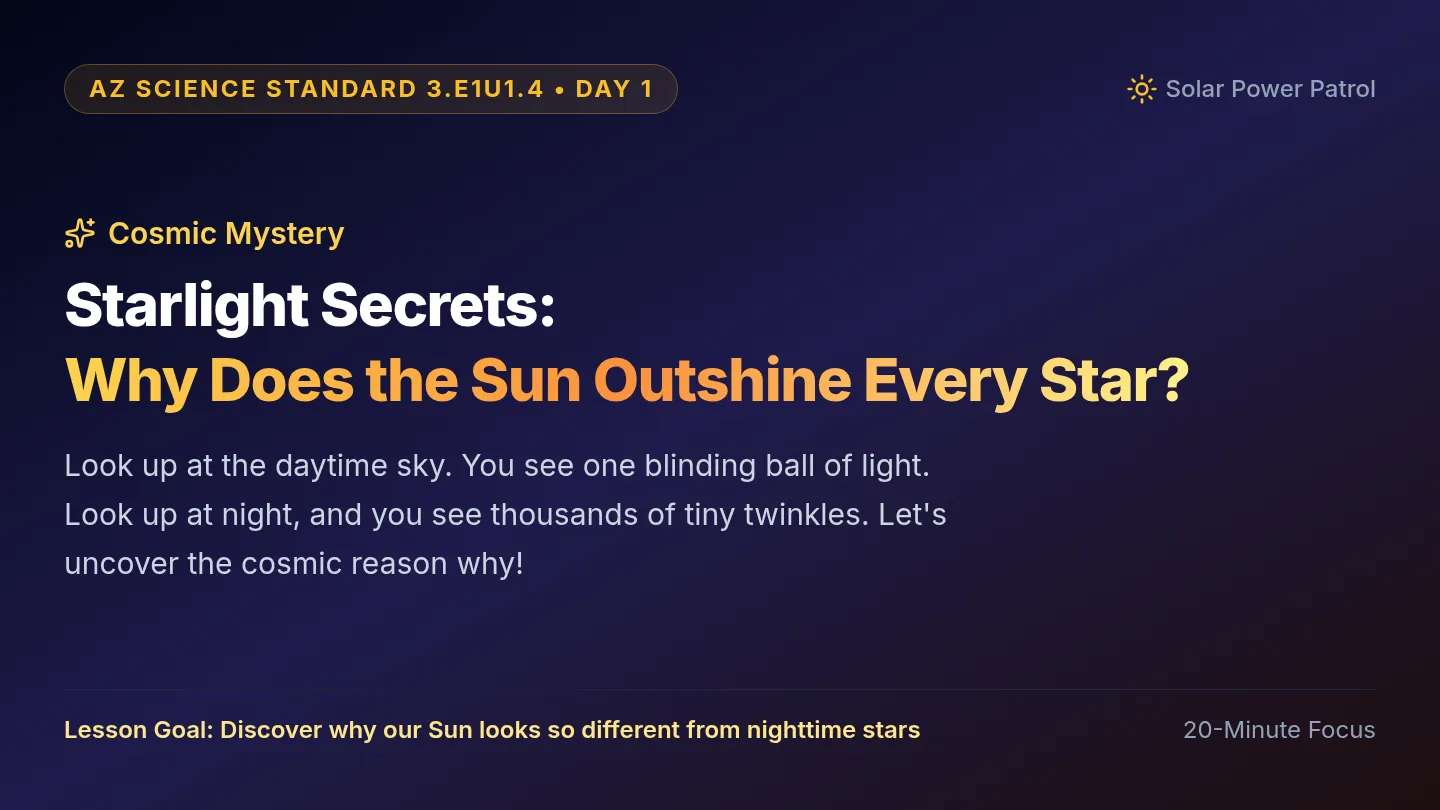
Starlight Secrets Slides

Solar Power Patrol

A four-day third-grade science unit exploring the Sun as our closest star, apparent brightness, solar energy, and the flow of sunlight to living ecosystems.

SM

Samantha McBath

8
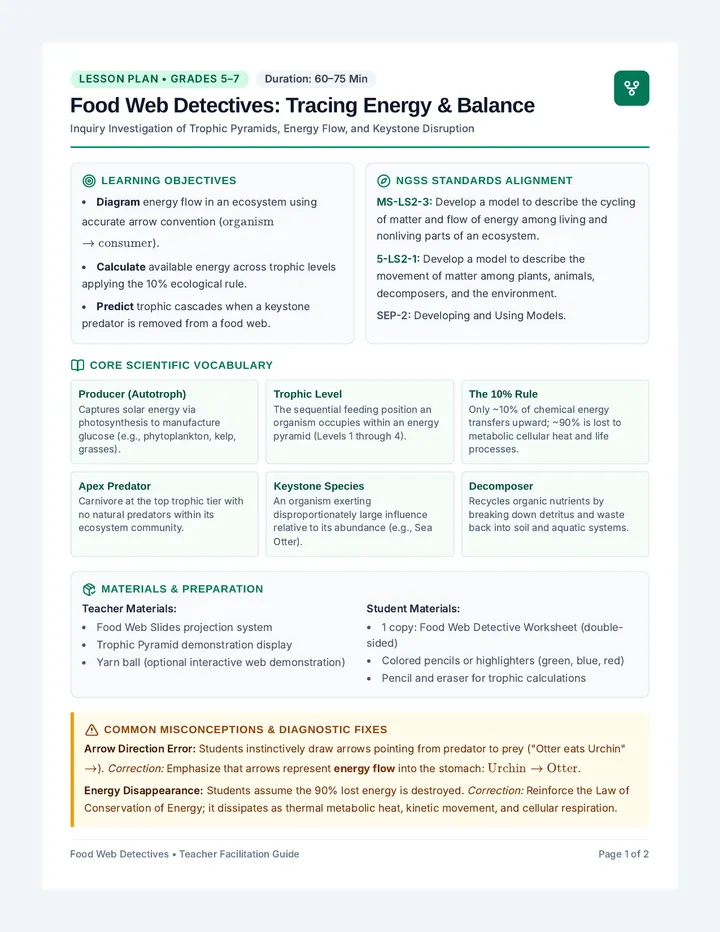
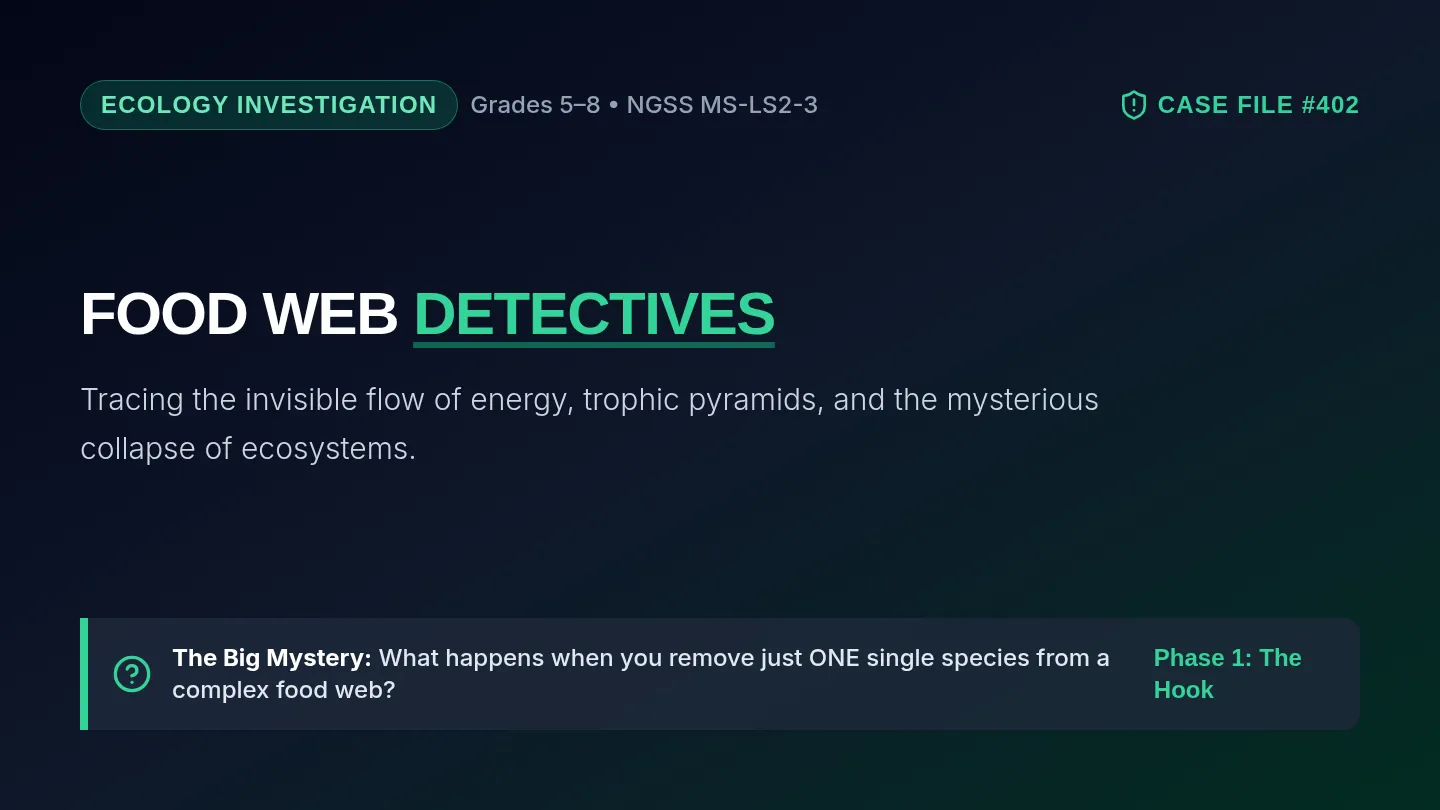
Food Web Lesson Plan

Food Web Detectives

An inquiry-driven science lesson exploring trophic levels, energy transfer, and ecosystem stability for upper elementary and middle school learners. Students trace energy flow through food webs and investigate the ripple effects of keystone species disruption.

Lenny Avatar
Lenny
4
Food Web Answer Key

Food Web Answer Key

A 2-page teacher answer key and scoring guide providing complete solutions, exemplar student responses, diagnostic notes, and an analytic rubric for the Food Web Detective investigation.

Lenny Avatar
Lenny
Helix Studio Slides

Candy Code Sequence

A multi-day competency-based biology sequence exploring DNA architecture, complementary base pairing, and semi-conservative replication through tactile candy modeling and evidence-based assessment.

TM

Teri Minami

6
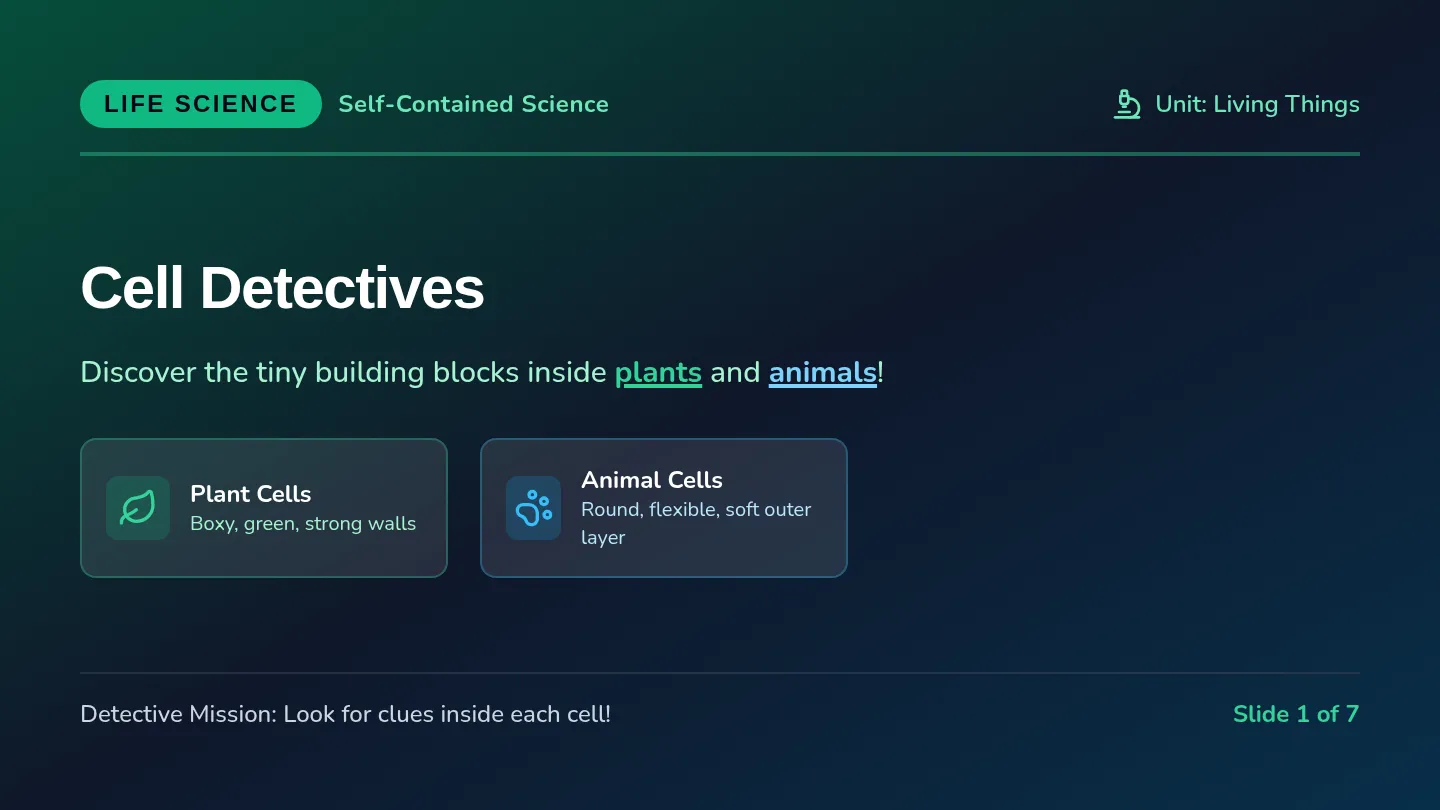
Cell Detectives Slides

Cell Detectives

A foundational life science lesson introducing plant and animal cells for self-contained classrooms, featuring high-contrast visual diagrams, simple analogies, and hands-on matching.

CF

Carissa Fenner

4
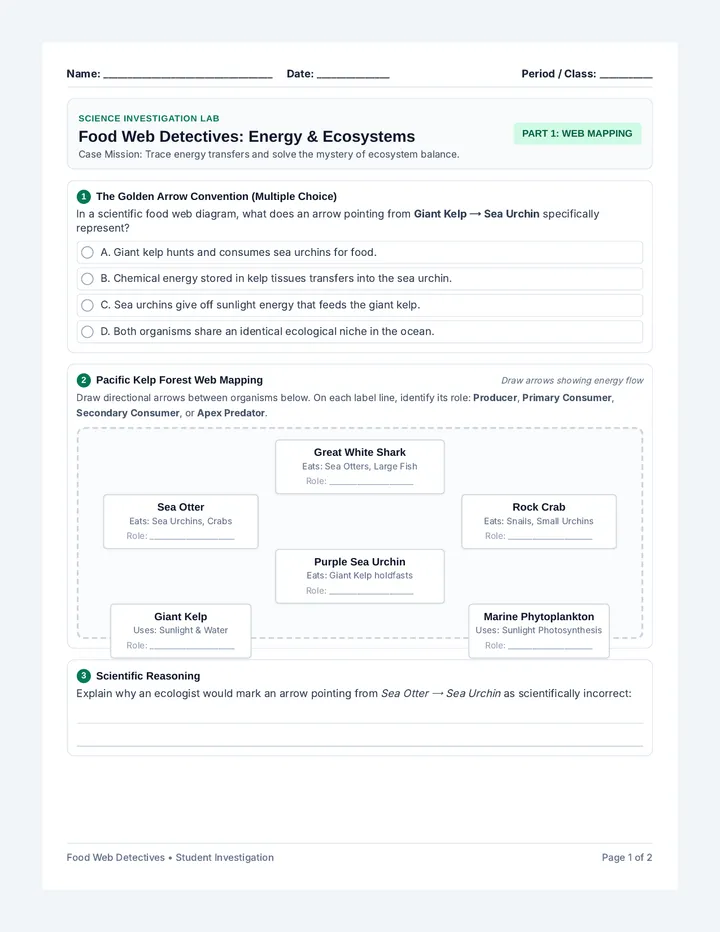
Food Web Detective Worksheet

Food Web Detective Worksheet

A 2-page hands-on student investigation worksheet featuring food web arrow mapping, trophic level energy calculations using the 10% rule, and a keystone species disruption case study.

Lenny Avatar
Lenny
Pesky Biters Slides

Bug Busters

A two-part fifth-grade science sequence investigating how insects can be annoying nuisances, bite and sting, and damage crops and homes. Specially scaffolded with high-visual supports, decodable text chunks, and guided practice for lower-literacy learners.

Lenny Avatar
Lenny
11
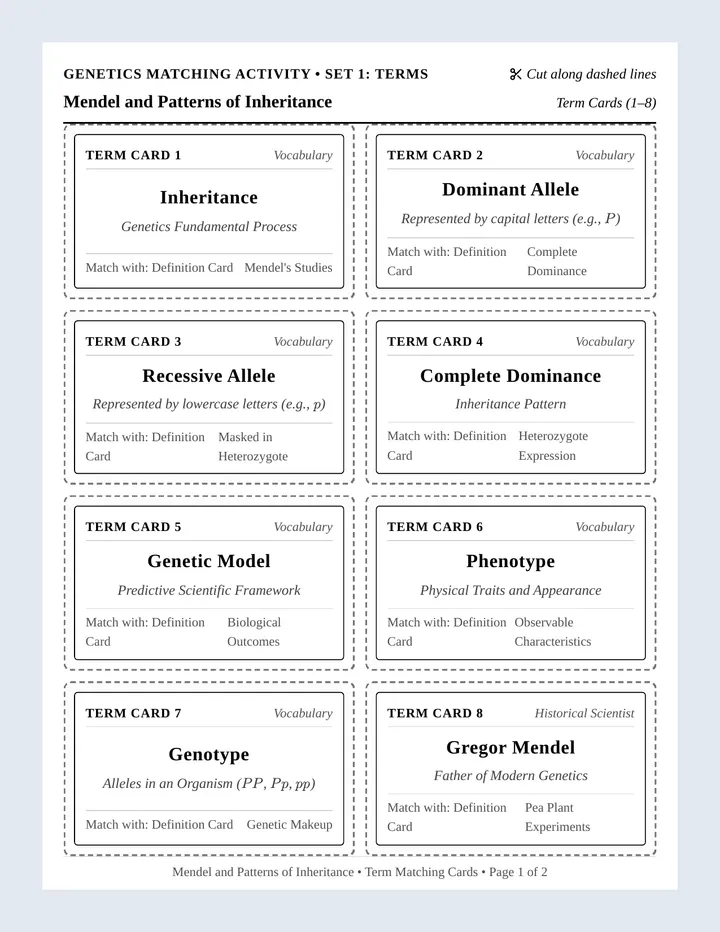
Mendel Inheritance Matching Cards

Mendel Inheritance

An introductory genetics lesson exploring Gregor Mendel's foundational pea plant experiments, inheritance patterns, allele types, genotype versus phenotype, and complete dominance.

MB

Marsha Bolden

4
Food Web Slides

Food Web Slides

A 6-slide presentation deck introducing trophic levels, energy flow arrow rules, the 10% energy pyramid, and keystone species trophic cascades with vivid visuals and inquiry prompts.

Lenny Avatar
Lenny
Habitability Blueprint Slides

Life Beyond Limits

A one-week interdisciplinary astrobiology sequence investigating Earth's habitability, extreme biological adaptations across eleven Earth species, and the plausibility of life on other celestial bodies.

M

Megan.Tanner

7
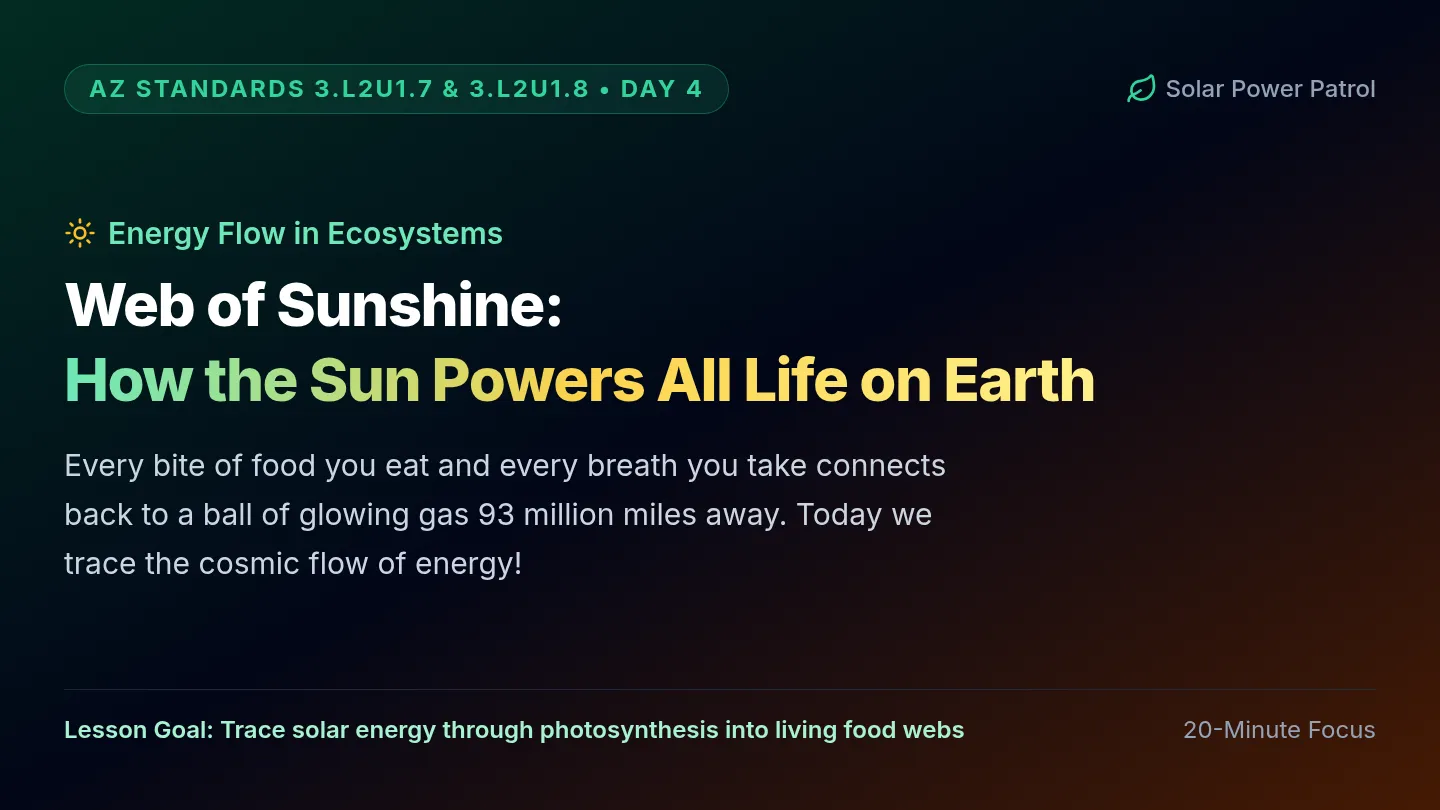
Sunshine Web Slides

Web of Sunshine

Students trace how the Sun's light and thermal energy warm Earth, fuel plant growth through photosynthesis, and flow through desert and grassland food webs.

SM

Samantha McBath

2
Food Web Lesson Plan

Food Web Lesson Plan

A comprehensive teacher facilitation guide for an inquiry-based science lesson on food webs, trophic levels, and ecosystem balance. Includes NGSS standards, pacing, misconceptions, and differentiation strategies.

Lenny Avatar
Lenny