Power of the People Slides Power of the People
Citizenship in Ancient Athens
What is a Citizen?
In Athens, citizenship wasn't just a label—it was an active job.
● It meant you had a say in how the city was run.
● Only about 10-15% of the total population were citizens.
The Athenian Population
15% Citizens
85% Non-Citizens
The Eligibility Checklist
Who WAS Eligible?
✓ Free-born males
✓ Age 18 or older
✓ Born to Athenian parents
(Both father AND mother had to be Athenians after 451 BCE)
Who WAS EXCLUDED?
Women
Enslaved People
Metics (Foreigners living in Athens)
Children
Rights & Responsibilities
Rights
Isegoria:
Right to speak in public
Isonomia:
Equality before the law
Right to vote in the Assembly
Responsibilities
Military Service (Defense)
Jury Duty (Heliaia)
Paying Taxes (for the wealthy)
The Ecclesia
Where the Magic (and the Shouting) Happened
The Pnyx
The Hill where they met
Quorum
At least 6,000 citizens had to show up for big decisions.
Voting
Decisions were made by a simple show of hands.
Debate
Any citizen could stand up and argue for or against a law.
Ostracism
The 10-Year Time Out
1
Once a year, the Assembly could vote to banish one person.
2
Citizens wrote the name of a person they feared was too powerful on a piece of broken pottery called an ostrakon.
3
If a person got enough votes, they had to leave Athens for 10 years.
Example of an ostrakon (pottery shard)
Quick Quiz!
Could a 30-year-old woman who owned land in Athens be a citizen?
No! Only free-born males were eligible.
What was the purpose of Ostracism?
To prevent any one person from becoming a tyrant or too powerful.
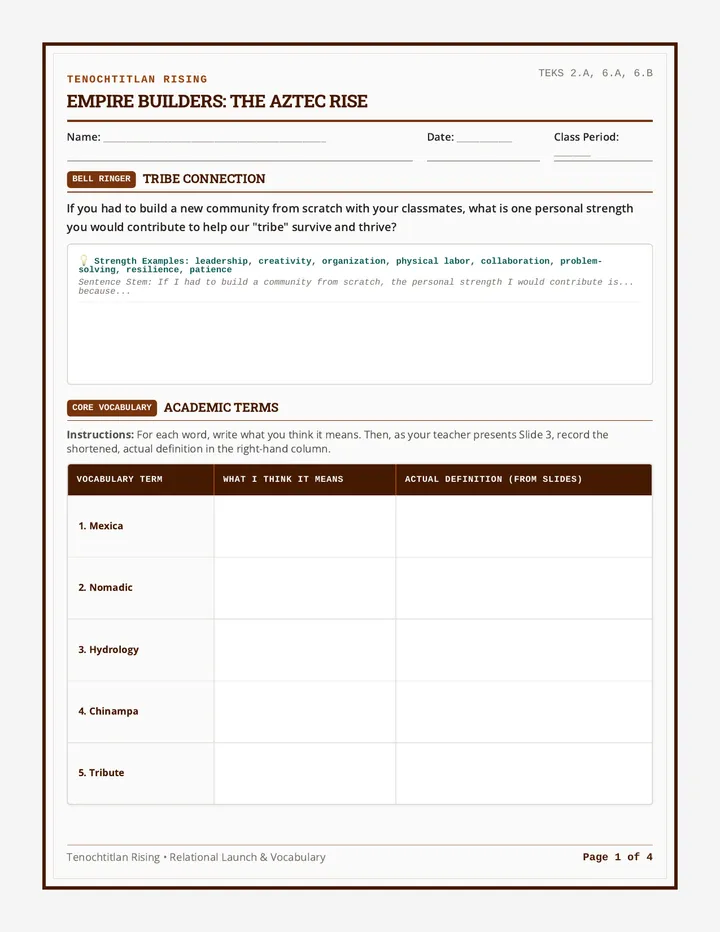
Citizen Tracker Worksheet The Athenian Citizen
Verification of Status & Rights Portfolio
Name:
Date:
I. The Eligibility Check
Check "YES" or "NO" for citizenship and explain your reasoning.
Profile A: Lycos
A 25-year-old man born in Athens to Athenian parents. He owns a small farm and serves in the infantry.
YES
NO
Reasoning:
Profile B: Chloe
A 40-year-old woman and daughter of two Athenian citizens. She owns a major workshop and pays high taxes to the city.
YES
NO
Reasoning:
Profile C: Marcus
A 32-year-old free man from Sparta who has lived in Athens for 10 years and served in the Athenian navy twice.
YES
NO
Reasoning:
II. The Citizen's Balance
Terms: Voting, Jury Duty, Speaking in Assembly, Military Service, Holding Office, Defending the City.
RIGHTS
RESPONSIBILITIES
III. The Ostraka Vote
Imagine a powerful general is acting like he is above the law. Why might you vote to banish him, even if he hasn't committed a crime?
Ostrakon
Ancient Athenian Ballot
Democracy Dictionary Anchor Charts Demos
Pronunciation: DEE-moss
The Greek word for "the people" or the citizens of a city-state.
Root of:
Democracy
Ecclesia
Pronunciation: eh-KLEE-zee-uh
The Assembly of citizens. They met 40 times a year to vote on laws.
Location:
The Pnyx Hill
Metics
Pronunciation: MEH-ticks
Foreigners living in Athens. They were free but were NOT citizens.
Status:
Residents, Not Voters
Ostrakon
Pronunciation: OSS-tra-kon
A piece of pottery used as a ballot to vote someone out of the city.
Action:
Ostracism
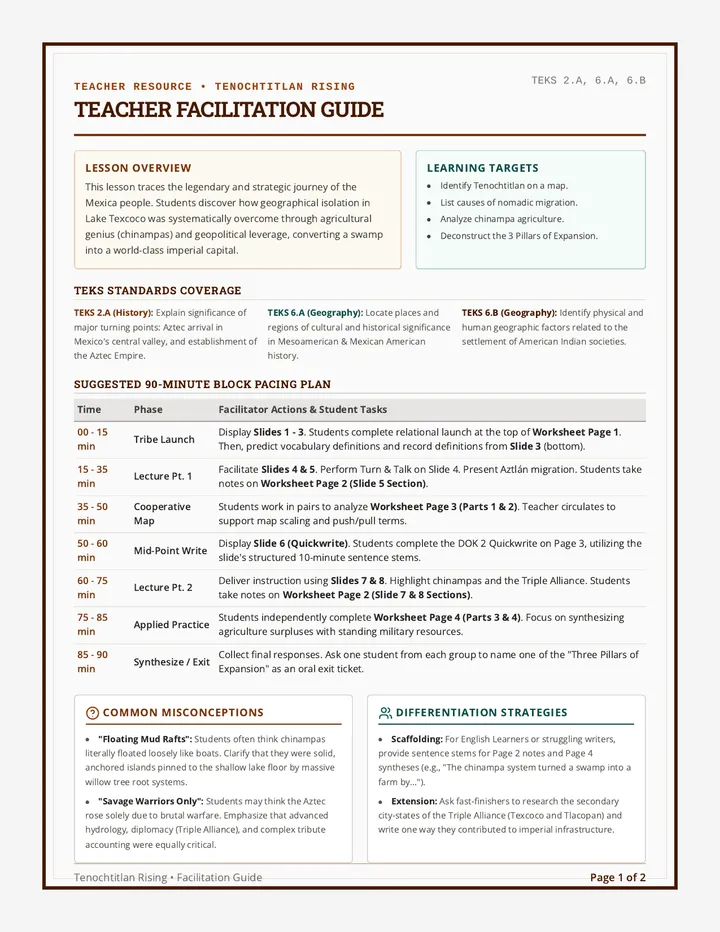
Citizen Guide Teacher Key Teacher Guide & Answer Key
Lesson: The Athenian Citizen
Instructional Pacing
0-10 min:
Hooks: Open with a discussion on who has power in today's society. Use the slides to pivot to the Athenian definition of "Demos."
10-25 min:
Direct Instruction: Go through the eligibility requirements. Emphasize that residency ≠ citizenship in Athens. Use the Anchor Charts to solidify vocabulary.
25-45 min:
Active Practice: Students complete the "Citizen Tracker Worksheet." Walk around to check reasoning on case studies.
45-60 min:
Debrief: Discuss the Ostracism prompt. Ask: "Is it fair to banish someone just for being popular?"
Common Misconceptions
"Everyone in Athens was a citizen." Clarify that citizenship was extremely exclusive (only ~15% of the total population). Women, children, slaves, and metics were all excluded.
"Metics were slaves." Metics were free residents who worked and paid taxes. Many were wealthy merchants, but they lacked political rights because they weren't of Athenian blood.
"Ostracism was a punishment for crimes." It was a political tool to preserve democracy. A person could be ostracized even if they were popular and law-abiding, simply because their influence was seen as a threat to the balance of power.
Worksheet Answer Key
I. Eligibility Case Studies
Profile A (Lycos): YES. Meets all criteria: male, 18+, Athenian bloodline.
Profile B (Chloe): NO. Women were entirely excluded from the political demos.
Profile C (Marcus): NO. He is a Metic. One could not "earn" citizenship through residency or military service.
II. Rights
Voting
Speaking in the Assembly
Holding Office
III. Responsibilities
Jury Duty
Military Service
Defending the City
IV. Ostraka Reflection
Sample Response: "I might vote to banish him because in a democracy, the power belongs to the demos. If one man becomes too popular, he might ignore the law and become a tyrant, ending democracy for everyone."