Students explore how social media algorithms prioritize content that generates outrage, influencing movement dynamics. The lesson covers shadow-banning, algorithmic radicalization, and the monetization of attention.
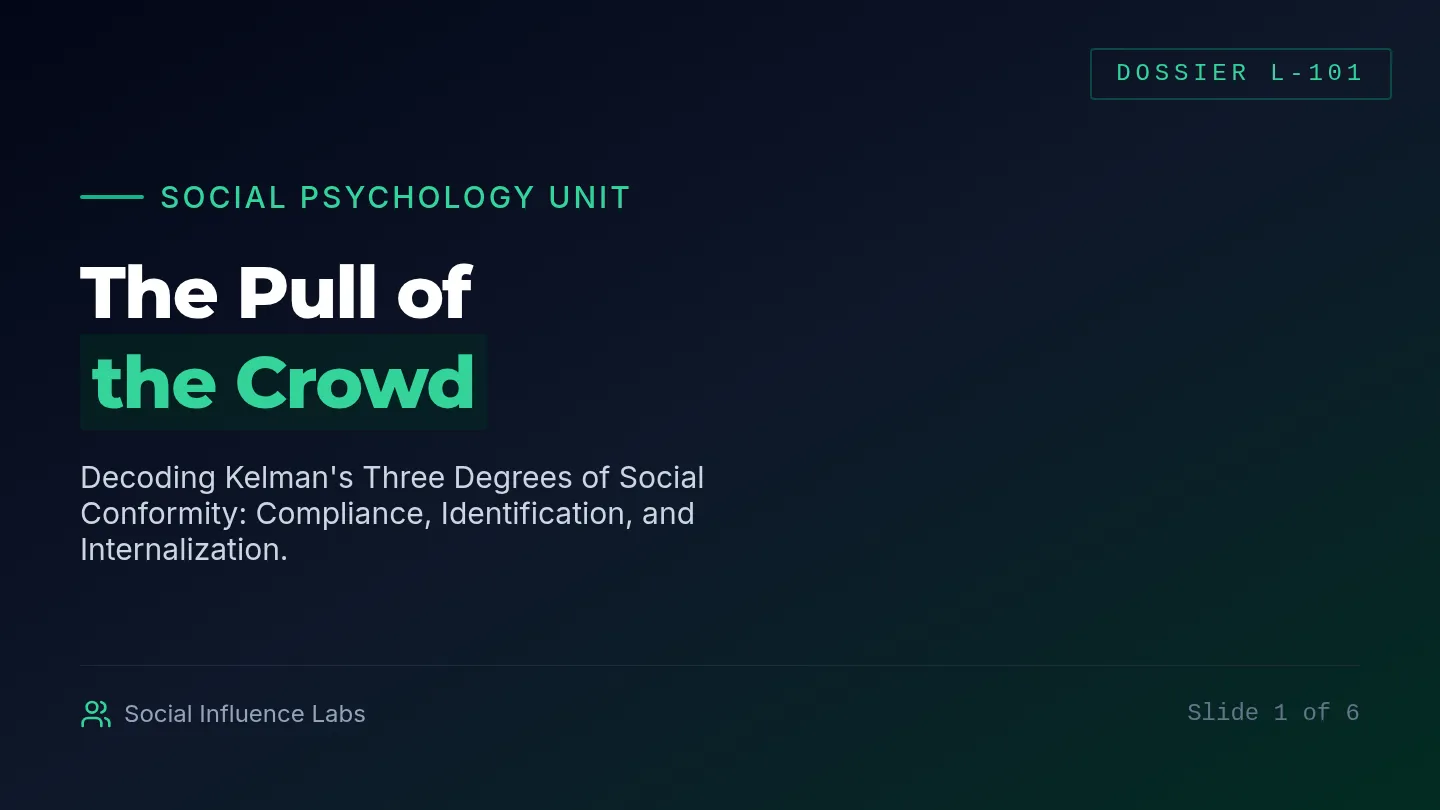
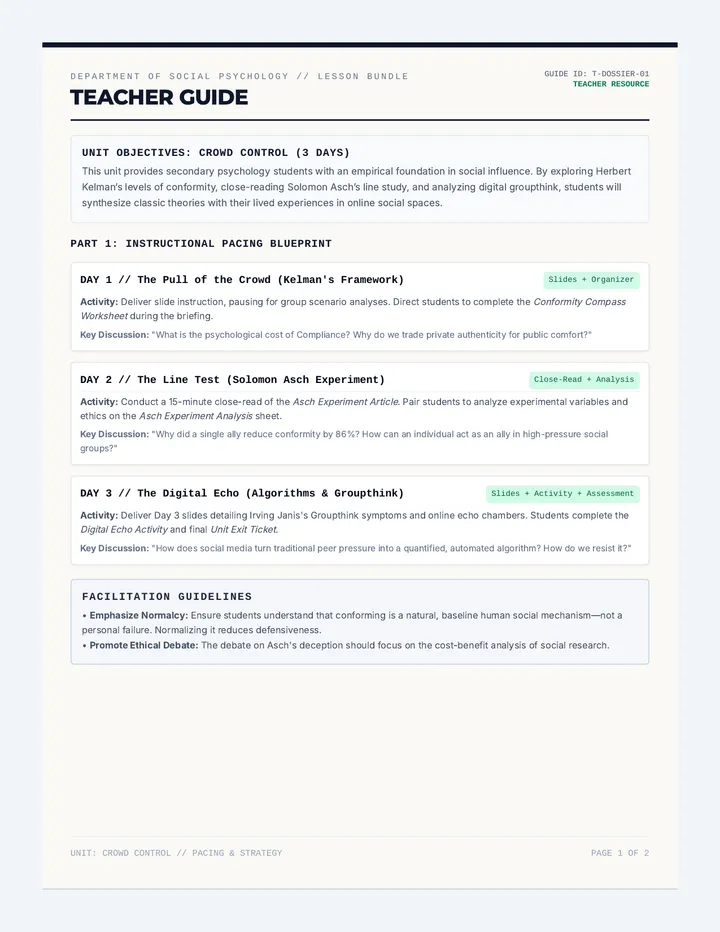
A three-day social psychology sequence exploring conformity, groupthink, and social influence. Students analyze foundational experiments, compare compliance versus internalization, and dissect modern digital peer pressure and media dynamics.
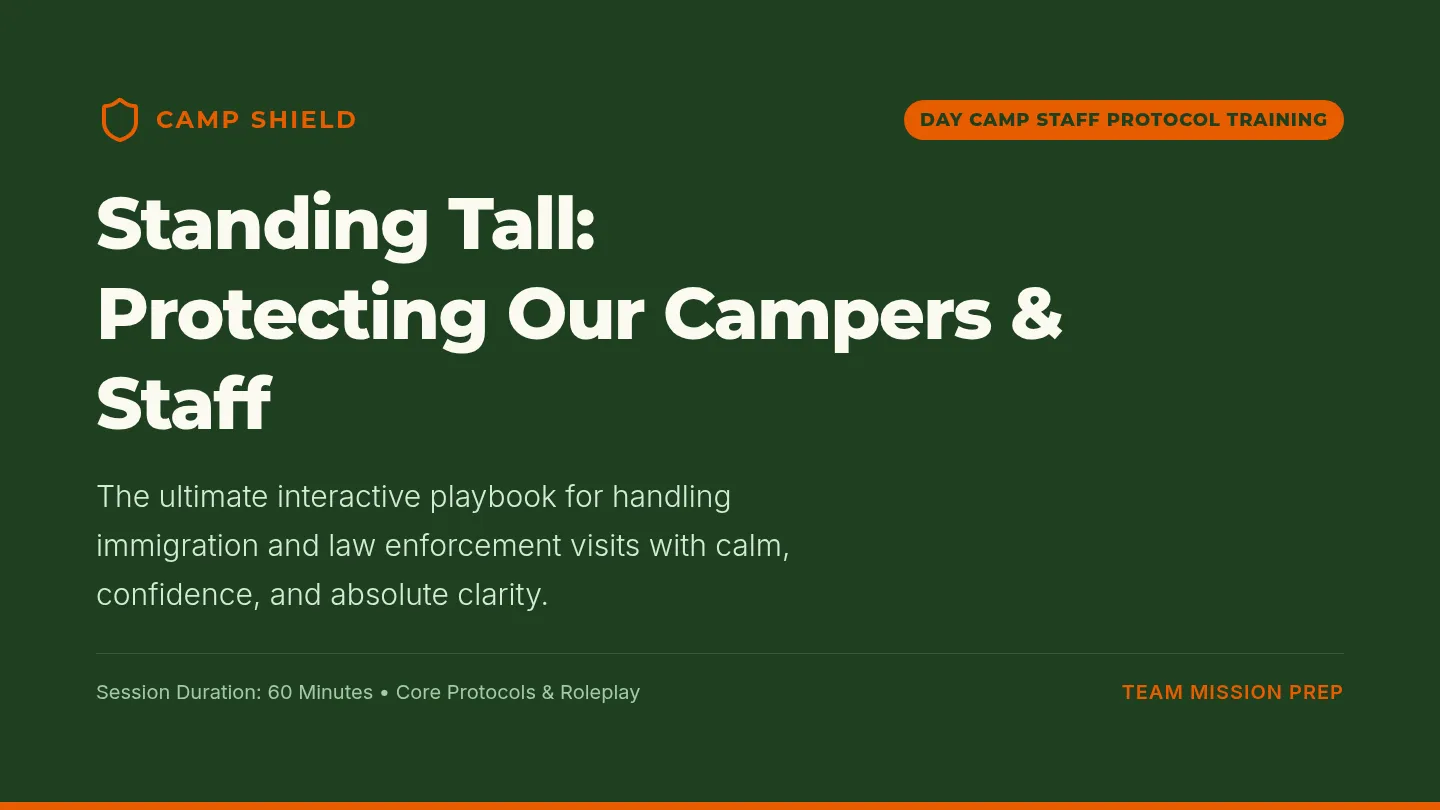
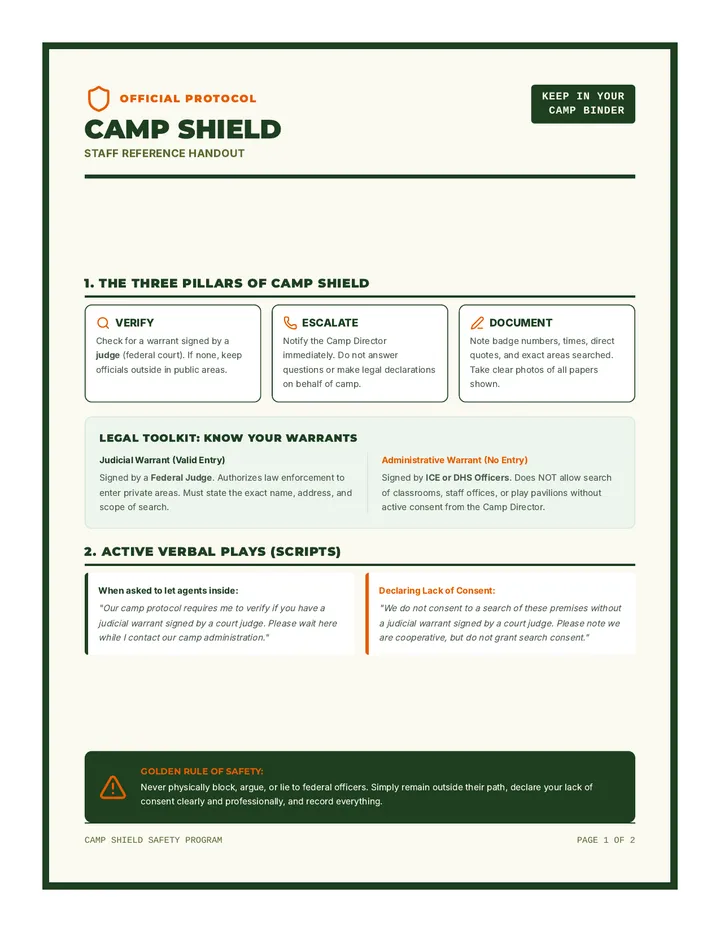
A comprehensive, scenario-based training lesson to prepare camp staff on safety, communication, and legal protocols if ICE or immigration officials arrive at camp. Equips staff with actionable toolkits, step-by-step guides, and interactive roleplay scenarios.
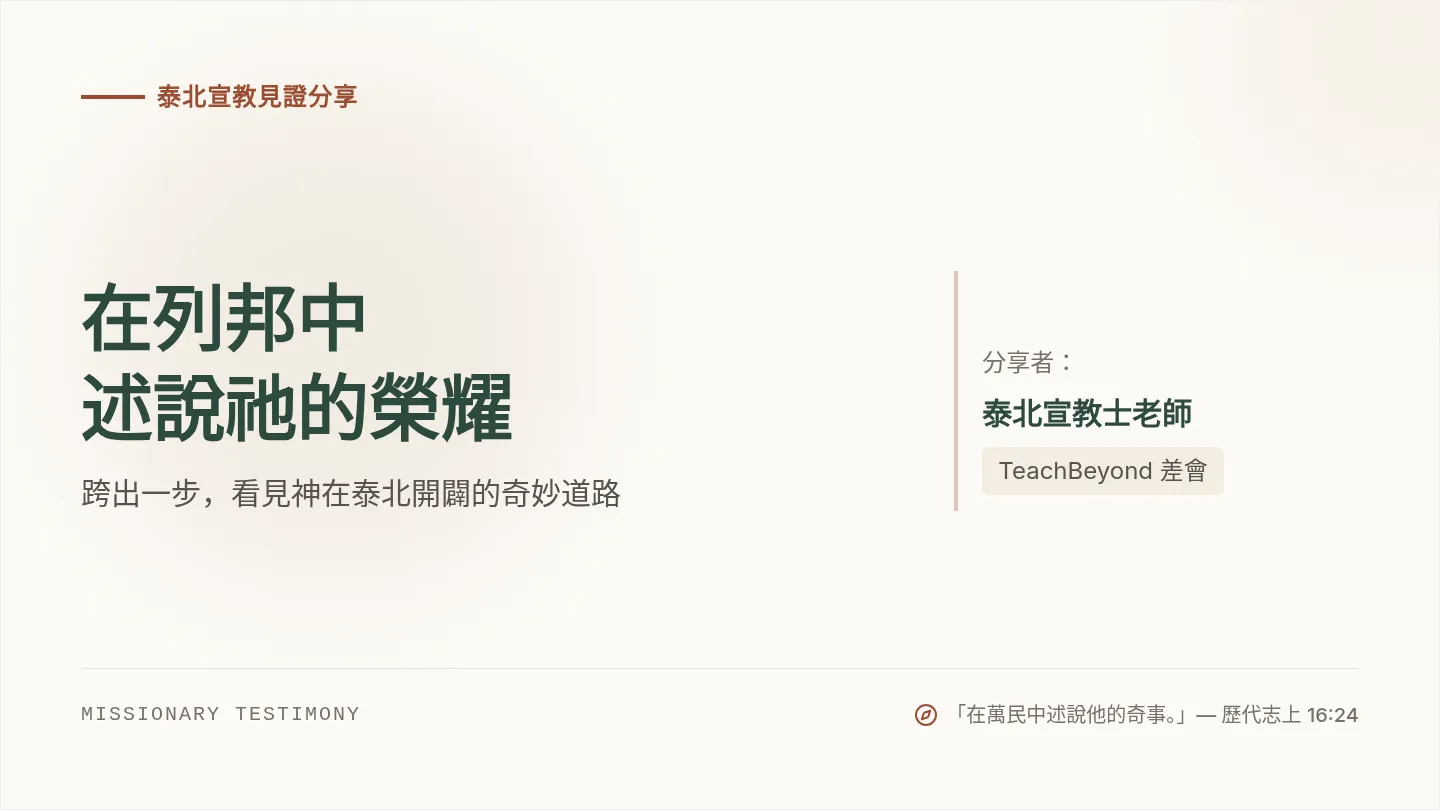
Warm and storyteller-style slide deck for a missionary testimony sharing about serving at a missionary kids' school in Northern Thailand (CRICS) under TeachBeyond. Enhanced with elegant CSS entrance transitions for slides and content blocks.
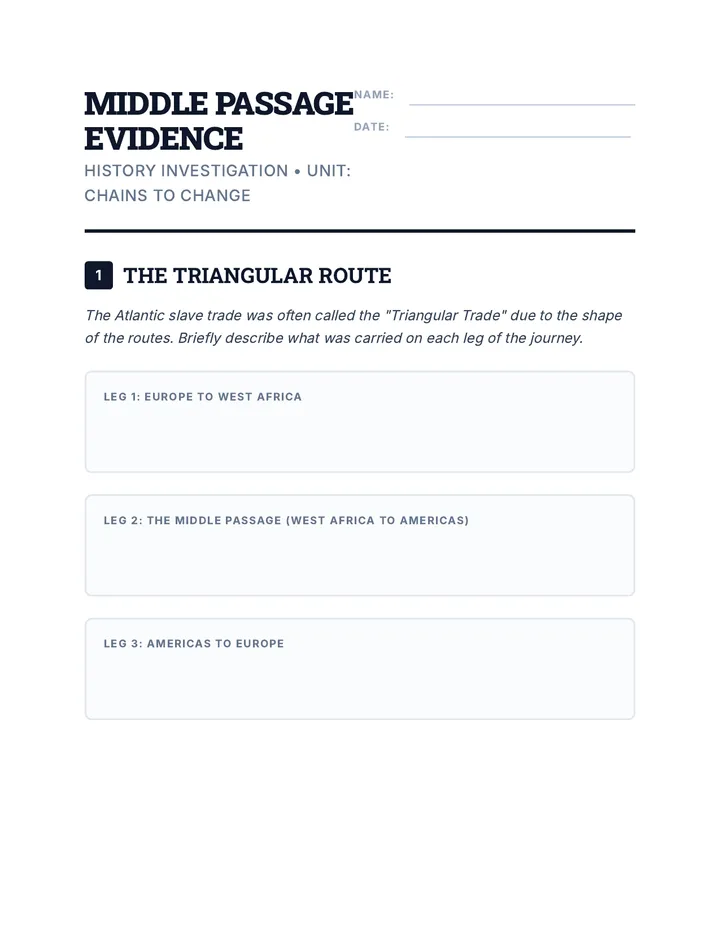
A comprehensive study of the Atlantic slave trade, the plantation economy, forms of resistance, and the eventual path to emancipation.
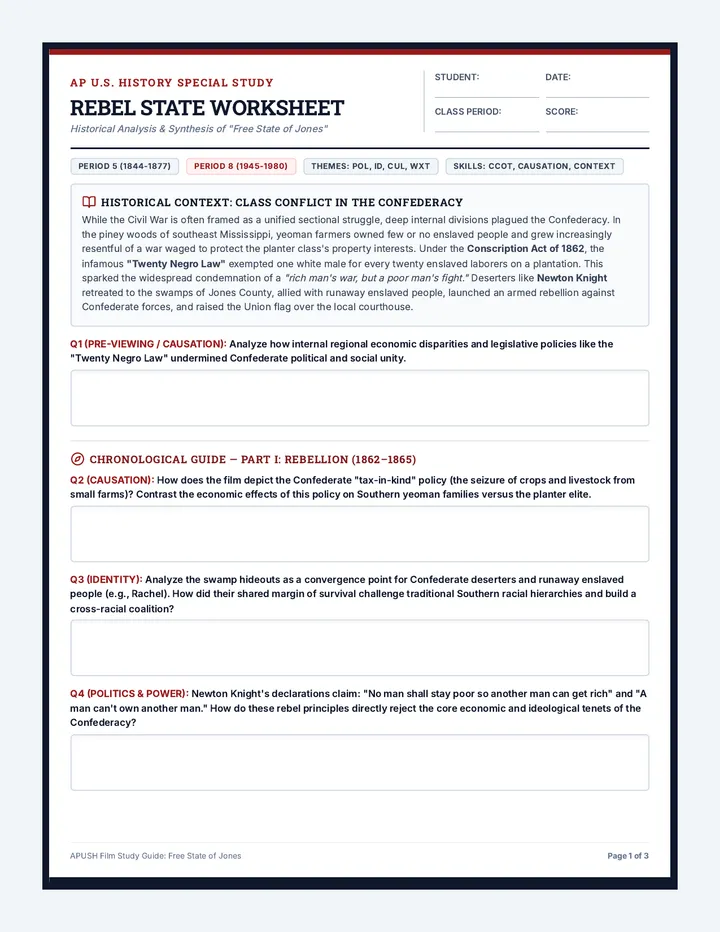
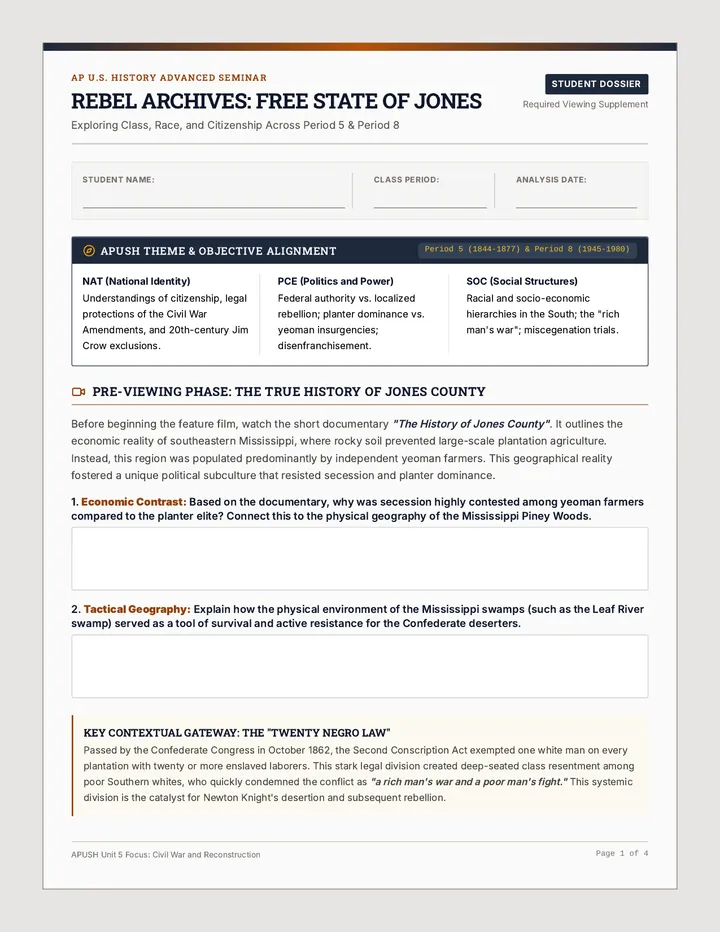
A comprehensive AP U.S. History study of the internal conflicts of the Confederacy, the legal boundaries of Reconstruction, and the long struggle for civil rights in Mississippi, structured around the historical events depicted in the film Free State of Jones.
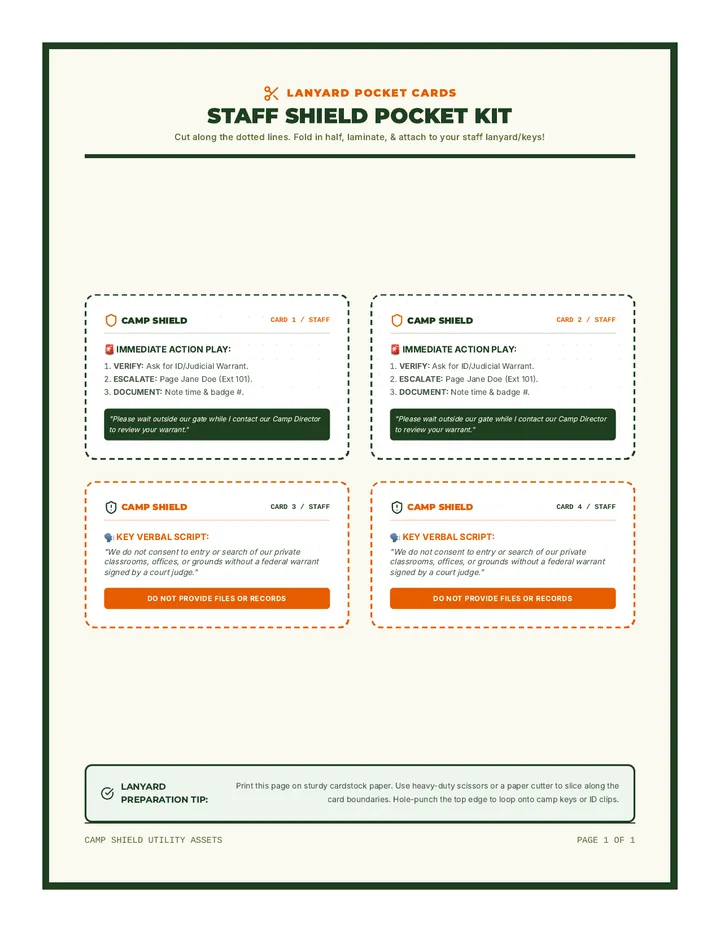
Printable lanyard-sized quick-reference cards for camp staff to carry at all times. Contains immediate action protocols, verbal scripts, and point-of-contact lists.
A comprehensive multi-day review sequence for psychology units on emotion, motivation, memory, and forgetting, featuring structured study aids, interactive challenges, and practice assessments.
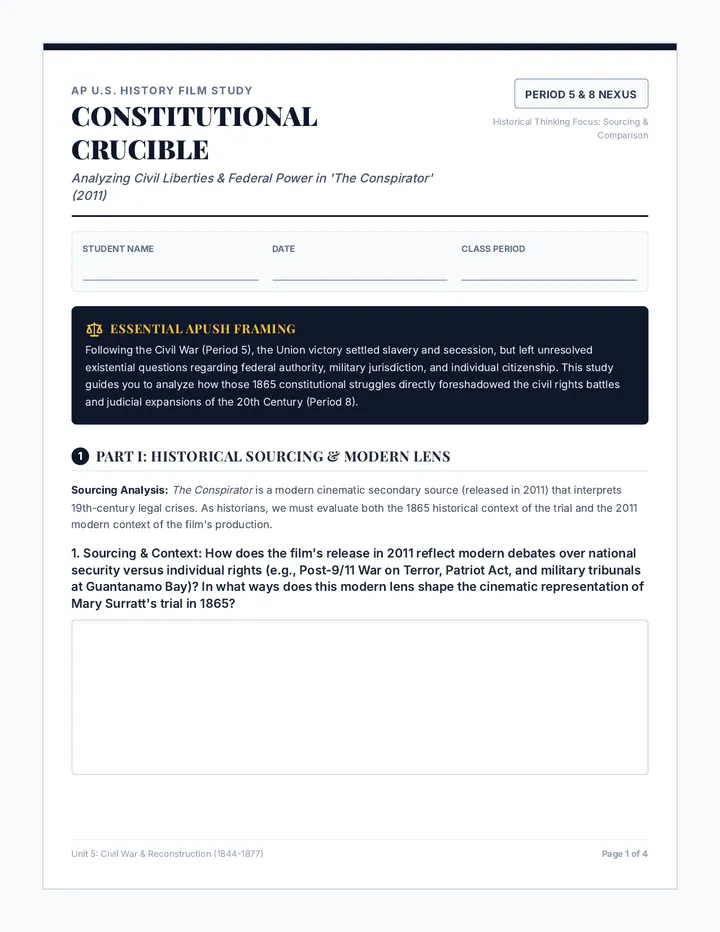
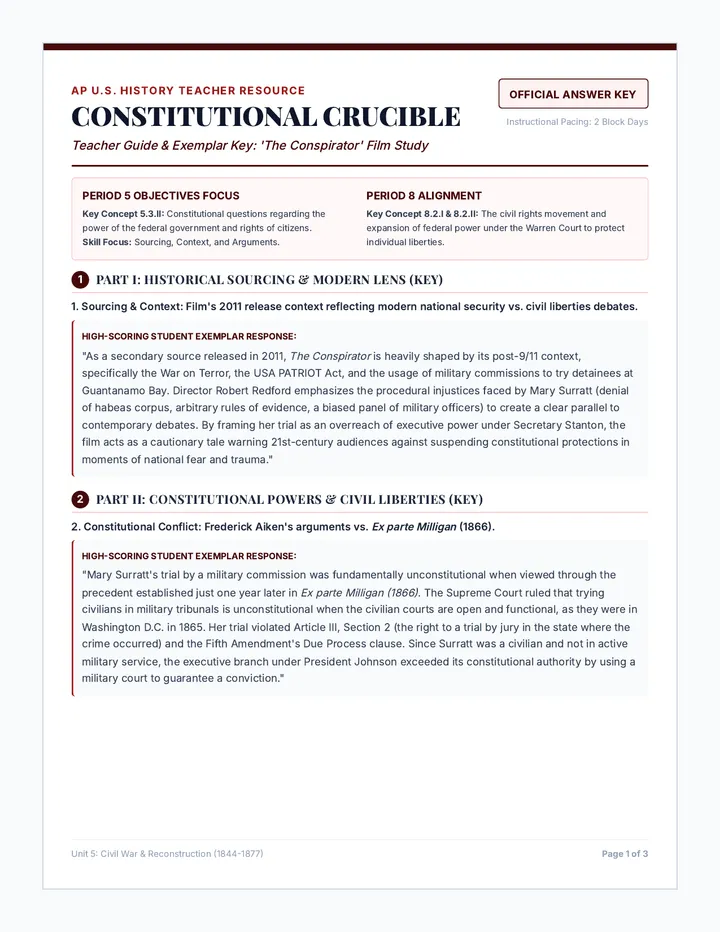
An AP U.S. History film study and constitutional analysis of 'The Conspirator'. Students explore Period 5 legal precedents, executive authority, and civil liberties, while tracing long-term continuities in civil rights into the 20th century.
Printable student handout and scenario worksheet for camp staff. Features core protocols, key verbal scripts, vocabulary checks, and blank collaborative workspace lines for group roleplay planning.
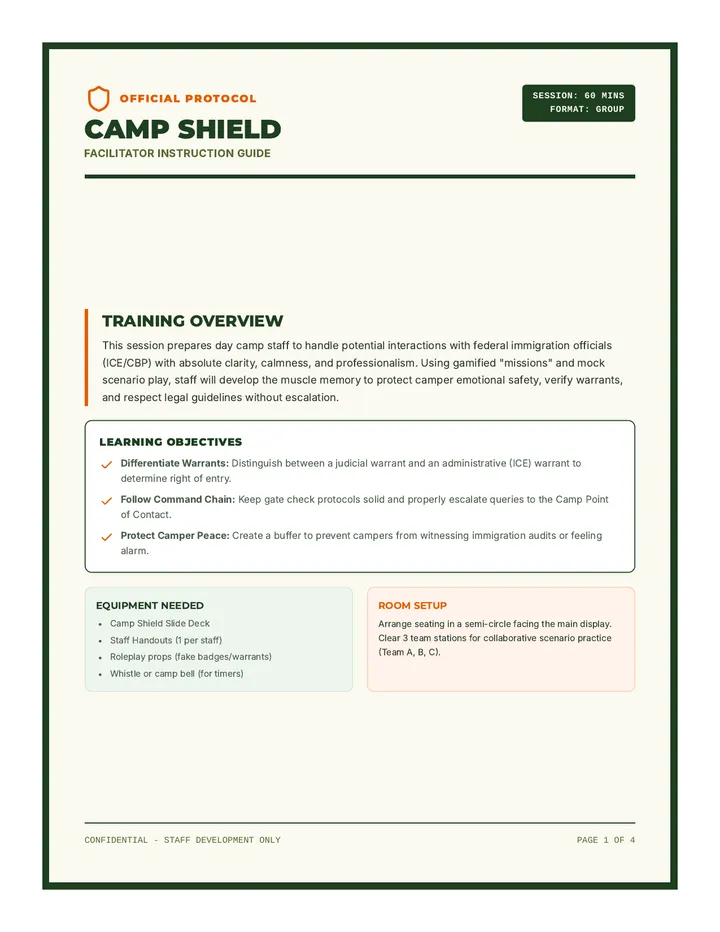
Comprehensive facilitator guide for camp administrators to lead a 60-minute interactive Camp Shield safety training. Features script guides, legal briefs, pacing charts, and roleplay facilitation blueprints.
Interactive training slide deck for Camp Shield protocol training, designed for a 16:9 widescreen presentation (1440x810px) with minimum font size of 24px and interactive team-based roleplay prompts.
A highly structured, four-page AP U.S. History film study viewing guide and historical analysis packet for the movie 'Free State of Jones'. It connects Period 5 Civil War/Reconstruction themes with Period 8 20th-century Civil Rights contexts, focusing on Southern class dynamics, Unionism, and racial classification continuities.