Lenny.com
Explore
Create
ActivitiesNewMathEnglish Language ArtsScience & EngineeringSocial StudiesGlobal LanguagesHealth & Physical EducationSpecial EducationCounseling & Life SkillsArts & CreativityESL
Lenny.com
Lenny.com
Explore
Create
ActivitiesNewMathEnglish Language ArtsScience & EngineeringSocial StudiesGlobal LanguagesHealth & Physical EducationSpecial EducationCounseling & Life SkillsArts & CreativityESL
Lenny.com
Lenny.com

Solutions

Lenny for EducatorsLenny for SchoolsLenny for Districts

Product

ExploreSign inCreateSupportAbout

Resources

Getting startedMTSS Acceleration Program

© 2026 Lenny Learning Inc.

TermsPrivacyAccessibility
LinkedInInstagramX
Lenny

Mind and Body Problem

Examines the relationship between mental states and physical brain processes. Analyzes classical dualism, physicalism, and modern theories of consciousness.

Social StudiesSocial Studies PracticesLocation WordsMapsOrder EventsChronology and CausationEvaluating SourcesHistorical ThinkingGeography, Humans, & the EnvironmentAmerican Symbols and LandmarksCitiesStatesState CapitalsRegions of the United StatesGeographic SkillsPhysical GeographyHuman GeographyRegional GeographyGeography of AfricaGeography of AsiaGeography of EuropeGeography of OceaniaGeography of the AmericasSociety and Environment of EuropeSociety and Environment of AsiaSociety and Environment of The AmericasSociety and Environment of the Middle EastSociety and Environment of AfricaHistoryPrehistoryComparing Ancient River CivilizationsAncient MesopotamiaAncient Egypt and KushAncient South AsiaEarly ChinaGreeceRome and the Byzantine EmpireAncient World HistoryNative Peoples of North AmericaNative Peoples of Mesoamerica and South AmericaAfrican EmpiresMedieval AsiaMedieval EuropeThe Silk RoadMedieval HistoryIslamic EmpiresWorld ReligionsRenaissance PeriodAge of ExplorationThe Thirteen ColoniesThe American RevolutionUS History Early RepublicFounding of the United StatesUS History AntebellumUS Civil WarReconstruction PeriodThe Gilded AgeUS ImperialismWorld ImperialismWorld War IUS History 1920sGreat DepressionWorld War IIThe Cold WarUS History 1950-60sUS History 1960s-70sWorld History 20th CenturyContemporary US HistoryContemporary World HistoryHolidaysCivics and GovernmentCitizenshipGovernment FoundationsThe ConstitutionUS ConstitutionExecutive BranchLegislative BranchJudicial BranchState and LocalPolitical ParticipationPublic PolicyPolitical SystemsPower and AuthoritySocial MovementsDefining DevianceTheories of DevianceCrime and Criminal JusticeEconomicsBasic Economic PrinciplesSupply and DemandWhat is MoneyEconomic FundamentalsMicroeconomicsMacroeconomicsBanking and FinanceEconomic SystemsGlobal EconomicsCorporations and PowerThe Changing WorkplaceUnemployment and LaborClass and InequalitySocial MobilityGlobal InequalityPsychologyHistory of PsychologyPsychology as a ScienceBrain and Nervous SystemNeuroscience and BehaviorGenetics and BehaviorSleep and ConsciousnessSensory ProcessesPerceptual OrganizationClassical ConditioningOperant ConditioningObservational LearningCognitive LearningMemory ProcessesThinking and Problem SolvingLanguage and CognitionTheories of MotivationStress and CopingPrenatal and Infant DevelopmentChildhood DevelopmentAdolescent DevelopmentAdulthood and AgingSelf and IdentitySocial CognitionSocial InfluenceAttraction and RelationshipsGroup BehaviorPrejudice and DiscriminationAnxiety and Mood DisordersClinical PsychologyForensic PsychologyPhilosophy & EthicsIntroduction to PhilosophyMajor Philosophers & IdeasMind and Body ProblemFree Will vs DeterminismEthics & MoralityReligion & PhilosophyPolitical Philosophy

Videos

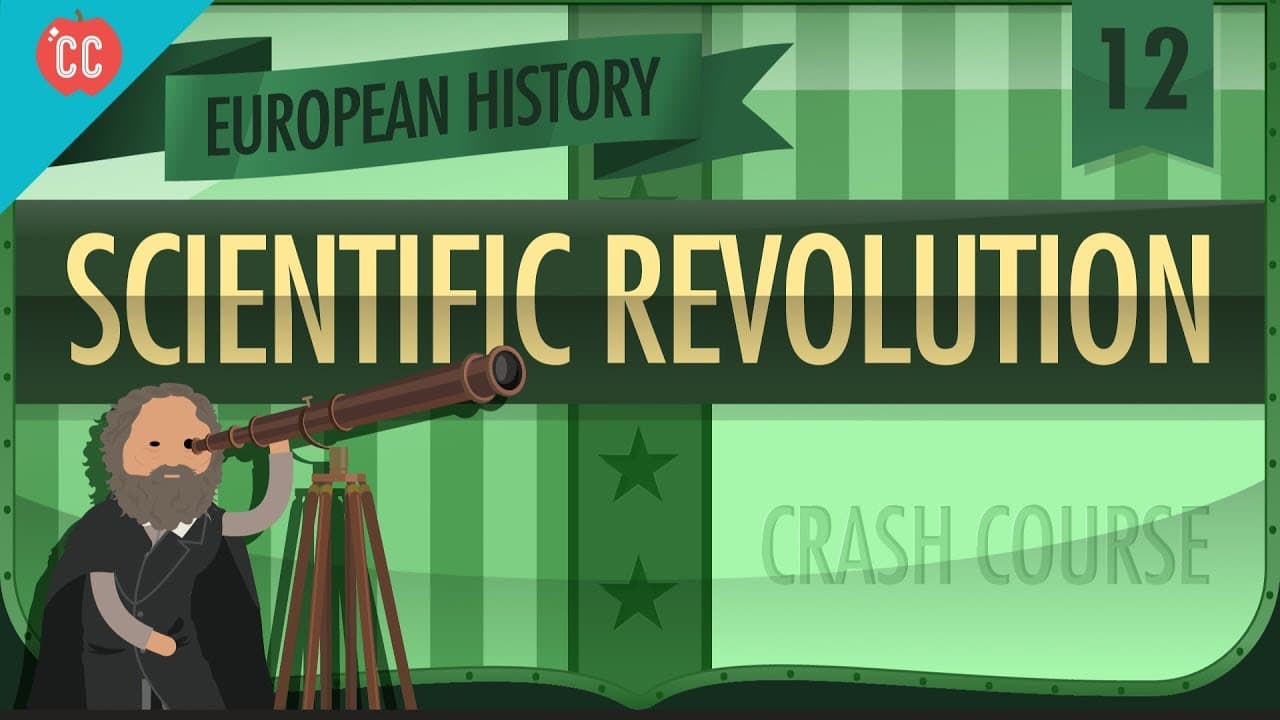
The Scientific Revolution: How Science Changed the World

The Scientific Revolution: How Science Changed the World

This educational video from the Crash Course European History series provides a fast-paced and comprehensive overview of the Scientific Revolution. Host John Green explains the fundamental paradigm shift that occurred in Europe during the 16th and 17th centuries, moving from an ancient, geocentric understanding of the universe to a heliocentric model grounded in observation and mathematics. The video details how this era introduced the radical new concept of human progress—the idea that life could improve over time through knowledge—which was a departure from previous cyclical views of history. The content explores key themes including the conflict between established religious dogma and emerging scientific evidence, specifically highlighting the tension between the Catholic Church and astronomers like Copernicus and Galileo. It delves into the development of the scientific method, contrasting Francis Bacon's inductive reasoning with Rene Descartes' deductive reasoning, and culminates with Isaac Newton's synthesis of these ideas into universal laws of physics. The video also connects scientific advancement to European exploration and colonization, noting how interactions with the wider world contributed to medical and botanical knowledge. For educators, this video serves as an excellent anchor for units on European History, the History of Science, or Epistemology. It creates opportunities to discuss the nature of truth, the importance of skepticism, and the historical roots of modern scientific inquiry. The video addresses complex topics like the trial of Galileo and the philosophical underpinnings of "I think, therefore I am" in a way that is accessible to high school students, making it a valuable tool for sparking classroom debates about authority, evidence, and the evolution of human thought.

CrashCourseCrashCourse

15mins 8s

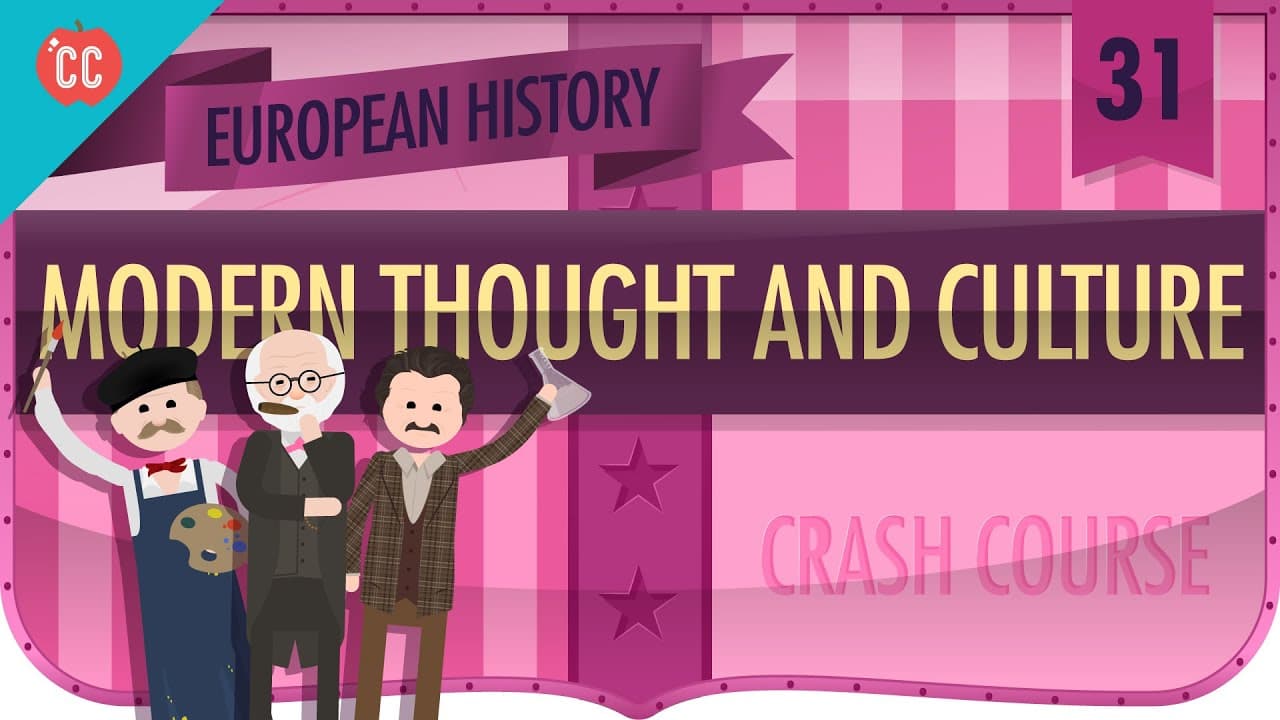
How Modernism Transformed Art, Science, and Philosophy

How Modernism Transformed Art, Science, and Philosophy

This educational video from Crash Course European History explores the profound cultural and intellectual shifts that occurred in Europe around the turn of the 20th century. Host John Green examines the rise of Modernism, a movement characterized by the rejection of traditional forms and the embrace of uncertainty, subjectivity, and innovation. The video covers the transition from Realism to Impressionism and Cubism in art, the departure from classical ballet in dance, and the move from Newtonian physics to Quantum Theory and Relativity in science. The content delves into key themes such as the breakdown of absolute truths, the exploration of the human subconscious, and the impact of non-European influences on Western culture. Significant figures like Sigmund Freud, Friedrich Nietzsche, Albert Einstein, and Pablo Picasso are discussed in depth, highlighting how their revolutionary ideas challenged the Enlightenment's focus on rationality and objective reality. The video illustrates how these disruptions in art, science, and philosophy mirrored the political and social upheavals of the era. For educators, this resource serves as an excellent synthesis of the intellectual history of the early 1900s. It provides a multidisciplinary approach, connecting visual arts, music, physics, and psychology to explain the "paradigm shift" that defined the modern era. The video is particularly useful for helping students understand abstract concepts like relativity, psychoanalysis, and existential philosophy by grounding them in their historical context and demonstrating how they shaped the 20th-century worldview.
CrashCourseCrashCourse

15mins 9s

Materials

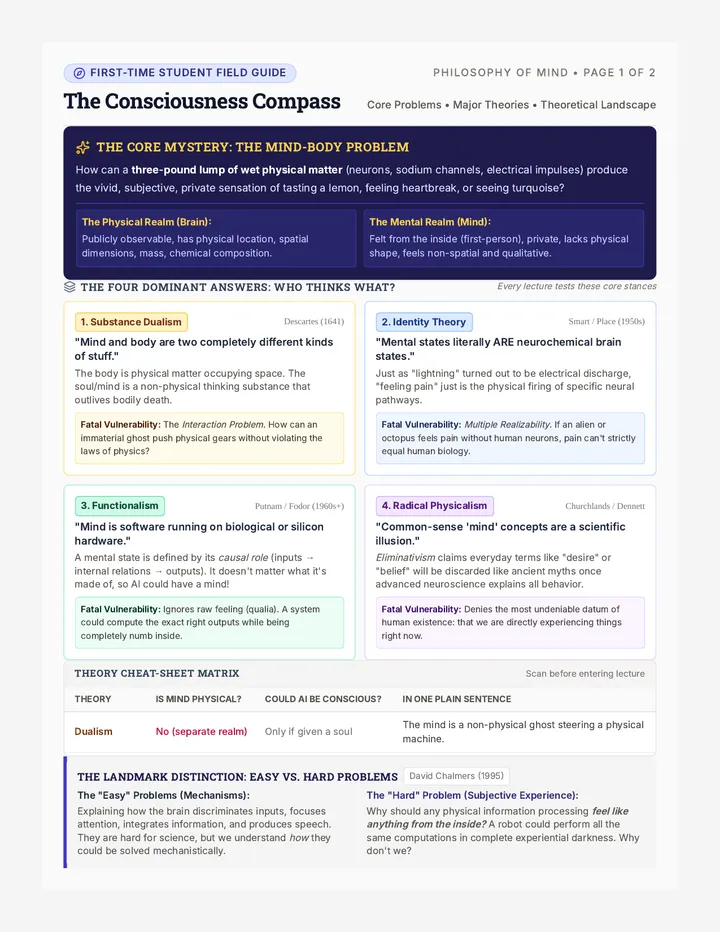
Consciousness Compass Reference Guide

Consciousness Compass Reference Guide

A comprehensive, plain-language two-page introductory field guide to the philosophy of mind. Covers the core mind-body problem, the four primary theoretical positions, the Easy vs. Hard problem distinction, the four legendary thought experiments, essential lecture jargon, and an active listening framework for first-time students.

ES

Eslem Serdar

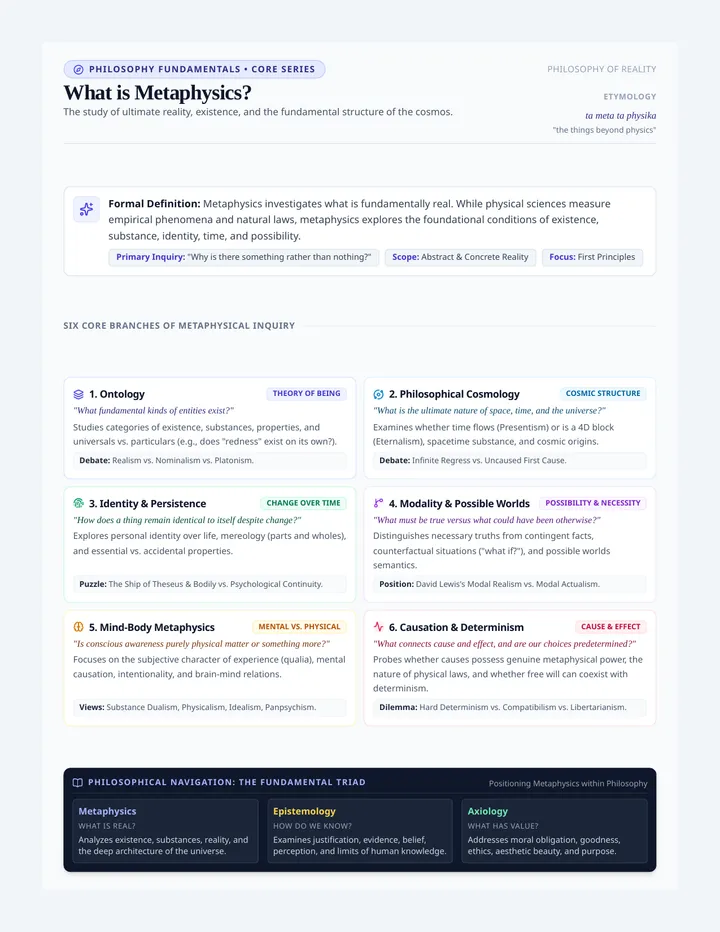
Metaphysics Architecture Reference Sheet

Metaphysics Architecture Reference Sheet

A concise, print-ready reference guide outlining the definition of metaphysics, its etymology, and its six primary branches—Ontology, Cosmology, Identity, Modality, Mind, and Causation—with key debates and philosophical distinctions.

ES

Eslem Serdar

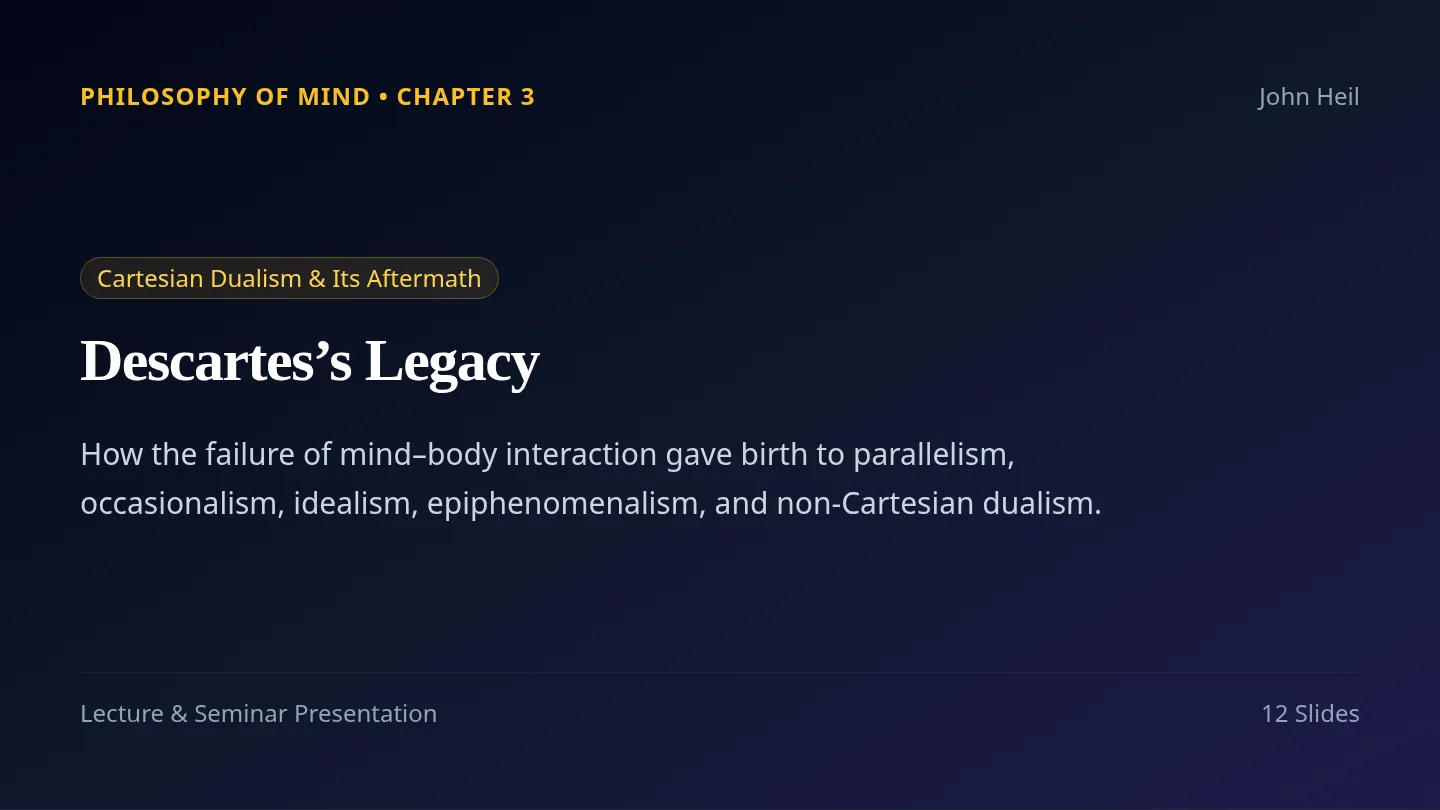
Descartes Legacy Slides

Descartes Legacy Slides

A comprehensive slide presentation on Chapter 3, 'Descartes's Legacy', from John Heil's *Philosophy of Mind: A Contemporary Introduction*. Covers the interaction problem, psycho-physical parallelism, occasionalism and causation, idealism and meaning, epiphenomenalism, and E.J. Lowe's non-Cartesian substance dualism.

ES

Eslem Serdar

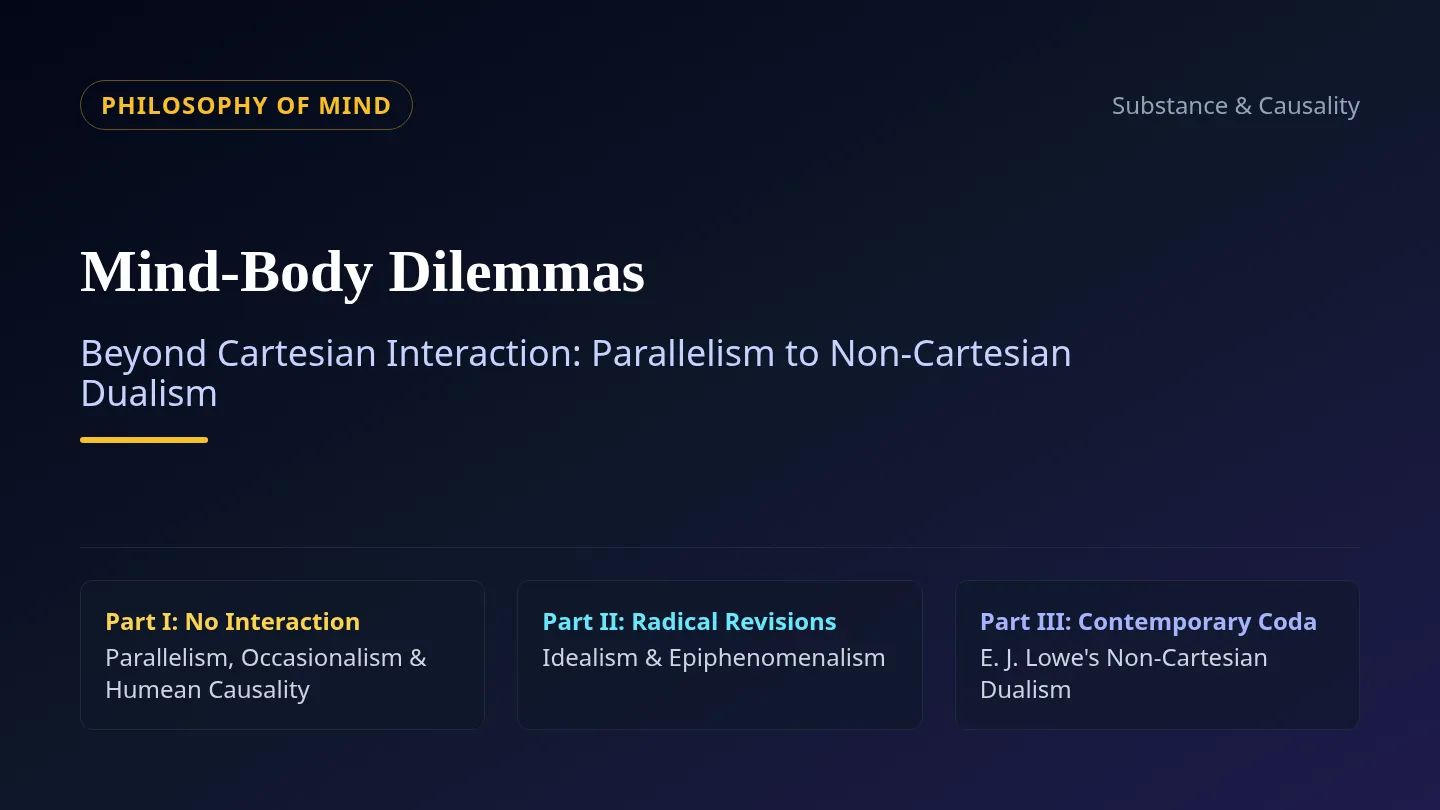
Mind Body Dilemmas Slides

Mind Body Dilemmas Slides

A comprehensive 10-slide presentation exploring philosophical alternatives to Cartesian mind-body interaction, covering parallelism, occasionalism, Humean causation, idealism, epiphenomenalism, and E.J. Lowe's non-Cartesian dualism. Each slide integrates visual diagrams, conceptual schemes, and clear key takeaways.

ES

Eslem Serdar

Sequences

Grand Plan Révisions Document

Odyssée Philo

Un programme de révision complet couvrant les 17 notions du baccalauréat de philosophie, structuré par grands domaines thématiques pour une compréhension transversale.

NL

Noémie L

2
Plan Annuel de Philosophie Document

Odyssée de la Pensée

Un parcours complet pour l'année de Terminale Générale couvrant les 17 notions du programme de philosophie à travers des problématiques transversales, des auteurs clés et des repères conceptuels.

2
Mirror Neuron Slides

Observational Learning Digital Neuro

A graduate-level psychology sequence exploring the intersection of Albert Bandura's Social Learning Theory with modern neuroscience (mirror neurons) and digital ecosystems (algorithms, AI, and social media). Students critically synthesize classical theory with contemporary research to propose theoretical updates for the digital age.

8
Mind Gap Slides

Cognitive Poetics and Reader Reception

A graduate-level exploration of the intersection between cognitive science and literary theory, focusing on how readers construct fictional worlds and the ethical dimensions of narrative engagement.

11
Garcia Effect Slides

Advanced Paradigms and Ethics in Conditioning

This graduate-level sequence challenges the 'general process' view of learning by exploring biological constraints and complex modern paradigms. Students analyze the Garcia Effect, psychoneuroimmunology, evaluative conditioning, and complex associative chaining, culminating in an ethical experimental design proposal.

11
Subjectivity Seminar Guide Document

Inquiry into Consciousness and Phenomenal Experience

A graduate-level exploration of the 'Hard Problem' of consciousness, focusing on the gap between physicalism and phenomenal experience through thought experiments and contemporary theories.

10

Lessons

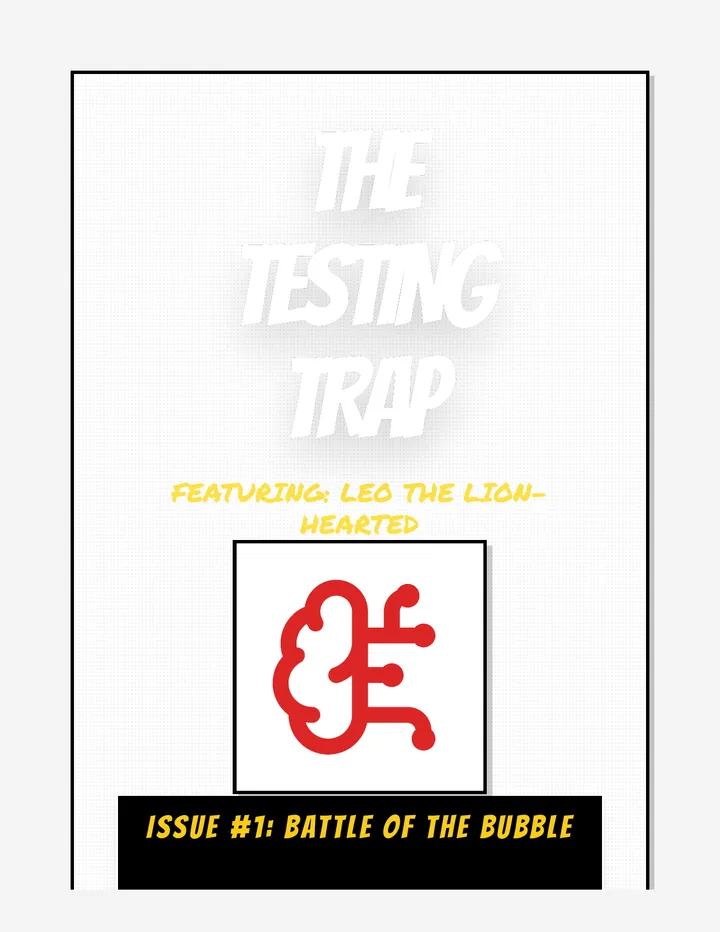
Testing Trap Comic

The Testing Trap

An exploration of the history, mechanics, and fairness of standardized testing through the lens of a neurodivergent student's experience. This lesson uses a retro-style comic to illustrate the disconnect between traditional testing and real-world intelligence.

J

JLaytner

3
What Makes Us Human Lesson Plan

What Makes Us Human

This lesson explores the multifaceted concept of humanity, delving into unique characteristics that define us through philosophical readings, creative activities, and critical discussion. Designed for 11th-12th grade students, this 60-minute session fosters deep reflection, empathy, and a nuanced understanding of the human condition.

C

ConceptX

15
Sagesse Slides Revision

Sagesse Flash

Une leçon interactive pour maîtriser huit concepts fondamentaux de la philosophie à travers des révisions visuelles et un quiz d'évaluation.

C

Camille

6
Chinese Room Slides

Thinking Machines

An exploration of John Searle's famous thought experiment, examining the distinction between syntax and semantics and the debate over Strong Artificial Intelligence.

NM

Nick Masoner

3
Défi des Notions Worksheet

Objectif Bac Philo

Une ressource complète pour évaluer et consolider les connaissances des élèves de Terminale sur les notions clés du programme de philosophie en vue du Baccalauréat.

C

Camille

3
Courthouse Fatigue Guide

Justice and Biology Debate

Students explore the intersection of biology and law through the lens of 'decision fatigue' in judicial rulings, culminating in a Socratic seminar and policy proposal for systemic reform.

4