Lenny.com
Explore
Create
ActivitiesNewMathEnglish Language ArtsScience & EngineeringSocial StudiesGlobal LanguagesHealth & Physical EducationSpecial EducationCounseling & Life SkillsArts & CreativityESL
Lenny.com
Lenny.com
Explore
Create
ActivitiesNewMathEnglish Language ArtsScience & EngineeringSocial StudiesGlobal LanguagesHealth & Physical EducationSpecial EducationCounseling & Life SkillsArts & CreativityESL
Lenny.com
Lenny.com

Solutions

Lenny for EducatorsLenny for SchoolsLenny for Districts

Product

ExploreSign inCreateSupportAbout

Resources

Getting startedMTSS Acceleration Program

Newsletters

School Funding Newsletter

© 2026 Lenny Learning Inc.

TermsPrivacyAccessibility
LinkedInInstagramX
Lenny

The Cold War

Ideological competition between capitalism and communism through nuclear deterrence, espionage, and proxy warfare. Examines the division of Europe, major proxy conflicts, and the eventual collapse of the Soviet Union.

Social StudiesSocial Studies PracticesLocation WordsMapsOrder EventsChronology and CausationEvaluating SourcesHistorical ThinkingGeography, Humans, & the EnvironmentAmerican Symbols and LandmarksCitiesStatesState CapitalsRegions of the United StatesGeographic SkillsPhysical GeographyHuman GeographyRegional GeographyGeography of AfricaGeography of AsiaGeography of EuropeGeography of OceaniaGeography of the AmericasSociety and Environment of EuropeSociety and Environment of AsiaSociety and Environment of The AmericasSociety and Environment of the Middle EastSociety and Environment of AfricaHistoryPrehistoryComparing Ancient River CivilizationsAncient MesopotamiaAncient Egypt and KushAncient South AsiaEarly ChinaGreeceRome and the Byzantine EmpireAncient World HistoryNative Peoples of North AmericaNative Peoples of Mesoamerica and South AmericaAfrican EmpiresMedieval AsiaMedieval EuropeThe Silk RoadMedieval HistoryIslamic EmpiresWorld ReligionsRenaissance PeriodAge of ExplorationThe Thirteen ColoniesThe American RevolutionUS History Early RepublicFounding of the United StatesUS History AntebellumUS Civil WarReconstruction PeriodThe Gilded AgeUS ImperialismWorld ImperialismWorld War IUS History 1920sGreat DepressionWorld War IIThe Cold WarUS History 1950-60sUS History 1960s-70sWorld History 20th CenturyContemporary US HistoryContemporary World HistoryHolidaysCivics and GovernmentCitizenshipGovernment FoundationsThe ConstitutionUS ConstitutionExecutive BranchLegislative BranchJudicial BranchState and LocalPolitical ParticipationPublic PolicyPolitical SystemsPower and AuthoritySocial MovementsDefining DevianceTheories of DevianceCrime and Criminal JusticeEconomicsBasic Economic PrinciplesSupply and DemandWhat is MoneyEconomic FundamentalsMicroeconomicsMacroeconomicsBanking and FinanceEconomic SystemsGlobal EconomicsCorporations and PowerThe Changing WorkplaceUnemployment and LaborClass and InequalitySocial MobilityGlobal InequalityPsychologyHistory of PsychologyPsychology as a ScienceBrain and Nervous SystemNeuroscience and BehaviorGenetics and BehaviorSleep and ConsciousnessSensory ProcessesPerceptual OrganizationClassical ConditioningOperant ConditioningObservational LearningCognitive LearningMemory ProcessesThinking and Problem SolvingLanguage and CognitionTheories of MotivationStress and CopingPrenatal and Infant DevelopmentChildhood DevelopmentAdolescent DevelopmentAdulthood and AgingSelf and IdentitySocial CognitionSocial InfluenceAttraction and RelationshipsGroup BehaviorPrejudice and DiscriminationAnxiety and Mood DisordersClinical PsychologyForensic PsychologyPhilosophy & EthicsIntroduction to PhilosophyMajor Philosophers & IdeasMind and Body ProblemFree Will vs DeterminismEthics & MoralityReligion & PhilosophyPolitical Philosophy

Videos

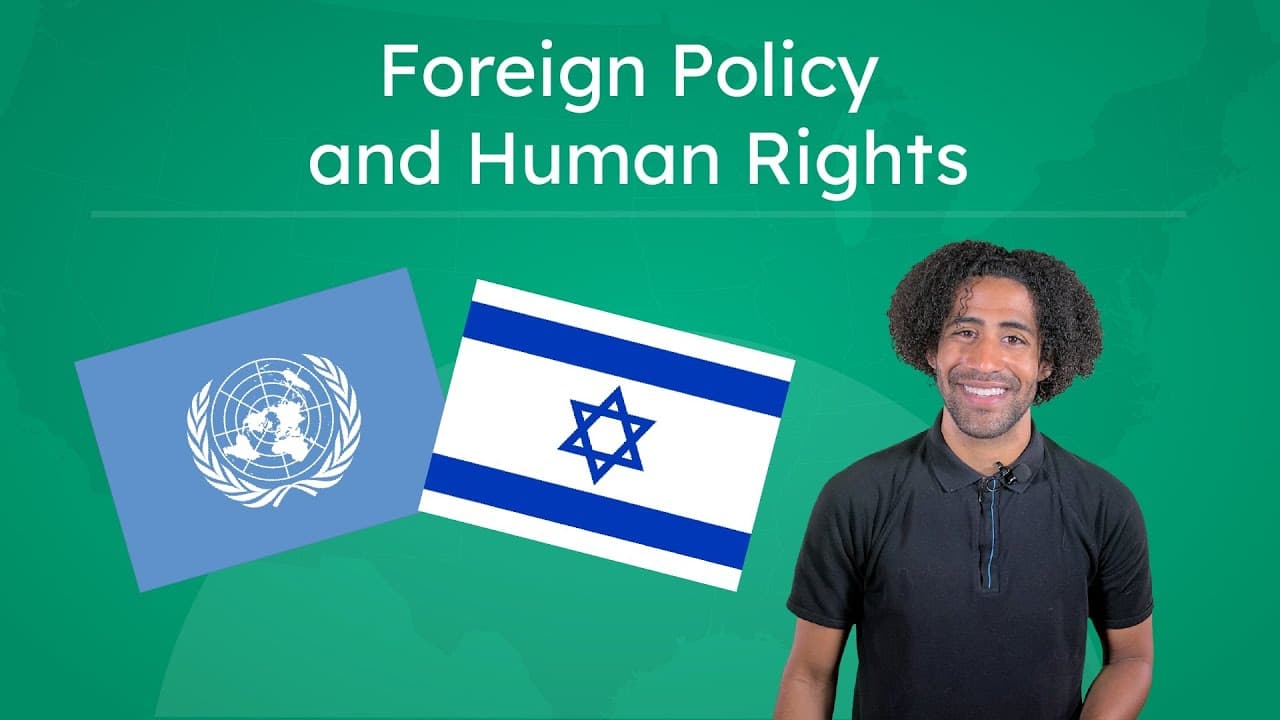
Shaping the Post-War World: Human Rights and the Birth of Israel

Shaping the Post-War World: Human Rights and the Birth of Israel

This educational video examines the profound shift in United States foreign policy following World War II, specifically focusing on the emergence of international human rights. It connects the atrocities of the war, including the Holocaust and the use of atomic weapons, to the creation of new global institutions and legal frameworks intended to prevent future catastrophes. The narrative explains the founding of the United Nations, the drafting of the Universal Declaration of Human Rights, and the definition of genocide. The video also delves into the complex geopolitical landscape of the post-war era, covering the United States' role in the establishment of the State of Israel. It explores the competing motivations behind US support, ranging from humanitarian concerns and religious connections to Cold War strategy against Soviet influence. Crucially, the video presents multiple perspectives, acknowledging both the Jewish historical claim to the land and the Palestinian experience of displacement (the Nakba), as well as critiques regarding colonialism and self-determination. Designed for high school history classrooms, this resource serves as an excellent primer for units on the Cold War, international relations, or human rights. It encourages students to think critically about the tension between national sovereignty and international oversight, and how historical decisions continue to shape modern geopolitical conflicts. The inclusion of pause points and graphic organizer prompts makes it ready-made for interactive note-taking and classroom engagement.

Miacademy & MiaPrep Learning ChannelMiacademy & MiaPrep Learning Channel

12mins 1s

Exploring Central Asia: The Land of the Stans

Exploring Central Asia: The Land of the Stans

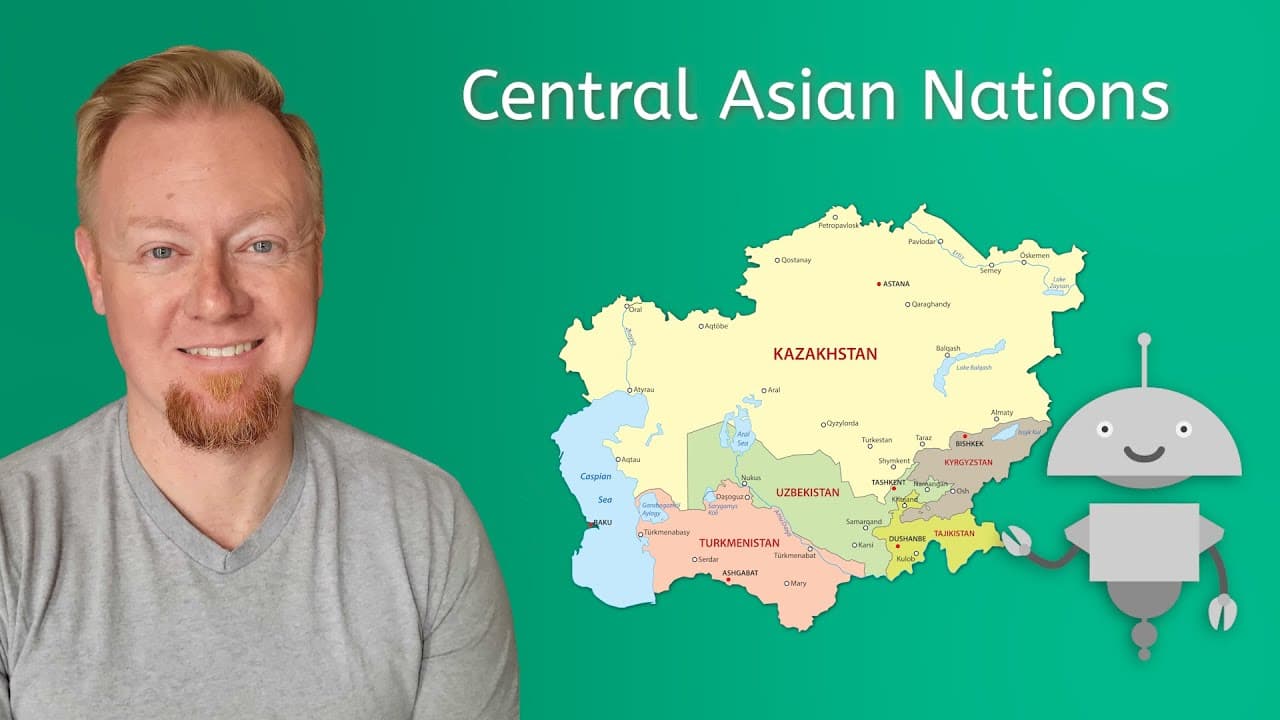
This educational video provides a comprehensive geographical and cultural overview of Central Asia, focusing on the five "Stan" countries: Kazakhstan, Kyrgyzstan, Tajikistan, Turkmenistan, and Uzbekistan. The narrator, Brian, guides viewers through the region's physical geography, including its towering mountain ranges, vast deserts, and the Caspian Sea, while also delving into the environmental challenges such as the shrinking Aral Sea. The video connects these physical features to the human experience, explaining how the landscape has shaped nomadic traditions and modern life. The content explores a wide range of topics including the etymology of the suffix "-stan," the region's history under the Soviet Union, and the current political and economic climates of these newly formed nations. It highlights key demographic data, religious practices, and unique cultural elements like eagle hunting, fermented mare's milk, and the ancient tradition of improvisational poetry battles. The video also touches on serious subjects like government corruption and economic reliance on commodities. For educators, this video serves as an excellent resource for World Geography, Social Studies, and History classes. It effectively illustrates the intersection of physical geography and human culture, offers a case study on environmental impact (the Aral Sea), and introduces students to a region often underrepresented in standard curricula. The mix of maps, data charts, and cultural footage provides multiple entry points for lesson activities ranging from map analysis to discussions on political freedom and environmental stewardship.
Miacademy & MiaPrep Learning ChannelMiacademy & MiaPrep Learning Channel

10mins 42s

From Isolation to Intervention: How US Foreign Policy Changed After WWII

From Isolation to Intervention: How US Foreign Policy Changed After WWII

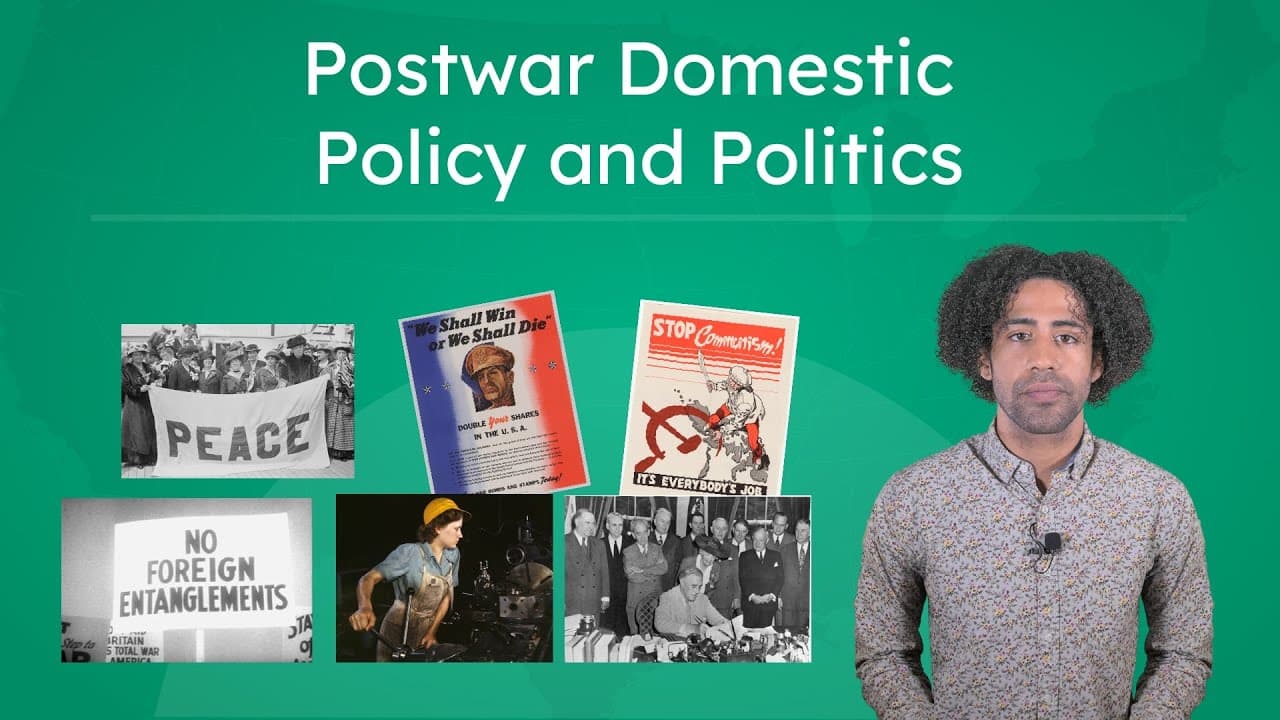
This educational video provides a comprehensive overview of the dramatic shift in United States domestic and foreign policy from the post-World War I era through the Cold War. It explores how the United States transitioned from a nation favoring isolationism and a small peacetime military to a global superpower with an interventionist foreign policy and a large standing army. The narrator explains the historical context behind these changes, highlighting how public opinion evolved due to the devastation of global wars, the rise of communism, and the threat of nuclear annihilation.

Miacademy & MiaPrep Learning ChannelMiacademy & MiaPrep Learning Channel

10mins 59s

Understanding the Iranian Revolution of 1979

Understanding the Iranian Revolution of 1979

In this episode of Crash Course World History, John Green explores the complex history of Iran, focusing specifically on the causes and consequences of the Iranian Revolution of 1979. The video dismantles common simplifications about the region, distinguishing Iranians (Persians) from Arabs and explaining the historical roots of Shia Islam. It traces the lineage of Iranian leadership from the Safavid and Qajar dynasties to the Pahlavi Shahs, setting the stage for the dramatic political shifts of the 20th century. The narrative examines the crucial role of foreign intervention, particularly the British and American involvement in the 1953 coup that overthrew Prime Minister Mohammad Mosaddegh, and how this fueled anti-Western sentiment. Green analyzes the Shah's "White Revolution," which brought economic modernization but also political repression, ultimately alienating both the clergy and the working class. The video details the rise of Ayatollah Khomeini and the transition from a monarchy to an Islamic Republic, highlighting the unique and contradictory government structure that blends theocratic authority with democratic elements. For educators, this video is an invaluable resource for teaching modern Middle Eastern history, the Cold War, and political science. It provides a nuanced look at how religious and secular motivations can intertwine in revolutionary movements. The content is excellent for sparking discussions on the long-term impacts of imperialism, the nature of theocracies versus democracies, and the complexities of US-Iran relations, helping students move beyond headlines to understand the deep historical context of current events.

CrashCourseCrashCourse

13mins 41s

How Geography Defines Development and Wealth

How Geography Defines Development and Wealth

This educational video explores the complex geographic and economic concept of "development," focusing on the Middle East and North Africa (MENA) region as a primary case study. Hosted by Alizé Carrère for Crash Course Geography, the video challenges traditional definitions of wealth and power by contrasting the resource-rich United Arab Emirates with Lebanon—a country with significant natural advantages but historical and political struggles. It delves into how historical narratives, particularly colonialism, have shaped modern perceptions of which countries are considered "developed" or "developing." Key themes include the evolution of terminology from "First/Third World" to "Global North/South," the limitations of using Gross Domestic Product (GDP) as the sole measure of success, and the impact of international debt and austerity measures on lower-income nations. The video introduces alternative metrics like the Human Development Index (HDI), Gender Inequality Index (GII), and Gross National Happiness, urging viewers to consider social well-being and sustainability alongside economic growth. For educators, this resource serves as an excellent tool for high school Geography, Economics, and World History classrooms. It encourages critical thinking about data and global inequality, asking students to question how we measure success and who gets to define it. The content seamlessly bridges physical geography (resources like oil and water) with human geography (politics, economics, and culture), making it ideal for units on global development, economic systems, or the modern Middle East.

CrashCourseCrashCourse

12mins 29s

How History Defined Europe as a Functional Region

How History Defined Europe as a Functional Region

This educational video explores the concept of Europe as a "functional region," examining how its boundaries and influence have been defined not just by physical geography, but by historical connections, trade networks, and cultural legacies. The narrator guides viewers through a chronological journey, starting with the Greco-Roman era and moving through the Crusades, the Age of Exploration, the Scramble for Africa, the Cold War, and finally the modern European Union. The video explains how these events created networks of interaction that extended Europe's "functional" borders far beyond its physical continent. Key themes include the difference between formal and functional regions, the lasting impact of Roman infrastructure and language, the spread of religion (Christianity and Islam), the geopolitical consequences of colonization, and the role of economic integration in the modern era. It specifically addresses how political ideologies during the Cold War divided the continent into two distinct functional zones and how the EU has since worked to reintegrate them through trade and a common currency. For educators, this video serves as an excellent bridge between geography and history, demonstrating how spatial relationships change over time. It provides concrete examples of abstract geographic concepts like "functional regions" and "spheres of influence." Teachers can use this resource to help students understand complex topics such as why French Guiana is part of Europe, how the Roman Empire laid the groundwork for modern Western culture, and the economic rationale behind the European Union.

Miacademy & MiaPrep Learning ChannelMiacademy & MiaPrep Learning Channel

9mins 54s

Materials

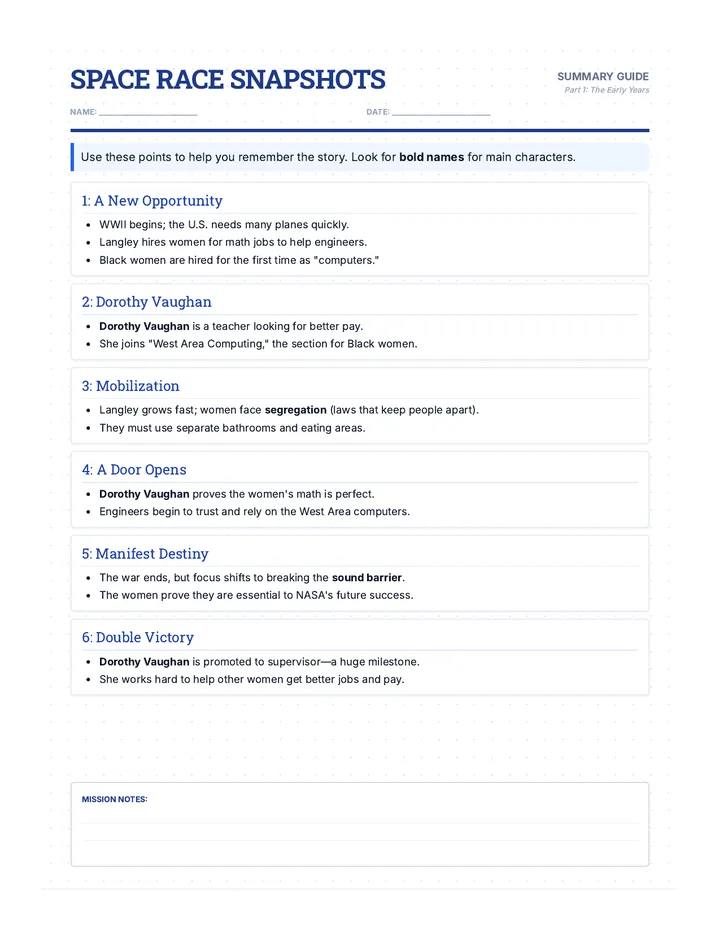
Space Race Snapshots Summary Guide

Space Race Snapshots Summary Guide

A four-page chapter-by-chapter summary guide for "Hidden Figures" (Young Readers Edition), designed specifically for struggling readers. It features bulleted main points, bolded character names, and a clean, high-contrast NASA-inspired layout to support comprehension and tracking of the narrative.

M

mattiea

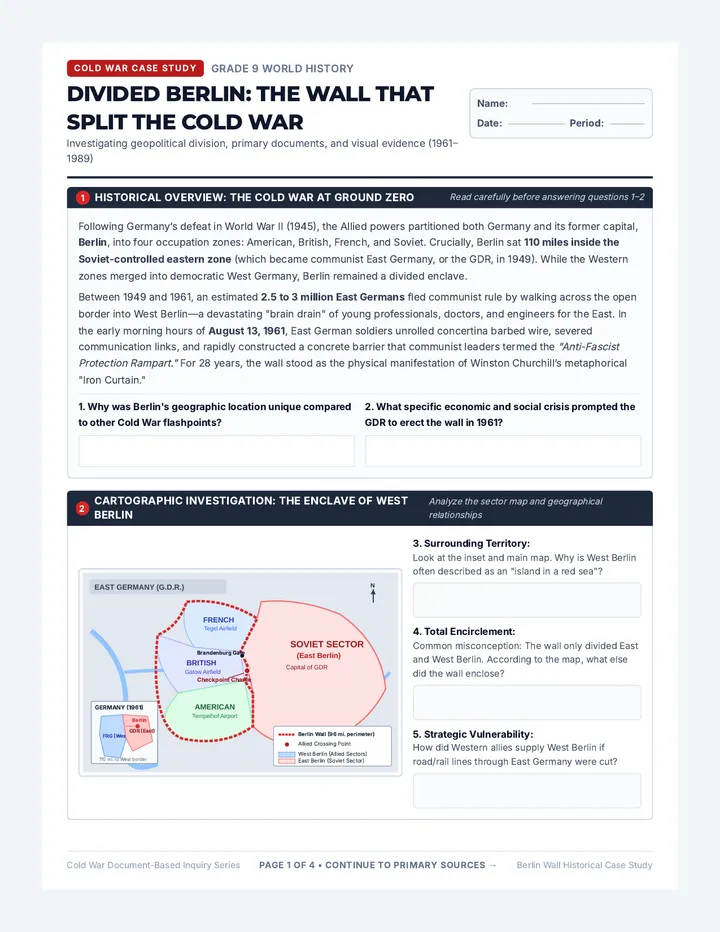
Divided Berlin Worksheet

Divided Berlin Worksheet

An expanded 4-page 9th-grade history worksheet on the Berlin Wall, adding an in-depth Death Strip architectural cross-section, escape case studies, Reagan's 1987 Brandenburg Gate speech, and photo analysis of the Wall's fall in 1989.

JB

Jonathan Becker

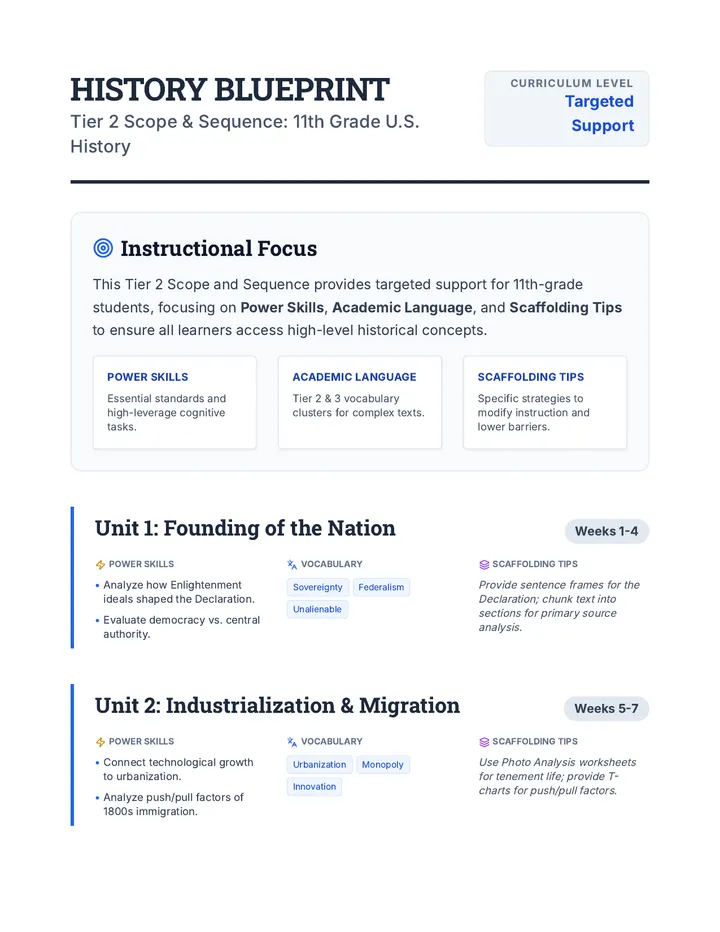
History Blueprint Scope and Sequence

History Blueprint Scope and Sequence

An updated Tier 2 Scope and Sequence for 11th Grade U.S. History, now including specific scaffolding tips for each unit alongside power skills and academic vocabulary. The layout is optimized for teacher reference with instructional strategies tailored for targeted support.

D

dfleisch

Intelligence Briefing Flashcards

Intelligence Briefing Flashcards

A set of 8 high-impact flashcards designed as 'Classified Intelligence Files' covering the Iran Hostage Crisis and the Iran-Contra Affair. Each card features key figures, dates, and outcomes with a professional bureaucratic aesthetic for easy printing and study.

JS

Jennifer Schoen

Cold War Dossier Flashcards

Cold War Dossier Flashcards

A set of 20 printable two-sided flashcards covering key Cold War terms and concepts for the US History STAAR test. The cards feature a 'confidential dossier' aesthetic and are formatted for double-sided printing with terms on the front and detailed historical significance on the back.

JS

Jennifer Schoen

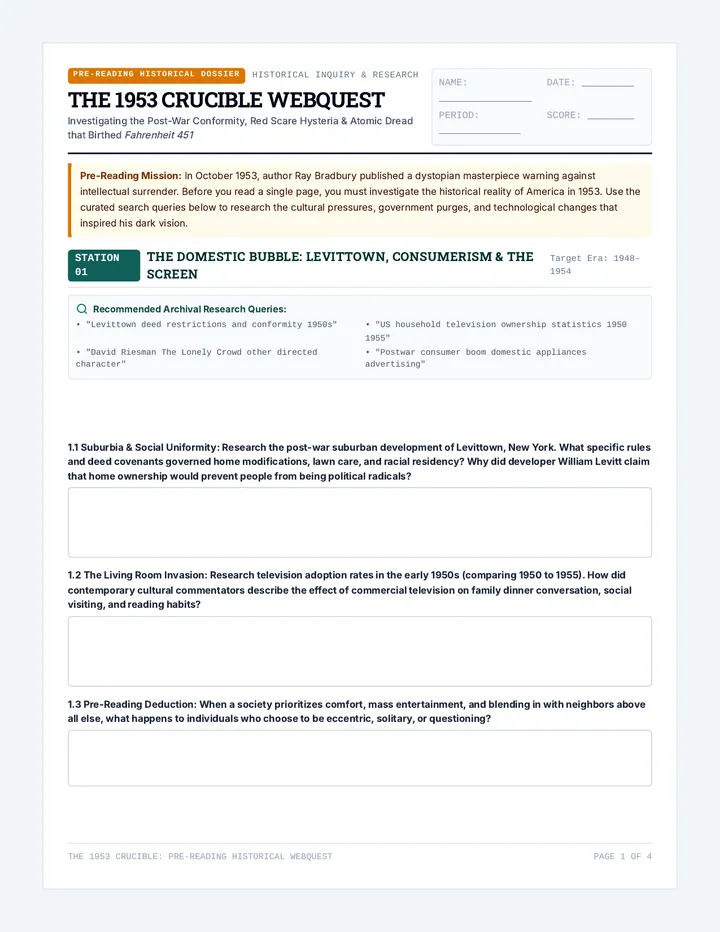
Suburban Ashes WebQuest

Suburban Ashes WebQuest

A four-station pre-reading research WebQuest examining the post-war conformity, McCarthyite Red Scare, civil defense nuclear dread, and cultural censorship of the 1950s that shaped the world of Fahrenheit 451, completely free of book spoilers.

Sequences

Unity Roadmap Teacher Guide

Unity and Growth

A modified Modern US History curriculum (Founding to Present) for Tier 2 and 3 special education students, based on Grade 11 Social Studies standards. Focuses on government, industrialization, world wars, and civil rights.

D

dfleisch

26
Conflict Cards Activity

Century Crossroads

A comprehensive assessment sequence covering the pivotal moments of 20th-century US history, from the build-up to World War II through the height of the Cold War and the diverse Civil Rights movements.

AH

Ashley Hopf

16
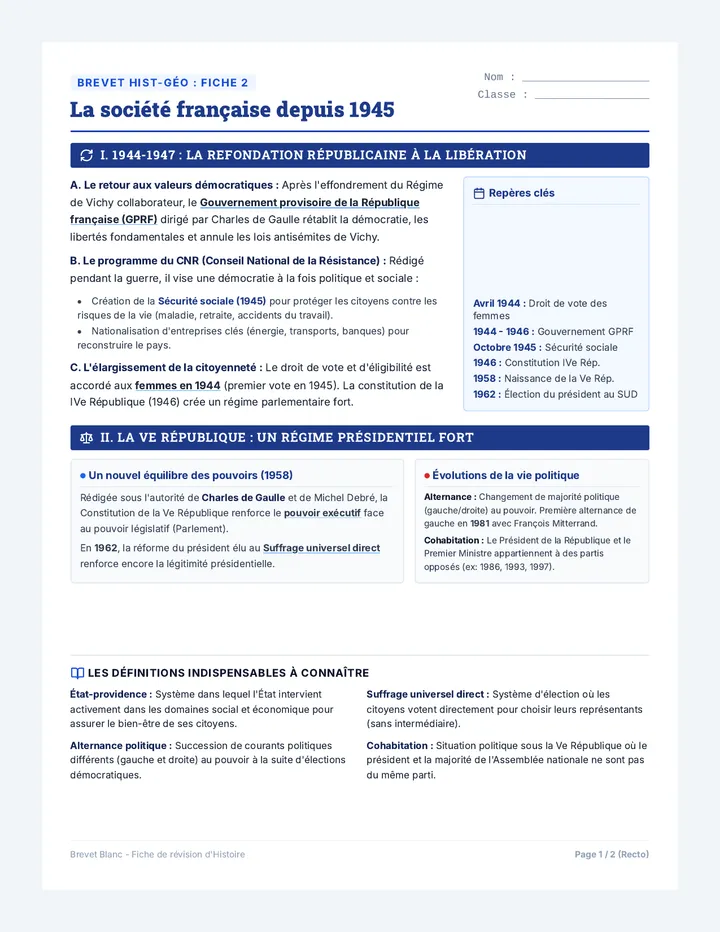
Societe Francaise Depuis 1945 Fiche

Brevet Fiches : Hist-Géo, EMC & Physique-Chimie

Une collection complète de fiches de révision classiques (recto-verso A4) très ciblées pour préparer les élèves de Troisième aux épreuves d'Histoire, de Géographie, d'EMC et de Physique-Chimie du DNB. Chaque fiche traite d'une leçon précise des programmes officiels.

MW

Myriam Wb

16
Reconstruction Reckoning Worksheet

Modern America

A comprehensive journey through United States history from the aftermath of the Civil War to the contemporary era, exploring the social, political, and economic shifts that shaped the modern nation.

DP

Darren Polamalu

18
Mobilization Intro Slides

Global Conflict WWII

A comprehensive 2-day unit covering World War II for 11th Grade US History, aligned with TEKS. It focuses on the transition from isolationism to total war, the home front experience, major turning points in both the European and Pacific theaters, and the strategic decisions that ended the conflict.

BB

Bridgette Burdick

17
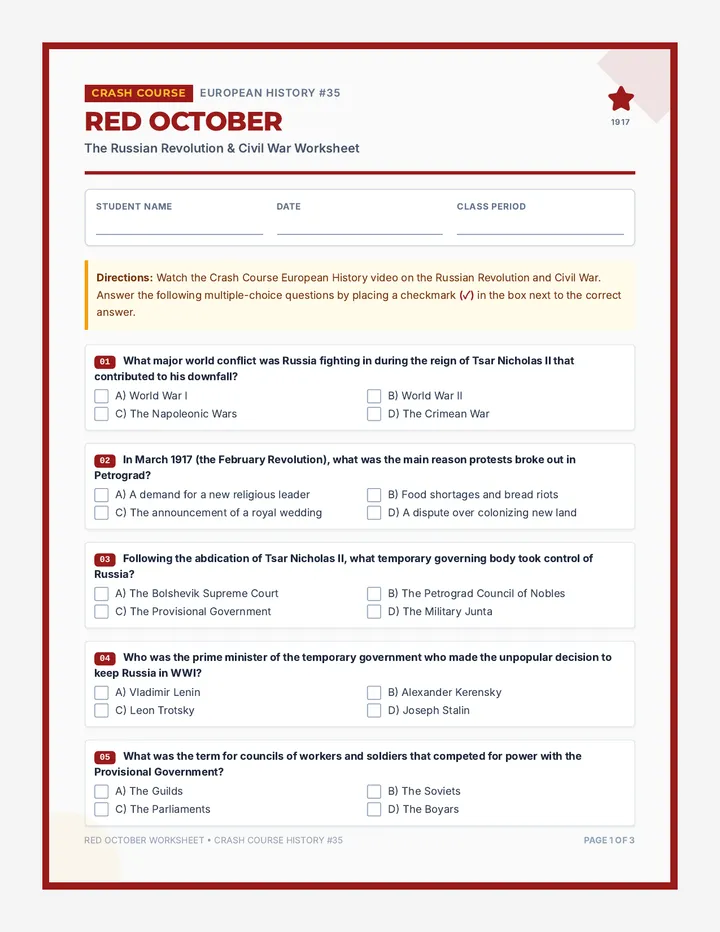
Red October Worksheet

Red Star Rising

A comprehensive history sequence focusing on 20th-century communist revolutions in Russia and China. This sequence uses Crash Course videos, detailed worksheets, complete answer keys, and accessible vocabulary flashcards to explore the collapse of old empires and the rise of communist states.

J

james.shaw

9

Lessons

History Sprint Pacing Guide

STAAR History Sprint

A comprehensive pacing guide and activity resource designed to cover the remaining 11th Grade US History TEKS before the STAAR test on April 16th. This lesson provides a day-by-day calendar for A/B block schedules and high-engagement activities for each remaining historical era.

BB

Bridgette Burdick

51
Modern Era Reader Part 1

The Modern Ledger

A comprehensive exploration of the 1990s through the modern day, covering technological shifts, political milestones, military conflicts, and cultural evolution in the United States.

CE

Chelsea Elliott

20
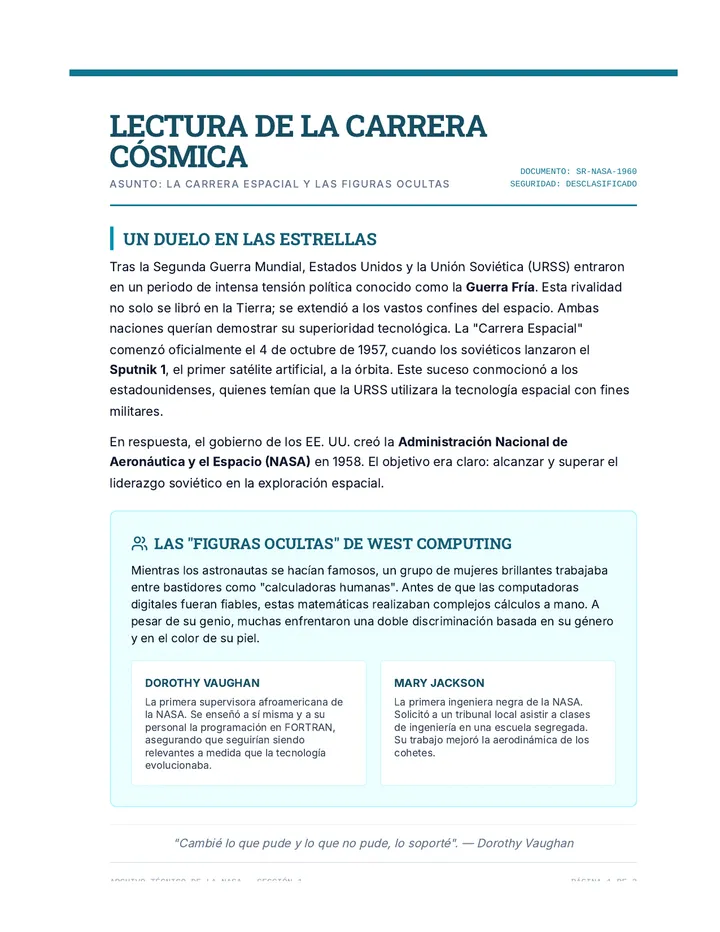
Cosmic Race Reading Text

Stellar Rivalry

A comprehensive exploration of the Space Race, highlighting the technological competition between the US and USSR, the essential contributions of African American women at NASA, and the international agreements that keep space a peaceful frontier.

RM

Robyn MacDonald

16
Freedom Struggles Unit Assessment

Freedom Struggles

A comprehensive lesson exploring the divergent paths to independence in India and Vietnam, examining non-violent resistance, armed struggle, and the influence of Cold War ideologies.

AH

Ashley Hopf

8
Mission Briefing Teacher Guide

Modern Era Missions

A 100-minute station-based lesson covering pivotal events from the 1970s to the modern era, including Stagflation, the Camp David Accords, Reaganomics, and the War on Terror. Students rotate through four 20-minute missions using primary sources, political cartoons, data mapping, and manipulatives to master STAAR-aligned content.

LF

Lindsey Foulks

9
Chronicle Study Guide Student

Modern Era Mastery

A comprehensive review and assessment package covering World History from the Enlightenment through the Cold War, aligned with state standards.

AH

Ashley Hopf

16