Lenny.com
Explore
Create
ActivitiesNewMathEnglish Language ArtsScience & EngineeringSocial StudiesGlobal LanguagesHealth & Physical EducationSpecial EducationCounseling & Life SkillsArts & CreativityESL
Lenny.com
Lenny.com
Explore
Create
ActivitiesNewMathEnglish Language ArtsScience & EngineeringSocial StudiesGlobal LanguagesHealth & Physical EducationSpecial EducationCounseling & Life SkillsArts & CreativityESL
Lenny.com
Social StudiesSocial Studies PracticesLocation WordsMapsOrder EventsChronology and CausationEvaluating SourcesHistorical ThinkingGeography, Humans, & the EnvironmentAmerican Symbols and LandmarksCitiesStatesState CapitalsRegions of the United StatesGeographic SkillsPhysical GeographyHuman GeographyRegional GeographyGeography of AfricaGeography of AsiaGeography of EuropeGeography of OceaniaGeography of the AmericasSociety and Environment of EuropeSociety and Environment of AsiaSociety and Environment of The AmericasSociety and Environment of the Middle EastSociety and Environment of AfricaHistoryPrehistoryComparing Ancient River CivilizationsAncient MesopotamiaAncient Egypt and KushAncient South AsiaEarly ChinaGreeceRome and the Byzantine EmpireAncient World HistoryNative Peoples of North AmericaNative Peoples of Mesoamerica and South AmericaAfrican EmpiresMedieval AsiaMedieval EuropeThe Silk RoadMedieval HistoryIslamic EmpiresWorld ReligionsRenaissance PeriodAge of ExplorationThe Thirteen ColoniesThe American RevolutionUS History Early RepublicFounding of the United StatesUS History AntebellumUS Civil WarReconstruction PeriodThe Gilded AgeUS ImperialismWorld ImperialismWorld War IUS History 1920sGreat DepressionWorld War IIThe Cold WarUS History 1950-60sUS History 1960s-70sWorld History 20th CenturyContemporary US HistoryContemporary World HistoryHolidaysCivics and GovernmentCitizenshipGovernment FoundationsThe ConstitutionUS ConstitutionExecutive BranchLegislative BranchJudicial BranchState and LocalPolitical ParticipationPublic PolicyPolitical SystemsPower and AuthoritySocial MovementsDefining DevianceTheories of DevianceCrime and Criminal JusticeEconomicsBasic Economic PrinciplesSupply and DemandWhat is MoneyEconomic FundamentalsMicroeconomicsMacroeconomicsBanking and FinanceEconomic SystemsGlobal EconomicsCorporations and PowerThe Changing WorkplaceUnemployment and LaborClass and InequalitySocial MobilityGlobal InequalityPsychologyHistory of PsychologyPsychology as a ScienceBrain and Nervous SystemNeuroscience and BehaviorGenetics and BehaviorSleep and ConsciousnessSensory ProcessesPerceptual OrganizationClassical ConditioningOperant ConditioningObservational LearningCognitive LearningMemory ProcessesThinking and Problem SolvingLanguage and CognitionTheories of MotivationStress and CopingPrenatal and Infant DevelopmentChildhood DevelopmentAdolescent DevelopmentAdulthood and AgingSelf and IdentitySocial CognitionSocial InfluenceAttraction and RelationshipsGroup BehaviorPrejudice and DiscriminationAnxiety and Mood DisordersClinical PsychologyForensic PsychologyPhilosophy & EthicsIntroduction to PhilosophyMajor Philosophers & IdeasMind and Body ProblemFree Will vs DeterminismEthics & MoralityReligion & PhilosophyPolitical Philosophy
Lenny.com

Solutions

Lenny for EducatorsLenny for SchoolsLenny for Districts

Product

ExploreSign inCreateSupportAbout

Resources

Getting startedMTSS Acceleration Program

© 2026 Lenny Learning Inc.

TermsPrivacyAccessibility
LinkedInInstagramX
Lenny

Medieval Asia

Political structures of the Tang, Song, and Ming dynasties alongside the rise of the Mongol Empire and feudal Japan. Examines cross-cultural exchange via the Silk Road and the spread of major religions across the continent.

Videos

How Leadership Styles Shaped the Mughal Empire

How Leadership Styles Shaped the Mughal Empire

This educational video presents a comparative case study of two major emperors of the Mughal Empire in India: Akbar and Aurangzeb. It begins by contextualizing the Mughal Empire within the "First Global Age," mentioning contemporaries like the Ottomans, Ashanti, Tokugawa Shogunate, and Qing Dynasty. The narrative then focuses on how these two specific leaders managed the immense challenge of governing a vast, religiously and culturally diverse population. The video contrasts Akbar's policies of religious tolerance, cultural integration, and decentralized administration with Aurangzeb's later approach of strict centralization, religious orthodoxy, and relentless military expansion. Key themes explored include the impact of leadership styles on political stability, the role of religious tolerance in unifying diverse populations, and the economic consequences of continuous warfare. The video delves into specific historical examples, such as Akbar's "Divine Faith" discussions and tax reforms versus Aurangzeb's imposition of Islamic law and the reinstatement of taxes on non-Muslims. It highlights the direct correlation between these administrative choices and the empire's rise and eventual decline. For educators, this video serves as an excellent tool for teaching cause-and-effect in history and comparative governance. It transforms abstract political concepts into concrete examples by pitting two distinct ruling philosophies against one another. The content encourages critical thinking by asking students to evaluate which leadership style was more effective and why, making it highly applicable for units on World History, Asian Studies, or Civics. The clear visual aids, including maps and historical miniature paintings, help students visualize the geography and culture of the period.

Miacademy & MiaPrep Learning ChannelMiacademy & MiaPrep Learning Channel

9mins 50s

Exploring the Geography and Cultures of East and Southeast Asia

Exploring the Geography and Cultures of East and Southeast Asia

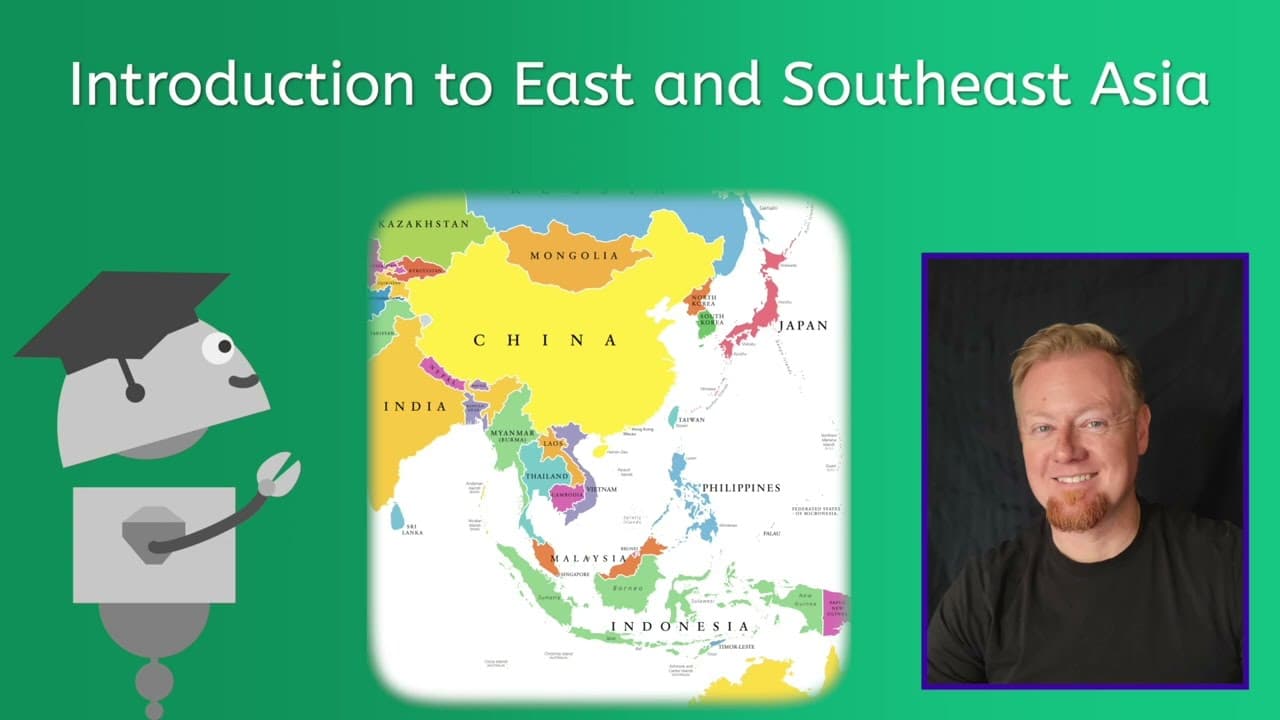
This comprehensive educational video takes students on a geographic and cultural journey through East and Southeast Asia. The lesson begins by identifying the specific nations that make up these two distinct regions, from the steppes of Mongolia to the archipelagos of Indonesia. It provides a historical overview that touches on ancient civilizations, the Silk Road, European colonization, and the political shifts of the 20th century, including the rise of communism in China, North Korea, and Vietnam.

Miacademy & MiaPrep Learning ChannelMiacademy & MiaPrep Learning Channel

10mins 22s

Introduction to South and East Asia: Following Marco Polo

Introduction to South and East Asia: Following Marco Polo

This engaging educational video serves as an introduction to a geography and history unit focused on South and East Asia. The presenter uses the historical narrative of Marco Polo's 24-year journey to frame the vastness and mystery of the region for students. By drawing a parallel between a student's first day at a new school and Marco Polo's encounter with foreign cultures, the video helps viewers empathize with the concept of "culture shock" and sensory overload, making distant historical events personally relatable.

Miacademy & MiaPrep Learning ChannelMiacademy & MiaPrep Learning Channel

4mins 57s

How Humans Harnessed Energy to Build Civilization

How Humans Harnessed Energy to Build Civilization

Hosted by Stan Muller, this episode of Crash Course World History explores the fundamental history of human energy consumption based on Alfred Crosby's book "Children of the Sun." The video traces humanity's journey from relying solely on muscle power to mastering fire, domesticating plants and animals, and eventually unlocking the massive energy stores within fossil fuels. It explains how these advancements allowed for civilization building, from the pyramids to modern metropolises, while emphasizing that almost all energy sources ultimately originate from the sun. The video covers key historical turning points including the Agricultural Revolution, the Industrial Revolution, and the modern reliance on electricity and the internal combustion engine. It provides a balanced look at different fuel sources—wood, coal, oil, and nuclear power—analyzing their efficiency, historical impact, and downsides. Significant attention is given to the exponential increase in energy usage since 1850 and the geopolitical and environmental consequences of this shift. For educators, this resource bridges the gap between science and history, demonstrating how physical laws (thermodynamics) shape human progress. It is an excellent tool for discussing the Anthropocene, the trade-offs of technological advancement, and the complex challenge of sustainability. The video sets up discussions on climate change, resource management, and the future of energy, making it highly relevant for both social studies and environmental science curriculums.
CrashCourseCrashCourse

7mins 21s

Comparing Mughal Emperors: Akbar vs. Aurangzeb

Comparing Mughal Emperors: Akbar vs. Aurangzeb

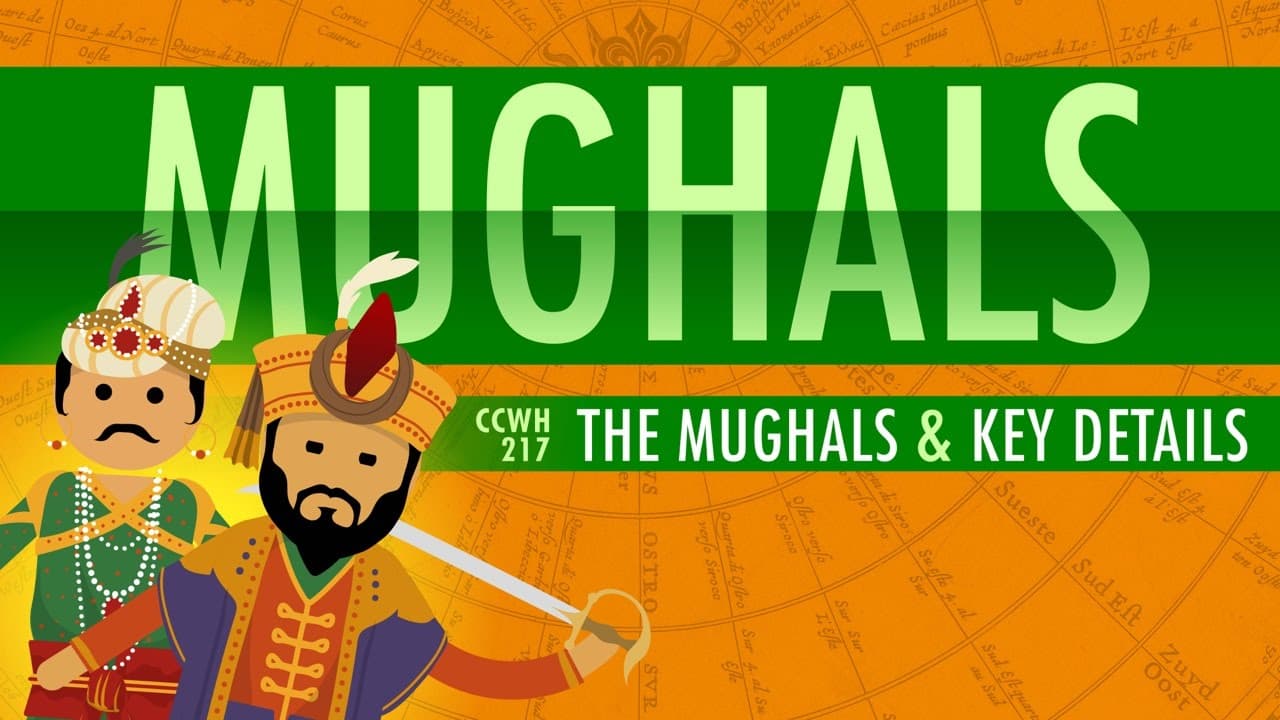
In this installment of Crash Course World History, John Green explores the history of the Mughal Empire in India, focusing specifically on the contrasting reigns and reputations of two of its most famous emperors: Akbar and Aurangzeb. The video moves beyond a simple timeline of events to examine how the empire was consolidated through administration, taxation, and military might, while also highlighting the cultural blending of Persian and Indian traditions that characterized the period. The core of the video is a historiographical analysis of how history is remembered versus how it actually happened. It challenges the traditional narrative that paints Akbar as the "good, tolerant" ruler and Aurangzeb as the "bad, intolerant" zealot who destroyed the empire. By presenting evidence that complicates these reputations—such as Akbar's brutality in war and Aurangzeb's pragmatic financial decisions—the video encourages viewers to question historical biases. This resource is highly valuable for teaching students not just about Indian history, but about the study of history itself. It demonstrates how modern political contexts (like anti-imperialism and Hindu nationalism) shape our understanding of the past. Teachers can use this video to introduce concepts of historiography, bias, and the complex nature of ruling a diverse empire.

CrashCourseCrashCourse

11mins 44s

How the Scientific Revolution Changed the World

How the Scientific Revolution Changed the World

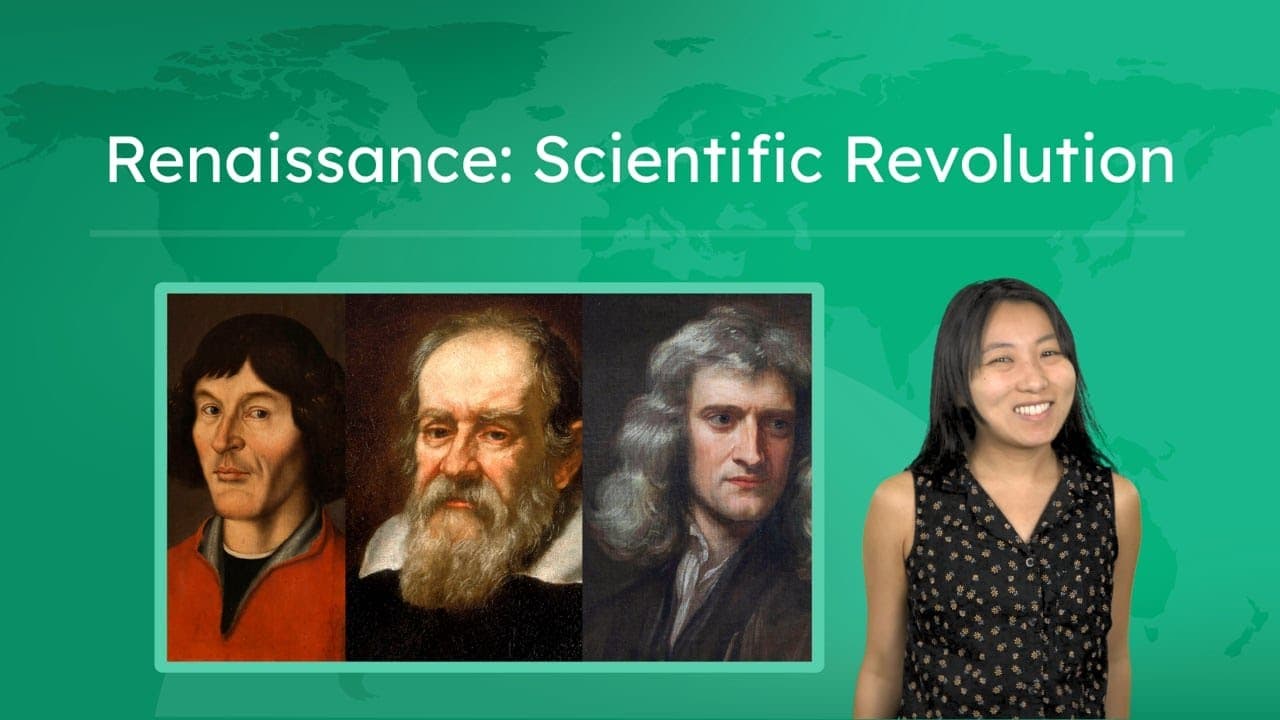
This educational video provides a comprehensive overview of the Scientific Revolution during the Renaissance, tracing its roots from the Islamic Golden Age to its profound impact on European society and the modern world. The narrative explains how the shift from relying on tradition and religious authority to using observation, experimentation, and reason transformed humanity's understanding of the universe. It highlights the interconnectedness of global history by acknowledging the crucial role Islamic scholars played in preserving and advancing Greek and Roman knowledge, which later fueled European scientific breakthroughs. The video profiles key historical figures including Ibn al-Haytham and Al-Khwarizmi from the Islamic world, and Copernicus, Galileo, and Isaac Newton from Europe. It details their specific contributions—from the development of algebra and optics to the heliocentric theory and the laws of gravity. Beyond the science, the video explores the ripple effects of these discoveries, explaining how the scientific method influenced navigation, global trade, economic power, and even political philosophies leading to democracy and human rights. This resource is highly valuable for World History, Science, and Social Studies classrooms. It encourages interdisciplinary learning by connecting scientific progress with political and social change. Teachers can use this video to teach the importance of critical thinking, the value of cross-cultural knowledge exchange, and the historical struggle between established authority and new evidence-based ideas.

Miacademy & MiaPrep Learning ChannelMiacademy & MiaPrep Learning Channel

12mins 40s

Sequences

Detective Evidence Log Worksheet

Nation State Detectives

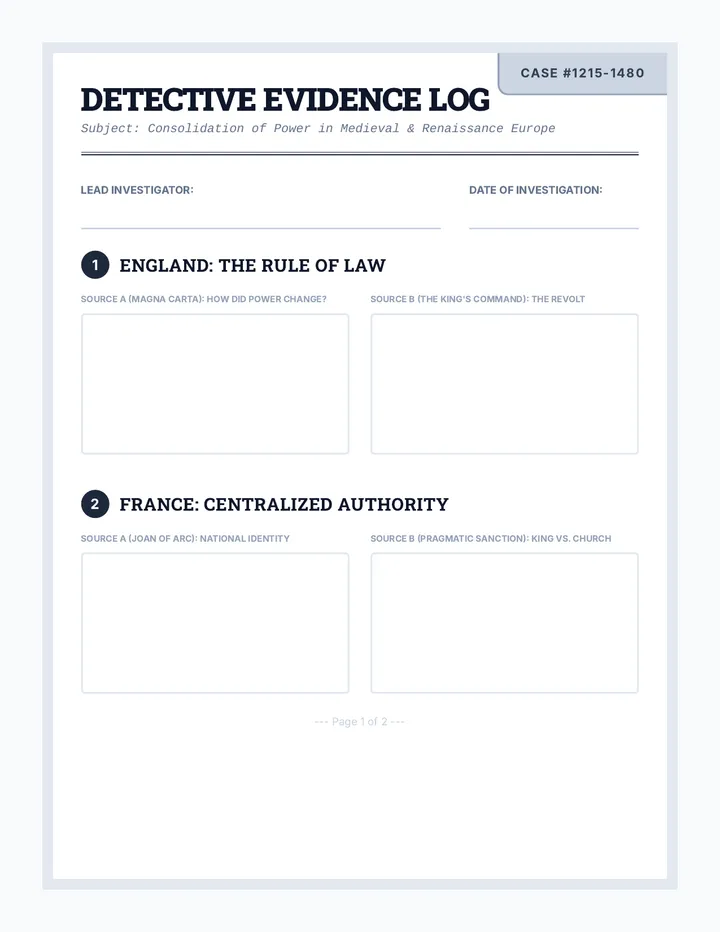
A comprehensive middle school history unit where students act as 'history detectives' to investigate the rise of nation-states in England, France, Spain, and Russia through primary source analysis.

HO

Helen O'Keefe

11
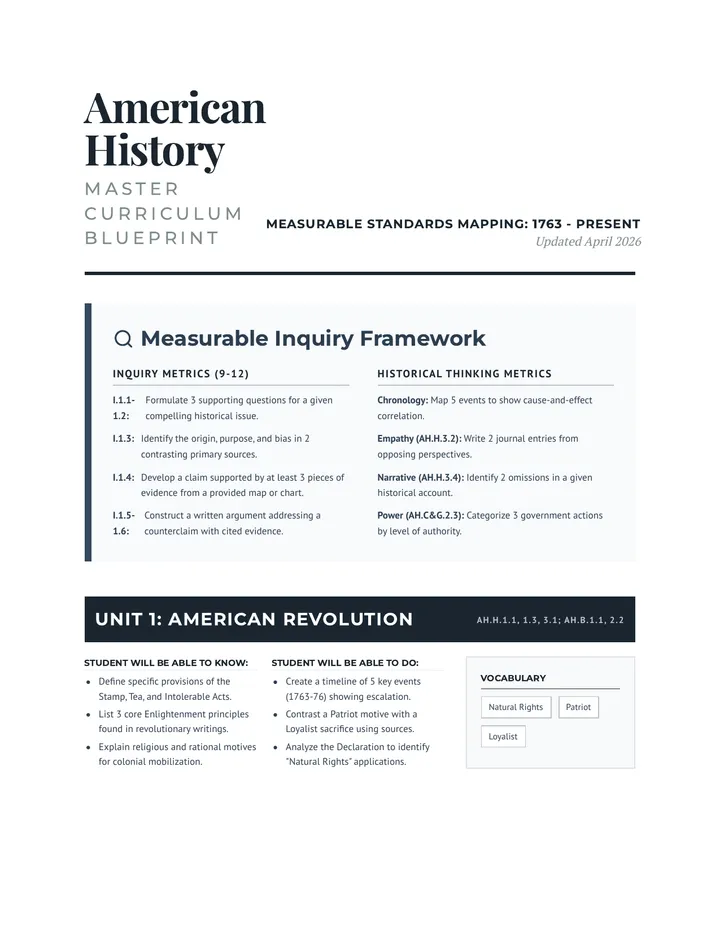
Curriculum Blueprint Document v2

History Horizon Sequence

A comprehensive high school curriculum plan for American History, covering 13 units from the American Revolution to the modern era, aligned with North Carolina Social Studies standards.

AK

Amity Kea

21
Blueprint Prep Slides

Regents Blueprint Series

An intensive review series for the Modern World History NYS Regents exam, structured as high-speed 30-minute 'blueprint' sessions focusing on key units and test-taking strategies.

J

james.shaw

18
World in Transition Worksheet

Medieval Worlds

A comprehensive 10-lesson unit exploring the political, economic, religious, and technological landscape of the Middle Ages across Western Europe, Japan, and the Islamic Empire. Students will analyze feudal systems, cultural achievements, and global connections through slides, guided activities, and comparative studies.

J

joseph.vida

12
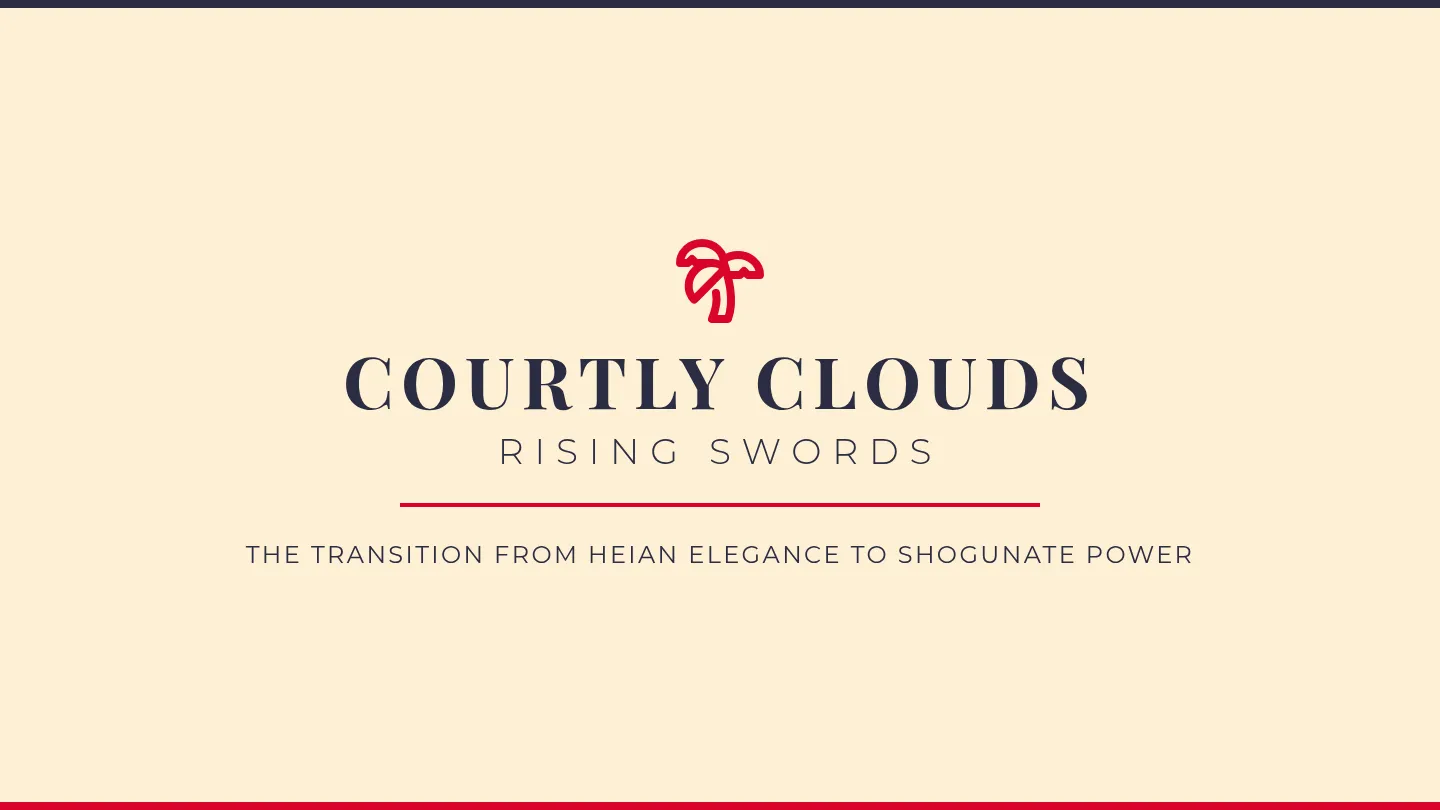
Courtly Clouds Slides

Shoguns and Samurai

This sequence explores the development of feudalism in Japan, contrasting the theoretical power of the Emperor with the actual power of the Shogunate. Students will analyze the social hierarchy, the code of Bushido, the chaos of the Sengoku period, and the eventual stability of Tokugawa isolationism.

15
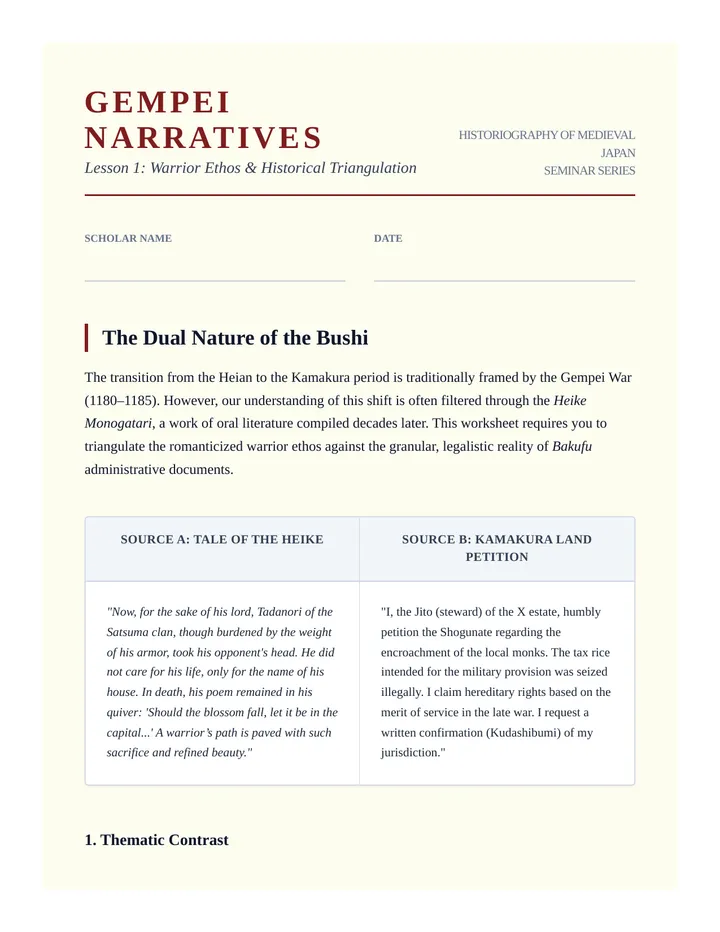
Gempei Triangulation Handout

Japanese Power and Class

A graduate-level exploration of the historiography of medieval Japan, focusing on power structures, class dynamics, and the critical evaluation of 'feudalism' as a historical category. Students engage with primary sources from the Kamakura through Sengoku periods.

10

Lessons

Explorer Epochs Wall Chart

Early World Explorers

A comprehensive lesson on early world exploration from 300 BCE to 1500 CE, focusing on the geographical, cultural, and religious impacts of key explorers across different continents.

J

jcasey

14
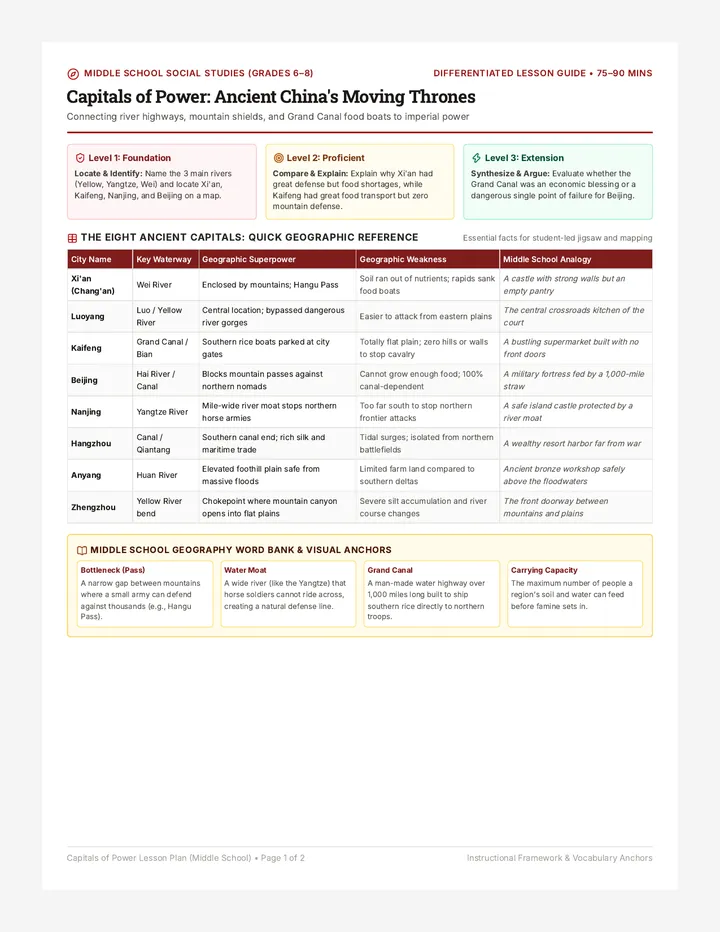
Capitals of Power Lesson Plan

Capitals of Power

An immersive geography and history investigation exploring China's eight ancient capitals, examining how river systems, mountain barriers, and agricultural heartlands dictated imperial power centers over four millennia. Students trace spatial shifts across China's major geographic zones through interactive mapping, comparative trade-off analysis, and strategic case studies.

DB

Danielle Burham

6
Divine Crossroads Slides

Divine Crossroads

This lesson explores the historical and philosophical interaction between Buddhism and Christianity in Japan. Students will examine core beliefs, the history of Jesuit missions and the 'Hidden Christians,' and how these faiths have uniquely blended into modern Japanese cultural practices.

LR

Linda Rector

5
Caravan Quest Slides

Silk Road Caravan

A comprehensive activity-based lesson on the Silk Road, focusing on trade, geography, and cultural exchange through a merchant simulation.

MR

Mi Rendon

4
Inquiry Project Teacher Guide

Blended Roots Inquiry

An inquiry-based project where students research the cultural transformation of a Latin American country during the colonial era, focusing on the blending of Spanish, Indigenous, and African influences in religion, language, and social structures.

KT

Kyle Trocolla

6
Shogun Shadows Slides

Shogun Shadows

A comprehensive lesson exploring the enduring influence of the Shogunate on modern Japanese culture, politics, and society. Students examine the transition from feudalism to modernity and identify the 'shadows' of the Shogun in today's world.

S

sarah.bowman3

3