Lenny.com
Explore
Create
ActivitiesNewMathEnglish Language ArtsScience & EngineeringSocial StudiesGlobal LanguagesHealth & Physical EducationSpecial EducationCounseling & Life SkillsArts & CreativityESL
Lenny.com
Lenny.com
Explore
Create
ActivitiesNewMathEnglish Language ArtsScience & EngineeringSocial StudiesGlobal LanguagesHealth & Physical EducationSpecial EducationCounseling & Life SkillsArts & CreativityESL
Lenny.com
Social StudiesSocial Studies PracticesLocation WordsMapsOrder EventsChronology and CausationEvaluating SourcesHistorical ThinkingGeography, Humans, & the EnvironmentAmerican Symbols and LandmarksCitiesStatesState CapitalsRegions of the United StatesGeographic SkillsPhysical GeographyHuman GeographyRegional GeographyGeography of AfricaGeography of AsiaGeography of EuropeGeography of OceaniaGeography of the AmericasSociety and Environment of EuropeSociety and Environment of AsiaSociety and Environment of The AmericasSociety and Environment of the Middle EastSociety and Environment of AfricaHistoryPrehistoryComparing Ancient River CivilizationsAncient MesopotamiaAncient Egypt and KushAncient South AsiaEarly ChinaGreeceRome and the Byzantine EmpireAncient World HistoryNative Peoples of North AmericaNative Peoples of Mesoamerica and South AmericaAfrican EmpiresMedieval AsiaMedieval EuropeThe Silk RoadMedieval HistoryIslamic EmpiresWorld ReligionsRenaissance PeriodAge of ExplorationThe Thirteen ColoniesThe American RevolutionUS History Early RepublicFounding of the United StatesUS History AntebellumUS Civil WarReconstruction PeriodThe Gilded AgeUS ImperialismWorld ImperialismWorld War IUS History 1920sGreat DepressionWorld War IIThe Cold WarUS History 1950-60sUS History 1960s-70sWorld History 20th CenturyContemporary US HistoryContemporary World HistoryHolidaysCivics and GovernmentCitizenshipGovernment FoundationsThe ConstitutionUS ConstitutionExecutive BranchLegislative BranchJudicial BranchState and LocalPolitical ParticipationPublic PolicyPolitical SystemsPower and AuthoritySocial MovementsDefining DevianceTheories of DevianceCrime and Criminal JusticeEconomicsBasic Economic PrinciplesSupply and DemandWhat is MoneyEconomic FundamentalsMicroeconomicsMacroeconomicsBanking and FinanceEconomic SystemsGlobal EconomicsCorporations and PowerThe Changing WorkplaceUnemployment and LaborClass and InequalitySocial MobilityGlobal InequalityPsychologyHistory of PsychologyPsychology as a ScienceBrain and Nervous SystemNeuroscience and BehaviorGenetics and BehaviorSleep and ConsciousnessSensory ProcessesPerceptual OrganizationClassical ConditioningOperant ConditioningObservational LearningCognitive LearningMemory ProcessesThinking and Problem SolvingLanguage and CognitionTheories of MotivationStress and CopingPrenatal and Infant DevelopmentChildhood DevelopmentAdolescent DevelopmentAdulthood and AgingSelf and IdentitySocial CognitionSocial InfluenceAttraction and RelationshipsGroup BehaviorPrejudice and DiscriminationAnxiety and Mood DisordersClinical PsychologyForensic PsychologyPhilosophy & EthicsIntroduction to PhilosophyMajor Philosophers & IdeasMind and Body ProblemFree Will vs DeterminismEthics & MoralityReligion & PhilosophyPolitical Philosophy
Lenny.com

Solutions

Lenny for EducatorsLenny for SchoolsLenny for Districts

Product

ExploreSign inCreateSupportAbout

Resources

Getting startedMTSS Acceleration Program

Newsletters

School Funding Newsletter

© 2026 Lenny Learning Inc.

TermsPrivacyAccessibility
LinkedInInstagramX
Lenny

Islamic Empires

Expansion and administration of the Umayyad, Abbasid, and Ottoman caliphates. Examines the Islamic Golden Age's contributions to science, philosophy, and global trade networks.

Videos

Exploring the Origins and Geography of Central and Southwest Asia

Exploring the Origins and Geography of Central and Southwest Asia

This educational video provides a comprehensive overview of the geography, history, and modern geopolitical landscape of Central and Southwest Asia. Hosted by Brian, the lesson begins by establishing the region's historical significance as the "birthplace of civilization" and the origin of three major world religions: Judaism, Christianity, and Islam. It traces the transition from the Agricultural Revolution to the rise of empires like the Ottomans, and explains how World War I and the subsequent protectorate system shaped modern national borders.

Miacademy & MiaPrep Learning ChannelMiacademy & MiaPrep Learning Channel

8mins 30s

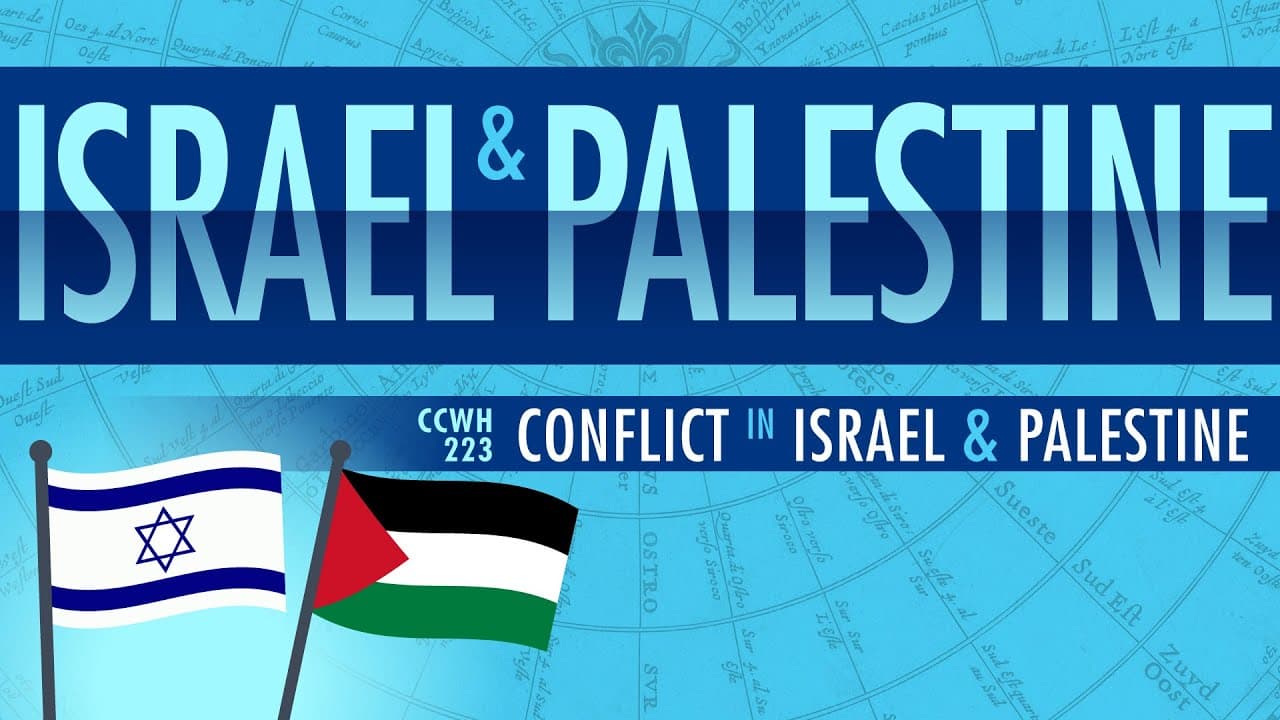
The History of the Conflict in Israel and Palestine

The History of the Conflict in Israel and Palestine

This fast-paced educational video provides a comprehensive historical overview of the conflict between Israel and Palestine, challenging the common misconception that the struggle is the result of ancient religious hatreds. Narrated by John Green, the video traces the roots of the modern conflict back to the late 19th century, examining the rise of competing nationalisms—Zionism and Arab nationalism—under the Ottoman Empire and the subsequent British Mandate. It details the complex web of contradictory promises made by the British during World War I, the impact of the Holocaust and World War II, and the pivotal 1948 and 1967 wars that shaped the current geopolitical map. Key themes explored include the effects of colonialism and "divide and rule" policies, the role of international bodies like the United Nations, and the tension between security and sovereignty. The video covers critical events such as the UN Partition Plan, the Nakba, the Intifadas, the rise of the PLO and Hamas, and the failed peace processes of the 1990s and 2000s. It places significant emphasis on understanding the legitimacy of the historical narratives held by both sides, framing the conflict as a dispute over land and nationhood rather than purely theology. For educators, this video serves as an essential primer for High School World History or Current Events units. It models historical thinking by analyzing primary sources, maps, and shifting demographics. The content encourages students to move beyond polarizing headlines and understand the internal logic of both Israeli and Palestinian perspectives. It provides a neutral, fact-based foundation for discussing difficult topics like military occupation, terrorism, refugees, and the two-state solution, making it a powerful tool for fostering critical thinking and empathy.
CrashCourseCrashCourse

12mins 53s

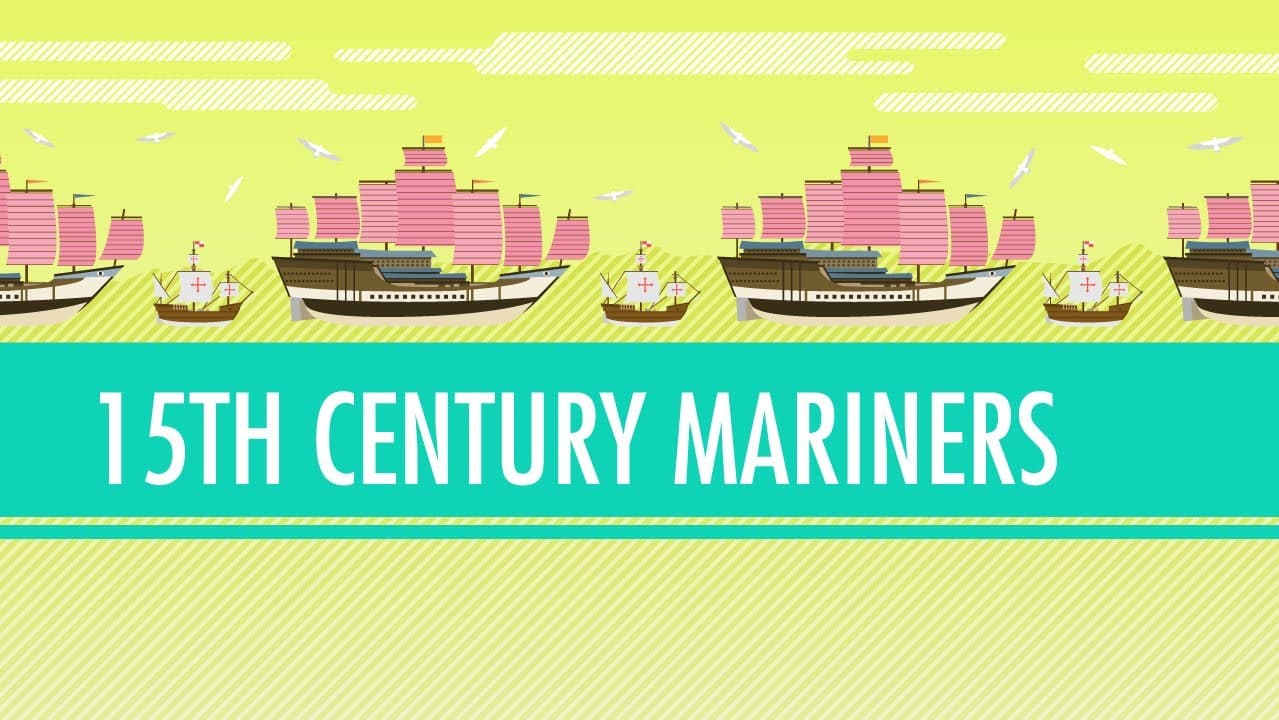
Who Was the Greatest Mariner of the 15th Century?

Who Was the Greatest Mariner of the 15th Century?

This fast-paced World History video compares and contrasts three major 15th-century mariners: China's Zheng He, Portugal's Vasco da Gama, and Spain's Christopher Columbus. It moves beyond the traditional Eurocentric narrative of exploration to examine the massive scale of Chinese naval expeditions and the aggressive trading tactics of the Portuguese in the Indian Ocean. The host, John Green, deconstructs common myths surrounding these figures, particularly focusing on the technological disparities between their fleets and their differing motivations—ranging from imperial prestige to religious zeal and economic extortion. The video explores key historical themes such as the 'Tribute System' of the Ming Dynasty, the concept of a 'Trading Post Empire' established by the Portuguese, and the misconceptions regarding Columbus's navigational skills and beliefs. It provides a detailed look at maritime technology, contrasting the gigantic Chinese treasure ships with the modest European vessels, and explains the geopolitical shifts that led nations to either embrace or abandon naval exploration. For educators, this resource serves as an excellent tool for teaching comparative history and critical thinking. It encourages students to evaluate historical "greatness" through different lenses—administrative competence, navigational daring, or long-term historical impact. The video is particularly useful for units on the Age of Exploration, Global Trade Networks, and the shift from regional to global history.

CrashCourseCrashCourse

10mins 38s

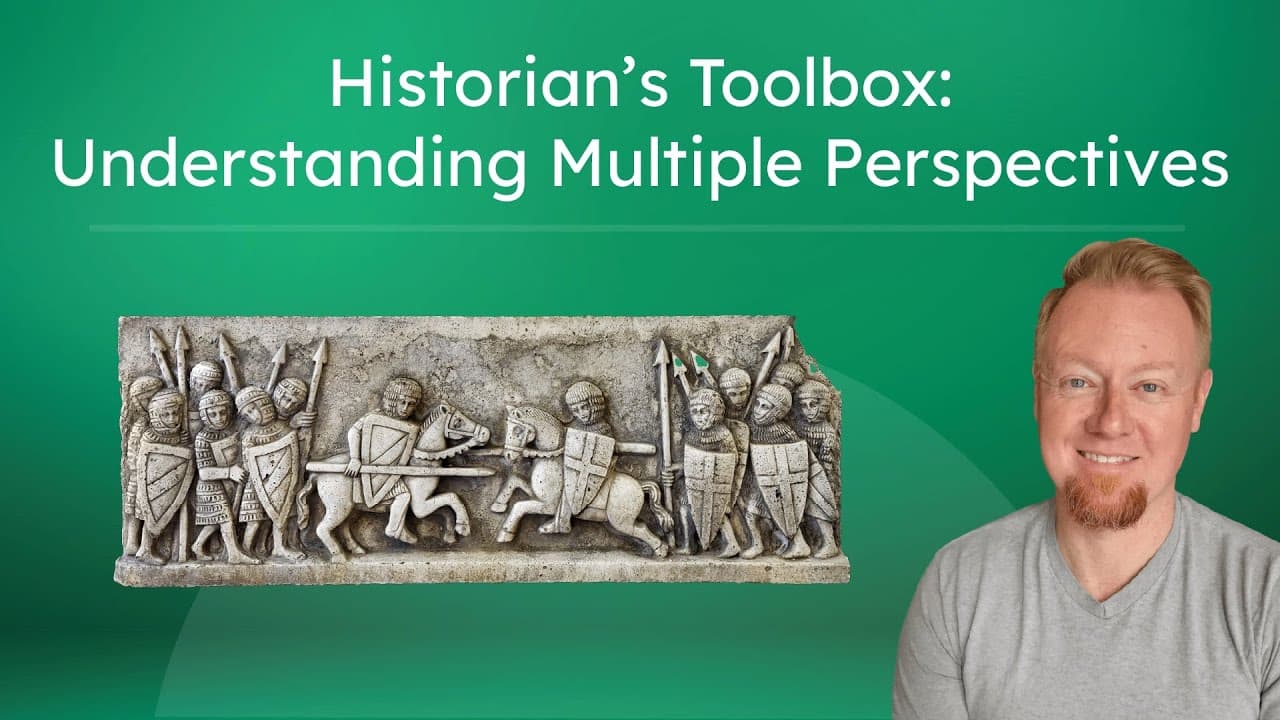
Discovering History Through Multiple Perspectives

Discovering History Through Multiple Perspectives

This engaging educational video introduces students to the critical historical concept of historiography—specifically, the importance of analyzing multiple perspectives to understand the past. Through a clever retelling of "Jack and the Beanstalk" from the Giant's point of view, the narrator demonstrates how changing the storyteller changes the story itself. The video transitions from this accessible analogy to real-world historical examples, showing how differently events are perceived depending on who is telling the tale.

Miacademy & MiaPrep Learning ChannelMiacademy & MiaPrep Learning Channel

11mins 43s

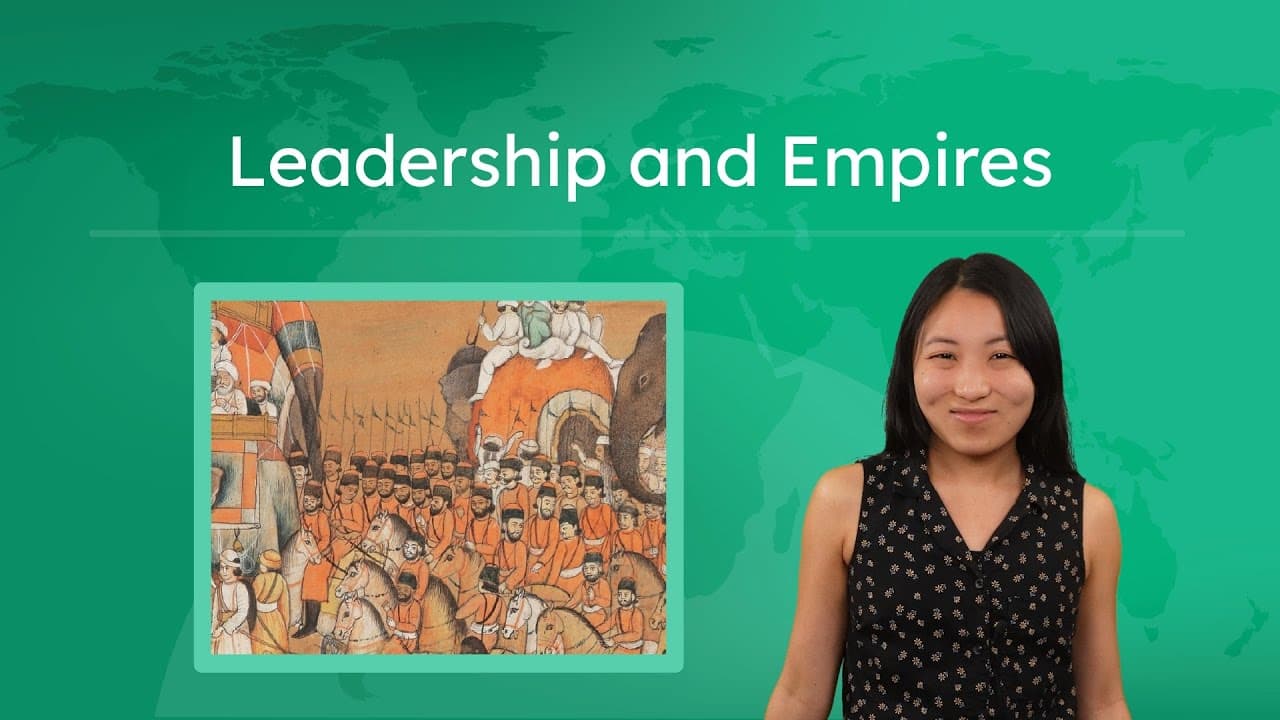
How Leadership Styles Shaped the Mughal Empire

How Leadership Styles Shaped the Mughal Empire

This educational video presents a comparative case study of two major emperors of the Mughal Empire in India: Akbar and Aurangzeb. It begins by contextualizing the Mughal Empire within the "First Global Age," mentioning contemporaries like the Ottomans, Ashanti, Tokugawa Shogunate, and Qing Dynasty. The narrative then focuses on how these two specific leaders managed the immense challenge of governing a vast, religiously and culturally diverse population. The video contrasts Akbar's policies of religious tolerance, cultural integration, and decentralized administration with Aurangzeb's later approach of strict centralization, religious orthodoxy, and relentless military expansion. Key themes explored include the impact of leadership styles on political stability, the role of religious tolerance in unifying diverse populations, and the economic consequences of continuous warfare. The video delves into specific historical examples, such as Akbar's "Divine Faith" discussions and tax reforms versus Aurangzeb's imposition of Islamic law and the reinstatement of taxes on non-Muslims. It highlights the direct correlation between these administrative choices and the empire's rise and eventual decline. For educators, this video serves as an excellent tool for teaching cause-and-effect in history and comparative governance. It transforms abstract political concepts into concrete examples by pitting two distinct ruling philosophies against one another. The content encourages critical thinking by asking students to evaluate which leadership style was more effective and why, making it highly applicable for units on World History, Asian Studies, or Civics. The clear visual aids, including maps and historical miniature paintings, help students visualize the geography and culture of the period.

Miacademy & MiaPrep Learning ChannelMiacademy & MiaPrep Learning Channel

9mins 50s

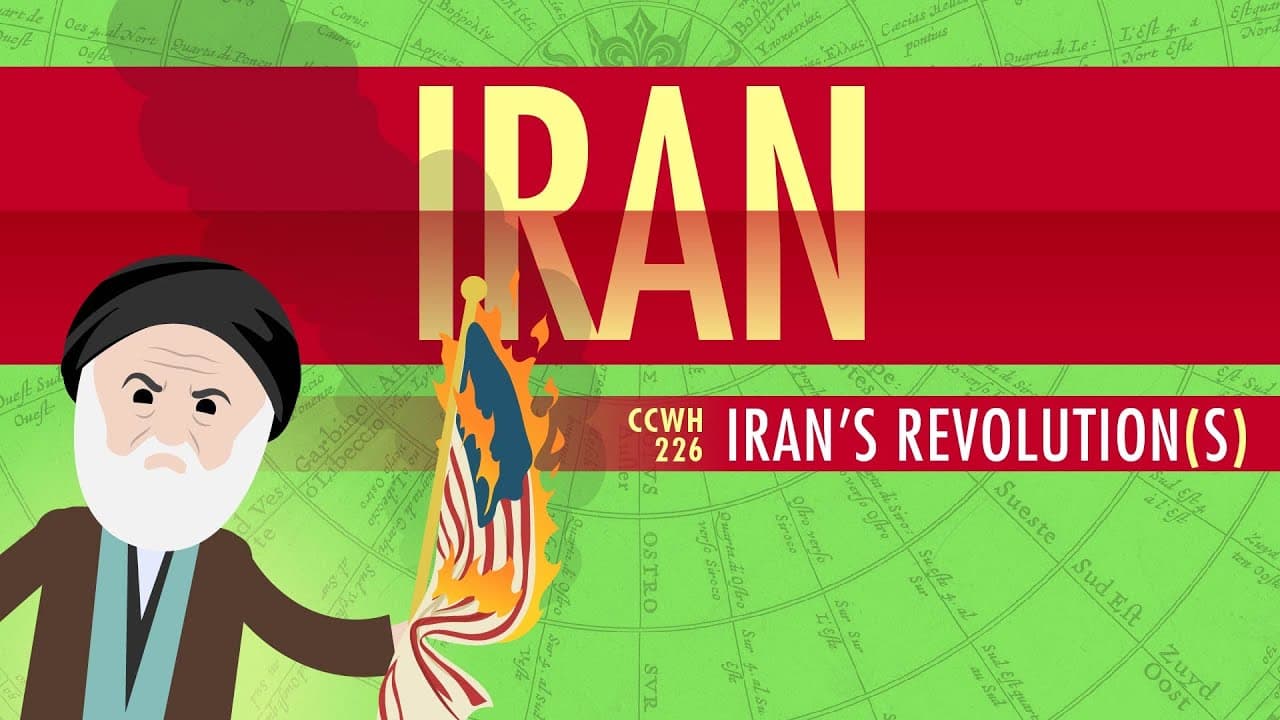
Understanding the Iranian Revolution of 1979

Understanding the Iranian Revolution of 1979

In this episode of Crash Course World History, John Green explores the complex history of Iran, focusing specifically on the causes and consequences of the Iranian Revolution of 1979. The video dismantles common simplifications about the region, distinguishing Iranians (Persians) from Arabs and explaining the historical roots of Shia Islam. It traces the lineage of Iranian leadership from the Safavid and Qajar dynasties to the Pahlavi Shahs, setting the stage for the dramatic political shifts of the 20th century. The narrative examines the crucial role of foreign intervention, particularly the British and American involvement in the 1953 coup that overthrew Prime Minister Mohammad Mosaddegh, and how this fueled anti-Western sentiment. Green analyzes the Shah's "White Revolution," which brought economic modernization but also political repression, ultimately alienating both the clergy and the working class. The video details the rise of Ayatollah Khomeini and the transition from a monarchy to an Islamic Republic, highlighting the unique and contradictory government structure that blends theocratic authority with democratic elements. For educators, this video is an invaluable resource for teaching modern Middle Eastern history, the Cold War, and political science. It provides a nuanced look at how religious and secular motivations can intertwine in revolutionary movements. The content is excellent for sparking discussions on the long-term impacts of imperialism, the nature of theocracies versus democracies, and the complexities of US-Iran relations, helping students move beyond headlines to understand the deep historical context of current events.

CrashCourseCrashCourse

13mins 41s

Materials

Source Clash Task Cards

Source Clash Task Cards

A 5-page printable task card set featuring eight paired-source historical corroboration bellringers, with Card 07 specifically detailing when and why the Alternative Center for Excellence (ACE) in Danbury CT opened in 1977, paired with a weekly student analysis log.

KT

Kyle Trocolla

Sequences

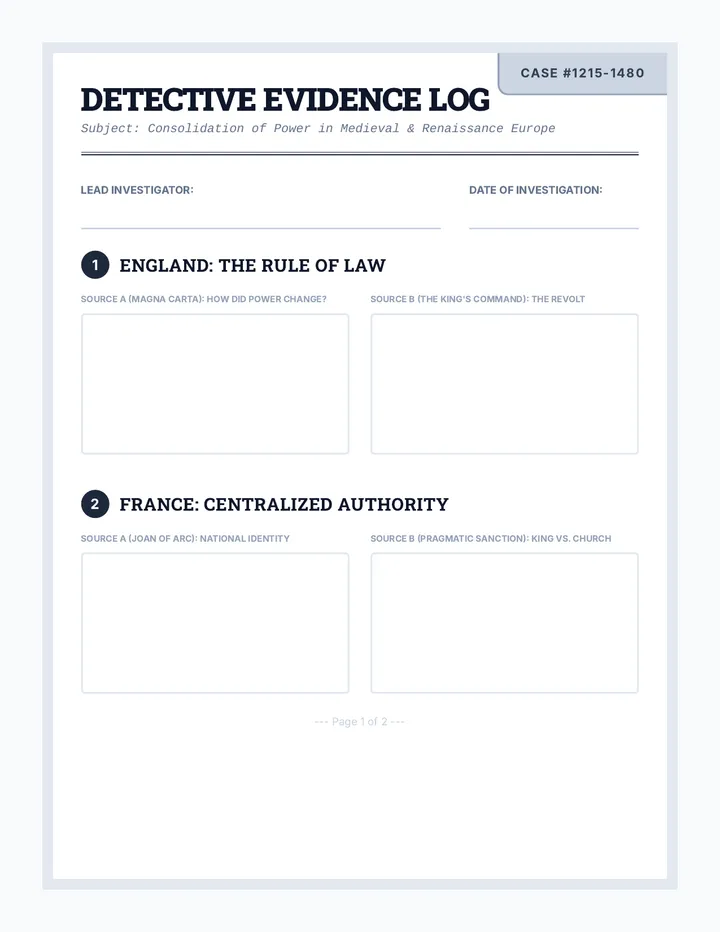
Detective Evidence Log Worksheet

Nation State Detectives

A comprehensive middle school history unit where students act as 'history detectives' to investigate the rise of nation-states in England, France, Spain, and Russia through primary source analysis.

HO

Helen O'Keefe

11
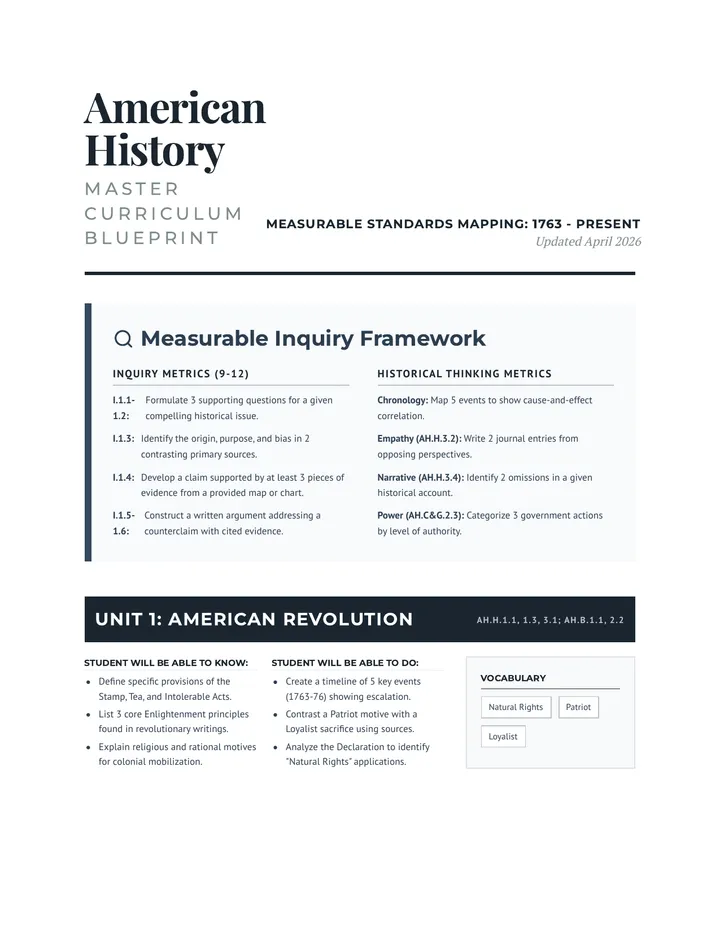
Curriculum Blueprint Document v2

History Horizon Sequence

A comprehensive high school curriculum plan for American History, covering 13 units from the American Revolution to the modern era, aligned with North Carolina Social Studies standards.

AK

Amity Kea

21
Blueprint Prep Slides

Regents Blueprint Series

An intensive review series for the Modern World History NYS Regents exam, structured as high-speed 30-minute 'blueprint' sessions focusing on key units and test-taking strategies.

J

james.shaw

18
World in Transition Worksheet

Medieval Worlds

A comprehensive 10-lesson unit exploring the political, economic, religious, and technological landscape of the Middle Ages across Western Europe, Japan, and the Islamic Empire. Students will analyze feudal systems, cultural achievements, and global connections through slides, guided activities, and comparative studies.

J

joseph.vida

12
Nation-State Navigator Worksheet

Crown and Country

An exploration of the transition from feudal fragmentation into centralized nation-states in England, France, Spain, and Russia.

HO

Helen O'Keefe

12
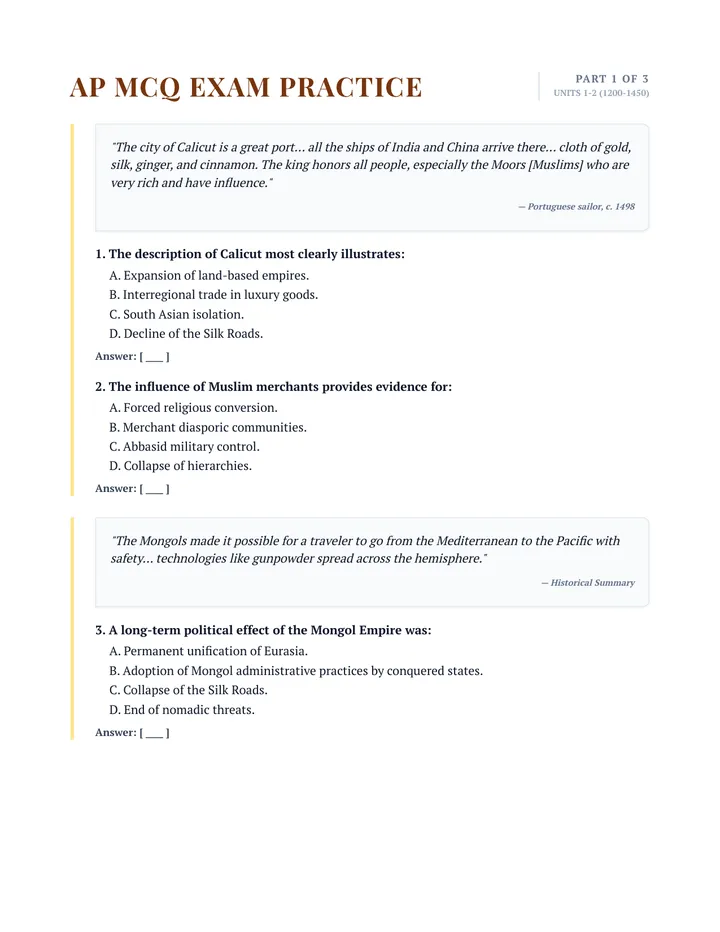
Interconnectivity Practice Questions

AP MCQ Vault

A focused AP World History practice series consisting exclusively of stimulus-based multiple choice questions and detailed answer keys covering Units 1-9.

J

james.shaw

6

Lessons

Explorer Epochs Wall Chart

Early World Explorers

A comprehensive lesson on early world exploration from 300 BCE to 1500 CE, focusing on the geographical, cultural, and religious impacts of key explorers across different continents.

J

jcasey

14
Islam Foundations Slides

Islamic Origins

A foundational exploration of the origins of Islam, the life of Prophet Muhammad, the significance of the Quran, and the growth of the Islamic empire.

PB

Paula Bakerian

4
Islam Review Worksheet

Islam Review Quest

A comprehensive review lesson focused on the foundational teachings, sacred texts, and practices of Islam, emphasizing active reading and question type identification.

EV

Erin Venuti

2
Caravan Quest Slides

Silk Road Caravan

A comprehensive activity-based lesson on the Silk Road, focusing on trade, geography, and cultural exchange through a merchant simulation.

MR

Mi Rendon

4
Global Crossings Quiz Sheet

Chronicle Checkpoints

A comprehensive weekly assessment suite featuring high-quality multiple choice and short answer questions designed to measure student mastery of major World History themes and US History eras.

AH

Ashley Hopf

6
Tectonic Shifts Worksheet

Tectonic Shifts Analysis

An exploration of major historical turning points, focusing on social and economic shifts from the Feudal era through the 20th century. Includes a narrative reading, analysis worksheets, and instructional slides.

TH

Thomas Harris

5