Lenny.com
Explore
Create
ActivitiesNewMathEnglish Language ArtsScience & EngineeringSocial StudiesGlobal LanguagesHealth & Physical EducationSpecial EducationCounseling & Life SkillsArts & CreativityESL
Lenny.com
Lenny.com
Explore
Create
ActivitiesNewMathEnglish Language ArtsScience & EngineeringSocial StudiesGlobal LanguagesHealth & Physical EducationSpecial EducationCounseling & Life SkillsArts & CreativityESL
Lenny.com

Physical Geography

Earth’s natural landforms, climate zones, and tectonic processes define the physical environment. Examines how water systems and ecosystems shape the planet’s surface across various regions.

Lenny.com

Solutions

Lenny for EducatorsLenny for SchoolsLenny for Districts

Product

ExploreSign inCreateSupportAbout

Resources

Getting startedMTSS Acceleration Program

Newsletters

School Funding Newsletter

© 2026 Lenny Learning Inc.

TermsPrivacyAccessibility
LinkedInInstagramX
Lenny
Social StudiesSocial Studies PracticesLocation WordsMapsOrder EventsChronology and CausationEvaluating SourcesHistorical ThinkingGeography, Humans, & the EnvironmentAmerican Symbols and LandmarksCitiesStatesState CapitalsRegions of the United StatesGeographic SkillsPhysical GeographyHuman GeographyRegional GeographyGeography of AfricaGeography of AsiaGeography of EuropeGeography of OceaniaGeography of the AmericasSociety and Environment of EuropeSociety and Environment of AsiaSociety and Environment of The AmericasSociety and Environment of the Middle EastSociety and Environment of AfricaHistoryPrehistoryComparing Ancient River CivilizationsAncient MesopotamiaAncient Egypt and KushAncient South AsiaEarly ChinaGreeceRome and the Byzantine EmpireAncient World HistoryNative Peoples of North AmericaNative Peoples of Mesoamerica and South AmericaAfrican EmpiresMedieval AsiaMedieval EuropeThe Silk RoadMedieval HistoryIslamic EmpiresWorld ReligionsRenaissance PeriodAge of ExplorationThe Thirteen ColoniesThe American RevolutionUS History Early RepublicFounding of the United StatesUS History AntebellumUS Civil WarReconstruction PeriodThe Gilded AgeUS ImperialismWorld ImperialismWorld War IUS History 1920sGreat DepressionWorld War IIThe Cold WarUS History 1950-60sUS History 1960s-70sWorld History 20th CenturyContemporary US HistoryContemporary World HistoryHolidaysCivics and GovernmentCitizenshipGovernment FoundationsThe ConstitutionUS ConstitutionExecutive BranchLegislative BranchJudicial BranchState and LocalPolitical ParticipationPublic PolicyPolitical SystemsPower and AuthoritySocial MovementsDefining DevianceTheories of DevianceCrime and Criminal JusticeEconomicsBasic Economic PrinciplesSupply and DemandWhat is MoneyEconomic FundamentalsMicroeconomicsMacroeconomicsBanking and FinanceEconomic SystemsGlobal EconomicsCorporations and PowerThe Changing WorkplaceUnemployment and LaborClass and InequalitySocial MobilityGlobal InequalityPsychologyHistory of PsychologyPsychology as a ScienceBrain and Nervous SystemNeuroscience and BehaviorGenetics and BehaviorSleep and ConsciousnessSensory ProcessesPerceptual OrganizationClassical ConditioningOperant ConditioningObservational LearningCognitive LearningMemory ProcessesThinking and Problem SolvingLanguage and CognitionTheories of MotivationStress and CopingPrenatal and Infant DevelopmentChildhood DevelopmentAdolescent DevelopmentAdulthood and AgingSelf and IdentitySocial CognitionSocial InfluenceAttraction and RelationshipsGroup BehaviorPrejudice and DiscriminationAnxiety and Mood DisordersClinical PsychologyForensic PsychologyPhilosophy & EthicsIntroduction to PhilosophyMajor Philosophers & IdeasMind and Body ProblemFree Will vs DeterminismEthics & MoralityReligion & PhilosophyPolitical Philosophy

Videos

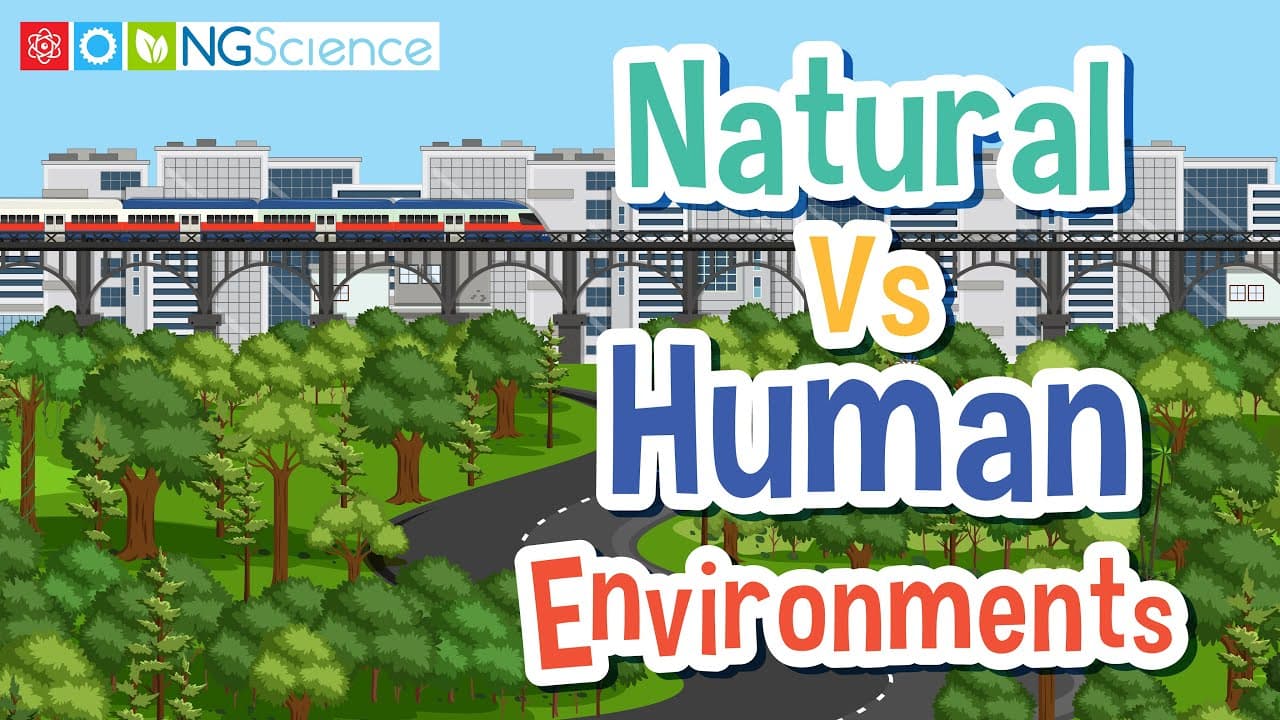
Comparing Natural and Human-Made Environments

Comparing Natural and Human-Made Environments

This educational video provides a clear and visually rich comparison between natural environments and human-made environments. It begins by defining the concept of "environment" as the surroundings in which we live, including air, water, land, and ecosystems. The video then takes viewers on a journey through pristine natural landscapes like rainforests, deserts, and mountains, explaining how these areas function without human interference. It contrasts these with human environments such as cities, farms, and industrial zones, illustrating how human ingenuity alters landscapes to suit societal needs.

Next Generation ScienceNext Generation Science

7mins 34s

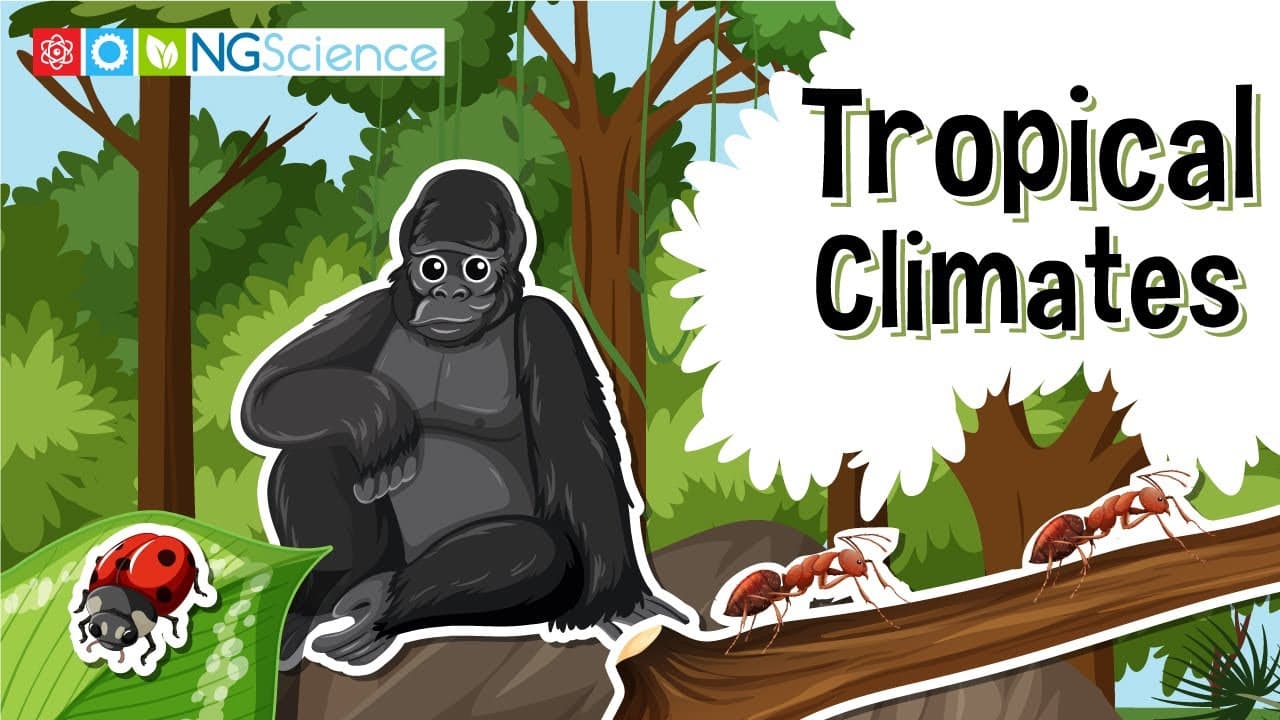
Exploring Tropical Climates and Rainforests

Exploring Tropical Climates and Rainforests

This educational video provides a comprehensive overview of tropical climates, also known as equatorial climates. It explains the geographical location of these zones near the equator, covering approximately one-third of Earth's land surface. The video details the defining characteristics of tropical climates, specifically their consistent high temperatures year-round and significant rainfall, distinguishing their two-season cycle (wet and dry) from the four-season cycle found in temperate regions. The content highlights major tropical rainforest regions including the Amazon Basin in Brazil, the Congo Basin in Africa, and forests throughout Southeast Asia. It emphasizes the incredible biodiversity of these habitats, noting that they are the most diverse land ecosystems on Earth and home to millions of plant and animal species, many of which remain undiscovered. The video features high-quality footage of various rainforest animals such as monkeys, colorful frogs, exotic birds, and insects. The final segment addresses the critical environmental issue of deforestation, showing powerful imagery of logging and land clearing for agriculture and infrastructure. It concludes with a conservation message, urging viewers to understand the importance of protecting these vital ecosystems to ensure the survival of their unique flora and fauna for future generations.

Next Generation ScienceNext Generation Science

2mins 26s

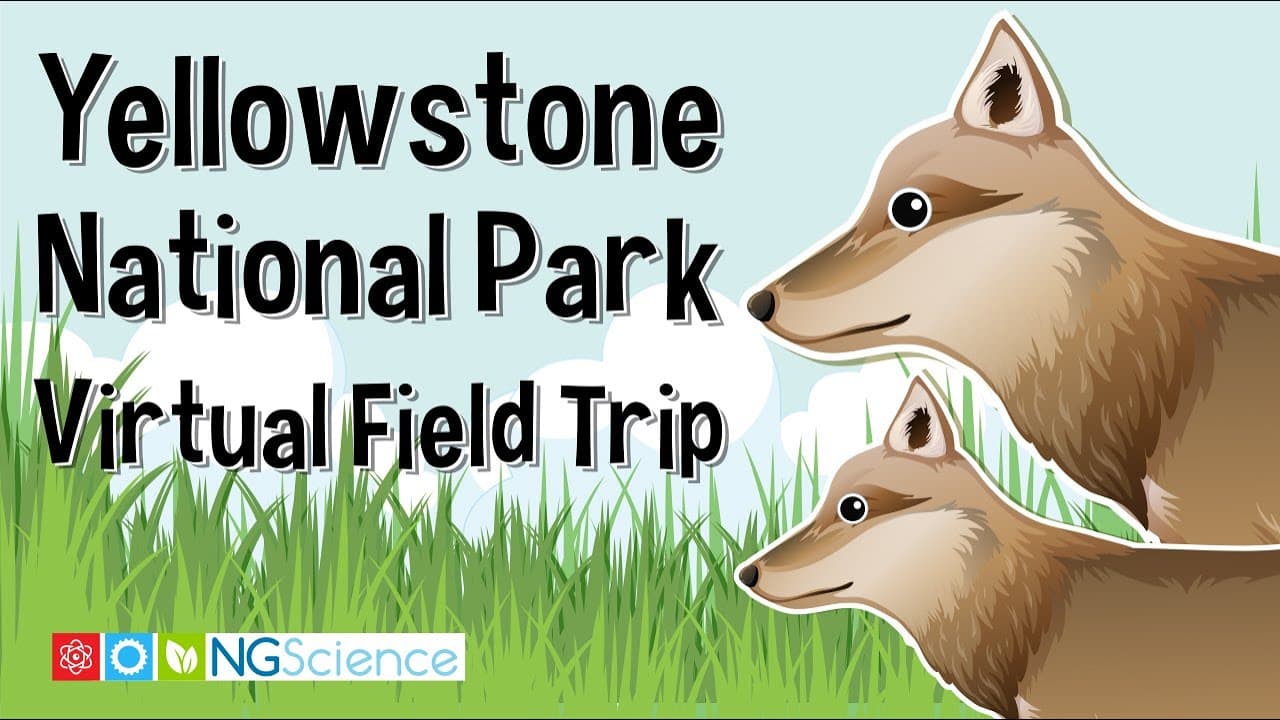
A Virtual Field Trip to Yellowstone National Park

A Virtual Field Trip to Yellowstone National Park

Take students on an immersive virtual field trip to Yellowstone, the world's first national park. This video provides a comprehensive overview of the park's history, geography, and stunning natural features, explaining that it was established by the US Congress in 1872 and spans across Wyoming, Montana, and Idaho. The narration effectively situates the park geographically while highlighting its immense size of nearly 9,000 square kilometers.

Next Generation ScienceNext Generation Science

2mins 42s

From Earth to Cake: How We Use Natural Resources

From Earth to Cake: How We Use Natural Resources

This educational video from Crash Course Kids explores the fundamental relationship between human communities and natural resources. It begins by establishing that humans, like all animals, have basic survival needs—food, water, and shelter—which are met by resources provided by the Earth. The host explains how the availability of these resources dictates where communities form, illustrating why major cities are rarely found in deserts or on mountain peaks, but rather in locations rich with water and agricultural potential. The video introduces the concept of "transformation," explaining that raw materials from the Earth usually require processing to become useful products. Using the engaging example of baking a cake, the host breaks down the supply chain of everyday items. She traces ingredients like water, flour, and eggs back to their natural sources (reservoirs and farms) and explains how energy—derived from oil, gas, sun, wind, or water—is required to mix and bake these ingredients. This step-by-step investigation helps students visualize the invisible web connecting finished goods to raw natural resources. For educators, this video serves as an excellent bridge between geography, environmental science, and economics. It provides concrete definitions for key vocabulary like "resource," "community," "agriculture," and "cultivate." Teachers can use the "cake investigation" model to have students trace the origins of other common items, fostering a deeper appreciation for the environment and an understanding of supply chains, energy consumption, and human dependence on the natural world.
Crash Course KidsCrash Course Kids

3mins 15s

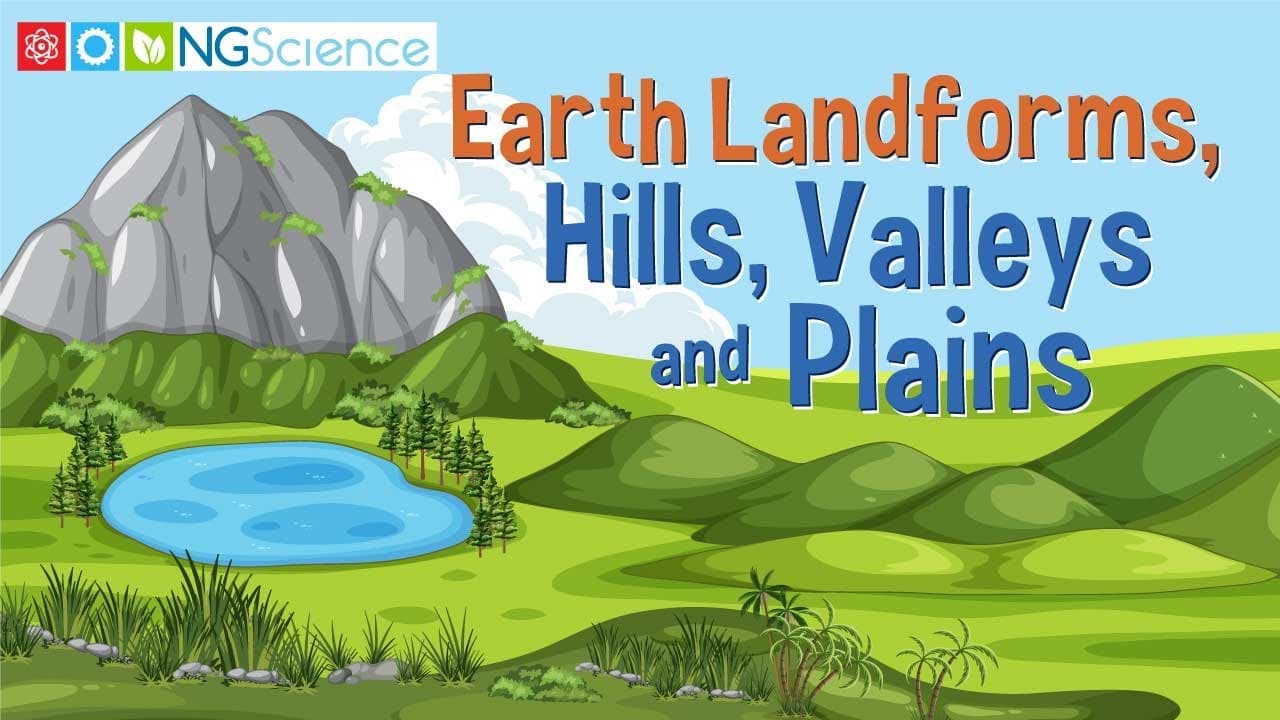
Exploring Earth's Surface: Hills, Valleys, and Plains

Exploring Earth's Surface: Hills, Valleys, and Plains

This educational video provides a visually rich exploration of three fundamental landforms that shape the Earth's surface: hills, valleys, and plains. Through high-quality aerial footage and clear narration, the video defines each landform, explains the geological processes behind their formation—such as erosion, volcanic activity, and sediment deposition—and distinguishes their unique physical characteristics. It moves beyond simple identification to explain the dynamic nature of these landscapes. The content highlights the significant relationship between physical geography and human activity. It illustrates how different landforms dictate land use, from the agricultural potential of fertile plains and valleys to the residential and recreational uses of hills. Specific geological concepts like V-shaped versus U-shaped valleys and the role of drainage systems are introduced, connecting abstract definitions to observable real-world features. For educators, this video serves as an excellent anchor for units on Earth Science, Geography, or Human-Environment Interaction. It seamlessly bridges the gap between physical science (geology) and social studies (human settlement patterns). The clear pacing and specific examples, such as the Great Plains and the Pampas, make it a versatile tool for comparing global landscapes and understanding why civilizations develop in specific locations.

Next Generation ScienceNext Generation Science

4mins 6s

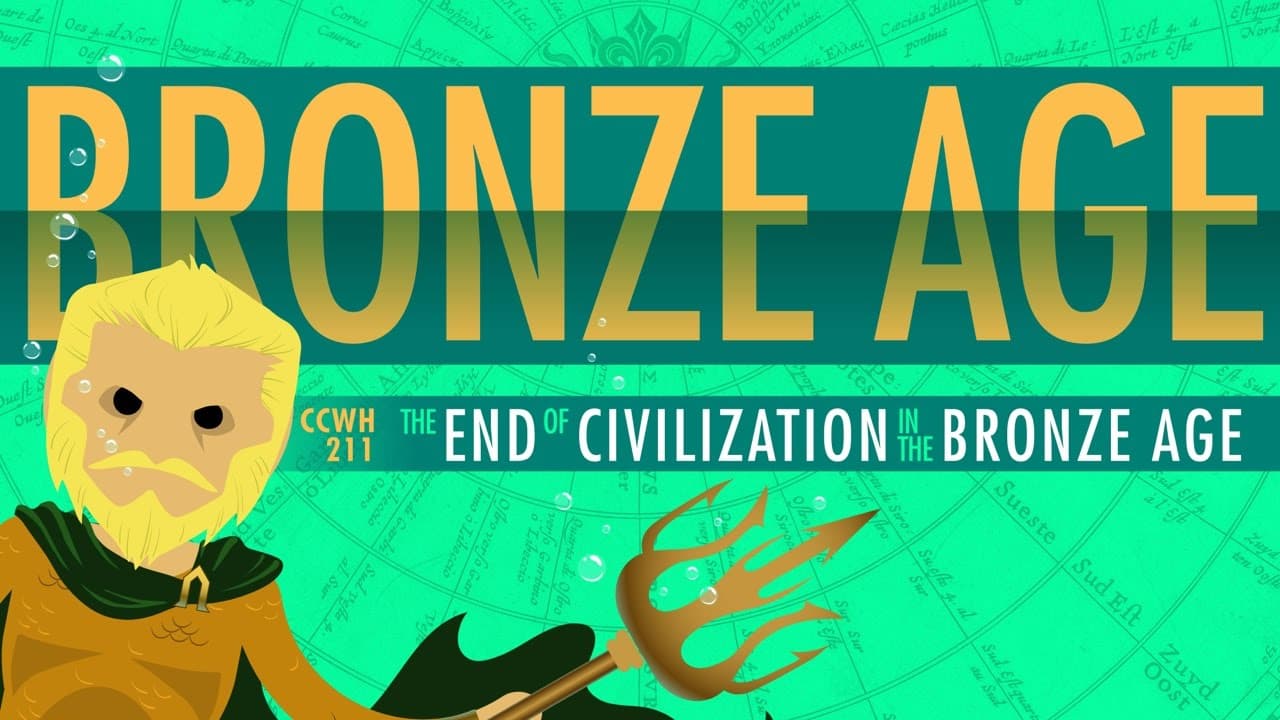
Why the Bronze Age Civilizations Collapsed

Why the Bronze Age Civilizations Collapsed

In this episode of Crash Course World History, John Green explores the mysterious collapse of the Bronze Age civilizations in the Eastern Mediterranean around 1200 BCE. The video challenges the traditional narrative of separate, isolated civilizations by demonstrating how Egypt, the Hittites, the Mycenaeans, and others formed a highly interconnected international system defined by trade, diplomacy, and war. It examines the evidence for this interdependence, including the famous Uluburun shipwreck and the Amarna Letters.

CrashCourseCrashCourse

12mins 58s

Materials

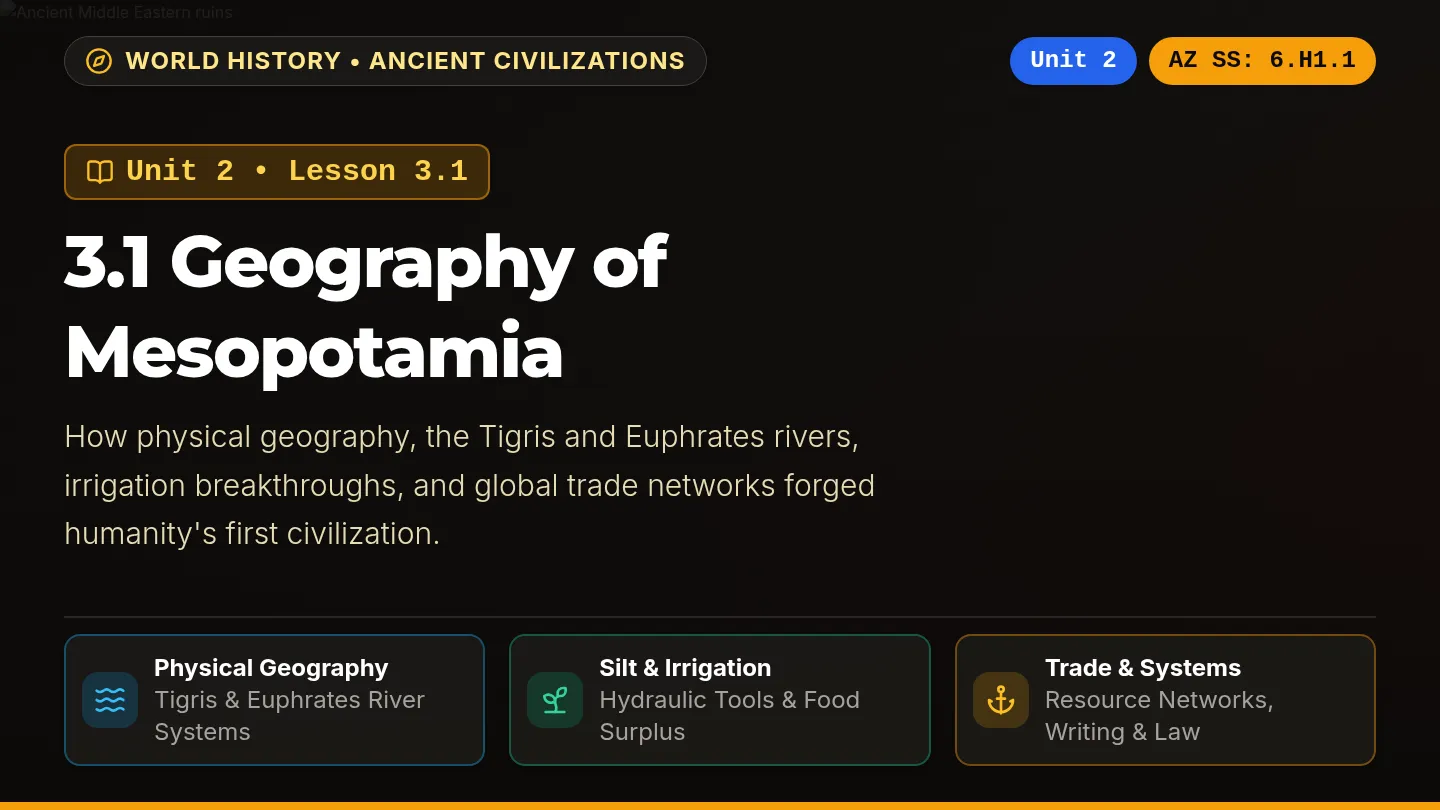
River Cradle Slides

River Cradle Slides

A dark-themed, visually vibrant classroom slide deck labeled Unit 2: Lesson 3.1 Geography of Mesopotamia, aligned with Arizona History and Social Science standards on every slide, featuring rich photography, high-contrast color-coded cards, and interactive review prompts.

SZ

Sandra Zoerhoff

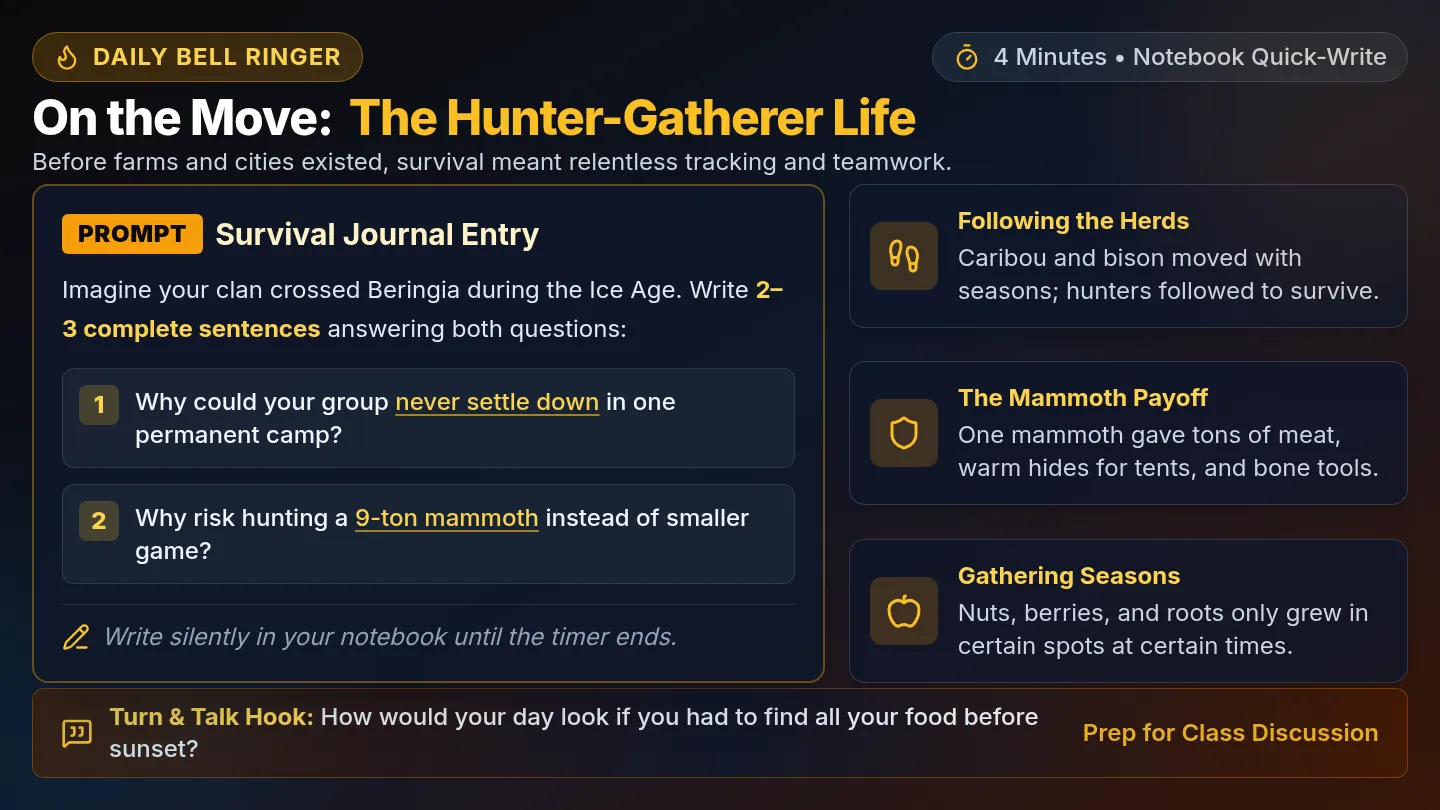
Nomad Survival Bell Ringer Slides

Nomad Survival Bell Ringer Slides

A 2-slide introductory deck for early American history featuring a nomadic survival bell ringer and a structured 'What We Will Learn' roadmap covering migration, megafauna hunting, and the agricultural revolution.

MA

Maria Avery

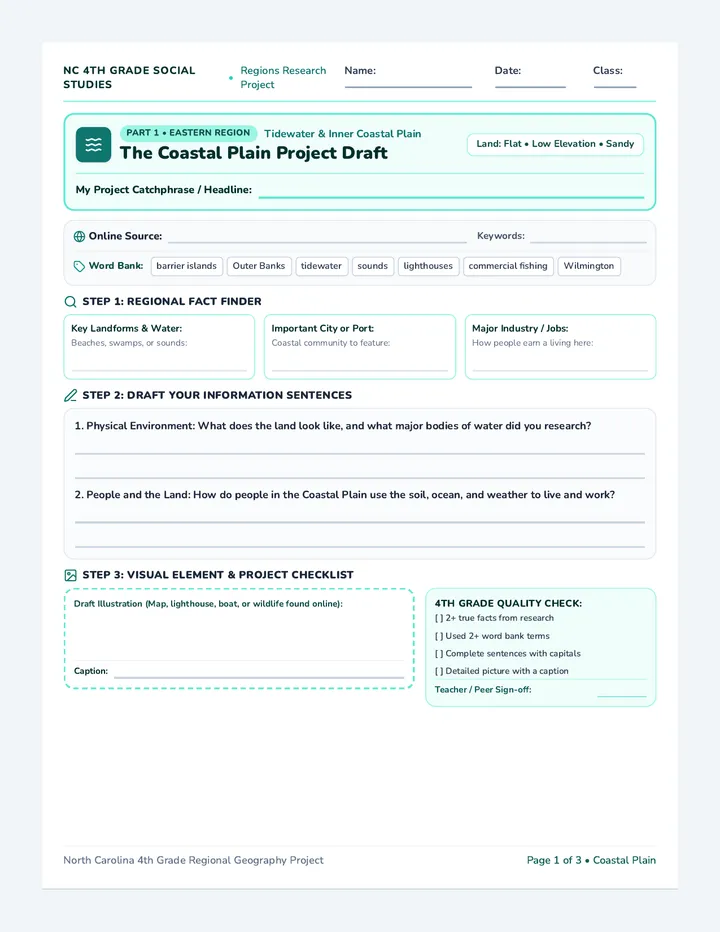
Carolina Regions Draft Sheet

Carolina Regions Draft Sheet

A three-page printable project draft sheet for 4th grade students researching North Carolina's regions. Includes both an online research source tracker and regional academic word banks, structured fast-fact cards, guided drafting lines, an illustration workspace with captions, and a 4th grade quality check.

TG

Tolisha Goldston

Mesopotamia Adventure Packet

Mesopotamia Adventure Packet

A 6-page printable-ready student adventure packet about ancient Mesopotamia with enlarged readable Nunito fonts, a 5-paragraph reading passage, 4 text-dependent questions, scaffolded missions, and a culminating Settler Council simulation.

D

destiny.lanier

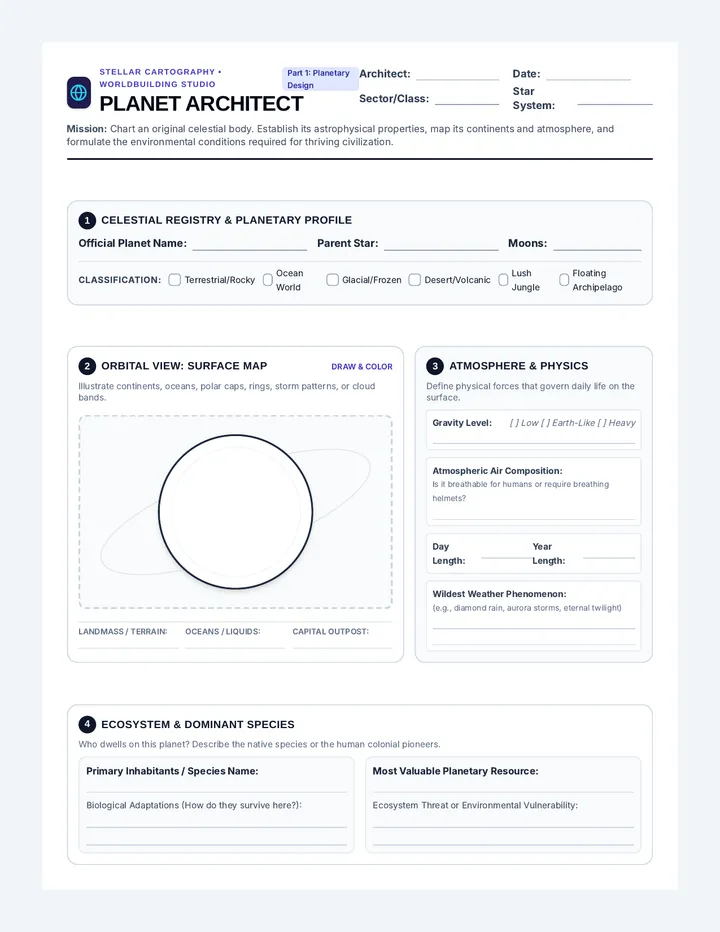
Planet Architect Blueprint Worksheet

Planet Architect Blueprint Worksheet

A comprehensive two-page worldbuilding and civics worksheet where students design a new planet, map its geography and environment, establish its governance, and draft its supreme laws.

DW

Destiny Williams

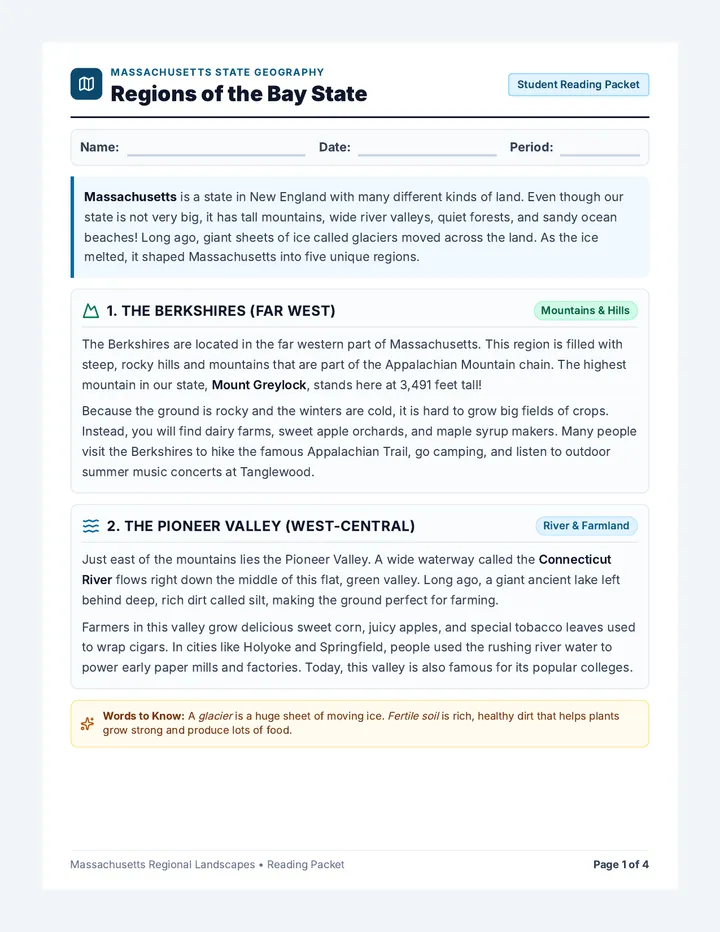
Bay State Regions Worksheet

Bay State Regions Worksheet

An accessible four-page informational reading comprehension packet about Massachusetts regions written at an elementary/early-middle grade reading level. Features clear definitions, friendly explanations, large fonts, multiple-choice questions, clue matching, and spacious short-response writing lines.

C

cfassel

Sequences

Invention Boom Slides

Modern Era Odyssey

A 13-day journey through modern American history, from the Industrial Revolution to the present day, focusing on key historical figures and major conflicts as outlined in the 5th Grade TEKS. Each lesson is designed for a quick 30-minute block, integrating multimedia and primary source analysis.

CH

Courtney Holdren

49
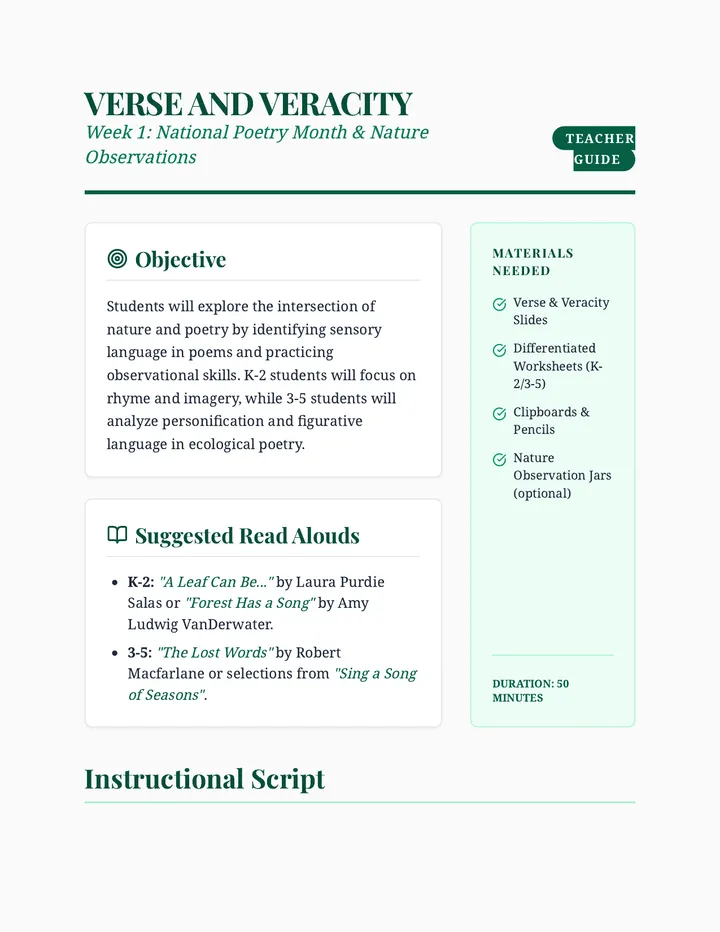
Verse and Veracity Teacher Guide

Media Center Year Curriculum

A comprehensive K-5 Media Center curriculum spanning August to May. Each month features a thematic unit integrating library skills (Dewey Decimal System, research, digital citizenship), literacy (poetry, biographies, informational texts), and STEM/Maker Space challenges. Resources are differentiated for K-2 and 3-5.

B

bethany.nied

50
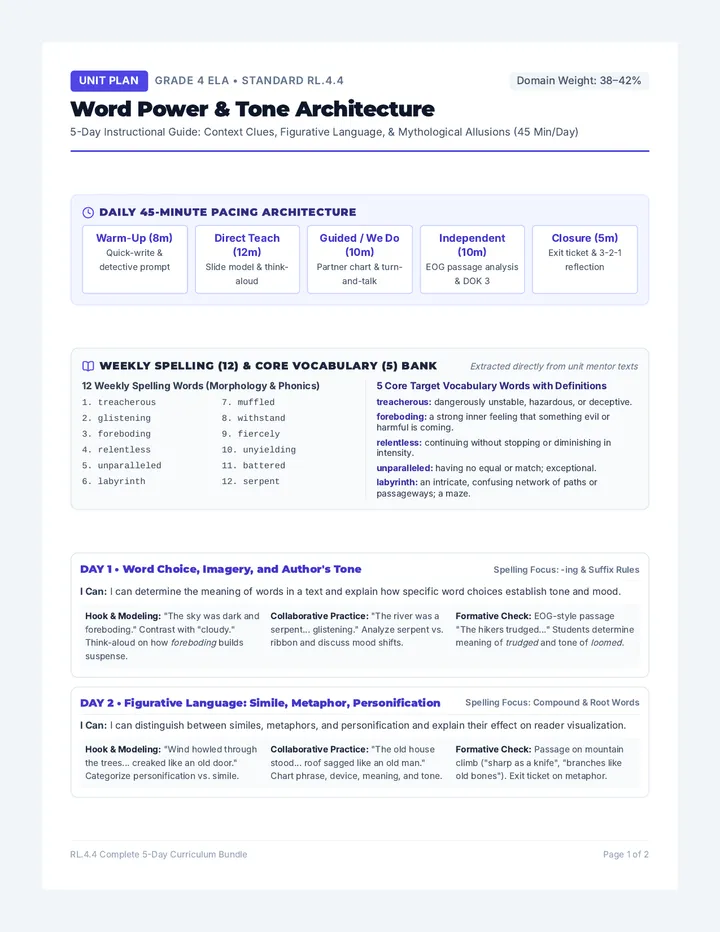
Word Power Lesson Plan

Fourth Grade Core Units

Fourth-grade standards-aligned instructional sequence featuring integrated English Language Arts literary analysis and North Carolina regional geography and historical development.

DG

Debra Golden

11
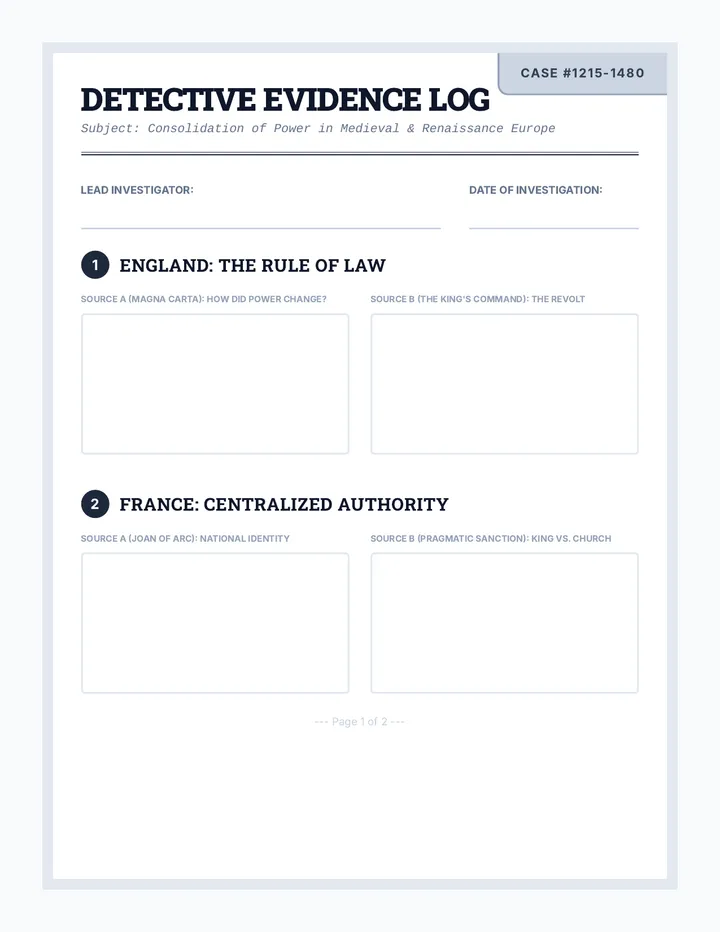
Detective Evidence Log Worksheet

Nation State Detectives

A comprehensive middle school history unit where students act as 'history detectives' to investigate the rise of nation-states in England, France, Spain, and Russia through primary source analysis.

HO

Helen O'Keefe

11
Disaster Zones Slides

Planet Earth Systems

An exploration of Earth's dynamic physical and ecological systems in 9th-grade World Geography. This sequence covers natural hazard dynamics followed by an interactive study of global biomes, their geographical importance, and ecological distributions.

JD

Jaiden Dawn Kennedy

23
Spartan Stand Teacher Guide

Spartan Stand

A two-day exploration of the Battle of Thermopylae, focusing on strategic geography, historical context, and the concept of valor through evidence-based analysis and targeted vocabulary acquisition.

S

scortese

6