Lenny.com
Explore
Create
ActivitiesNewMathEnglish Language ArtsScience & EngineeringSocial StudiesGlobal LanguagesHealth & Physical EducationSpecial EducationCounseling & Life SkillsArts & CreativityESL
Lenny.com
Lenny.com
Explore
Create
ActivitiesNewMathEnglish Language ArtsScience & EngineeringSocial StudiesGlobal LanguagesHealth & Physical EducationSpecial EducationCounseling & Life SkillsArts & CreativityESL
Lenny.com
Lenny.com

Solutions

Lenny for EducatorsLenny for SchoolsLenny for Districts

Product

ExploreSign inCreateSupportAbout

Resources

Getting startedMTSS Acceleration Program

© 2026 Lenny Learning Inc.

TermsPrivacyAccessibility
LinkedInInstagramX
Lenny

Atoms and Molecules

Atomic structure, subatomic particles, and the principles of chemical bonding. Examines how molecular configurations determine the physical and chemical properties of matter.

Science & EngineeringLife ScienceLiving ThingsAnimalsPlantsBody SystemsTraitsAdaptationsCellsEcosystemsHeredityGenes to TraitsCell DivisionPhysicsComparing MaterialsShapes and PropertiesMagnetsMagnetismLightSoundLight and SoundMatterStates of MatterChanges of StateMixturesPhysical and Chemical ChangeHeating and CoolingHeat and Thermal EnergyEnergyForce and MotionElectrical CircuitsAtoms and MoleculesPeriodic TableMotion in One DimensionMotion in Two DimensionsScalars and VectorsForces and Laws of MotionCircular Motion and GravityMomentum and ImpulseWork, Energy, and PowerWavesElectromagnetic WavesGeometric OpticsElectricity and MagnetismSimple Harmonic MotionThermodynamicsNuclear PhysicsEarth Science & AstronomyWeatherWater CycleRocks and MineralsFossilsEarth's FeaturesEarth's ResourcesEarth's StructureWeather and ClimateEarth EventsFossils and Geologic TimePlate TectonicsHuman ImpactsAstronomyChemistryUnits and MeasurementAtomic StructurePeriodic TrendsChemical BondingNomenclatureMolecular StructureIntermolecular ForcesThe MoleStoichiometryProperties of GasesSolutionsChemical ReactionsBalancing EquationsEnergy ChangesRates of ReactionsEquilibriumAcids and BasesQuantum ModelBiologyClassificationCell StructureThe Chemistry of LifeBiomoleculesCellular TransportCell EnergyCell Growth and DivisionDNAProtein SynthesisMeiosis and Sexual ReproductionPatterns of InheritanceMulticellular OrganismsEvolutionEcologyBiodiversityComputer ScienceAlgorithms and Computational ThinkingProgramming LanguagesComputing SystemsNetworks and InternetData AnalysisCybersecurityAI and Machine LearningSoftware Design and DevelopmentBlockchainEngineering & AIDesigning ExperimentsEngineering PracticesDesign ThinkingEngineering Design ProcessMechanical EngineeringElectrical EngineeringMaterials and StructuresCAD and 3D DesignRoboticsArtificial Intelligence BasicsVibe CodingMachine LearningAI Ethics and SocietySystems ThinkingEntrepreneurship & InnovationEntrepreneurial MindsetBusiness Idea DevelopmentBusiness Plan BasicsMarketing & Customer DiscoveryFinancial Management for Startups

Videos

Understanding Matter: Mass, Volume, and Atoms

Understanding Matter: Mass, Volume, and Atoms

In this engaging general science lesson, host Justin breaks down the fundamental concept of matter, explaining that almost everything in the universe—from squirrels to water bottles—is made of it. The video simplifies abstract physical science concepts by defining matter through two main criteria: having mass and taking up space (volume). Through clear visual examples and animations, students learn to distinguish between objects with different masses and volumes, understanding that size doesn't always equal mass. The lesson explores key themes including the definitions of mass versus volume, the distinction between matter and non-matter (like ideas and light), and the physical properties of gases. A significant portion of the video demonstrates that air is indeed matter through a practical balloon experiment, addressing a common student misconception. It concludes by zooming in to the microscopic level, introducing atoms as the basic building blocks of all matter. This video is an excellent resource for elementary and middle school science classrooms introducing physical science. It includes built-in pause points for student reflection and note-taking, making it ready-to-use for direct instruction. Teachers can use the comparative examples (like the bowling ball vs. beach ball) to spark classroom debates about density and mass, while the segment on atoms provides a perfect segue into more advanced chemistry topics.

Miacademy & MiaPrep Learning ChannelMiacademy & MiaPrep Learning Channel

9mins 40s

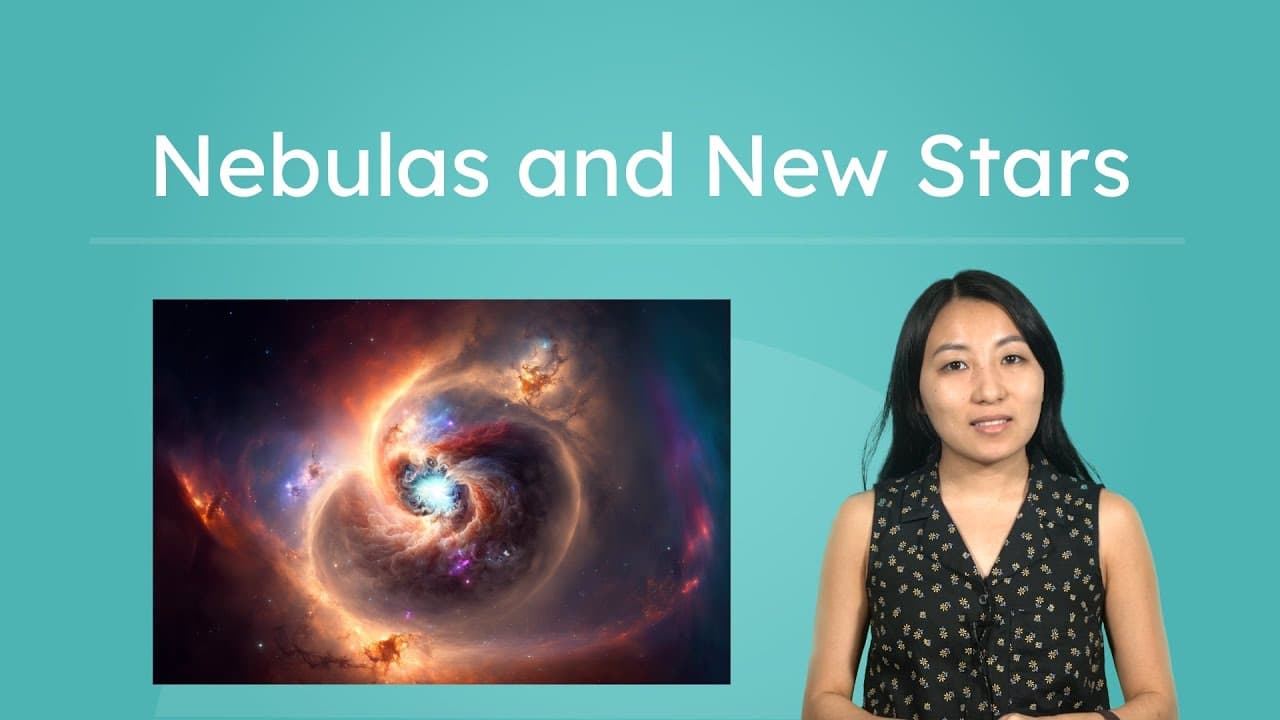
From Nebula to White Dwarf: The Life Cycle of a Star

From Nebula to White Dwarf: The Life Cycle of a Star

This educational video takes students on a cosmic journey through the life cycle of an average-sized star, similar to our own Sun. It begins by explaining the birth of stars within stellar nebulas, detailing how gravity pulls gas and dust together to form protostars. The narrator simplifies complex astrophysical concepts, such as nuclear fusion, using clear animations to show how hydrogen atoms fuse into helium to release the immense energy that powers stars. Key themes include the transformation of matter and energy, the influence of gravity in space, and the stages of stellar evolution. The video explicitly differentiates between average-sized stars and massive stars, focusing on the specific path of average stars as they evolve from main sequence stars into expanding red giants. It concludes by describing the final stages of death for these stars: the shedding of outer layers to form planetary nebulas and the cooling of the core into a white dwarf. This resource is highly valuable for middle school science classrooms as it breaks down abstract space concepts into digestible stages. The clear definitions, visual diagrams of atomic fusion, and step-by-step lifecycle flowcharts make it an excellent tool for visual learners. Teachers can use this video to introduce units on astronomy, matter and energy, or the history of the universe, providing a solid foundation for understanding the life expectancy and eventual fate of our own solar system.

Miacademy & MiaPrep Learning ChannelMiacademy & MiaPrep Learning Channel

7mins 46s

Heating Matter: From Ice to Steam Explained

Heating Matter: From Ice to Steam Explained

This educational video provides a clear, visual demonstration of the three states of matter—solid, liquid, and gas—using water as the primary example. Through a live laboratory demonstration, a presenter heats ice in a beaker to show the transformation from solid ice to liquid water, and finally to water vapor. The video explicitly connects the addition of heat energy to these phase changes, known as melting and evaporating. Key themes explored include the physical properties of matter, such as how solids maintain their shape while liquids take the shape of their container but maintain their volume. Crucially, the video introduces the particle theory of matter using animated diagrams overlaid on the footage. These animations visualize how particles are tightly packed in solids, slide past one another in liquids, and move freely in gases. This resource is highly valuable for elementary science classrooms as it bridges the gap between observable phenomena (ice melting) and abstract concepts (molecular arrangement). Teachers can use this video to introduce the water cycle, thermodynamics, or the basic definitions of matter. It provides a "virtual lab" experience that allows students to see the process of boiling and evaporation safely and clearly, serving as a perfect anchor for lessons on physical changes.

Next Generation ScienceNext Generation Science

2mins 40s

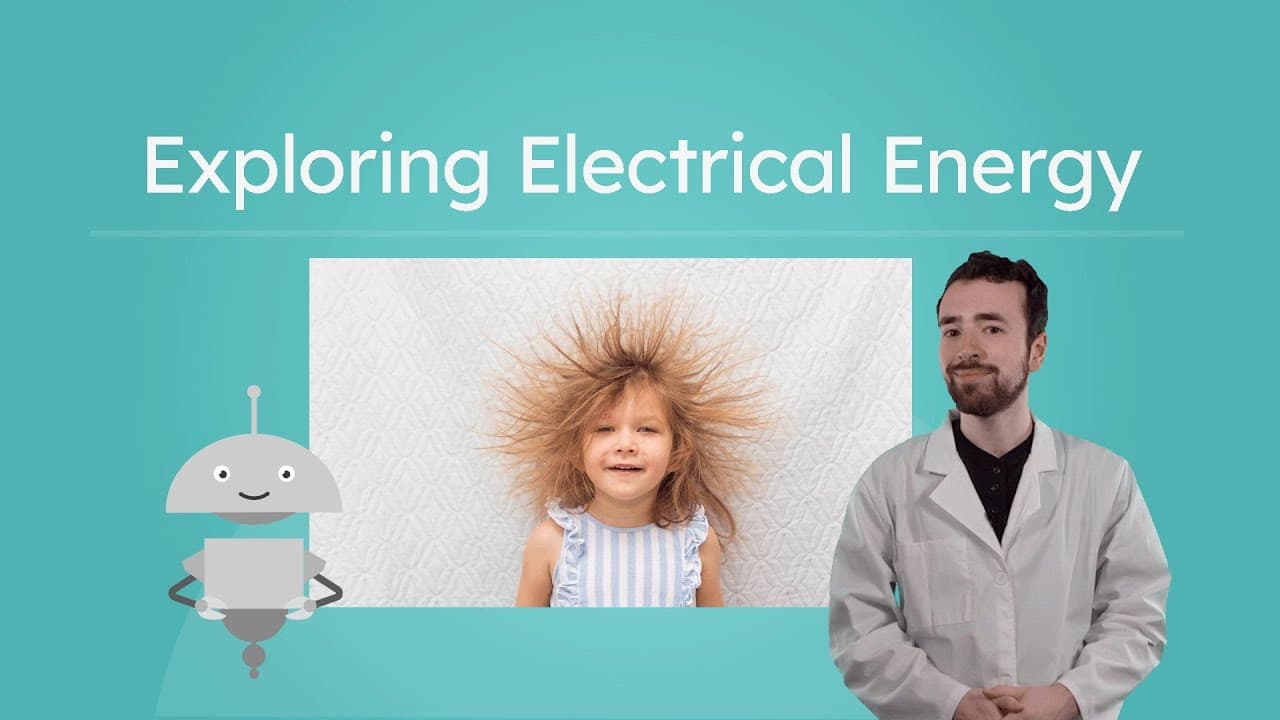
Exploring Electrical Energy and Static Electricity

Exploring Electrical Energy and Static Electricity

This engaging educational video introduces students to the fundamental concepts of electrical energy, beginning with the atomic structure of matter. Through a mix of live-action humor and clear animated diagrams, the host explains how the movement of subatomic particles—specifically electrons—creates the electricity that powers our daily lives. The video breaks down complex physics concepts into digestible segments, covering the differences between protons, neutrons, and electrons, and how their charges interact to create energy.

Miacademy & MiaPrep Learning ChannelMiacademy & MiaPrep Learning Channel

10mins 47s

Exploring Matter: States, Properties, and Changes

Exploring Matter: States, Properties, and Changes

This energetic animated music video provides a comprehensive introduction to the concept of matter, setting fundamental physical science concepts to a catchy, rhythmic beat. Through a cast of colorful animated characters and clear visual diagrams, the song defines matter as anything that has mass and takes up space, distinguishing it from forms of energy like light and sound. The video breaks down the composition of matter into atoms and molecules, visualizing protons, neutrons, and electrons in a way that makes abstract atomic theory accessible to young learners. The content covers several critical curriculum standards, including the three primary states of matter (solid, liquid, gas) and the phase changes between them (melting, freezing, evaporation, condensation). It progresses to more advanced topics by distinguishing between physical changes—where the substance remains the same, like tearing paper—and chemical changes—where new substances are formed, illustrated by rusting locks, burning wood, and cooking food. The lyrics also introduce key properties used to describe matter, such as mass, volume, density, and texture. For educators, this video serves as an excellent engagement hook or review tool for units on physical science. The repetitive nature of the chorus helps reinforce the definition of matter, while the specific visual examples provide concrete anchors for difficult vocabulary. It successfully bridges the gap between simple observation (what things look like) and scientific explanation (molecular structure and chemical reactions), making it a versatile resource for upper elementary and middle school science classrooms.
Have Fun TeachingHave Fun Teaching

4mins 29s

What Is Matter? A Musical Science Lesson

What Is Matter? A Musical Science Lesson

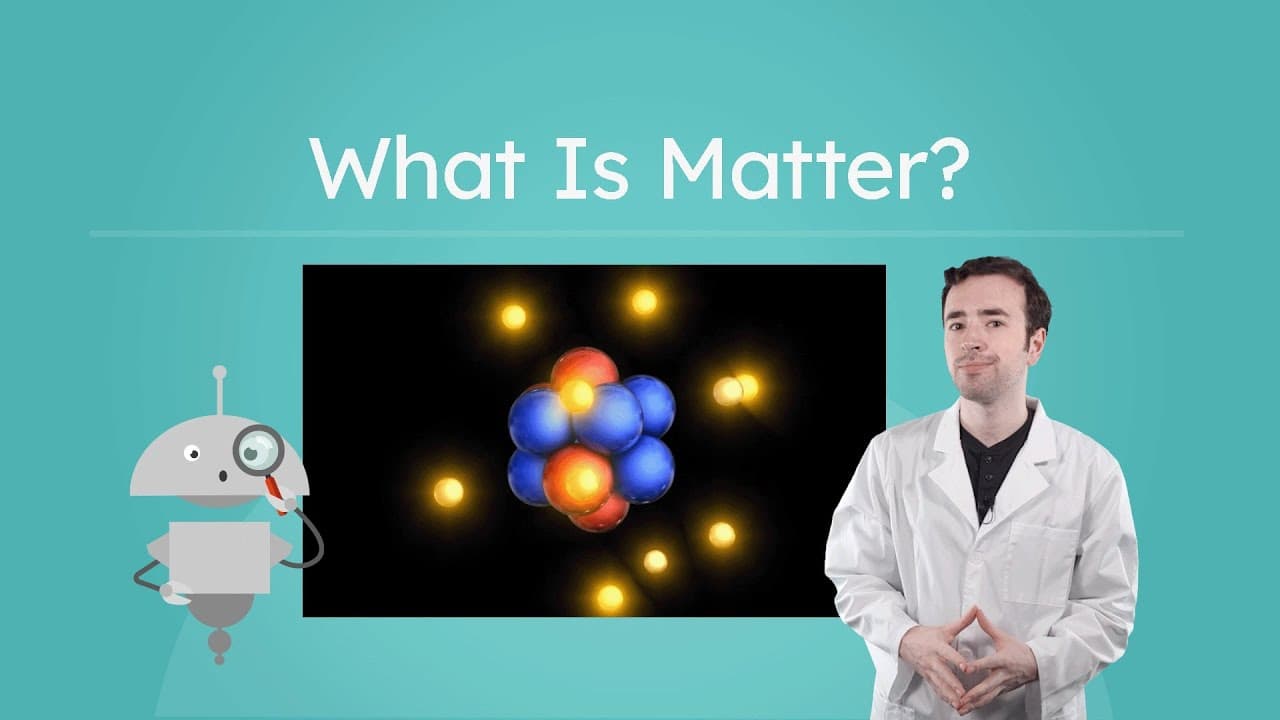
This high-energy animated music video serves as an engaging introduction to the fundamental concepts of matter for elementary students. Through a catchy pop-rock song performed by a diverse band of cartoon characters, the video defines matter as anything that has mass and takes up space. It moves beyond simple definitions to introduce the microscopic structure of matter, explaining that it is composed of molecules, atoms, and subatomic particles like protons, neutrons, and electrons. The content effectively differentiates between matter and non-matter, specifically addressing forms of energy that students often confuse with physical objects. By visually and lyrically contrasting matter with light, sound, heat, and wind, it helps clarify abstract distinctions in physical science. The video utilizes clear, colorful graphics—such as atomic models and diagrams of molecules—to visualize these invisible concepts alongside everyday objects like cheese and ice cubes. Teachers can use this video as a hook to start a unit on physical science or as a review tool to reinforce vocabulary. Its musical format aids in memorization, making definitions of 'mass', 'volume', and 'atoms' stickier for young learners. The video naturally bridges the gap between observing the world (everything you see and touch) and understanding the underlying scientific structure (atoms and elements), providing a springboard for lessons on density, states of matter, or atomic theory.

Have Fun TeachingHave Fun Teaching

1min

Materials

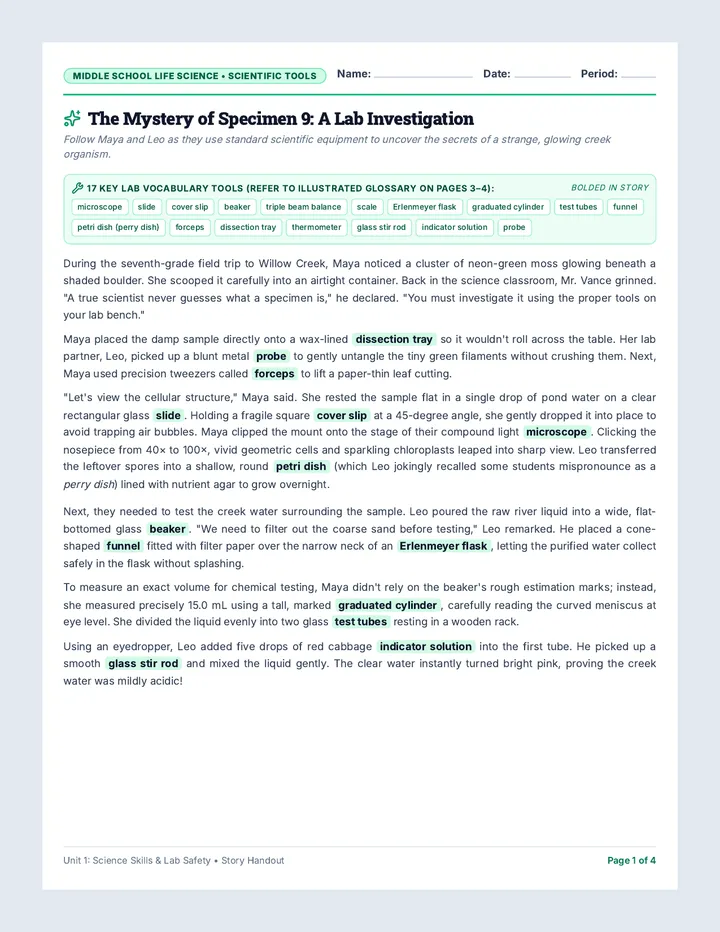
Mystery Specimen Story Handout

Mystery Specimen Story Handout

A comprehensive four-page middle school science packet containing the 'Mystery of Specimen 9' reading story, comprehension questions, and a complete two-page illustrated visual glossary featuring diagrams and definitions for all 17 laboratory tools.

S

stewart

Matter Science Anchor Charts

Matter Science Anchor Charts

A complete set of eight illustrated, large-print science anchor charts covering Matter, Atom, Element, Property, States of Matter, Solid, Liquid, and Gas for 6th-grade special education science students.

PL

Patrick l

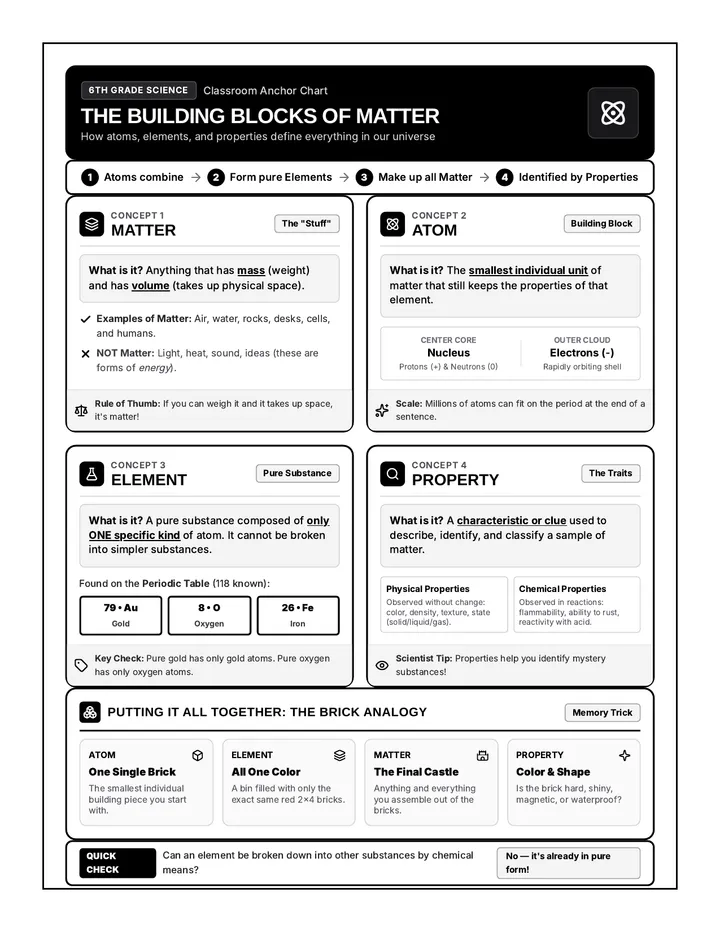
Matter Basics Anchor Chart

Matter Basics Anchor Chart

A high-contrast, black-and-white printable anchor chart for 6th grade science explaining matter, atoms, elements, and properties, optimized for classroom photocopying.

AA

Aline Araujo Teixeira

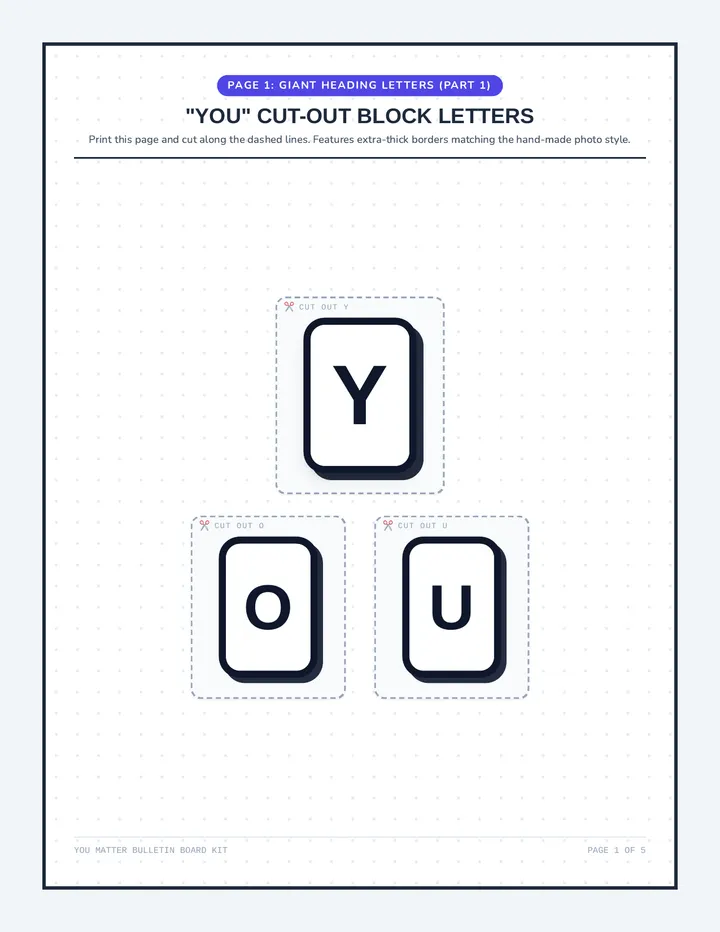
You Matter Bulletin Board Kit

You Matter Bulletin Board Kit

A revised 5-page printable bulletin board kit featuring giant cut-out heading letters with BOTH 'T's for 'MATTER!', colorful sub-headline quote boxes, scientific molecular models of the three states of matter (Solid, Liquid, Gas), and a modern, labeled Bohr model of an atom.

LN

Leah Nickols

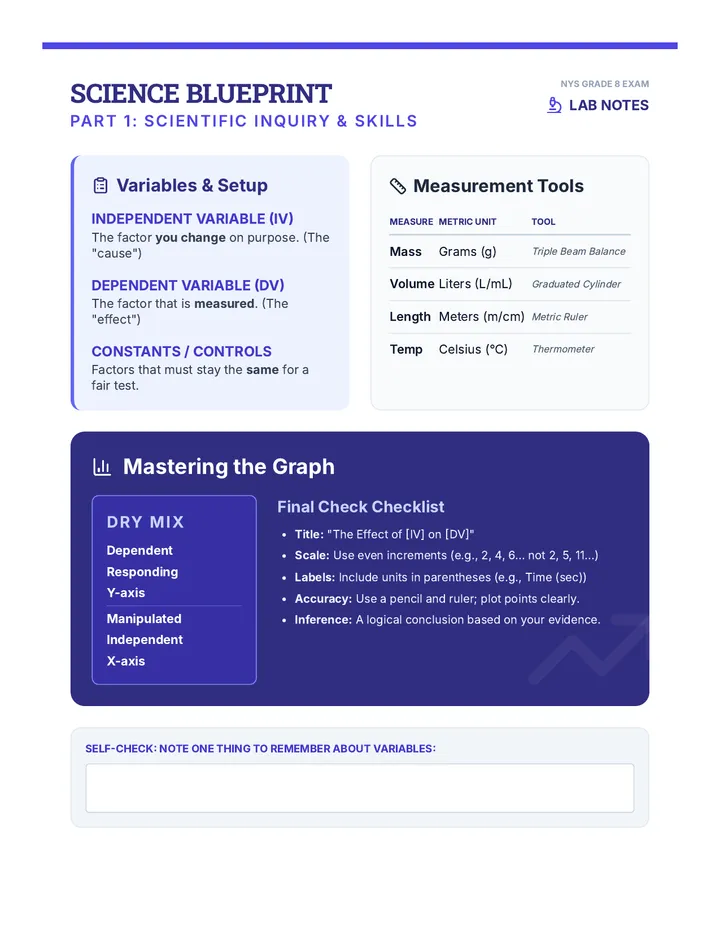
NYS Science Power Pack Study Guide

NYS Science Power Pack Study Guide

A fully optimized 4-page science study guide for the 8th-grade NYS science exam, featuring tight layout, fixed character encoding for chemical formulas with <sub> tags, improved student self-check areas, and clear domain summaries.

AW

Austin WIllis

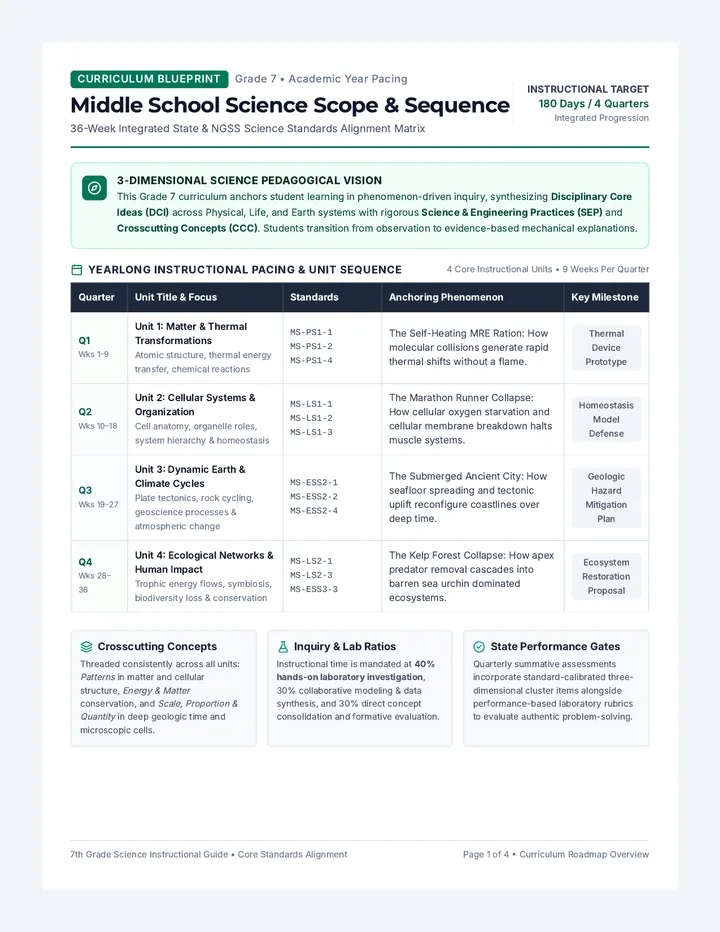
Science Scope Curriculum Guide

Science Scope Curriculum Guide

A comprehensive middle school 7th grade science scope and sequence curriculum guide. It outlines four instructional units across thirty-six weeks, aligning state standards and Next Generation Science Standards with anchoring phenomena, core labs, and assessment milestones.

JD

Jenny Daniels

Sequences

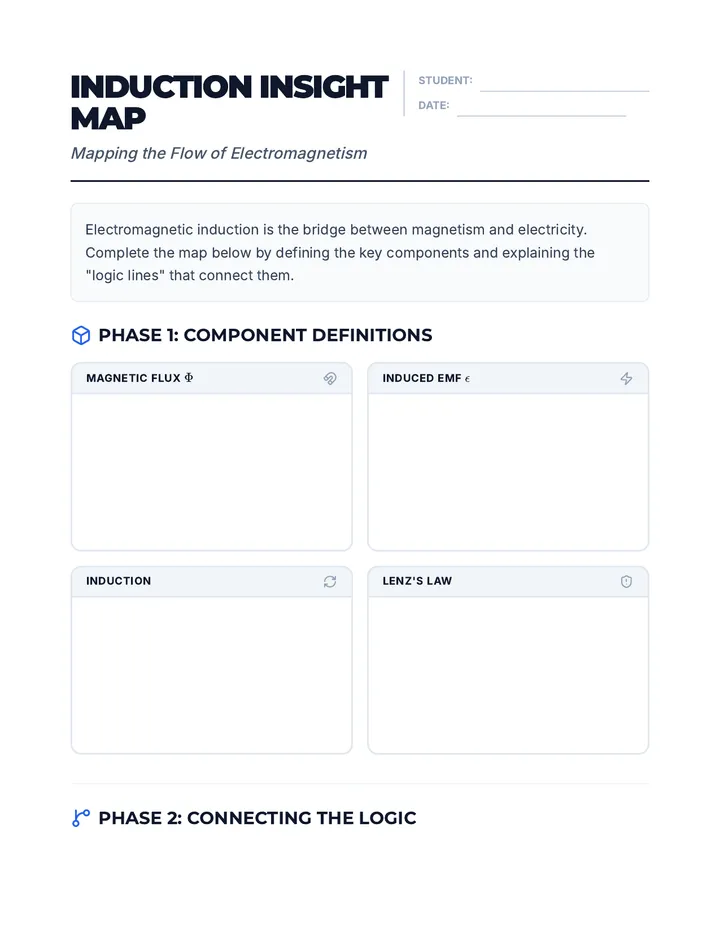
Induction Insight Map Handout

Magnetic Forces Investigation

A 5-day intensive exploration of magnetic forces and fields, focusing on atomic-level causes, field interactions, and mathematical modeling of forces on charged particles. Students progress from anchoring phenomena to complex mathematical applications and a comprehensive unit review.

OM

Olutoyin Makinde

68
Climate Crisis Slides

Science Essentials Vault

A comprehensive collection of core science units covering Environmental Science, Biology, and Physical Science. This sequence provides high-impact instructional slides, hands-on lab experiences, guided notes, and differentiated assessments for five major scientific domains.

CB

Chloe Brown

25
Hess Pathfinders Slides

Energy in Chemical Bonds

A five-day high school chemistry unit exploring thermochemistry, collision theory, enthalpy diagrams, and calorimetry through the lens of body heat and chemical reactions. Students investigate the anchoring phenomenon of exercise-induced heat while mastering TEKS C.13 standards.

OM

Olutoyin Makinde

48
Pressure Poster Workshop Handout

Pressure Power

A comprehensive 5-day chemistry unit investigating the relationships between gas pressure, volume, temperature, and moles using lab inquiries, mathematical modeling, and real-world applications.

OM

Olutoyin Makinde

69
KMT Field Manual Packet

Molecular Mayhem Gas Unit

A 10-day exploration of the Behavior of Gases using Kinetic Molecular Theory, various gas laws, and real-world phenomena to understand gas behavior at both molecular and macroscopic scales. Students will investigate compressibility, gas variables, ideal behavior, and mixtures.

OM

Olutoyin Makinde

26
Steady State Slides

Reaction Dynamics

This unit explores how chemical reactions occur and how they reach a state of balance. Students investigate reaction kinetics, energy changes, and the principles of dynamic equilibrium through modeling and laboratory investigation.

OM

Olutoyin Makinde

34

Lessons

Heat Flow Teacher Guide

Particle Behavior Review

A lesson focusing on the states of matter (solid, liquid, gas) and the behavior of particles at the molecular level. Students will model particle motion and arrangement, as well as the energy changes that drive phase transitions.

EA

Erica Andre

54
Flow State Reading Guide Expanded

Flow State

This lesson explores the fundamental properties of fluids, including the molecular differences between solids, liquids, and gases, the concept of density, and the characteristics of ideal fluids. Students will learn to distinguish states of matter through atomic interactions and apply the density formula to various substances.

CM

Chuguna Murugesan

33
Charge Chart Organizer

Sparking Science

A comprehensive introduction to electrostatic forces, covering atomic structure, triboelectric charging, Coulomb's Law, and electric fields through hands-on labs and scaffolded practice.

CB

Chloe Brown

6
Electric Tug Master Lab Sheet

Electric Tug

An inquiry-based lab where students use the PhET Coulomb's Law simulation to discover the relationships between charge, distance, and electrostatic force.

CM

Chuguna Murugesan

29
Planning Brevet Calendrier

Objectif Brevet

Un programme de révision intensif et structuré sur 3 semaines pour préparer sereinement les épreuves de SVT, Physique-Chimie et Histoire-Géographie du Diplôme National du Brevet.

MW

Myriam Wb

6
Atomic Archives Guided Notes

Atomic Archives

A comprehensive lesson connecting nuclear chemistry (isotopes) to climate science (greenhouse gases, ice cores, and carbon dating). Students explore how atomic mass influences molecular vibrations and how isotope ratios serve as ancient thermometers.

CB

Chloe Brown

4