Lenny.com
Explore
Create
ActivitiesNewMathEnglish Language ArtsScience & EngineeringSocial StudiesGlobal LanguagesHealth & Physical EducationSpecial EducationCounseling & Life SkillsArts & CreativityESL
Lenny.com
Lenny.com
Explore
Create
ActivitiesNewMathEnglish Language ArtsScience & EngineeringSocial StudiesGlobal LanguagesHealth & Physical EducationSpecial EducationCounseling & Life SkillsArts & CreativityESL
Lenny.com
Lenny.com

Solutions

Lenny for EducatorsLenny for SchoolsLenny for Districts

Product

ExploreSign inCreateSupportAbout

Resources

Getting startedMTSS Acceleration Program

© 2026 Lenny Learning Inc.

TermsPrivacyAccessibility
LinkedInInstagramX
Lenny

Cells

Fundamental structures and functions of plant and animal cells, including organelles like the nucleus and mitochondria. Examines membrane transport, protein synthesis, and cellular division processes.

Science & EngineeringLife ScienceLiving ThingsAnimalsPlantsBody SystemsTraitsAdaptationsCellsEcosystemsHeredityGenes to TraitsCell DivisionPhysicsComparing MaterialsShapes and PropertiesMagnetsMagnetismLightSoundLight and SoundMatterStates of MatterChanges of StateMixturesPhysical and Chemical ChangeHeating and CoolingHeat and Thermal EnergyEnergyForce and MotionElectrical CircuitsAtoms and MoleculesPeriodic TableMotion in One DimensionMotion in Two DimensionsScalars and VectorsForces and Laws of MotionCircular Motion and GravityMomentum and ImpulseWork, Energy, and PowerWavesElectromagnetic WavesGeometric OpticsElectricity and MagnetismSimple Harmonic MotionThermodynamicsNuclear PhysicsEarth Science & AstronomyWeatherWater CycleRocks and MineralsFossilsEarth's FeaturesEarth's ResourcesEarth's StructureWeather and ClimateEarth EventsFossils and Geologic TimePlate TectonicsHuman ImpactsAstronomyChemistryUnits and MeasurementAtomic StructurePeriodic TrendsChemical BondingNomenclatureMolecular StructureIntermolecular ForcesThe MoleStoichiometryProperties of GasesSolutionsChemical ReactionsBalancing EquationsEnergy ChangesRates of ReactionsEquilibriumAcids and BasesQuantum ModelBiologyClassificationCell StructureThe Chemistry of LifeBiomoleculesCellular TransportCell EnergyCell Growth and DivisionDNAProtein SynthesisMeiosis and Sexual ReproductionPatterns of InheritanceMulticellular OrganismsEvolutionEcologyBiodiversityComputer ScienceAlgorithms and Computational ThinkingProgramming LanguagesComputing SystemsNetworks and InternetData AnalysisCybersecurityAI and Machine LearningSoftware Design and DevelopmentBlockchainEngineering & AIDesigning ExperimentsEngineering PracticesDesign ThinkingEngineering Design ProcessMechanical EngineeringElectrical EngineeringMaterials and StructuresCAD and 3D DesignRoboticsArtificial Intelligence BasicsVibe CodingMachine LearningAI Ethics and SocietySystems ThinkingEntrepreneurship & InnovationEntrepreneurial MindsetBusiness Idea DevelopmentBusiness Plan BasicsMarketing & Customer DiscoveryFinancial Management for Startups

Videos

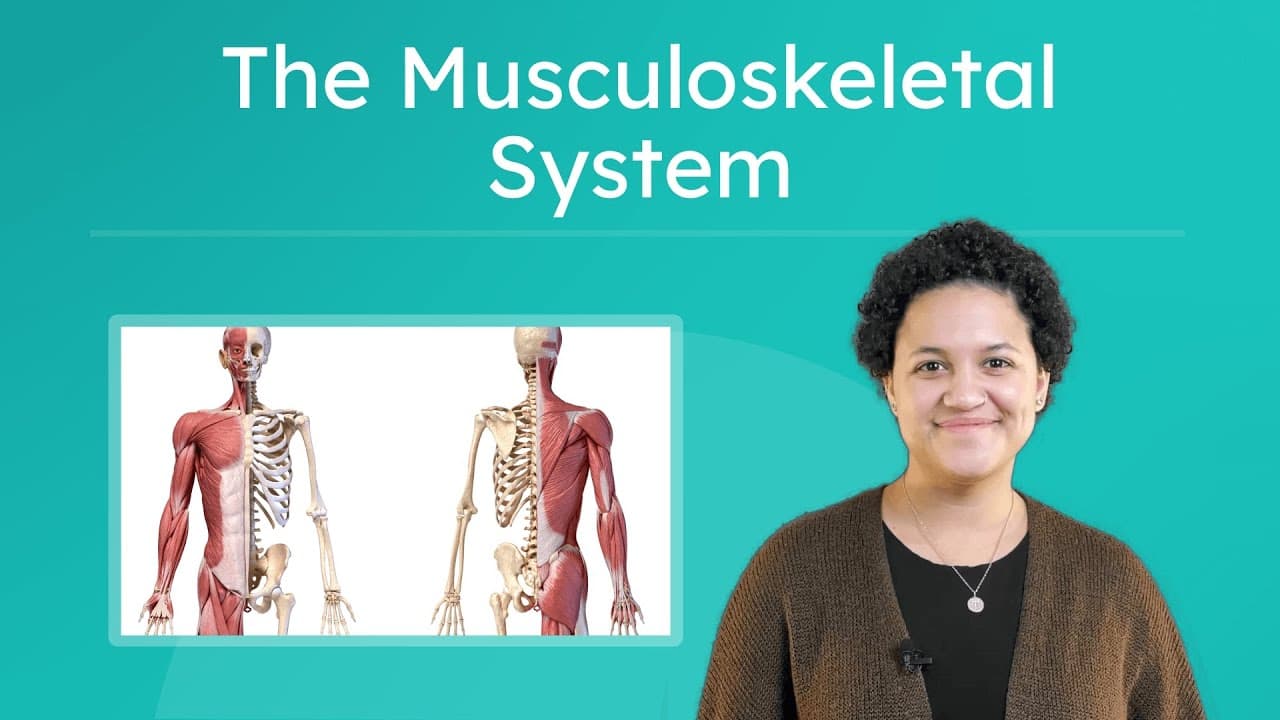
Exploring the Musculoskeletal System: How We Move

Exploring the Musculoskeletal System: How We Move

This comprehensive biology video explores the intricate relationship between muscles and bones, treating them as a unified musculoskeletal system. Hosted by Taylor, the lesson breaks down the specific anatomy and physiology required for human movement, moving beyond simple descriptions to explain the cellular and structural composition of body tissues. The video utilizes clear animations and diagrams to visualize internal structures like bone marrow, muscle fibers, and joint connections that students cannot easily observe otherwise. The content covers three primary areas: the types of muscle tissue (smooth, cardiac, and skeletal), the internal structure of living bone (compact, spongy, and marrow), and the connective tissues that bind them together (ligaments and tendons). It addresses common misconceptions—specifically that bones are non-living structures—and explains the physiological mechanics of how muscles contract to pull bones. Additionally, the video dedicates a significant portion to health education, outlining the role of nutrition (protein, calcium, Vitamin D), exercise, and sleep in maintaining this system. For educators, this video serves as a perfect core lesson for units on the human body, anatomy, or health. It effectively bridges the gap between identifying organs and understanding their function. The clear distinction made between voluntary and involuntary muscles, as well as the mechanical explanation of tendons versus ligaments, provides excellent anchor points for classroom demonstrations and physical education cross-integration.
Miacademy & MiaPrep Learning ChannelMiacademy & MiaPrep Learning Channel

11mins 28s

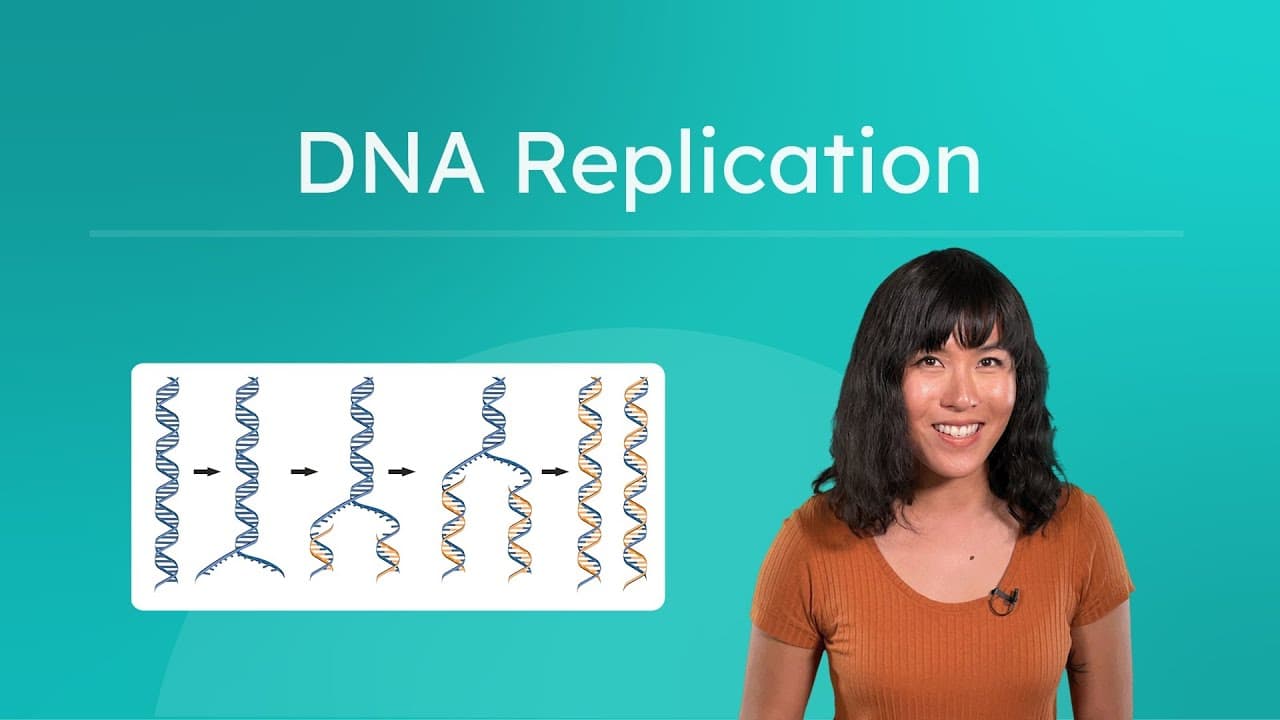
How DNA Replicates and Repairs Itself

How DNA Replicates and Repairs Itself

This comprehensive biology video breaks down the complex process of DNA replication, explaining how cells faithfully copy their genetic material before division. Using the analogy of copying tedious math formulas, the narrator introduces the sheer scale of cellular division in the human body—approximately 10 quadrillion times in a lifetime. The video visually demonstrates the semi-conservative nature of replication, where the double helix unwinds and unzips to create templates for new strands, ensuring genetic continuity.

Miacademy & MiaPrep Learning ChannelMiacademy & MiaPrep Learning Channel

10mins 57s

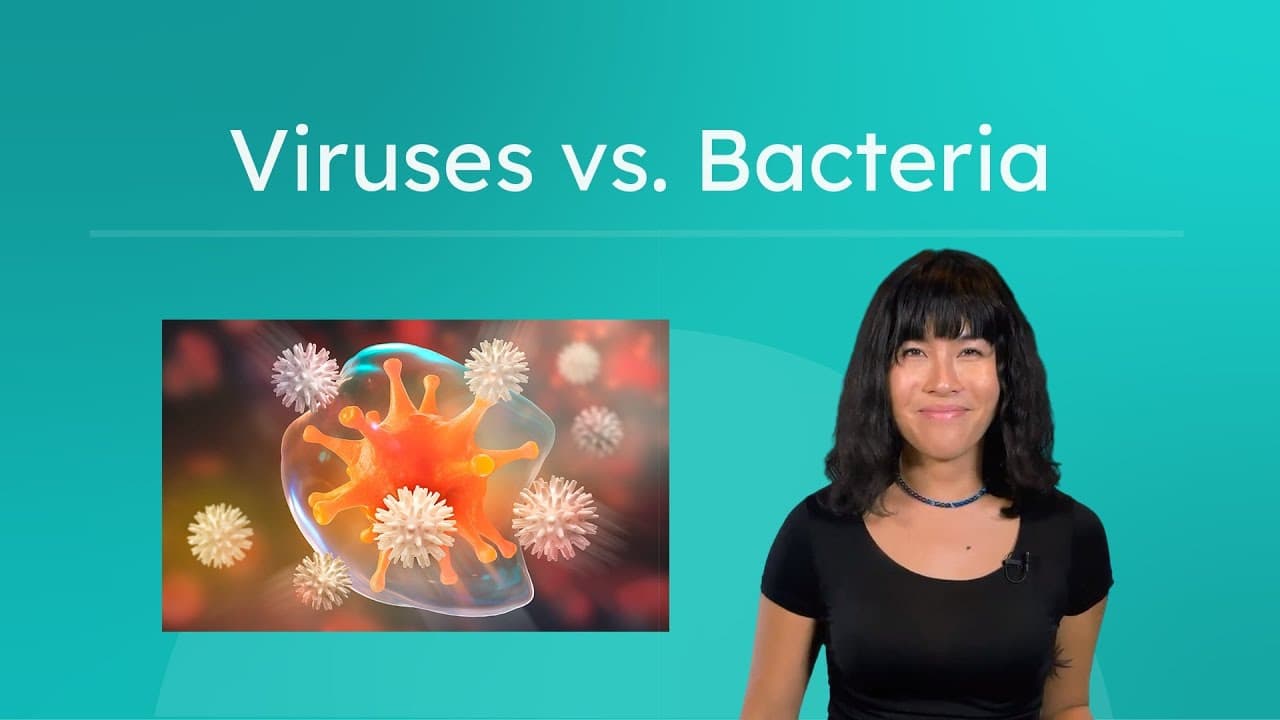
Are Viruses Alive? Applying the 7 Criteria for Life

Are Viruses Alive? Applying the 7 Criteria for Life

This engaging biology lesson tackles a fundamental scientific debate: Are viruses actually alive? Hosted by a relatable narrator battling a cold, the video uses the "7 Criteria for Life" framework to systematically evaluate viruses. It contrasts viruses with bacteria and human cells, explaining why common treatments like antibiotics are ineffective against viral infections. The video dives deep into cellular biology, exploring viral structure, replication mechanisms, and the difference between reproduction and replication. The content covers key biological concepts including cellular organization, homeostasis, energy use, adaptation, and response to stimuli. It clarifies the distinction between viruses and bacteria using clear visual aids and analogies, such as comparing a viral infection to turning a cell into a "copy machine." The video also touches upon how viruses evolve (using the flu shot as an example) and how the human immune system responds to these invaders. For educators, this video serves as an excellent bridge between units on cell theory and microbiology. It provides a structured way to teach the characteristics of life by testing a "borderline" case, encouraging critical thinking rather than rote memorization. The real-world connections to illness, vaccines, and immunity make the abstract biological concepts relevant and accessible to students, helping them understand the "why" behind public health recommendations and medical treatments.

Miacademy & MiaPrep Learning ChannelMiacademy & MiaPrep Learning Channel

15mins 33s

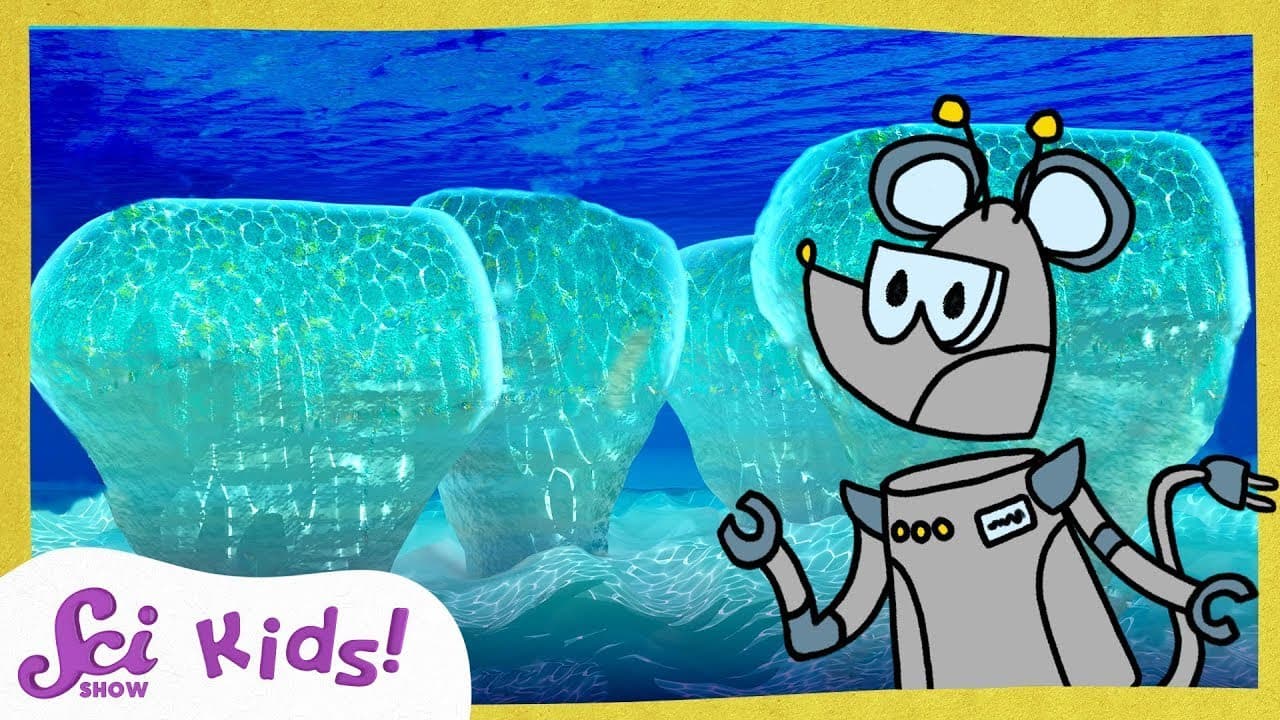
Traveling Back to the First Life on Earth

Traveling Back to the First Life on Earth

In this engaging episode of SciShow Kids, host Anthony and his robot mouse friend Squeaks explore the history of life on Earth through a pretend time machine adventure. While Squeaks initially wants to visit the dinosaurs, Anthony suggests traveling back even further—3.5 billion years ago—to discover the very first living things on our planet. The video uses this narrative frame to introduce students to the concept of deep time and the vast history that occurred before dinosaurs even existed. The core scientific focus is on stromatolites and cyanobacteria. The video explains how these microscopic organisms use sunlight to create energy (photosynthesis) and build rock-like structures called stromatolites over thousands of years. Through clear animations and analogies, such as comparing rock layers to lasagna, complex geological and biological processes are made accessible to young learners. The video also connects this ancient history to the modern world by showing living stromatolites that still exist in Shark Bay, Australia today. This resource is highly valuable for introducing elementary students to paleontology beyond just dinosaurs. It helps students visualize the timeline of Earth's history, introduces the concept of fossils as clues, and explains the role of microorganisms in shaping our planet. Teachers can use this video to launch units on Earth's history, fossils, rock formation, or the basic needs of living things, effectively bridging the gap between biology and geology.

SciShow KidsSciShow Kids

5mins 44s

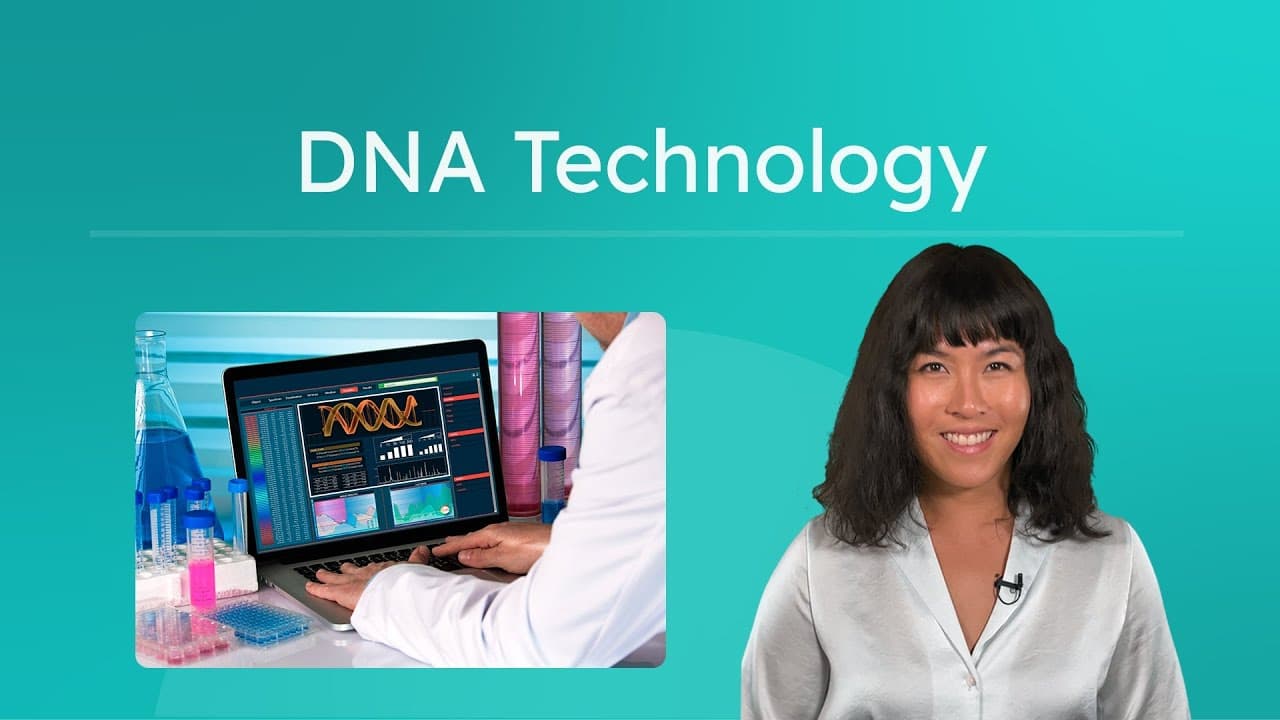
How DNA Technology Solves Crimes and Cures Diseases

How DNA Technology Solves Crimes and Cures Diseases

This educational video introduces students to the fascinating world of DNA technology through the lens of a crime scene investigation. Hosted by a presenter named "B", the video explains how forensic scientists use biological evidence to solve crimes. It breaks down complex laboratory techniques like Polymerase Chain Reaction (PCR) and Gel Electrophoresis into understandable concepts using effective analogies and animations. The narrative solves a hypothetical crime while simultaneously teaching the underlying molecular biology principles.

Miacademy & MiaPrep Learning ChannelMiacademy & MiaPrep Learning Channel

17mins 13s

How Earth Recycles: The Four Key Cycles of Matter

How Earth Recycles: The Four Key Cycles of Matter

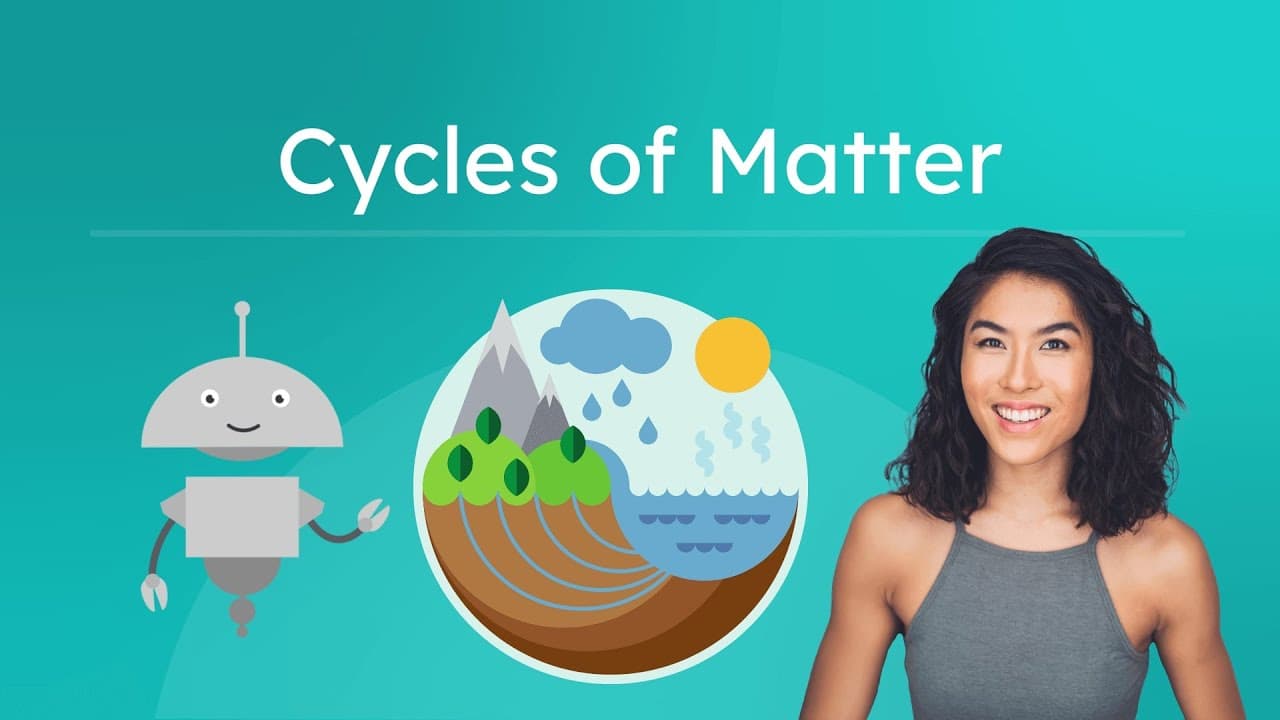
This educational video provides a comprehensive overview of how matter cycles through the Earth's systems, emphasizing the concept of Earth as a "closed system." It begins by posing a thought-provoking question about population growth: if Earth doesn't gain new matter, where do the materials for new life come from? The host then explains the difference between elements and compounds before diving into four specific biogeochemical cycles: the Carbon Cycle, the Nitrogen Cycle, the Phosphorus Cycle, and the Water Cycle. Key themes include the law of conservation of matter, the interaction between Earth's spheres (atmosphere, hydrosphere, geosphere, and biosphere), and the specific biological and chemical processes that drive these cycles. The video details complex processes such as photosynthesis, respiration, combustion, nitrogen fixation, mineralization, nitrification, and weathering, breaking them down with clear visuals and definitions. This resource is highly valuable for middle and high school science classrooms studying ecology, earth science, or chemistry. It effectively connects abstract chemical concepts to real-world phenomena, such as how plants grow, how clouds form, and what our bodies are made of. Teachers can use this video to introduce the concept of nutrient cycling or to review specific vocabulary related to ecosystem dynamics.

Miacademy & MiaPrep Learning ChannelMiacademy & MiaPrep Learning Channel

14mins 5s

Materials

Muscle Fatigue Activity

Muscle Fatigue Activity

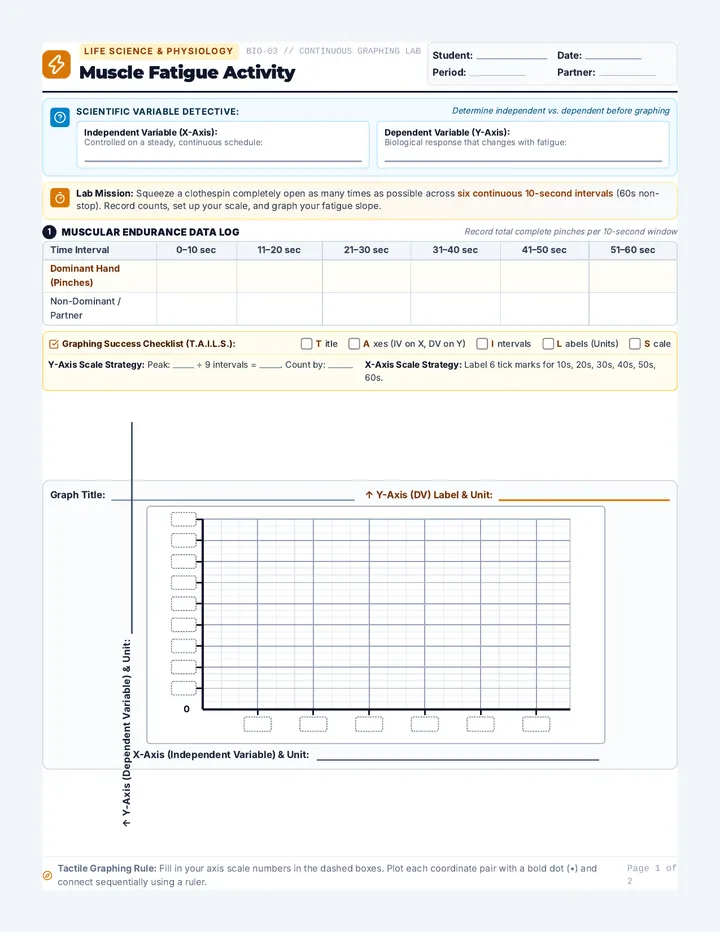
A 2-page hands-on life science printable activity where students measure clothespin pinch frequency across six 10-second intervals to map muscular fatigue, independently identify the independent and dependent variables, determine their coordinate scale, and construct a precision line graph on a full coordinate grid.

S

stewart

Lens Detectives Lab Activity

Lens Detectives Lab Activity

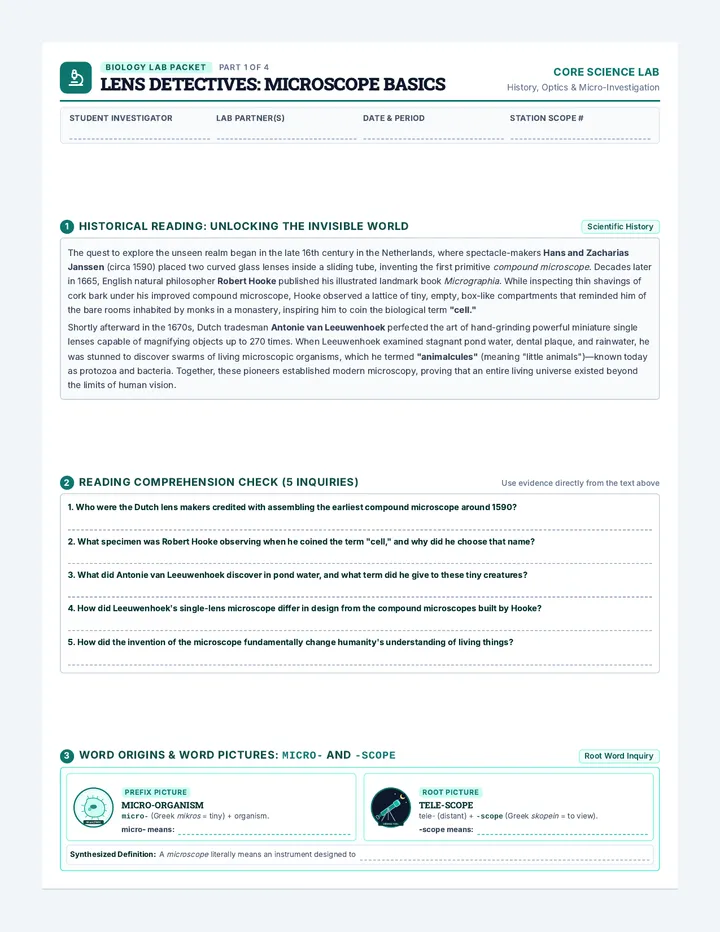
A comprehensive 4-page laboratory investigation packet covering microscope history with comprehension questions, root word pictures, a labeled microscope anatomy diagram, magnification math, letter 'e' inversion inquiry, and pond water wet-mount microscopy with realistic 400x photomicrograph views of Euglena, Paramecium, Amoeba, and Diatoms.

S

stewart

Trait Tracker Homework Extra Compact

Trait Tracker Homework Extra Compact

Final ultra-compact version of the Trait Tracker Homework, featuring a minimized header to maximize page space for student answers while retaining the engaging detective theme and core objectives. Question 4 has been moved to a separate page for easier printing.

AC

Aaron Conlin

Monosaccharide Check Exit Ticket

Monosaccharide Check Exit Ticket

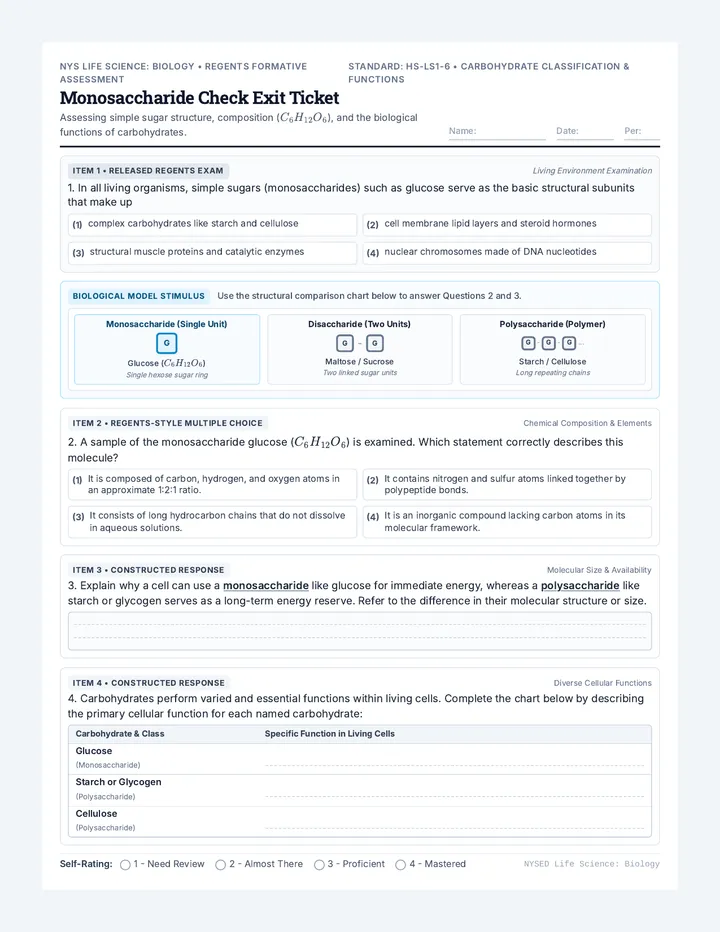
A print-ready New York State Regents-style exit ticket focused on monosaccharide structure, classification, and carbohydrate functions in cells. It contains zero questions on diffusion, chemical indicators, or chemical reactions, centering purely on building blocks, elemental composition, and biological roles (energy fuel, storage, and plant cell wall structure).

S

stewart

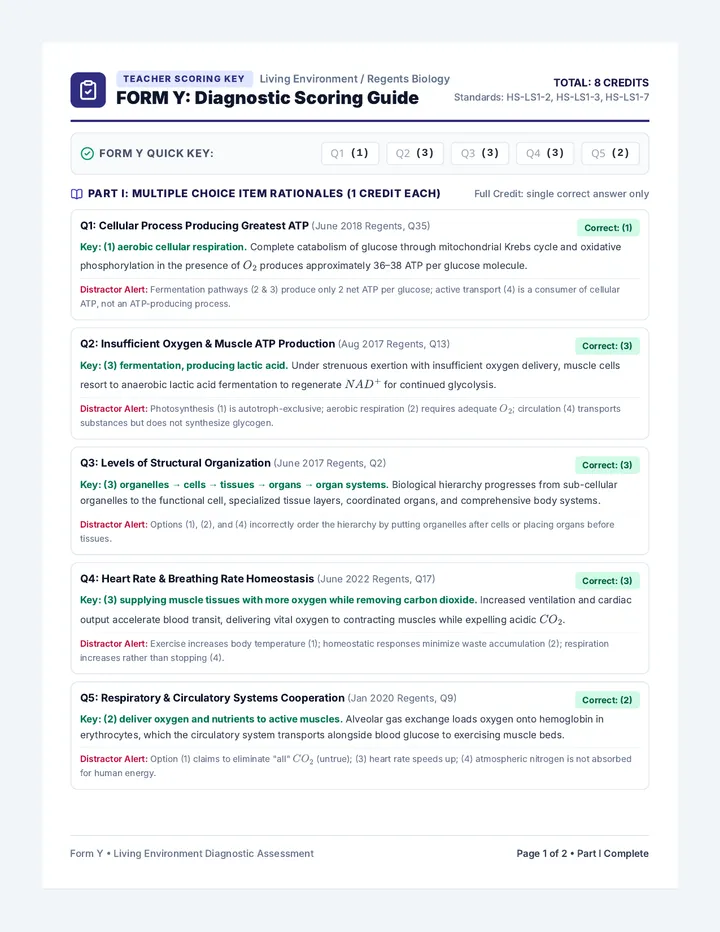
Form Y Biology Answer Key

Form Y Biology Answer Key

Complete teacher scoring key and rubric for Form Y of the Regents Biology exam. Features item rationales, distractor analyses, acceptable constructed responses, and NYS Regents grading criteria for body systems, homeostasis, and cellular energy.

J

jelterman

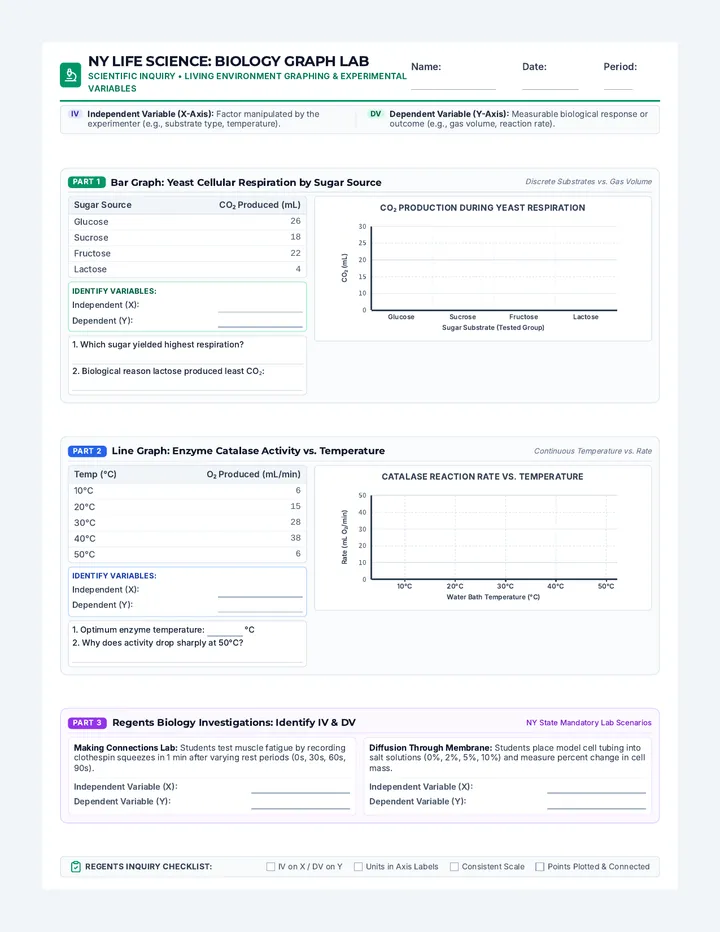
Life Science Graph Lab Practice Worksheet

Life Science Graph Lab Practice Worksheet

A NY Life Science / Living Environment biology practice worksheet aligned with NYSSLS, featuring yeast cellular respiration bar graphs, enzyme temperature line graphs, and Regents state lab variable identification.

S

stewart

Sequences

Cell Discovery Guide Worksheet

Hidden Worlds Sequence

A comprehensive one-week unit covering the foundations of cell theory, the technical mastery of microscopes, and the fascinating structures of unicellular organisms (Amoeba, Paramecium, Euglena, and Volvox).

S

sam

12
Climate Crisis Slides

Science Essentials Vault

A comprehensive collection of core science units covering Environmental Science, Biology, and Physical Science. This sequence provides high-impact instructional slides, hands-on lab experiences, guided notes, and differentiated assessments for five major scientific domains.

CB

Chloe Brown

25
Hess Pathfinders Slides

Energy in Chemical Bonds

A five-day high school chemistry unit exploring thermochemistry, collision theory, enthalpy diagrams, and calorimetry through the lens of body heat and chemical reactions. Students investigate the anchoring phenomenon of exercise-induced heat while mastering TEKS C.13 standards.

OM

Olutoyin Makinde

48
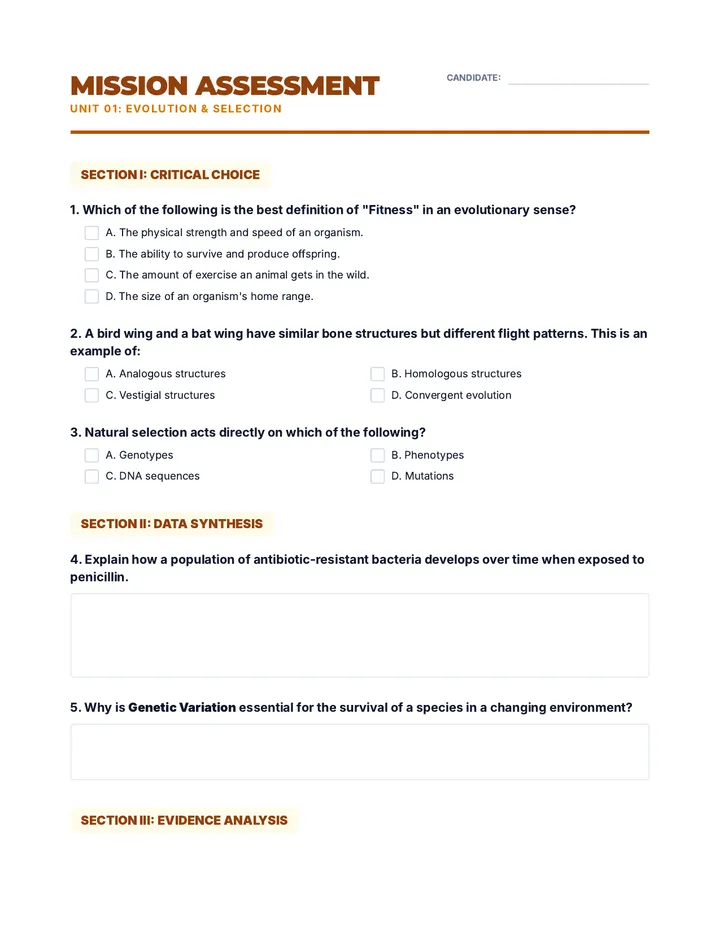
Evolution Assessment Quiz

Biology Recovery Sprint

A high-intensity biology credit recovery program focused on high-yield standards: Evolution, Systems, Viruses, and Cellular Genetics.

PB

Priyadarshini Bharath

15
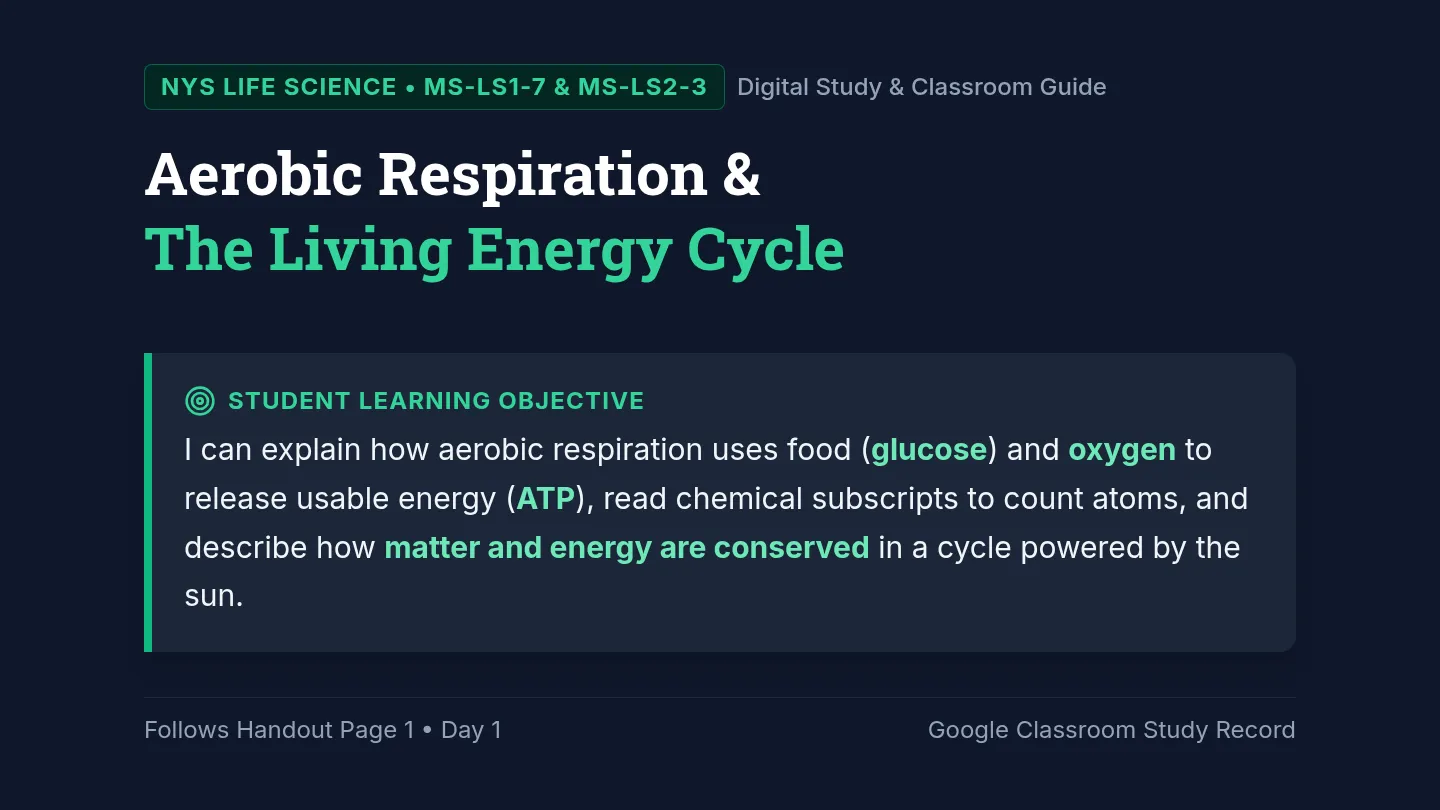
Aerobic Respiration Lesson Slides

Cellular Respiration Cycle

A comprehensive multi-day middle school life science sequence aligned with NYS learning standards exploring aerobic and anaerobic cellular respiration, matter recycling, and energy flow powered by the sun.

JE

Jeffrey Elterman

8
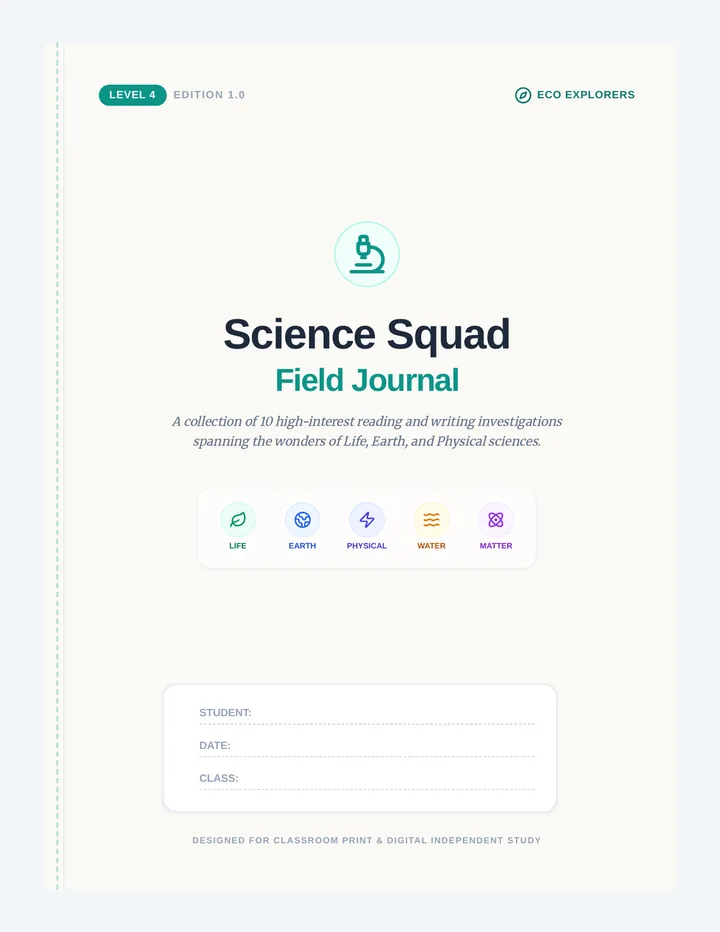
Science Squad Student Booklet

Science Literacy Journals

A multi-grade collection of scientific reading comprehension and response booklets designed to build disciplinary literacy in Earth, Life, and Physical sciences across elementary and middle school levels.

N

nmack

4

Lessons

Life in Balance Slides Plus

Life in Balance

A foundational lesson on the characteristics of life and the factors that shape ecological populations, designed to help students distinguish between living and non-living systems and understand environmental impacts.

I

isaac_daigle

11
Biomolecule Blueprint Worksheet

Molecular Machinery

An introductory exploration of the four primary biomolecules (carbohydrates, lipids, proteins, and nucleic acids), aligning to TEKS Biology 5A. Students compare their chemical functions and identify key biological examples across animal, plant, and cellular systems.

SB

Stephen Bassford

5
Hypothesis Lab Slides

Hypothesis Lab

An eighth-grade life science investigation lesson where students analyze New York statewide science exam biology scenarios to master hypothesis generation, independent and dependent variable identification, and experimental testing.

J

jelterman

7
Mind Matters Instruction Slides

Mind Matters

A comprehensive lesson exploring the human brain's capabilities and the nature of intelligence, featuring an informational text analysis and a multiple intelligences choice board.

V

vivianbelarmino

9
Blueprint Slides

Cellular Blueprint

This lesson explores the relationship between structure and function in prokaryotic and eukaryotic cells, and how cells organize into complex organisms. Designed for diverse learners, it uses a 'Blueprint' theme to visualize biological systems as carefully designed structures.

CB

Chloe Brown

7
Brain Beats Lesson Plan

The Musical Brain

A high school lesson exploring the neuroscience of music, investigating how the brain processes auditory stimuli, triggers emotions, and encodes memories through melodies.

J

jditomaso

15