Lenny.com
Explore
Create
ActivitiesNewMathEnglish Language ArtsScience & EngineeringSocial StudiesGlobal LanguagesHealth & Physical EducationSpecial EducationCounseling & Life SkillsArts & CreativityESL
Lenny.com
Lenny.com
Explore
Create
ActivitiesNewMathEnglish Language ArtsScience & EngineeringSocial StudiesGlobal LanguagesHealth & Physical EducationSpecial EducationCounseling & Life SkillsArts & CreativityESL
Lenny.com
Lenny.com

Solutions

Lenny for EducatorsLenny for SchoolsLenny for Districts

Product

ExploreSign inCreateSupportAbout

Resources

Getting startedMTSS Acceleration Program

© 2026 Lenny Learning Inc.

TermsPrivacyAccessibility
LinkedInInstagramX
Lenny

Electrical Engineering

Circuit theory, electromagnetism, and digital logic design. Addresses power generation, signal processing, and the development of electronic hardware and systems.

Science & EngineeringLife ScienceLiving ThingsAnimalsPlantsBody SystemsTraitsAdaptationsCellsEcosystemsHeredityGenes to TraitsCell DivisionPhysicsComparing MaterialsShapes and PropertiesMagnetsMagnetismLightSoundLight and SoundMatterStates of MatterChanges of StateMixturesPhysical and Chemical ChangeHeating and CoolingHeat and Thermal EnergyEnergyForce and MotionElectrical CircuitsAtoms and MoleculesPeriodic TableMotion in One DimensionMotion in Two DimensionsScalars and VectorsForces and Laws of MotionCircular Motion and GravityMomentum and ImpulseWork, Energy, and PowerWavesElectromagnetic WavesGeometric OpticsElectricity and MagnetismSimple Harmonic MotionThermodynamicsNuclear PhysicsEarth Science & AstronomyWeatherWater CycleRocks and MineralsFossilsEarth's FeaturesEarth's ResourcesEarth's StructureWeather and ClimateEarth EventsFossils and Geologic TimePlate TectonicsHuman ImpactsAstronomyChemistryUnits and MeasurementAtomic StructurePeriodic TrendsChemical BondingNomenclatureMolecular StructureIntermolecular ForcesThe MoleStoichiometryProperties of GasesSolutionsChemical ReactionsBalancing EquationsEnergy ChangesRates of ReactionsEquilibriumAcids and BasesQuantum ModelBiologyClassificationCell StructureThe Chemistry of LifeBiomoleculesCellular TransportCell EnergyCell Growth and DivisionDNAProtein SynthesisMeiosis and Sexual ReproductionPatterns of InheritanceMulticellular OrganismsEvolutionEcologyBiodiversityComputer ScienceAlgorithms and Computational ThinkingProgramming LanguagesComputing SystemsNetworks and InternetData AnalysisCybersecurityAI and Machine LearningSoftware Design and DevelopmentBlockchainEngineering & AIDesigning ExperimentsEngineering PracticesDesign ThinkingEngineering Design ProcessMechanical EngineeringElectrical EngineeringMaterials and StructuresCAD and 3D DesignRoboticsArtificial Intelligence BasicsVibe CodingMachine LearningAI Ethics and SocietySystems ThinkingEntrepreneurship & InnovationEntrepreneurial MindsetBusiness Idea DevelopmentBusiness Plan BasicsMarketing & Customer DiscoveryFinancial Management for Startups

Videos

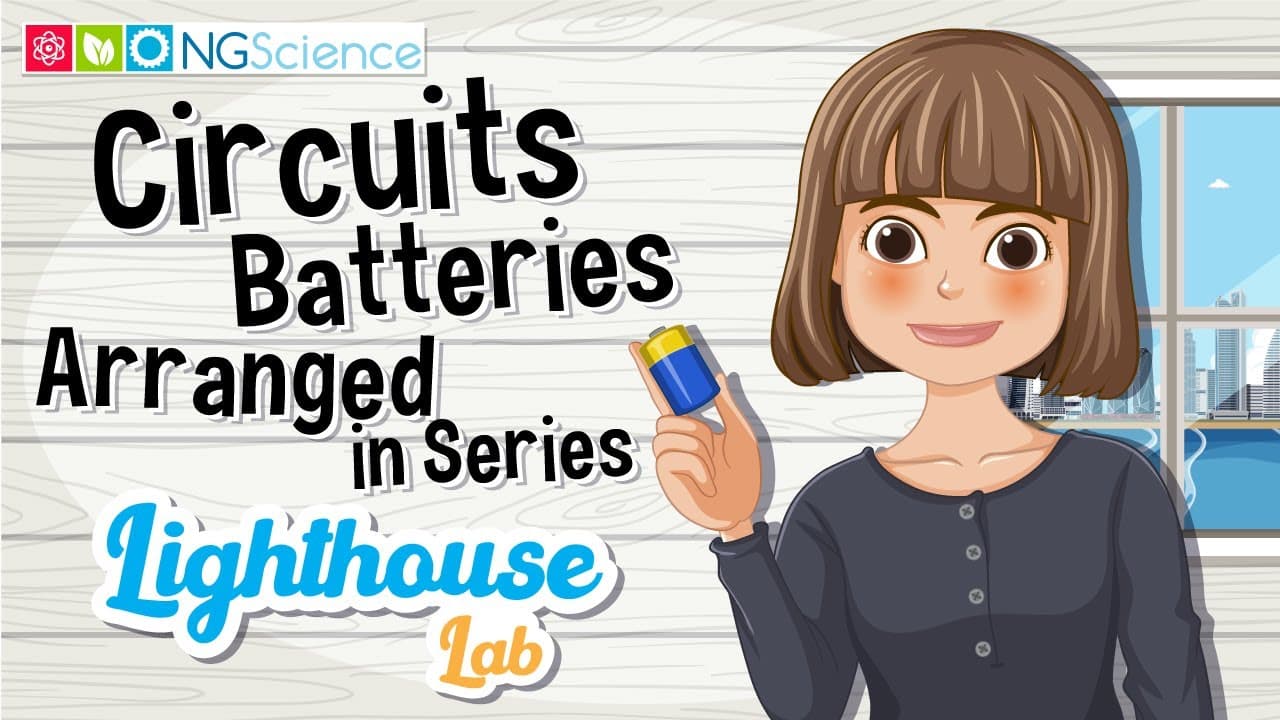
How to Build Simple Electrical Circuits

How to Build Simple Electrical Circuits

This educational video provides a clear, step-by-step demonstration of how to build simple electrical circuits. Hosted in the "Lighthouse Lab," the presenter guides viewers through the process of connecting basic components—batteries, wires, a light bulb, and a switch—to create a functional circuit. The video visualizes the concept of a complete path for electrical current, moving from a basic loop to more complex arrangements involving control mechanisms and increased power sources.

Next Generation ScienceNext Generation Science

4mins 48s

How Wind Turbines Generate Clean Energy

How Wind Turbines Generate Clean Energy

This educational video provides a clear and concise overview of wind energy, explaining how wind turbines function to generate electricity. It begins by establishing the importance of electricity in modern life before diving into the mechanics of energy conversion—specifically how kinetic energy from wind is transformed into electrical power through generators. The video utilizes clear diagrams to illustrate the internal components of a wind turbine, making complex engineering concepts accessible to students. Beyond just the mechanics, the video explores the broader implications of wind energy. It introduces the concept of "wind farms" and how they can power entire cities. Crucially, it discusses the environmental benefits of wind power as a clean, renewable resource that doesn't produce emissions. This sets the stage for discussions about sustainable living and alternative energy sources. The video concludes by presenting a balanced view, addressing the disadvantages of wind turbines, including their potential impact on wildlife like birds and bats, noise pollution, and high maintenance costs. This balanced perspective is excellent for critical thinking exercises, allowing students to weigh the pros and cons of renewable energy technologies and understand that engineering solutions often involve trade-offs.

Next Generation ScienceNext Generation Science

1min 45s

How Solar Panels Power Our Homes: From Sunlight to Electricity

How Solar Panels Power Our Homes: From Sunlight to Electricity

This educational video provides a clear and concise explanation of how solar energy is harvested, converted, and utilized in modern homes and businesses. It breaks down the technical process of photovoltaic generation, explaining the critical difference between Direct Current (DC) and Alternating Current (AC), and the role of inverters in making solar power compatible with the electrical grid. The video also introduces the concept of battery storage to manage energy demand during non-sunlight hours. Beyond the technical mechanics, the video explores the broader implications of adopting solar technology. It balances the discussion by highlighting key advantages—such as environmental sustainability, cost savings, and technological advancements—against significant challenges like weather dependence, high initial installation costs, and the environmental concerns surrounding panel disposal. For educators, this resource serves as an excellent primer for units on renewable energy, electricity, or environmental science. It simplifies complex electrical concepts like AC/DC conversion into digestible visuals, making it accessible for upper elementary and middle school students. The balanced presentation of pros and cons also makes it a valuable tool for critical thinking exercises regarding energy policy and sustainability.

Next Generation ScienceNext Generation Science

3mins 30s

How a Simple Series Circuit Works

How a Simple Series Circuit Works

This educational video provides a clear and concise demonstration of a simple series circuit, serving as an excellent introduction to basic electricity concepts for elementary students. It uses a physical model consisting of a battery pack, a knife switch, and a light bulb connected by wires to visually demonstrate how electric current flows. The video clearly defines what a series circuit is by emphasizing the single path available for the current. The content covers essential terminology including components, series circuits, and the function of a switch. It explicitly demonstrates the difference between an 'open' circuit (where the path is broken and the light is off) and a 'closed' circuit (where the path is complete and the light is on). The narration is paced slowly to allow students to connect the spoken definitions with the physical actions occurring on screen. For educators, this video is a valuable tool for visualizing abstract electrical concepts. It bridges the gap between definitions and reality by showing real-world components. It is particularly useful for introducing the counter-intuitive terminology of 'open' and 'closed' switches before students attempt to build their own circuits in a hands-on lab setting.

Next Generation ScienceNext Generation Science

1min 12s

How Simple Electrical Circuits Work

How Simple Electrical Circuits Work

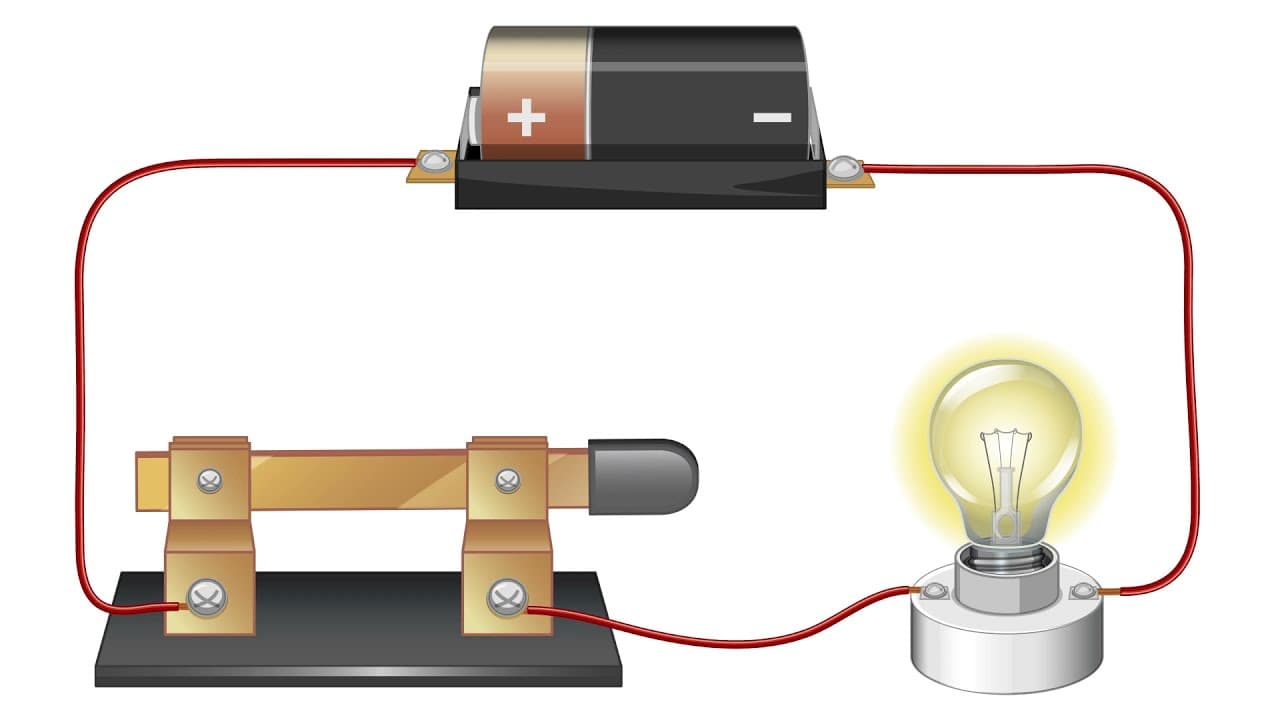
This educational video provides a clear and concise introduction to the fundamental components and mechanics of a simple electrical circuit. Through clear narration and illustrative animations, it breaks down the essential parts of a circuit—the energy source (battery), output device (light bulb), connectors (copper wires), and control mechanism (switch)—explaining the specific role each plays in the system.

Next Generation ScienceNext Generation Science

1min 26s

How Magnets Work and Why We Use Them

How Magnets Work and Why We Use Them

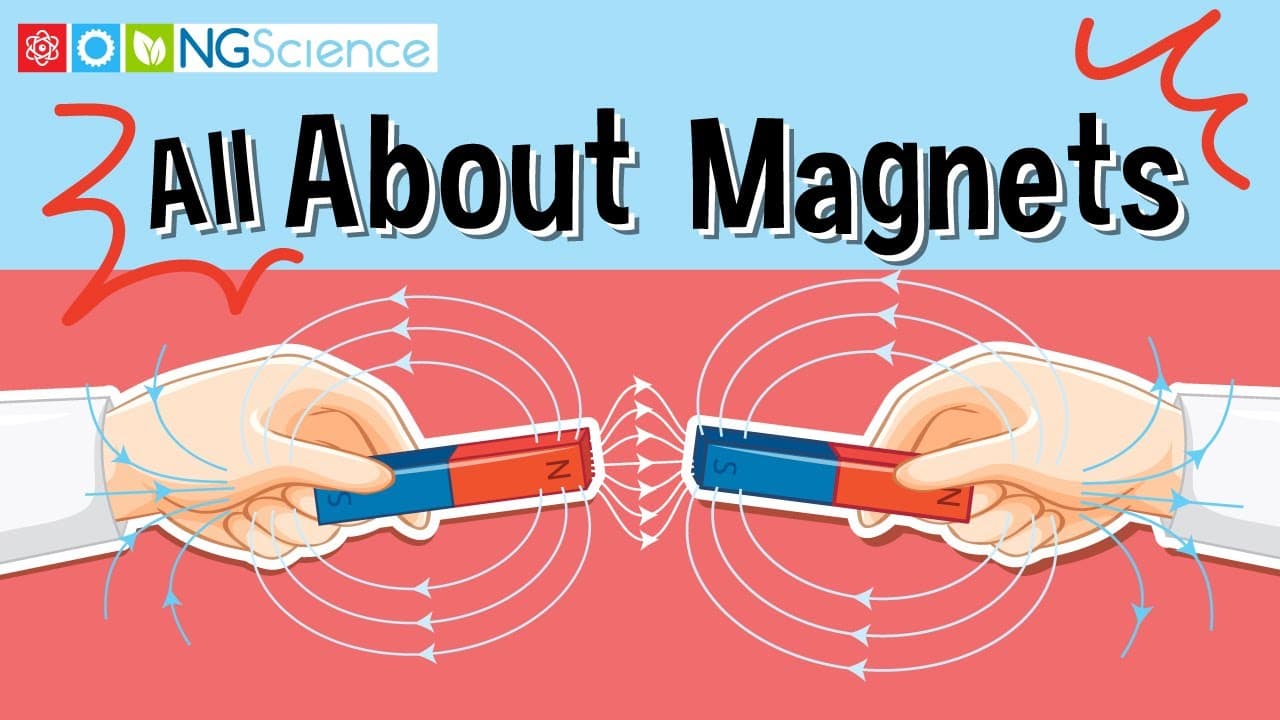
This educational video provides a comprehensive introduction to magnets, exploring their fundamental properties, different classifications, and wide-ranging applications in modern technology. The video begins by defining magnets through their ability to attract specific metals like iron and steel, visualizing the invisible magnetic fields that surround them. It breaks down the three primary types of magnets—permanent, temporary, and electromagnets—explaining how each functions differently, from the simple magnets on a refrigerator to the powerful electromagnets used in junkyards and roller coasters. The content delves into the physics of magnetic poles, illustrating the core rule that opposite poles attract while like poles repel. This segment uses clear visual demonstrations with bar magnets and iron filings to make abstract concepts concrete for young learners. The video also clarifies common misconceptions by distinguishing between magnetic and non-magnetic materials, showing tests on plastic, wood, and glass to reinforce understanding of material properties. Finally, the video connects these scientific concepts to the real world by highlighting how magnets are essential to everyday life and advanced engineering. Students learn about magnets in computers, earbuds, electric cars, and MRI machines, culminating in an exciting look at Maglev trains that float above tracks. This resource is excellent for elementary science units on forces and motion, offering clear definitions, engaging examples, and a built-in quiz to assess student comprehension.
Next Generation ScienceNext Generation Science

8mins 16s

Materials

Coding Pioneers Worksheet

Coding Pioneers Worksheet

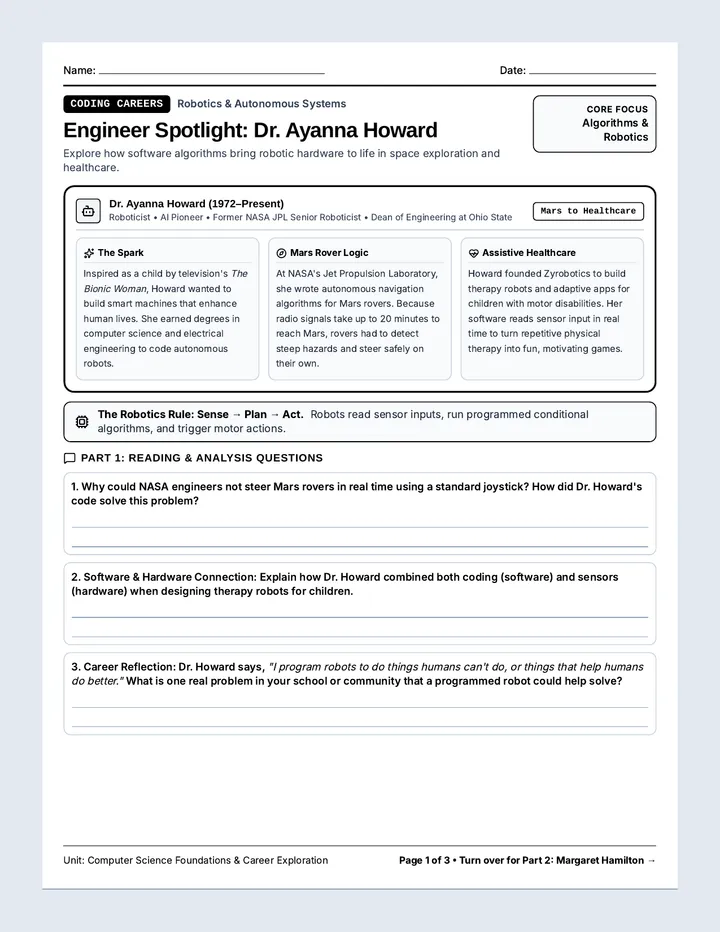
A printer-friendly black-and-white edition of the three-page computer science packet featuring Dr. Ayanna Howard (Page 1), Margaret Hamilton (Page 2), and an independent digital research lab (Page 3), optimized for crisp monochrome photocopying and minimal toner use.

M

Megan.Tanner

Roof Modification Challenge Slides

Roof Modification Challenge Slides

A 31-slide interactive presentation featuring 15 multiple-choice questions covering pages 60-63 of the Futura Engineering Dossier (White Roofs and Solar Roofs). Each question slide is followed immediately by an answer and explanation slide, fully adhering to font size guidelines and answer length constraints.

K

KATIE.CADLE

Wind Power Blueprint Worksheet

Wind Power Blueprint Worksheet

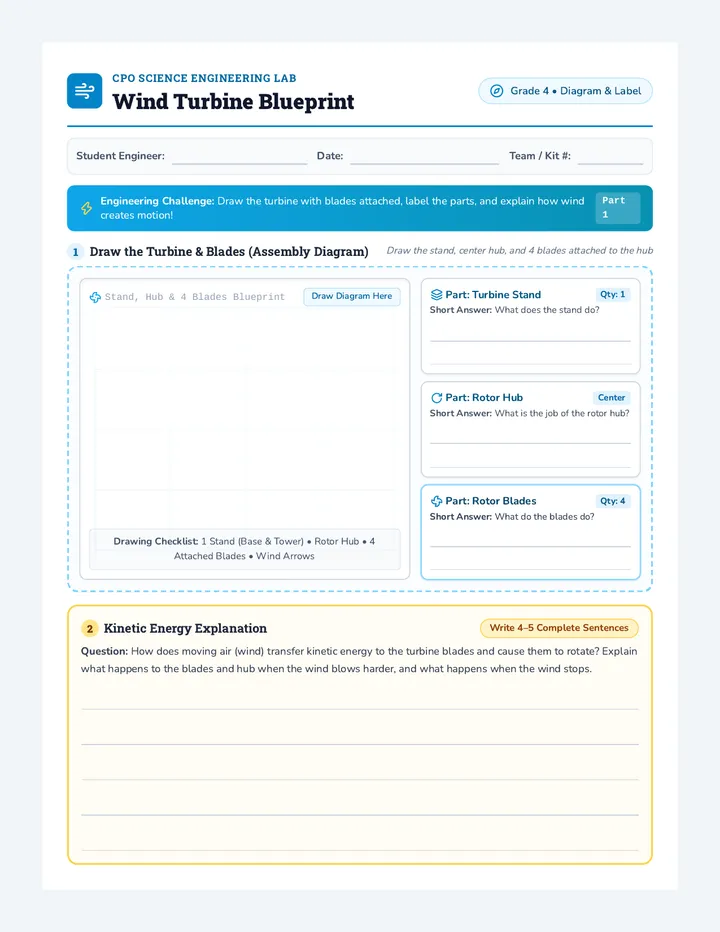
A two-page fourth-grade science diagram and labeling worksheet for the CPO Science Wind Turbine. Page 1 features drawing the turbine assembly, defining exterior component functions, and a dedicated 4-5 sentence kinetic energy explanation; Page 2 covers the electromagnetic generator parts and energy chain.

N

nmack

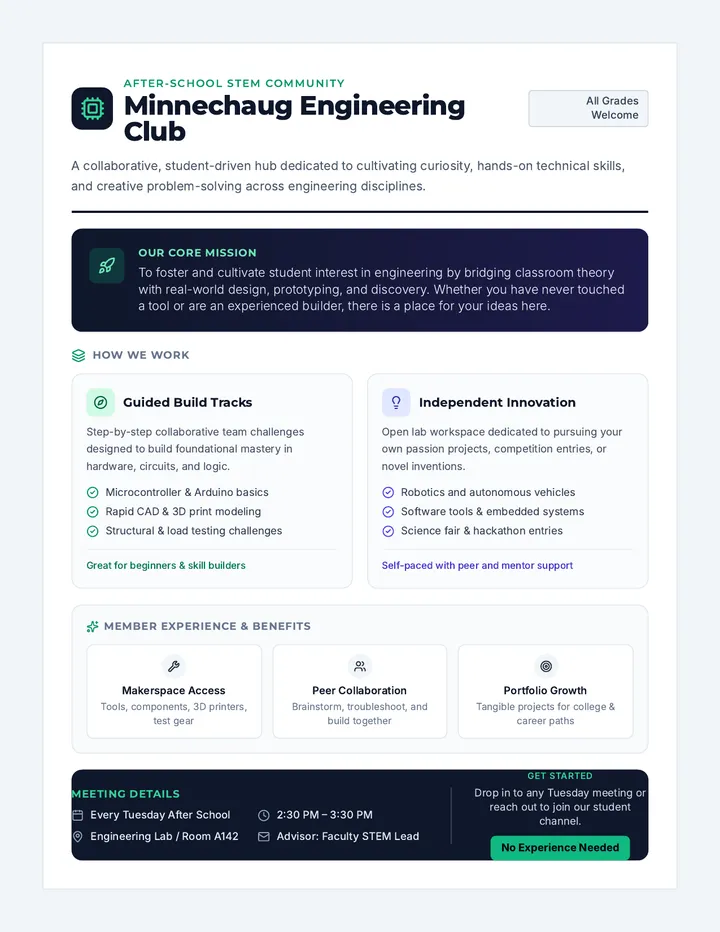
Minnechaug Engineers Info Sheet

Minnechaug Engineers Info Sheet

An informative one-page overview flyer for the Minnechaug Engineering Club, highlighting its STEM mission, guided build tracks, independent innovation opportunities, meeting details, and joining information.

J

jdembkowski

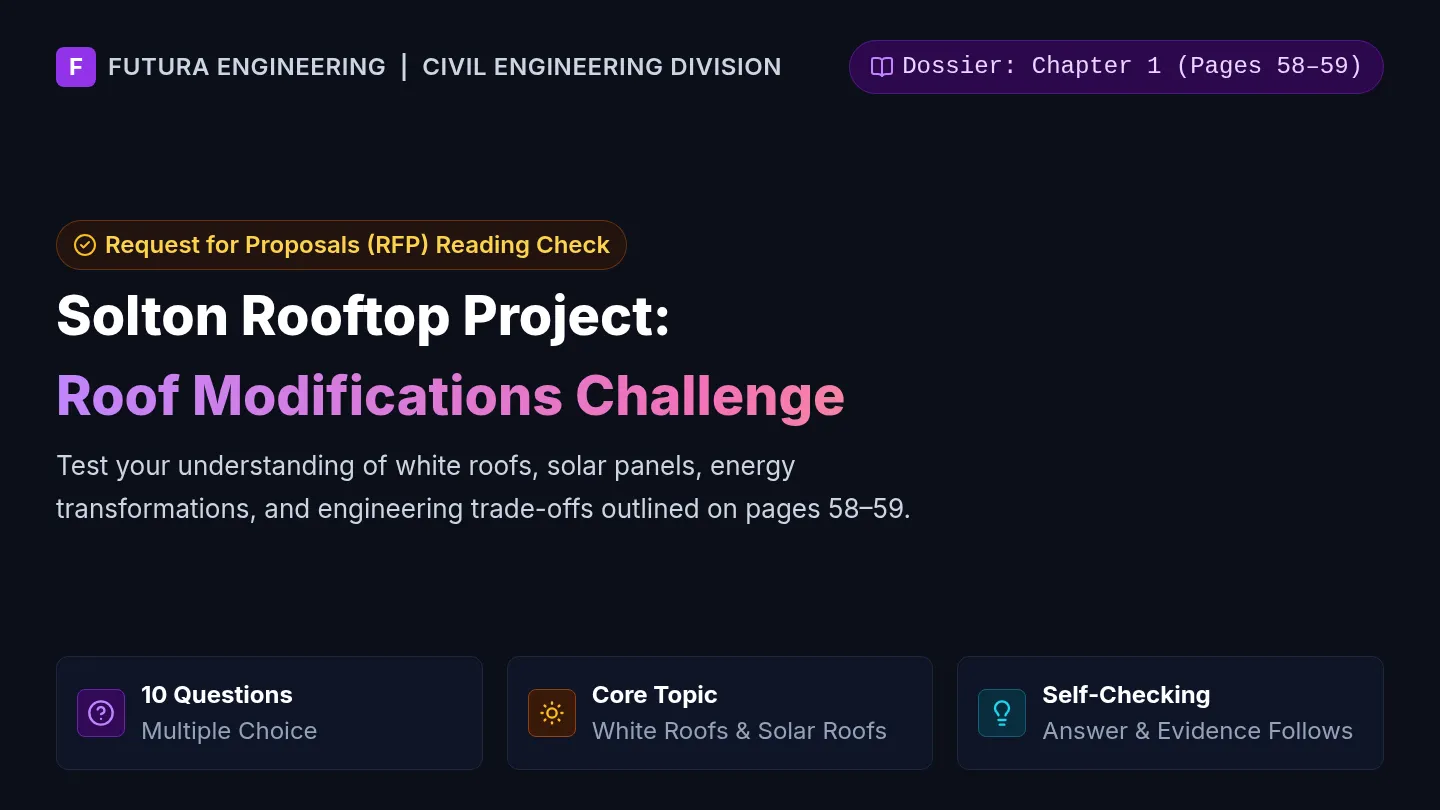
Rooftop Modifications Challenge Slides

Rooftop Modifications Challenge Slides

A 21-slide presentation featuring 10 multiple-choice reading comprehension questions and detailed answer explanations on pages 58–59 of the Solton Rooftop Project dossier. Covers white roofs, solar panels, light absorption and reflection, thermal energy conversion, electricity generation, project criteria, and architectural constraints. Every question is paired with an immediate explanation slide, with all correct answers strictly shorter than the longest distractor.

K

KATIE.CADLE

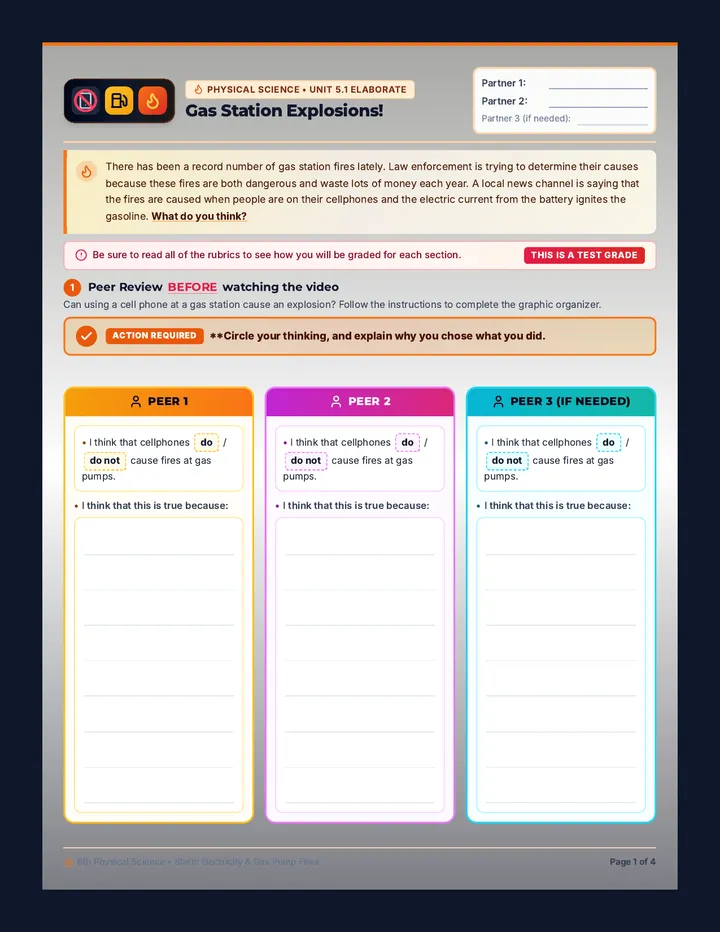
Gas Station Explosions Investigation Activity

Gas Station Explosions Investigation Activity

A 4-page scientific investigation with an energetic fire-themed aesthetic, prominent high-visibility instructions for the pre-video peer review, expanded design improvement workspaces, bold label requirements, and score evaluation moved to the back page.

LN

Leah Nickols

Sequences

Planet Profile Slides

Infinite Frontier

A comprehensive Hi-Lo unit for 6th graders exploring the scale of the universe, our place in the Milky Way, the technology used to explore space, and the history of human spaceflight.

JS

Janette Sullivan

54
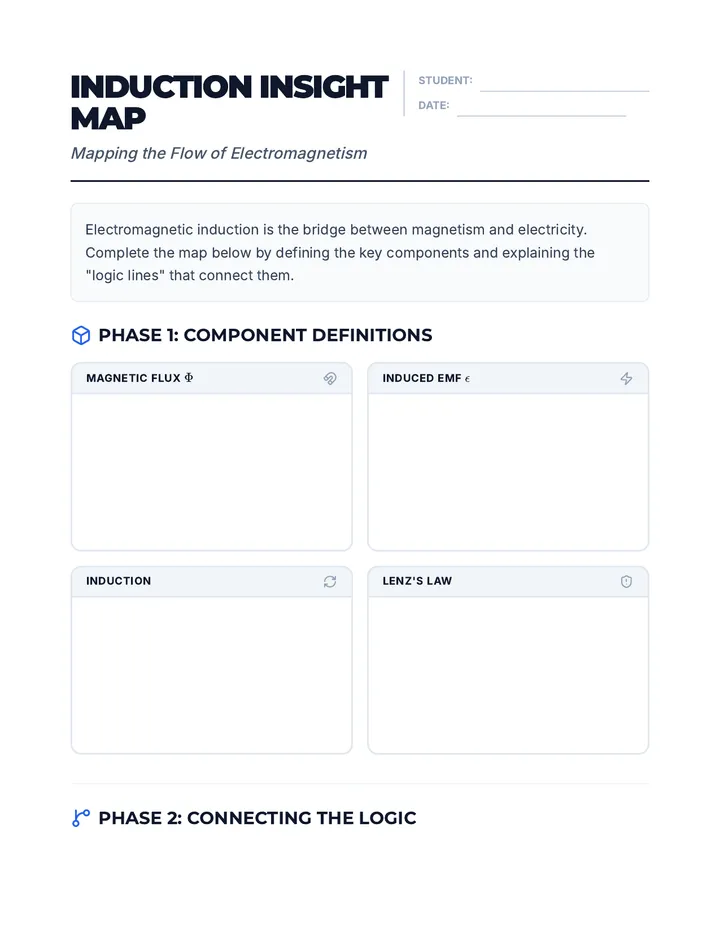
Induction Insight Map Handout

Magnetic Forces Investigation

A 5-day intensive exploration of magnetic forces and fields, focusing on atomic-level causes, field interactions, and mathematical modeling of forces on charged particles. Students progress from anchoring phenomena to complex mathematical applications and a comprehensive unit review.

OM

Olutoyin Makinde

68
Volt Vibe Slides

Electrical Fundamentals

A comprehensive technical certification sequence designed to teach commercial coffee equipment technicians how to demystify electricity, safely troubleshoot components, and master electrical systems.

KO

Kyle Ousley

37
Kirchhoff Review Worksheet

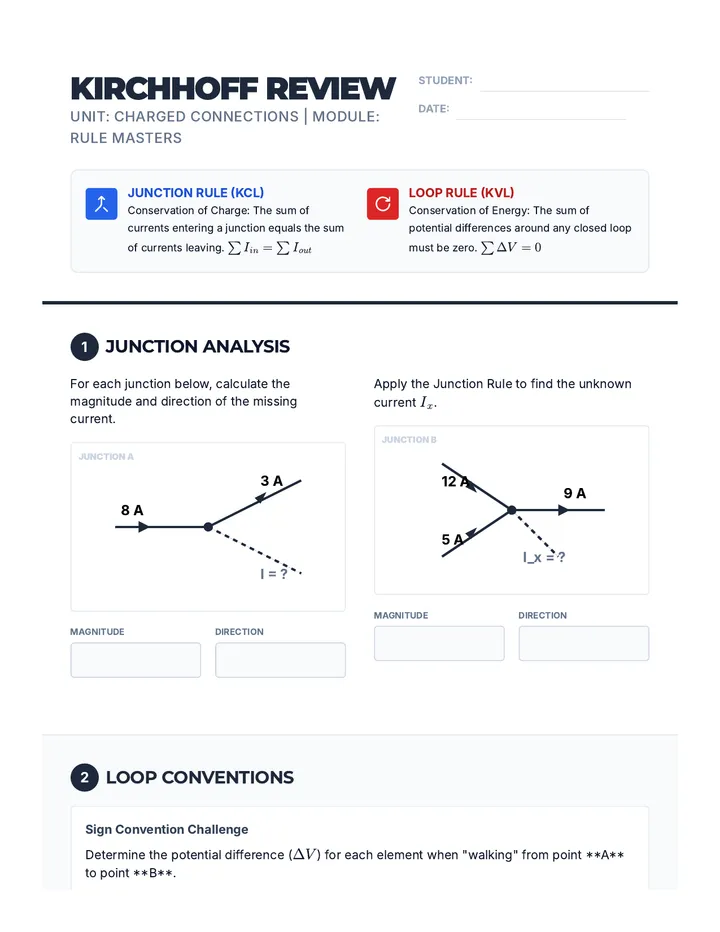
Charged Connections

A modular physics unit focused on the principles of electricity, circuit design, and the mathematical laws governing energy flow in electrical systems.

OM

Olutoyin Makinde

42
Power Parade Slides

The Grid Powering the Future

A comprehensive 2-week unit on electricity and circuits, covering electric potential, power generation, Ohm's law, and circuit analysis. Students move from the fundamental physics of voltage to the design of complex grid systems.

OM

Olutoyin Makinde

30
Forces Motion Slides

Force Fields Action

A comprehensive 5-week 4th-grade physical science unit exploring contact and non-contact forces, magnetic fields, electrical charges, and how invisible forces produce motion. Students investigate magnetic poles, field strength over distance, static electricity push and pull, and culminate with an engineering review challenge.

TG

Tolisha Goldston

16

Lessons

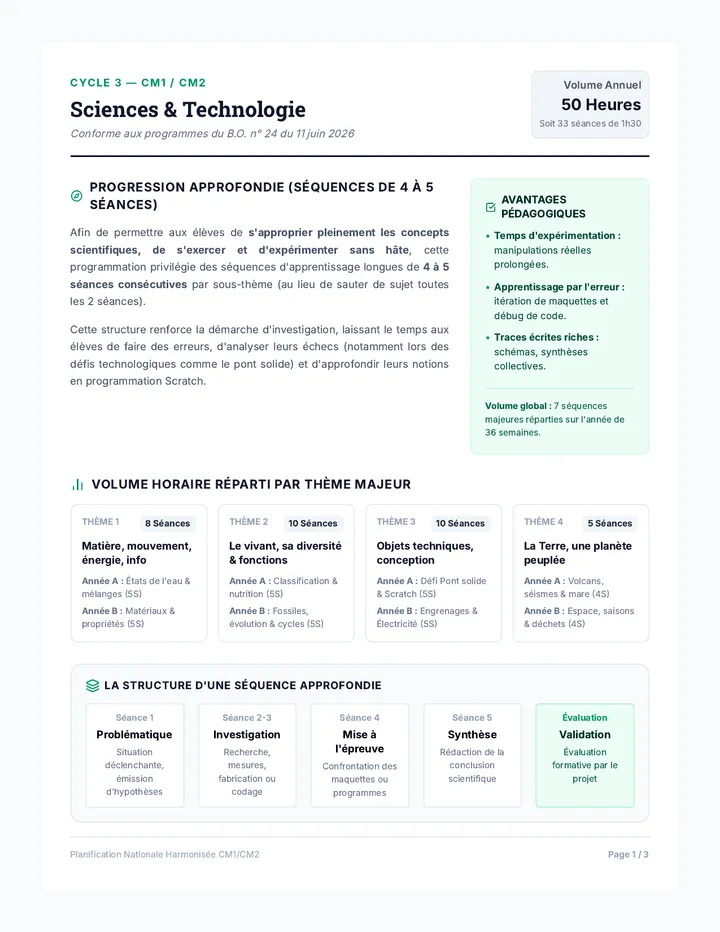
Tableau Progression Annuelle Sciences CM

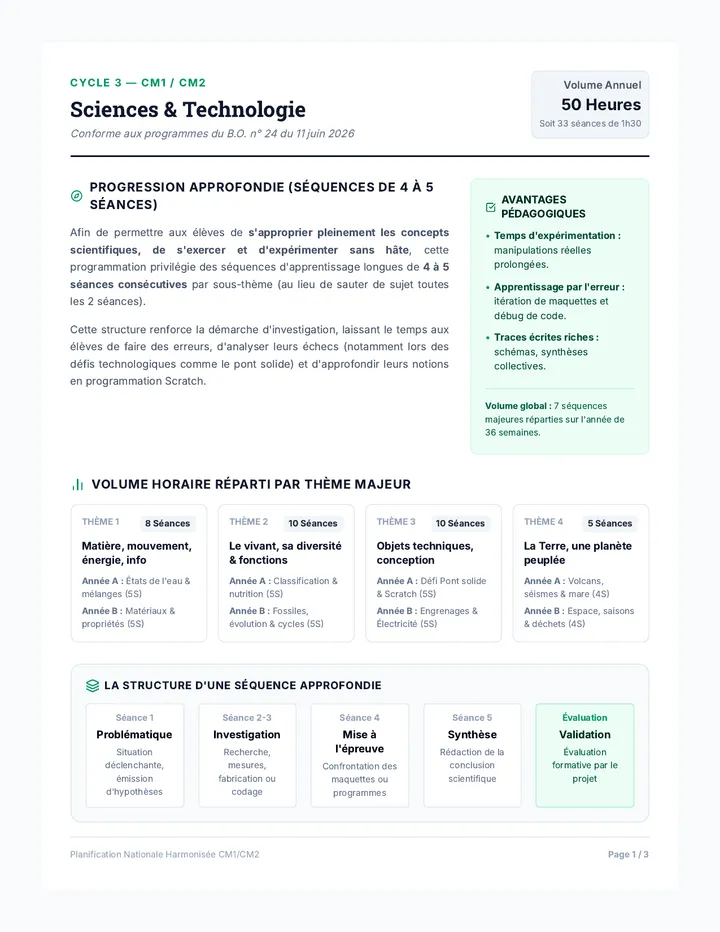
Progression Sciences CM1 CM2

Outil de planification annuelle et de progression pour l'enseignement des sciences et technologies en classe de CM1/CM2, conforme au BO de juin 2026. Ce guide propose une répartition claire des volumes horaires et des thèmes entre l'année A et l'année B pour éviter les redondances dans les classes à double niveau.

LP

LAURENT PERCHE

40
Curiosity Hacks Counselor Guide

Curiosity Hacks

A dynamic, curiosity-driven lesson designed to re-engage middle-of-the-pack students by transforming mundane everyday phenomena into deep, fascinating mysteries, boosting active questioning and self-motivation.

SH

Susan Henderson

4
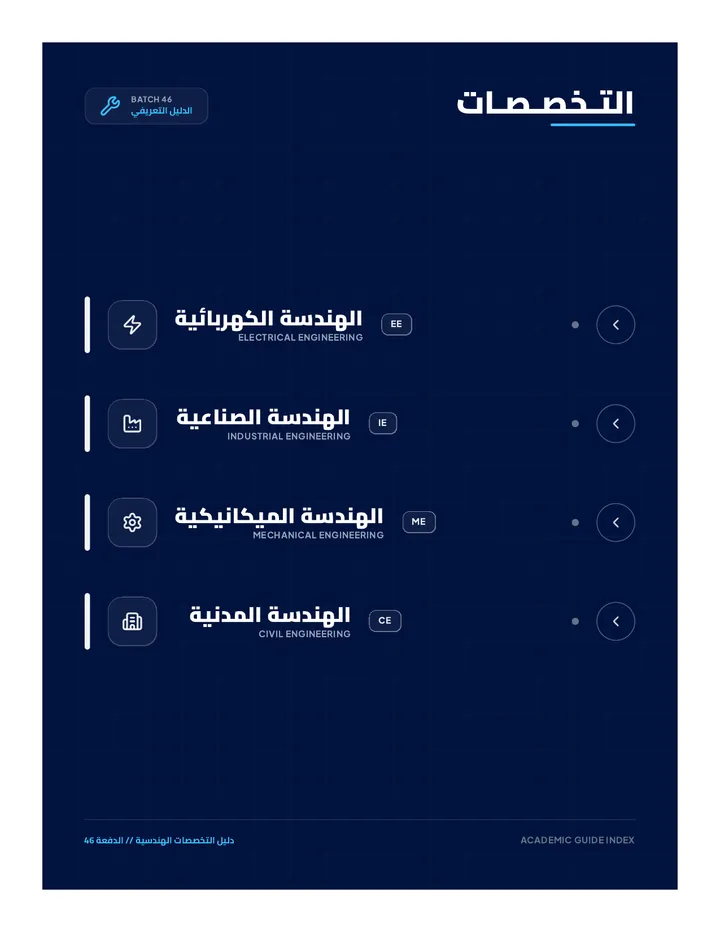
فهرس التخصصات الهندسية

تخصصات المستقبل الرقمي

دليل تعريفي لتخصصات الحاسب الآلي والتقنية يهدف إلى استعراض الفروع الرئيسية وتوجيه الطلاب نحو التخصص المناسب.

YA

Yara Alqwaizani

10
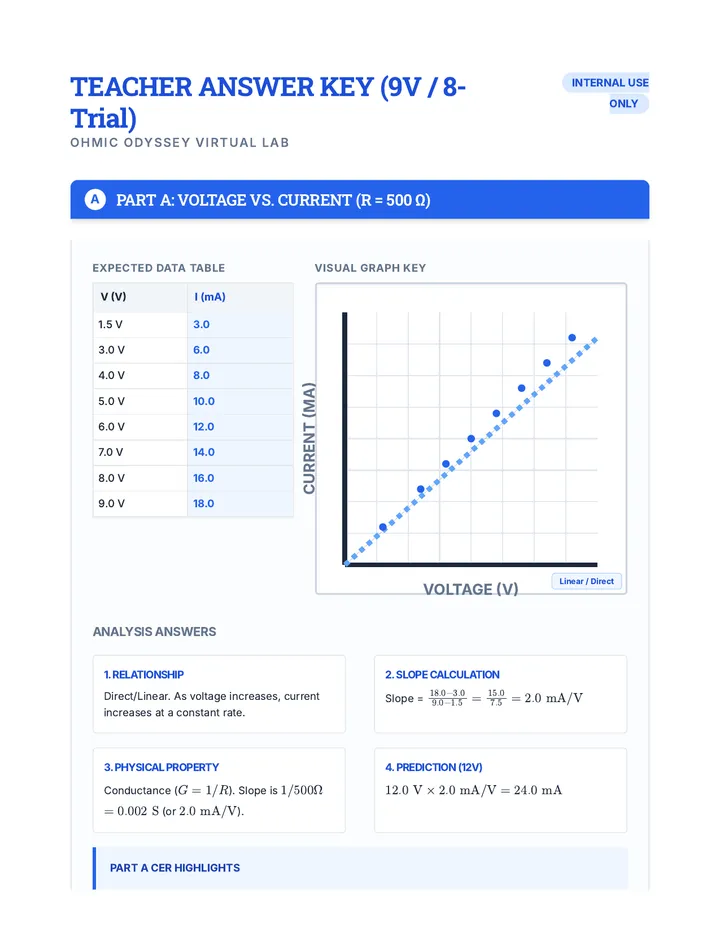
Ohmic Odyssey Answer Key V3

Ohmic Odyssey

A hands-on virtual lab using the PhET Ohm's Law simulation to investigate the relationships between voltage, current, and resistance. Students collect data, graph results, and use CER to explain their findings.

CM

Chuguna Murugesan

22
Tableau Progression Annuelle Sciences CM

Progression Sciences CM1 CM2

Outil de planification annuelle et de progression pour l'enseignement des sciences et technologies en classe de CM1/CM2, conforme au BO de juin 2026. Ce guide propose une répartition claire des volumes horaires et des thèmes entre l'année A et l'année B pour éviter les redondances dans les classes à double niveau.

L

Laurent

11
A+ Final Exam Student Exam

A+ Certification Finale

A comprehensive capstone assessment covering CompTIA A+ Core 1 (220-1101) and Core 2 (220-1102) domains, including multiple-choice questions and performance-based scenarios.

AG

Armand Gonzalez

3