Lenny.com
Explore
Create
ActivitiesNewMathEnglish Language ArtsScience & EngineeringSocial StudiesGlobal LanguagesHealth & Physical EducationSpecial EducationCounseling & Life SkillsArts & CreativityESL
Lenny.com
Lenny.com
Explore
Create
ActivitiesNewMathEnglish Language ArtsScience & EngineeringSocial StudiesGlobal LanguagesHealth & Physical EducationSpecial EducationCounseling & Life SkillsArts & CreativityESL
Lenny.com
Lenny.com

Solutions

Lenny for EducatorsLenny for SchoolsLenny for Districts

Product

ExploreSign inCreateSupportAbout

Resources

Getting startedMTSS Acceleration Program

Newsletters

School Funding Newsletter

© 2026 Lenny Learning Inc.

TermsPrivacyAccessibility
LinkedInInstagramX
Lenny

Designing Experiments

Statistical methodologies for testing AI models, including variable isolation and hypothesis formulation. Builds systematic frameworks for data collection and performance evaluation to ensure robust engineering outcomes.

Science & EngineeringLife ScienceLiving ThingsAnimalsPlantsBody SystemsTraitsAdaptationsCellsEcosystemsHeredityGenes to TraitsCell DivisionPhysicsComparing MaterialsShapes and PropertiesMagnetsMagnetismLightSoundLight and SoundMatterStates of MatterChanges of StateMixturesPhysical and Chemical ChangeHeating and CoolingHeat and Thermal EnergyEnergyForce and MotionElectrical CircuitsAtoms and MoleculesPeriodic TableMotion in One DimensionMotion in Two DimensionsScalars and VectorsForces and Laws of MotionCircular Motion and GravityMomentum and ImpulseWork, Energy, and PowerWavesElectromagnetic WavesGeometric OpticsElectricity and MagnetismSimple Harmonic MotionThermodynamicsNuclear PhysicsEarth Science & AstronomyWeatherWater CycleRocks and MineralsFossilsEarth's FeaturesEarth's ResourcesEarth's StructureWeather and ClimateEarth EventsFossils and Geologic TimePlate TectonicsHuman ImpactsAstronomyChemistryUnits and MeasurementAtomic StructurePeriodic TrendsChemical BondingNomenclatureMolecular StructureIntermolecular ForcesThe MoleStoichiometryProperties of GasesSolutionsChemical ReactionsBalancing EquationsEnergy ChangesRates of ReactionsEquilibriumAcids and BasesQuantum ModelBiologyClassificationCell StructureThe Chemistry of LifeBiomoleculesCellular TransportCell EnergyCell Growth and DivisionDNAProtein SynthesisMeiosis and Sexual ReproductionPatterns of InheritanceMulticellular OrganismsEvolutionEcologyBiodiversityComputer ScienceAlgorithms and Computational ThinkingProgramming LanguagesComputing SystemsNetworks and InternetData AnalysisCybersecurityAI and Machine LearningSoftware Design and DevelopmentBlockchainEngineering & AIDesigning ExperimentsEngineering PracticesDesign ThinkingEngineering Design ProcessMechanical EngineeringElectrical EngineeringMaterials and StructuresCAD and 3D DesignRoboticsArtificial Intelligence BasicsVibe CodingMachine LearningAI Ethics and SocietySystems ThinkingEntrepreneurship & InnovationEntrepreneurial MindsetBusiness Idea DevelopmentBusiness Plan BasicsMarketing & Customer DiscoveryFinancial Management for Startups

Videos

How Engineers Test Solutions with Variables and Trials

How Engineers Test Solutions with Variables and Trials

This educational video uses a bowling analogy to explain the engineering design process, specifically focusing on how to test solutions through trials. The host, Sabrina, breaks down complex concepts like variables, constants, criteria, and outcomes into manageable parts by demonstrating how an engineer would approach the problem of getting a strike at a bowling alley. The video explores key scientific inquiry themes including the importance of isolating variables to ensure fair testing, defining success criteria before testing begins, and the necessity of keeping other factors constant. It demonstrates the iterative nature of testing, showing how engineers perform multiple trials, analyze the results against their established criteria, and adjust their approach based on data. For educators, this resource provides a clear, visual model for teaching the experimental method and engineering design. It is particularly useful for introducing students to the vocabulary of experimentation (isolate, constant, trial) and showing why changing only one variable at a time is crucial for scientific validity. The bowling metaphor makes abstract procedural steps concrete and relatable for elementary and middle school students.
Crash Course KidsCrash Course Kids

3mins 1s

How Engineers Find and Fix Failure Points

How Engineers Find and Fix Failure Points

This video explores the engineering design process, specifically focusing on how engineers identify and resolve "failure points" to create safe and effective solutions. Hosted by Sabrina Cruz, the episode uses engaging animations and real-world examples to explain that failure isn't a negative outcome in engineering, but a necessary step in testing limits. It breaks down how engineers create plans, build models, and conduct trials by isolating variables to find exactly where a design stops working. Key themes include the definition of a "failure point," the importance of strategic planning over random guessing, and the scientific method's role in engineering through isolating variables. The video illustrates these concepts through a relatable example of testing a model bridge's weight capacity and a historical reference to the Tacoma Narrows Bridge collapse. It emphasizes iteration—using failure data to redesign and improve the solution. For educators, this resource is an excellent tool to introduce the "Test and Improve" phase of the engineering cycle. It helps destigmatize failure, framing it as critical data collection. Teachers can use the bridge testing demonstration to launch hands-on STEM challenges where students must intentionally test their designs to the breaking point to understand their limits. It also bridges science and engineering by showing how controlled experiments (trials) are used to validate design choices.

Crash Course KidsCrash Course Kids

4mins 2s

Why Engineers Change One Variable at a Time

Why Engineers Change One Variable at a Time

In this engaging episode of Crash Course Kids, host Sabrina Cruz uses the analogy of a mobile video game to explain the fundamental engineering concepts of variables and outcomes. The video breaks down the scientific method of testing solutions, specifically focusing on why it is critical to isolate variables during an experiment to understand cause and effect. Through a "Catbot" slingshot game, viewers see a practical demonstration of how changing launch angle versus pull strength affects the result.

Crash Course KidsCrash Course Kids

3mins 18s

How Engineers Use Variables to Solve Problems

How Engineers Use Variables to Solve Problems

This educational video introduces students to the critical concept of variables within the engineering design process. Using the relatable framework of asking "What If" questions, the host explains how engineers identify and manipulate different factors to test the success of their solutions. The video distinguishes between variables that can be controlled (like the weight or design of a prototype) and those that cannot (like gravity or wind), providing a clear foundation for scientific testing. The content reviews the standard engineering process—from defining a problem to building a prototype—before focusing specifically on how variables influence outcomes. Through animated examples involving bouncing balls and a hang glider attempting to cross a gorge, the video demonstrates practical applications of these abstract concepts. It emphasizes that identifying variables allows engineers to predict potential failures and refine their designs before real-world implementation. For educators, this video serves as an excellent bridge between general problem-solving and specific scientific methodology. It simplifies the often-confusing topic of variables (independent, dependent, and constants) by framing them as "conditions we can change" versus "conditions we can't." This makes it highly useful for preparing students for science fair projects, STEM challenges, or any unit focusing on experimental design and the scientific method.

Crash Course KidsCrash Course Kids

3mins 55s

How to Engineer a Robot Rescue Mission

How to Engineer a Robot Rescue Mission

In this engaging episode of Crash Course Kids, host Sabrina Cruz introduces students to the engineering design process through a relatable real-world problem: she dropped her phone down a storm drain. Instead of panicking, she uses this scenario to demonstrate how engineers define problems, brainstorm solutions, and design technologies to overcome challenges. The video breaks down complex concepts like isolating variables and conducting trials into accessible, bite-sized explanations.

Crash Course KidsCrash Course Kids

4mins 27s

How to Build a Mars Helicopter Model

How to Build a Mars Helicopter Model

Join Anthony and his robot pal Squeaks to explore the fascinating engineering behind NASA's Ingenuity helicopter, the first machine designed to fly on Mars. This engaging video breaks down the science of flight, comparing how helicopters work on Earth versus the unique challenges posed by the thin Martian atmosphere. Viewers learn how scientists solved these problems using specific design features like lightweight materials and extra-long, fast-spinning blades. The video transitions from theory to practice by guiding students through a hands-on STEM activity: building their own paper helicopter models. It demonstrates the importance of scientific modeling and introduces the engineering design process, encouraging viewers to test, observe, and iterate on their designs—just like real NASA engineers. This resource is an excellent tool for introducing elementary students to concepts of aerodynamics, planetary science, and engineering. It seamlessly connects complex space exploration topics with a simple, accessible classroom craft, making it perfect for lessons on the scientific method, variables, and the perseverance required in problem-solving.

SciShow KidsSciShow Kids

6mins 41s

Materials

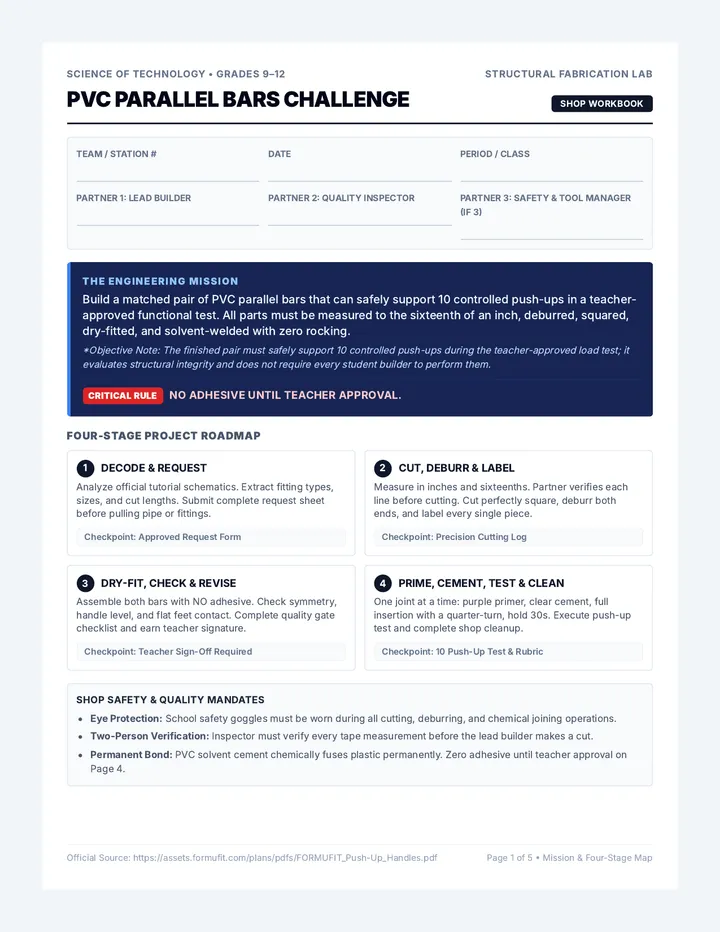
PVC Parallel Bars Workbook

PVC Parallel Bars Workbook

A comprehensive 5-page student workbook for the PVC Parallel Bars Challenge in Grade 9-12 Science of Technology. Features tight individual crops of only the original FORMUFIT black line-art silhouettes on Page 2, a 14-piece cutting log on Page 3, official 4-step assembly diagrams on Page 4, and consistent shop deburring terminology throughout.

KI

Koah Ing

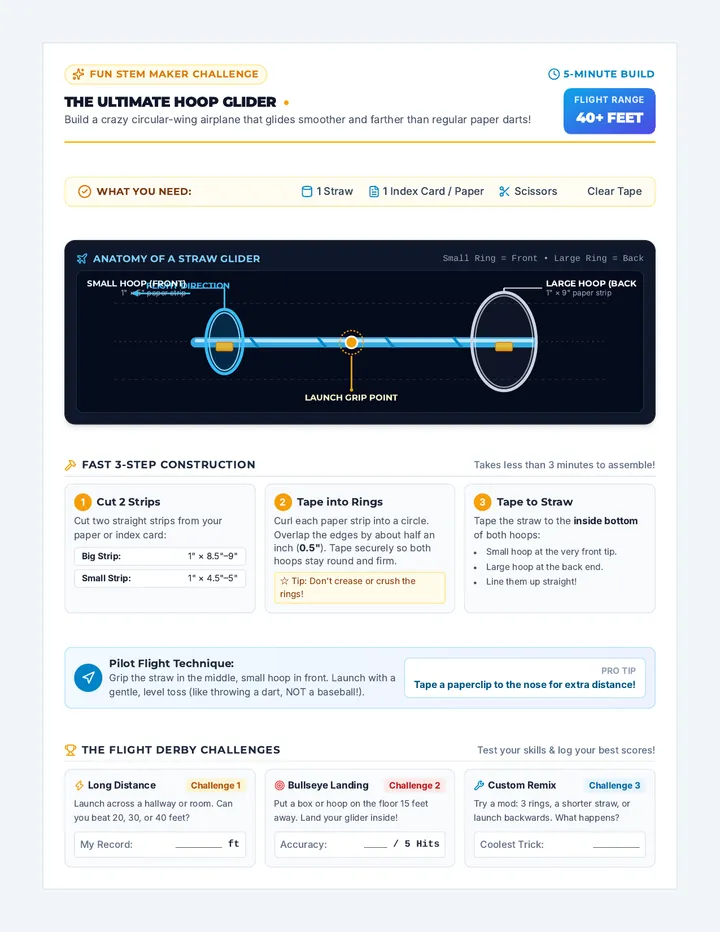
Straw Glider Challenge Guide

Straw Glider Challenge Guide

A fun, visual, single-page maker guide and challenge sheet for building a straw loop glider. Features an illustrated diagram of the glider, rapid 3-step build instructions, pilot flight hacks, and three gamified flight challenges.

AR

Angie Rice

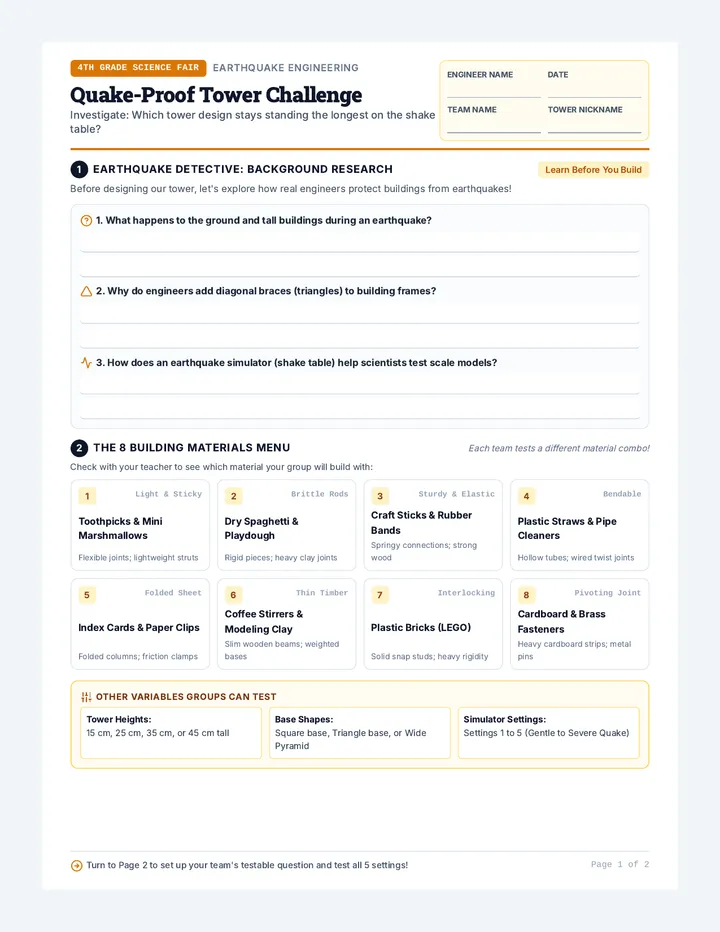
Quake Proof Worksheet

Quake Proof Worksheet

A two-page 4th-grade science fair engineering worksheet featuring background research questions, an 8-material selection menu, height and 5-speed simulator variables, and a 5-trial shake-table test log.

AS

AJ S

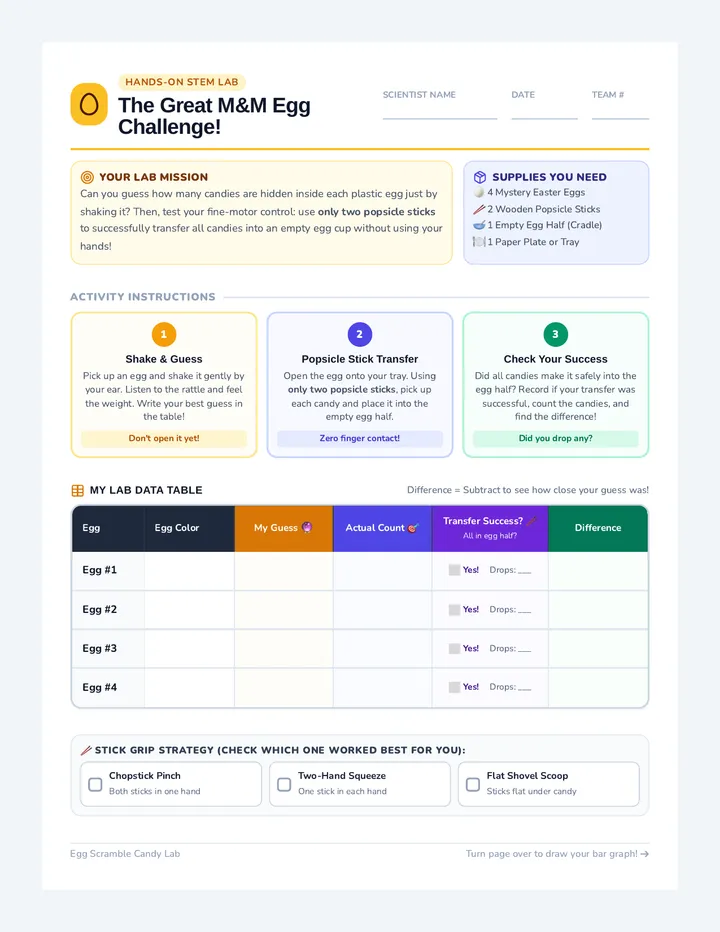
Egg Scramble Lab Sheet

Egg Scramble Lab Sheet

A student-friendly two-page printable lab sheet for elementary and middle schoolers to shake and guess M&M counts in Easter eggs, test transfer success using two popsicle sticks without dropping candies, record data, color a comparative bar graph, and answer reflection questions.

SF

Steven Flint

Science Showdown Project Packet

Science Showdown Project Packet

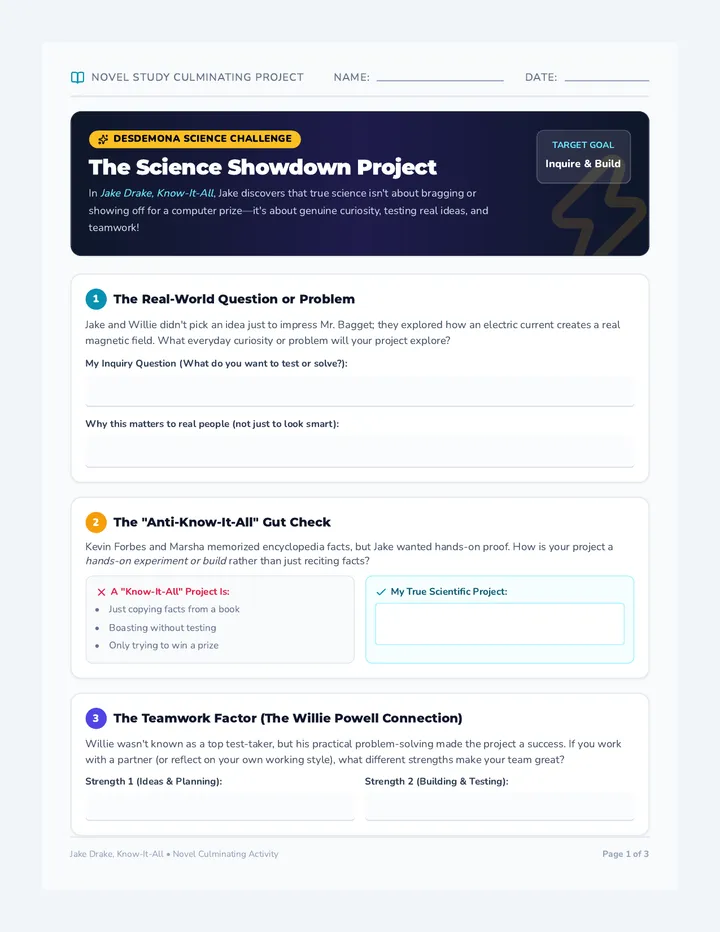
A comprehensive 3-page end-of-novel culminating project packet for Jake Drake, Know-It-All, featuring the Desdemona Science Fair challenge, invention blueprint planning, and character growth reflections.

K

K

Living Earth Curriculum Plan

Living Earth Curriculum Plan

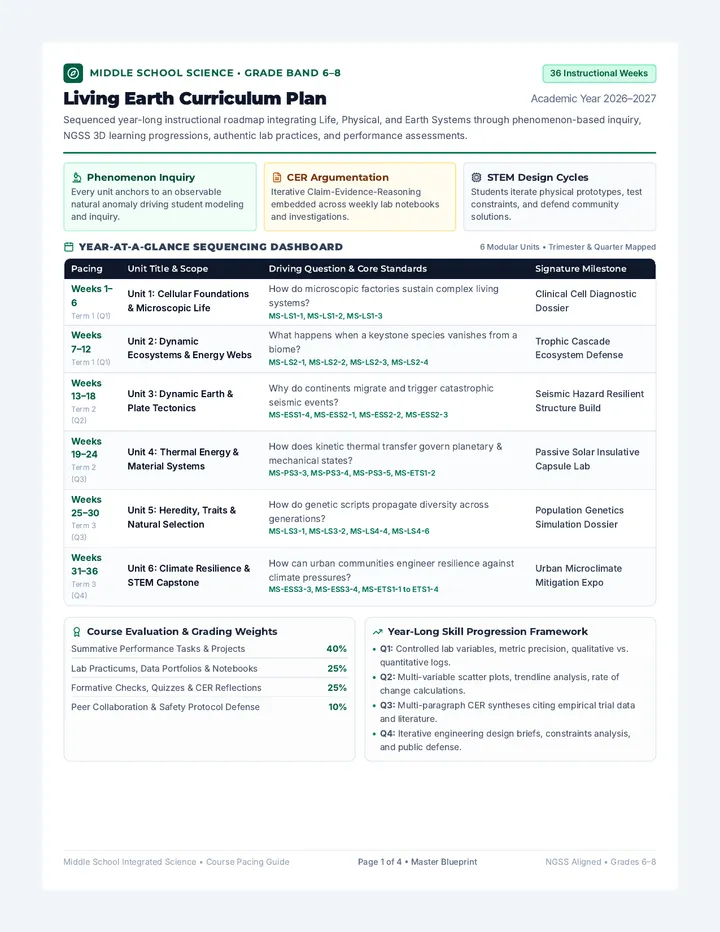
A comprehensive four-page sequenced middle school science year unit plan covering 36 instructional weeks. Details six modular units aligned with NGSS standards, driving phenomena, essential questions, hands-on lab activities, formative assessments, and summative performance tasks alongside universal differentiation frameworks.

Sequences

Planet Profile Slides

Infinite Frontier

A comprehensive Hi-Lo unit for 6th graders exploring the scale of the universe, our place in the Milky Way, the technology used to explore space, and the history of human spaceflight.

JS

Janette Sullivan

54
Naval Architect Challenge Answer Key

Fluid Dynamics

A series of lessons exploring the physics of fluids, including buoyancy, pressure, and fluid flow.

CM

Chuguna Murugesan

28
Malware Mutiny Lesson Plan

Digital Defense Unit

A multi-part cybersecurity unit focusing on defensive strategies, from identifying malicious threats to mastering network access control and traffic filtering.

KW

Karen Wright

13
Wave Racer CER Bellringer

Wave Runners Sequence

A comprehensive physics unit covering the behavior of mechanical and electromagnetic waves. Students transition from hands-on slinky exploration to advanced optical modeling and mathematical derivations.

OM

Olutoyin Makinde

65
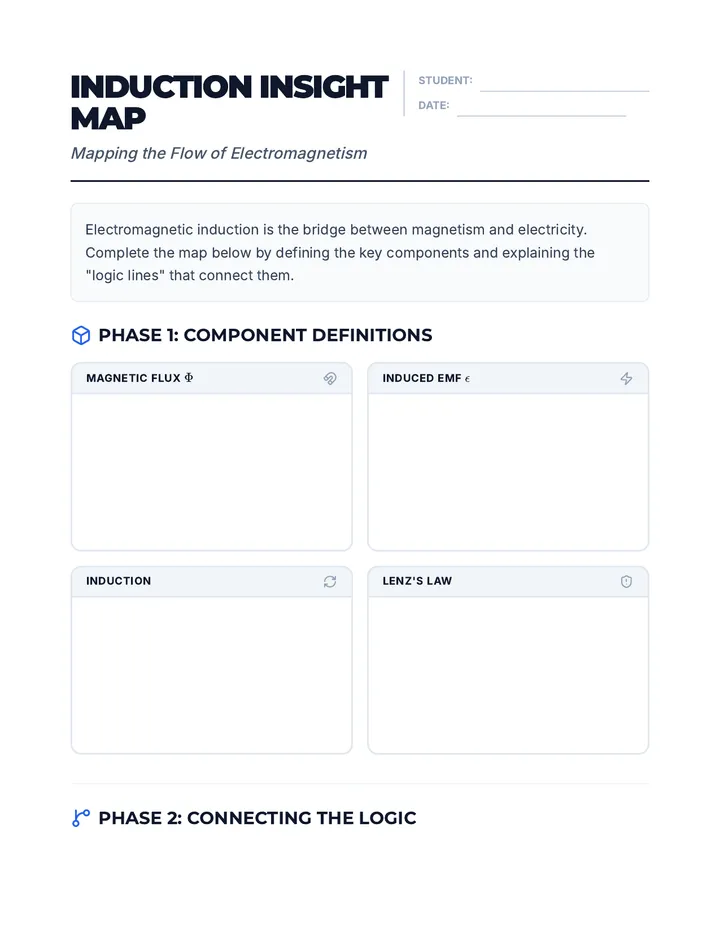
Induction Insight Map Handout

Magnetic Forces Investigation

A 5-day intensive exploration of magnetic forces and fields, focusing on atomic-level causes, field interactions, and mathematical modeling of forces on charged particles. Students progress from anchoring phenomena to complex mathematical applications and a comprehensive unit review.

OM

Olutoyin Makinde

68
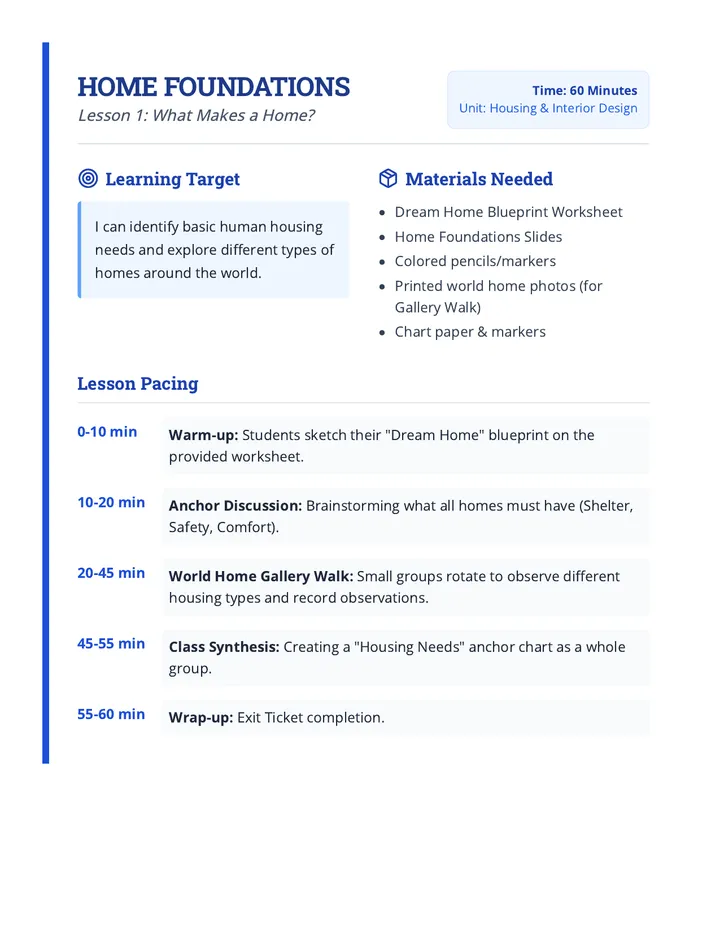
Home Foundations Teacher Guide

Housing and Interior Design

An introductory unit on Housing and Interior Design within the Human Services field. Students explore basic housing needs, sustainable green building, universal design for accessibility, the impact of local resources and climate on home construction, and residential energy efficiency.

JM

Jill Miller

38

Lessons

Tableau Progression Annuelle Sciences CM

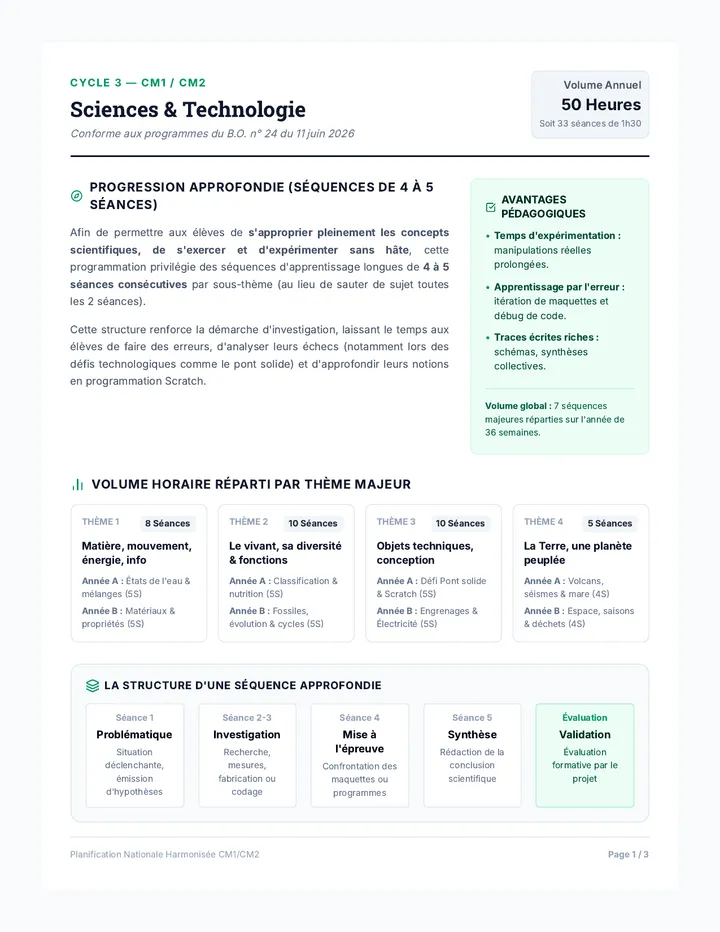
Progression Sciences CM1 CM2

Outil de planification annuelle et de progression pour l'enseignement des sciences et technologies en classe de CM1/CM2, conforme au BO de juin 2026. Ce guide propose une répartition claire des volumes horaires et des thèmes entre l'année A et l'année B pour éviter les redondances dans les classes à double niveau.

LP

LAURENT PERCHE

40
Brain Beats Lesson Plan

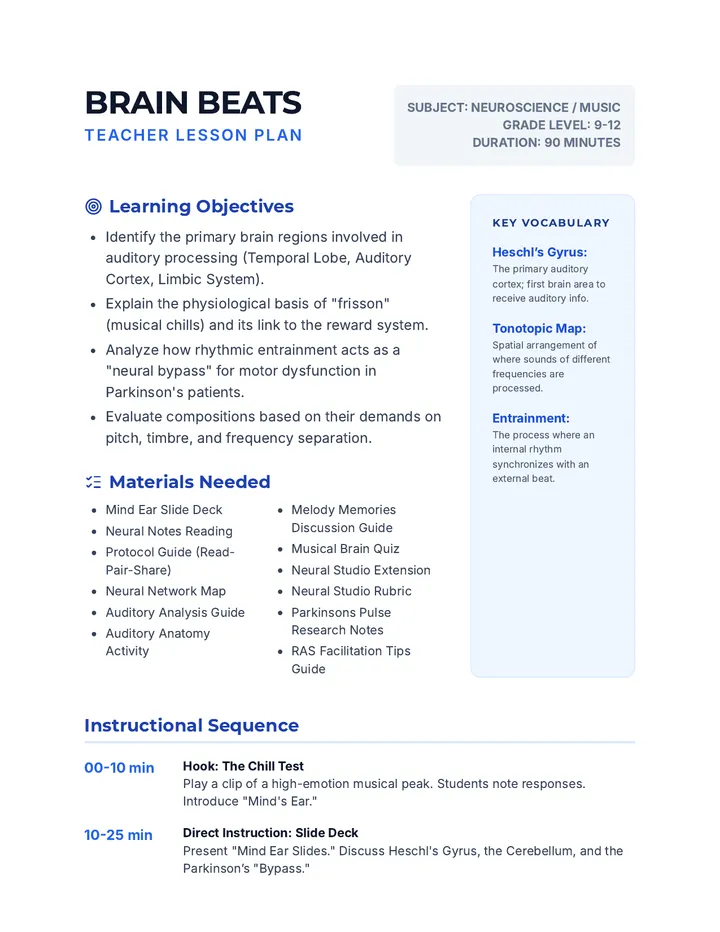
The Musical Brain

A high school lesson exploring the neuroscience of music, investigating how the brain processes auditory stimuli, triggers emotions, and encodes memories through melodies.

J

jditomaso

15
Operation Earth Slides

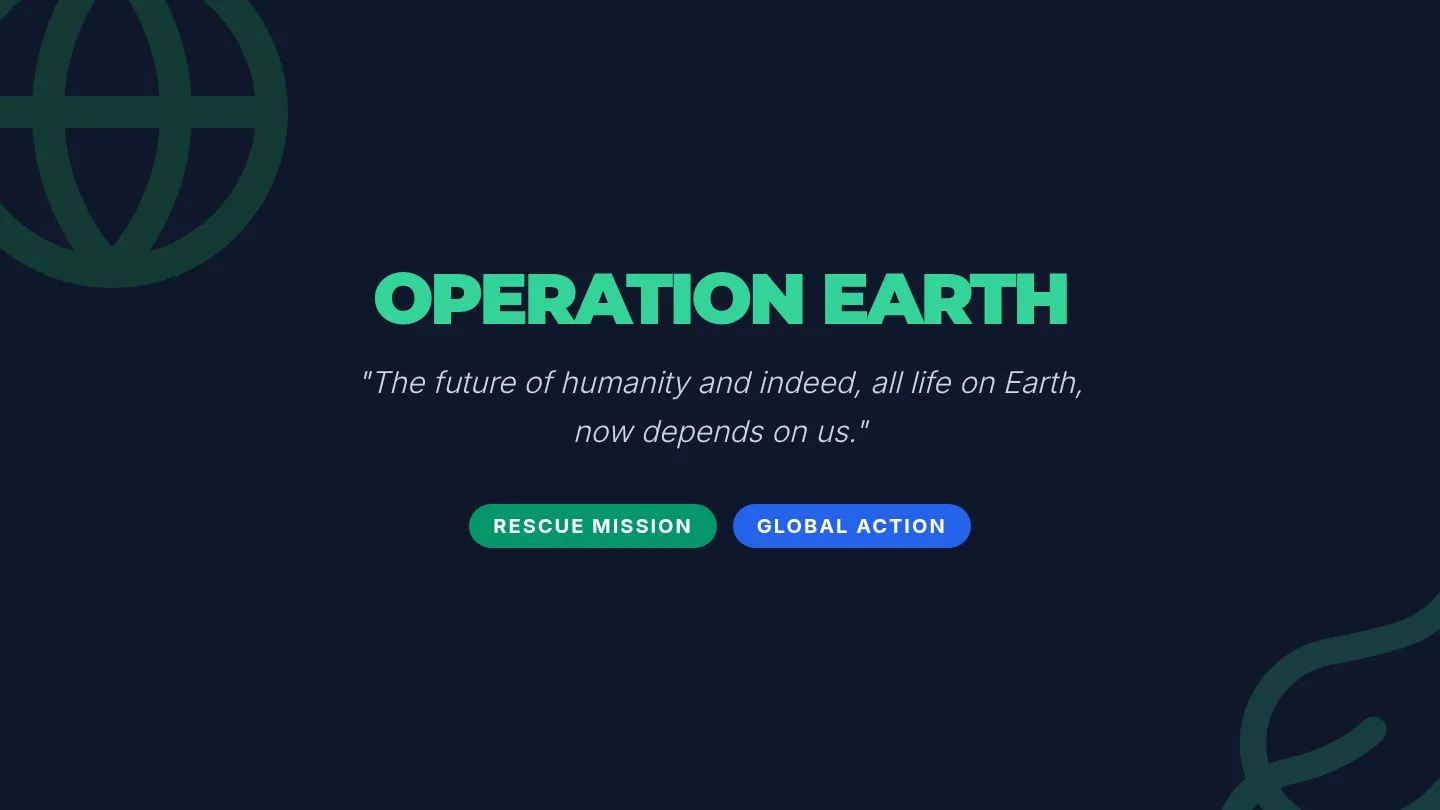
Operation Earth

A high-stakes research project where students choose an environmental challenge to solve. Using the David Attenborough video as inspiration, students research, plan, and create a model or presentation to rescue our planet.

PB

Priyadarshini Bharath

7
Méthodologie Documentaire Slides 2024

Méthodologie Documentaire 2024

Une séance approfondie de 2 heures alignée sur le référentiel de compétences 2024, centrée sur la compétence "Rechercher et traiter des données professionnelles et scientifiques". La séance combine rigueur méthodologique, pratique intensive de la norme APA 7 et analyse critique de sources en soins infirmiers.

SG

Stéphanie Giai-Miniet

16
Engineer Manual Teacher Guide

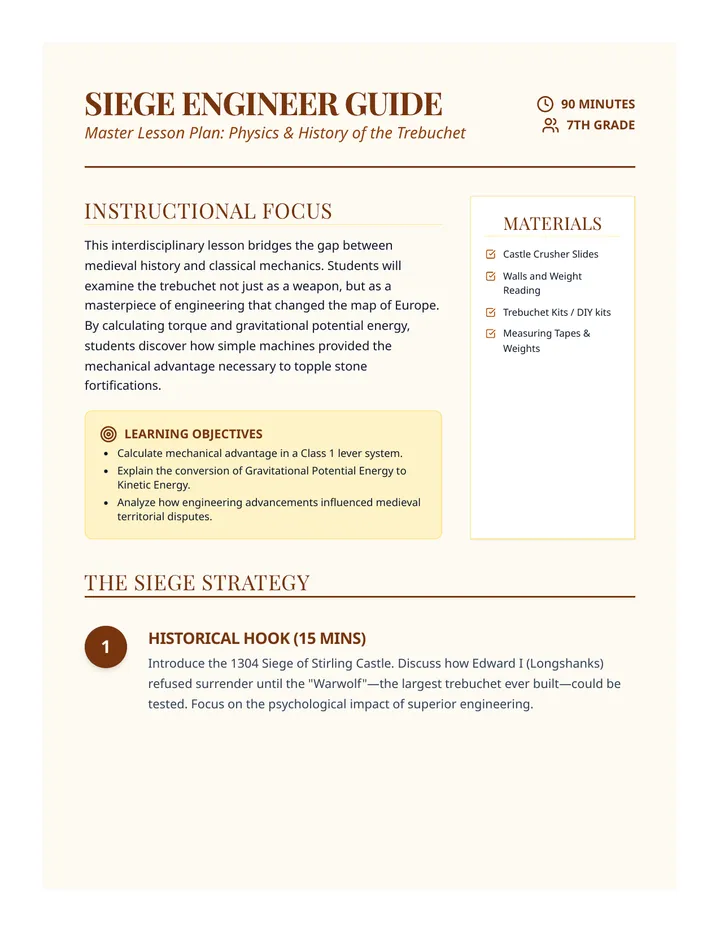
Siege Science

An interdisciplinary exploration of medieval siege engines, combining the physics of levers, torque, and potential energy with the historical impact of engineering on territorial warfare. Students analyze how the trebuchet revolutionized medieval combat through mathematical precision.

JR

Jonathan Reynolds

5
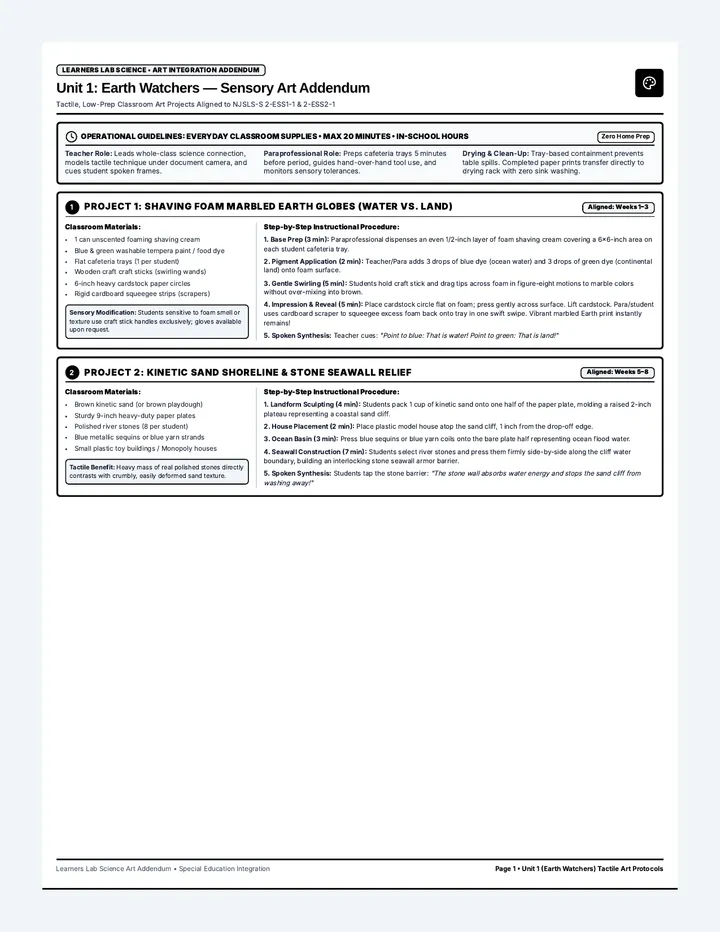
Learners Lab Science Art Addendum

Learners Lab Science

An adapted special education science curriculum framework aligning NJSLS-S standards across grades 2-4 with functional access points, 25-minute multi-sensory inquiry lessons, and rigorous tiered expression.

JE

jenn edwards

21