Lenny.com
Explore
Create
ActivitiesNewMathEnglish Language ArtsScience & EngineeringSocial StudiesGlobal LanguagesHealth & Physical EducationSpecial EducationCounseling & Life SkillsArts & CreativityESL
Lenny.com
Lenny.com
Explore
Create
ActivitiesNewMathEnglish Language ArtsScience & EngineeringSocial StudiesGlobal LanguagesHealth & Physical EducationSpecial EducationCounseling & Life SkillsArts & CreativityESL
Lenny.com
Lenny.com

Solutions

Lenny for EducatorsLenny for SchoolsLenny for Districts

Product

ExploreSign inCreateSupportAbout

Resources

Getting startedMTSS Acceleration Program

Newsletters

School Funding Newsletter

© 2026 Lenny Learning Inc.

TermsPrivacyAccessibility
LinkedInInstagramX
Lenny
Science & EngineeringLife ScienceLiving ThingsAnimalsPlantsBody SystemsTraitsAdaptationsCellsEcosystemsHeredityGenes to TraitsCell DivisionPhysicsComparing MaterialsShapes and PropertiesMagnetsMagnetismLightSoundLight and SoundMatterStates of MatterChanges of StateMixturesPhysical and Chemical ChangeHeating and CoolingHeat and Thermal EnergyEnergyForce and MotionElectrical CircuitsAtoms and MoleculesPeriodic TableMotion in One DimensionMotion in Two DimensionsScalars and VectorsForces and Laws of MotionCircular Motion and GravityMomentum and ImpulseWork, Energy, and PowerWavesElectromagnetic WavesGeometric OpticsElectricity and MagnetismSimple Harmonic MotionThermodynamicsNuclear PhysicsEarth Science & AstronomyWeatherWater CycleRocks and MineralsFossilsEarth's FeaturesEarth's ResourcesEarth's StructureWeather and ClimateEarth EventsFossils and Geologic TimePlate TectonicsHuman ImpactsAstronomyChemistryUnits and MeasurementAtomic StructurePeriodic TrendsChemical BondingNomenclatureMolecular StructureIntermolecular ForcesThe MoleStoichiometryProperties of GasesSolutionsChemical ReactionsBalancing EquationsEnergy ChangesRates of ReactionsEquilibriumAcids and BasesQuantum ModelBiologyClassificationCell StructureThe Chemistry of LifeBiomoleculesCellular TransportCell EnergyCell Growth and DivisionDNAProtein SynthesisMeiosis and Sexual ReproductionPatterns of InheritanceMulticellular OrganismsEvolutionEcologyBiodiversityComputer ScienceAlgorithms and Computational ThinkingProgramming LanguagesComputing SystemsNetworks and InternetData AnalysisCybersecurityAI and Machine LearningSoftware Design and DevelopmentBlockchainEngineering & AIDesigning ExperimentsEngineering PracticesDesign ThinkingEngineering Design ProcessMechanical EngineeringElectrical EngineeringMaterials and StructuresCAD and 3D DesignRoboticsArtificial Intelligence BasicsVibe CodingMachine LearningAI Ethics and SocietySystems ThinkingEntrepreneurship & InnovationEntrepreneurial MindsetBusiness Idea DevelopmentBusiness Plan BasicsMarketing & Customer DiscoveryFinancial Management for Startups

Quake Proof Worksheet

A two-page 4th-grade science fair engineering worksheet featuring background research questions, an 8-material selection menu, height and 5-speed simulator variables, and a 5-trial shake-table test log.

ASAJ S

Quake Proof Worksheet

A two-page 4th-grade science fair engineering worksheet featuring background research questions, an 8-material selection menu, height and 5-speed simulator variables, and a 5-trial shake-table test log.

ASAJ S

You might also like

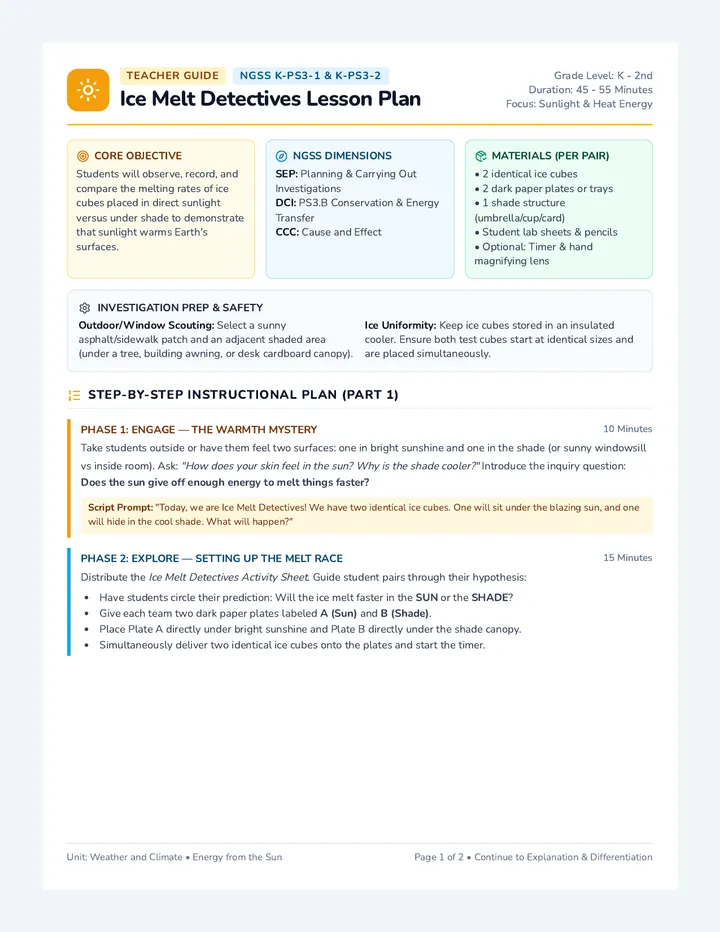
Ice Melt Detectives Lesson Plan

Science Inquiry Series

A multi-grade hands-on science sequence emphasizing experiential investigations, energy concepts, clear classroom procedures, proactive behavior management, and deep cognitive engagement.

R

rcarlson

7
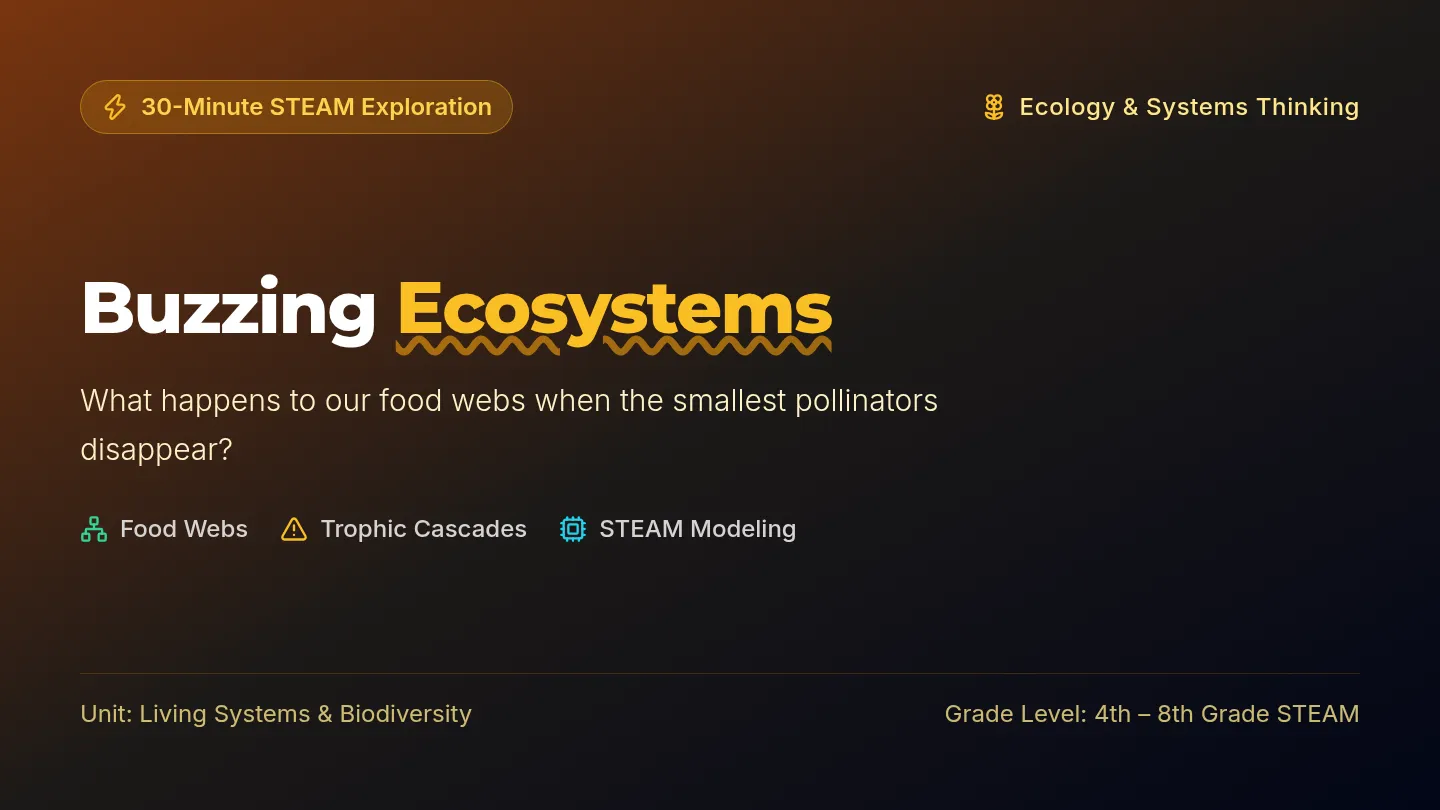
Buzzing Ecosystems Slides

Buzzing Ecosystems

A 30-minute hands-on STEAM lesson exploring ecosystems, food webs, and the ecological collapse triggered by the loss of honeybees. Students model trophic interdependence and analyze how keystone pollinators sustain biodiversity and human agriculture.

SN

Seale Navare

4
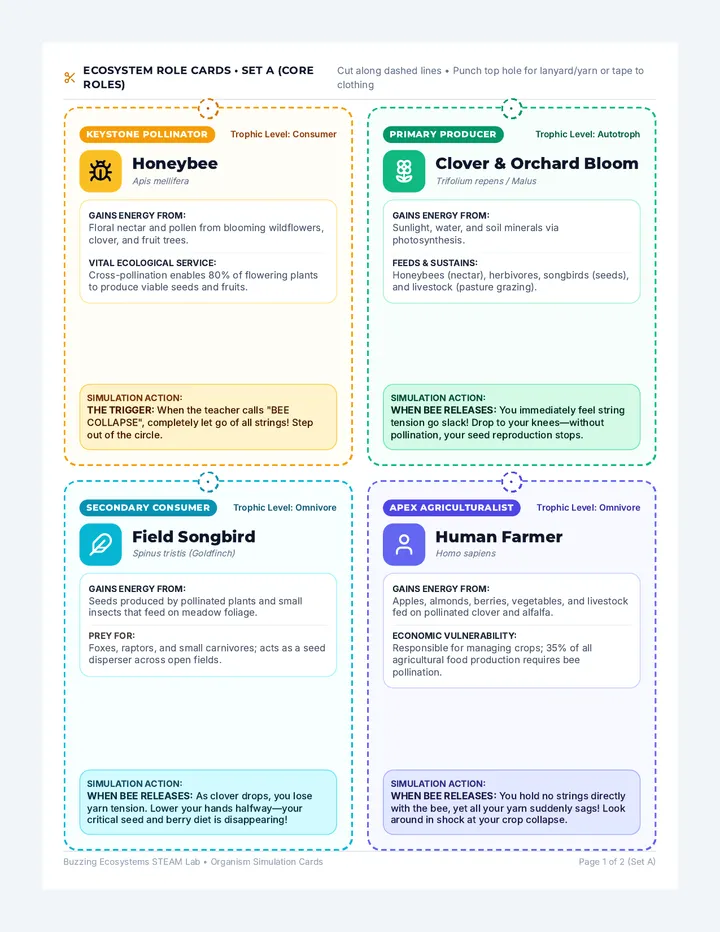
Ecosystem Species Role Cards

Ecosystem Species Role Cards

Printable cut-and-use organism role cards for the hands-on web simulation, detailing ecological trophic levels, energy sources, connections, and collapse instructions.

SN

Seale Navare

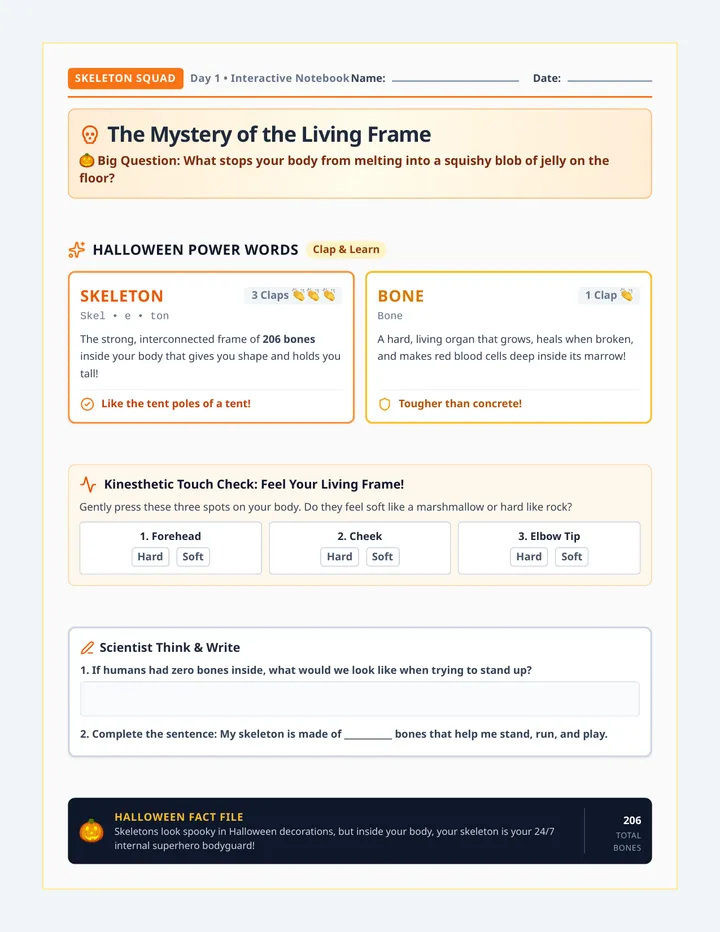
Bone Frame Notebook Entry

Skeleton Squad

A structured 5-lesson weekly life science sequence exploring bones and the skeletal system just in time for Halloween for 2nd-4th grade learners. Features visual vocabulary launch, protection and support layering, joint movement formative checks, a hands-on cotton-swab skeleton lab, and an independent Halloween flex challenge.

JE

jenn edwards

12
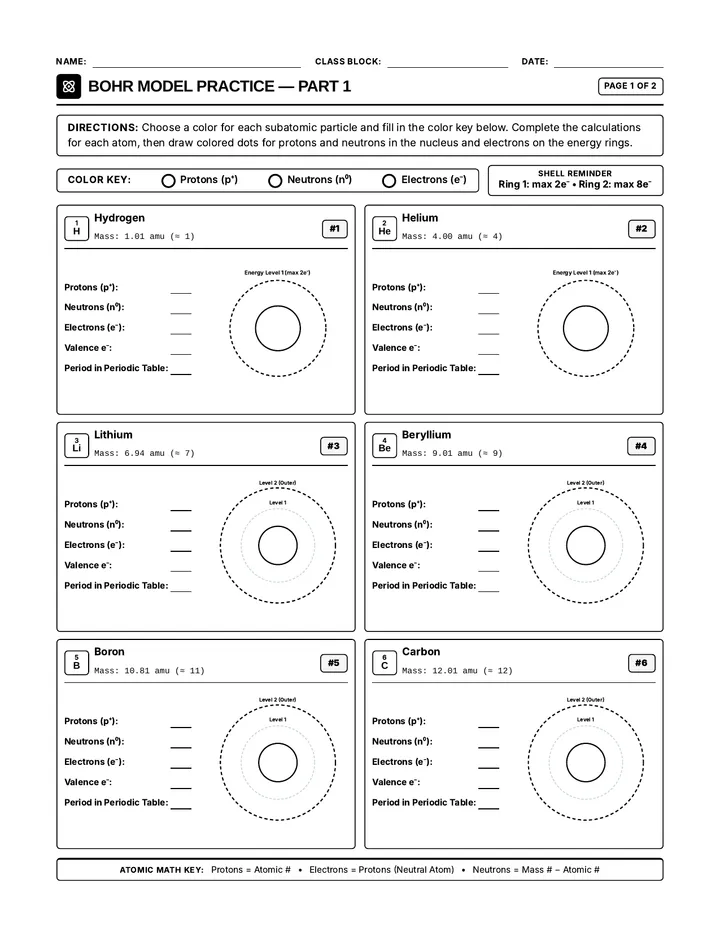
Bohr Model Practice Worksheet

Bohr Model Mastery

A differentiated physical science lesson exploring atomic structure, subatomic particles, and Bohr models tailored across varied reading proficiencies and academic depths.

JA

John Anderson

6
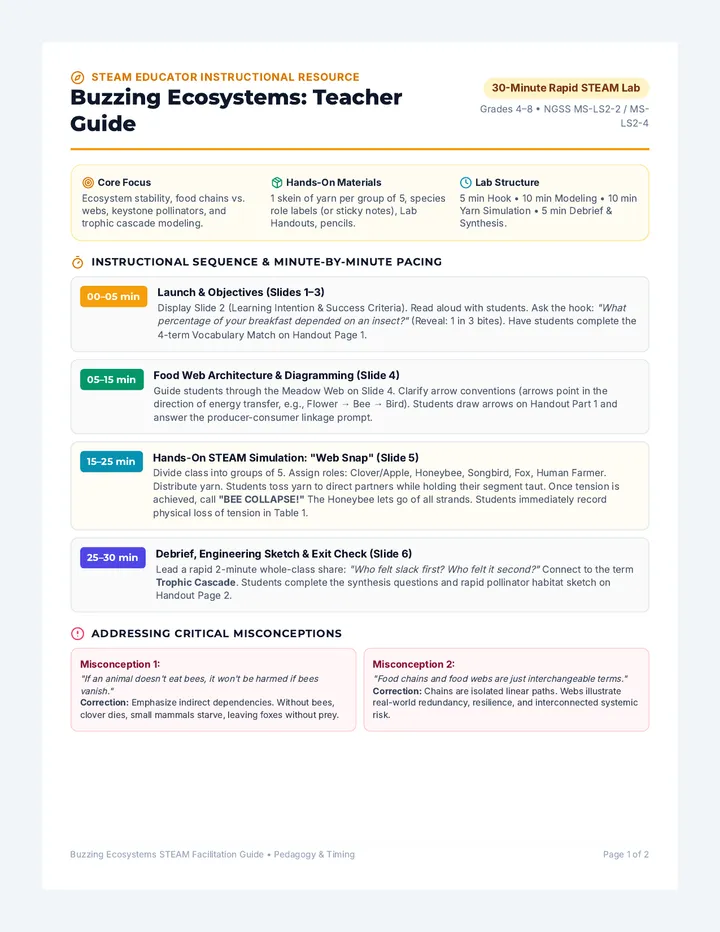
Buzzing Ecosystems Teacher Guide

Buzzing Ecosystems Teacher Guide

A comprehensive 30-minute instructional facilitation guide featuring minute-by-minute pacing, material setup, guided discussion scripts, common misconceptions, differentiation, and a complete lab answer key.

SN

Seale Navare

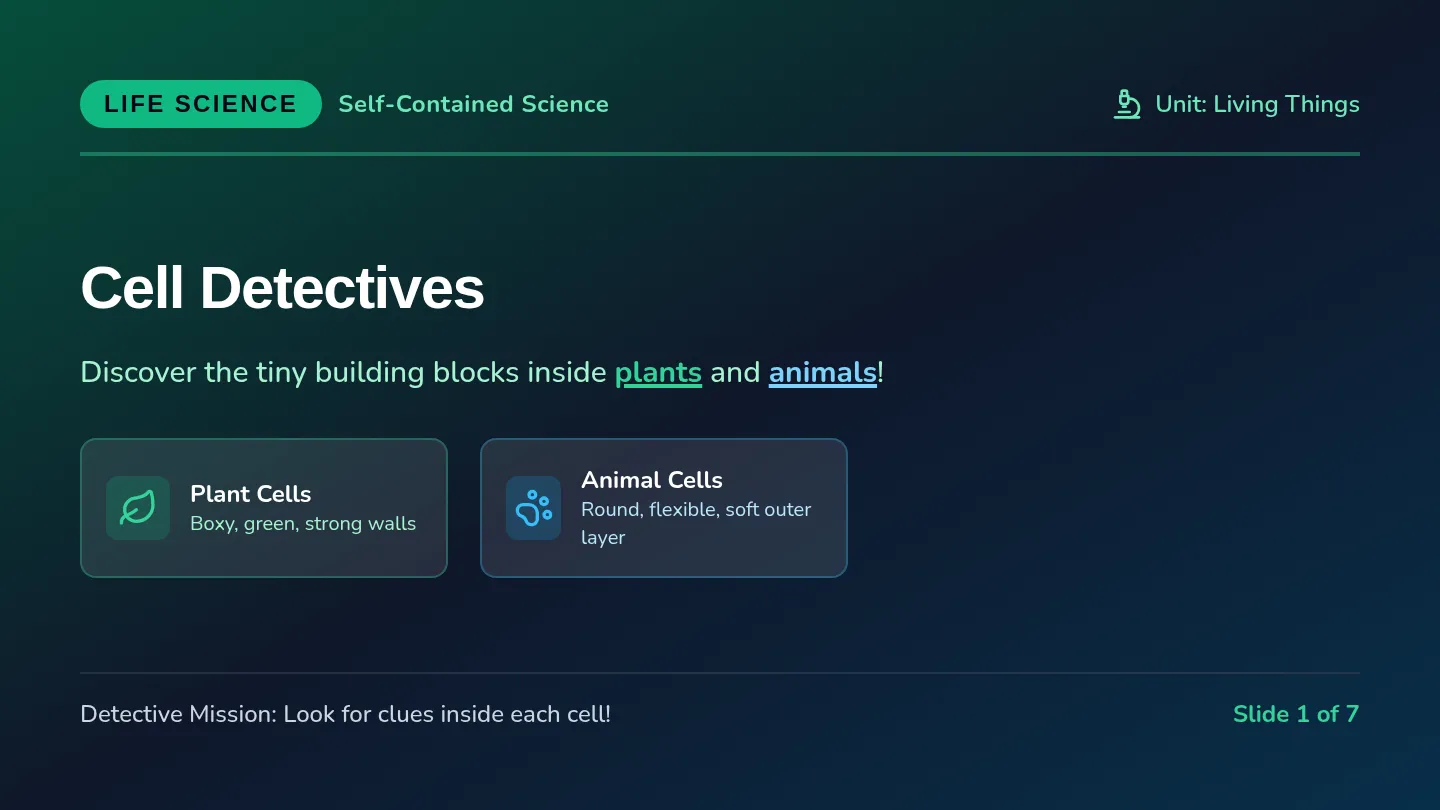
Cell Detectives Slides

Cell Explorers

A foundational life science unit for self-contained learners exploring the microscopic world of cells, organelle jobs, and how specialized cells work in teams to build living things.

CF

Carissa Fenner

8
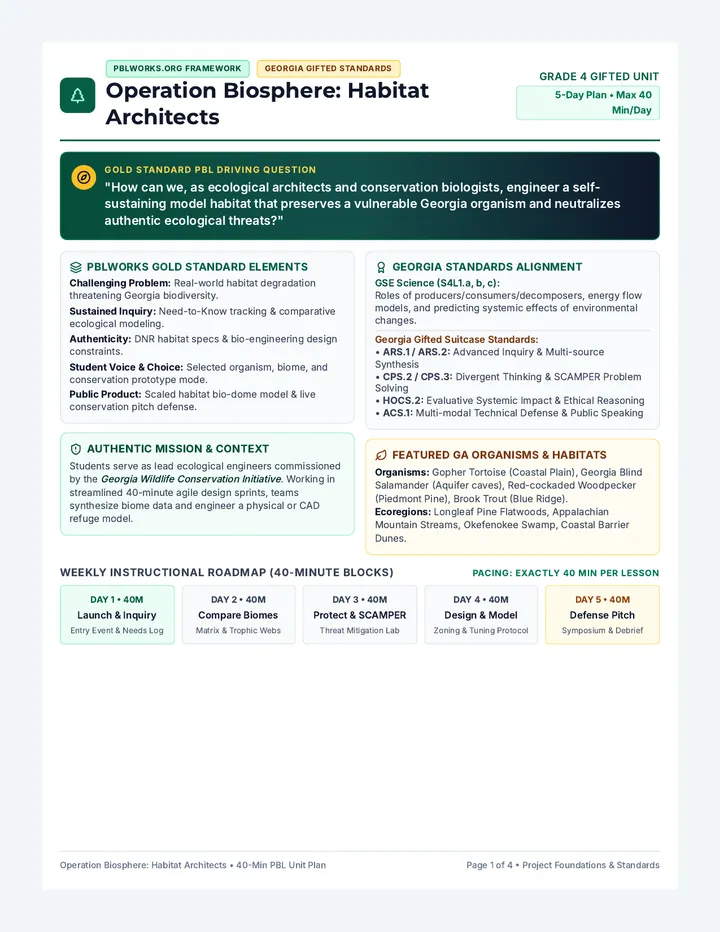
Habitat Architects Lesson Plan

Habitat Architects

A week-long Gold Standard PBL unit for 4th grade gifted learners integrating Georgia ecosystem science (GSE S4L1), comparative biome analysis, threat mitigation, and bio-dome habitat engineering.

SS

Sabrina Smith

2
Bee Collapse Lab Handout

Bee Collapse Lab Handout

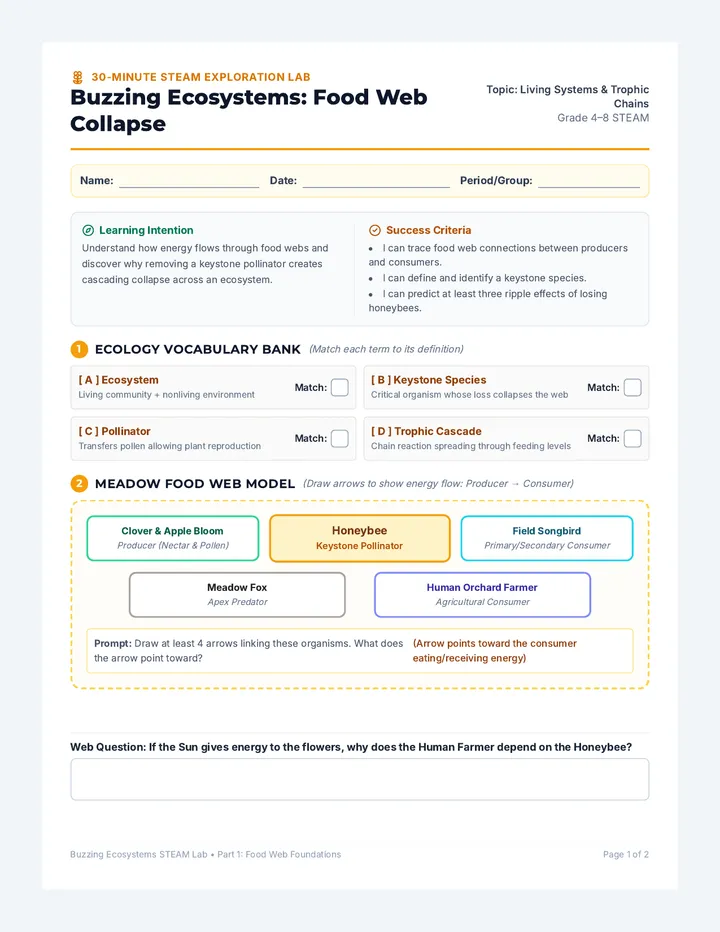
A print-ready 2-page hands-on STEAM lab handout featuring learning goals, key vocabulary, food web modeling diagrams, a hands-on bee collapse simulation data table, and critical thinking reflection questions.

SN

Seale Navare

Binary Bytes Slides

Code Sparks

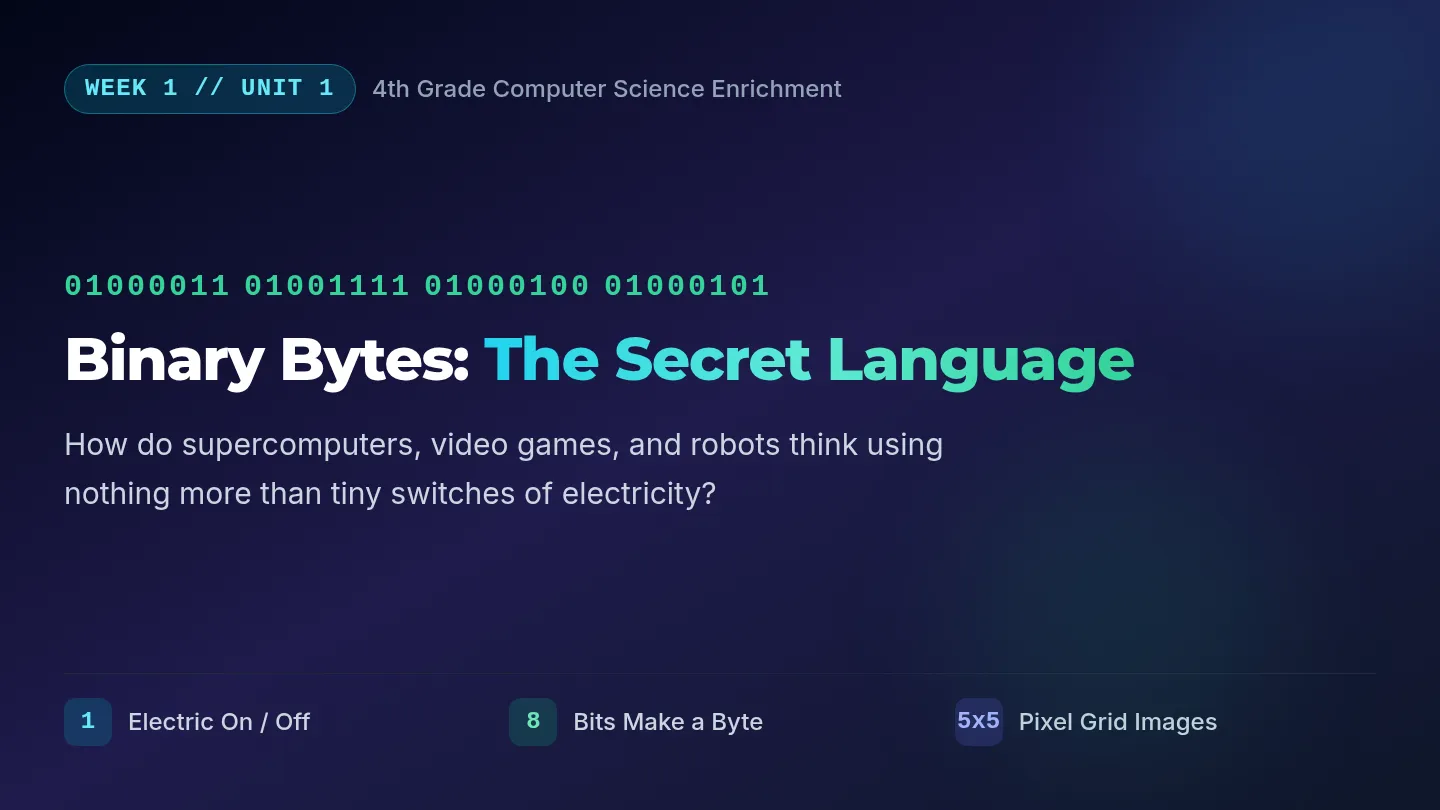
A four-week computer science enrichment unit for 4th graders introducing computational thinking fundamentals. Students progress from binary code and digital data representation to block-based algorithm logic, physical computing, and sensor-driven inventions with the micro:bit.

BK

Becky Krug

8
Adaptation Stage Slides

The Adaptation Stage

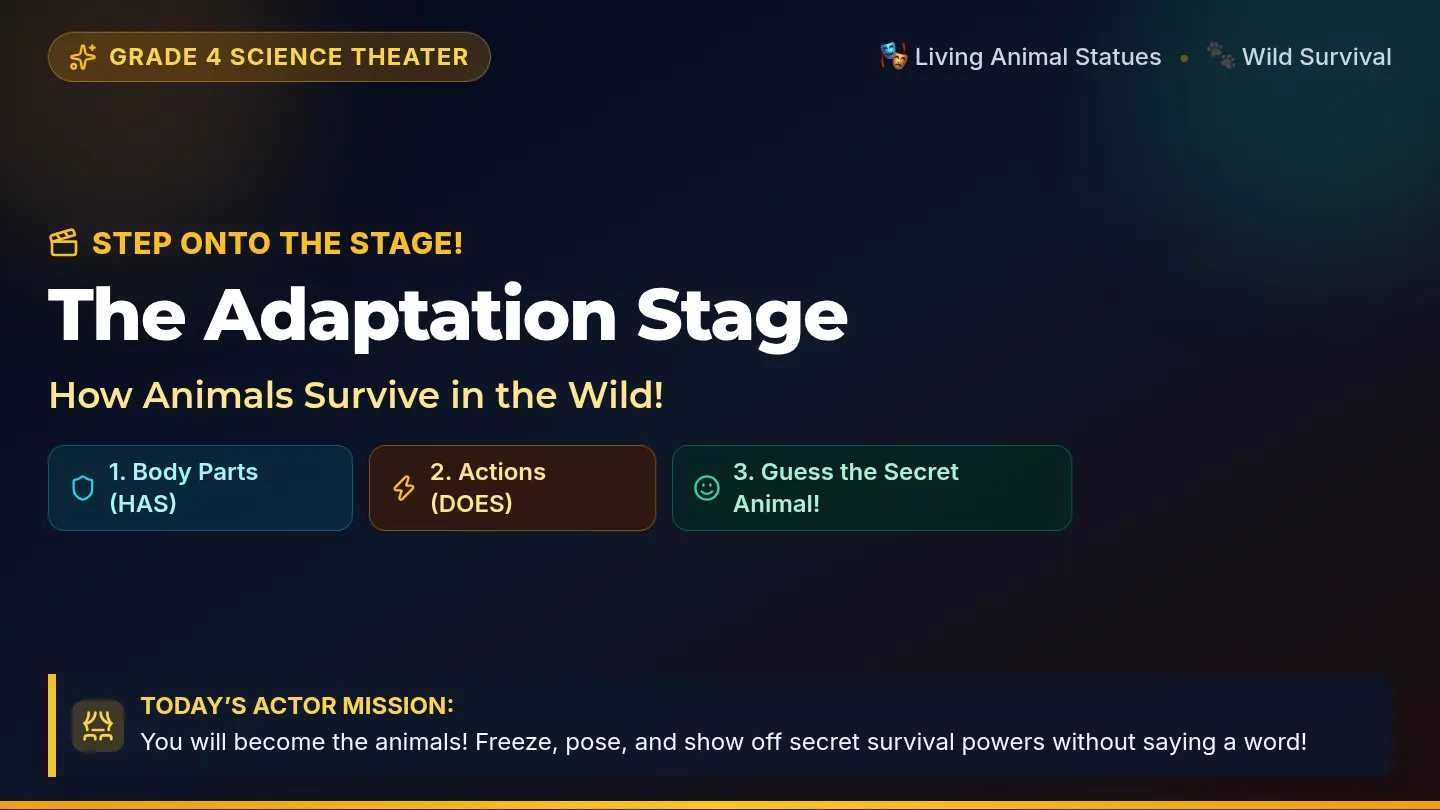
An interactive life science lesson exploring physical and behavioral animal adaptations through theatrical role-play, living statues, and collaborative evidence-based classification.

L

lkeir

3
Buzzing Ecosystems Slides

Buzzing Ecosystems Slides

Interactive visual presentation guiding the 30-minute STEAM lesson with clear learning intentions, success criteria, key vocabulary, food web mechanics, and the honeybee collapse simulation challenge.

SN

Seale Navare