Lenny.com
Explore
Create
ActivitiesNewMathEnglish Language ArtsScience & EngineeringSocial StudiesGlobal LanguagesHealth & Physical EducationSpecial EducationCounseling & Life SkillsArts & CreativityESL
Lenny.com
Lenny.com
Explore
Create
ActivitiesNewMathEnglish Language ArtsScience & EngineeringSocial StudiesGlobal LanguagesHealth & Physical EducationSpecial EducationCounseling & Life SkillsArts & CreativityESL
Lenny.com
Lenny.com

Solutions

Lenny for EducatorsLenny for SchoolsLenny for Districts

Product

ExploreSign inCreateSupportAbout

Resources

Getting startedMTSS Acceleration Program

Newsletters

School Funding Newsletter

© 2026 Lenny Learning Inc.

TermsPrivacyAccessibility
LinkedInInstagramX
Lenny

Molecular Structure

Lewis structures, VSEPR theory, and molecular geometry. Connects bonding patterns to chemical properties and physical behavior.

Science & EngineeringLife ScienceLiving ThingsAnimalsPlantsBody SystemsTraitsAdaptationsCellsEcosystemsHeredityGenes to TraitsCell DivisionPhysicsComparing MaterialsShapes and PropertiesMagnetsMagnetismLightSoundLight and SoundMatterStates of MatterChanges of StateMixturesPhysical and Chemical ChangeHeating and CoolingHeat and Thermal EnergyEnergyForce and MotionElectrical CircuitsAtoms and MoleculesPeriodic TableMotion in One DimensionMotion in Two DimensionsScalars and VectorsForces and Laws of MotionCircular Motion and GravityMomentum and ImpulseWork, Energy, and PowerWavesElectromagnetic WavesGeometric OpticsElectricity and MagnetismSimple Harmonic MotionThermodynamicsNuclear PhysicsEarth Science & AstronomyWeatherWater CycleRocks and MineralsFossilsEarth's FeaturesEarth's ResourcesEarth's StructureWeather and ClimateEarth EventsFossils and Geologic TimePlate TectonicsHuman ImpactsAstronomyChemistryUnits and MeasurementAtomic StructurePeriodic TrendsChemical BondingNomenclatureMolecular StructureIntermolecular ForcesThe MoleStoichiometryProperties of GasesSolutionsChemical ReactionsBalancing EquationsEnergy ChangesRates of ReactionsEquilibriumAcids and BasesQuantum ModelBiologyClassificationCell StructureThe Chemistry of LifeBiomoleculesCellular TransportCell EnergyCell Growth and DivisionDNAProtein SynthesisMeiosis and Sexual ReproductionPatterns of InheritanceMulticellular OrganismsEvolutionEcologyBiodiversityComputer ScienceAlgorithms and Computational ThinkingProgramming LanguagesComputing SystemsNetworks and InternetData AnalysisCybersecurityAI and Machine LearningSoftware Design and DevelopmentBlockchainEngineering & AIDesigning ExperimentsEngineering PracticesDesign ThinkingEngineering Design ProcessMechanical EngineeringElectrical EngineeringMaterials and StructuresCAD and 3D DesignRoboticsArtificial Intelligence BasicsVibe CodingMachine LearningAI Ethics and SocietySystems ThinkingEntrepreneurship & InnovationEntrepreneurial MindsetBusiness Idea DevelopmentBusiness Plan BasicsMarketing & Customer DiscoveryFinancial Management for Startups

Videos

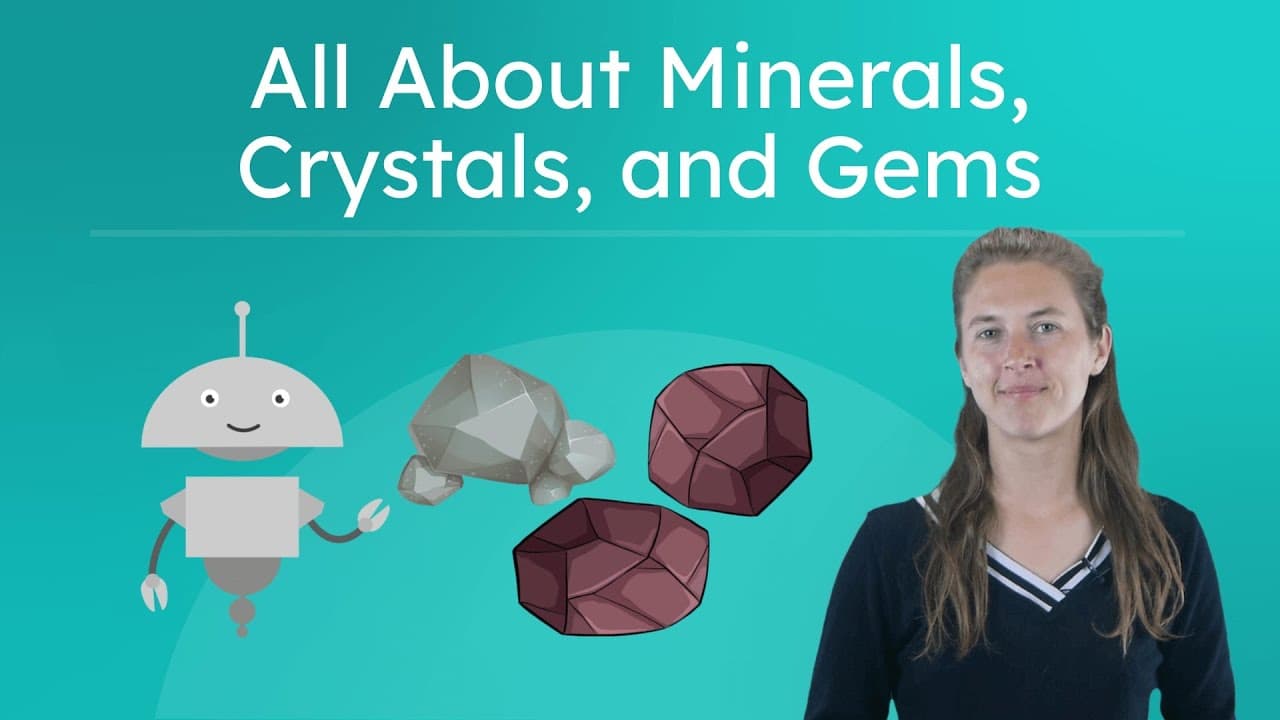
Identifying and Classifying Minerals, Crystals, and Gemstones

Identifying and Classifying Minerals, Crystals, and Gemstones

This comprehensive science video provides a detailed exploration of the geological building blocks of our planet: minerals, crystals, and gemstones. Hosted by Kylie, the lesson begins by distinguishing between these three often-confused terms, explaining that rocks are mixtures of minerals, while minerals are the building blocks that form crystals. The video establishes the five strict scientific criteria for a substance to be considered a mineral: it must be naturally occurring, solid, inorganic, have a fixed chemical formula, and possess an ordered crystalline structure. Viewers are guided through specific examples, such as why wood and sugar are not minerals (organic) while salt and quartz are. The content delves deep into mineral classification, introducing the eight major mineral groups: native elements, sulfides, oxides, phosphates, sulfates, carbonates, halides, and silicates. For each group, the video provides clear definitions, chemical compositions, and real-world examples like pyrite (fool's gold), turquoise, and quartz. The lesson also explores how crystals form through cooling lava, hardening liquids, or evaporation, and categorizes them by their geometric shapes, such as cubic, hexagonal, and triclinic structures. Ideal for Earth Science curriculums, this video serves as an excellent foundation for geology units. It bridges the gap between basic rock identification and introductory chemistry by explaining atoms, molecules, and chemical formulas in an accessible way. Teachers can use this resource to explain complex classification systems, discuss the difference between organic and inorganic matter, or introduce the geometry of natural structures. The video concludes with a look at gemstones and a demonstration of raw vs. polished specimens, encouraging students to start their own collections.
Miacademy & MiaPrep Learning ChannelMiacademy & MiaPrep Learning Channel

12mins 23s

Why Water Is Essential for Life: A Molecular Look

Why Water Is Essential for Life: A Molecular Look

This video provides a comprehensive exploration of the biological importance of water, bridging the gap between molecular chemistry and macroscopic biological functions. It begins by contrasting the diverse life of the Amazon Rainforest with the sparse life of the Sahara Desert to illustrate water's critical role in ecosystems. The narrator then zooms in to the molecular level, explaining the chemical structure of water ($H_2O$), the difference between elements and compounds, and the concept of polarity, using magnets as an analogy for how positive hydrogen and negative oxygen atoms interact.

Miacademy & MiaPrep Learning ChannelMiacademy & MiaPrep Learning Channel

15mins 32s

Exploring Carbon: Life's Building Block and Climate Changer

Exploring Carbon: Life's Building Block and Climate Changer

This comprehensive educational video explores the fundamental role of carbon as the building block of life and its significant impact on the Earth's climate. The narrator, Bee, takes viewers on a journey from the swampy forests of the Carboniferous period to the molecular structures that make up our bodies, explaining why carbon's unique chemical properties make it essential for biological complexity. The video uses accessible analogies, such as comparing atoms to Legos, to demystify concepts like chemical bonding, electron sharing, and molecular diversity. The content bridges the gap between chemistry and environmental science by tracing the lifecycle of carbon from ancient plant matter to fossil fuels like coal. It explains the chemical process of combustion and how burning these fuels releases stored carbon dioxide into the atmosphere. The video provides a clear, scientific explanation of the greenhouse effect, distinguishing between the natural warming that makes Earth habitable and the accelerated warming caused by human activity. Teachers can use this video to support units in chemistry, biology, and environmental science. It effectively connects abstract concepts like atomic structure and covalent bonding to tangible real-world issues like energy consumption and climate change. By integrating the history of the Earth with modern scientific challenges, the video encourages students to think critically about sustainable energy solutions and the importance of ecological balance.

Miacademy & MiaPrep Learning ChannelMiacademy & MiaPrep Learning Channel

17mins 20s

How Molecules and Chemical Reactions Power Life

How Molecules and Chemical Reactions Power Life

This educational video bridges the gap between basic chemistry and biology by explaining how the microscopic world of atoms and molecules powers living organisms. It begins with the familiar phrase "you are what you eat" to introduce the concept that our bodies are constructed from the atoms found in our food. The video uses clear visual models to explain fundamental concepts including atomic structure, the periodic table, chemical bonding, and the formation of molecules like oxygen, carbon dioxide, and water. The content progresses to explain chemical reactions as the mechanism that rearranges atoms—similar to reassembling LEGO bricks—transforming food molecules into body structures and energy. It distinguishes between reactants and products, demonstrates the conservation of atoms during reactions, and visually balances a chemical equation for the formation of water. The narrator emphasizes that while molecules change, the atoms themselves remain constant during biological processes. Finally, the video explores the role of energy in biological systems, explaining how breaking chemical bonds releases energy for life processes while other reactions, like photosynthesis, absorb energy. This resource is highly valuable for teachers introducing biochemistry or the flow of matter and energy in ecosystems, as it concretizes abstract concepts using relatable examples like apples, nutrition labels, and building blocks.

Miacademy & MiaPrep Learning ChannelMiacademy & MiaPrep Learning Channel

14mins 25s

Materials

Chemical Formulas Worksheet

Chemical Formulas Worksheet

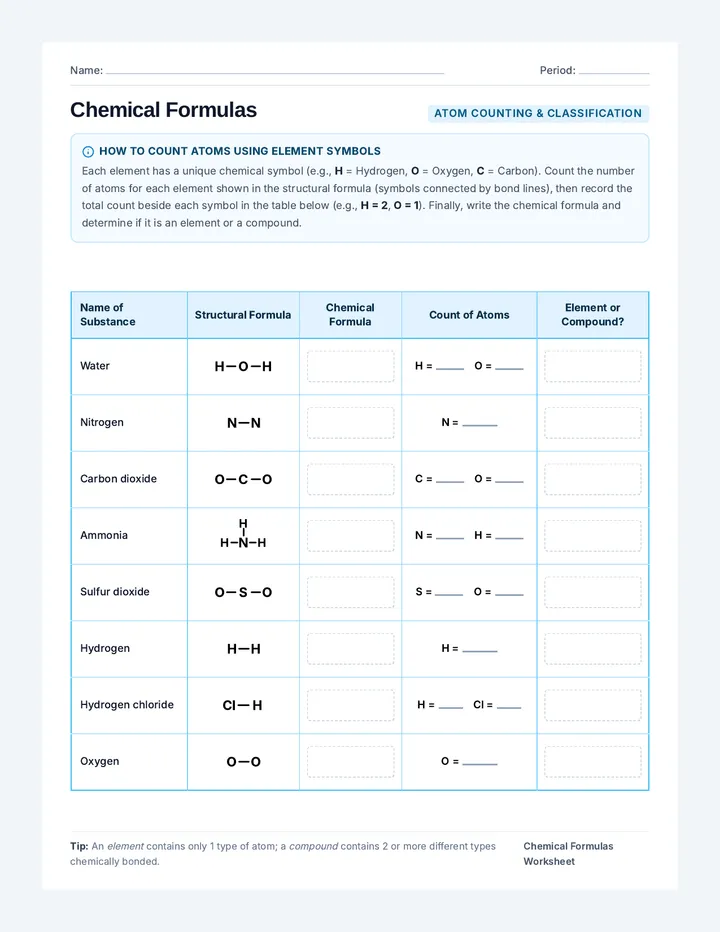
A chemistry worksheet for identifying chemical formulas, counting atoms beside element symbols using structural formulas with bond lines, and classifying substances as elements or compounds.

SH

Sarah Hale

Water Powers Worksheet

Water Powers Worksheet

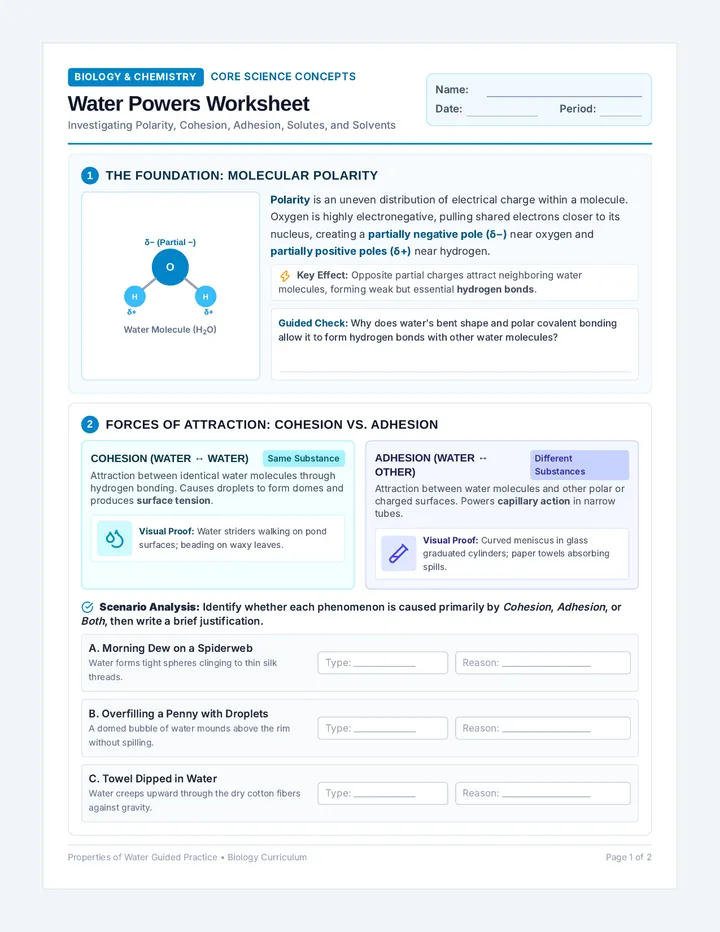
A comprehensive two-page guided practice worksheet exploring the unique properties of water, updated with crystal-clear concrete solute/solvent examples, an explicit modeled anchor row, and labeled hydration diagrams.

S

stewart

Bond Battles Warmup Slides

Bond Battles Warmup Slides

A 3-slide projected bell work presentation tailored for a Biology class, reviewing ionic, covalent, hydrogen, and carbon bonding through cellular examples, macromolecule structures, and living phenomena.

R

Rebekah.Rees

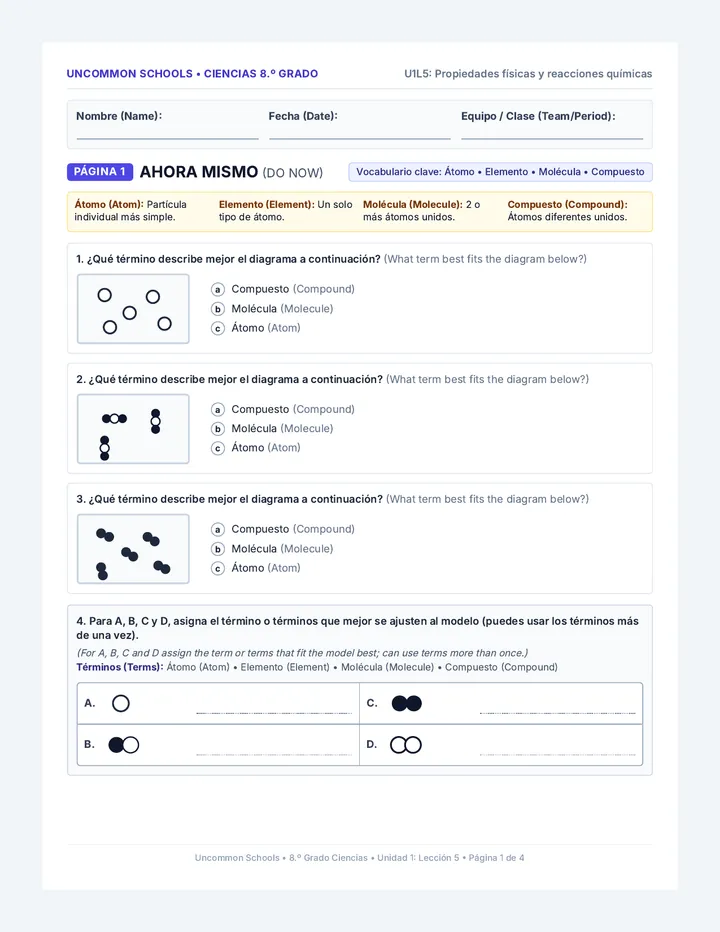
Matter Changes Bilingual Packet

Matter Changes Bilingual Packet

A bilingual Spanish-first 4-page science packet covering physical and chemical properties, particle models, and chemical reactions with English parenthetical supports for ELL students, featuring clear vector illustrations for the scientific phenomena.

SP

Sheridan Pickett

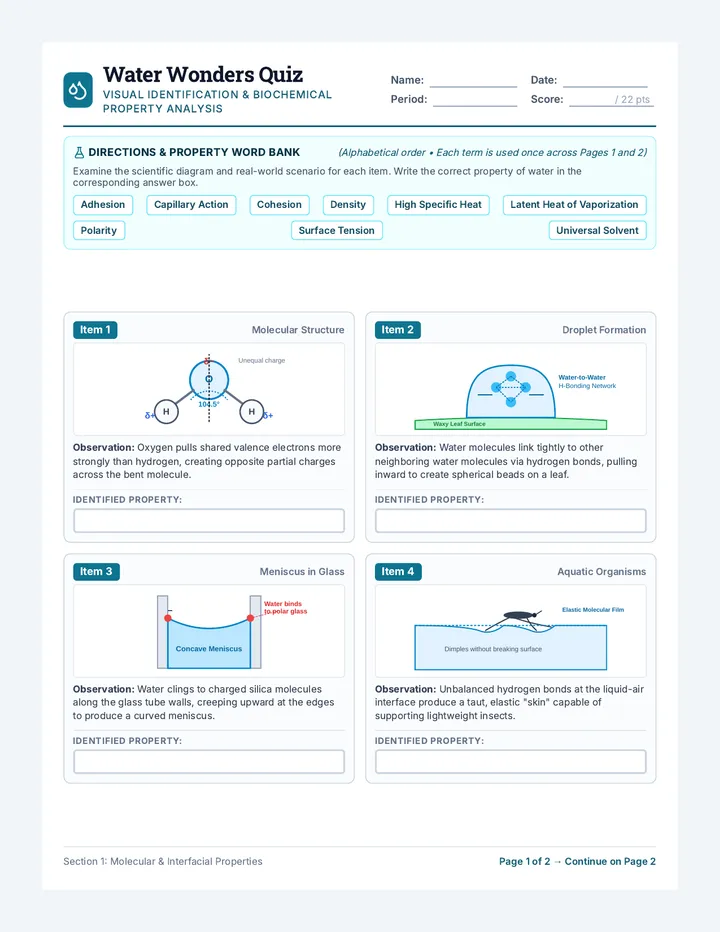
Water Wonders Quiz

Water Wonders Quiz

A two-page illustrated biology and chemistry quiz where students identify nine essential properties of water from diagrams and scenarios, plus a dedicated morpheme analysis section covering "sol-" (prefix), "hydro-" (prefix), "-philic" (suffix), and "-phobic" (suffix).

EG

EMILY GEARHART

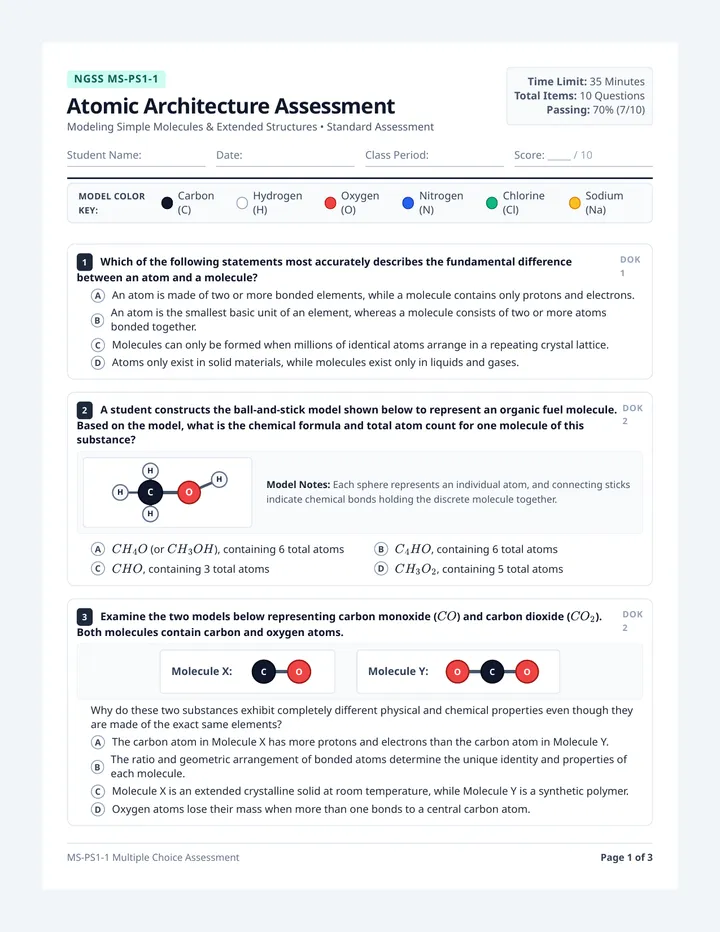
Atomic Architecture Assessment

Atomic Architecture Assessment

A 10-question multiple-choice assessment aligned to MS-PS1-1 covering simple molecules and extended structures. Emphasizes DOK Level 2 conceptual analysis, visual model interpretation, and subunit classification with print-ready formatting.

SH

Sarah Hale

Sequences

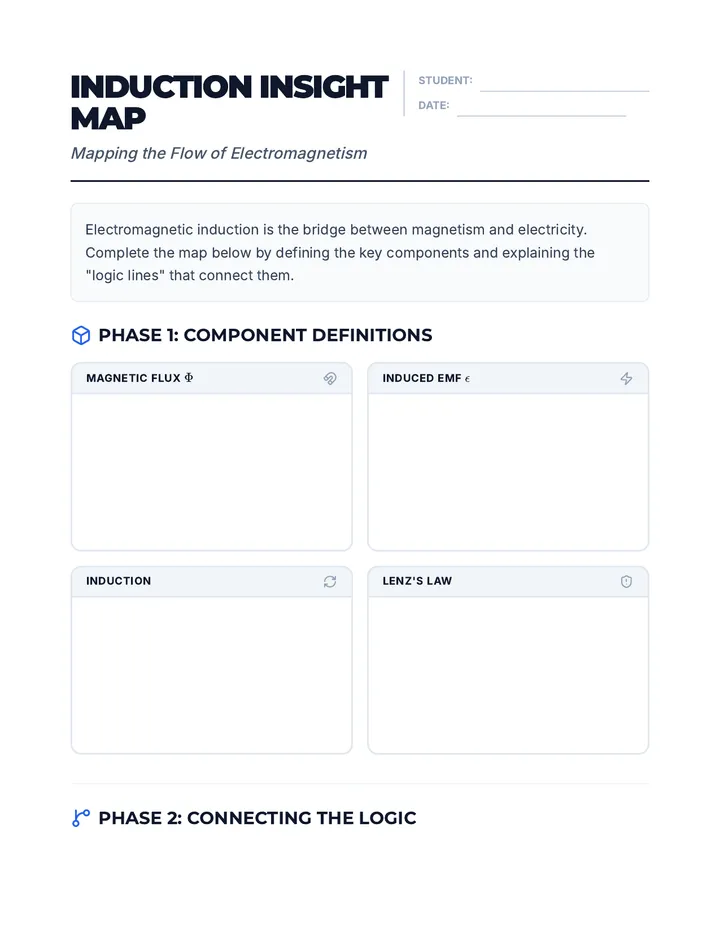
Induction Insight Map Handout

Magnetic Forces Investigation

A 5-day intensive exploration of magnetic forces and fields, focusing on atomic-level causes, field interactions, and mathematical modeling of forces on charged particles. Students progress from anchoring phenomena to complex mathematical applications and a comprehensive unit review.

OM

Olutoyin Makinde

68
Hess Pathfinders Slides

Energy in Chemical Bonds

A five-day high school chemistry unit exploring thermochemistry, collision theory, enthalpy diagrams, and calorimetry through the lens of body heat and chemical reactions. Students investigate the anchoring phenomenon of exercise-induced heat while mastering TEKS C.13 standards.

OM

Olutoyin Makinde

48
Pressure Poster Workshop Handout

Pressure Power

A comprehensive 5-day chemistry unit investigating the relationships between gas pressure, volume, temperature, and moles using lab inquiries, mathematical modeling, and real-world applications.

OM

Olutoyin Makinde

69
KMT Field Manual Packet

Molecular Mayhem Gas Unit

A 10-day exploration of the Behavior of Gases using Kinetic Molecular Theory, various gas laws, and real-world phenomena to understand gas behavior at both molecular and macroscopic scales. Students will investigate compressibility, gas variables, ideal behavior, and mixtures.

OM

Olutoyin Makinde

26
CHEM 1406 Study Guide

CHEM 1406 Lab Midterm Review

A comprehensive review of CHEM 1406 introductory chemistry lab concepts, including safety, measurement, atomic structure, bonding, and chemical reactions.

OM

Olutoyin Makinde

4
Atomic Foundations Teacher Planner

Atomic Foundations

A comprehensive 5-day unit focusing on atomic structure, the periodic table, and chemical reactivity, designed for Integrated Physics and Chemistry students.

MB

Marsha Bolden

14

Lessons

Heat Flow Teacher Guide

Particle Behavior Review

A lesson focusing on the states of matter (solid, liquid, gas) and the behavior of particles at the molecular level. Students will model particle motion and arrangement, as well as the energy changes that drive phase transitions.

EA

Erica Andre

54
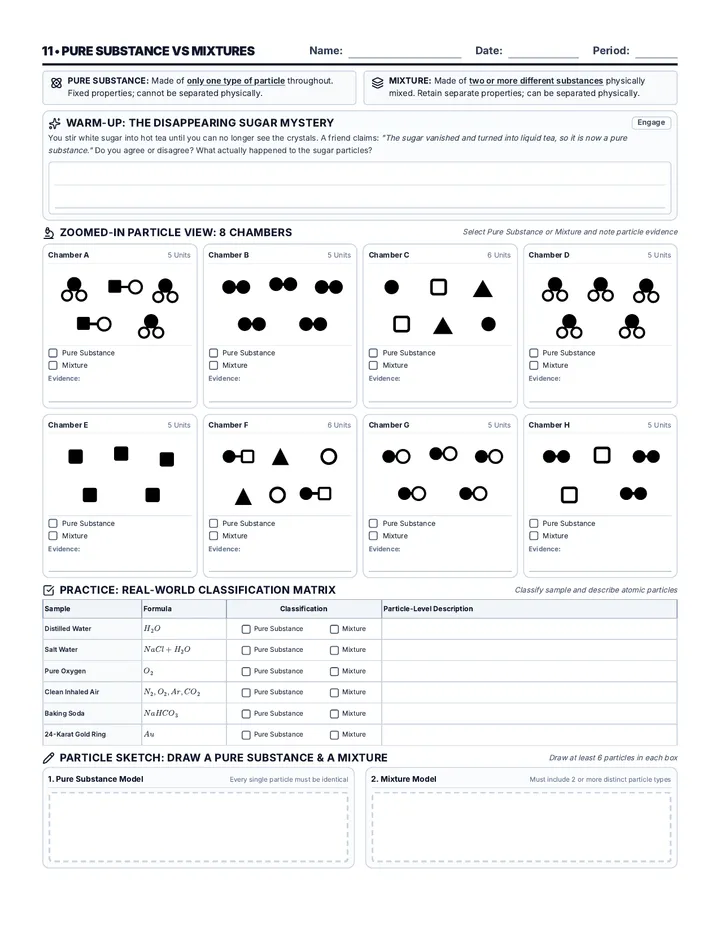
Pure Substance vs Mixtures Worksheet

Substance Showdown

A middle school physical science investigation exploring pure substances and mixtures through everyday observations and zoomed-in particle models. Students analyze atomic arrangements, classify diverse materials, and design physical separation methods.

MM

Megan McDonald

2
Flow State Reading Guide Expanded

Flow State

This lesson explores the fundamental properties of fluids, including the molecular differences between solids, liquids, and gases, the concept of density, and the characteristics of ideal fluids. Students will learn to distinguish states of matter through atomic interactions and apply the density formula to various substances.

CM

Chuguna Murugesan

33
Atomic Archives Guided Notes

Atomic Archives

A comprehensive lesson connecting nuclear chemistry (isotopes) to climate science (greenhouse gases, ice cores, and carbon dating). Students explore how atomic mass influences molecular vibrations and how isotope ratios serve as ancient thermometers.

CB

Chloe Brown

4
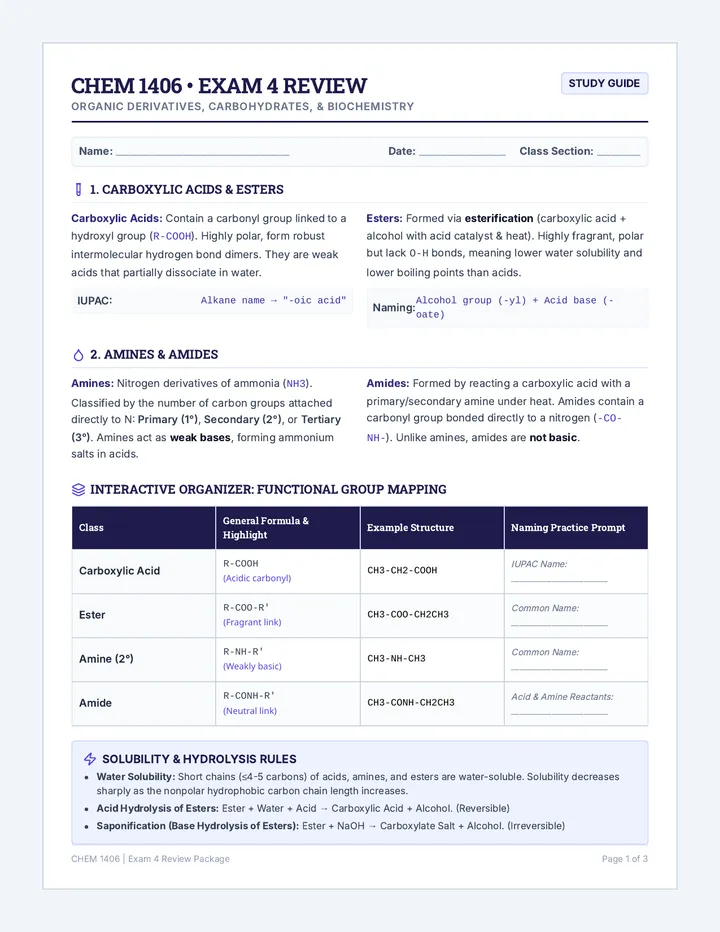
Concept Review Study Guide

Exam Review Package

A comprehensive review package designed for CHEM 1406 Exam 4. It covers organic chemistry (carboxylic acids, esters, amines, amides), carbohydrates, stereochemistry, amino acids, proteins, and basic metabolic pathways through high-impact study summaries, a full practice test, and detailed explanations.

OM

Olutoyin Makinde

3
Internal Systems Test v2

Body Balance Assessment

A comprehensive assessment on Indiana Biology standards focusing on homeostasis, levels of organization, and feedback loops, including ILEARN-style item types and CER responses.

J

Jennifer.Tetrick

10