A comprehensive 20-lesson inquiry unit for 2nd grade exploring Iowa's history, focusing on changes in daily life, significant individuals, and community celebrations using the C3 Framework.
A series of accessible lessons on the Civil Rights Movement designed for middle school English Learners reading at an elementary level. This sequence focuses on key figures and events through simplified text and visual support.
A vibrant, hands-on social studies lesson designed for K-2 students to explore the culture, art, music, and food of Mexico City (CDMX) through coloring, sensory details, and tracing.
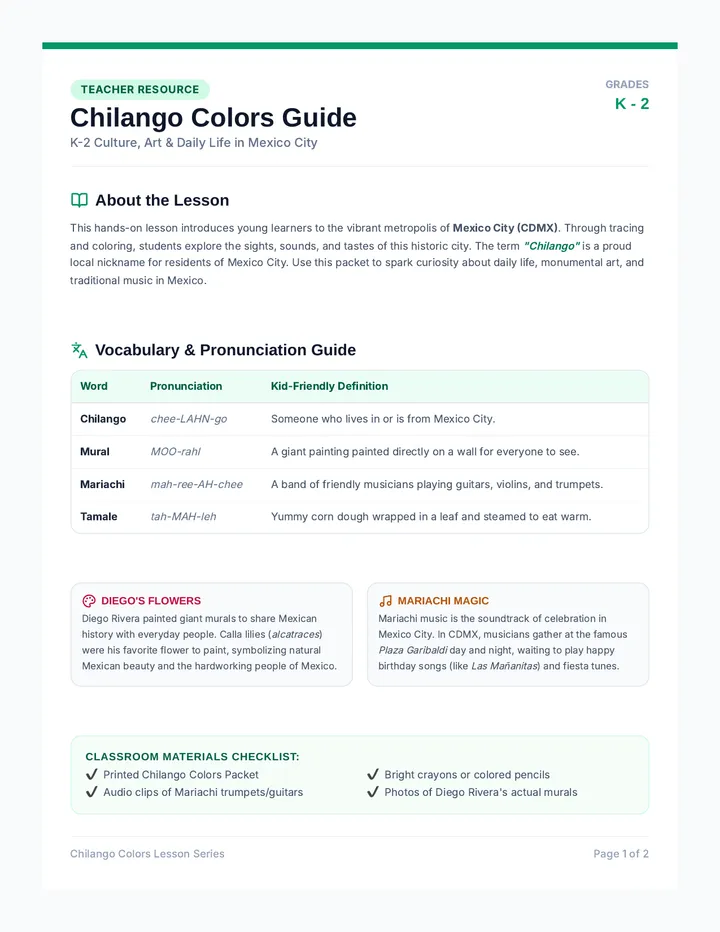
A 2-page companion teacher guide for delivering the Chilango Colors lesson, featuring pronunciation keys, background knowledge, and lesson delivery ideas.
A comprehensive tour of the 50 United States, exploring their flags, shapes, capitals, and unique facts through interactive worksheets and visual aids.
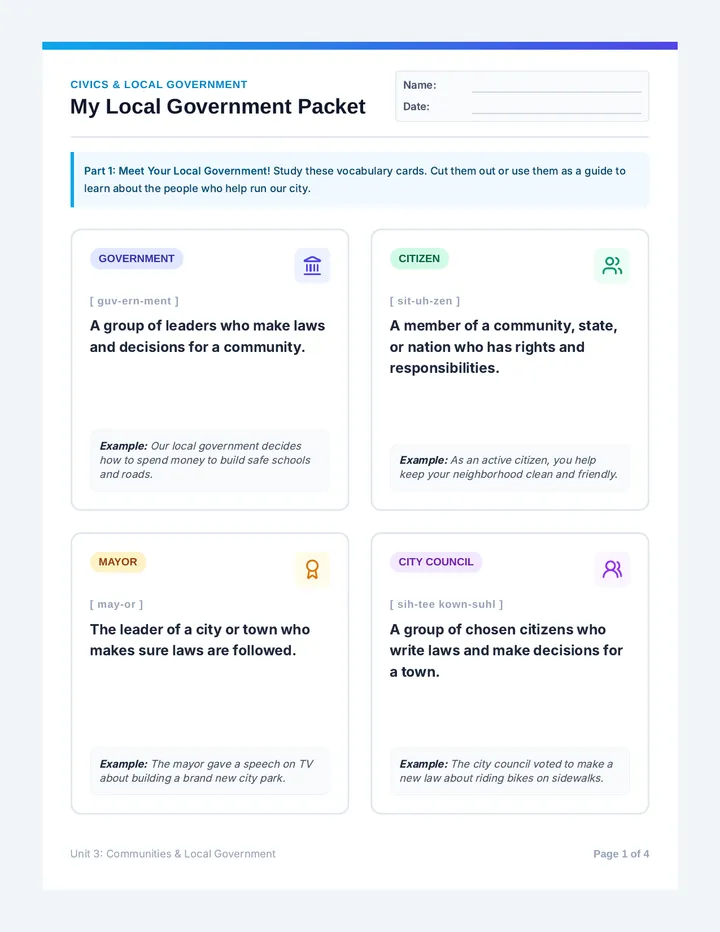
A high-support, scaffolded version of the Communities and Local Government lesson designed for students needing extra language and cognitive scaffolds. It features visual vocabulary cards, structured matching, guided sentence frames, and an accessible exit ticket.
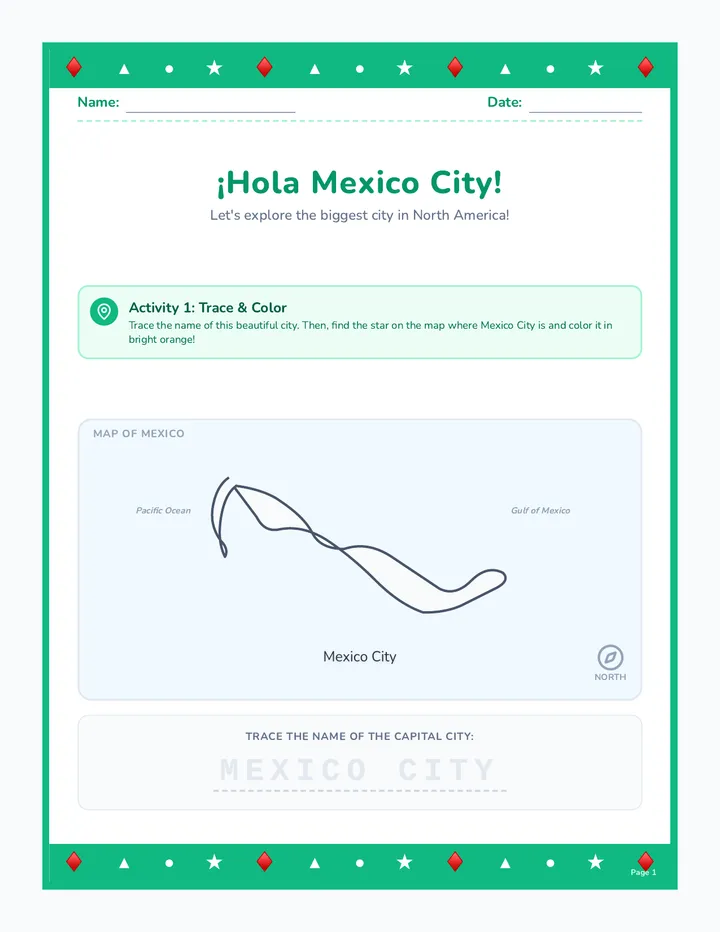
A 4-page printable coloring, tracing, and simple mapping packet for K-2 students to learn about Mexico City (CDMX) through hands-on activities.
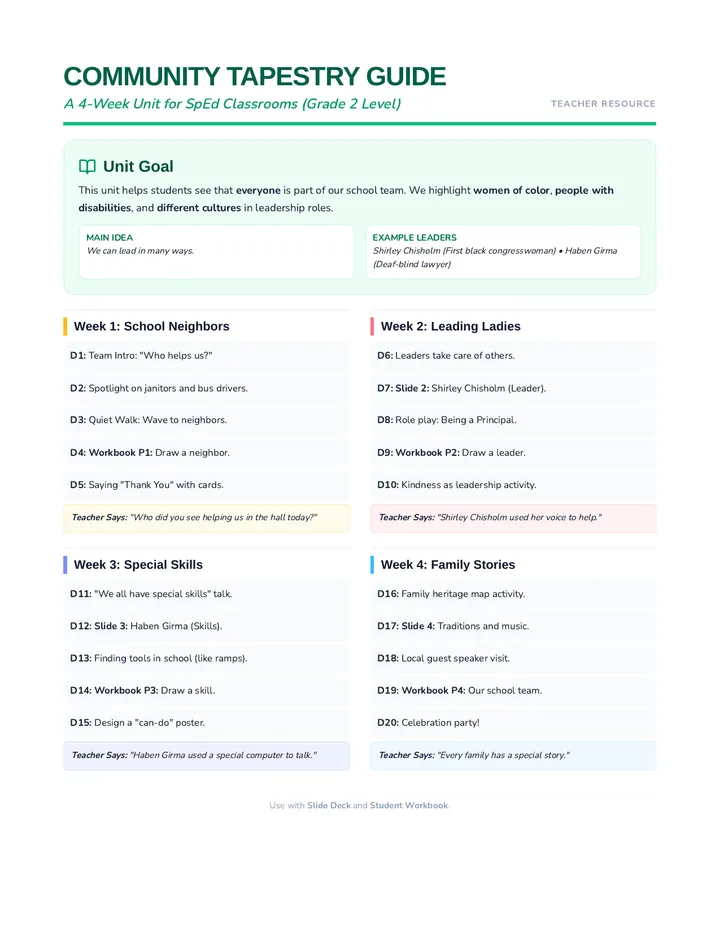
A four-week exploration of school community roles, focusing on diversity, inclusion, and representation in leadership. Students will identify daily community members and learn about the contributions of women of color and people with disabilities in their school and beyond.
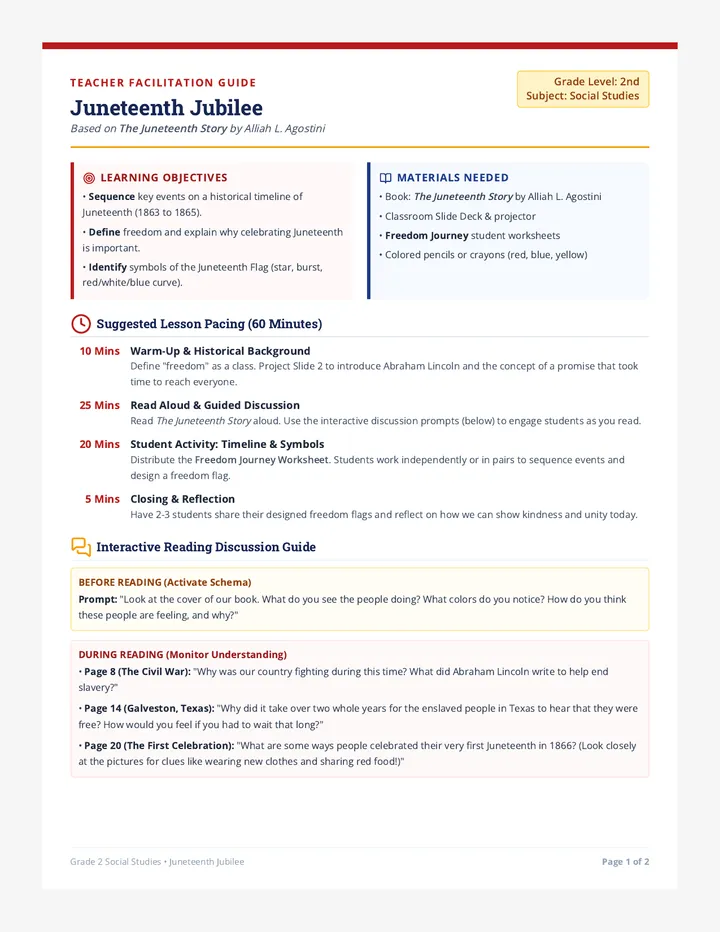
A comprehensive social studies and history lesson for second-grade students based on Alliah L. Agostini's book 'The Juneteenth Story'. It focuses on the timeline of freedom, the historical significance of June 19, 1865, and symbols of celebration like the Juneteenth Flag.
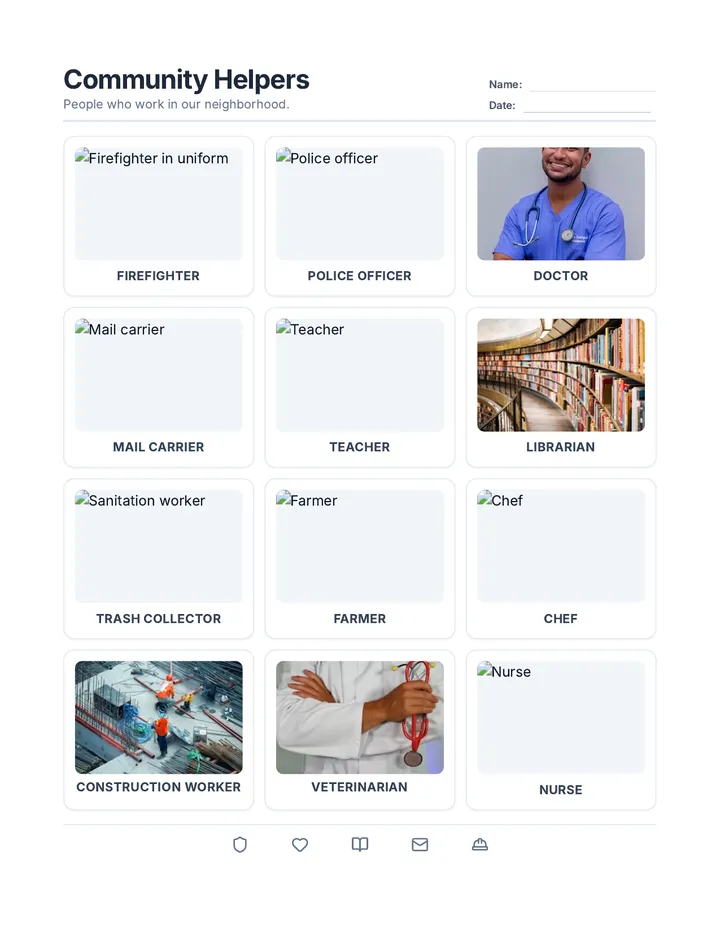
A polished one-page printout featuring 12 community helpers in a 3x4 grid with realistic photos and clear labels. Reduced padding and adjusted aspect ratios ensure everything fits perfectly on a single page.
A comprehensive, 4-page scaffolded packet for students needing extra support, containing 8 illustrated vocabulary flashcards, a guided matching activity, a scaffolded writing template with sentence frames, and an accessible exit ticket with a built-in self-assessment.