Social Identity Presentation Psychology: Unit 4
Roots of Identity
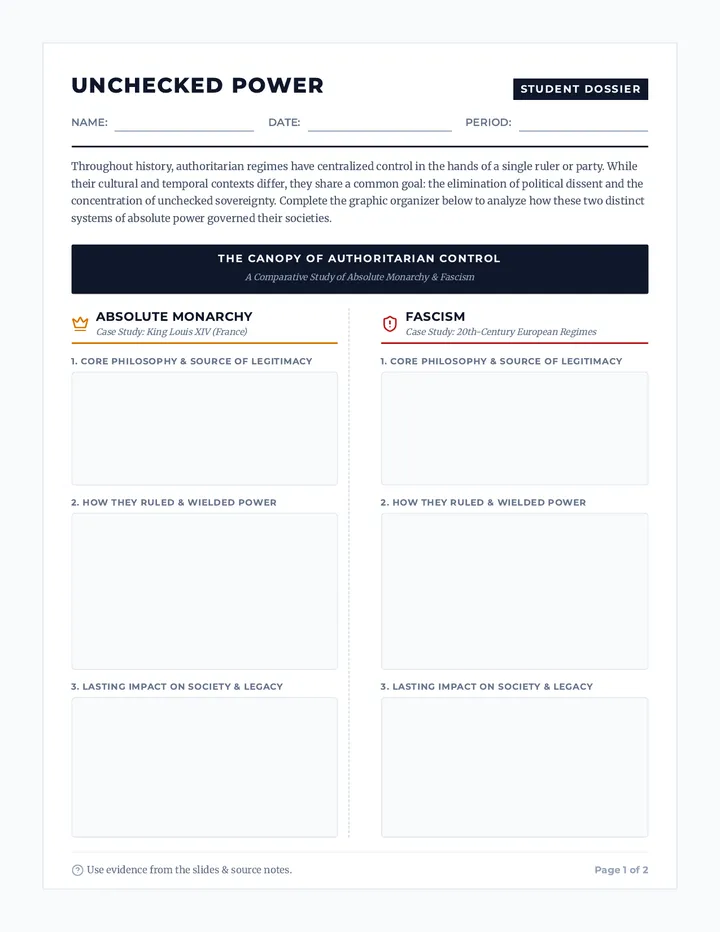
Why do we divide the world into "Us" and "Them"? Exploring Social Identity Theory and In-Group Bias.
Lesson 1.1
The Human Grouping Instinct
Think about your school. Name three groups that exist.
How do you know who is in which group?
Do these groups treat each other equally?
What happens the moment you are "assigned" a group?
"Man is a social animal."
— Aristotle
Social Identity Theory (SIT)
Henri Tajfel & John Turner (1979)
01. Categorization
We put people (and ourselves) into categories to understand the social environment.
02. Identification
We adopt the identity of the group we have categorized ourselves as belonging to.
03. Comparison
We compare our group with other groups, seeking "positive distinctiveness."
"Our self-esteem is tied to the status and success of the groups we belong to."
Minimal Group Paradigm
Tajfel discovered that bias occurs even when the groups are based on trivial or meaningless criteria.
No previous conflict necessary.
No personal profit necessary.
Just "Us vs. Them" is enough.
The Simulation
Next up: We will be assigned to groups based on your preference for two modern artists.
Kandinsky
Klee
Artful Bias Simulation Activity Artful Bias Simulation
Minimal Group Paradigm Activity
Name:
Date:
Phase 1: Your Aesthetic Preference
Carefully look at the two abstract painting samples projected on the screen (or provided by your teacher). Based on your gut instinct—which artist's style do you prefer?
Painting A (Kandinsky)
Group A: Kandinsky
Painting B (Klee)
Group B: Klee
Phase 2: Resource Allocation
You have been given 100 "Points" to distribute between a member of Your Group and a member of The Other Group . You do not know these individuals; you only know their group affiliation.
Option Points for Your Group Member Points for Other Group Member Strategy 1 50 Points 50 Points Strategy 2 70 Points 30 Points Strategy 3 14 Points 1 Point
Circle your choice above. Be prepared to explain why you chose that specific distribution.
Post-Allocation Reflection
1. If you chose Strategy 3, why did you choose to give your own group member fewer total points than in Strategy 2, just to ensure the other group got almost nothing?
2. How did knowing someone was "in your group" change your perception of them, even if you don't know who they are?
Social Identity Analysis Worksheet Theory File: SIT
Psychological Analysis Unit
SUBJECT: SOCIAL IDENTITY CODE: TAJFEL-1979
The Core Proposition
Social Identity Theory (SIT) proposes that a person's sense of who they are is based on their group membership(s). Groups (e.g., social class, family, football team etc.) give us a sense of social identity: a sense of belonging to the social world.
Key Motive: Self-Esteem
The Three Stages
1
Social Categorization
We categorize objects and people to understand them and identify them. By assigning people to categories (Black/White, Student/Teacher), we can better define their attributes and our relationship to them.
2
Social Identification
We adopt the identity of the group we have categorized ourselves as belonging to. If you categorized yourself as a "musician," you will start to act like a musician and adopt the norms of that group.
3
Social Comparison
Once we have identified our group, we compare it with other groups. To maintain self-esteem, we must perceive our group as better than others—this is Positive Distinctiveness .
Analysis Case Study: The "High School Cafeteria"
Identify 3 social groups present in your school:
A.
B.
C.
Positive Distinctiveness Example:
How does one of these groups try to show they are "better" or "more unique" than another?
Theoretical Link: Why does "out-group hostility" occur according to SIT?
Hint: Consider the relationship between group status and individual self-esteem.
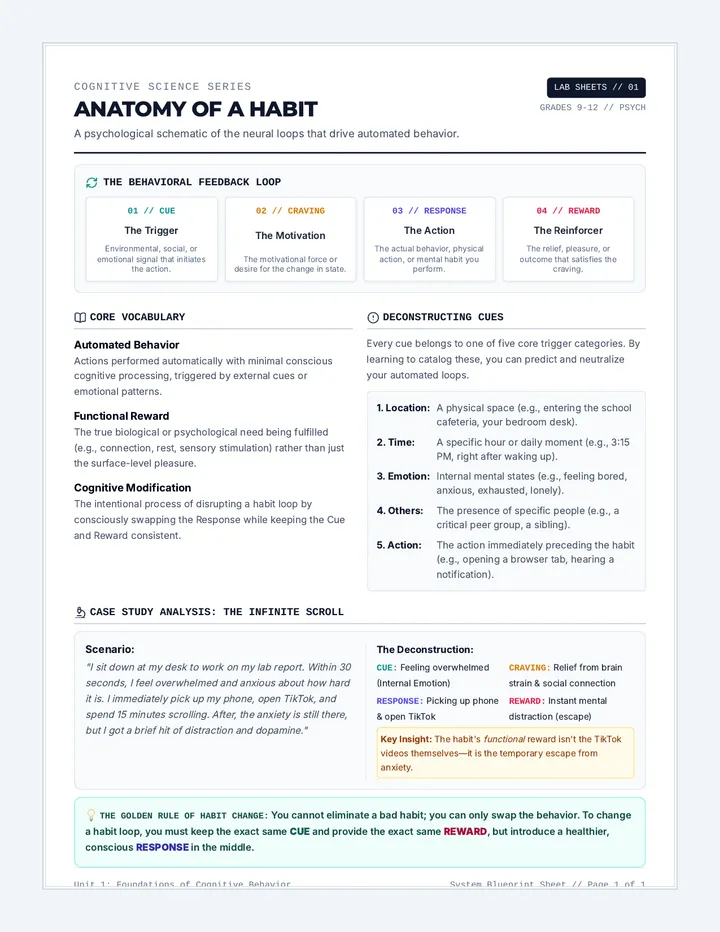
Implicit Bias Presentation Cognitive Science Unit
The Hidden Brain
Investigating Implicit Bias and the Automatic Mind.
Lesson 1.2: Implicit Associations
Can you trust your eyes?
Our brains are designed for efficiency, not always accuracy.
"The brain is a pattern-matching machine. It takes shortcuts to process billions of bits of data every second."
When we apply these shortcuts to people , we call them implicit biases.
[Müller-Lyer Illusion Image]
[Checkerboard Shadow Illusion]
System 1 vs. System 2
System 1
Fast, Automatic
Emotional, Instinctive
Uses Heuristics (Shortcuts)
Location of Implicit Bias
System 2
Slow, Deliberate
Logical, Calculating
Effortful Thinking
Can override biases
Measuring the Unconscious
The IAT measures the strength of associations between concepts (e.g., race, gender) and evaluations (e.g., good, bad).
How it works:
The faster you pair two items, the more strongly your brain associates them. Speed = Strength.
Experimental Protocol
1
Press 'E' for Female / Science
2
Press 'I' for Male / Liberal Arts
3
Switch: Female / Liberal Arts...
We will now conduct a class-based mini-IAT.
Cognitive Shortcut Lab Worksheet Cognitive Shortcut Lab
Implicit Association Research Guide
Observer ID
Trial Date
Experiment 1: Automatic Pattern Matching
Our brains are programmed to see patterns even when they don't exist. This is a survival mechanism. Look at the images provided by your teacher and record your immediate response before System 2 (your logical brain) can kick in.
Image A: Ambiguous Figure
First Impression (System 1):
Image B: Visual Prime
First Impression (System 1):
Reflection: The IAT Results
1. The "Automatic Association" Paradox
Many people find that their IAT results (which reveal bias) do not match their personal beliefs. Why is it possible to have a bias that you consciously disagree with?
Explain using the concepts of System 1 (Automatic) and System 2 (Reflective).
2. Cultural Mirroring
Does a "fast association" on the IAT mean you are a prejudiced person, or does it mean you have been exposed to cultural stereotypes? What's the difference?
Critiquing the Tool
Some psychologists argue the IAT measures familiarity rather than bias . If you see a certain pairing in movies constantly, your brain will pair them faster. How might this affect the validity of the test?
Lab Challenge
If biases are automatic (System 1), what can System 2 do to prevent them from becoming discriminatory behavior?
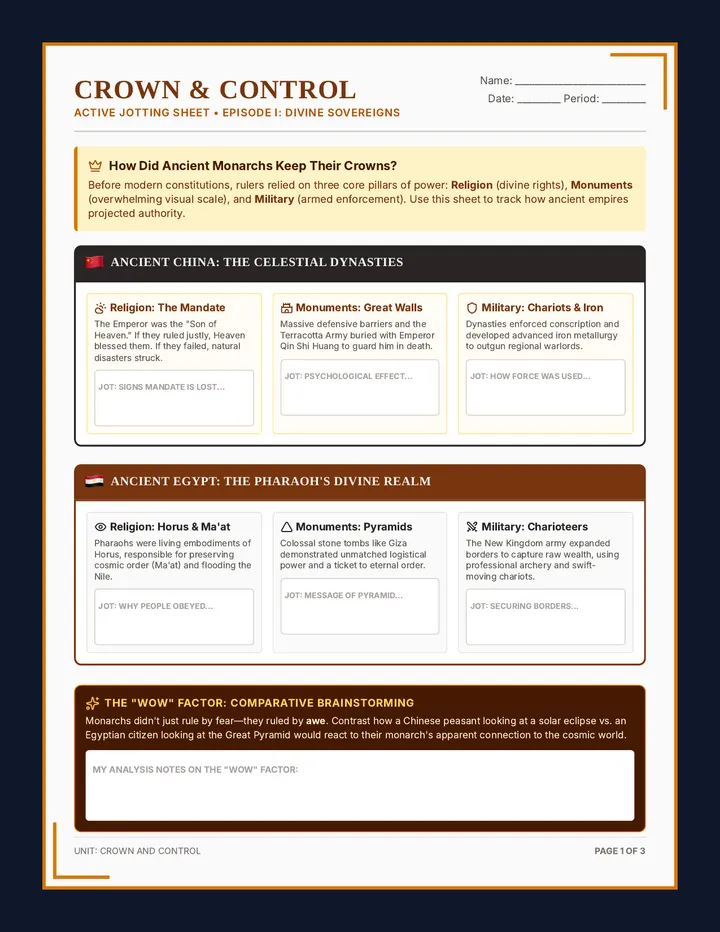
Robbers Cave Presentation Case Study: 1954
ROBBERS CAVE
Realistic Conflict Theory & The Escalation of Hostility
Observation File #82
The Experimental Setup
The Subjects
22 white, 11-year-old boys from middle-class backgrounds. All stable, well-adjusted, and unknown to each other.
The Location
Robbers Cave State Park, Oklahoma. A remote summer camp setting.
"The boys believed they were simply attending a summer camp. They did not know researchers were observing their every move."
[Camp Map Illustration]
Phase 1 to Phase 3: A Descent
Phase 1: In-Group
The boys are split into two groups: The Eagles and The Rattlers . They bond within their own groups for 5 days.
Phase 2: Friction
A tournament of competitive games is introduced. Only ONE group can win the prize. Name-calling, flag-burning, and cabin-raids begin.
Phase 3: Integration
Researchers create Superordinate Goals —tasks that require BOTH groups to cooperate to succeed (e.g., fixing the water tank).
Resolution
Realistic Conflict Theory
Prejudice arises when groups are in direct competition for limited, valuable resources.
Zero-Sum Game
"If they win, we lose." This mindset rapidly accelerates dehumanization and discrimination.
The Solution
Contact alone isn't enough. Conflict is reduced by sharing a common threat or goal.
Robbers Cave Case Study Packet Case File: RC-1954
SHERIF'S EXPERIMENTAL FIELD STUDY
DATE: JUNE - JULY 1954
STATUS: CONFIDENTIAL
Diary Entries: The Descent into Friction
Day 6: The Tournament Begins
"We were doing just fine until they showed up. We thought the camp was ours. Now we have to share the baseball field with those 'Rattlers'. They talk loud and act like they own the place. Tomorrow we play them for the trophy. We won't lose."
Day 9: Escalation
"They burned our flag last night. Dirty cowards. We went to their cabin this morning and turned over their beds. If they want a war, they've got one. I don't care about the prize anymore; I just want to see them lose."
Part 1: Defining Conflict
Realistic Conflict Theory suggests that prejudice isn't just "in the mind"—it's a result of social structure. Answer the following based on the experiment:
What was the "Limited Resource" in this experiment?
How did the researchers use "Superordinate Goals" to resolve the conflict?
The Ethics Brief
Muzafer Sherif has been criticized for the ethical treatment of his subjects. The boys were deceived, placed in high-stress situations, and encouraged to engage in physical hostility.
Was the scientific value worth the psychological stress on the children?
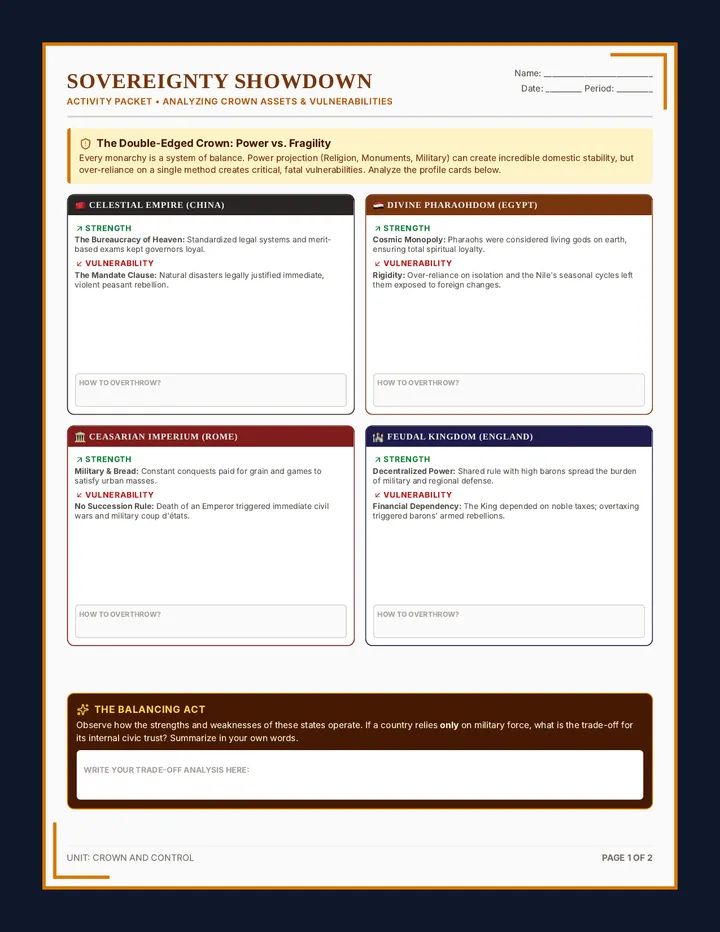
Stereotypes Presentation Lesson 1.4: Cognitive Tropes
Stereotypes
How schemas and confirmation bias lock our minds into cycles of prejudice.
The Brain's Filing System
Schemas
Mental frameworks that help us organize and interpret information.
Heuristics
Mental shortcuts that allow for fast decision-making.
Stereotypes are social schemas gone wrong.
How it works:
1
You meet a person from Group X.
2
Your brain pulls up the "Group X" file (Schema).
3
You assign the file's contents to the individual, ignoring their uniqueness.
The Armor of Bias: Confirmation
Once a stereotype exists, we seek out information that proves it right and ignore information that proves it wrong.
Selective Attention
Noticing only the people who fit the stereotype.
Selective Interpretation
Explaining away behavior that doesn't fit ("He's just an exception").
Selective Memory
Remembering only the instances that confirmed your belief.
Where do these files come from?
Media, family, and peers are the "editors" of our cognitive files.
Media Tropes
Social Echoes
Historical Narratives
"We don't see things as they are, we see them as we are." — Anaïs Nin
Media Tropes Analysis Worksheet Media Tropes Analysis
Unit: Cognitive Bias in Society
ANALYST
"A trope is a common or overused theme or device. When tropes are applied to groups of people, they reinforce stereotypes—making them feel 'natural' or 'true' to our automatic System 1 thinking."
1. The "Aggressive Out-Group" Trope
Often seen in action movies or news reporting where certain ethnic or social groups are consistently portrayed as the antagonist or a threat.
Example from Media:
Stereotype it reinforces:
2. The "Nerd / Tech-Geek" Trope
Portraying specific groups (often based on gender or ethnicity) as naturally gifted in STEM but socially awkward or devoid of emotion.
Example from Media:
Stereotype it reinforces:
The "Exception to the Rule" Challenge
Confirmation bias works by making us ignore disconfirming evidence . Think of a stereotype you've held or seen in others. Now, find three specific "real-world" examples that prove that stereotype wrong.
1
Evidence Item A
2
Evidence Item B
3
Evidence Item C
Reflect: How did searching for this evidence feel compared to your automatic thought?
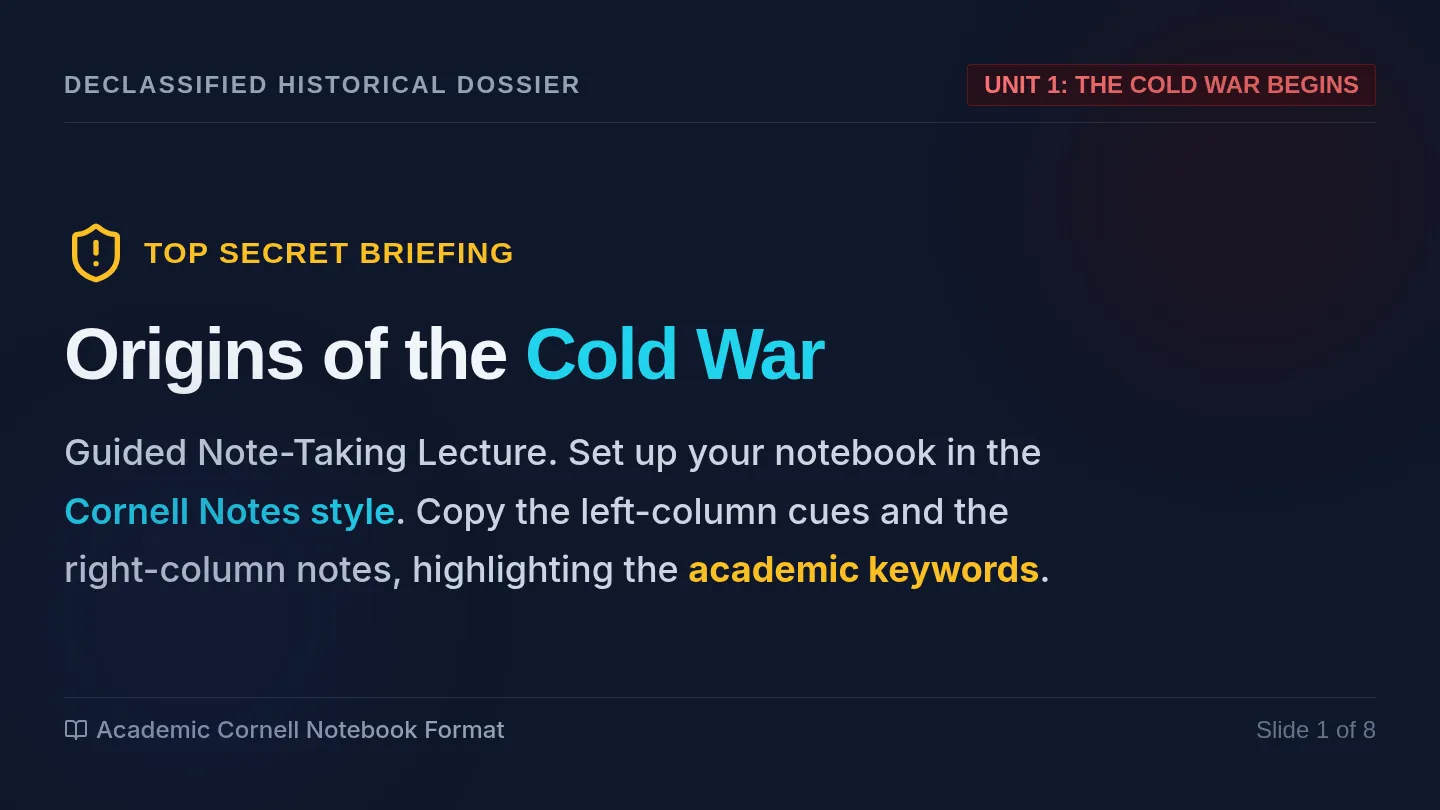
ABC Model Presentation Final Synthesis
ABC of BIAS
Separating Thoughts, Feelings, and Actions.
A Affective
B Behavioral
C Cognitive
Key Distinctions
Stereotype
(Cognitive)
A generalized belief or schema about a group of people.
"They are all X."
Prejudice
(Affective)
An unjustifiable negative attitude or feeling toward a group.
"I don't like X."
Discrimination
(Behavioral)
Unjustifiable negative behavior or action toward a group.
"I won't hire X."
Can you have one without the other?
Can you hold a stereotype but not feel prejudice?
Can you feel prejudice but not discriminate?
When do thoughts become dangerous actions?
Case Discussion
"A store owner believes teenagers are likely to shoplift (Stereotype). He feels suspicious when a group enters (Prejudice). He follows them through the aisles (Discrimination)."
Where could the owner have stopped the cycle?
Conflict Diagnosis Assessment Conflict Diagnosis
Sequence Assessment: The Cognitive Roots of Bias
STUDENT
SCORE
/30
Part 1: The ABC Framework
Categorize the following descriptions by writing Stereotype (C) , Prejudice (A) , or Discrimination (B) next to each.
Refusing to hire someone because they are over the age of 60.
Believing that all athletes are uninterested in academic success.
Feeling a sense of unease or discomfort when sitting next to a person in religious clothing.
Part 2: Deep Diagnosis
Case Scenario
"A tech company primarily hires graduates from prestigious Ivy League schools. The CEO believes that 'state school students lack the grit required for high-stakes coding.' During a recent hiring round, a highly qualified candidate from a state university was rejected without an interview. The hiring manager later admitted she 'just didn't feel good' about the candidate's background."
1. Identify the Stereotype (Cognitive component) in this scenario.
2. Explain how Confirmation Bias might prevent the CEO from changing their mind.
3. Synthesis: Apply Social Identity Theory (SIT). How does the "Ivy League" identity contribute to this conflict?
The Final Question
Based on everything you have learned in this sequence, to what extent is prejudice a biological byproduct of our brain's architecture versus a learned behavior ?