Wind Turbine STEM Packet
Physical Science • Unit 5.2 Electricity & Magnetism
Analyzing Wind Power Generators
Electromagnetic Induction & Renewable Power Engineering
Student Project Guide 4-Part STEM Investigation
Partner 1:
Partner 2:
Partner 3:
Period / Date:
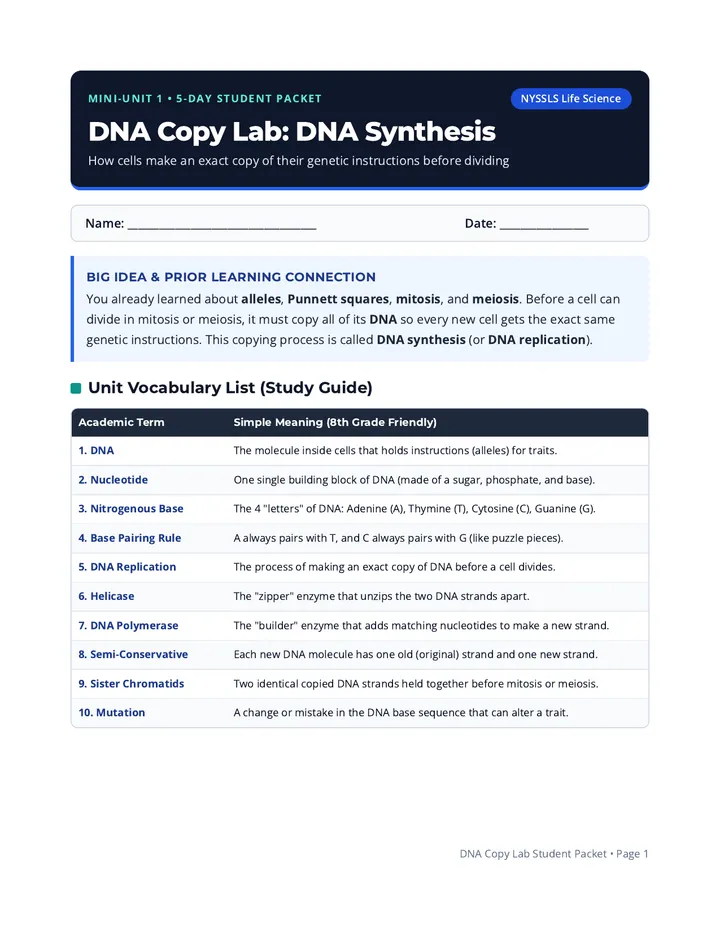
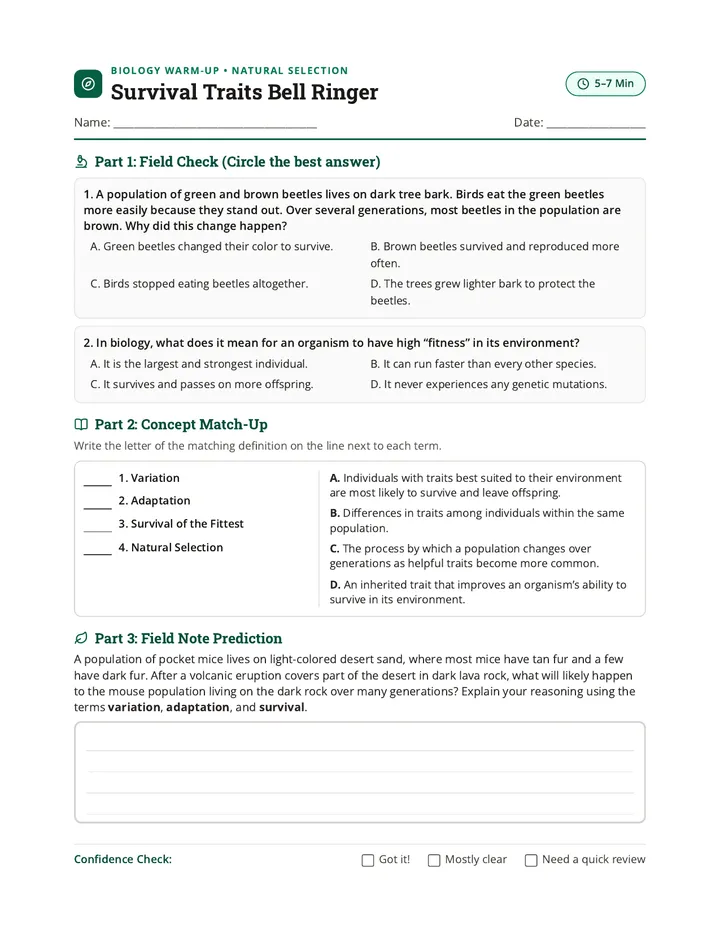
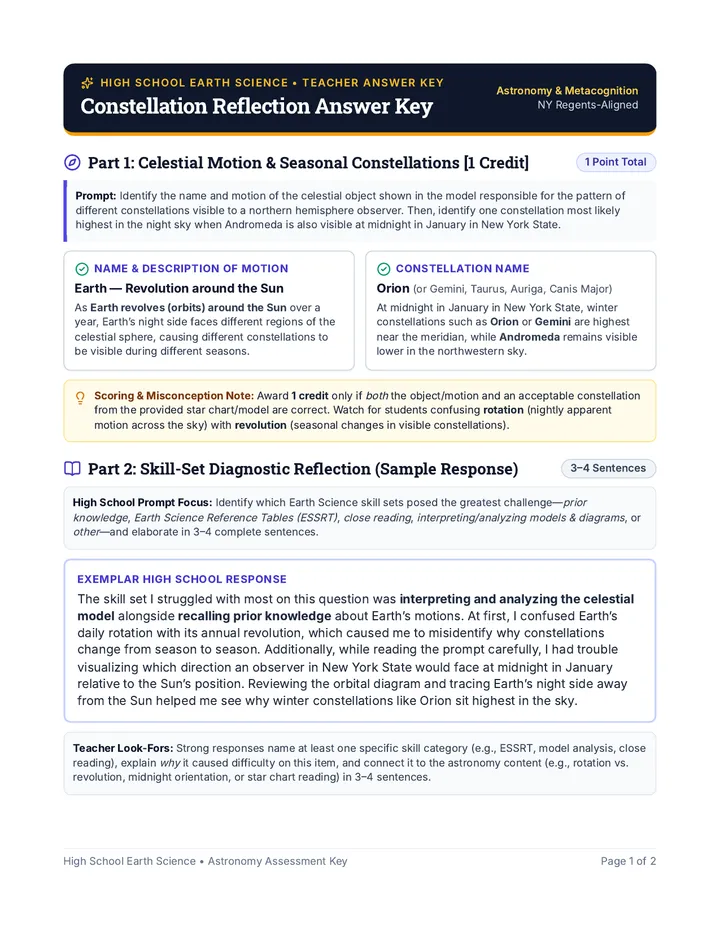
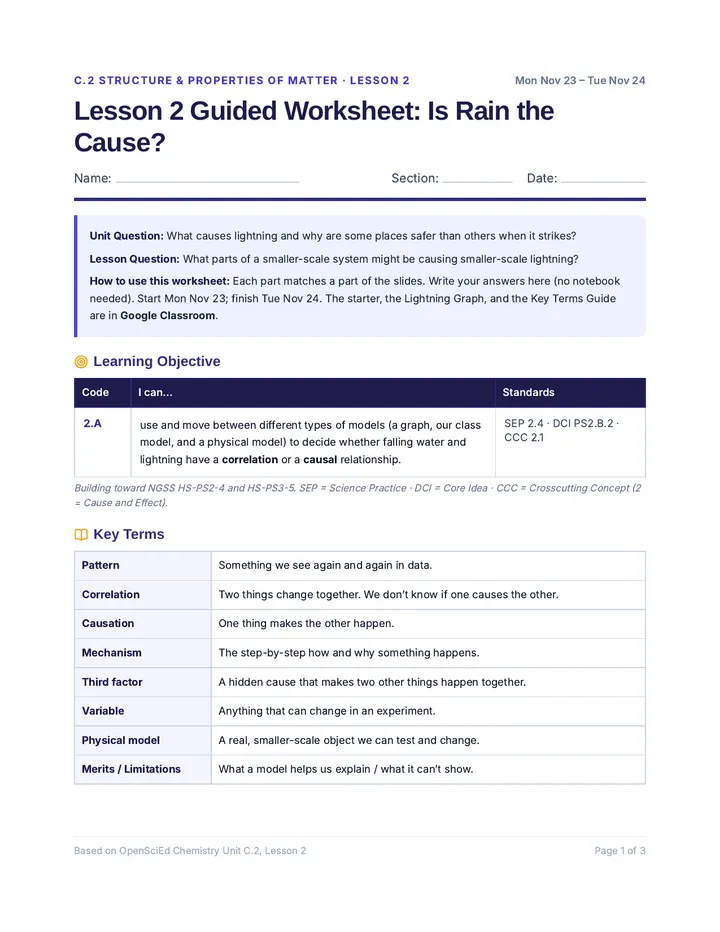
Project Mission & Scientific Context
In this STEM project, students explore and explain a new design for a wind turbine that uses a magnet as part of the process of generating electricity. They then propose a modification to the design that could make it more efficient.
Renewable Energy Focus: Wind energy is a renewable source of energy, but one challenge is that it can be inconsistent, and it is not strong enough to generate electricity in many locations around the world. Scientists are proposing Offshore Wind Farms as the next step in capturing wind energy, as the oceans and Great Lakes provide a strong, consistent source of wind power.
Generator Mechanism & Induction
Kinetic energy from wind moves the aerodynamically shaped blades, turning the slow rotor shaft. The gearbox accelerates rotational speed to turn powerful magnets inside copper coils, inducing electric current.
Weather Vane Gearbox & Magnets
1
Explaining the Design | Video Analysis
Score: ____ / 6
Task: Analyze the wind turbine design in the video segment on Discovery Education and explain how it generates electricity.
Word Bank
windier pressure weather vane electricity gears turbines
-
The wind causes big to spin.
-
Uneven air causes the blades to spin.
-
A keeps the turbine facing into the wind.
-
The rotor shaft doesn't spin quickly enough to produce . So, it is attached to which will increase the rotation.
-
Wind turbines are tall because the higher up you go, the it is.
Physical Science Unit 5.2 • Analyzing Wind Power Generators Page 1 of 4
2
Modifying the Design
Engineering Evaluation, Trade-offs & Structural Improvements
Rubric: 10 Points
Pros and Cons of Wind Energy
Pros (Advantages)
- • Clean: Produces no carbon emissions.
- • Local: Harnessed domestically within regional grids.
- • Affordable generation: Low operational costs.
- • Wind is free: Inexhaustible natural kinetic fuel.
- • Landowner income: Farmers get paid for turbine leases.
- • High efficiency: Recent advances maximize power.
Cons (Challenges & Limitations)
- • Needs to be windy: Turbines sit idle in calm air.
- • Inconsistent supply: Hard to predict energy collection.
- • Blades cannot be recycled: Composite waste issues.
- • Finite metals: Mining rare metals harms environments.
• What is one problem with the current wind turbine design? One current problem with the current design is:
• What are two things that could improve this design so that the turbine generates more electricity?
1. Improvement Idea:
2. Improvement Idea:
Engineering Design Models (With Labels)
Labels Strictly Required for Full Credit (10 Pts)
Instruction: Clearly sketch each design modification below and draw arrows with written labels identifying every changed component. Unlabeled models receive reduced points on rubric.
Model for Design Improvement #1 Must Include Labels
Schematic Grid • 14mm
[ ] Labeled Modified Parts [ ] Labeled Motion/Airflow [ ] Labeled Materials
Label Key:
Model for Design Improvement #2 Must Include Labels
Schematic Grid • 14mm
[ ] Labeled Modified Parts [ ] Labeled Motion/Airflow [ ] Labeled Materials
Label Key:
Physical Science Unit 5.2 • Analyzing Wind Power Generators Page 2 of 4
3
Calculating Energy Savings and Costs
Economic Viability, Payback Period & Decision Analysis
Calculator Allowed Rubric: 10 Points
Scenario: A family is considering installing a 3-watt wind generator for their home. It would cost $15,000 to install this new generator. Currently, the family pays $0.15/kilowatt-hour for energy from their local electricity company. The new wind generator would cost $0.05/kilowatt-hour for energy. If the family uses about 1,000 kilowatt-hours of energy every month, calculate how long it would take before the cost of the new wind turbine offsets the savings in electricity.
1. Current Utility Rate: $0.15 / kWh
2. Wind Generator Rate: $0.05 / kWh
3. Monthly Usage: 1,000 kWh / mo
4. Upfront Cost: $15,000 total
• How much does the family pay for energy right now?
$ /kilowatt-hour
• How much does the new wind generator cost for energy?
$ /kilowatt-hour
• How many kilowatt-hours does the family use each month?
kilowatt-hours
• How much does the family pay per month with their local electrical company? Show Work
Equation: (Monthly kWh) × ($ Rate/kWh) = Monthly Cost
Work Space
Monthly Local Cost = $________________
• How much would they pay for the wind generator per month? Show Work
Equation: (Monthly kWh) × ($ Rate/kWh) = Monthly Cost
Work Space
Monthly Wind Cost = $______________
• How much money will the family save every month if they get the wind generator? Show Work
Equation: (Local Electric Cost) − (Wind Cost) = Savings Current − Wind
Work Space
Monthly Savings = $__________________
• How many months will it take to earn back the money spent on the wind generator? Show Work
Equation: Months = (Generator Cost) ÷ (Monthly Savings) Years = Mo ÷ 12
Saved / mo: $ ________
Generator cost: $ ________
Division Work Space
It will take months or years.
• Do you think that the family should purchase the wind generator? (Circle one):
YES NO
• Justification: Support your decision with math evidence using the sentence stem: Include Numbers & Evidence
The family should / should not buy the generator because my math shows that
Physical Science Unit 5.2 • Analyzing Wind Power Generators Page 3 of 4
Project Assessment Rubrics
Standardized Performance Criteria & Evaluation Guidelines (Total: 26 Points)
Grading Key
Rubric 1: Design Modifications & Engineering Models (Part 2) 10 Points Max
| 10 pts |
8 pts |
6 pts |
4 pts |
2 pts |
0 pts |
| Answer lists a reasonable challenge and two possible modifications based on sound reasoning. Models are complete with labels. |
Answer lists a reasonable challenge and two possible modifications, but the modifications contain errors. Models are either complete with no labels or are vague. |
Answer provides a reasonable challenge, but just one modification. Models are either complete with no labels or are vague. |
Answer provides a reasonable challenge but no suggestions for modifications. Models do not connect to the modifications and/or labels are missing. |
Answer has been attempted but both the challenge and any modifications are incorrect. Models have major inaccuracies. |
Component is missing or irrelevant. |
Rubrics 2 & 3: Calculations & Justification Analysis (Part 3) 10 Points Max (5 pts each)
| Criterion |
5 pts |
4 pts |
3 pts |
2 pts |
1 pt |
0 pts |
| Calculating Energy Savings |
Calculations are complete and accurate. |
Calculations are complete but contain 1–2 errors. |
Calculations are incomplete and contain 1–2 errors. |
Calculations have several errors. |
Calculations do not address the problem. |
Component is missing or irrelevant. |
| Explaining Justification |
Answer provides a complete and accurate explanation. |
Answer provides a complete explanation with a few errors. |
Answer provides a partial explanation that contains a few errors. |
Answer provides an attempted explanation that contains several errors. |
Answer has been attempted but is incomplete and inaccurate. |
Component is missing or irrelevant. |
Final Score Breakdown & Teacher Evaluation Physical Science Unit 5.2
Part 1 Design Terms
____ / 6
Part 2 Modifications
____ / 10
Part 3A Math Savings
____ / 5
Part 3B Justification
____ / 5
Total Score
____ / 26
Teacher Feedback & Observations:
Physical Science Unit 5.2 • Analyzing Wind Power Generators Page 4 of 4