This project packet guides students through designing a fictional settlement adapted to a specific biome, requiring them to justify their architectural and environmental choices.
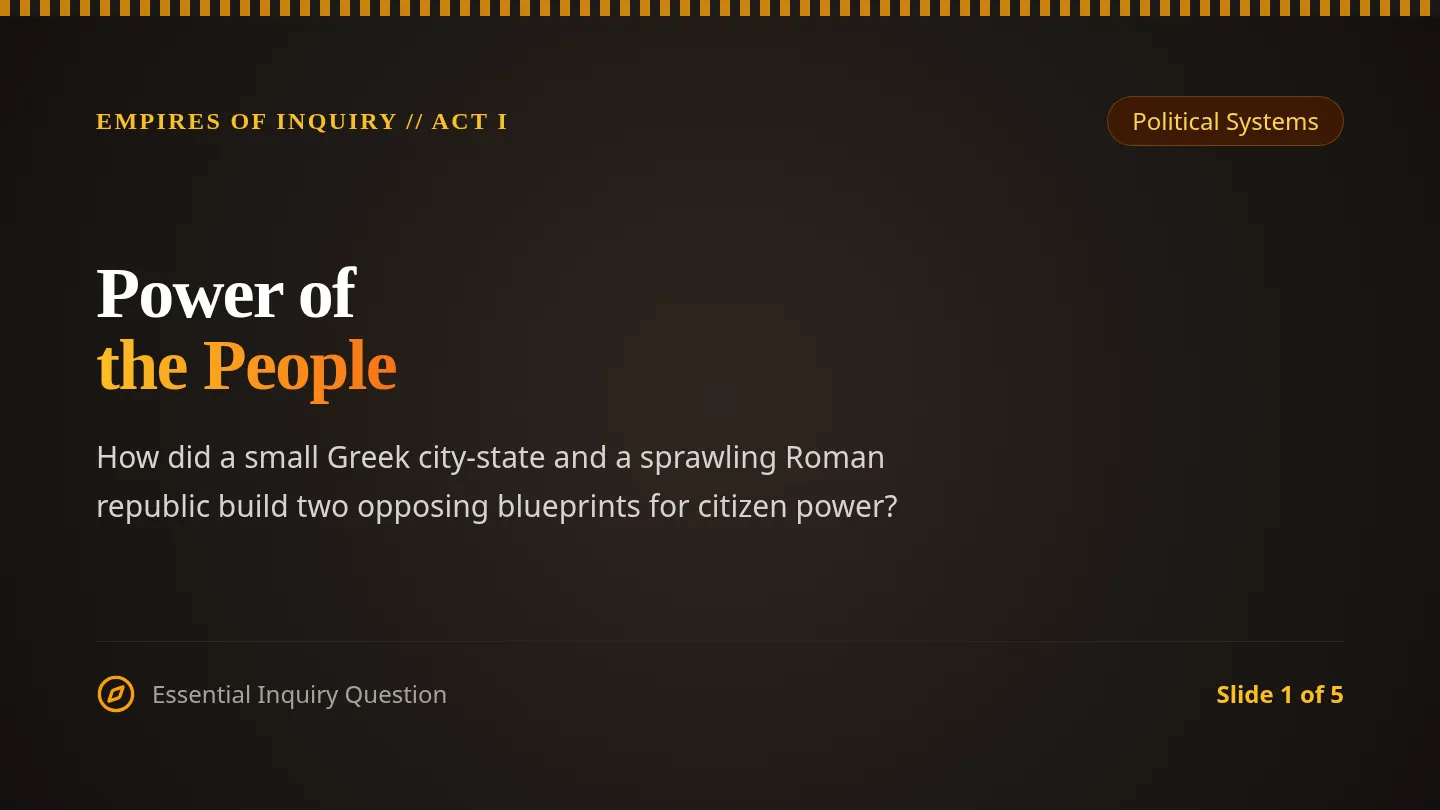
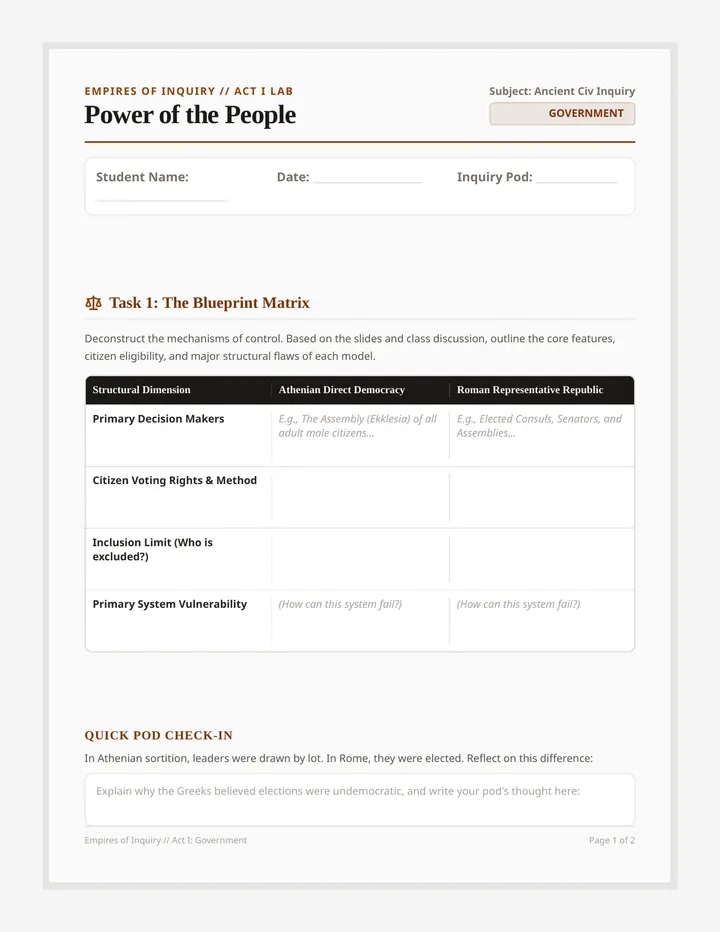
An inquiry-driven social studies sequence investigating Ancient Greece and Rome across four core pillars: government, philosophy, trade, and engineering. Students engage with primary sources, architectural achievements, and ethical dilemmas to construct arguments about classical legacies.
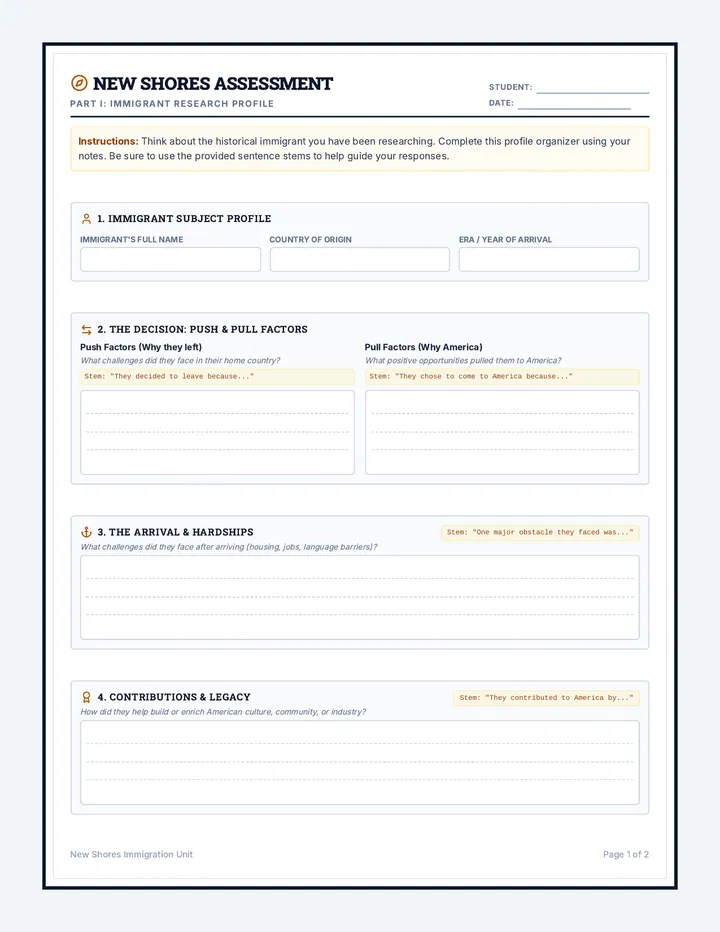
A historical investigation lesson exploring the experiences of immigrants in America. Students research an individual immigrant, complete a detailed profile organizer, and demonstrate their understanding of core concepts like push and pull factors.
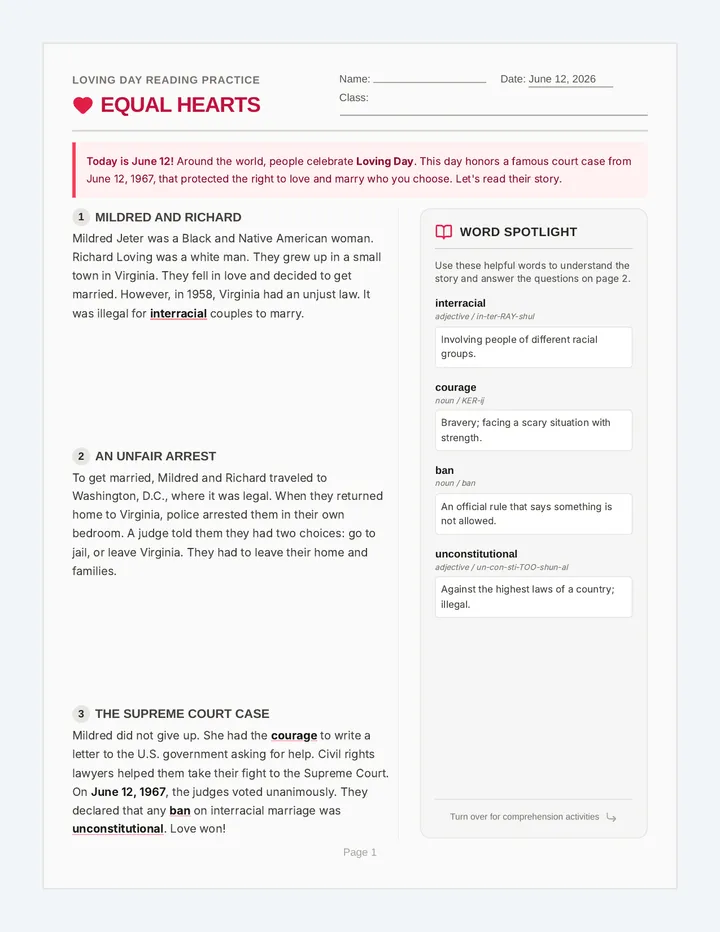
A standalone, double-sided printable reading worksheet designed for English Language Learners (ELL) focusing on Loving Day (June 12, 1967). Includes an accessible, scaffolded reading passage, a visual vocabulary spotlight, text-dependent comprehension questions with writing frames, and a creative reflection activity.
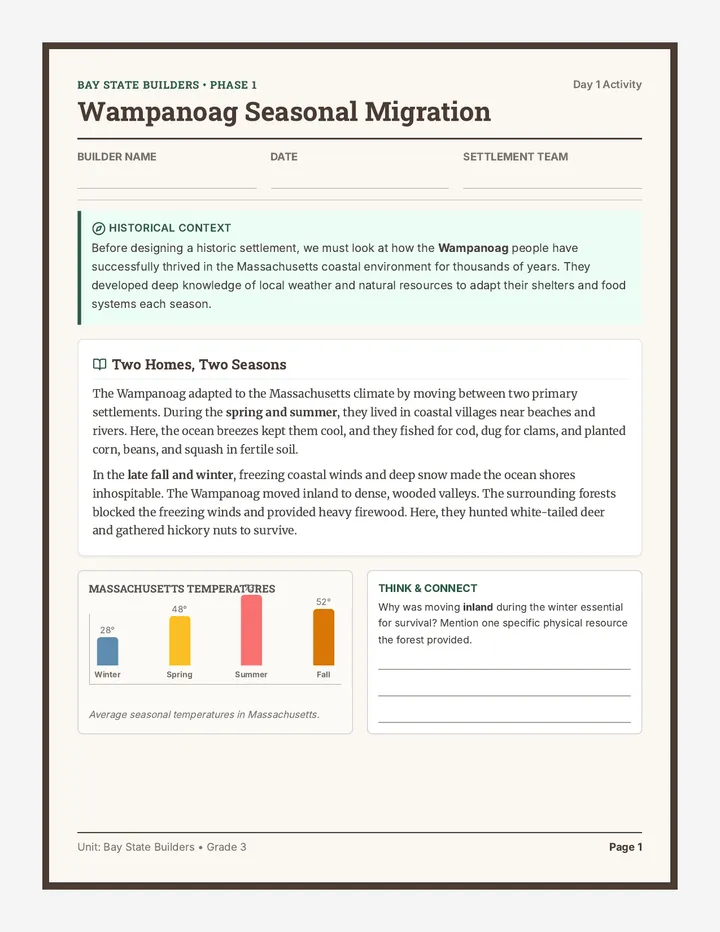
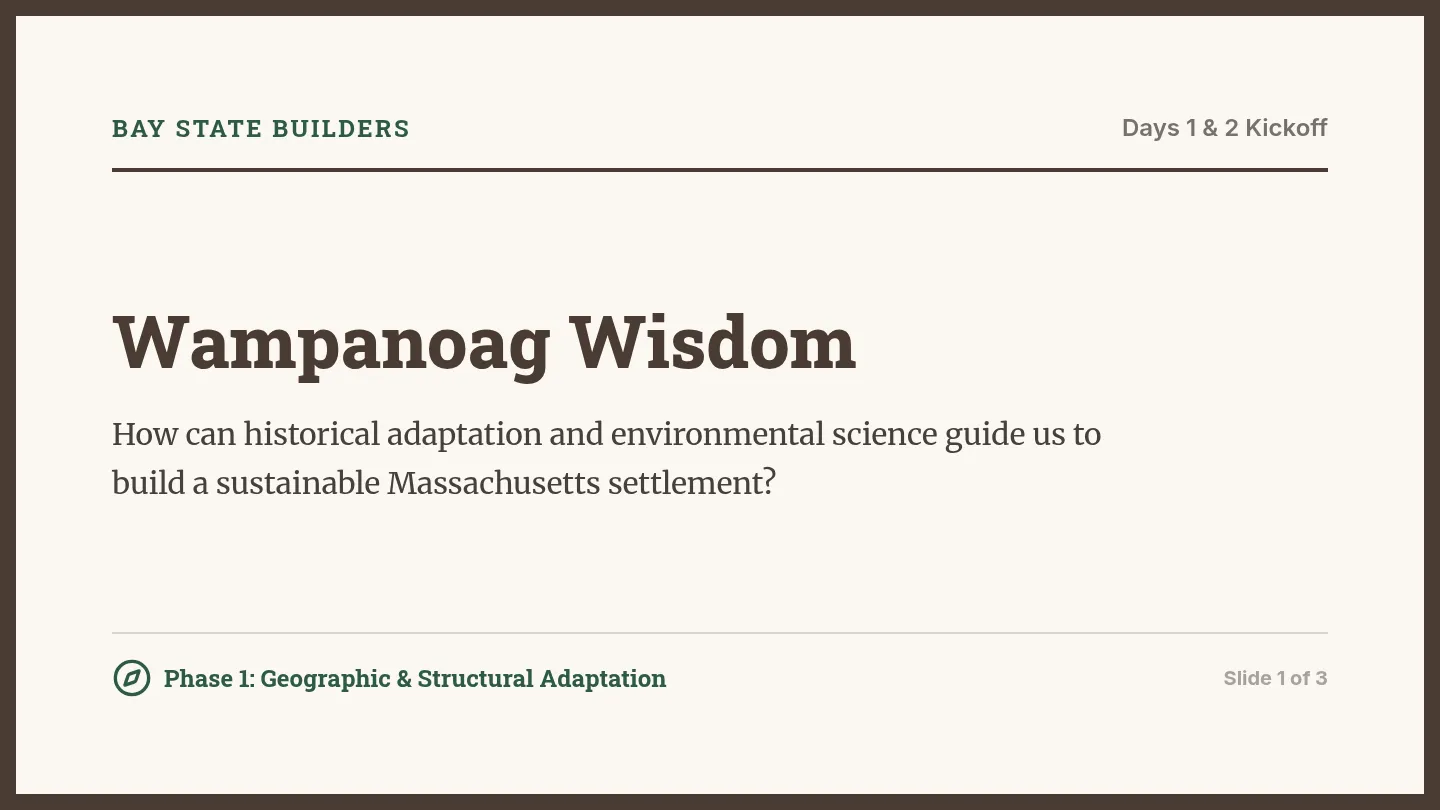
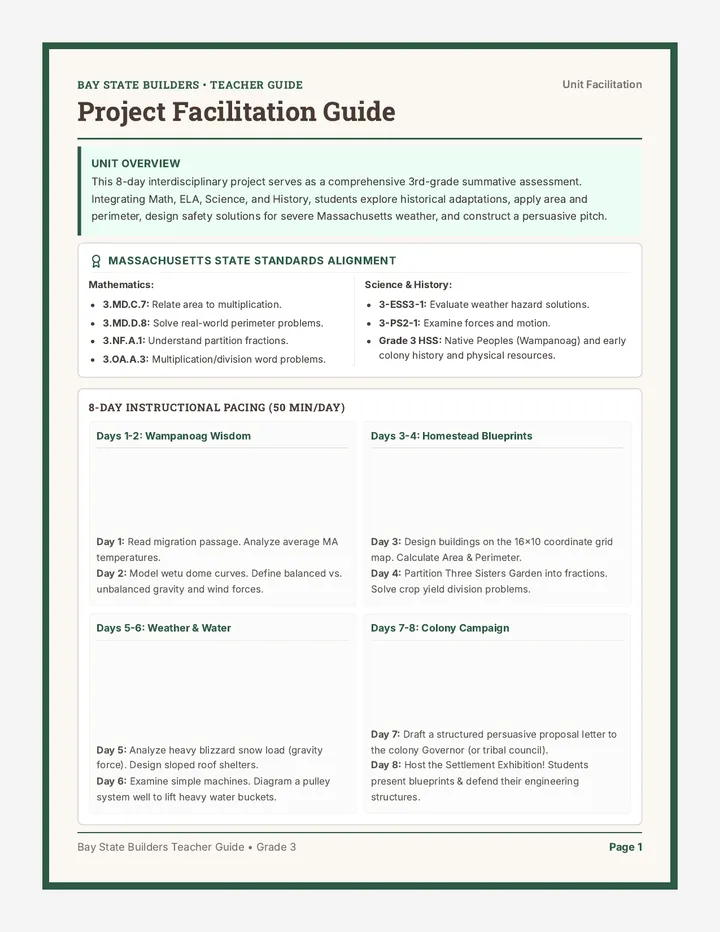
An 8-day interdisciplinary project where 3rd-grade students design a sustainable historical Massachusetts settlement. Integrating math, ELA, science, and social studies, students apply area, perimeter, fractions, weather science, Wampanoag adaptations, and persuasive writing.
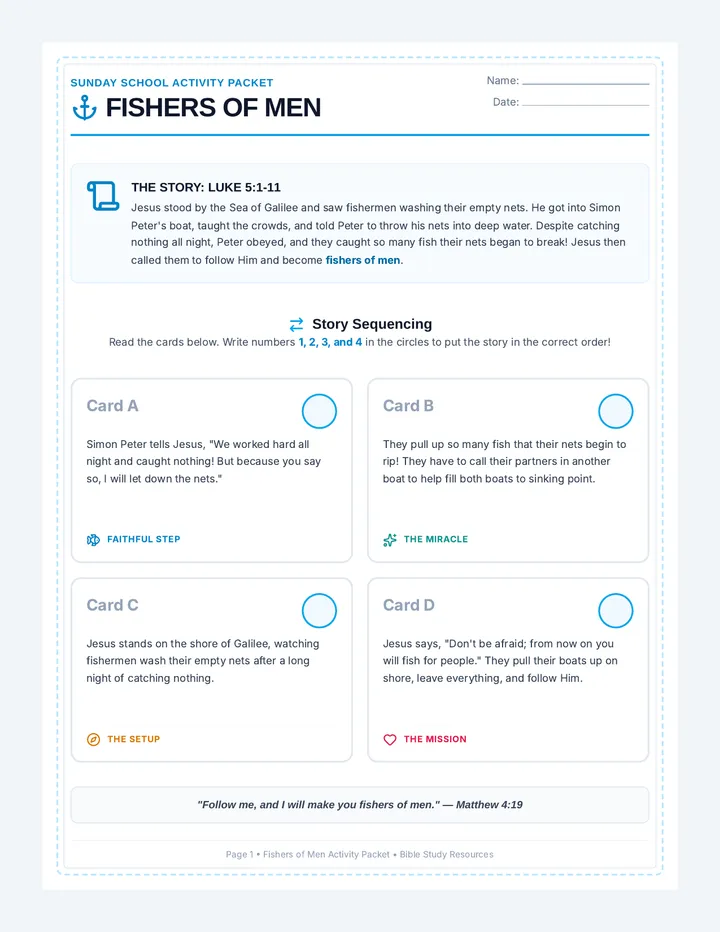
A lesson exploring the calling of the first disciples, focusing on Jesus' invitation to become fishers of men and share God's love with others through creative, hands-on activities.
A two-page print-ready assessment for 4th-grade students studying immigration. Page one features a scaffolded immigrant research profile organizer, and page two contains vocabulary matching, multiple-choice questions, and a short-answer writing prompt.
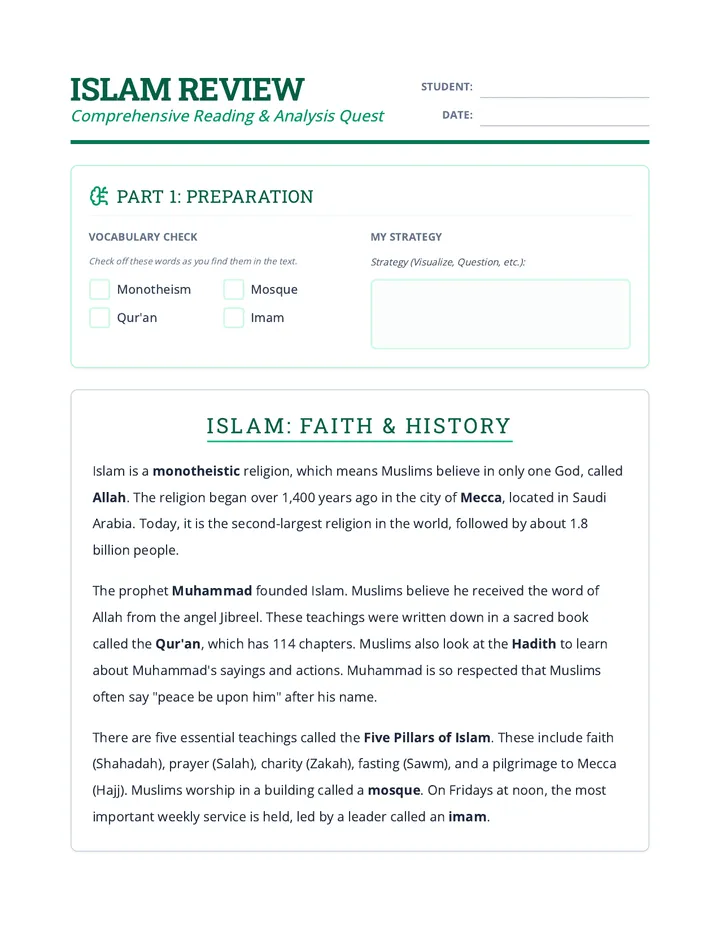
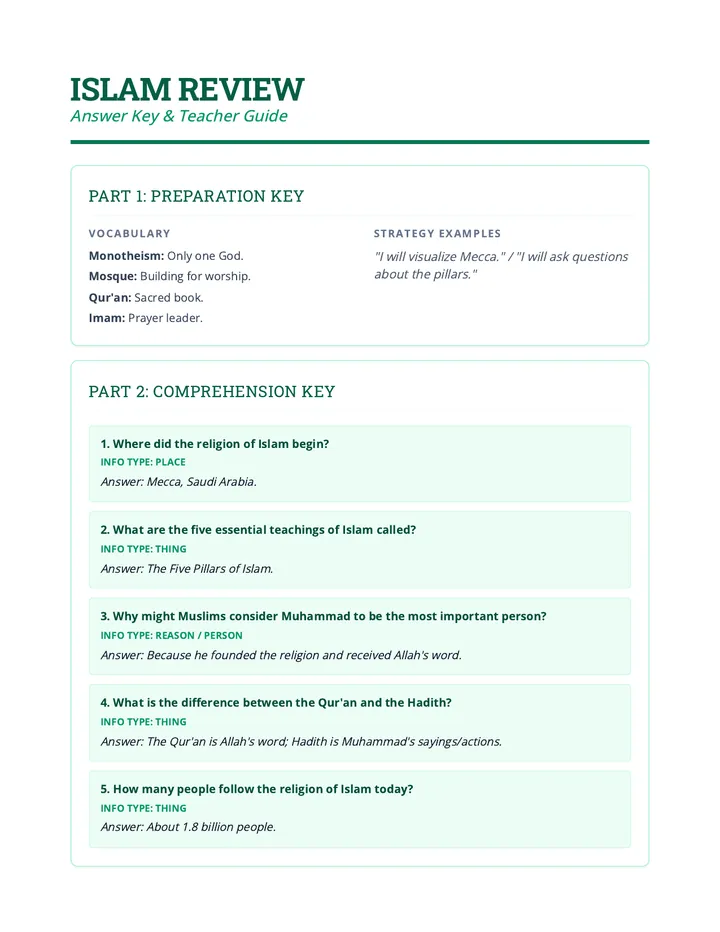
A comparative and deep-dive review sequence exploring foundational teachings, sacred texts, and cultural practices of major world religions.
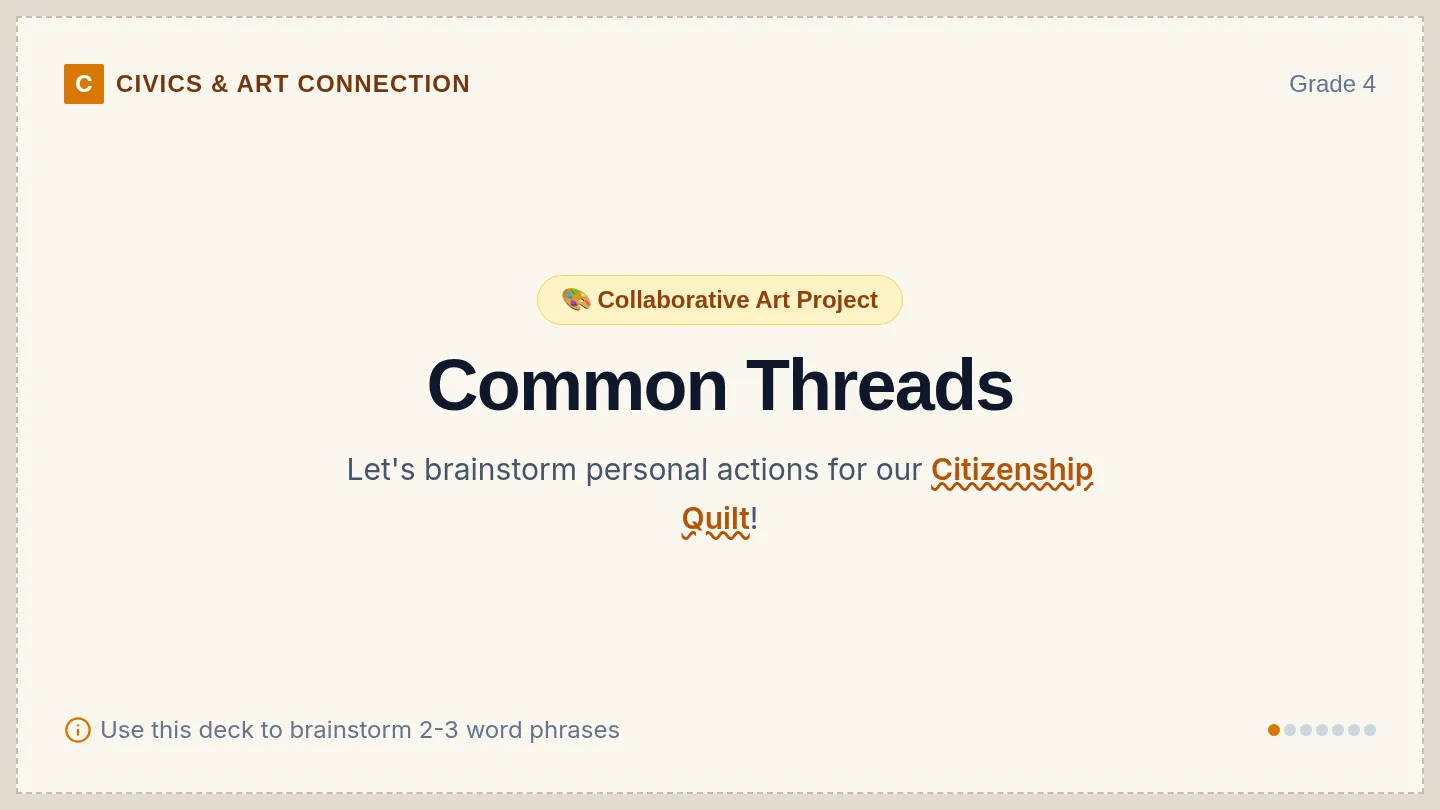
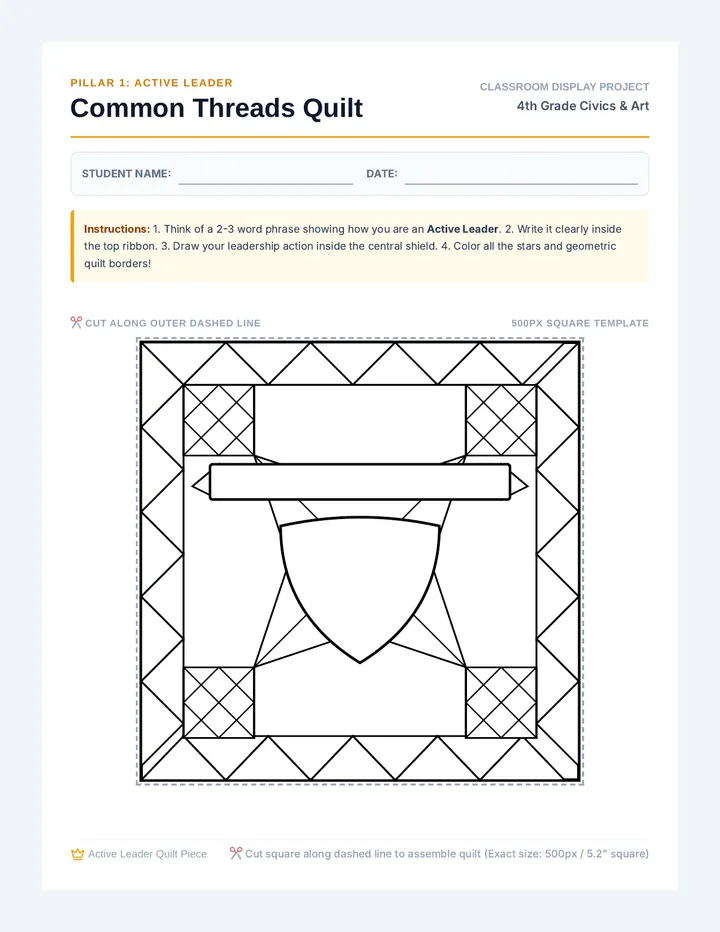
A creative civics and art lesson where fourth-grade students brainstorm personal actions for four key areas of citizenship (leadership, planet care, rules, and helping), then design personal, colorable quilt squares that combine into a collaborative classroom display.
A gorgeous 4-page printable activity packet for the 'Fishers of Men' lesson. Includes a story sequencing activity, a word search and code breaker puzzle, a 'Catch of Love' cut-and-paste craft, and a coloring and reflection page. Fully styled with a nautical blue and seafoam green aesthetic.
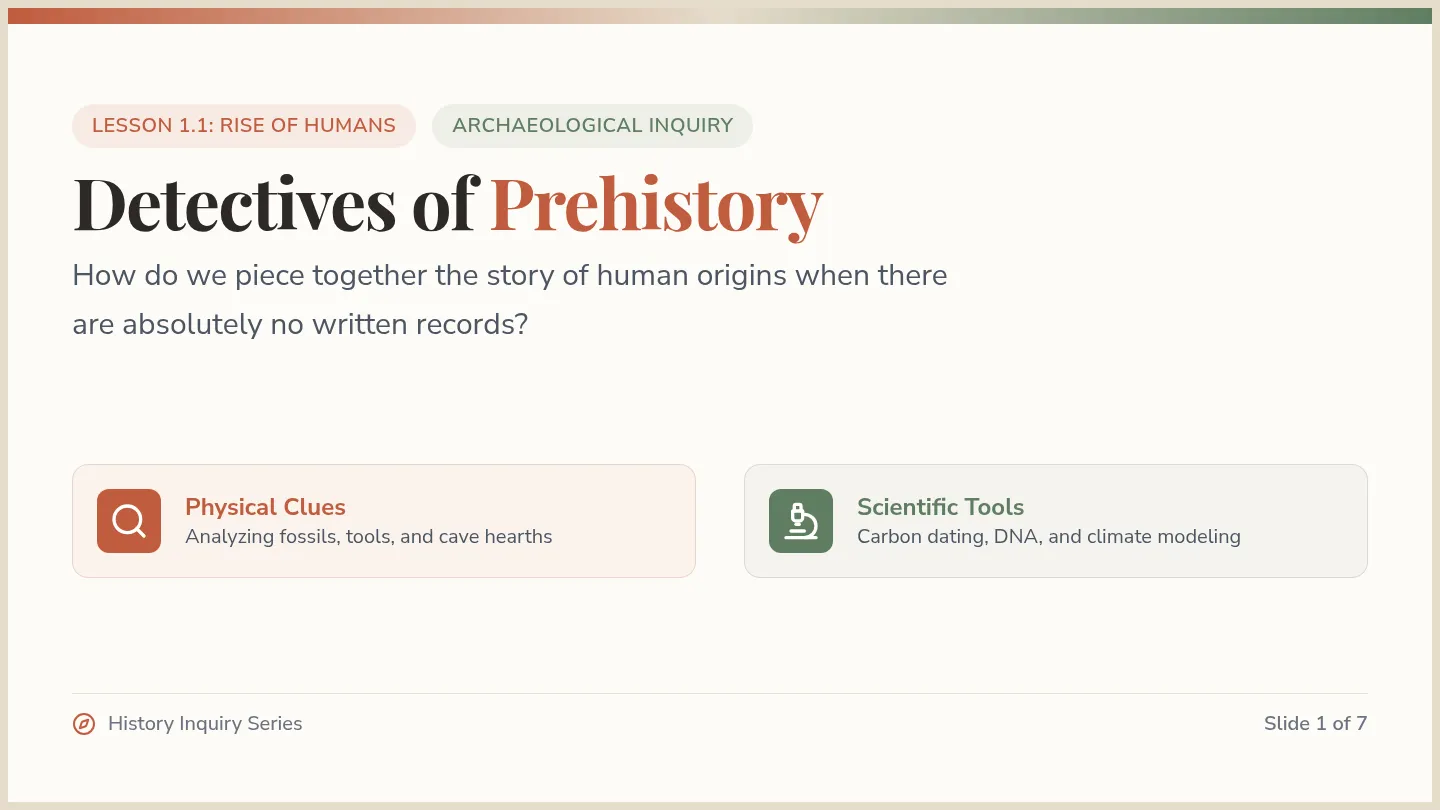
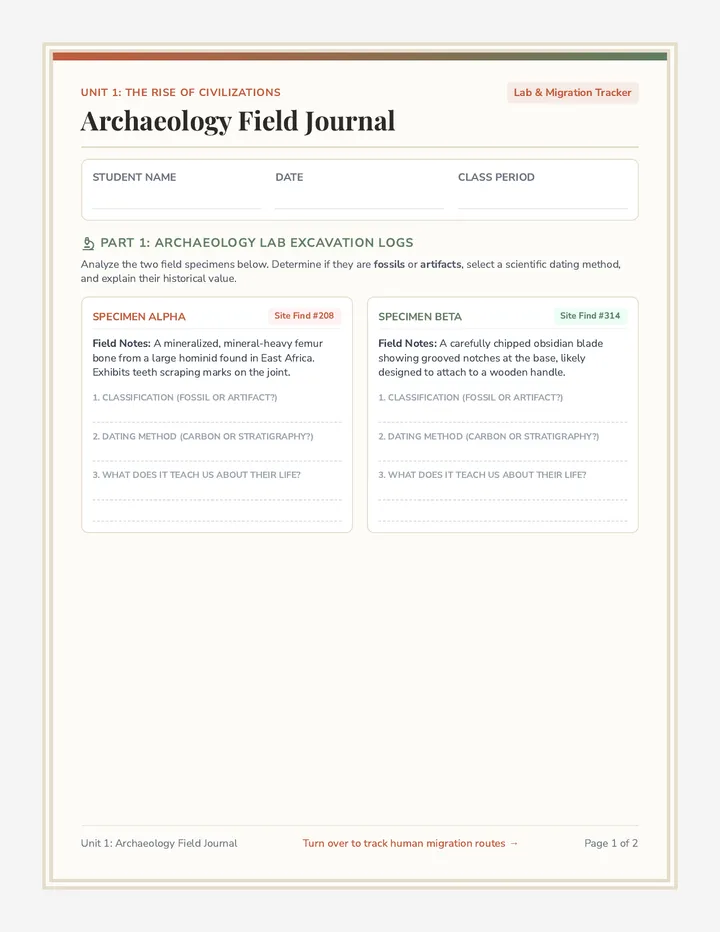
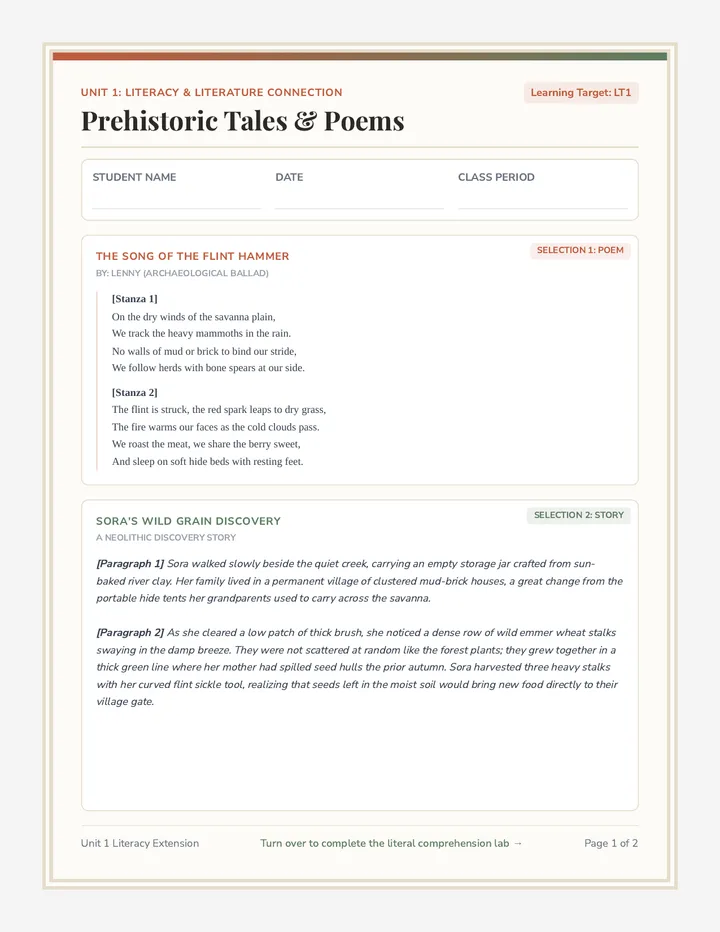
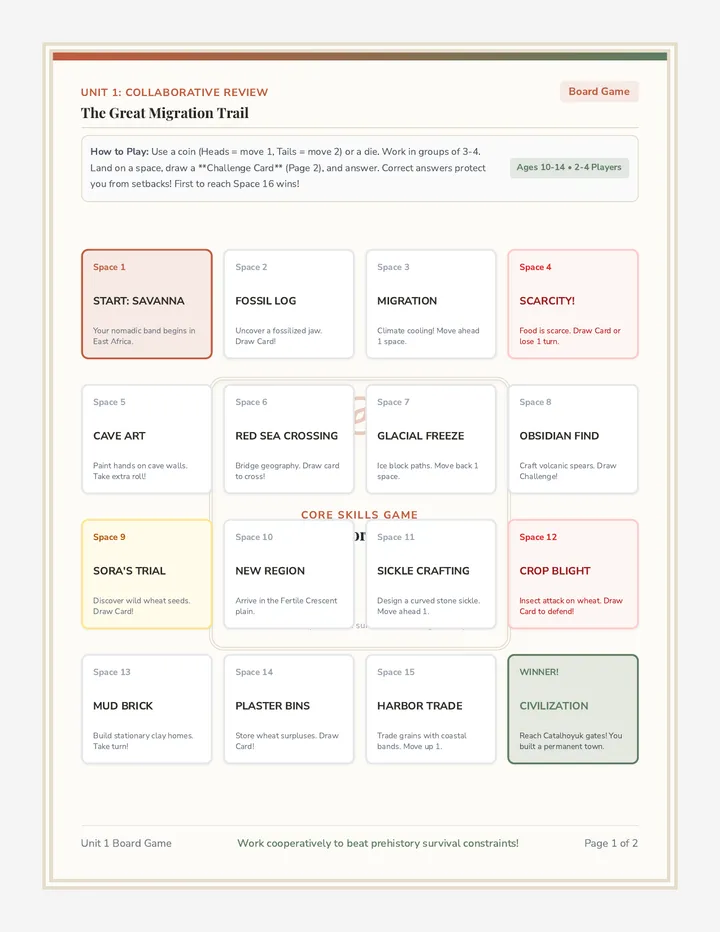
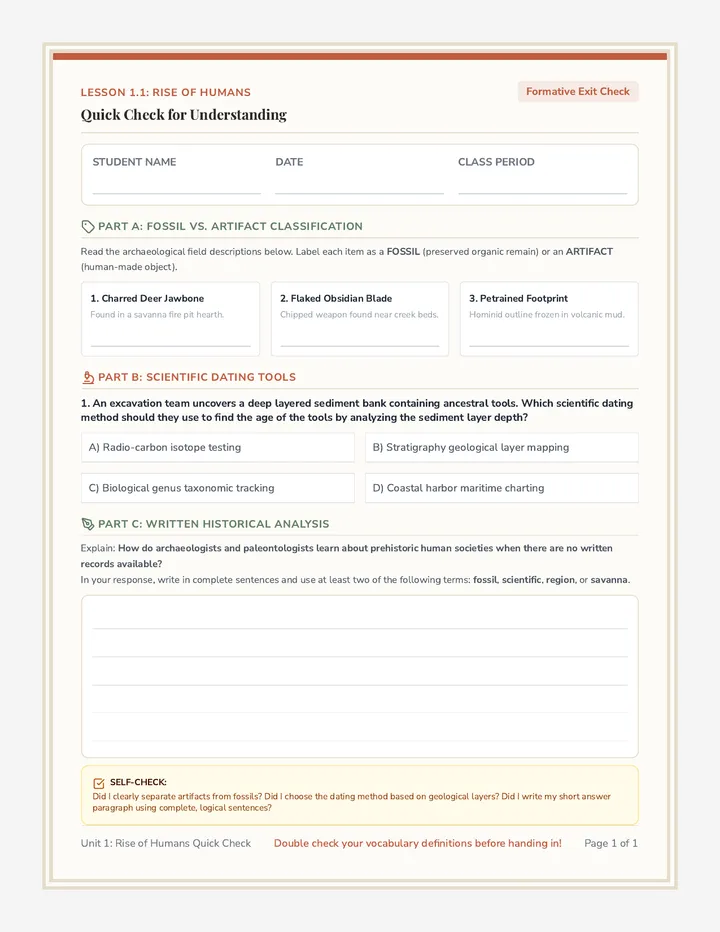
A middle-school history unit exploring the emergence of early humans, their prehistoric migrations, the radical transition of the agricultural revolution, and the foundations of early civilizations.
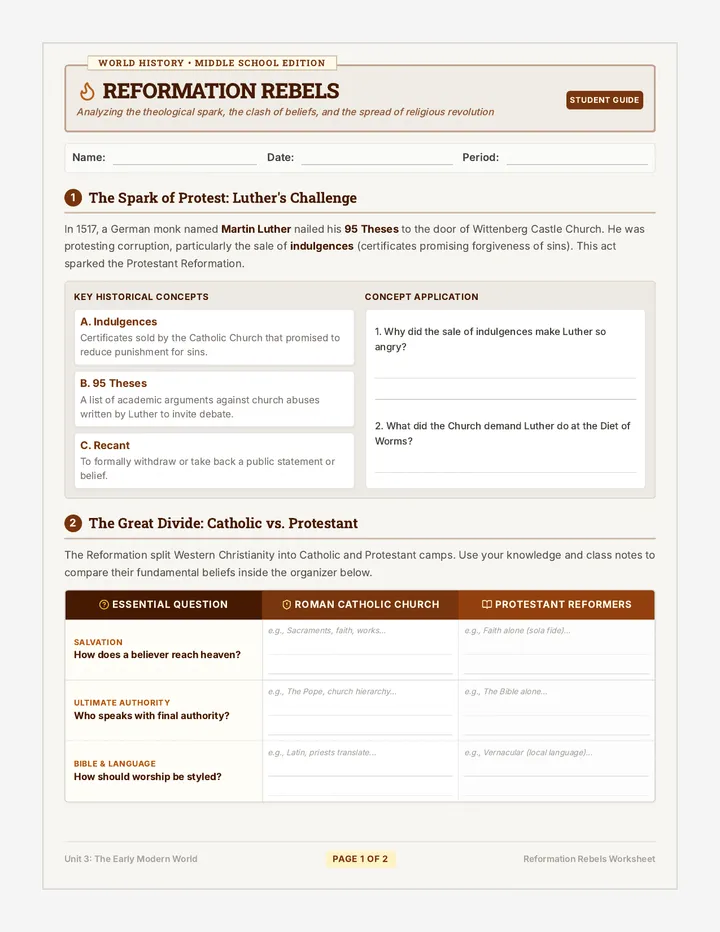
A middle school history lesson introducing the Protestant Reformation, focusing on Martin Luther's protest, the fundamental theological clashes, and the visual spread of Protestantism across Europe.
A premium 5-page printable document containing four unique, colorable quilt square templates (one for each citizenship pillar) and a teacher facilitation/assembly guide. Designed to be cut out and combined into a collaborative classroom quilt display.