Lenny.com
Explore
Create
ActivitiesNewCurriculumNewMathEnglish Language ArtsScience & EngineeringSocial StudiesGlobal LanguagesHealth & Physical EducationSpecial EducationCounseling & Life SkillsArts & CreativityESL
Lenny.com
Lenny.com
Explore
Create
ActivitiesNewCurriculumNewMathEnglish Language ArtsScience & EngineeringSocial StudiesGlobal LanguagesHealth & Physical EducationSpecial EducationCounseling & Life SkillsArts & CreativityESL
Lenny.com
Lenny.com

Solutions

Lenny for EducatorsLenny for SchoolsLenny for Districts

Product

ExploreSign inCreateSupportAbout

Resources

Getting startedMTSS Acceleration Program

Newsletters

School Funding Newsletter

© 2026 Lenny Learning Inc.

TermsPrivacyAccessibility
LinkedInInstagramX
Lenny
Science & EngineeringLife ScienceLiving ThingsAnimalsPlantsBody SystemsTraitsAdaptationsCellsEcosystemsHeredityGenes to TraitsCell DivisionPhysicsComparing MaterialsShapes and PropertiesMagnetsMagnetismLightSoundLight and SoundMatterStates of MatterChanges of StateMixturesPhysical and Chemical ChangeHeating and CoolingHeat and Thermal EnergyEnergyForce and MotionElectrical CircuitsAtoms and MoleculesPeriodic TableMotion in One DimensionMotion in Two DimensionsScalars and VectorsForces and Laws of MotionCircular Motion and GravityMomentum and ImpulseWork, Energy, and PowerWavesElectromagnetic WavesGeometric OpticsElectricity and MagnetismSimple Harmonic MotionThermodynamicsNuclear PhysicsEarth Science & AstronomyWeatherWater CycleRocks and MineralsFossilsEarth's FeaturesEarth's ResourcesEarth's StructureWeather and ClimateEarth EventsFossils and Geologic TimePlate TectonicsHuman ImpactsAstronomyChemistryUnits and MeasurementAtomic StructurePeriodic TrendsChemical BondingNomenclatureMolecular StructureIntermolecular ForcesThe MoleStoichiometryProperties of GasesSolutionsChemical ReactionsBalancing EquationsEnergy ChangesRates of ReactionsEquilibriumAcids and BasesQuantum ModelBiologyClassificationCell StructureThe Chemistry of LifeBiomoleculesCellular TransportCell EnergyCell Growth and DivisionDNAProtein SynthesisMeiosis and Sexual ReproductionPatterns of InheritanceMulticellular OrganismsEvolutionEcologyBiodiversityComputer ScienceAlgorithms and Computational ThinkingProgramming LanguagesComputing SystemsNetworks and InternetData AnalysisCybersecurityAI and Machine LearningSoftware Design and DevelopmentBlockchainEngineering & AIDesigning ExperimentsEngineering PracticesDesign ThinkingEngineering Design ProcessMechanical EngineeringElectrical EngineeringMaterials and StructuresCAD and 3D DesignRoboticsArtificial Intelligence BasicsVibe CodingMachine LearningAI Ethics and SocietySystems ThinkingEntrepreneurship & InnovationEntrepreneurial MindsetBusiness Idea DevelopmentBusiness Plan BasicsMarketing & Customer DiscoveryFinancial Management for Startups

Cell Energy Test Sheet

A 7th-grade life science test item featuring a full fill-in-the-blank reciprocal cycle diagram and fill-in chemical equations for photosynthesis and cellular respiration, paired with an evidence-based constructed response.

BLBurris Laboratory School

Cell Energy Test Sheet

A 7th-grade life science test item featuring a full fill-in-the-blank reciprocal cycle diagram and fill-in chemical equations for photosynthesis and cellular respiration, paired with an evidence-based constructed response.

BLBurris Laboratory School

You might also like

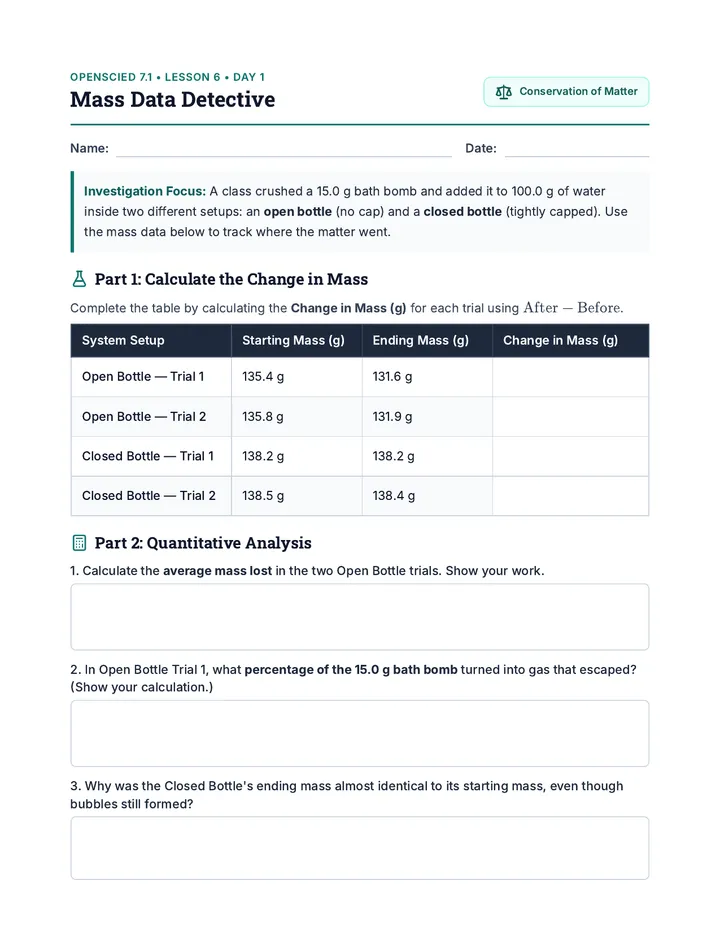
Mass Data Detective Worksheet

Particle Rearrangement Lab

A two-day instructional sequence for OpenSciEd 7.1 Lesson 6 connecting quantitative mass and gas data to particle rearrangement and conservation of matter during chemical reactions.

R

rnmurphy

4
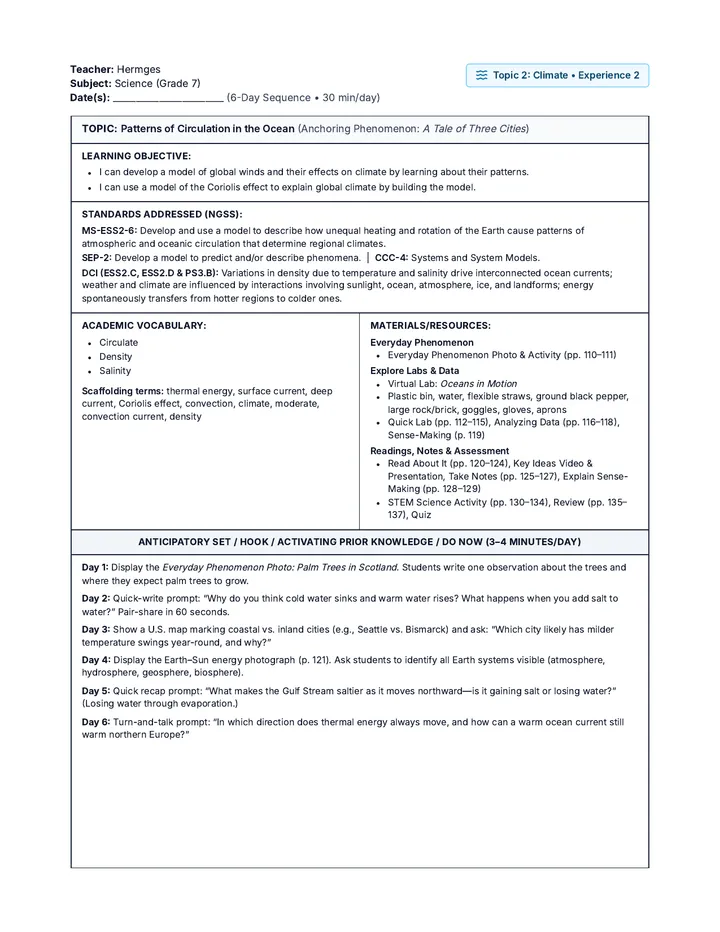
Ocean Circulation Lesson Plan

Ocean Circulation Studio

A 6-day Grade 7 science lesson sequence (30 minutes per day) for Topic 2: Climate, Experience 2: Patterns of Circulation in the Ocean, aligned to NGSS MS-ESS2-6. Includes a structured daily lesson plan matching the Circulation Studio format and a companion daily summary guide with leading questions and expectations.

MH

Mason Hermges

2
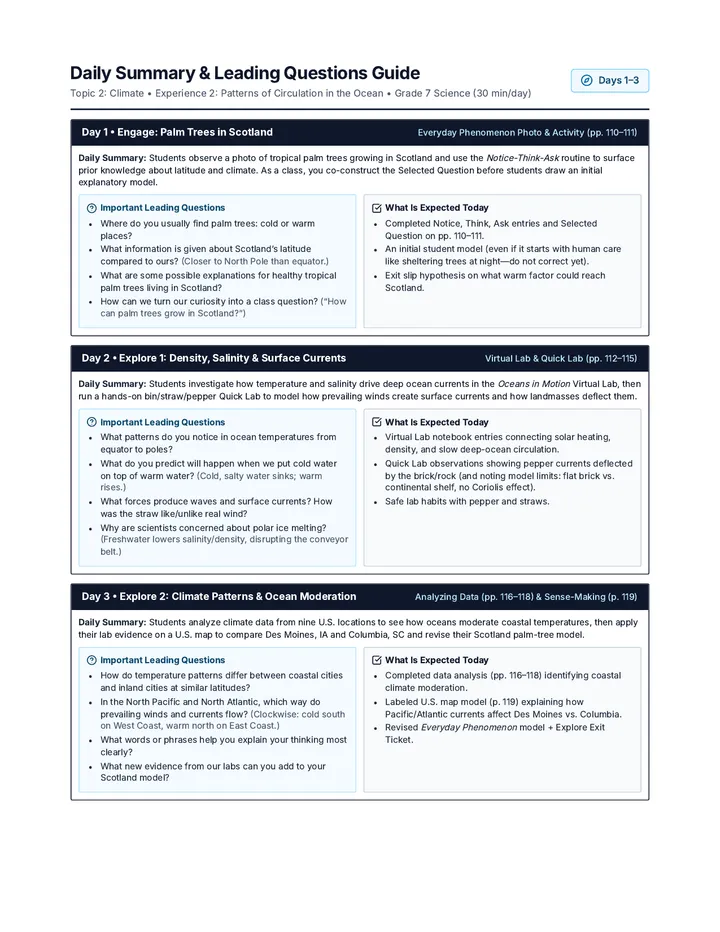
Ocean Circulation Daily Guide

Ocean Circulation Daily Guide

A 2-page companion teacher guide summarizing each of the 6 days in the Ocean Circulation Lesson Plan, highlighting essential leading questions with target understandings and clear daily student expectations and deliverables.

MH

Mason Hermges

Particle Detectives Slides

Atom Rearrangers

A 3-lesson 7th-grade science sequence centered on OpenSciEd Unit 7.1 Lesson 7. Students investigate how atoms rearrange during chemical reactions to form new substances while conserving mass.

R

rnmurphy

11
Climate Mystery Slides

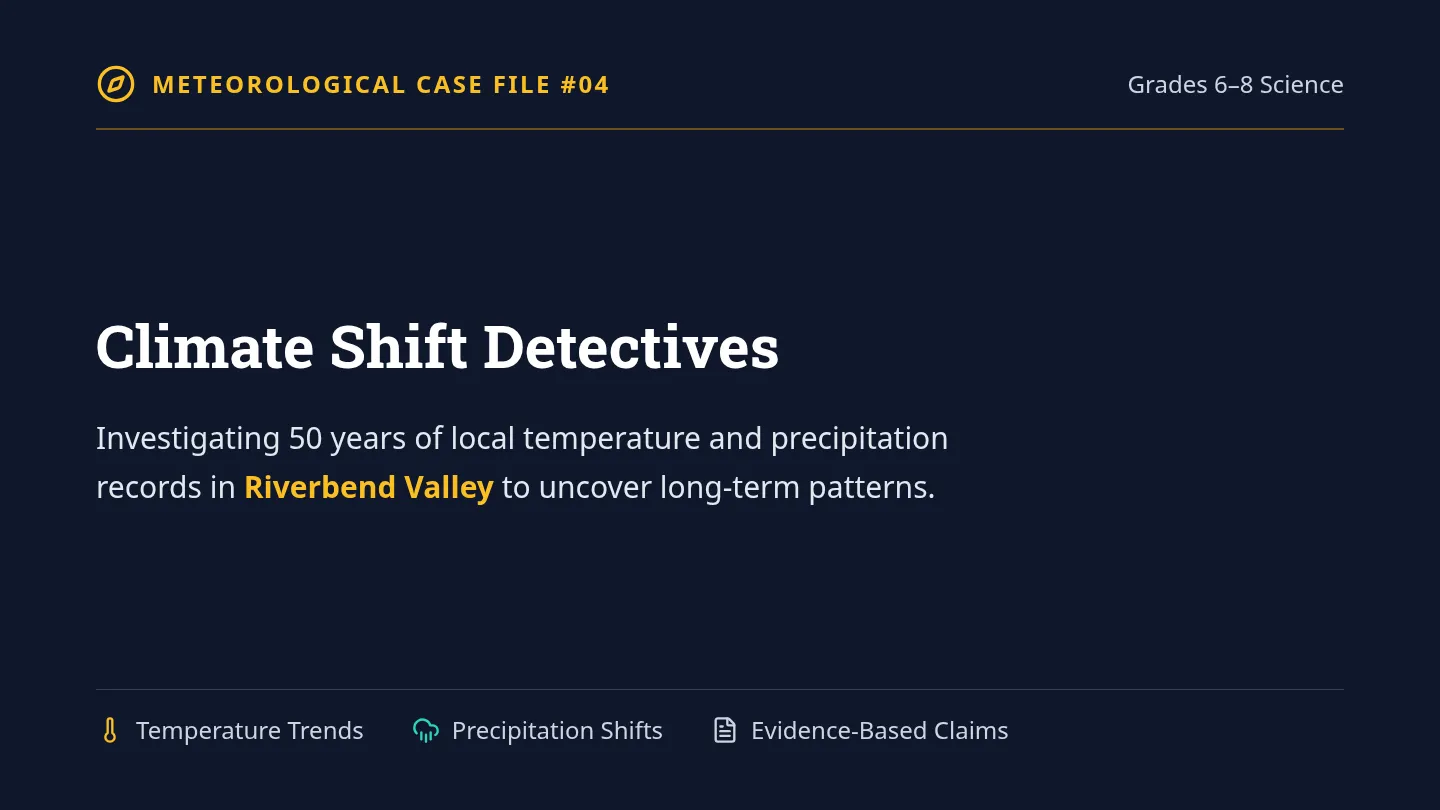
Climate Shift Detectives

A Grades 6–8 science investigation where students act as climate detectives analyzing multi-decade local temperature and precipitation records. Students compare historical baselines to recent decades, identify long-term trends, and construct evidence-based explanations.

JN

Jason Nagy

3
Ocean Circulation Lesson Plan

Ocean Circulation Lesson Plan

A 3-page, 6-day Grade 7 science lesson plan (30 min/day) for Topic 2: Climate, Experience 2: Patterns of Circulation in the Ocean, formatted in the Circulation Studio template with daily Anticipatory Sets, I Do, We Do, You Do, Differentiation, ENL supports, Closings, and Exit Assessments.

MH

Mason Hermges

Crucible Blade Lesson Plan

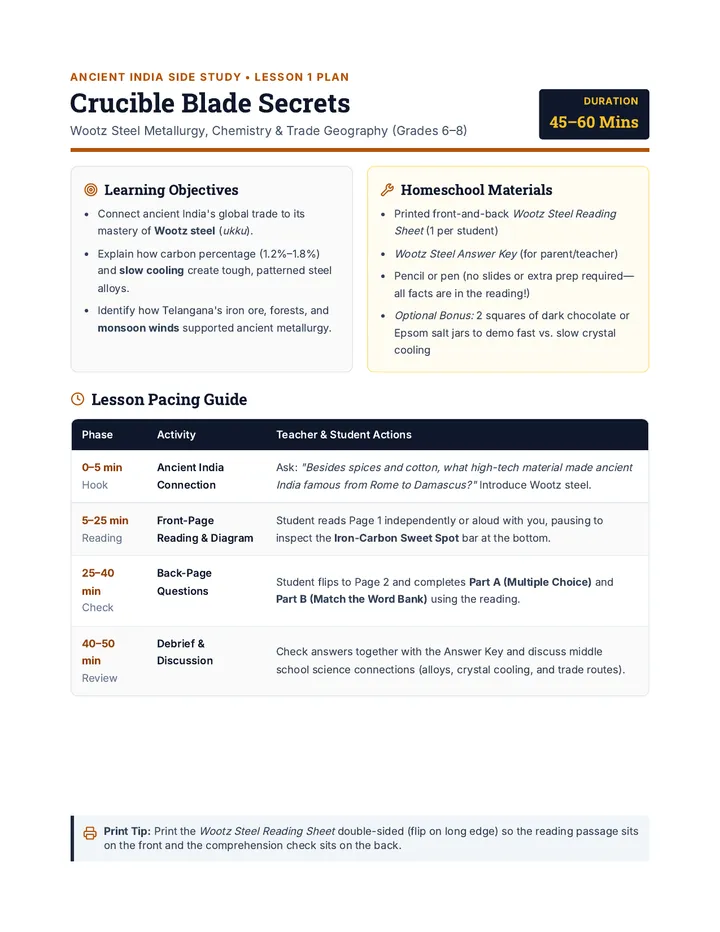
Iron and Basalt

A two-lesson science and geography sequence for middle schoolers exploring South India's ancient Wootz steel metallurgy and the volcanic Deccan Plateau. Students investigate material science, crystal structures, volcanic geology, and monsoon geography through hands-on activities.

DB

Danielle Burham

6
Eye Spy Unit Quiz

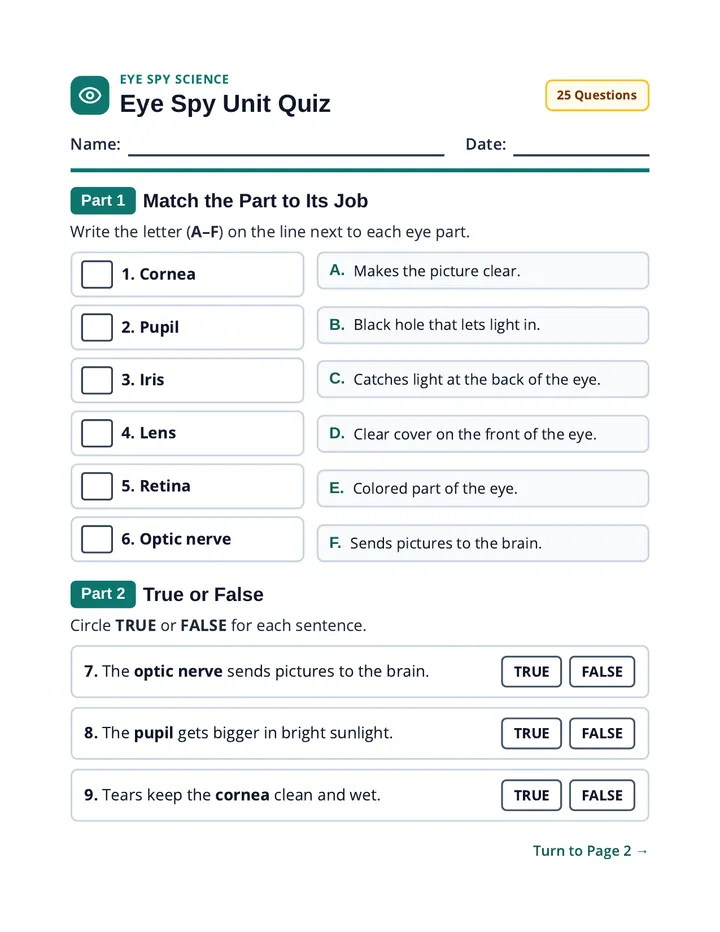
Eye Spy Science

A unit assessment lesson for Eye Spy Science focused on the parts of the human eye and their jobs, designed with enlarged text and accessible language for low-literacy learners.

A

amy_oshea

3
Climate Detectives Teacher Guide

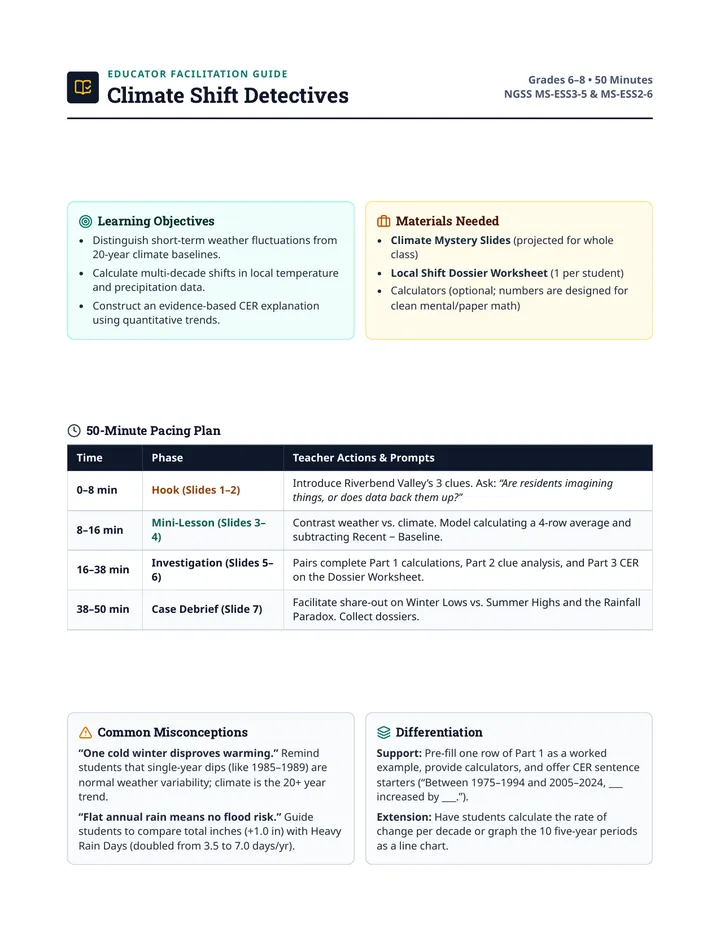
Climate Detectives Teacher Guide

A 2-page teacher guide and answer key for the Climate Shift Detectives lesson, including NGSS-aligned objectives, a 50-minute pacing plan, differentiation strategies, common misconceptions, and complete worked solutions with a model CER response.

JN

Jason Nagy

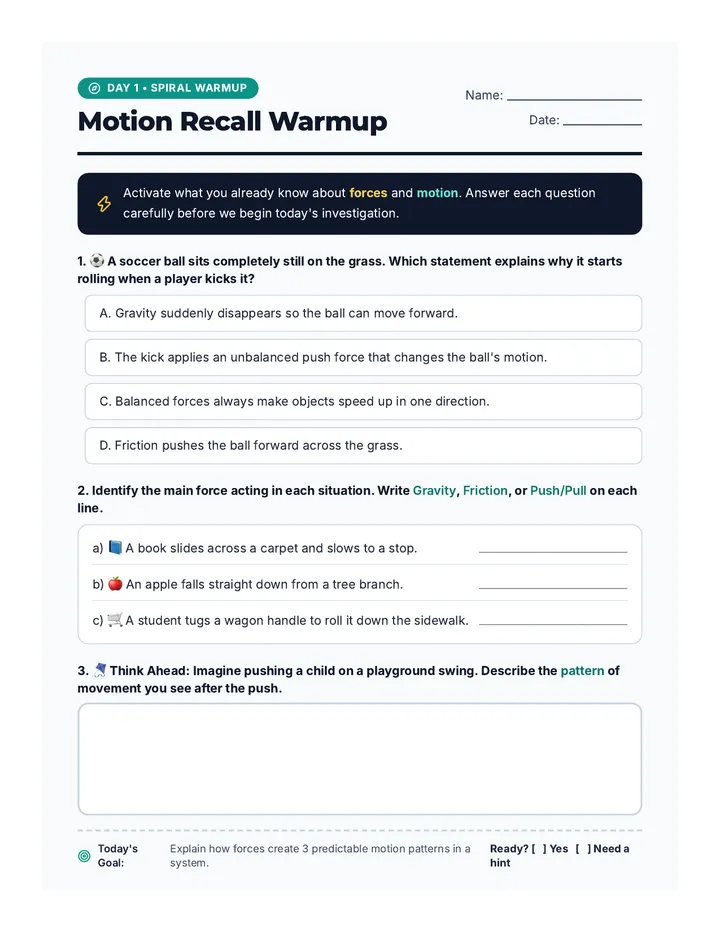
Motion Recall Warmup

Motion Pattern Makers

A two-day science sequence exploring how forces create predictable motion patterns within a system—moving in one direction, shifting back and forth, and moving in cycles—and how conditions like force strength, mass, and friction affect how fast or slowly these patterns occur.

LB

Lara Becker

11
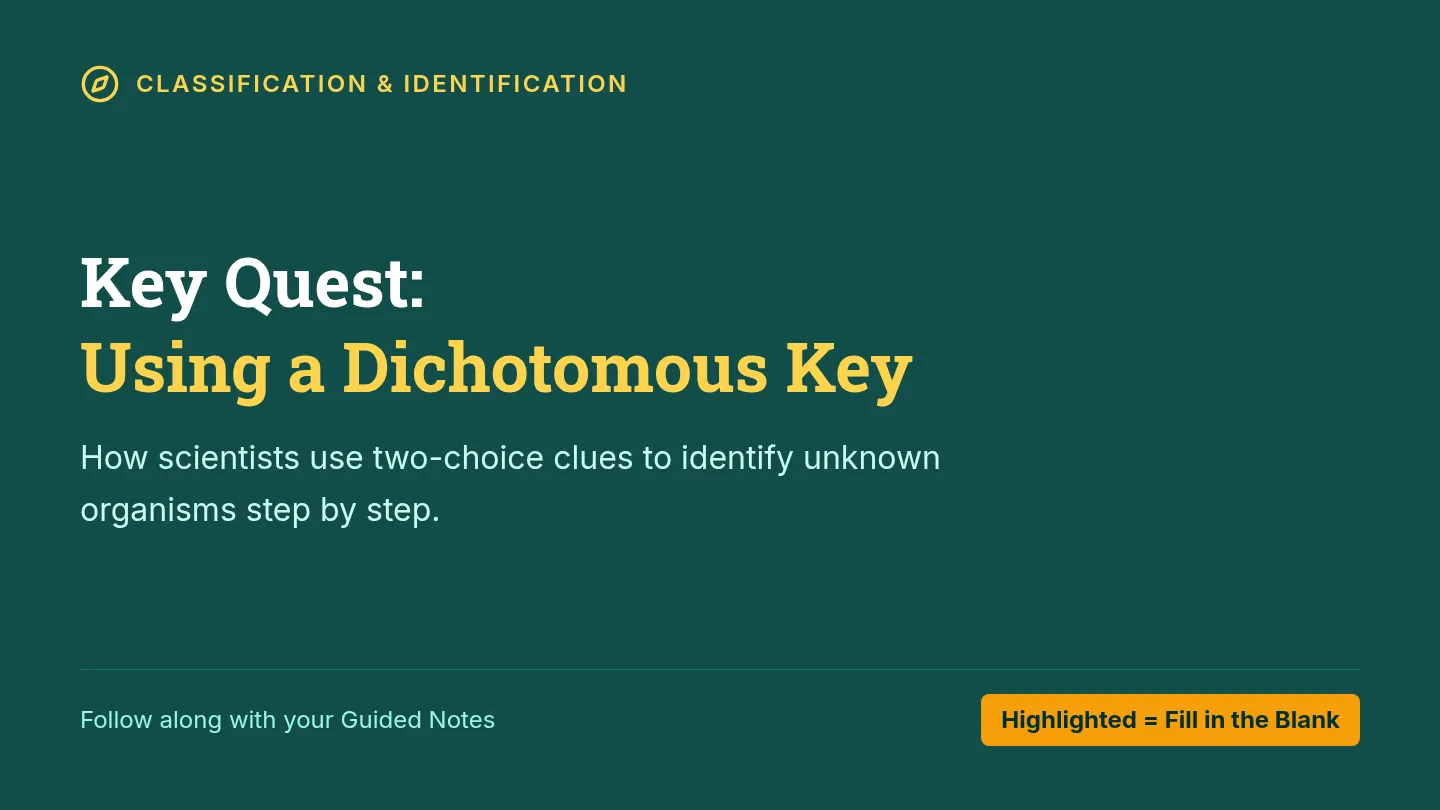
Key Quest Slides

Key Quest

A complete lesson teaching students how to use a dichotomous key to identify organisms, aligned with classification and evolution test items. Includes a visual slide deck, word-for-word fill-in-the-blank guided notes, and a teacher answer key.

BS

Baylee Snell

3
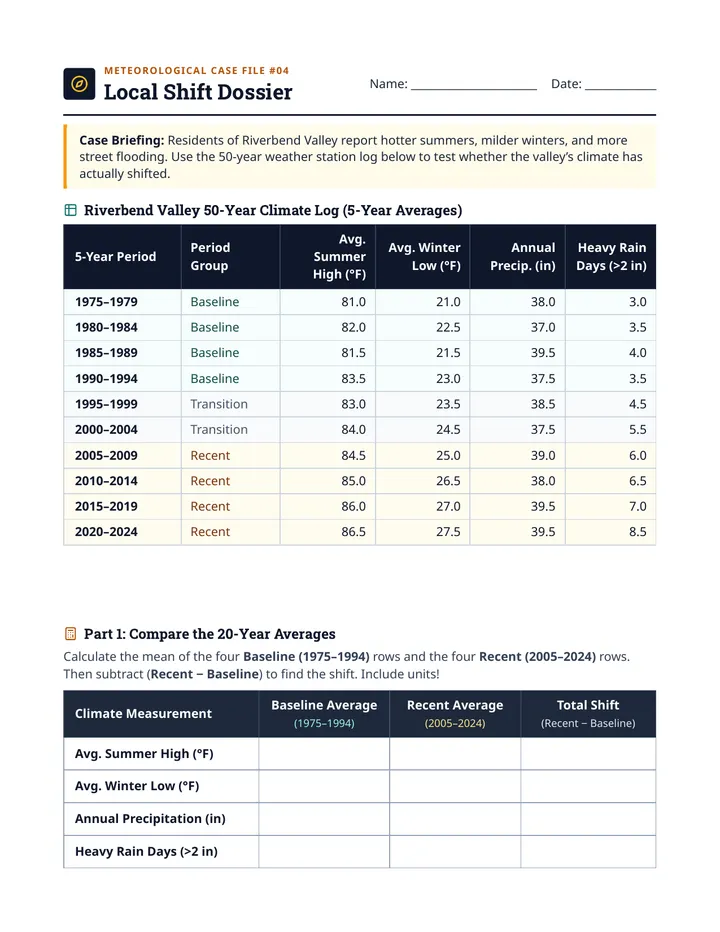
Local Shift Dossier Worksheet

Local Shift Dossier Worksheet

A 2-page print-ready student investigation worksheet featuring a 50-year local climate dataset for Riverbend Valley (1975–2024), a baseline-versus-recent calculation table, pattern analysis questions, and a structured Claim-Evidence-Reasoning (CER) response section.

JN

Jason Nagy